

See more of our articles in your search results.
Compared to other animals, humans have built highly developed societies in terms of culture and technology. Historically this has been attributed to a hierarchical superiority of humans on a supposed evolutionary scale. For example, theories that the human brain is larger or simply superior are still in vogue today.
The research and theory of Michael Tomasello have been the most relevant recent contributions of Comparative Psychology to a classic question: what makes us human? That is, what differentiates us from other animals?
Michael Tomasello’s theory
Michael Tomasello, co-director of the Max Planck Institute for Evolutionary Anthropology, is a psychologist who researches social cognition, that is, the way people process social information, social learning and communication.
Tomasello, whose perspective is situated in constructivism, suggests that humans differ from other species by our ability to collaborate on activities when we share goals Tomasello calls this “shared intentionality.”
Comparative studies with children and chimpanzees
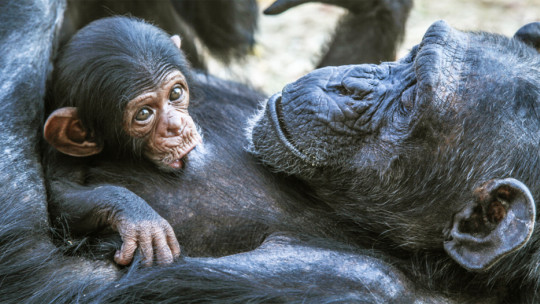
In recent years Tomasello has studied communication and shared intentionality above all. For it has compared the cognitive processes of children and chimpanzees since they are the closest animal to humans.
How many of these have you been "meaning to read" for months?
- 1
 TarcherThe Artist's Way30th Anniversary EditionListen Free On Audible
- 2
 Undercover Publishing HouseStop Letting Everything Affect YouHow to break free from overthinking, emotional chaos, and self-sabotage.Listen Free On Audible
- 3
 MajostaDon't Believe Everything You ThinkWhy Your Thinking Is The Beginning & End Of Suffering (Beyond Suffering)Listen Free On Audible
In his experiments Tomasello analyzed, among other aspects, the way in which children and chimpanzees distribute rewards after carrying out a collaborative effort. To do this, he compared the results obtained in collaborative tasks carried out by pairs of children or chimpanzees.
Although the chimpanzees studied were capable of working as a team, after achieving the reward, food in this case, the more dominant of the two kept the entire prize. This tendency towards individualism causes non-human primates to have difficulties maintaining cooperative relationships sustained over time.
Instead the children shared the reward more or less fairly after collaborating to obtain it. Although before they argued or tried to keep all the food, there was a kind of negotiation that normally concluded with each of the children keeping half of the prize.
In another experiment, one of the members of the pair obtained the prize before the other. In the case of children, the first one to get the reward continued collaborating with the other until the other one also got his/hers. On the contrary, the chimpanzee that got the food first ignored his partner.
Differences between human and chimpanzee societies
Tomasello affirms from his experiments and observations that societies formed by great apes are much more individualistic than those of humans. He attributes this to the greater capacity of people, even when they are very young, for collaboration and to attribute intentions to others.
This ability to “mind reading,” or imagining the emotions and thoughts of others and understanding that they can be different from one’s own, is known as “theory of mind.” Great apes and other animals, such as crows or parrots, are also considered to have this ability, but it is much less developed than in humans.
Tomasello says that great apes often use theory of mind to compete, for example to obtain sexual partners. They can also carry out altruistic or prosocial behaviors to help other individuals, but they only usually do so if there is no type of competition for resources and the effort required is minimal.
According to Tomasello, the groups of chimpanzees rely heavily on dominance and individual activity; For example, gathering food or caring for young is carried out by a single individual.
On the other hand, among humans, social relationships and hierarchies are not determined only by selfishness and domination, but collaboration is more important. Tomasello suggests that non-cooperative people (parasites or “free riders”) tend to be left aside in cooperative activities.
The development of culture and morality
Another fundamental difference between us and the rest of the primates is that Humans create social norms and institutions According to Tomasello, these are a consequence of our ability to exchange information with other members of our group and to transmit culture from generation to generation, which allows us to progressively make our societies more complex.
The degree of collaboration and interdependence also increases as societies develop. Human groups tend to get larger and larger: in a few thousand years, a tiny period of time in the context of evolution, we have gone from being part of small tribes of hunters and gatherers to today’s globalized world. This progress would have been unthinkable without the development of language and the cumulative progress of culture and technology.
According to Tomasello, children are instinctively cooperative But as they grow up and are influenced by the culture that surrounds them, they learn to discriminate with whom they collaborate, mainly so as not to be exploited by “free riders.”
Human children internalize the norms constructed by their society to such an extent that they give themselves the responsibility of making others comply with them, even if doing so does no harm to anyone. Tomasello suggests that human culture encourages us to do things “the right way”, that is, as the majority of the group of which we are a part does, and that Those who do not comply with social norms get a bad reputation and are viewed with suspicion.
Human intelligence and animal intelligences
Historically, it has been considered that human intelligence is quantitatively superior to animal intelligence because our brain is more developed. However, according to Tomasello’s studies Children surpass chimpanzees in social intelligence but they have a level of physical intelligence, for example spatial or corporal, equivalent to theirs.
Tomasello and other authors have proven that great apes have cognitive abilities that until recently we would have attributed exclusively to humans. Among other things, they know that objects continue to exist even if they disappear from their sight (Piagetian object permanence) and they can differentiate quantities mentally.
Chimpanzee babies are also skilled at making communicative gestures, but their variety and complexity are limited. another ape, Koko the gorilla has been trained in the use of sign language by Francine Patterson. Koko has even created complex concepts by combining several words. There are also examples that non-human animals can transmit culture from generation to generation: for example, in a group of chimpanzees in the Ivory Coast, young people are taught to use stones as hammers to open nuts.
Cooperation makes us human
According to the constructivist Tomasello, people learn language through cumulative cultural transmission, which has allowed our verbal communication to be very complex. Besides our body is perfectly adapted to language, from the speech organs to specific areas of the brain. Just as marine animals have adapted to an aquatic context, we have adapted to a social context.
Humans need culture to develop. Without social interaction and language, not only would we not reach our full potential as a species, but our cognitive and social abilities would be very similar to those of other primates. Wild children, such as Victor of Aveyron, serve as an example of this: Without contact with other people, humans lose what makes us special
Use this citation format to reference the article clearly and help readers find the original source.
PsychologyFor. (2024). Michael Tomasello Theory: What Makes Us Human?. PsychologyFor. https://psychologyfor.com/michael-tomasello-theory-what-makes-us-human/