

See more of our articles in your search results.
When we think of renowned biologists, the first one that comes to mind in all cases is a man with a serious face and a thick beard: Charles Darwin. No wonder, since this influential scientist postulated the theory of natural selection, widely accepted and, although nuanced, irrefutable today. Thanks to him we know that in nature the survival of the fittest prevails, and that the impositions of the environment favor the appearance and discarding of certain characteristics in populations of living beings.
If we move to the field of genetics, we may think of Gregor Mendel, that Augustinian friar who, with some peas and an unusual mind, postulated Mendel’s laws on which the bases of genetic inheritance are still based today. Without abandoning the genome, Watson and Crick, discoverers of the DNA double helix, may also come to mind, not without multiple social controversies that we still have present today.
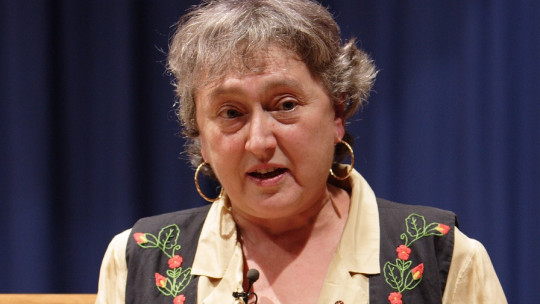
These are some of the most recognized names in the world of biology: as you will see, almost all of them are men who lived in past times, but there are thousands of other examples that are equally important, despite having remained in the shadows of popular culture. This is the case of Lynn Margulis, a renowned biologist, scientist and popularizer, who lived with us until 2011. If you want to know everything about her, keep reading, because here you will find a biography of Lynn Margulis
Brief biography of Lynn Margulis
Lynn Margulis was born on March 3, 1938, in Chicago, United States. From a young age she already showed hints of genius, since she graduated with honors from the University of Chicago in 1957, where she was accepted at the age of 15. Curiously, The first career that this scientist studied was Liberal Arts, although she later went to the University of Wisconsin to (now) study biology In 1960, she obtained a master’s degree in genetics and zoology.
Her first publication as a “new scientist” was conceived together with her mentor, Walter Pault, which was published in 1958, in the professional journal Journal of Protozoology. In it he addressed genetic issues in gender Euglenasmall unicellular flagellated protists.
How many of these have you been "meaning to read" for months?


After finishing his master’s degree in 1960, Margulis moved to the University of California (Berkeley) to study and obtain a doctorate specialized in genetics The defended thesis that awarded her the position of doctor followed the line of research that she began in her master’s degree, since she graduated An Unusual Pattern of Thymidine Incorporation in Euglena, in which he explored the same genus of microorganisms mentioned above. His doctoral work was completed at Brandeis University (Massachusetts) in 1965, as that is where he obtained his first job position associated with research.
Once a doctorate, Lynn Margulis She joined the teaching team at Boston University in 1966, where she taught biology classes as a professor for 22 years Following her work as a teacher, she received the titles of “distinguished professor of botany” and “distinguished professor of biology” in 1988 and 1993, respectively. She moved to the geosciences department in 1997, where she remained in the honorary position until she died of a stroke in 2011.
Thought and currents
Lynn Margulis married Carl Sagan, had two children, and divorced to remarry Thomas N. Margulis, a crystallographer. We do not need to know too much about the personal life of this eminence, since we find it much more interesting to reflect the importance of her work and thoughts. We all have a personal life, but this does not usually define the ideological imprint we leave in common culture.
For most of her career as a scientist, Margulis was branded by her colleagues as an “extremist”, as she did not agree at all with the neo-Darwinian ideas that, for the most part, underlie the evolutionary mechanisms of the “survival of the fittest” In his own words: “Natural selection eliminates and maybe maintains, but it does n’t create.”
Margulis She was a staunch defender of symbiosis as an evolutionary engine That is, the association of different organisms (whether favorable or deleterious) is the most important cause of change and adaptation in nature. In these terms, we coin the term “symbiosis” as any relationship between two or more living beings, whether good (usual symbiosis), indifferent for one of the parties (commensalism) or deleterious for the host (parasitism).
Margulis and the endosymbiotic theory
Based on these premises, Margulis postulated the endosymbiotic theory or serial endosymbiosis in various articles, publications and scientific books, such as the following: On the origin of mitosing cells (1967), Origins of Eukaryotic Cells (1975) and Symbiosis in Cell Evolution (1981). In these documents, this eminence defended that the transition from prokaryotic cell to eukaryotic cell occurred through the symbiogenetic incorporation of certain bacteria.
Not without reason, Margulis compared the structure and functionality of mitochondria and chloroplasts (organelles present in the cytoplasm of eukaryotic cells) with the nature of prokaryotic cells that is, bacteria and archaea. The similarities are obvious, but we present some of the most striking in the following list:
As you can see, the similarities are inescapable, and we haven’t even covered them all. In any case, it is worth noting that, No matter how much autonomy the mitochondria present, most of the proteins they need to perform their functions come from the ribosomes of the cytosol that is, from the host cell.
If we go to investigate the bacterial genome, we will see that, for example, E.coli It has about 4,000 different genes. On the other hand, the mitochondrial genome has been left with a tiny number of 37 coding genes, compared to the 25,000 present in the nucleus of human cells.
All this means that, despite the clear benefits for possible mitochondrial primordia, These bacteria have had to reject a large part of their autonomy throughout evolution to adapt excellently to their host: the eukaryotic cell Therefore, its genetic load is extremely low and most of the materials necessary for its permanence come from the cellular cytosol.
In any case, this theory is widely accepted today and seems practically indisputable. With the genetic techniques available today, The genome of bacteria has been found to be phylogenetically associated with rickettsial proteobacteria, while chloroplasts show close similarities with cyanobacteria, prokaryotic nitrogen-fixing bacteria. The multiple evidence present today makes Margulis endosymbiosis something as accepted as natural selection itself in the scientific community.
Summary
Despite the foundation of the endosymbiotic theory, Margulis also stood out for many other things, such as his devotion to teaching, especially in the most disadvantaged regions. She was an excellent teacher, who poured her life and expectations into leaving her legacy present in all future generations through obtaining knowledge.
Figures like this show us that, indeed, history is full of more than capable and skilled women. Unfortunately, usually their male counterparts continue to take all the credit, but as long as we continue writing and reading about these female eminences, the voice and presence of contemporary geniuses will continue among us. In the next section, we leave you some of her works, so you can learn from her first-hand.
Use this citation format to reference the article clearly and help readers find the original source.
PsychologyFor. (2024). Lynn Margulis: Biography of This Researcher and Reference in Biology. PsychologyFor. https://psychologyfor.com/lynn-margulis-biography-of-this-researcher-and-reference-in-biology/