


You find yourself sitting in a professional meeting or a family gathering, noticing how subtly authority is distributed, how women’s contributions are routinely interrupted, or how domestic responsibilities are quietly assumed to be female obligations. That sudden wave of clarity is rarely comfortable. For many people, awakening to structural inequality feels disorienting, sparking a mixture of righteous anger, exhaustion, and a deep yearning for intellectual frameworks that explain the historical machinery of gender. It is not an isolated personal frustration. Rather, it exposes the pervasive systemic reality of patriarchal social conditioning.
For centuries, women have documented, analyzed, and resisted the political, economic, and psychological mechanisms that diminish their autonomy and devalue their lived experiences. However, modern commercial culture often reduces feminist theory to shallow corporate slogans, girl-boss branding, or polarizing online soundbites that strip the movement of its revolutionary intellectual rigor. True feminist literacy requires engaging with foundational texts across diverse eras and perspectives—spanning existentialist philosophy, Black feminist thought, data-driven systemic analysis, and intersectional social critique. Discovering transformative feminist literature equips you with the analytical tools to challenge oppressive hierarchies and construct an authentic, equitable social consciousness.
How can reading peer-reviewed and foundational feminist literature help you understand the intersections of gender, race, class, and institutional power dynamics?
This comprehensive guide details the 9 best books on feminism, reviewing landmark historical treatises, intersectional manifestos, data-driven investigations, and cultural essays that define the modern struggle for collective liberation.
The 9 Best Books on Feminism
Verified Top Picks-
1
 Simone de Beauvoir The Second Sex The monumental foundational text of feminist existentialism deconstructing womanhood as a social constructCHECK TODAY'S PRICE
 -
2
 Virginia Woolf A Room of One's Own A brilliant extended essay on the material, financial, and spatial prerequisites for female creative autonomyCHECK TODAY'S PRICE
 -
3bell hooks Feminism Is for Everybody A clear, passionate primer defining feminism as a movement to end sexist exploitation, oppression, and violenceCHECK TODAY'S PRICE
-
4Caroline Criado Perez Invisible Women Empirical research exposing the systemic gender data gap across medicine, technology, design, and policyCHECK TODAY'S PRICE
-
5Audre Lorde Sister Outsider: Essays and Speeches Groundbreaking essays examining the intersections of race, gender, sexuality, class, and radical transformationCHECK TODAY'S PRICE
-
6Betty Friedan The Feminine Mystique The landmark second-wave critique articulating the problem that has no name and challenging domesticityCHECK TODAY'S PRICE
-
7Roxane Gay Bad Feminist: Essays A sharp, funny, and vulnerable exploration of pop culture, intersectional identity, and human contradictionsCHECK TODAY'S PRICE
-
8Chimamanda Ngozi Adichie We Should All Be Feminists A warm, eloquent, and highly persuasive universal manifesto for 21st-century gender equityCHECK TODAY'S PRICE
-
9Naomi Wolf The Beauty Myth Exposing how cultural and commercial beauty standards operate as a political weapon of social controlCHECK TODAY'S PRICE
Why Is Intersectional Analysis Crucial in Modern Feminist Theory?
Intersectional analysis fundamentally transforms feminist theory by demonstrating that gender inequality cannot be understood or resolved in isolation from race, socioeconomic class, sexuality, ability, and nationality. When feminism focuses exclusively on the challenges of affluent, white, Western women, it inadvertently reinforces systemic oppression for marginalized communities.
Legal scholar Kimberlé Crenshaw coined the term “intersectionality” in 1989 to describe how overlapping social identities create complex, compounding systems of discrimination that traditional single-axis frameworks fail to capture. For example, a Black woman navigating the legal system or workplace hiring practices experiences compounded biases that are distinct from both the experiences of white women and Black men. Failing to account for these overlapping structures renders policy interventions ineffective and perpetuates institutional marginalization.
Renowned Black feminist theorist bell hooks expanded this analysis by defining patriarchy as part of an interlocking “imperialist white-supremacist capitalist patriarchy.” By examining how economic exploitation, racial hierarchy, and gender oppression reinforce one another, intersectional literature provides a comprehensive lens for dismantling systemic inequality and building inclusive feminist solidarity.
- Intersectionality exposes how race, gender, and economic class interact to create compounding systemic barriers.
- Single-axis feminist frameworks frequently erase the distinct struggles of marginalized women of color.
- Structural critiques demonstrate that genuine liberation requires dismantling interlocking systems of capitalist and racial oppression.
- Adopting an intersectional lens establishes durable foundations for authentic, cross-cultural collective social justice.
The 9 Best Books on Feminism for Critical Thinkers
The following curated selection represents the essential literary canon of feminist thought, spanning foundational twentieth-century philosophical treatises, transformative intersectional manifestos, and rigorous modern empirical investigations into systemic gender inequality.
1. The Second Sex — Simone de Beauvoir
The Second Sex by French philosopher Simone de Beauvoir is the monumental foundational text of modern feminist existentialism. Published in 1949, Beauvoir’s masterwork articulates the famous thesis: “One is not born, but rather becomes, a woman.” Across hundreds of meticulously researched pages, she demonstrates that womanhood is not a biological destiny, but a social and cultural construct designed to position women as the perpetual “Other” to man’s defining “Subject.”
Beauvoir examines biological data, historical myths, psychoanalytic theories, and lived female experiences to expose how patriarchal civilization has historically justified female subjugation. This profound volume remains an indispensable, philosophically rigorous cornerstone for understanding the constructed nature of gender and female oppression.
- Articulates the foundational existentialist distinction between biological sex and socially constructed gender roles.
- Deconstructs how patriarchal mythology positions women as the subordinate, passive existential “Other”.
- Surveys history, biology, and literature to expose the systematic restriction of female existential agency.
2. A Room of One’s Own — Virginia Woolf

A Room of One’s Own by modernist literary pioneer Virginia Woolf is a brilliant, incandescent extended essay based on lectures delivered at Cambridge University in 1928. Woolf investigates the structural and material prerequisites required for intellectual and artistic creation, asserting that “a woman must have money and a room of her own if she is to write fiction.”
Through the fictional creation of “Judith Shakespeare”—William Shakespeare’s equally gifted sister whose genius is destroyed by societal denial, poverty, and forced domesticity—Woolf reveals how centuries of financial dependence and spatial denial silenced female creative voices. It remains an elegant, profoundly persuasive defense of female intellectual autonomy.
- Identifies independent financial security and private physical space as essential prerequisites for creative freedom.
- Introduces the tragic parable of Judith Shakespeare to illustrate historical female literary erasure.
- Critiques the systemic economic barriers that historically prevented women from achieving intellectual independence.
3. Feminism Is for Everybody: Passionate Politics — bell hooks
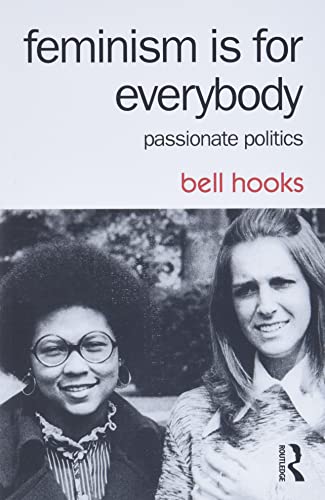
Feminism Is for Everybody by visionary cultural critic and theorist bell hooks offers an accessible, fiercely clear, and welcoming introduction to feminist political theory. hooks defines feminism with disarming simplicity: “Feminism is a movement to end sexism, sexist exploitation, and oppression.” In doing so, she dispels widespread myths that feminism is an anti-male ideology.
hooks emphasizes that patriarchy harms men as well as women by demanding emotional suppression, dominance, and aggression. Spanning chapters on reproductive freedom, class struggle, race, violence, and revolutionary love, this volume serves as the quintessential, accessible primer for building intersectional feminist consciousness.
- Defines feminism simply and powerfully as a systemic struggle against all forms of sexist oppression and exploitation.
- Demonstrates how patriarchal conditioning emotionally damages boys and men by enforcing rigid masculine stereotypes.
- Connects gender justice directly with anti-racist advocacy, reproductive rights, and socioeconomic equality.
4. Invisible Women: Data Bias in a World Designed for Men — Caroline Criado Perez
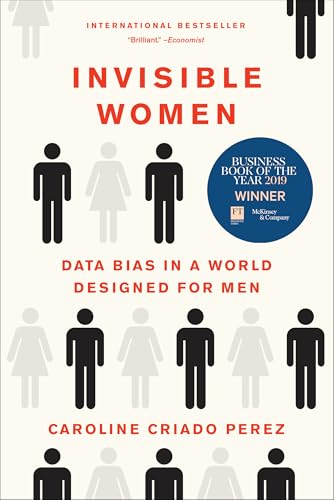
Invisible Women by investigative journalist and activist Caroline Criado Perez exposes the pervasive “gender data gap” that treats men as the default human being and women as an invisible afterthought. Drawing on mountains of empirical case studies, Criado Perez demonstrates how treating male physiology and lifestyles as universal leads to deadly consequences across medicine, urban planning, workplace policy, and technology.
From crash-test dummies modeled exclusively on male bodies to medical trials that omit female cell lines, this shocking, data-dense masterwork reveals that what is often dismissed as minor inconvenience is actually systematic institutional bias. It is essential reading for anyone seeking an airtight, evidence-based critique of institutional gender data bias.
- Documents extensive empirical evidence of the gender data gap across healthcare, vehicle safety, and urban design systems.
- Reveals how medical research modeled on male biology leads to misdiagnosis and fatal pharmacological outcomes for women.
- Demonstrates that uncompensated domestic care labor constitutes a massive, uncounted driver of the global economic system.
5. Sister Outsider: Essays and Speeches — Audre Lorde

Sister Outsider collects fifteen groundbreaking essays and speeches by poet, activist, and Black lesbian feminist theorist Audre Lorde. Lorde examines the intersections of racism, sexism, homophobia, ageism, and economic exploitation with searing poetic clarity, insisting that genuine unity among women cannot be forged by ignoring differences, but by embracing them as catalysts for change.
The collection features iconic essays including “The Master’s Tools Will Never Dismantle the Master’s House” and “Uses of the Erotic: The Erotic as Power.” Lorde provides a transformative framework for converting anger into creative action and confronting internal biases, making this volume a cornerstone of radical Black feminist literature.
- Challenges mainstream feminist movements to confront internalized racism, class privilege, and systemic homophobia.
- Articulates the famous thesis that oppressive institutional structures cannot be reformed using patriarchal power mechanisms.
- Reclaims the erotic as a profound, creative source of spiritual power and authentic self-determination.
6. The Feminine Mystique — Betty Friedan

The Feminine Mystique by activist and writer Betty Friedan ignited the second-wave feminist movement upon its publication in 1963. Friedan gave voice to “the problem that has no name”—the pervasive, suffocating dissatisfaction, anxiety, and depression experienced by millions of mid-twentieth-century American suburban housewives who were told that domestic perfection and motherhood would completely satisfy their human potential.
Friedan deconstructs how women’s magazines, advertising agencies, psychoanalytic dogmas, and educational institutions systematically pressured women into abandoning intellectual and professional ambitions. While historically critiqued for focusing primarily on white, middle-class domesticity, this volume remains a crucial historical milestone in second-wave feminist social critique.
- Identifies and articulates “the problem that has no name” affecting millions of isolated suburban domestic women.
- Exposes how commercial advertising and media institutions manufactured a myth of mandatory female domestic fulfillment.
- Catalyzed massive political organizing that led to the legal creation of modern workplace gender equality protections.
7. Bad Feminist: Essays — Roxane Gay

Bad Feminist by essayist and cultural critic Roxane Gay offers a funny, vulnerable, and deeply human examination of what it means to embrace feminism while living in a deeply imperfect world. Gay candidly explores the contradictions between her commitment to gender equality and her enjoyment of popular culture that often fails feminist purity tests.
Through essays spanning competitive Scrabble, hip-hop lyrics, reality television, and survival after sexual violence, Gay argues that feminism must allow room for human complexity, fallibility, and contradiction. This refreshing, accessible collection provides an essential antidote to dogmatic perfectionism, empowering readers to claim an authentic nuanced feminist self-identity.
- Rejects unrealistic ideological purity standards in favor of a compassionate, authentic, and accessible feminist identity.
- Critiques modern pop culture, film, and media representation through a sharp intersectional racial lens.
- Blends deeply vulnerable personal memoir with insightful sociological analysis of gender and sexual violence.
8. We Should All Be Feminists — Chimamanda Ngozi Adichie

We Should All Be Feminists by celebrated Nigerian author Chimamanda Ngozi Adichie is a short, eloquent, and immensely persuasive adaptation of her famous 2012 TEDx talk. Adichie draws upon her personal experiences growing up in Nigeria and living in the United States to illustrate how subtle, everyday gender conditioning limits the potential of both girls and boys worldwide.
Adichie provides clear, humorous, and deeply humane examples of institutional sexism, showing how society teaches girls to shrink themselves while teaching boys that vulnerability is weakness. This short, powerful pocket-sized volume serves as the perfect introductory gateway for readers of all backgrounds seeking a universal defense of twenty-first-century gender equity.
- Deconstructs subtle, everyday cross-cultural gender conditioning with warmth, humor, and accessible personal narratives.
- Critiques how societal expectations force girls to compromise their ambitions to accommodate male fragile egos.
- Advocates for a shared global humanism where both men and women achieve unrestricted personal fulfillment.
9. The Beauty Myth: How Images of Beauty Are Used Against Women — Naomi Wolf

The Beauty Myth by author Naomi Wolf delivers a blistering critique of how cultural beauty standards function as an unconscious political weapon designed to halt female socioeconomic progress. Wolf argues that as women successfully dismantled legal and professional barriers during the twentieth century, the cultural imperative to achieve physical perfection intensified dramatically.
Wolf details how the beauty myth damages women psychologically and physically through the proliferation of eating disorders, cosmetic surgery obsession, and chronic financial depletion. By treating physical appearance as an ideological currency that controls women’s time, energy, and self-esteem, this landmark volume exposes the psychological mechanisms of aesthetic social control.
- Exposes how commercial beauty standards operate as an institutional mechanism to derail female socioeconomic advancement.
- Investigates the direct psychological links between cultural body surveillance and escalating eating disorder pathology.
- Challenges women to reclaim physical bodily autonomy from predatory commercial industries and media beauty standards.
The Evolution of Feminist Waves: A Comparative Overview
Feminist history is traditionally organized into four distinct “waves,” each defined by specific political goals, socioeconomic contexts, and theoretical breakthroughs. Understanding this historical progression allows readers to contextualize individual feminist texts within their broader historical and intellectual evolution.
| Feminist Wave | Core Historical Objectives and Primary Themes |
|---|---|
| First Wave (Late 19th – Early 20th Century) | Women’s legal suffrage, property ownership rights, equal marriage laws, and access to basic educational institutions. |
| Second Wave (1960s – 1980s) | Workplace discrimination, reproductive rights, domestic violence protection, sexuality, and challenging suburban domesticity. |
| Third Wave (1990s – 2000s) | Intersectionality, queer theory, challenging rigid gender binaries, media representation, and individual empowerment. |
| Fourth Wave (2010s – Present) | Digital activism (#MeToo), systemic data bias, sexual harassment accountability, trans-inclusive rights, and algorithmic equity. |
While the wave metaphor simplifies complex, overlapping historical movements, it illustrates how feminist priorities have expanded from basic legal enfranchisement toward comprehensive cultural and structural transformation. Reading books across multiple waves—from Virginia Woolf’s early twentieth-century material critique to Caroline Criado Perez’s fourth-wave algorithmic data analysis—provides students and activists with an unmatched depth of systemic political literacy.
The Psychological Toll of Patriarchal Socialization on Mental Health
Patriarchal socialization is not merely an abstract political structure; it directly impacts psychological functioning, neural development, and autonomic nervous system health for individuals of all genders. Clinical research proves that rigid gender role expectations fuel chronic mental health vulnerabilities, relationship ruptures, and internalized emotional distress.
For women, chronic exposure to objectification and systemic invalidation frequently triggers “self-objectification”—the habit of constantly monitoring one’s physical appearance from a third-person perspective. Psychological studies demonstrate that self-objectification drains cognitive processing bandwidth, increases vulnerability to clinical depression, and fuels body dysmorphia. Feminist authors like Naomi Wolf and bell hooks highlight how external systemic oppression becomes internalized as relentless subconscious self-criticism.
For men, patriarchal socialization demands emotional suppression, toxic stoicism, and the aggressive rejection of vulnerability, a dynamic that clinical psychologists term “normative male alexithymia.” Men conditioned under these rigid scripts struggle to identify and express complex emotions, leading to higher rates of substance abuse, cardiovascular disease, and suicide. Dismantling patriarchal conditioning is therefore a vital clinical prerequisite for cultivating genuine cross-gender psychological healing.
- Chronic self-objectification drains working cognitive memory and significantly increases vulnerability to clinical depressive episodes.
- Societal beauty standards fuel severe body dissatisfaction, perfectionism, and pervasive eating disorder pathology.
- Restricting emotional expression in men promotes chronic alexithymia, elevated cardiovascular stress, and relational isolation.
- Feminist psychoeducation supports cognitive unhooking from rigid gender dogmas, fostering authentic psychological resilience and autonomy.
How the Gender Data Gap Affects Modern Healthcare
One of the most urgent and dangerous frontiers of contemporary feminism is the gender data gap within modern clinical medicine and pharmacology. For decades, medical researchers excluded female human subjects and female animal models from clinical trials under the assumption that female hormonal fluctuations introduced too much experimental variance.
Author Caroline Criado Perez documents the catastrophic consequences of this historical omission: women are systematically misdiagnosed when presenting with heart attacks because diagnostic criteria were derived almost exclusively from male symptom profiles. Furthermore, because drug dosages and toxicity thresholds were calibrated on standard seventy-kilogram male bodies, women experience adverse pharmaceutical reactions at nearly double the rate of men. This is not benign oversight; it represents institutionalized medical negligence.
Recognizing and closing the gender data gap requires reforming clinical research protocols, incorporating sex-disaggregated data in medical education, and taking female physical pain seriously. Feminist data analysis directly saves lives by transforming medicine into an inclusive, scientifically accurate discipline.
- Historical clinical drug trials systematically excluded female subjects, leading to dangerous pharmacological dosage discrepancies.
- Cardiac diagnostic protocols modeled on male symptom profiles result in fatal misdiagnosis rates for female patients.
- Female chronic pain complaints are systematically dismissed as psychological or psychosomatic in emergency clinical settings.
- Mandating sex-disaggregated biological data in academic research establishes genuine evidence-based medical equity.
Feminism and Emotional Labor: The Invisible Workload
Beyond formal workplace inequality, feminist scholars have illuminated the concept of “emotional labor” and the invisible cognitive workload that disproportionately burdens women within households and organizations. Emotional labor encompasses the continuous, uncompensated psychological effort required to anticipate needs, manage family schedules, soothe relational friction, and maintain social and domestic harmony.
Sociologist Arlie Russell Hochschild originally defined emotional labor in workplace contexts, but contemporary feminist writers have expanded this analysis to domestic partnerships. When one partner carries the entire “mental load”—remembering birthdays, coordinating pediatric appointments, planning meals, and monitoring household supplies—they experience chronic cognitive overload and emotional exhaustion, even if physical chores are divided equally. This invisible friction is a major unaddressed driver of marital resentment and burnout.
Achieving true domestic and relational equity requires making this cognitive workload visible, establishing explicit shared management systems, and valuing emotional attunement as a vital, shared relational responsibility rather than an innate female obligation.
- The invisible mental load of domestic planning generates chronic cognitive overload and relational marital exhaustion.
- Societal conditioning defaults emotional caretaking and conflict de-escalation to women in both home and workplace settings.
- Establishing equitable partnerships requires auditing invisible cognitive management and creating shared accountability systems.
- Valuing emotional attunement as a universal human competency fosters healthier, more resilient interpersonal relationship dynamics.
Practical Steps to Apply Feminist Critical Thinking Daily
Reading foundational feminist literature creates meaningful social change only when theoretical concepts are translated into daily critical thinking and interpersonal behavior. Moving from passive reading to active advocacy requires deliberate habits that challenge everyday assumptions and foster gender justice in practice.
Clinical psychologist Carl R. Rogers consistently emphasized that authentic personal growth requires integrating intellectual insight into daily experiential living practices. When reading about structural bias or emotional labor, individuals should audit their own workplace communication, family dynamics, and media consumption to spot subtle patriarchal scripts in real time. This disciplined integration turns feminist theory into an active personal ethics curriculum.
- Conduct a daily language audit to identify and eliminate gender-biased phrasing in professional and personal communication.
- Actively amplify female and marginalized voices in workplace meetings by supporting their ideas and preventing conversational interruptions.
- Distribute the invisible household mental load through explicit, transparent weekly planning sessions to ensure domestic partnership equity.
- Diversify your media and literary consumption by intentionally reading authors from diverse racial, cultural, and socioeconomic backgrounds.
When Gender-Based Trauma Requires Professional Clinical Support
While feminist literature offers transformative psychoeducation and empowering socio-political frameworks, books are educational resources and can never substitute for professional mental health treatment. Understanding when the emotional weight of gender-based oppression or personal trauma requires clinical intervention is a critical mental health literacy skill.
Individuals who have experienced sexual assault, domestic violence, workplace harassment, or chronic emotional abuse often carry deep somatic and psychological trauma that requires specialized clinical treatment. Modalities such as Trauma-Informed Cognitive Behavioral Therapy (TF-CBT), Eye Movement Desensitization and Reprocessing (EMDR), and Dialectical Behavior Therapy (DBT) provide safe, structured environments to process traumatic memories and rebuild autonomic regulation under the care of a licensed mental health professional.
Most urgently, if you or someone you know is currently in immediate danger from domestic violence or is experiencing acute suicidal distress, do not rely on literature. In the United States, immediately contact the National Domestic Violence Hotline by calling 1-800-799-SAFE (7233) or texting “START” to 88788. If experiencing acute emotional crisis or suicidal ideation, call or text 988 to connect with the Suicide & Crisis Lifeline, available twenty-four hours a day, seven days a week, free and confidential. Seeking specialized clinical support during moments of crisis is not a sign of vulnerability; it is the ultimate act of courageous personal self-advocacy.
- Survivors of gender-based violence and chronic domestic abuse require specialized care from a licensed trauma therapist.
- Evidence-based modalities like EMDR and TF-CBT safely resolve somatic trauma memories and restore nervous system regulation.
- Immediate domestic danger or acute suicidal crisis demands immediate emergency contact with dedicated crisis support hotlines.
FAQs about Books on Feminism and Gender Studies
What is the single best book on feminism for a complete beginner?
For a complete beginner seeking an engaging, accessible, and welcoming introduction, Feminism Is for Everybody by bell hooks or We Should All Be Feminists by Chimamanda Ngozi Adichie provides the ideal starting point. bell hooks defines feminism with exceptional clarity as a movement to end sexist oppression, dispelling common misconceptions and emphasizing that gender justice benefits people of all genders. Adichie’s short, pocket-sized volume uses humorous and relatable personal anecdotes from Nigeria and the United States to illustrate how everyday gender conditioning limits human potential. Both titles establish foundational feminist literacy without dense academic jargon.
What is the difference between second-wave and third-wave feminism?
Second-wave feminism, which emerged in the 1960s and 1970s and is exemplified by Betty Friedan’s The Feminine Mystique, focused heavily on legal equality, workplace discrimination, reproductive rights, and breaking free from domestic confinement. However, it was historically critiqued for centering primarily on white, middle-class women. Third-wave feminism, emerging in the 1990s, broadened this focus by prioritizing intersectionality, queer theory, racial diversity, and challenging rigid binary definitions of gender. Third-wave theorists like Audre Lorde and bell hooks emphasized that gender liberation cannot be achieved without addressing racism, classism, and homophobia simultaneously.
How does reading feminist books benefit men and boys?
Reading feminist literature benefits men and boys by exposing how patriarchal culture enforces rigid, emotionally restrictive masculine stereotypes that harm their mental and physical health. Authors like bell hooks illustrate how boys are socialized to suppress vulnerability, sadness, and emotional attunement, which fuels elevated rates of loneliness, depression, and cardiovascular stress. Feminist books provide men with the vocabulary to build authentic emotional intelligence, construct equitable domestic partnerships, and free themselves from the toxic pressure to constantly perform dominance and emotional invulnerability.
Is The Second Sex by Simone de Beauvoir too dense for casual readers?
The Second Sex is an extensive, deeply philosophical work grounded in twentieth-century French existentialism and phenomenology, meaning it is more intellectually demanding than contemporary essay collections. However, its brilliant prose and groundbreaking insights make it exceptionally rewarding. Readers intimidated by its full length can begin with key introductory chapters, such as Beauvoir’s famous exploration of biological and cultural myths, or explore curated anthologies before tackling the entire two-volume treatise. It remains the essential intellectual foundation for nearly all modern feminist theory.
Why is Invisible Women considered an essential contemporary feminist book?
Invisible Women by Caroline Criado Perez is essential because it moves beyond theoretical arguments to provide incontrovertible, empirical data proving that modern society is systematically designed around the male body as the default human standard. By examining real-world case studies across medicine, smartphone design, public transit routing, disaster response, and vehicle crash testing, Criado Perez demonstrates how the gender data gap directly harms women’s health, safety, and economic security daily. It provides readers with an airtight, data-driven foundation for structural advocacy.
How can I tell if a book represents intersectional feminist thought?
To determine if a book represents intersectional feminist thought, examine whether the author analyzes gender alongside race, socioeconomic class, sexual orientation, disability, and geopolitical context. Intersectional feminist texts—such as works by Audre Lorde, bell hooks, and Kimberlé Crenshaw—explicitly reject one-size-fits-all female narratives, highlighting how women of color, working-class women, and LGBTQ+ individuals experience distinct, compounding forms of structural oppression. If a text treats all women as having identical experiences and ignores racial or economic hierarchies, it reflects a traditional single-axis framework rather than intersectional analysis.
Bibliography
- Adichie, C. N. (2014). We Should All Be Feminists. Anchor Books.
- Beauvoir, S. de. (2011). The Second Sex (C. Borde & S. Malovany-Chevallier, Trans.). Vintage Books.
- Criado Perez, C. (2019). Invisible Women: Data Bias in a World Designed for Men. Abrams Press.
- Friedan, B. (2013). The Feminine Mystique (50th anniversary ed.). W. W. Norton & Company.
- Gay, R. (2014). Bad Feminist: Essays. Harper Perennial.
- hooks, b. (2000). Feminism Is for Everybody: Passionate Politics. South End Press.
- Lorde, A. (2007). Sister Outsider: Essays and Speeches. Crossing Press.
- Rogers, C. R. (1961). On Becoming a Person: A Therapist’s View of Psychotherapy. Houghton Mifflin.
- Wolf, N. (2002). The Beauty Myth: How Images of Beauty Are Used Against Women. Harper Perennial.
- Woolf, V. (1989). A Room of One’s Own. Mariner Books.
Use this citation format to reference the article clearly and help readers find the original source.
PsychologyFor. (2026). The 9 Best Books on Feminism. PsychologyFor. https://psychologyfor.com/the-9-best-books-on-feminism/