

See more of our articles in your search results.
Much is said about the assimilation that the Roman Empire made of the culture and knowledge of the Greeks, especially when it came to mythology.
Indeed, many of the Roman gods and goddesses coexist in parallel with their counterparts from Ancient Greece. And as the Romans imposed themselves on the old continent (Europe), the presence of their most famous deities increased.
Whenever we talk about the Romans, epic gladiator movies, battles against other empires or the wisdom of Julius Caesar come to mind. However, the need to believe in and embrace mythological beings is intrinsic to the development of history. In this article We will focus on the Roman goddesses and their characteristics
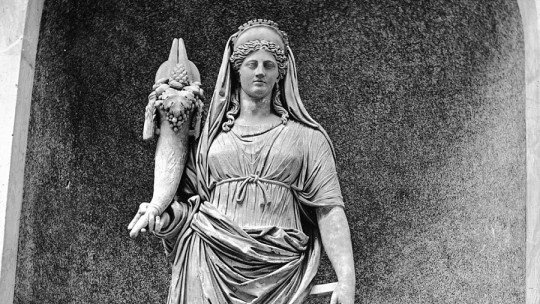
The 10 most important Roman goddesses
In this article we will focus on the most influential Roman goddesses in our culture, who have served, among many other things, to give rise to many female names.
1. Diana
Diana, patron saint of virginity and hunting, is the daughter of Jupiter and Latona. The etymology of her name originates from her first name: Diviana, which means “radiance.” What this deity represents She is the protector of children and chastity
How many of these have you been "meaning to read" for months?
- 1
 Irvin D. YalomLove's ExecutionerRadically honest case studies on existential dread and changeListen Free On Audible
- 2
 Irvin D. YalomThe Gift of Therapy85 practical, warm clinical insights from a master therapistListen Free On Audible
- 3
 Oliver SacksThe Man Who Mistook His Wife for a HatUnforgettable clinical case studies on perception and identityListen Free On Audible
As a tribute, women cut their hair before marrying or having children. Nowadays it is very common to hear this name in most Western countries.
2. Minerva
Daughter of Jupiter too, she was born without a mother. It is said that this was her favorite daughter for everything what she represented: magic, crafts, wisdom and medicine, among others She is always represented with extreme innocence and wisdom, and purity, with a touching physique. Interestingly, she is also considered the goddess of war.
3. Vesta
Another of the most interesting Roman goddesses, and one that is talked about rather little, is Vesta, who represents fire and passion Goddess of the home as something sacred, In its Roman temple there was the famous “flame that never goes out” The most important documents and archives of the Empire were housed in that building. Its origin in ancient mythology is not yet known, nor who were its parents.
4. Congratulate
Felicitas corresponds to the meaning of happiness today, inherited from the literature and fantasy of the moment. Its meaning is good luck, fortune, blessed. Definitely, She was considered the Roman goddess of success and prosperity and the merchants of the Empire entrusted themselves to it in order to prosper.
5. Fortune
This is one of the most famous Roman goddesses in Western culture. Although it may seem somewhat contradictory, Fortuna initially represented the whims of life, and ended up becoming the personification of good luck. It held great significance during the Roman Empire as a Temple and a public sanctuary were built for it.
6. Victory
Undoubtedly He was the most relevant deity in the armies of Great Rome As its name indicates, it represents the successes of soldiers against their enemies. The etymology comes from the Latin “Vincere”, which means to conquer. Every time a general returned with a victory under the shield, an offering was made to Victoria with great parades and military crowds.
7. Venus
Venus She is the goddess of sex, fertility and love It is the equivalent of Aphrodite from Greek mythology, but with many more qualities than her. As a curious fact, Venus also represented prostitution.
8. Aurora
Sister of Helios, god of the Sun and Selene, goddess of the moon, Aurora represents the glow of dew According to Roman mythology, Aurora had the function of waking up every day and from the sea, soaring through the skies and pouring a good amount of dew onto the Earth, jug through. In Spain and Latin America it is increasingly common to use this name for daughters.
9. Cybele
Who doesn’t know one of the most famous squares in Spain? In the heart of Madrid, there is the fountain that pays tribute to the Roman goddess Cybele, represented with her chariot drawn by two lions The city’s two soccer teams bathe in the fountain that surrounds the sculpture to celebrate their sporting triumphs.
The symbolism of Cybele is that of a healer and protector at the same time, being another reference for the battles of Hannibal the Carthaginian.
10. Juno
She is the mother of all goddesses, the maximum representative of the female figure in Roman mythology It symbolizes marriage and childbirth, that is, the family. From the sculptures that remain in museums around the world, Juno seems to have embodied a brave and warrior goddess, since her image is that of a woman with a spear and a cape made of the skin of an unknown animal, just as Roman soldiers dressed.
Use this citation format to reference the article clearly and help readers find the original source.
PsychologyFor. (2024). The 10 Most Important Roman Goddesses. PsychologyFor. https://psychologyfor.com/the-10-most-important-roman-goddesses/