


You finally get both children asleep, stand in the kitchen surrounded by unwashed plates, and realize you have spent the entire day solving everyone else’s problems while barely noticing your own breathing. That quiet depletion is real. Parenting is often portrayed as an instinctive state of endless patience, but real motherhood and fatherhood involve contradictory emotions, impossible choices, and a constant fear that one ordinary mistake will permanently damage a child’s future. It is not a failure of love. Rather, it is the ordinary psychological weight of modern parental responsibility.
The right parenting books do not promise perfect children or flawless adults; they offer something far more useful: language for difficult moments, frameworks for understanding development, and permission to repair after inevitable mistakes. Fathers and mothers frequently arrive at parenting literature carrying guilt, exhaustion, or competing advice from relatives, social media, and professionals who seem to disagree about nearly everything. Evidence-informed books can cut through that noise, while compassionate memoirs remind parents that feeling overwhelmed does not make them inadequate. Choosing a thoughtful reading list transforms isolated worry into a more confident, developmentally informed parenting practice.
Which books actually help parents respond with greater connection rather than simply demanding more parental perfection?
This comprehensive guide details the 6 best books for fathers and mothers, reviewing practical communication guides, attachment-informed parenting frameworks, brain-development research, and compassionate approaches to raising children without losing yourself.
6 Best Books for Fathers and Mothers
Verified Top Picks- 1
 Daniel J. Siegel & Tina Payne Bryson The Whole-Brain Child 12 revolutionary strategies translating developmental neuroscience into emotional regulation and connectionCHECK TODAY'S PRICE
 - 2
 Adele Faber & Elaine MazlishHow to Talk So Kids Will Listen & Listen So Kids Will TalkPractical scripts for acknowledging feelings, reducing power struggles, and setting respectful boundariesCHECK TODAY'S PRICE
 - 3Daniel J. Siegel & Mary HartzellParenting from the Inside OutAttachment research and reflective self-understanding for interrupting inherited emotional patternsCHECK TODAY'S PRICE
- 4Philippa PerryThe Book You Wish Your Parents Had ReadRelationship-centered parenting advice on listening, emotional triggers, and repairing rupturesCHECK TODAY'S PRICE
- 5Daniel J. Siegel & Tina Payne BrysonNo-Drama DisciplineA connection-based discipline model that maintains limits while teaching emotional regulation and problem-solvingCHECK TODAY'S PRICE
- 6Daniel J. Siegel & Tina Payne BrysonThe Whole-Brain Child WorkbookGuided exercises translating developmental neuroscience into repeatable family practices and calmer responsesCHECK TODAY'S PRICE
What Makes a Parenting Book Genuinely Useful?
A genuinely useful parenting book combines developmental knowledge with concrete language that parents can use during real moments of conflict, fatigue, and uncertainty. It should help adults understand what a child is communicating while also respecting the parent’s own emotional limits and practical circumstances.
Child psychiatrist Daniel J. Siegel emphasizes that children’s brains develop through relationships, particularly repeated experiences of attunement, repair, and emotional safety. That means parenting advice should focus on the quality of connection rather than isolated performance metrics, because a single imperfect response rarely determines a child’s entire developmental trajectory. The most useful manuals therefore explain both child development and parental self-regulation.
Psychotherapist Philippa Perry adds another essential layer: parents bring their own childhood experiences into every interaction, often reacting to old emotional patterns before consciously choosing a response. Reading a parenting book becomes genuinely transformative when it helps adults notice those inherited scripts without turning self-reflection into another source of shame.
- Useful parenting books combine developmental knowledge with practical everyday language.
- Strong guidance supports child development while respecting parental emotional limits.
- Attachment-informed approaches prioritize repeated connection and repair over isolated parenting perfection.
- Self-reflection works best when it reveals inherited patterns without creating additional parental shame.
The 6 Best Books for Fathers and Mothers
The following selection represents six of the most practical, psychologically informed, and widely trusted books for fathers and mothers, spanning child development, communication, attachment, discipline, and intergenerational emotional awareness.
1. The Whole-Brain Child: 12 Revolutionary Strategies to Nurture Your Child’s Developing Mind — Daniel J. Siegel and Tina Payne Bryson
The Whole-Brain Child by psychiatrist Daniel J. Siegel and psychotherapist Tina Payne Bryson translates developmental neuroscience into twelve practical strategies parents can use during everyday emotional storms. The authors explain how children’s developing brains integrate gradually, which helps adults understand why a child may know a rule intellectually yet remain unable to follow it when overwhelmed.
Strategies such as “connect and redirect” and “name it to tame it” give parents concrete ways to respond to tantrums, fear, and frustration without dismissing feelings or surrendering boundaries. It is an accessible introduction to brain-based parenting.
- Explains how children’s developing brains affect emotional regulation and behavior.
- Provides twelve practical strategies for responding to tantrums and overwhelming feelings.
- Balances emotional connection with clear, developmentally appropriate parental boundaries.
2. How to Talk So Kids Will Listen & Listen So Kids Will Talk — Adele Faber and Elaine Mazlish

How to Talk So Kids Will Listen & Listen So Kids Will Talk by Adele Faber and Elaine Mazlish remains one of the most practical communication manuals available to parents. Drawing from workshops with psychologist Haim Ginott, the authors demonstrate how acknowledging feelings, describing problems without accusation, and offering limited choices can reduce unnecessary power struggles.
The book is filled with sample dialogues that sound usable rather than idealized, making it particularly valuable for parents who freeze during conflict and cannot remember abstract theory. It remains a classic guide to emotionally intelligent parent-child communication.
- Models language for acknowledging children’s feelings without rewarding harmful behavior.
- Demonstrates how limited choices can reduce recurring parent-child power struggles.
- Provides realistic sample dialogues for emotionally charged everyday family conflicts.
3. Parenting from the Inside Out: How a Deeper Self-Understanding Can Help You Raise Children Who Thrive — Daniel J. Siegel and Mary Hartzell
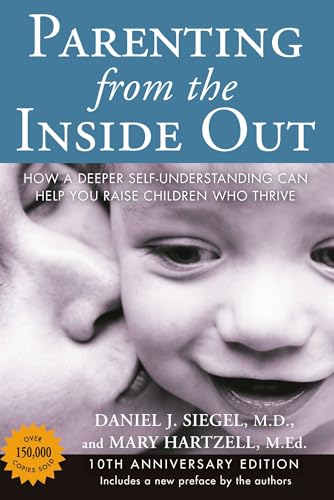
Parenting from the Inside Out by Daniel J. Siegel and educator Mary Hartzell explores how a parent’s unresolved childhood experiences can shape reactions to a child’s needs. The authors connect attachment research, interpersonal neurobiology, and reflective self-understanding to show why adults sometimes respond intensely to behaviors that seem minor on the surface.
This is not a book about blaming parents for their own histories. Instead, it offers a compassionate route toward breaking automatic intergenerational patterns through reflection, repair, and more conscious parenting choices.
- Connects attachment research with the way childhood experiences shape adult parenting reactions.
- Explains how reflective self-understanding can interrupt intergenerational emotional patterns.
- Offers a compassionate framework for repair without assigning paralyzing parental blame.
4. The Book You Wish Your Parents Had Read — Philippa Perry
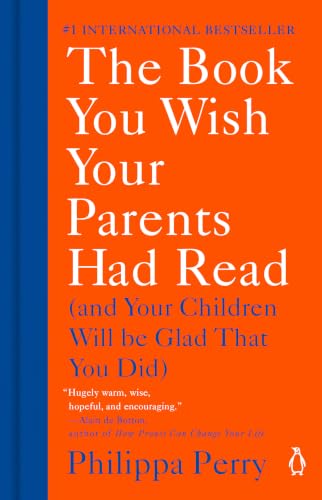
The Book You Wish Your Parents Had Read by psychotherapist Philippa Perry focuses on the emotional relationship between parent and child rather than offering a rigid list of behavioral rules. Perry explores how parents can listen more accurately, repair ruptures, and recognize the difference between a child’s actual need and the adult’s triggered emotional response.
Her tone is warm but not indulgent; she acknowledges that children deserve respect while parents also deserve honesty about exhaustion, resentment, and ambivalence. It is a thoughtful guide to relationship-centered parenting.
- Explores how parental listening can strengthen emotional connection.
- Distinguishes a child’s genuine need from an adult’s triggered emotional response.
- Normalizes repair after conflict rather than demanding perfect family relationships.
5. No-Drama Discipline: The Whole-Brain Way to Calm the Chaos and Nurture Your Child’s Developing Mind — Daniel J. Siegel and Tina Payne Bryson
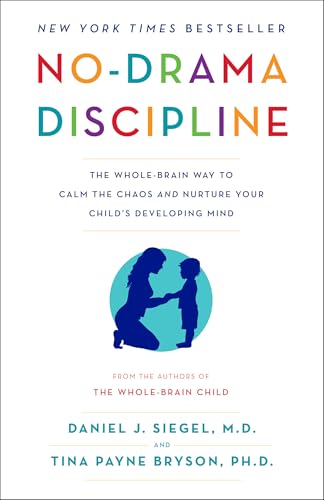
No-Drama Discipline by Daniel J. Siegel and Tina Payne Bryson reframes discipline as teaching rather than punishment. The authors explain how parents can maintain limits while staying connected to the child whose behavior has crossed a boundary, using moments of misbehavior as opportunities to develop emotional regulation and problem-solving capacity.
The approach does not mean permissiveness. It means separating the child’s identity from the behavior, then responding in ways that preserve dignity while making expectations clear. It is a practical guide to connection-based discipline.
- Reframes discipline as an opportunity for teaching and emotional development.
- Shows how parents can maintain limits without severing relational connection.
- Separates a child’s identity from behavior to protect long-term self-worth.
6. The Whole-Brain Child Workbook: Practical Exercises for Parents — Daniel J. Siegel and Tina Payne Bryson
The Whole-Brain Child Workbook extends Siegel and Bryson’s developmental framework into guided exercises, reflection prompts, and practical activities parents can use with children. Rather than adding more theory to an already crowded parenting shelf, the workbook focuses on translating ideas about brain integration into repeatable family practices.
Parents can use its prompts to identify recurring triggers, rehearse language for difficult situations, and help children connect emotions with bodily sensations. It works best alongside the original book as a bridge between parenting insight and daily implementation.
- Translates developmental neuroscience into guided family exercises.
- Helps parents identify recurring triggers and rehearse calmer communication responses.
- Bridges parenting insight with repeatable daily implementation practices.
How These Six Books Complement Different Parenting Needs
These six books address different layers of family life, from child brain development and communication to parental history and discipline. Mapping those differences helps fathers and mothers choose the title that fits their most immediate parenting challenge.
| Parenting Need | Recommended Book and Core Focus |
|---|---|
| Understanding Children’s Behavior | The Whole-Brain Child and its developmental neuroscience framework |
| Communication During Conflict | How to Talk So Kids Will Listen’s practical language strategies |
| Breaking Inherited Patterns | Parenting from the Inside Out’s attachment and self-reflection work |
| Repairing Relationship Ruptures | The Book You Wish Your Parents Had Read’s relational approach |
| Setting Limits Without Shame | No-Drama Discipline’s connection-based discipline model |
| Turning Ideas Into Practice | The Whole-Brain Child Workbook’s guided exercises and prompts |
As the table illustrates, a parent dealing with daily tantrums may benefit from The Whole-Brain Child, while someone repeating painful patterns from their own upbringing may need Parenting from the Inside Out first. The best starting point is usually the book that addresses your most urgent current family difficulty.
Why Repair Matters More Than Parenting Perfection
One of the most reassuring ideas across contemporary parenting psychology is that healthy families are not conflict-free families; they are families where adults return after conflict and rebuild emotional connection.
Daniel Siegel’s work on attachment and brain development emphasizes that repeated experiences of repair teach children relationships can survive anger, disappointment, and misunderstanding. A parent who apologizes specifically, listens without defensiveness, and changes a behavior offers a more powerful developmental lesson than a parent who maintains a flawless performance but never acknowledges mistakes. Repair is not a consolation prize. It is a core parenting skill.
Philippa Perry makes a related point from a psychotherapeutic perspective: parents can acknowledge their own limits without placing adult emotional burdens on children. Saying “I was overwhelmed and I spoke too sharply; that was not your fault” differs completely from asking a child to comfort the parent. The first models accountability. The second reverses roles and creates emotional confusion.
- Healthy families are defined by repeated repair rather than the absence of all family conflict.
- Specific apologies teach children that relationships can survive anger and misunderstanding.
- Parents can acknowledge limits without placing adult burdens on children’s emotional shoulders.
- Repair models accountability while protecting a child’s developing relational security.
Practical Communication Strategies Parents Can Use Today
Parenting communication improves when adults replace vague commands and emotional lectures with short, specific language that recognizes feelings while naming clear behavioral boundaries.
Adele Faber and Elaine Mazlish recommend describing what you see instead of immediately judging it, acknowledging a child’s feeling before offering a solution, and giving information that helps the child solve a problem independently. These strategies work because they reduce defensiveness and preserve a child’s sense of competence during moments when frustration already feels enormous. The goal is not to sound endlessly calm. It is to make connection possible under pressure.
- Describe the situation without blame, using observable language.
- Acknowledge the child’s feeling before offering advice or correction.
- Give limited choices that preserve both autonomy and parental boundaries.
- Return to the problem later when everyone has regained emotional regulation.
Discipline, Boundaries, and the Difference Between Firmness and Harshness
Effective discipline combines warmth with predictable limits, allowing parents to be firm without using shame, humiliation, or fear as the primary tools of behavioral guidance.
No-Drama Discipline emphasizes that a boundary should communicate what must happen next rather than simply expressing the adult’s anger about what already happened. A child who hits may need physical safety, a clear limit, help naming the emotion, and a later conversation about alternatives; punishment alone rarely teaches the missing skill. This does not mean every consequence disappears. It means consequences are connected to learning rather than designed merely to produce obedience through distress.
- Firm discipline communicates predictable limits without attacking a child’s identity or worth.
- Behavioral boundaries should teach missing skills rather than produce obedience through fear or humiliation.
- Connected consequences link actions to learning through developmentally appropriate repair.
- Parents can remain warm and authoritative while still protecting physical and emotional safety.
How Parents Can Adapt Advice to Different Families and Ages
Parenting books offer frameworks, not universal scripts. Children differ in temperament, culture, disability, sensory profile, and developmental pace, so useful advice requires thoughtful adaptation to individual family circumstances.
Strategies that work for a verbal preschooler may not suit a minimally speaking child, a teenager managing anxiety, or a child whose neurodevelopmental differences affect transitions and sensory regulation. Fathers and mothers also operate within different economic, cultural, and caregiving realities, meaning advice that assumes flexible schedules, private space, or abundant support may feel impossible rather than helpful. The most responsible reading approach extracts the underlying principle and adapts its expression without abandoning respect for the child’s needs.
- Adapt communication strategies to a child’s developmental stage and communication profile.
- Consider sensory, cultural, economic, and disability-related factors before applying parenting advice literally.
- Extract principles from books while adapting delivery to real family circumstances.
When Parenting Stress Becomes a Mental Health Concern
Parenting stress is common, but persistent distress that disrupts sleep, functioning, relationships, or safety deserves more than another book or a promise to try harder. Recognizing this boundary protects both parent and child through appropriate mental health support.
If a parent experiences persistent hopelessness, severe anxiety, emotional numbness, frightening intrusive thoughts, or an inability to complete basic daily responsibilities for more than two consecutive weeks, a licensed psychologist, psychiatrist, or counselor can provide individualized assessment and support. Postpartum depression, postpartum anxiety, trauma symptoms, and parental burnout are real clinical concerns that may require treatment beyond ordinary self-help reading. Seeking assistance is not evidence of inadequate love; it is an act of responsible family care.
Most critically, if you or someone you know is experiencing thoughts of self-harm, thoughts of harming a child, or a crisis where immediate safety cannot be guaranteed, do not rely on parenting books alone. In the United States and Canada, immediately call or text 988, or contact local emergency services if danger is imminent. Professional crisis support protects families during moments when private coping is not enough.
- Persistent parental distress warrants evaluation by a licensed mental health professional.
- Postpartum depression, anxiety, trauma symptoms, and burnout may require individualized clinical treatment.
- Self-harm or child-safety concerns demand immediate contact with crisis support services.
FAQs about Books for Fathers and Mothers
What is the best parenting book for a first-time mother or father?
The Whole-Brain Child by Daniel Siegel and Tina Payne Bryson is an excellent starting point for first-time parents because it explains children’s emotional development in accessible language and offers practical strategies for common challenges such as tantrums, fear, and frustration. Its core ideas help new parents understand why young children cannot always control behavior, even when they know household rules. The book also reassures parents that connection and repair matter more than maintaining perfect calm during every difficult moment.
Which book is best for improving communication with children?
How to Talk So Kids Will Listen & Listen So Kids Will Talk by Adele Faber and Elaine Mazlish is the strongest choice for parents seeking immediately usable communication tools. It includes sample dialogues for acknowledging feelings, offering choices, describing problems without blame, and setting limits respectfully. The examples feel realistic rather than polished, which helps parents apply them during rushed mornings, sibling arguments, bedtime resistance, and other ordinary conflicts where remembering abstract psychological theory can be difficult.
How can parents avoid repeating harmful patterns from their own childhood?
Parenting from the Inside Out by Daniel Siegel and Mary Hartzell directly addresses this question by helping parents examine how unresolved childhood experiences shape automatic reactions to their own children. The book does not blame adults for what happened to them, nor does it suggest that reflection prevents every mistake. Instead, it explains how self-understanding creates more choice between a child’s behavior and the parent’s response, making it easier to interrupt intergenerational patterns and repair relationships after conflict.
Is No-Drama Discipline permissive parenting?
No-Drama Discipline is not permissive parenting because it supports clear, consistent limits while rejecting shame and humiliation as primary discipline tools. Daniel Siegel and Tina Payne Bryson distinguish between connecting with a child’s feelings and allowing unsafe behavior to continue. A parent can acknowledge anger, stop hitting, and teach a better response within the same interaction. The approach treats discipline as an opportunity to build emotional regulation and problem-solving skills rather than merely forcing immediate obedience.
Can parenting books replace therapy or professional parenting support?
No, parenting books provide general education and practical ideas but cannot replace individualized therapy, psychiatric care, or professional family support when significant distress exists. A book cannot assess postpartum depression, trauma, severe anxiety, neurodevelopmental differences, or safety concerns within a particular family. Parents may use books alongside therapy, parenting groups, pediatric guidance, or family counseling, but persistent symptoms that interfere with functioning deserve direct professional attention rather than continued self-help reading alone.
How should fathers and mothers divide parenting responsibilities fairly?
None of these books offers a universal formula for dividing household labor, but their shared emphasis on communication, self-awareness, and relationship repair provides a useful foundation. Parents can discuss invisible tasks such as scheduling appointments, anticipating school needs, and managing emotional labor rather than counting only visible chores. Regular check-ins work better than waiting until resentment peaks. Fairness may mean equal time, equivalent rest, or flexible responsibilities based on work and health demands, provided both adults’ contributions remain visible and valued.
Bibliography
- Faber, A., & Mazlish, E. (2012). How to Talk So Kids Will Listen & Listen So Kids Will Talk. Scribner.
- Perry, P. (2020). The Book You Wish Your Parents Had Read. Penguin Life.
- Siegel, D. J., & Bryson, T. P. (2011). The Whole-Brain Child: 12 Revolutionary Strategies to Nurture Your Child’s Developing Mind. Bantam.
- Siegel, D. J., & Bryson, T. P. (2014). No-Drama Discipline: The Whole-Brain Way to Calm the Chaos and Nurture Your Child’s Developing Mind. Bantam.
- Siegel, D. J., & Hartzell, M. (2013). Parenting from the Inside Out: How a Deeper Self-Understanding Can Help You Raise Children Who Thrive. TarcherPerigee.
- World Health Organization. (2022). World Mental Health Report: Transforming Mental Health for All. WHO Press.
Use this citation format to reference the article clearly and help readers find the original source.
PsychologyFor. (2026). The 6 Best Books for Fathers and Mothers. PsychologyFor. https://psychologyfor.com/the-6-best-books-for-fathers-and-mothers/