

Is there no way for your child to sleep alone in their room? Discover the possible reasons, as well as effective solutions so that your child feels safe sleeping alone.
See more of our articles in your search results.
Sleep is one of the most important activities in a child’s life since it acquires a relevant importance in their development and is one of the conditions that allow good interaction with the environment. In fact, during sleep the body carries out multiple activities that have great significance both psychologically and physically. Therefore, acquiring a good sleep habit is not only essential but also influences the well-being of the couple and the family. In this sense, one of the most common concerns of families is that their child does not want sleep alone in your bed thus generating great discomfort.
To achieve a good sleep habit in childhood, it is essential that children learn to sleep alone Otherwise, it will end up harming the child’s development, as well as family dynamics. The reasons why a child does not want to sleep alone can be diverse. Keep reading to learn about some of them and recommendations to know how to intervene in these cases.
Possible reasons why your child does not want to sleep alone:
that a child don’t want to sleep in your room It does not have to indicate a problem, in most cases the cause is part of the normal development process. However, there are other reasons, such as the following:
- Previous illness: Sometimes it is common for the child not to want to sleep alone after an illness such as, for example, acute gastroenteritis where the child has slept with the parents during that period of time.
- Separation anxiety: Separation anxiety disorder is characterized by excessive anxiety about separation from the people to whom the child is attached. In this case, the problems would not only occur at bedtime, but would also interfere with other activities such as going to school, going to camps, etc.
- Phobia of the dark: According to the DSM-5 (Diagnostic and Statistical Manual of Mental Disorders), 5% of children under 13 years of age have some type of specific phobia and specifically, a phobia of the dark may be one of the reasons why the child does not want to sleep in his or her room.
- Nightmares or night terrors: Both nightmares and night terrors are two types of sleep disorders that usually appear in childhood. These interfere with sleep and may be one of the reasons why the child has fear of sleeping alone
How many of these have you been "meaning to read" for months?
- 1
 TarcherThe Artist's Way30th Anniversary EditionListen Free On Audible
- 2
 Undercover Publishing HouseStop Letting Everything Affect YouHow to break free from overthinking, emotional chaos, and self-sabotage.Listen Free On Audible
- 3
 MajostaDon't Believe Everything You ThinkWhy Your Thinking Is The Beginning & End Of Suffering (Beyond Suffering)Listen Free On Audible
How to teach a child to sleep alone?
The first thing to keep in mind when teaching a child to sleep alone is to always follow a routine. Therefore, it is important that the child goes to sleep at the same time, in addition to avoiding overstimulation by avoiding the use of screens, sugary foods, etc. hours before sleeping. That said, some of the following strategies may be helpful to get a child used to sleeping alone:
- Behavioral fading: Behavioral fading is a technique that consists of gradually removing aids. Fading applied to teaching a child to sleep alone would basically consist of helping him little by little to get used to sleeping in her room. For example, we can start with the child lying in her bed and we sit in a chair until she falls asleep. When he/she has become accustomed to sleeping in this situation, we will move the chair further away from the bed and so on progressively until the child is able to sleep alone in the bed’s room. If the child wakes up at night and goes to the parents’ room, it is important to take the child to the room and help him or her sleep in their bed.
- Pay attention to their needs if they cry or call: In the event that the child has managed to start sleep in your room, but in the middle of the night they wake up and cry or call us, it is important to go and attend to them. In this way, the child will feel that his/her needs are taken care of even if he/she sleeps alone and will be able to feel safe.
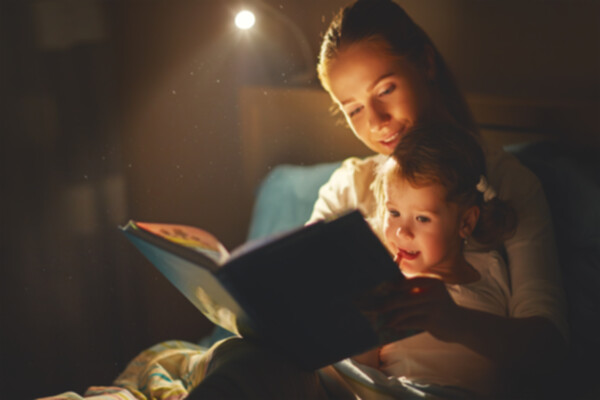
- Establish a relaxing routine beforehand: Children usually like to be read a story, explain how their day went, etc. before going to sleep. The routine does not have to be very long or tedious, simply something that can be adapted to our daily lives and that allows the child to associate sleeping with a relaxing activity.
Frequent errors:
Sometimes, as a result of desperation and fatigue, some mistakes are made that cause the problem to persist over time. Perhaps some of these errors make the problem last less time, but mean more disadvantages in the future. Some examples of errors are the following:
- Getting angry with the child because he/she does not want to sleep in his/her room: It is common for children refuse to sleep alone and show their displeasure with tantrums. When tired, we can lose patience and yell at the child, which may work on the first day, but in the long term it can lead to behavioral problems. Furthermore, the child must understand that he must sleep in her room, but always with containment and respect. We must strive to understand why the child he doesn’t want to sleep alone and help you make this transition by offering you resources to do so.
- Tell him that he is already very old and that he should not be afraid: The ideal is that the transition between sleeping with parents and sleeping in their room is made in the most natural way possible, adapting to the child’s rhythms. In this sense, it is normal for certain fears to appear throughout childhood (darkness, ghosts, etc.) and although they may seem “nonsense” to us, the reality is that children’s fears have the same importance. than those that arise in adulthood, the only thing that is consistent with their development. Therefore, telling the child that she should not be afraid and minimizing her emotions is not the most appropriate because we are conveying that her emotions are not important and that it is not appropriate to express them. On the contrary, we must convey that it is normal to be afraid, help her identify her emotions, name them and offer her tools to manage them.
- Not being firm in orders: The child may try to delay bedtime or sleep. stay alone in your room So if we give in to these requests, the child will learn that it is possible to be with the tablet, to sleep with him/her for a while, etc. and every day she will try again, since we would be reinforcing this behavior. The child would be obtaining a reward (such as being with the tablet) by doing a behavior that we really do not want to be repeated.
- Help you with things you can already do: The bath, dinner, etc. They are activities that have to be done before going to sleep and it is normal that due to past experiences in which they have refused to sleep alone, we anticipate that it is going to be late and we help them do things that they already know how to do on their own. only. This can help speed up the process, but in the long run the child will get used to this help and will be less autonomous.
If your child has great difficulty sleeping, it is important to seek help from a professional so that they can evaluate the case and you can receive individualized guidance that adapts to your needs.
Use this citation format to reference the article clearly and help readers find the original source.
PsychologyFor. (2024). ‘My Child Doesn’t Want to Sleep Alone in His Bed’: Possible Causes and Effective Strategies. PsychologyFor. https://psychologyfor.com/my-child-doesnt-want-to-sleep-alone-in-his-bed-possible-causes-and-effective-strategies/