


When conventional schooling, standardized testing, and narrow definitions of IQ leave you or your children feeling intellectually inadequate or misunderstood, discovering the 8 best books on multiple intelligences provides a transformative paradigm shift in cognitive psychology. Millions of bright, creative individuals grow up believing they lack intelligence simply because their minds excel in spatial navigation, musical composition, bodily movement, or interpersonal empathy rather than traditional linguistic or logical-mathematical testing. You might recognize the lingering emotional sting of academic discouragement, wondering why standard IQ scores fail to reflect real-world problem-solving, artistic mastery, or emotional leadership.
This persistent sense of intellectual alienation is not an individual limitation; rather, it reflects a deeply entrenched cultural bias that equates human worth with a single, unitary IQ score. In 1983, Harvard developmental psychologist Howard Gardner dismantled this century-old assumption by demonstrating that the human mind possesses at least eight distinct, relatively autonomous cognitive modalities. When educational institutions prioritize linguistic and mathematical memory to the exclusion of other modalities, the natural human capacity for diverse intellectual flourishing and creativity becomes severely constricted. Exploring foundational Multiple Intelligences (MI) literature equips you with evidence-based frameworks to identify your cognitive strengths, tailor learning strategies, and honor neurodiversity.
How can reading systematic Multiple Intelligences literature help you unlock hidden cognitive strengths and potential in yourself and others?
Engaging with transformative multiple intelligences books provides educators, parents, and self-directed learners with practical pedagogical tools to differentiate instruction, cultivate emotional self-awareness, and achieve authentic lifelong intellectual success.
The 8 Best Books on Multiple Intelligences
Verified Top Picks- 1
 Howard Gardner Frames of Mind: The Theory of Multiple Intelligences The monumental foundational classic introducing the seven multiple intelligencesCHECK TODAY'S PRICE
 - 2
 Thomas Armstrong Multiple Intelligences in the Classroom The definitive practical manual for multimodal lesson planning and authentic assessmentCHECK TODAY'S PRICE
 - 3Howard Gardner Intelligence Reframed: Multiple Intelligences for the 21st Century Introducing naturalist intelligence and evaluating candidates for existential intelligenceCHECK TODAY'S PRICE
- 4Thomas Armstrong 7 Kinds of Smart: Identifying and Developing Your Multiple Intelligences Self-assessment tools and daily exercises to discover and develop your cognitive strengthsCHECK TODAY'S PRICE
- 5Howard Gardner Multiple Intelligences: New Horizons in Theory and Practice A comprehensive overview of two decades of global research and Project Spectrum dataCHECK TODAY'S PRICE
- 6Thomas Armstrong In Their Own Way: Encouraging Your Child's Multiple Intelligences A compassionate parenting guide for discovering and advocating for diverse learning stylesCHECK TODAY'S PRICE
- 7Howard Gardner Five Minds for the Future Essential cognitive orientations and ethical mindsets required to thrive in a global economyCHECK TODAY'S PRICE
- 8Robert J. Sternberg Successful Intelligence: How Practical and Creative Intelligence Determines Success The landmark Triarchic Theory demonstrating the superiority of creative and practical smartsCHECK TODAY'S PRICE
The Evolution of Intelligence Theory: From Unitary IQ to Multiple Modalities
For most of the twentieth century, Western psychology and education were dominated by the concept of general intelligence, or the $g$ factor, formulated by British psychologist Charles Spearman in 1904. Spearman argued that a single underlying mental energy determines performance across all cognitive tasks, a view that directly influenced the design of the Stanford-Binet and Wechsler IQ tests. French psychologist Alfred Binet originally developed cognitive assessments to identify schoolchildren requiring specialized educational assistance, but Western institutions quickly weaponized IQ testing into a rigid metric of innate human capability.
Howard Gardner fundamentally challenged this psychometric orthodoxy through Project Zero at the Harvard Graduate School of Education. Synthesizing evidence from neuropsychology, developmental psychology, evolutionary biology, anthropology, and cognitive neuroscience, Gardner demonstrated that brain damage can isolate specific cognitive faculties while leaving others completely intact. A stroke victim might lose linguistic syntax while retaining immaculate musical melody or spatial navigation, proving that the human brain operates through distinct neurological processing modules.
To establish that a cognitive capability qualifies as a distinct intelligence rather than merely a talent or skill, Gardner established eight rigorous biological and psychological criteria:
- Potential isolation by brain damage, demonstrated through clinical neuropsychological lesion studies.
- The existence of prodigies, savants, and exceptional individuals with isolated cognitive abilities.
- An identifiable core set of information-processing computational operations.
- A distinct developmental history with definable expert end-state performances.
- An evolutionary history and evolutionary biological plausibility.
- Support from experimental psychological tasks and cognitive psychology laboratory testing.
- Support from psychometric findings and standardized statistical psychometric data.
- Susceptibility to encoding in a symbolic cultural communication system.
Understanding these eight biological criteria provides readers with the scientific foundation needed to recognize that intelligence is multidimensional, multifaceted, and deeply embedded in human biology.
Top 8 Books on Multiple Intelligences for Educators and Learners
The following curated selection represents the definitive multiple intelligences bibliography, featuring groundbreaking foundational texts by Howard Gardner, practical classroom application guides by Thomas Armstrong, and complementary intelligence models by Robert Sternberg and Daniel Goleman.
1. Frames of Mind: The Theory of Multiple Intelligences — Howard Gardner
Frames of Mind is the monumental, epoch-making work in which Howard Gardner first introduced the Theory of Multiple Intelligences to the scientific community in 1983. Drawing upon extensive empirical research with stroke patients, brain-damaged adults, prodigies, and autistic savants, Gardner systematically deconstructs the unitary concept of IQ. He presents detailed biological, psychological, and anthropological profiles for the original seven human intelligences: Linguistic, Logical-Mathematical, Spatial, Musical, Bodily-Kinesthetic, Interpersonal, and Intrapersonal subjective emotional intelligence.
Gardner’s prose is scholarly, rigorous, and deeply humane, challenging educational systems to move beyond the narrow linguistic-logical funnel that disenfranchises millions of students. He explores how different human cultures historically prioritized distinct intelligences, from the spatial navigation of Puluwat sailors to the bodily-kinesthetic mastery of traditional hunters. For psychologists, educators, philosophers, and serious students of cognition, this foundational classic remains the essential cornerstone of modern intelligence literature.
- Introduces the revolutionary seven intelligences backed by cross-cultural and neuropsychological evidence.
- Dismantles the scientific validity of a single unitary general intelligence quotient.
- Analyzes the distinct developmental trajectories and symbolic systems of each cognitive modality.
2. Multiple Intelligences in the Classroom — Thomas Armstrong

Multiple Intelligences in the Classroom by veteran educator and psychologist Dr. Thomas Armstrong is the definitive, bestselling practical manual for translating Gardner’s theoretical framework into dynamic classroom instruction. While Gardner provided the scientific theory, Armstrong built the pedagogical bridge, showing teachers exactly how to design multimodal lesson plans, create enriched classroom learning centers, and conduct authentic performance assessments. Now in its fourth edition, this book has become a bona fide educational teaching classic.
Armstrong provides concrete strategies for teaching reading, mathematics, science, and history through bodily movement, visual art, musical rhythm, collaborative group work, and self-reflective journaling. He addresses the application of MI theory to special education, neurodivergent learners, curriculum development, and educational technology. For teachers, school administrators, and homeschooling parents, this comprehensive handbook is the ultimate practical classroom implementation guide.
- Provides actionable lesson planning templates integrating all eight multiple intelligence modalities.
- Outlines authentic assessment alternatives to replace rigid standardized multiple-choice testing.
- Offers strategies to support neurodivergent students with ADHD, dyslexia, and learning differences.
3. Intelligence Reframed: Multiple Intelligences for the 21st Century — Howard Gardner
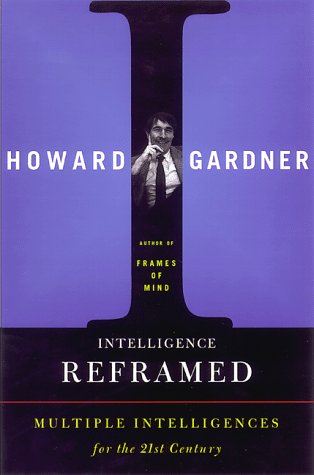
Intelligence Reframed, published in 1999, is Howard Gardner’s essential state-of-the-art report on the evolution, refinement, and expansion of Multiple Intelligences theory. In this accessible volume, Gardner introduces the eighth intelligence—Naturalist Intelligence, the ability to recognize, categorize, and draw upon features of the natural environment—while rigorously evaluating candidates for a ninth modality, Existential Intelligence. He directly addresses common misconceptions, clarify distinctions between intelligences, learning styles, and personality traits, and provides critical updates for twenty-first-century education.
Gardner also responds directly to academic critics, explaining why spiritual and moral capacities should be treated as human values and ethical commitments rather than computational intelligences. He explores the intersection of multiple intelligences with the future of work, digital technology, and global citizenship. For readers seeking a refined, mature presentation of MI theory that balances scientific caution with visionary educational reform, this book provides an indispensable theoretical update and clarification.
- Formally introduces Naturalist Intelligence and evaluates the validity of Existential Intelligence.
- Clarifies the vital scientific distinction between cognitive intelligences, learning styles, and domains.
- Outlines the ethical responsibilities associated with cultivating diverse human intellectual capabilities.
4. 7 Kinds of Smart: Identifying and Developing Your Multiple Intelligences — Thomas Armstrong

7 Kinds of Smart by Dr. Thomas Armstrong is the premier popular self-help guide designed to help adults identify, assess, and develop their own unique spectrum of multiple intelligences. Armstrong demystifies Gardner’s academic concepts through engaging self-assessment quizzes, practical daily exercises, and real-world success stories. The book teaches readers how to overcome past educational discouragement by recognizing that everyone possesses a distinct, customizable cognitive profile of intellectual strengths.
Each chapter is dedicated to a specific intelligence, offering dozens of practical activities to strengthen weaker modalities while maximizing dominant capabilities in professional, creative, and personal settings. Armstrong demonstrates how accountants can tap into visual-spatial thinking, how writers can enhance bodily-kinesthetic awareness, and how managers can refine interpersonal intelligence. For general readers seeking personal growth and self-discovery, this empowering book is an invaluable personal intelligence development manual.
- Features comprehensive self-assessment checklists to map your individual multiple intelligence profile.
- Provides daily actionable exercises to awaken underutilized artistic, physical, and musical intelligences.
- Demonstrates how to align your cognitive strengths with fulfilling career and lifestyle choices.
5. Multiple Intelligences: New Horizons in Theory and Practice — Howard Gardner

Multiple Intelligences: New Horizons is Howard Gardner’s thoroughly revised and expanded compilation of essays exploring the worldwide impact and clinical applications of MI theory. Gardner synthesizes two decades of experimental data gathered from innovative schools, museums, and workplace environments globally, demonstrating how multiple intelligences principles foster deep understanding and creative problem-solving. This volume serves as an authoritative anthology for educators seeking to implement systemic institutional educational reforms.
The book details the famous Project Spectrum assessment system, which evaluates young children’s strengths in naturalistic learning environments rather than through artificial paper-and-pencil tests. Gardner explores how MI theory transforms teacher training, curriculum design, and organizational leadership in the modern knowledge economy. For policymakers, academic researchers, and school leaders, this collection provides a rigorous overview of applied MI research.
- Details findings from Project Spectrum regarding early childhood naturalistic talent identification.
- Examines the globalization of Multiple Intelligences theory across international educational systems.
- Explores the application of multiple intelligences in corporate leadership and workplace training.
6. In Their Own Way: Discovering and Encouraging Your Child’s Multiple Intelligences — Thomas Armstrong
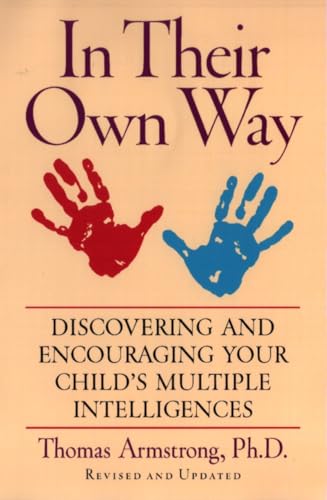
In Their Own Way by Dr. Thomas Armstrong is the essential, compassionate parenting guide for discovering, nurturing, and advocating for a child’s unique learning profile. Armstrong challenges the pathologizing of non-traditional learners, showing how children labeled with learning disabilities or attention deficits are frequently gifted spatial, bodily-kinesthetic, or musical thinkers trapped in linguistic-only classrooms. He provides parents with practical strategies to create an enriched home environment that fosters natural curiosity and authentic self-esteem.
The book offers concrete advice on collaborating with teachers, navigating parent-teacher conferences, and adapting homework assignments to match a child’s dominant intelligence. Armstrong explains how to use bodily movement to teach math concepts, visual storytelling to improve reading comprehension, and nature exploration to develop scientific thinking. For parents seeking to protect their children from academic burnout and cultivate their innate gifts, this volume provides a lifeline of practical parenting wisdom.
- Teaches parents how to identify their child’s dominant cognitive learning styles and intelligences.
- Provides actionable strategies to adapt frustrating homework into engaging multimodal learning games.
- Reframes learning differences and ADHD labels through an empowering neurodiversity perspective.
7. Five Minds for the Future — Howard Gardner

Five Minds for the Future by Howard Gardner expands beyond individual cognitive modalities to define the comprehensive mental capacities required for professional excellence, civic responsibility, and ethical leadership in the twenty-first century. Gardner identifies five essential cognitive orientations: the Disciplined Mind (mastery of scholarly disciplines and crafts), the Synthesizing Mind (surveying and integrating vast information), the Creating Mind (putting forth novel questions and solutions), the Respectful Mind (honoring cultural diversity), and the Ethical Mind conceptualizing societal responsibility.
Drawing on cognitive psychology, history, and business case studies, Gardner demonstrates that technical mastery alone is insufficient in an interconnected, automated global landscape. Leaders and citizens must develop the capacity to synthesize fragmented data, think creatively outside established paradigms, and act ethically beyond self-interest. This forward-looking book provides an inspiring, structured blueprint for cultivating advanced cognitive and moral capabilities.
- Defines the five essential cognitive capacities required to thrive in the modern global economy.
- Explains how the synthesizing mind organizes information to prevent severe cognitive overload.
- Integrates intellectual discipline with ethical responsibility for exemplary professional leadership.
8. Successful Intelligence: How Practical and Creative Intelligence Determines Success in Life — Robert J. Sternberg

Successful Intelligence by renowned Yale psychologist Robert J. Sternberg presents his landmark Triarchic Theory of Intelligence, serving as an exceptional complement to Gardner’s Multiple Intelligences framework. Sternberg proves that traditional academic intelligence (analytical ability) accounts for only a tiny fraction of real-world success, introducing the critical importance of creative intelligence (generating novel ideas in unfamiliar situations) and practical intelligence (applying knowledge, adapting to environments, and navigating complex social systems).
Sternberg demonstrates how individuals who perform poorly on conventional IQ tests often achieve extraordinary success by leveraging practical street smarts and creative problem-solving. The book provides self-assessment tools and practical exercises to help readers balance analytical, creative, and practical abilities to achieve their personal goals. For students, professionals, and educators seeking a broader view of human capability, this seminal work is an indispensable treatise on real-world intelligence.
- Introduces the Triarchic Theory comprising analytical, creative, and practical intelligence.
- Demonstrates why practical intelligence outweighs academic IQ in predicting career achievement.
- Provides actionable strategies to adapt to, shape, and select optimal personal environments.
The 8 Core Intelligences Defined: A Comprehensive Psychological Overview
Howard Gardner’s model defines intelligence not as a static score, but as a bio-psychological potential to process information that can be activated in a cultural setting to solve problems or create products of value in a culture. Each of the eight intelligences operates via specialized neural pathways, computational mechanisms, and symbolic systems. Cognitive psychologist Daniel Goleman incorporated Gardner’s personal intelligences into his foundational work on emotional intelligence, showing that interpersonal empathy and self-regulation are far more predictive of life success than traditional analytical intelligence metrics.
To understand the full spectrum of human cognitive capability, consider the defining characteristics of the eight intelligences:
- Linguistic Intelligence: Sensitivity to spoken and written language, grammatical syntax, semantic nuance, and effective verbal storytelling capabilities.
- Logical-Mathematical Intelligence: Capacity to analyze problems logically, execute mathematical calculations, identify patterns, and conduct scientific deductive reasoning.
- Spatial Intelligence: Potential to recognize, manipulate, and recreate mental images in two- and three-dimensional spatial environments.
- Musical Intelligence: Skill in the performance, composition, and appreciation of musical pitch, rhythm, timbre, and tone.
- Bodily-Kinesthetic Intelligence: Mastery over whole-body movement and fine-motor tactile dexterity to solve physical and expressive problems.
- Interpersonal Intelligence: Capacity to discern and respond appropriately to the moods, motivations, desires, and unconscious intentions of other people.
- Intrapersonal Intelligence: Deep self-awareness, emotional granularity, understanding of personal strengths and limitations, and effective internal emotional self-regulation.
- Naturalist Intelligence: Expertise in recognizing, classifying, and distinguishing species of flora, fauna, and complex ecological geological systems.
Recognizing this broad cognitive spectrum allows educators and individuals to appreciate that human capability is multifaceted, flexible, and incapable of reduction to a single IQ number.
Educational and Clinical Applications: Transforming Schools and Workplaces
Applying Multiple Intelligences theory in educational and clinical settings moves pedagogy away from standardized one-size-fits-all instruction toward individualized, student-centered learning. Developmental psychologist Jerome Bruner famously proposed that any subject can be taught effectively in some intellectually honest form to any child at any stage of development, a principle that directly aligns with multimodal MI teaching. When teachers present curriculum concepts through multiple entry points—such as narrative, numerical, aesthetic, hands-on, and interpersonal modes—they ensure that every cognitive profile can engage deeply.
In clinical psychotherapy and executive coaching, MI theory provides a non-stigmatizing framework for identifying an individual’s cognitive strengths. Rather than asking “How smart are you?”, clinicians and coaches ask “How are you smart?” Psychotherapist Viktor Frankl emphasized that recognizing individual dignity and unique potential is essential for psychological healing. By helping clients leverage their dominant intelligences—such as using spatial art therapy for trauma integration or bodily movement for anxiety reduction—clinicians build resilient psychological coping mechanisms.
Implementing Multiple Intelligences principles across institutional environments yields several transformative systemic benefits:
- Significantly reduces academic disengagement and behavioral issues by validating non-traditional cognitive profiles.
- Provides differentiated instruction that accommodates students with diverse neurodivergent learning needs.
- Fosters collaborative corporate team structures by assembling members with complementary multiple intelligence strengths.
- Encourages project-based portfolio assessments that measure real-world creative problem-solving mastery.
Transforming classrooms and workplaces through Multiple Intelligences ensures that human potential is nurtured in all its rich, multifaceted expressions.
Debates and Critiques: What Cognitive Psychology and Neuroscience Say
While Multiple Intelligences theory has achieved worldwide acclaim in educational circles, it has encountered substantial scrutiny from cognitive psychologists, psychometricians, and neuroscientists. Critics like psychometrician Arthur Jensen and cognitive psychologist Richard Herrnstein argued that empirical evidence consistently supports the existence of the general intelligence factor ($g$), which correlates strongly across academic, occupational, and life outcomes. They contend that Gardner’s separate intelligences are better understood as cognitive abilities, talents, or personality traits rather than independent intelligences.
Furthermore, contemporary neuroscientists point out that modern functional neuroimaging (fMRI) reveals extensive distributed connectivity across the brain during complex problem-solving rather than isolated cognitive modules. Neuroscientist Lisa Feldman Barrett demonstrates that the brain operates as a highly integrated, predictive network where cognitive, sensory, and emotional systems continuously interact. While specific brain regions specialize in processing auditory or visual data, complex real-world tasks require interconnected whole-brain neural coordination.
Navigating the academic debates surrounding Multiple Intelligences requires maintaining an objective, balanced scientific perspective:
- Acknowledge that Multiple Intelligences is a visionary educational and developmental framework rather than a statistically verified psychometric model.
- Recognize that while general intelligence ($g$) predicts academic performance, it fails to capture creative, practical, and social competence.
- Avoid the neuromyth of rigid learning styles by ensuring all students engage with multimodal sensory learning experiences.
- Utilize MI theory as an empowering heuristic to cultivate human potential without denying underlying cognitive architecture.
By adopting an evidence-informed perspective, educators and learners can celebrate the pedagogical power of Multiple Intelligences while honoring rigorous contemporary cognitive science.
Practical Exercises to Discover and Develop Your Multiple Intelligences
Reading Multiple Intelligences literature creates lasting personal value only when theoretical understanding translates into active, daily self-cultivation. Discovering your personal spectrum of intelligences allows you to optimize career decisions, overcome learning plateaus, and engage in deeply satisfying creative hobbies. Clinical psychologist Carl Rogers emphasized that self-actualization requires exploring and accepting all facets of personal experience to become a fully functioning human being.
To cultivate and expand your multiple intelligences in daily life, practice these five evidence-based development disciplines:
- Conduct a weekly intelligence audit by mapping out which cognitive modalities you utilized during daily professional and personal activities.
- Strengthen spatial-visual intelligence by sketching complex concepts as mind maps rather than writing linear bulleted notes.
- Enhance bodily-kinesthetic awareness by practicing intentional movement disciplines like yoga, dance, or manual crafting skills.
- Deepen intrapersonal intelligence by maintaining a daily reflective journal to examine emotional triggers and core personal values.
- Cultivate interpersonal intelligence by practicing active listening and non-verbal calibration during challenging social and professional conversations.
Consistently practicing these multimodal development exercises empowers you to awaken underutilized mental faculties, enhance cognitive flexibility, and achieve lifelong intellectual flourishing.
FAQs about Books on Multiple Intelligences
What is the core premise of Howard Gardner’s Multiple Intelligences theory?
The core premise of Howard Gardner’s Multiple Intelligences theory is that human intelligence is not a single, fixed general capability measured by an IQ test, but a collection of relatively autonomous cognitive faculties. Gardner proposes that every individual possesses a unique profile of eight distinct intelligences: Linguistic, Logical-Mathematical, Spatial, Musical, Bodily-Kinesthetic, Interpersonal, Intrapersonal, and Naturalist. Each intelligence has its own neurological foundation, developmental trajectory, and information-processing operations, meaning that an individual can excel in one modality while having modest ability in another.
What is the difference between Multiple Intelligences and learning styles?
Multiple Intelligences and learning styles are fundamentally different concepts that are frequently confused. Multiple Intelligences refers to the distinct cognitive information-processing capacities and biological computational mechanisms a person possesses, such as spatial or musical capability. In contrast, learning styles refer to an individual’s preferred psychological manner of approaching educational materials, such as visual, auditory, or kinesthetic preferences. Gardner has explicitly clarified that an individual with strong spatial intelligence does not need materials presented exclusively in visual formats, but benefits from engaging with concepts across multiple multimodal representations.
Which book should an educator read first to apply Multiple Intelligences in the classroom?
For educators seeking to apply Multiple Intelligences theory immediately in their teaching, Multiple Intelligences in the Classroom by Thomas Armstrong is the most practical and universally recommended starting point. While Gardner’s original text Frames of Mind provides the deep scientific and philosophical rationale, Armstrong translates that theory into actionable pedagogical tools. Armstrong’s book provides ready-to-use lesson plan templates, classroom center designs, authentic portfolio assessment strategies, and specific guidance for supporting neurodivergent students with diverse learning profiles.
Is the Theory of Multiple Intelligences scientifically proven?
The Theory of Multiple Intelligences is widely respected as an empowering educational and developmental philosophy, but it remains controversial within mainstream psychometric cognitive psychology. Psychometricians argue that statistical data consistently support the general intelligence factor ($g$), which correlates across various cognitive tasks. Furthermore, neuroscience shows that the brain operates through complex, interconnected neural networks rather than entirely isolated modular intelligences. However, MI theory remains extraordinarily valuable because it broadens the definition of human capability beyond narrow linguistic and mathematical testing.
How does Robert Sternberg’s Triarchic Theory relate to Multiple Intelligences?
Robert Sternberg’s Triarchic Theory of Intelligence serves as an exceptional complementary model to Howard Gardner’s Multiple Intelligences. While Gardner focuses on the specific sensory, symbolic, and content domains through which intelligence operates (like musical or spatial domains), Sternberg focuses on the broader functional processes of intelligence: Analytical (academic problem-solving), Creative (generating novel solutions), and Practical (street smarts and adapting to real-world environments). Both theories share the common mission of dismantling the hegemony of the unitary IQ score in favor of multidimensional human competence.
Can an adult develop and strengthen their weaker multiple intelligences?
Yes, an adult can intentionally develop and enhance their weaker intelligences throughout life. While biological predispositions exist, Gardner and Armstrong emphasize that every intelligence is a developmental potential that can be significantly expanded through deliberate practice, enriched environments, and focused education. By engaging in targeted activities—such as learning a musical instrument to develop musical intelligence, studying nature to enhance naturalist intelligence, or practicing mindfulness to build intrapersonal intelligence—adults leverage neuroplasticity to build new cognitive capabilities.
Bibliography
- Armstrong, T. (1999). 7 Kinds of Smart: Identifying and Developing Your Multiple Intelligences. Plume.
- Armstrong, T. (2000). In Their Own Way: Discovering and Encouraging Your Child’s Multiple Intelligences. Tarcher.
- Armstrong, T. (2017). Multiple Intelligences in the Classroom (4th ed.). ASCD.
- Barrett, L. F. (2017). How Emotions Are Made: The Secret Life of the Brain. Houghton Mifflin Harcourt.
- Bruner, J. S. (1960). The Process of Education. Harvard University Press.
- Frankl, V. E. (1959). Man’s Search for Meaning. Beacon Press.
- Gardner, H. (1983). Frames of Mind: The Theory of Multiple Intelligences. Basic Books.
- Gardner, H. (1999). Intelligence Reframed: Multiple Intelligences for the 21st Century. Basic Books.
- Gardner, H. (2006). Multiple Intelligences: New Horizons in Theory and Practice. Basic Books.
- Gardner, H. (2007). Five Minds for the Future. Harvard Business Review Press.
- Goleman, D. (1995). Emotional Intelligence: Why It Can Matter More Than IQ. Bantam Books.
- Rogers, C. R. (1961). On Becoming a Person: A Therapist’s View of Psychotherapy. Houghton Mifflin.
- Sternberg, R. J. (1996). Successful Intelligence: How Practical and Creative Intelligence Determines Success in Life. Simon & Schuster.
Use this citation format to reference the article clearly and help readers find the original source.
PsychologyFor. (2026). The 8 Best Books on Multiple Intelligences. PsychologyFor. https://psychologyfor.com/the-8-best-books-on-multiple-intelligences/