

There are new formulas for relating to children from a perspective focused on potential and free of violence. Positive parenting involves educating with positivity and firmness. Find out how to adopt it.

See more of our articles in your search results.
When we refer to the positive parenting, we are not pointing out behavior on the part of parents where everything is allowed. On the contrary, this new way of educating involves teaching good behavior using parenting techniques that are equal parts kind and firm. So what does it entail and how to practice it?
What is positive parenting?
The positive parenting It is beginning to form part of the new vocabulary of parents, teachers, educators and in general of all those who have contact with children/adolescents (NNA). This is largely due to a growing interest in new ways of exercising parenting, which are demands of the times in which we live and must be adapted to new social forms.
Furthermore, this new way of parenting It is also included at the legislative level, which within this area is understood as: “the exercise of positive parenting refers to the behavior of parents based on the best interests of the child, who cares for, develops their abilities, is not violent and offers recognition and guidance that include the establishment of limits that allow the child’s full development.
Legislative changes offer a framework for the development of this view of parenting but the interesting thing is to begin to change the way we have traditionally faced the task of educating children and adolescents, leaving behind models that fundamentally base education on reinforcements and punishments, and that are becoming insufficient in the face of the challenges that children and adolescents have to face in your day to day.
How many of these have you been "meaning to read" for months?
- 1
 Irvin D. YalomThe Gift of Therapy85 practical, warm clinical insights from a master therapistListen Free On Audible
- 2
 Lori GottliebMaybe You Should Talk to SomeoneA bestselling memoir on the shared humanity of therapist and clientListen Free On Audible
- 3
 Oliver SacksThe Man Who Mistook His Wife for a HatUnforgettable clinical case studies on perception and identityListen Free On Audible
At this point, parents often feel overwhelmed by the demands of parenting, while children and adolescents create a distorted image of their caregivers, which can lead to tension and discomfort in all family members. Furthermore, the task of parenting should not become an accumulation of responsibilities and dissatisfactions, but should promote harmony in the family, flexibility and communication between all members, maintaining a resistant and resilient organization and structure.
It should be noted that the positive parenting It has been tinged with false premises, such as that educating positively means that there are no consequences for unwanted behavior, that you cannot say “No” to children, depriving children of responsibility… But these are erroneous ideas, since one of the objectives of this perspective has to do with the need to create responsible children and adolescents who accept frustration, plan their behavior and are socially successful, but all this while trying to promote their potential. Thus, the fact that children and adolescents have positive and negative consequences for their behavior is not a problem in this approach, but it is necessary that these consequences be known in advance, agreed upon, coherent and consistent, and in many cases can be flexible.
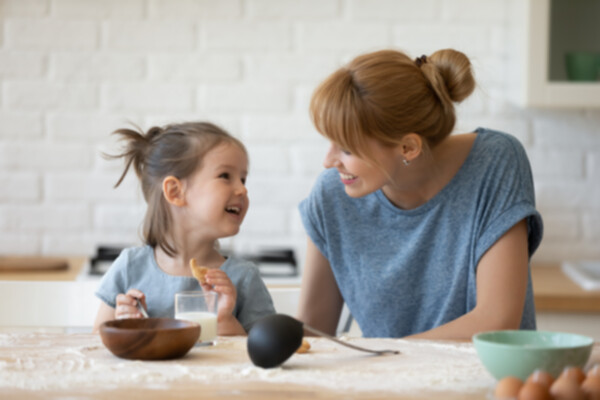
Tips for positive parenting
Mainly, positive teaching focuses on teaching children all those behaviors that are acceptable. Additionally, this style of parenting does so by allowing children to become mentally healthier as they adapt to their environment and learn about adult life.
It is important to take these teaching strategies into account because numerous studies indicate that parenting styles influence whether adolescents will suffer from low self-esteem, which means that they end up experiencing more challenges than their peers.
In order to adopt a more positive parenting style we recommend that you take into account the following tips:
- Be attentive with affection: Although it seems simple, children must be brought closer to affection in a meaningful way. From hugs, pampering to holding hands. Show them the affection they want and need.
- Offer them a wide variety of activities to stimulate them mentally: Children are more likely to misbehave when they are bored, so providing them with different options will not only help their behavior, but will also help them investigate what they really like.
- Set clear boundaries: It is important that children know clearly what they can and cannot do. Additionally, you should also let him know what the consequences will be if he breaks any of the established rules. These rules should be few, that is, fair, easy to follow and should always be expressed in a positive way.
- Don’t feed his emotional outbursts: It is normal for children to sometimes have certain outbursts. When faced with them, it is important to remain calm and try to tell them how you would like them to react to these emotions. For example: ‘Stop throwing things on the floor, play better at the table.’ In addition, it is recommended that if he behaves correctly you use praise: ‘Thank you for playing at the table‘.
- Have realistic expectations: All children behave badly sometimes, and it is inevitable that they will have some problems with discipline. Do not expect your child to always behave perfectly, as this will end up causing frustration and disappointment.
- Don’t forget to take care of yourself: It’s hard to be a calm, relaxed parent if you’re stressed, anxious, or depressed. Although parenting demands a lot of your time, it is vital that you find time to take care of yourself inside and out.
- Don’t forget to give your child positive attention: Your children need positive attention. If they do not receive attention, they will choose to seek it in a negative way. This is because children want your attention and any kind will be better than being ignored.
- Act by example: Children are like sponges: they absorb all the information around them. Especially that which comes from their parents. Therefore, it is important that you try to act by example.
Adopting these tips may be difficult at first, but by maintaining them you will see the results and how your child evolves positively. This is because compassion and kindness are excellent practices in parenting, since they always encourage the development of your children from the positive.
Use this citation format to reference the article clearly and help readers find the original source.
PsychologyFor. (2024). What is Positive Parenting? 8 Tips to Follow This Parenting Style. PsychologyFor. https://psychologyfor.com/what-is-positive-parenting-8-tips-to-follow-this-parenting-style/