

See more of our articles in your search results.
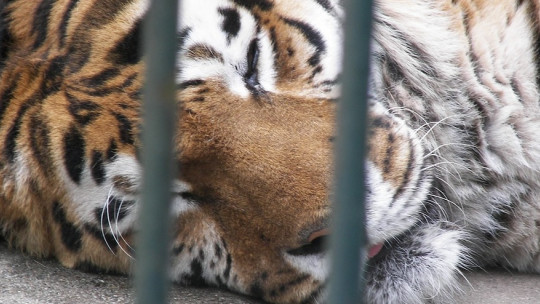
That scene has a name in animal-welfare circles: zoochosis. It’s a catchy, slightly unsettling word, coined for the repetitive, seemingly pointless behaviors that show up in some wild animals kept in captivity. Pacing, swaying, head-bobbing, bar-biting, over-grooming. Visitors see it constantly and often misread it as boredom, quirk or even playfulness. Scientists read it differently, and the research behind that reading is richer, and less tidy, than the term suggests. The word sounds like a diagnosis. It isn’t one. The charity that popularized it says the behavior is thought to result from animals being unable to express natural behaviors, and the science of stereotypic behavior largely agrees on that general point.
What’s actually going on inside the animal is still being argued about.
This article explains what zoochosis is and how it appears in captive animals, which species are most affected and why, what the science says about suffering, and what really helps.
What is zoochosis?
Zoochosis is an informal term for the abnormal, repetitive behaviors that some captive wild animals develop, especially in zoos, circuses, aquariums and roadside attractions. Scientists usually call these behaviors stereotypic behavior or stereotypies: repetitive, fairly unvarying patterns with no obvious goal or function.
The word was coined in 1992 by a co-founder of the UK charity Born Free to describe stereotypic behavior in captive wild animals. The charity describes it as a very real psychological condition affecting many captive animals worldwide, and lists pacing, swaying, head-bobbing, bar-biting and over-grooming among the typical signs. It adds that these behaviors are thought to result from animals being unable to express natural behaviors.
How many of these have you been "meaning to read" for months?
- 1
 Spiegel & GrauCodependent No MoreHow to Stop Controlling Others and Start Caring for Yourself (Revised and Updated)Listen Free On Audible
 - 2
 THOUGHT CATALOGThe Mountain Is YouTransforming Self-Sabotage Into Self-MasteryListen Free On Audible
 - 3
 TarcherThe Artist's Way30th Anniversary EditionListen Free On Audible
A few points are worth keeping straight from the start:
The term is borrowed from human psychiatry. “Psychosis” in people means losing contact with reality, with delusions or hallucinations. Nobody is claiming that a pacing leopard hallucinates. The label is metaphorical, and some researchers dislike it for exactly that reason.
Zoochosis isn’t a veterinary diagnosis. You won’t find it in a clinical manual of animal medicine. What is a documented and studied phenomenon is the underlying behavior, which has been measured in zoo, farm and laboratory animals for decades.
And the behavior is not limited to zoos. Caged farm animals, laboratory rodents and pets in barren homes show stereotypies too, which tells us the cause lies in the mismatch between what an animal is built to do and what its surroundings allow.
Take Hana, an illustrative composite. She visits a zoo on a rainy weekday and spends ten minutes at the big cat enclosure. A tiger walks the length of the fence, turns at precisely the same post and returns, seven or eight times, ignoring the keeper and the splashing puddles. Hana thinks he’s restless. A behavioral scientist would call it pacing, the most common stereotypy in captive carnivores, and ask what the animal wants to be doing instead.
That last question, “what does he want to do instead,” is the key to everything that follows.

Is zoochosis a real psychological condition or just a buzzword?
Myth: zoochosis is an official mental illness that vets diagnose and treat. Fact: it’s an activist-coined label for a pattern scientists study under other names, and the science behind the pattern is solid even though the label isn’t clinical.
The researcher most associated with getting the science right is Georgia J. Mason, an animal-behavior scientist who has spent decades studying stereotypic behavior. In a 2006 chapter on stereotypic behavior in captive animals, she reviewed the standard definition, “repetitive, unvarying behavior with no apparent goal or function,” and then argued that the definition doesn’t match how people really use the term. She proposed centering the definition on causes instead: stereotypic behaviors are repetitive behaviors induced by frustration, repeated attempts to cope, and/or central nervous system dysfunction.
That’s a more useful definition than a purely descriptive one. It tells you that the behavior isn’t random. It’s the visible tail of something the animal’s brain is doing in response to a situation it can’t resolve.
So, real or buzzword? Both, in different ways. The behavior is real and measured. The word “zoochosis” works as shorthand, and it helps the public notice something many people walk past. But it can also mislead. It implies a single illness with a single cause, when researchers describe a family of behaviors with several possible causes, and it risks implying that every pacing animal is suffering equally, which the evidence doesn’t support.
I’d put it this way. If you use the word to start a conversation, it’s useful. If you use it to settle a debate, it’s a blunt instrument.
It also helps to know what isn’t being claimed. Normal, healthy animals pace sometimes. A big cat may walk before feeding time in anticipation. A bear may make repeated passes while investigating a new smell. Short, goal-directed repetition isn’t a stereotypy. The marker is repetition that is rigid, prolonged, and apparently disconnected from any immediate purpose.
Context matters too. A dog circling before lying down, or a bird preening, is doing a normal repeated action. The word “stereotypy” earns its keep only when the pattern is excessive and out of proportion to what the animal’s natural behavior would involve.
The honest summary: the label is not clinical, the behavior is real, and the interpretation takes care.
What does zoochosis look like in captive animals?
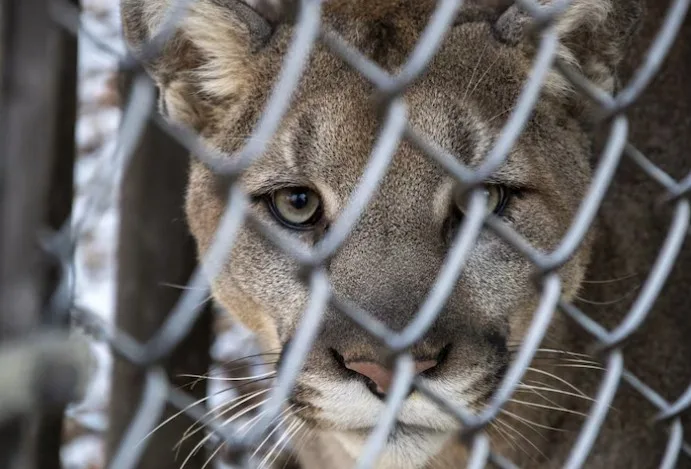
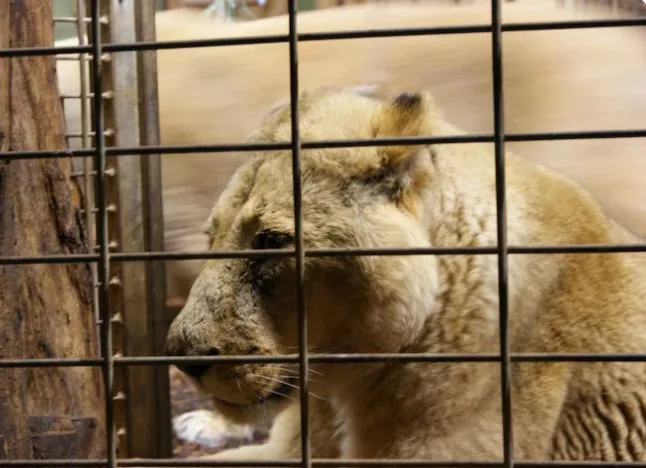
It looks like repeated, rigid movements that serve no visible purpose: pacing a fixed route, swaying, swimming in circles, head-bobbing, biting bars, plucking fur or feathers, or hurting oneself. Each species has its own signature.
| Behavior | What you see | Often reported in |
|---|---|---|
| Pacing | Walking the same path back and forth or in circles, sometimes wearing a visible track | Big cats, bears, wolves, other carnivores |
| Swaying and weaving | Rocking the head, trunk or whole body from side to side | Elephants, some primates, horses |
| Head-bobbing or neck-twisting | Rhythmic nodding, tossing, or twisting the neck back | Giraffes, big cats, some birds |
| Bar-biting and oral stereotypies | Licking, sucking or chewing bars, walls and gates | Giraffes, bears, ungulates |
| Circular swimming | Repeated laps along a pool edge or surface-pacing | Polar bears, marine mammals |
| Over-grooming and self-injury | Pulling out hair or feathers, chewing the tail or a limb, hitting the head | Primates, parrots, big cats |
| Regurgitation and re-ingestion | Bringing up food and eating it again | Great apes, some other primates |
Behavior-focused organizations describe how these behaviors appear in practice. Born Free’s guide, for example, notes that constant walking back and forth or in a circle can leave definite paths worn into the ground, that rocking can involve sitting and hugging the legs, and that self-harm can include biting the tail or leg or hitting the head against a wall.
Three details help you tell a stereotypy from ordinary activity. First, it’s repetitive and rigid: the same route, the same angle, the same tempo. Second, it’s prolonged: minutes or hours rather than a brief burst. Third, it’s hard to interrupt: a keeper, a loud noise or a toy may barely alter it, or the animal drops back into it right away.
How much of an animal’s day is involved? That varies hugely. Some animals pace for a small fraction of the day; others spend large portions of daylight hours on it. Researchers typically measure the percentage of time spent on the behavior using scheduled observations, which is more reliable than a quick visit.
Imagine Rowan, an illustrative composite keeper, who notices that one of her charges, a female bear, begins pacing about twenty minutes before the usual food delivery. After enrichment changes she paces less during the day but still does so before meals. Rowan learns to log the times. That pattern says something different from round-the-clock pacing, and a log is how you’d see it.
Not every sign is a stereotypy. Lethargy, hiding, or aggression can reflect poor welfare too but aren’t repetitive in the technical sense. Keepers and welfare scientists track many indicators together for exactly that reason.
Which captive animals are most affected?
Wide-ranging carnivores top the list in the research: lions, tigers, bears and wolves. But elephants, great apes, giraffes and marine mammals such as orcas are also frequently cited, and the pattern is surprisingly predictable. Animals whose wild lives involve covering enormous distances tend to struggle most with confinement.
The clearest evidence comes from Ros Clubb and Georgia J. Mason, who published a short but influential paper in Nature in 2003. They compared 35 species of caged carnivores and asked what explained why some species paced so much more than others. Their finding was that a species’ natural home-range size and typical daily travel distance predicted how much it paced in captivity, and also predicted captive infant mortality. The effect held after accounting for body weight and general activity levels. Pacing accounted for 97 percent of the stereotypies reported among carnivores in their data.
That result overturned a common assumption. Many people expected that hunting, or the lack of it, would be the main driver. The data pointed at ranging instead: the sheer inability to travel. A follow-up analysis published in 2007 by Clubb and Mason in Applied Animal Behaviour Science reached a similar conclusion, finding that carnivore stereotypy levels were significantly predicted by natural ranging behavior, not by foraging or hunting measures.
The same research group looked at elephants. In a 2008 study in Science, Clubb and colleagues compared survival in zoo elephants with protected populations. They reported that the median life span of African elephants in European zoos was about 17 years, versus 56 in a protected population in Kenya, and that Asian elephants in zoos had a median of about 19 years versus around 42 in Myanmar timber camps. Obesity, stillbirth and stress were among the factors discussed. Life span is not the same as stereotypy, but it signals that something about captivity is hard on this species.
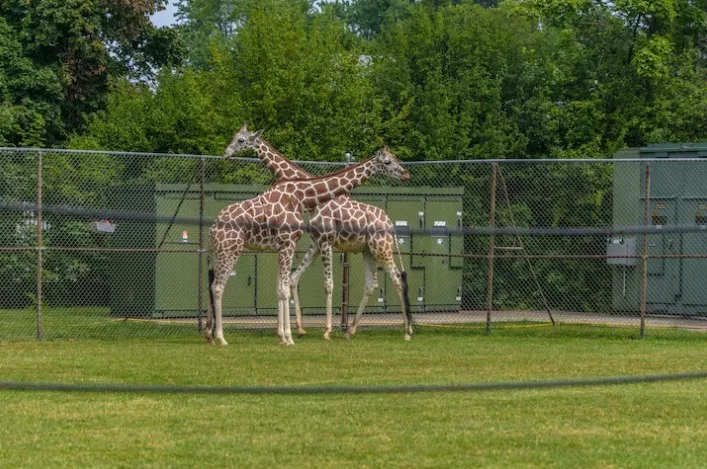
Giraffes are known for oral stereotypies such as licking and tongue-rolling, which are often linked to feeding conditions, particularly a lack of browsing opportunities. Great apes may show regurgitation and re-ingestion, and over-grooming. Orcas and other cetaceans in concrete pools sometimes show repetitive swimming and surface-resting patterns, though such cases are harder to study and more contested.
A word on balance. Not all species are equally affected, and not all individuals within a species are. Some animals do well in captivity, particularly species with small home ranges, and good zoos work to match species to feasible conditions. Researchers like Mason emphasize that you can’t treat “captive wild animal” as a single category.
That’s an important thing to hold onto. The evidence suggests that the question isn’t “zoo versus no zoo” but “which animal, in which space, with what management.”
Why do captive animals develop these repetitive behaviors?
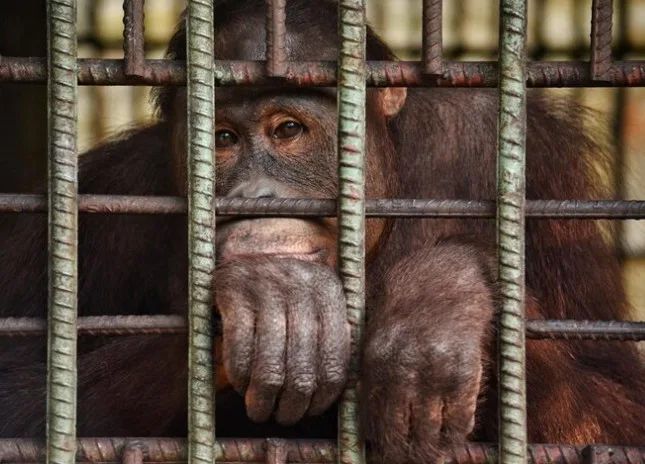
The leading explanation is that a captive environment frustrates highly motivated natural behaviors, and the animal’s repeated attempts to cope or escape harden into a fixed routine. In some animals, changes in brain function also lock the routine in place.
Georgia J. Mason‘s causal framework gives three routes to a stereotypy. Frustration happens when an animal is strongly motivated to do something, such as travel, hunt, forage or flee, and can’t. Repeated attempts to cope happens when an animal tries a behavior to deal with a problem, such as pacing a fence line in search of an exit, and the attempt becomes habitual. Central nervous system dysfunction is the third route, in which the brain’s behavior-selection machinery is altered by prolonged deprivation or stress, so the repetition continues even if the original trigger disappears.
Behind these sits an older observation. In the middle of the twentieth century, Swiss zoologist Heini Hediger wrote Wild Animals in Captivity, a founding text of zoo biology. He argued that animals in the wild live in territories with defined space, escape routes and social structure, and that a zoo has to supply functional equivalents, not just food and a roof. Hediger was an early voice for thinking about what an animal’s spatial needs mean to the animal, not just to the exhibit designer.
The ingredients that tend to produce trouble include:
Small or barren enclosures with nothing to explore. Predictable feeding with no foraging effort. Lack of choice, such as being unable to leave public view. Social mismatch, such as animals housed alone when they’re naturally social, or in groups that don’t suit them. Early rearing conditions, such as being hand-reared or separated from the mother. And a history of earlier poor conditions, which may leave behavioral scars.
Take Tobias, an illustrative composite young visitor who watches a chimpanzee repeatedly pull out its own hair in a bare concrete room. The chimp’s keepers might point to a history: separation early in life, years in a small cage before moving to a better facility. The hair-pulling persists even though the new exhibit has ropes and puzzle feeders. That’s the “scar” idea, which we’ll look at in a moment.
It’s important to be honest about how much remains uncertain. Mason herself has argued that stereotypies can have several causes at once, and distinguishing them in a single animal is hard. Two pacing wolves may be pacing for different reasons.
The practical implication is that fixes depend on diagnosis. If an animal is frustrated by lack of space, giving puzzle toys may help only a little. If it’s a long-standing habit, better conditions may reduce but not erase the behavior.
What is happening in the animal’s brain?
Research suggests that long-term stereotypies involve changes in the brain circuits that select and sequence behavior, particularly those running through the basal ganglia. The behavior can become more automatic and harder to switch off over time, which helps explain why it often persists after conditions improve.
This idea was developed by researchers such as Joseph P. Garner, who in a 2005 review argued that stereotypies and related abnormal repetitive behaviors are an important issue for animal welfare and for the validity of research. Garner and others have compared them with repetitive behaviors in human conditions, such as obsessive-compulsive disorder, Tourette syndrome and some features of autism, in which the brain’s action-selection circuits are implicated. The comparison is suggestive, not exact; the human conditions are far more varied, and the animal evidence is only partial.
The picture goes roughly like this. Early in a stereotypy’s life, it is a response to a particular frustrating or stressful situation, and it varies with context: it increases when the animal is aroused or thwarted and decreases when it is occupied. With time, the behavior can become less dependent on that context and more habit-like. It becomes rigid and perseverative, repeated even when the situation changes. That is the feature researchers sometimes call behavioral inflexibility.
Some lab work in rodents supports it. Animals that develop stereotypies in barren cages have been shown to be worse at switching responses when rules change, which suggests a link between repetitive behavior and impaired flexibility. Whether the same holds for large zoo carnivores or elephants is much harder to test, and so far the evidence is limited, mostly indirect and tied to specific species.
Now the concept that matters most for interpreting what you see. In 2004, Georgia J. Mason and her colleague Nicola R. Latham published a paper provocatively titled Can’t stop, won’t stop: is stereotypy a reliable animal welfare indicator? Their argument was that stereotypies can act as behavioral scars. A scar tells you that an injury happened, not that the wound is still open. An animal that developed a stereotypy under poor conditions may keep performing it for years after moving to a far better home. So the presence of a stereotypy tells you about the animal’s history, and not necessarily about how it feels today.
This cuts both ways. A visitor who sees a pacing bear in a lavish new enclosure may be watching an old scar. And a facility can’t assume that low rates of stereotypy mean everything is fine, because animals also express poor welfare through other behaviors, like inactivity or withdrawal.
Think of someone who learned to bite their nails during a miserable school year and still does so at forty. The habit outlasted the cause. The analogy is imperfect, but it captures why scientists are careful about reading present suffering off a behavior alone.
Does a stereotypy mean the animal is suffering right now?
Not necessarily, and not always in the way you’d guess. A stereotypy is a red flag that welfare has been, or is, compromised, but it is an imperfect indicator. A careful assessment looks at the whole picture of an animal’s life.
The paper by Georgia J. Mason and Nicola R. Latham makes three points that anyone reading about zoochosis should hold on to. First, stereotypies may be a way of coping, and in that sense even a sign of an animal that is managing. Second, a high rate of stereotypy in a group may reflect past conditions rather than present ones. Third, a low rate doesn’t guarantee good welfare, since some animals, especially those with severe brain-level dysfunction or extreme deprivation, stop acting altogether.
That leaves a puzzle: what should we look at? Welfare scientists increasingly use broader frameworks. One of the most widely used is the Five Domains model, described by David J. Mellor and Ngaio Beausoleil in 2015 and refined since. It organizes welfare assessment around nutrition, physical environment, health, behavioral interactions, and the overall mental state that results. The idea is that an animal’s experience, whether suffering or positive, comes from the combination, and that behavior is one window into it.
Under that kind of approach, a pacing animal prompts a series of questions rather than a verdict. What’s its history? Does the pacing increase before feeding or at certain times? Is it social, and with whom? Does it have places to hide, climb or choose? What does it do when given a new opportunity?
Consider Elias, an illustrative composite zoo welfare officer. He reviews two tigers who both pace. One does so mostly at dawn and dusk, drops the behavior when a feeding puzzle is added, and otherwise explores, sleeps and plays normally. The other paces for hours, ignores new items, and keeps to one corner. The same word, “pacing,” describes both. The welfare picture is very different.
What’s an honest takeaway for non-specialists? Be wary of confident verdicts based on a few minutes at the fence. Equally, be wary of dismissals, such as “he’s just stretching his legs,” because the evidence says that repetitive, rigid, prolonged behavior is a signal worth taking seriously.
Scientific caution isn’t the same as indifference. A signal that is hard to interpret remains a signal.
Can environmental enrichment reduce zoochosis?
Yes, often, but it rarely wipes the behavior out. Environmental enrichment means changing an animal’s surroundings or routine so it can express more natural behaviors, and research generally shows that well-designed enrichment lowers stereotypic behavior without eliminating it in many cases.
The modern enrichment movement owes a lot to Hal Markowitz, whose 1982 book Behavioral Enrichment in the Zoo argued that zoo animals should have to work for food and have opportunities to control their environment. His early examples used devices that let animals earn food through natural-style activities. Later, Ruth C. Newberry sharpened the concept in a 1995 paper, arguing that enrichment should increase the biological relevance of captive environments, in other words, improve an animal’s biological functioning, not just add interesting objects. A random toy is not enrichment if the animal ignores it.
Then came the scientific stock-taking. Ronald R. Swaisgood and David J. Shepherdson reviewed the literature in 2005. Their conclusions, in broad terms, were that enrichment frequently reduces stereotypic behavior but often does not eliminate it, and that the quality of the studies and the lack of follow-up on long-term effects limit what we can say. In practice that means a mixed picture, with many success stories and many cases in which a stubborn residue remains.
Common forms of enrichment include:
- Feeding enrichment: scattering food, hiding it, using puzzle feeders, or offering whole carcasses to carnivores so animals have to search, chase or pull.
- Space and structure: climbing frames, water features, varied substrates, and multiple levels to give choice and complexity.
- Sensory enrichment: novel scents, sounds or textures introduced on a rotating schedule.
- Social enrichment: appropriate companions, or contact with neighbors through visual or olfactory exchange where full contact isn’t possible.
- Cognitive enrichment: training sessions and problem-solving tasks that give animals control and a reason to engage.
Why isn’t enrichment a cure? Partly because it addresses frustration and boredom, which are only two of the causes. If the underlying issue is a species’ need to travel miles each day, no puzzle feeder can substitute. Partly, too, because of the scar problem: animals with long histories of stereotypy may keep the habit. Enrichment may reduce its frequency and intensity, but the pattern may remain a bit.
Some facilities also turn to medication, such as anti-anxiety drugs or antidepressants, to treat stereotypy. Critics argue that this addresses the symptom, not the cause, and the evidence base is thin. Most welfare scientists prefer changing the environment first.
The best programs treat enrichment as ongoing practice, not a one-off gadget. They observe, change, measure and revise.
Can pets show zoochosis-like behavior too?
Yes. Pets can develop stereotypic behaviors for very similar reasons: too little stimulation, too little freedom to express natural behavior, or chronic stress. Parrots, dogs, cats and horses are the usual cases.
Take Tom, an illustrative composite whose African grey parrot has begun plucking out chest feathers. The bird spends nine hours a day alone in a living room with the television on. It is intelligent, social, built to forage and fly. Feather-plucking in captive parrots is widely linked to boredom, social isolation and stress, though medical causes also need ruling out.
Other common patterns are worth recognizing:
- Dogs: compulsive tail-chasing, fly-snapping, flank-sucking or fence-running. Some breeds seem predisposed, and a medical cause or pain should be excluded first.
- Cats: over-grooming that creates bald patches, particularly in indoor cats under stress or with too little play and territory.
- Horses: crib-biting, weaving and stall-walking, often tied to confinement, limited forage and little time with other horses.
- Small mammals and birds: bar-biting in rodents, repetitive pacing in rabbits or ferrets kept in small cages.
The principle from zoo research transfers fairly directly. Behaviors that animals are strongly motivated to perform, whether foraging, exploring, running or socializing, need an outlet. If they don’t get one, frustration can turn into fixed routines.
What should an owner do? First, rule out physical problems with a veterinarian, because itching, pain, allergies or neurological issues can mimic behavioral causes. Second, look honestly at the animal’s day. How much exercise, mental work, social contact and choice does it get? Third, adjust gradually: add foraging games, longer walks, perches at windows, rotating toys, training sessions. Fourth, if the behavior is intense or causes injury, ask a vet or a qualified animal behaviorist for a plan.
A word of caution on punishment. Scolding an animal for a stereotypy usually makes things worse, because it adds stress to an already stressed animal. The goal is to meet the underlying need, and the behavior fades as the need is met.
This is also where the zoo debate and the pet-owner reality meet. Most of us can’t give a parrot a rainforest. We can, however, make its Tuesday afternoon a lot less empty.
How should you read what you see on your next zoo visit?
Look for patterns across time, not a snapshot. A single moment of pacing or swaying tells you little; a repeated, rigid, prolonged routine across a visit is more informative. And try to hold your judgment lightly, because even experts need careful data to interpret welfare.
Here’s a practical approach you can use without any equipment:
- Watch for several minutes before deciding. Note whether the behavior stops when something interesting happens.
- Check the rhythm. Is the route identical each lap? Does the animal turn at the same spot? Rigid repetition is the flag.
- Notice the surroundings. Are there hiding places, varied terrain, water, shade, enrichment items in use? Do social species have companions?
- Observe the rest of the day’s behavior if you can: resting, foraging, grooming, interacting. A full repertoire is a good sign.
- Read the signage and ask staff. Good facilities will talk about enrichment programs, feeding schedules and welfare monitoring.
- Look at accreditation and transparency. Accreditation schemes exist in many countries, though standards vary, and they are not a guarantee of any particular animal’s welfare.
Be aware of your own biases. Visitors tend to read animals through human feelings, and seeing a hairless patch or a swaying elephant may trigger strong reactions. Those reactions are legitimate, but they’re not data. Equally, people who work at or love a zoo may under-notice behaviors that have become routine.
The wider debate, whether keeping wild animals in captivity can ever be justified, is a values question, and research doesn’t settle it alone. Supporters point to conservation breeding, education and research. Critics point to welfare costs, especially for wide-ranging, highly social or highly intelligent species. What the science does contribute is sharper questions: which species, what space, what management, what outcomes, and measured by whom?
If you came away from a visit troubled, you have options beyond a verdict. You can write to the facility, support organizations that campaign for higher standards or fund sanctuaries, or choose which places to visit. If you work with animals, you can learn to record behavior systematically and share the data.
That polar bear on his eleven steps may be telling us something about his past, his present, or both. The honest response is to keep asking.
FAQs about Zoochosis in Captive Animals
What does the word zoochosis actually mean?
Zoochosis is an informal word for the repetitive, seemingly purposeless behaviors that some captive wild animals perform, such as pacing, swaying, bar-biting and over-grooming. It was coined in 1992 by a co-founder of the charity Born Free, borrowing the ending from “psychosis.” Scientists generally prefer the term stereotypic behavior or abnormal repetitive behavior, because the word zoochosis suggests a single illness and an animal that has lost touch with reality, which is not what the research shows. In everyday use, though, the term is a convenient shorthand for the pattern. People who use it carefully tend to add that it describes a pattern, not a verdict about any one animal.
Is zoochosis an official diagnosis?
No. It does not appear as a diagnosis in veterinary or psychiatric manuals, and it was introduced by animal-welfare campaigners, not clinicians. What is well established is the underlying phenomenon of stereotypic behavior, which researchers have measured and written about for decades in zoo, farm, laboratory and companion animals. When a veterinarian or behaviorist assesses a pacing or self-injuring animal, they look at causes such as frustration, coping attempts and brain-level changes, along with medical problems, and then plan changes to environment, routine and sometimes treatment. The label is not part of that process. The answer from welfare science is that a label isn’t needed to take the behavior seriously, since the measurements stand on their own.
Which animals show zoochosis the most?
Wide-ranging carnivores such as tigers, lions, bears and wolves are the most studied, and a 2003 study of 35 caged carnivore species found that species with larger natural home ranges paced more in captivity. Elephants, great apes, giraffes, orcas and polar bears are also frequently mentioned. Not every individual in these groups develops the behavior, and some species with small home ranges tend to cope better. Individual history matters too: early rearing, past conditions, enclosure design and social setup all affect how likely a given animal is to show repetitive behavior, and species-level patterns only tell part of the story.
Can an animal recover from zoochosis if it moves to a sanctuary?
Often it improves, but not always completely. Better space, social partners and opportunities to forage can reduce stereotypic behavior substantially in many animals. In others the habit persists for years, which researchers describe as a behavioral scar: the pattern is left over from earlier poor conditions and continues even when conditions get better. Recovery tends to be better when the animal is younger, when the stereotypy has been present for a shorter time, and when the new environment meets the species’ key behavioral needs. Expect improvement to be gradual and uneven, with some individuals keeping a residual routine. Staff at a good sanctuary will usually say plainly that rehabilitation is a long process, and that the aim is steady improvement in quality of life, not erasing every trace of the past.
Do zoo animals get depressed or bored?
Researchers are cautious about attributing human emotions to animals, but evidence supports that animals can experience frustration, stress and, in some cases, states that resemble human low mood. Studies on captive primates and other species have linked barren conditions with behavioral and physiological signs of poor welfare. Boredom is often invoked, but it is hard to measure directly. What is better established is that when highly motivated natural behaviors are blocked, animals may show repetitive behaviors, inactivity or withdrawal. Interpreting any one animal’s mental state requires observing many indicators over time. Mental states in animals are an active research area, and the more precise answer is that the evidence supports frustration and stress with more confidence than it supports any specific human-style diagnosis.
Does enrichment completely stop repetitive behavior?
Usually not. Reviews of enrichment studies generally find that it reduces stereotypic behavior in many cases but only seldom eliminates it entirely. Success depends on how well the enrichment matches the animal’s natural motivations: a food-searching task helps with foraging frustration, but it does nothing for a species that needs to travel long distances. Long-standing stereotypies may also persist as habits. Researchers recommend monitoring each animal, trying different types of enrichment, and measuring the response, rather than assuming that a single toy or feeder will fix the problem. It’s also common to find that enrichment works best when it is rotated, since an item that is exciting on Monday may be ignored by Friday.
Can my dog, cat or parrot develop zoochosis?
Pets can develop stereotypic behaviors for similar reasons, although the word zoochosis is rarely used for them. Parrots may pluck feathers, dogs may chase their tails or fly-snap, cats may over-groom, and horses may crib-bite or weave. Possible causes include limited stimulation, isolation, too little exercise and chronic stress, but medical problems such as pain, allergies or neurological disease can look similar. Start with a veterinary check, then review the animal’s daily routine, adding exercise, foraging, social contact and training. For severe or injurious behavior, a qualified animal behaviorist can create a tailored plan. For birds, rabbits and rodents, the same checklist applies, and small-animal owners often underestimate how much space and activity those species need.
How can I tell normal pacing from a stereotypy?
Normal pacing is usually brief, flexible and tied to something, such as anticipating food, exploring a new smell or reacting to a neighbor. A stereotypy is repetitive and rigid, with the same route or motion repeated again and again, often for long periods, and hard to interrupt. Watching for several minutes helps, as does noticing the context: does it happen all day or only before meals, and does it stop when the animal gets something interesting to do? Even then, a short observation can mislead. Welfare scientists use scheduled observations and time-budget data before drawing conclusions. Even then, a short observation can mislead, so treat what you see on a single visit as a question rather than an answer, and look for time-budget data if you want to know more.
Bibliography
- Clubb, R., & Mason, G. (2003). Captivity effects on wide-ranging carnivores. Nature, 425(6957), 473-474.
- Clubb, R., Rowcliffe, M., Lee, P., Mar, K. U., Moss, C., & Mason, G. J. (2008). Compromised survivorship in zoo elephants. Science, 322(5908), 1649.
- Garner, J. P. (2005). Stereotypies and other abnormal repetitive behaviors: Potential impact on validity, reproducibility, and animal welfare. ILAR Journal, 46(2), 106-117.
- Hediger, H. (1950). Wild animals in captivity. Butterworths Scientific Publications.
- Markowitz, H. (1982). Behavioral enrichment in the zoo. Van Nostrand Reinhold.
- Mason, G. J. (2006). Stereotypic behaviour in captive animals: Fundamentals and implications for welfare and beyond. In G. Mason & J. Rushen (Eds.), Stereotypic animal behaviour: Fundamentals and applications to welfare (2nd ed., pp. 325-356). CABI Publishing.
- Mason, G. J., & Latham, N. R. (2004). Can’t stop, won’t stop: Is stereotypy a reliable animal welfare indicator? Animal Welfare, 13(Suppl.), S57-S69.
- Mellor, D. J., & Beausoleil, N. J. (2015). Extending the “Five Domains” model for animal welfare assessment to incorporate positive welfare states. Animal Welfare, 24(3), 241-253.
- Newberry, R. C. (1995). Environmental enrichment: Increasing the biological relevance of captive environments. Applied Animal Behaviour Science, 44(2-4), 229-243.
- Swaisgood, R. R., & Shepherdson, D. J. (2005). Scientific approaches to enrichment and stereotypies in zoo animals: What’s been done and where should we go next? Zoo Biology, 24(6), 499-518.
Use this citation format to reference the article clearly and help readers find the original source.
PsychologyFor. (2026). Zoochosis: What it is and How it Appears in Captured Animals. PsychologyFor. https://psychologyfor.com/zoochosis-what-it-is-and-how-it-appears-in-captured-animals/