


Your five-year-old is on the floor screaming about a broken cracker, and somewhere in the back of your mind a small voice is asking whether you are raising a genuinely difficult child or simply doing something wrong. Neither answer is quite right. A child’s brain is not a small adult brain; it lacks the neural wiring for the kind of emotional regulation most parenting advice quietly assumes already exists.
That mismatch between expectation and actual brain development explains an enormous amount of everyday parenting frustration. You ask a four-year-old to “just calm down,” not realizing the brain regions responsible for calming down are years away from full development. Meanwhile, well-meaning advice from relatives, social media, and even outdated parenting books keeps reinforcing techniques that child psychology research has since complicated or outright contradicted. Praise for intelligence, once considered universally good parenting, turns out to backfire in specific, documented ways. Punishment aimed at stopping a tantrum often escalates it instead.
So which books actually reflect what research says about how children’s minds really work?
This guide reviews 11 highly recommended child psychology books, covering the frameworks, research, and named experts behind each one.
11 Highly Recommended Child Psychology Books
Verified Top Picks- 1
 Adele Faber & Elaine Mazlish How to Talk So Kids Will Listen & Listen So Kids Will Talk Practical, word-for-word communication scripts and tools to reduce everyday power strugglesCHECK TODAY'S PRICE
 - 2
 Daniel J. Siegel, MD & Tina Payne Bryson, PhD The Whole-Brain Child Twelve neuroscience-backed strategies and 'name it to tame it' techniques for emotional regulationCHECK TODAY'S PRICE
 - 3Daniel J. Siegel, MD & Tina Payne Bryson, PhD No-Drama Discipline A brain-based approach emphasizing connection before correction to build long-term self-controlCHECK TODAY'S PRICE
- 4Ross W. Greene, PhD The Explosive Child The Collaborative & Proactive Solutions model reframing meltdowns as lagging cognitive skillsCHECK TODAY'S PRICE
- 5Laura Markham, PhD Peaceful Parent, Happy Kids: How to Stop Yelling and Start Connecting Parental emotional self-regulation as the true cornerstone for building household harmonyCHECK TODAY'S PRICE
- 6Alison Gopnik The Gardener and the Carpenter Challenging outcome-focused parenting in favor of providing a rich, responsive ecological spaceCHECK TODAY'S PRICE
- 7Po Bronson & Ashley Merryman NurtureShock: New Thinking About Children Counterintuitive research revealing how praising intelligence and standard intuition backfireCHECK TODAY'S PRICE
- 8Lawrence J. Cohen, PhD Playful Parenting Utilizing play as a child's natural language to process difficult emotions and resolve conflictCHECK TODAY'S PRICE
- 9Kent Hoffman, Glen Cooper & Bert Powell Raising a Secure Child Adapting the Circle of Security framework to balance comfort-seeking with independent explorationCHECK TODAY'S PRICE
- 10Lisa Damour, PhD Untangled: Guiding Teenage Girls Through Seven Transitions A clinical guide mapping normal adolescent transitions and distinguishing them from true crisisCHECK TODAY'S PRICE
- 11Kim John Payne Simplicity Parenting A four-step decluttering framework reducing sensory overload to raise calmer, more secure kidsCHECK TODAY'S PRICE
What Makes a Child Psychology Book Genuinely Useful for Parents?
The strongest books in this genre translate developmental research into specific, observable parenting behaviors rather than offering vague encouragement to “be more patient” or “connect more” without any concrete mechanism.
Some books focus on brain development directly, explaining the neuroscience behind meltdowns and self-regulation. Others focus on attachment, communication scripts, or environmental factors shaping a child’s baseline stress level. Daniel J. Siegel and Tina Payne Bryson’s work sits closer to the neuroscience end of that spectrum, while Adele Faber and Elaine Mazlish’s communication scripts sit closer to the practical, moment-to-moment end. Most parents benefit from sampling several angles rather than committing to just one framework.
- Look for books that translate research into specific, observable behaviors rather than vague encouragement.
- Match neuroscience-focused titles to understanding meltdowns, and communication-focused titles to daily interactions.
- Expect honest books to acknowledge that child development varies considerably rather than following one fixed timeline.
The 11 Best Child Psychology Books for Parents and Educators
The following selection spans neuroscience, attachment theory, developmental research, and practical communication strategies, covering the range of angles worth understanding about child psychology.
1. How to Talk So Kids Will Listen & Listen So Kids Will Talk — Adele Faber and Elaine Mazlish
How to Talk So Kids Will Listen & Listen So Kids Will Talk by Adele Faber and Elaine Mazlish remains one of the most widely recommended communication guides in child psychology, teaching parents specific phrasing that reduces power struggles.
Rather than offering abstract theory, the authors provide word-for-word scripts and cartoon illustrations showing exactly how small changes in phrasing shift a child’s willingness to cooperate, without relying on threats or bribery.
- Provides specific, word-for-word scripts for reducing everyday power struggles.
- Uses cartoon illustrations to demonstrate phrasing changes in real time.
- Remains a foundational text in parent-child communication research decades after publication.
2. The Whole-Brain Child: 12 Revolutionary Strategies to Nurture Your Child’s Developing Mind — Daniel J. Siegel, MD, and Tina Payne Bryson, PhD

The Whole-Brain Child by neuropsychiatrist Daniel J. Siegel and psychotherapist Tina Payne Bryson translates neuroscience directly into parenting strategy, explaining how the brain’s left and right hemispheres and upper and lower regions integrate during a meltdown.
Their central technique, ‘name it to tame it,’ involves helping a child verbally label overwhelming emotion, which measurably calms the nervous system rather than simply distracting from the distress.
- Translates neuroscience directly into twelve practical, everyday parenting strategies.
- Introduces ‘name it to tame it’ for calming emotional meltdowns.
- Explains how brain integration, not willpower, drives emotional self-regulation in children.
3. No-Drama Discipline: The Whole-Brain Way to Calm the Chaos and Nurture Your Child’s Developing Mind — Daniel J. Siegel, MD, and Tina Payne Bryson, PhD
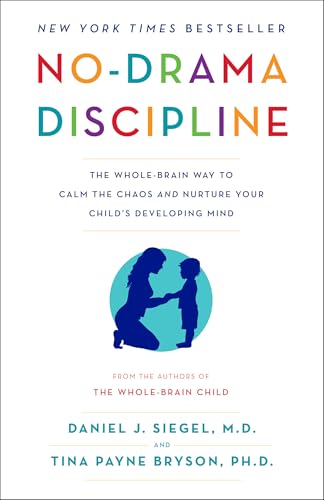
No-Drama Discipline, Siegel and Bryson’s follow-up, applies the same brain-based framework specifically to discipline, arguing that punishment aimed at the reactive lower brain rarely teaches the reflective skills discipline is meant to build.
The authors distinguish between short-term compliance, achieved through fear or punishment, and long-term skill-building, achieved through connection before correction, a distinction that reshapes how many parents approach misbehavior entirely.
- Applies brain-based science specifically to everyday discipline decisions.
- Distinguishes short-term compliance from long-term skill-building through connection.
- Argues punishment aimed at the reactive brain rarely builds lasting self-control.
4. The Explosive Child: A New Approach for Understanding and Parenting Easily Frustrated, Chronically Inflexible Children — Ross W. Greene, PhD

The Explosive Child by psychologist Ross W. Greene reframes chronic meltdowns as a skills deficit, specifically in flexibility and frustration tolerance, rather than willful defiance or poor parenting.
Greene’s Collaborative and Proactive Solutions model identifies specific lagging skills behind each explosive episode, then builds targeted plans to address them directly rather than relying on escalating consequences that rarely work for these children.
- Reframes chronic meltdowns as a skills deficit, not willful defiance.
- Introduces the Collaborative and Proactive Solutions model for targeted intervention.
- Moves away from escalating consequences that rarely help genuinely inflexible children.
5. Peaceful Parent, Happy Kids: How to Stop Yelling and Start Connecting — Laura Markham, PhD

Peaceful Parent, Happy Kids by clinical psychologist Laura Markham centers on the parent’s own emotional regulation as the foundation for a calmer household, arguing that a dysregulated parent cannot effectively soothe a dysregulated child.
Markham offers concrete strategies for managing a parent’s own anger before it escalates, alongside connection-based approaches to routine conflicts like bedtime and sibling rivalry that avoid relying primarily on punishment or rewards.
- Centers on parental self-regulation as the foundation for household calm.
- Offers concrete strategies for managing a parent’s own anger in the moment.
- Addresses bedtime and sibling conflict without relying primarily on punishment.
6. The Gardener and the Carpenter: What the New Science of Child Development Tells Us About the Relationship Between Parents and Children — Alison Gopnik
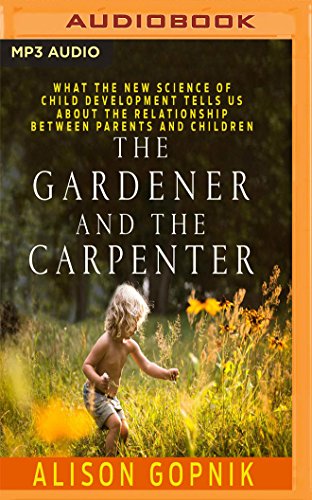
The Gardener and the Carpenter by developmental psychologist Alison Gopnik challenges the entire framing of modern parenting as a project with a fixed, controllable outcome, comparing it instead to gardening rather than carpentry.
Gopnik’s research suggests children develop best within a rich, varied, loving environment rather than through parents micromanaging every developmental outcome, a genuinely reassuring reframe for anxious, achievement-focused parents.
- Challenges outcome-focused ‘carpenter’ parenting in favor of a ‘gardener’ model.
- Draws on rigorous developmental psychology research rather than parenting trends.
- Offers reassurance to anxious parents who over-manage every developmental milestone.
7. NurtureShock: New Thinking About Children — Po Bronson and Ashley Merryman
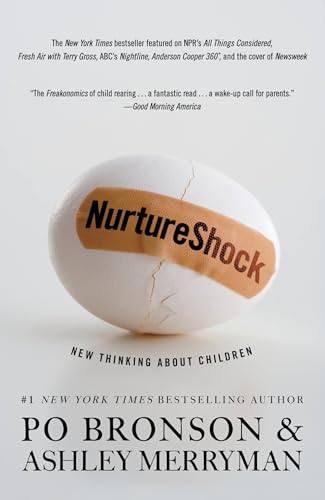
NurtureShock by journalists Po Bronson and Ashley Merryman surveys child development research that directly contradicts popular parenting intuition, including findings on praise, lying, and sibling relationships.
One widely cited chapter documents how excessive praise for intelligence, rather than effort, can measurably reduce a child’s willingness to attempt challenging tasks, a finding that reshaped how many educators approach classroom feedback.
- Surveys research that contradicts popular, intuitive parenting assumptions directly.
- Documents how praising intelligence over effort can reduce a child’s persistence.
- Covers lying, sibling dynamics, and other underexamined areas of child development.
8. Playful Parenting: An Exciting New Approach to Raising Children That Will Help You Nurture Close Connections, Solve Behavior Problems, and Encourage Confidence — Lawrence J. Cohen, PhD
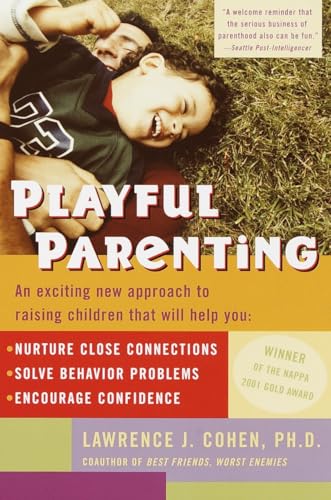
Playful Parenting by psychologist Lawrence J. Cohen treats play as a child’s primary language for processing difficult emotions, arguing that many behavior problems soften considerably once parents engage playfully rather than reactively.
Cohen offers specific play-based techniques for addressing common struggles, separation anxiety, sibling conflict, aggression, that work by meeting children in their own developmental mode rather than through adult-style verbal negotiation alone.
- Treats play as children’s primary language for processing difficult emotions.
- Offers specific play-based techniques for separation anxiety and sibling conflict.
- Engages children through their own developmental mode rather than adult verbal negotiation.
9. Raising a Secure Child: How Circle of Security Parenting Can Help You Nurture Your Child’s Attachment, Emotional Resilience, and Freedom to Explore — Kent Hoffman, Glen Cooper, and Bert Powell
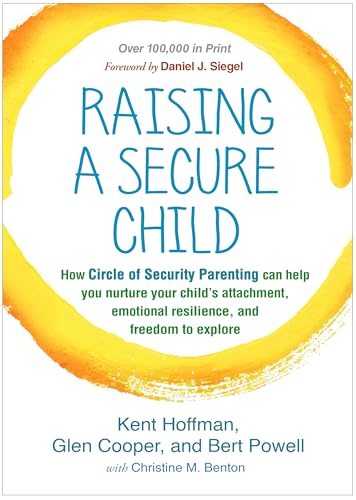
Raising a Secure Child by Kent Hoffman, Glen Cooper, and Bert Powell adapts their clinically validated Circle of Security program into an accessible self-help format, focused on balancing a child’s need for comfort with their need to explore independently.
The authors argue that perfect parenting is not the goal, or even possible; consistently ‘being with’ a child through both closeness and independence produces genuinely secure attachment over time.
- Adapts a clinically validated attachment program into accessible self-help form.
- Balances a child’s need for comfort with their need for independence.
- Rejects perfectionism in favor of consistent ‘being with’ over time.
10. Untangled: Guiding Teenage Girls Through the Seven Transitions into Adulthood — Lisa Damour, PhD
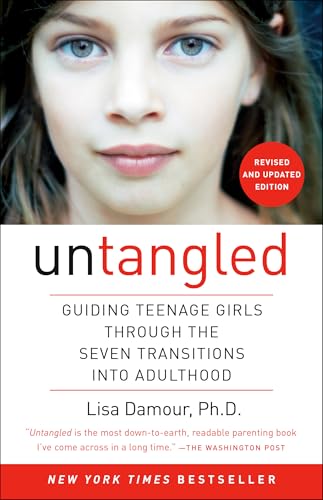
Untangled by clinical psychologist Lisa Damour maps seven normal developmental transitions specific to adolescent girls, from separating from parents to forming a sexual identity, helping parents distinguish typical adolescence from genuine concern.
Damour’s clear, research-grounded voice reassures parents that many alarming-seeming behaviors, moodiness, secrecy, sudden social shifts, reflect normal adolescent development rather than a crisis requiring immediate intervention.
- Maps seven specific developmental transitions unique to adolescent girls.
- Helps parents distinguish typical teenage behavior from genuine warning signs.
- Written by a practicing clinical psychologist specializing in adolescent development.
11. Simplicity Parenting: Using the Extraordinary Power of Less to Raise Calmer, Happier, and More Secure Kids — Kim John Payne
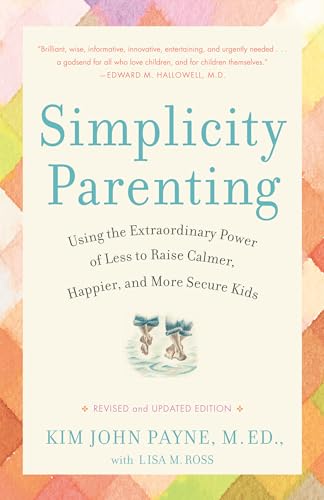
Simplicity Parenting by counselor Kim John Payne argues that many modern childhood behavior problems stem from environmental overload, too many toys, too many activities, too much stimulation, rather than purely psychological causes.
Payne’s four-step decluttering approach, covering environment, rhythm, schedules, and adult conversation exposure, aims to reduce a child’s baseline stress load, often producing noticeable behavioral improvement without any direct behavioral intervention at all.
- Frames many behavior problems as stemming from environmental overload, not psychology alone.
- Offers a four-step decluttering approach across environment, rhythm, and schedules.
- Aims to reduce a child’s baseline stress load before addressing specific behaviors.
How Does a Child’s Developing Brain Shape Emotional Meltdowns?
A meltdown is not defiance dressed up as chaos; it is often a genuine, temporary loss of access to the brain’s reasoning capacity, a distinction that changes how a parent might respond in the moment.
Neuropsychiatrist Daniel J. Siegel and psychotherapist Tina Payne Bryson explain that a child’s prefrontal cortex, responsible for impulse control and reasoning, develops gradually well into the twenties. During an emotional flood, the lower, more reactive brain regions effectively take over, which is why reasoning with a screaming toddler in that exact moment rarely works. The rational part of the brain is simply offline.
Siegel and Bryson’s ‘name it to tame it’ technique offers a practical response: helping a child verbally label the emotion, “you’re really frustrated,” activates brain regions that support regulation rather than escalation. This does not mean permissiveness. It means timing corrective conversation for after the storm passes, once the reasoning brain comes back online.
- The prefrontal cortex responsible for impulse control develops gradually into early adulthood.
- During emotional floods, reactive lower brain regions temporarily override reasoning capacity.
- Naming an emotion aloud activates regulation rather than escalating the meltdown further.
What Is the Circle of Security, and Why Does Attachment Matter So Much?
The Circle of Security, developed by Kent Hoffman, Glen Cooper, and Bert Powell, describes a child’s ongoing movement between seeking comfort from a caregiver and confidently exploring the world independently.
Secure attachment does not require a parent to be perfectly attuned every single moment. It requires being reliably available for both halves of that circle, comfort when a child returns distressed, and genuine support when a child ventures out to explore. Children whose caregivers consistently show up for both halves tend to develop more stable emotional regulation and social confidence over time, according to decades of attachment research the authors draw upon directly.
Alison Gopnik’s developmental research complements this framework nicely, arguing that children thrive within a rich, responsive environment rather than through constant parental micromanagement. Attachment security, in other words, comes from consistent presence, not flawless execution of any particular parenting technique.
- Secure attachment requires reliable availability, not moment-to-moment perfection from caregivers.
- Children need both comfort-seeking and independent exploration supported consistently over time.
- Consistent presence matters more than flawless execution of any single parenting technique.
How Do Common Parenting Myths Hold Up Against Child Development Research?
Several widely repeated parenting practices do not hold up well once tested directly against controlled research, and correcting these myths can meaningfully change how a household functions.
Journalists Po Bronson and Ashley Merryman documented one particularly striking finding: praising a child’s intelligence, rather than their effort or strategy, measurably reduces willingness to attempt harder tasks afterward. Children praised for being “smart” often avoid challenges that might threaten that label, while children praised for effort persist longer through genuine difficulty. A second common myth assumes children who lie are displaying a character flaw requiring firm correction. Bronson and Merryman’s research instead frames early lying as a normal cognitive milestone, tied to developing theory of mind, though ongoing intervention still matters over time.
These findings do not suggest abandoning praise or ignoring dishonesty entirely. They suggest adjusting the specific language and framing parents use, praising the process rather than a fixed trait, and responding to lying with curiosity rather than only punishment.
- Praising intelligence over effort can reduce willingness to attempt harder tasks.
- Early childhood lying often reflects a normal cognitive milestone, not a character flaw.
- Adjusting praise language toward effort produces more persistent problem-solving behavior.
Why Do Explosive or Highly Sensitive Children Need a Different Approach?
Some children experience frustration and transitions with an intensity that standard discipline approaches simply do not address, and treating these reactions as ordinary defiance often backfires considerably.
Psychologist Ross W. Greene‘s research reframes chronic explosive behavior as a skills deficit, specifically lagging skills in flexibility, frustration tolerance, and problem-solving, rather than willful manipulation. His Collaborative and Proactive Solutions model identifies the specific unsolved problems triggering repeated explosions, then works with the child directly to build missing skills rather than escalating consequences that have already failed repeatedly.
This approach requires a genuine shift in framing for many parents. A child is not “getting away with it” by receiving understanding rather than punishment; they are receiving the specific skill-building support that punishment alone has never provided. Greene is explicit that this does not mean permissiveness, but it does mean abandoning consequence-first strategies that clearly are not working for a chronically inflexible child.
- Chronic explosive behavior often reflects lagging skills, not willful manipulation.
- The Collaborative and Proactive Solutions model targets specific unsolved problems directly.
- Understanding-based approaches build missing skills that punishment alone rarely develops.
How Can Play Support a Child’s Emotional Development?
Play functions as a child’s primary language for processing difficult emotions, which is exactly why many behavior problems soften once parents engage playfully rather than purely reactively.
Psychologist Lawrence J. Cohen‘s research demonstrates that children often cannot verbally articulate complex fears or frustrations the way adults expect, but they can act them out through play, giving parents a genuine window into what is actually troubling a child. A child repeatedly playing out a “monster chasing” scenario, for instance, may be processing anxiety about something entirely unrelated to monsters.
Practically, this means joining a child’s play rather than only directing it, following their lead even when the scenario seems repetitive or strange to an adult observer. Cohen’s approach also uses playful roughhousing and silliness deliberately, to build connection and release tension, rather than treating play purely as idle time separate from genuine emotional development.
- Children process complex emotions through play rather than direct verbal articulation.
- Repetitive play scenarios often reveal underlying anxieties worth a parent’s attention.
- Joining a child’s play, rather than only directing it, builds genuine connection.
Common Misconceptions About Child Psychology These Books Correct
Popular parenting culture contains a fair amount of oversimplification, and several books on this list directly push back against the most persistent myths.
The most common misconception assumes a “good” child is simply one who rarely misbehaves, implying difficult behavior reflects poor character or poor parenting. Ross Greene’s research complicates this considerably, showing that explosive behavior often reflects a genuine skills gap rather than a character flaw in either the child or the parent. A second myth assumes intensive, highly structured parenting produces better outcomes than a more relaxed approach. Alison Gopnik’s developmental research directly challenges this, arguing that children thrive within a rich, varied environment rather than through constant parental engineering of every outcome.
A third misconception assumes teenage moodiness and secrecy always signal something seriously wrong. Lisa Damour’s research on adolescent girls pushes back on this, mapping normal developmental transitions that look alarming but rarely indicate genuine crisis. Distinguishing typical adolescence from real warning signs matters enormously for anxious parents.
- Difficult behavior often reflects a skills gap, not poor character in child or parent.
- Intensive, highly structured parenting does not reliably outperform a more relaxed approach.
- Typical adolescent moodiness rarely signals a crisis requiring immediate intervention.
When Should a Child’s Behavior Be Evaluated by a Professional?
Most challenging child behavior falls within a normal, if difficult, developmental range, but some patterns genuinely warrant evaluation by a pediatrician, child psychologist, or developmental specialist.
If explosive episodes occur frequently, escalate in intensity over time, or significantly disrupt school and family functioning despite consistent, informed parenting strategies, that pattern deserves professional evaluation rather than continued self-guided reading alone. Ross Greene’s own clinical work exists precisely because some children need structured, individualized support beyond what any book can offer at home. Similarly, if a teenager’s mood changes described by Lisa Damour as “normal” instead persist intensely for weeks, involve self-harm, or significantly impair daily functioning, that shifts from typical adolescence into territory requiring a mental health professional.
There is no failure in seeking professional support for a child’s behavioral or emotional struggles. Reaching out to a pediatrician or child psychologist reflects genuine attentiveness, not evidence that a parent has somehow failed by needing outside expertise.
- Frequent, escalating explosive episodes despite consistent strategies warrant professional evaluation.
- Intense adolescent mood changes involving self-harm require immediate mental health support.
- Seeking professional help reflects genuine attentiveness, not parental failure.
FAQs about Child Psychology Books
What is the best child psychology book for a new parent?
The Whole-Brain Child by Daniel Siegel and Tina Payne Bryson works well as a foundational starting point, since it explains basic brain development in accessible language that applies across a child’s entire early development, not just one specific age or issue. How to Talk So Kids Will Listen offers more immediately usable phrasing for daily interactions, which some new parents find easier to apply right away. Many readers eventually pair the two, using Siegel and Bryson’s book to understand the underlying science and Faber and Mazlish’s book for concrete daily scripts.
Is it true that praising children too much can actually hurt them?
It depends heavily on the type of praise, according to research summarized in NurtureShock by Po Bronson and Ashley Merryman. Praising intelligence or inherent talent, telling a child they are simply smart, has been shown to reduce willingness to attempt challenging tasks afterward, since failure then threatens that fixed identity. Praising effort, strategy, or specific actions taken produces more resilient, persistent behavior instead. The goal is not eliminating praise entirely, but shifting what specifically gets praised from fixed traits toward observable effort and process.
How do I know if my child’s tantrums are normal or something more serious?
Frequent tantrums during early childhood are developmentally typical, particularly given how slowly the brain’s self-regulation centers mature. Ross Greene’s research on explosive children suggests looking at frequency, intensity, and whether tantrums are gradually decreasing with consistent, informed strategies over months, not days. If explosive episodes are increasing in frequency or intensity despite consistent effort, occur across multiple settings, or significantly disrupt daily functioning at home and school, consulting a pediatrician or child psychologist is a reasonable next step rather than continuing to wait it out.
What is the Circle of Security, and is it different from general attachment parenting?
The Circle of Security, developed by Kent Hoffman, Glen Cooper, and Bert Powell, is a specific, clinically researched framework describing how children move between seeking comfort and exploring independently, and how caregivers can reliably support both halves of that cycle. It differs from some popular attachment parenting trends in that it does not require constant physical closeness or specific practices like extended co-sleeping. Instead, it emphasizes emotional availability and consistent responsiveness, which research suggests matters more for secure attachment than any single specific parenting technique.
Can play really help with serious behavior problems, or is that oversimplified?
Play-based approaches, as described in Lawrence Cohen’s Playful Parenting, work well for many common behavior challenges, separation anxiety, sibling conflict, mild aggression, since they meet children in their natural developmental mode rather than relying purely on verbal negotiation. That said, play-based strategies alone are not a complete substitute for more structured approaches when a child has significant, persistent behavioral difficulties, such as those addressed in Ross Greene’s work on explosive children. Combining play-based connection with more structured skill-building often works better than relying on either approach exclusively.
Are these books relevant for teachers and educators, not just parents?
Yes, and many of these frameworks translate directly into classroom settings. Daniel Siegel and Tina Payne Bryson’s brain-based strategies for emotional regulation apply just as well to a classroom meltdown as a home one. Ross Greene’s Collaborative and Proactive Solutions model has been widely adopted in schools specifically to reduce reliance on suspension and punishment for students with behavioral challenges. Lisa Damour’s research on adolescent development also helps educators distinguish typical teenage behavior from genuine warning signs requiring additional support at school.
Bibliography
- Bronson, P., and Merryman, A. (2011). NurtureShock: New Thinking About Children (Reprint Edition). Twelve.
- Cohen, L. J. (2002). Playful Parenting. Ballantine Books.
- Damour, L. (2017). Untangled: Guiding Teenage Girls Through the Seven Transitions into Adulthood. Ballantine Books.
- Faber, A., and Mazlish, E. (2012). How to Talk So Kids Will Listen & Listen So Kids Will Talk (30th Anniversary Edition). Scribner.
- Gopnik, A. (2016). The Gardener and the Carpenter: What the New Science of Child Development Tells Us About the Relationship Between Parents and Children. Farrar, Straus and Giroux.
- Greene, R. W. (2021). The Explosive Child: A New Approach for Understanding and Parenting Easily Frustrated, Chronically Inflexible Children (6th ed.). Harper Paperbacks.
- Hoffman, K., Cooper, G., and Powell, B. (2017). Raising a Secure Child: How Circle of Security Parenting Can Help You Nurture Your Child’s Attachment, Emotional Resilience, and Freedom to Explore. The Guilford Press.
- Markham, L. (2012). Peaceful Parent, Happy Kids: How to Stop Yelling and Start Connecting. Perigee.
- Payne, K. J. (2010). Simplicity Parenting: Using the Extraordinary Power of Less to Raise Calmer, Happier, and More Secure Kids. Ballantine Books.
- Siegel, D. J., and Bryson, T. P. (2012). The Whole-Brain Child: 12 Revolutionary Strategies to Nurture Your Child’s Developing Mind. Bantam.
- Siegel, D. J., and Bryson, T. P. (2016). No-Drama Discipline: The Whole-Brain Way to Calm the Chaos and Nurture Your Child’s Developing Mind. Bantam.
Use this citation format to reference the article clearly and help readers find the original source.
PsychologyFor. (2026). 11 Highly Recommended Child Psychology Books. PsychologyFor. https://psychologyfor.com/11-highly-recommended-child-psychology-books/