


You pick up one Chomsky book expecting dense linguistic theory and somehow end up reading a scathing critique of American foreign policy instead. Then the next one swings back toward cognitive science entirely. That whiplash is not confusion on your part. Noam Chomsky has spent seven decades operating in two seemingly separate worlds, revolutionizing theoretical linguistics while simultaneously becoming one of the most cited political dissidents alive, and the connective thread between those worlds is genuinely worth understanding.
The confusion makes sense once you realize both projects share the same underlying question: what shapes how a mind interprets information it receives, whether that information is a sentence or a news broadcast? Chomsky’s linguistic work asks how children acquire grammar from limited, messy input using an innate cognitive structure. His political work asks how adult citizens absorb, and often uncritically accept, a narrow range of acceptable opinion despite living in a formally free society. Both questions concern the gap between what the mind is given and what it constructs from that input, which is exactly why serious readers of either side of his work eventually find themselves curious about the other.
So where should a genuinely curious reader actually begin with such a sprawling body of work?
This guide reviews 12 essential books by Noam Chomsky, spanning linguistics, cognitive science, and political critique.
12 Essential Books by Noam Chomsky
Verified Top Picks- 1
 Noam Chomsky Syntactic Structures The landmark 1957 monograph introducing generative grammar and formal linguistic theoryCHECK TODAY'S PRICE
 - 2
 Noam Chomsky Language and Mind Connecting linguistic structure directly to the innate biological architecture of human cognitionCHECK TODAY'S PRICE
 - 3Noam Chomsky What Kind of Creatures Are We? Distilling fifty years of thought on language, knowledge, and human nature into accessible lecturesCHECK TODAY'S PRICE
- 4Edward S. Herman & Noam Chomsky Manufacturing Consent: The Political Economy of the Mass Media The definitive text introducing the five-filter propaganda model of institutional media biasCHECK TODAY'S PRICE
- 5Noam Chomsky Necessary Illusions: Thought Control in Democratic Societies Examining how democratic societies manufacture consent through structural ideological controlCHECK TODAY'S PRICE
- 6Noam Chomsky (Eds. Mitchell & Schoeffel) Understanding Power: The Indispensable Chomsky The most accessible, Q&A-based single introduction to Chomsky's political and social critiqueCHECK TODAY'S PRICE
- 7Noam Chomsky Profit Over People: Neoliberalism and Global Order A pointed critique of free-market deregulation, trade policy, and concentrated corporate powerCHECK TODAY'S PRICE
- 8Noam Chomsky Hegemony or Survival: America's Quest for Global Dominance Documenting post-Cold War foreign policy planning and the catastrophic risks of dominanceCHECK TODAY'S PRICE
- 9Noam Chomsky Who Rules the World? Examining post-9/11 geopolitical conflicts, drone warfare, and state power accountabilityCHECK TODAY'S PRICE
- 10Noam Chomsky Requiem for the American Dream: The 10 Principles Ten concise principles detailing the deliberate institutional concentration of wealth and powerCHECK TODAY'S PRICE
- 11Noam Chomsky On Anarchism Essays explaining libertarian socialism and placing the burden of proof on all authorityCHECK TODAY'S PRICE
- 12Noam Chomsky 9-11 Immediate post-9/11 interviews providing crucial historical context on the war on terrorCHECK TODAY'S PRICE
Why Does Noam Chomsky’s Work Span Both Linguistics and Politics?
Chomsky’s dual career is not a coincidence of interest; both fields grew from the same core conviction that human cognition contains structure worth investigating rigorously, rather than treating the mind as an empty vessel simply shaped by external input.
In linguistics, this conviction produced generative grammar, the theory that humans possess an innate capacity for language structure rather than learning grammar purely through imitation. In politics, a related conviction drives Chomsky’s media criticism: institutions shape public belief through structural mechanisms, not simply by lying outright, similar to how Chomsky argues grammar structures thought beneath conscious awareness. Readers drawn to one side of his work often discover the other side illuminates it further.
- Chomsky’s linguistics and politics share a common interest in underlying cognitive structure.
- Generative grammar argues language capacity is innate, not purely learned through imitation.
- Media criticism examines how institutions shape belief structurally, not merely through outright deception.
The 12 Essential Books by Noam Chomsky to Read
The following selection spans Chomsky’s foundational linguistics, cognitive science, media criticism, and political economy, covering the range of his work worth understanding as a coherent intellectual project.
1. Syntactic Structures — Noam Chomsky
Syntactic Structures, Chomsky’s 1957 monograph, introduced generative grammar to linguistics, arguing that a finite set of grammatical rules can generate an infinite number of sentences a speaker has never heard before.
The book is short, dense, and genuinely technical, but its core claim reshaped an entire academic field almost overnight. Understanding language, Chomsky argued, meant understanding the internal rule system the mind uses, not just cataloging observed speech.
- Introduced generative grammar as a formal model of linguistic competence.
- Argued a finite rule system can generate infinite novel sentences.
- Remains the foundational text that launched modern theoretical linguistics.
2. Language and Mind — Noam Chomsky

Language and Mind collects Chomsky’s essays connecting linguistic structure directly to questions about human cognition, arguing that language reveals something fundamental about the mind’s innate architecture.
This edition adds a chapter revisiting the ‘biolinguistic‘ approach that guided Chomsky’s work for decades, treating language as a genetically endowed biological system rather than a purely learned cultural product.
- Connects linguistic structure directly to broader questions about human cognition.
- Frames language as a biologically endowed system, not purely learned behavior.
- Bridges Chomsky’s technical linguistics with accessible philosophy of mind.
3. What Kind of Creatures Are We? — Noam Chomsky

What Kind of Creatures Are We? distills fifty years of Chomsky’s thinking on language, knowledge, and human nature into accessible, non-technical lectures aimed at general readers rather than fellow linguists.
Chomsky revisits the biolinguistic framework here, addressing directly why he believes the human capacity for language is innate rather than something a child must painstakingly learn from scratch through exposure alone.
- Summarizes decades of technical linguistic theory in accessible lecture form.
- Directly addresses why Chomsky considers language capacity innate, not learned.
- Serves as a strong entry point before tackling denser technical works.
4. Manufacturing Consent: The Political Economy of the Mass Media — Edward S. Herman and Noam Chomsky

Manufacturing Consent by economist Edward S. Herman and Chomsky introduces the propaganda model, arguing that structural factors, ownership, advertising, sourcing, flak, ideology, shape mainstream news coverage more than individual reporter bias ever does.
The book applies this model to specific historical case studies, showing how coverage of comparable atrocities differs sharply depending on whether the perpetrator is a US ally or adversary.
- Introduces the propaganda model of structural media bias.
- Co-authored with economist Edward S. Herman, adding empirical rigor.
- Applies the model to real historical media coverage case studies.
5. Necessary Illusions: Thought Control in Democratic Societies — Noam Chomsky
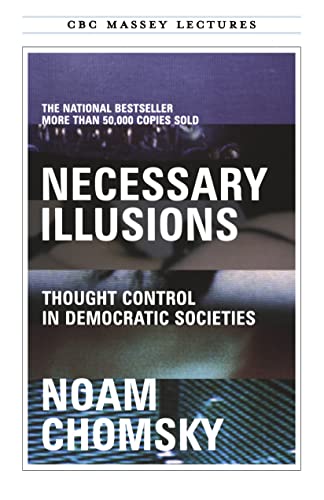
Necessary Illusions, based on Chomsky’s 1988 CBC Massey Lectures, extends the propaganda model’s argument that democratic societies rely on subtler forms of ideological control since direct force is unavailable.
Chomsky argues that manufacturing consent, rather than manufacturing compliance through coercion, becomes essential precisely because a population that can vote and speak freely must still be steered toward acceptable conclusions.
- Extends the propaganda model specifically to democratic ideological control.
- Based on Chomsky’s widely broadcast 1988 CBC Massey Lectures.
- Argues subtler consent-manufacturing replaces coercion in free societies.
6. Understanding Power: The Indispensable Chomsky — Noam Chomsky, edited by Peter R. Mitchell and John Schoeffel

Understanding Power, compiled by editors Peter R. Mitchell and John Schoeffel from Chomsky’s public talks and audience Q&As, offers the most conversational, accessible entry point into his political thought.
Because it is drawn from live discussions rather than formal writing, the book captures Chomsky responding directly to skeptical questions, which many readers find considerably easier to follow than his denser political texts.
- Compiled from live talks and Q&As rather than formal essays.
- Edited by Peter R. Mitchell and John Schoeffel for accessibility.
- Widely considered the best single introduction to Chomsky’s political thought.
7. Profit Over People: Neoliberalism and Global Order — Noam Chomsky
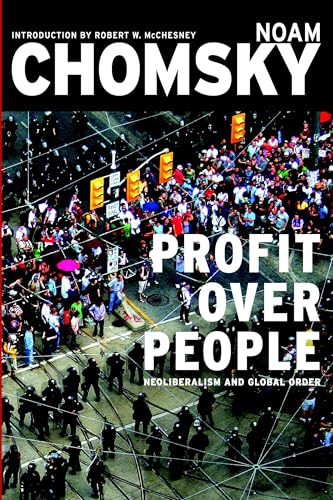
Profit Over People critiques neoliberal economic policy directly, arguing that deregulation and free-market orthodoxy since the 1970s primarily served concentrated corporate interests rather than the broad public promised expanded prosperity.
Chomsky combines historical examples with pointed critique of specific institutions, making the case that describing markets as simply ‘free’ obscures the deliberate policy choices that determined who actually benefits from them.
- Critiques neoliberal deregulation as primarily serving concentrated corporate interests.
- Combines historical examples with institutional critique of trade policy.
- Challenges the framing of markets as neutrally ‘free’ rather than policy-driven.
8. Hegemony or Survival: America’s Quest for Global Dominance — Noam Chomsky

Hegemony or Survival, an immediate bestseller upon release, argues that post-Cold War US foreign policy pursued global military and economic dominance as a deliberate strategic goal, documented through declassified planning documents.
The book’s central tension, hegemony versus survival, frames a specific worry Chomsky returns to repeatedly: that pursuing total dominance carries genuine risks, including nuclear escalation, that a less maximalist foreign policy would avoid.
- Documents US foreign policy planning through declassified government sources.
- Frames global dominance-seeking as carrying genuine escalation and nuclear risk.
- Became an immediate bestseller, reaching number one on Amazon’s charts.
9. Who Rules the World? — Noam Chomsky
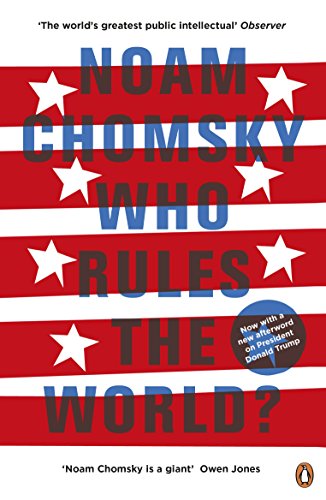
Who Rules the World? examines post-9/11 US foreign policy across drone warfare, the Syrian civil war, and Israel-Palestine, arguing that policymakers consistently prioritize power projection over stated commitments to human rights.
Chomsky’s central worry throughout is that public disengagement, whether through consumerism or directed hostility toward vulnerable groups, allows concentrated power to operate with minimal accountability or public scrutiny.
- Examines post-9/11 foreign policy across multiple specific conflict zones.
- Argues power projection consistently outweighs stated human rights commitments.
- Connects public disengagement directly to reduced accountability for power.
10. Requiem for the American Dream: The 10 Principles of Concentration of Wealth and Power — Noam Chomsky

Requiem for the American Dream, based on a documentary film, distills Chomsky’s decades of economic critique into ten specific principles describing how wealth concentration has been deliberately engineered rather than naturally occurring.
The condensed, numbered format makes this considerably more approachable than Chomsky’s denser academic writing, functioning almost as a summary companion to his broader body of economic and political critique.
- Distills economic critique into ten specific, numbered principles.
- Based on a companion documentary film, making it especially accessible.
- Argues wealth concentration reflects deliberate policy, not natural market outcomes.
11. On Anarchism — Noam Chomsky
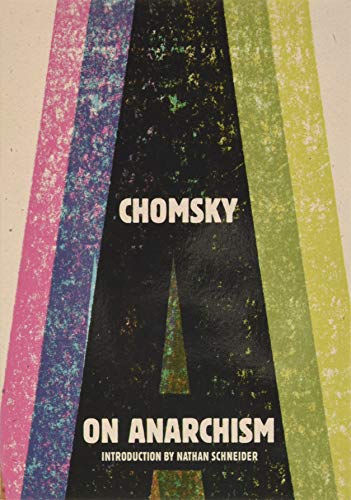
On Anarchism collects essays and interviews explaining Chomsky’s specific, less commonly understood brand of anarchism, one rooted in questioning the legitimacy of entrenched authority rather than rejecting all organization outright.
Chomsky’s core argument places the burden of proof on any authority structure to justify itself; structures that cannot meet that burden should be dismantled, a considerably more nuanced position than popular caricatures of anarchism suggest.
- Explains Chomsky’s specific anarchist framework, distinct from popular caricatures.
- Places the burden of proof on authority structures to justify themselves.
- Collects short essays and interviews, making it genuinely accessible in length.
12. 9-11 — Noam Chomsky

9-11, published weeks after the September 11 attacks, collects Chomsky’s immediate interviews addressing the attacks, the subsequent war on terror, and the historical context of US involvement in Afghanistan.
The book’s speed of publication captures Chomsky’s thinking in the moment, offering a genuinely useful historical snapshot of dissenting analysis during a period when public discourse in the United States left little room for it.
- Collects immediate post-9/11 interviews addressing terrorism and foreign policy.
- Provides historical context on US involvement in Afghanistan before 2001.
- Captures dissenting analysis published during a narrow window for public debate.
What Is Universal Grammar, and Why Did It Transform Linguistics?
Universal Grammar refers to Chomsky’s claim that humans are born with an innate cognitive structure specifying the possible forms grammar can take, which is why children acquire complex language from limited, often ungrammatical, real-world speech.
Before Chomsky’s Syntactic Structures, dominant linguistic theory treated language largely as a learned behavior, acquired through reinforcement and imitation like any other habit. Chomsky’s counterargument, sometimes called the poverty of the stimulus, points out that children reliably produce grammatically complex sentences they have never actually heard, using rule structures no one explicitly taught them. That gap between limited input and rich output demanded an explanation reinforcement alone could not provide.
This idea did not stay confined to linguistics departments. Psychologist Steven Pinker later popularized and extended Chomsky’s nativist framework in his own writing on language acquisition, bringing Universal Grammar into mainstream cognitive science discussions well beyond specialist linguistics journals. The theory remains debated today, but its core challenge to pure behaviorist learning models permanently reshaped the field.
- Universal Grammar proposes an innate structure specifying possible grammatical forms.
- The “poverty of the stimulus” argument explains complex output from limited input.
- Steven Pinker later extended Chomsky’s nativist framework into broader cognitive science.
How Did Chomsky’s Critique of Behaviorism Change Psychology?
Chomsky’s 1959 review of psychologist B. F. Skinner‘s book Verbal Behavior is often credited with helping end behaviorism’s dominance over academic psychology, redirecting the field toward cognitive explanations of mental processes.
Skinner had argued that language, like other behavior, could be explained entirely through reinforcement and conditioning, without needing to reference internal mental structures at all. Chomsky’s review argued this framework simply could not account for the creative, rule-governed nature of ordinary language production, since speakers constantly generate entirely novel sentence structures that reinforcement history alone cannot explain.
The review’s influence extended well beyond linguistics. Many historians of psychology consider it a pivotal moment in what became known as the cognitive revolution, the broader shift away from pure behaviorism toward studying internal mental representations directly. Whether Chomsky’s review alone caused this shift is debated, but it undeniably crystallized objections many researchers already held.
- Chomsky’s 1959 review challenged B. F. Skinner‘s purely behaviorist account of language.
- Argued reinforcement history cannot explain novel, rule-governed sentence production.
- Contributed to psychology’s broader shift toward studying internal mental representations.
What Is the Propaganda Model, and How Does It Explain Media Behavior?
The propaganda model, developed by economist Edward S. Herman and Chomsky in Manufacturing Consent, identifies five structural filters, ownership, advertising, sourcing, flak, and anti-communist ideology, that shape news coverage regardless of individual journalists’ intentions.
Ownership concentration means media outlets are typically owned by large corporations with their own financial interests. Reliance on advertising revenue creates pressure to avoid content that alienates major advertisers. Dependence on official sources, government press offices, corporate spokespeople, shapes which perspectives receive easy access to journalists in the first place. None of this requires deliberate conspiracy. The filters function structurally, producing predictable patterns of emphasis and omission simply through how the industry is organized financially.
Herman and Chomsky tested this model against specific historical cases, comparing coverage of comparable atrocities committed by US allies versus adversaries. The consistent pattern, extensive coverage of adversary atrocities, minimal coverage of ally-committed ones, supported their structural explanation over claims of simple individual reporter bias.
- The propaganda model identifies five structural filters shaping news coverage.
- Filters operate through financial structure, not necessarily deliberate individual conspiracy.
- Comparative case studies of ally versus adversary atrocities tested the model’s predictions.
How Does the Chomsky-Piaget Debate Explain Innate vs. Learned Cognition?
In 1975, Chomsky debated developmental psychologist Jean Piaget directly at a conference in France, and their disagreement crystallized one of the central questions in cognitive science: how much of cognition is innate versus constructed through a child’s active experience.
Piaget’s constructivist theory held that children build cognitive structures gradually through interacting with their environment, with language emerging from more general cognitive development rather than a dedicated, specialized module. Chomsky countered that language-specific structures must be innate, since the speed and uniformity of language acquisition across radically different environments and languages is difficult to explain through general-purpose learning alone.
Neither side fully conceded the debate, and echoes of this disagreement still run through developmental psychology today. Contemporary researchers generally occupy positions between the two extremes, acknowledging both genuine innate constraints and the real role of environmental interaction, rather than treating the question as a strict either-or choice the way the original debate sometimes implied.
- The 1975 debate pitted Chomsky’s innate language module against Piaget’s constructivism.
- Piaget argued cognition develops gradually through environmental interaction, not fixed modules.
- Contemporary developmental psychology occupies middle ground between innate and constructed cognition.
Common Misconceptions About Chomsky’s Work These Books Correct
Popular discussion of Chomsky often flattens a genuinely complex body of work into caricature, and several misconceptions deserve direct correction before diving into his books.
The most common misconception assumes Chomsky’s linguistics and his politics are entirely unrelated projects by the same coincidentally famous person. As explored earlier, both share a deep interest in cognitive structure and how minds process available information, whether linguistic or political. A second misconception treats Chomsky’s anarchism as advocacy for chaos or the total absence of organization. On Anarchism directly corrects this, framing his position as demanding that authority structures justify themselves rather than rejecting all structure outright.
A third misconception assumes the propaganda model claims journalists are consciously lying on behalf of corporate owners. Herman and Chomsky are explicit that the model describes structural pressures operating largely without deliberate coordination, which is a considerably more sophisticated claim than simple accusations of intentional deception.
- Chomsky’s linguistics and politics share deep thematic connections, not coincidental overlap.
- His anarchism demands justification from authority, rather than rejecting all organization.
- The propaganda model describes structural pressure, not deliberate journalist-level conspiracy.
Which Book Should You Start With Based on Your Interest?
Choosing where to begin depends heavily on whether your interest leans toward linguistics and cognitive science or political and economic critique.
Readers curious about language and the mind should start with What Kind of Creatures Are We?, since it summarizes decades of technical linguistic theory in accessible lecture form before attempting denser works like Syntactic Structures. Readers drawn to political critique should start with Understanding Power instead, given its conversational, Q&A-based format drawn directly from live talks rather than dense academic prose.
Readers specifically interested in media and propaganda should prioritize Manufacturing Consent, the single most influential and widely cited text in that specific area of Chomsky’s work. Those wanting a shorter, more contained introduction to his economic critique might prefer Requiem for the American Dream, given its numbered, documentary-based structure.
Readers with more time and patience might simply read Chomsky’s work in the rough chronological order it was written, since his political positions and linguistic theories both evolved considerably across seven decades, and watching that evolution unfold offers its own kind of insight into how a major thinker revises ideas over a long career.
| Reader Interest | Best Starting Book |
|---|---|
| Linguistics and cognitive science | What Kind of Creatures Are We? |
| General political thought | Understanding Power |
| Media and propaganda | Manufacturing Consent |
| Economic critique, shorter format | Requiem for the American Dream |
FAQs about Books by Noam Chomsky
What is the best Noam Chomsky book for a complete beginner?
Understanding Power works well for readers new to Chomsky’s political thought, since it is compiled from live talks and audience questions rather than dense academic writing, making the ideas considerably easier to follow. Readers more interested in his linguistics should start with What Kind of Creatures Are We? instead, which summarizes fifty years of technical theory in accessible lectures aimed at general readers. Either book provides a reasonable entry point before attempting denser, more specialized texts like Syntactic Structures or Necessary Illusions, which assume more background familiarity with the underlying frameworks.
Why is Noam Chomsky famous in both linguistics and politics?
Chomsky built his academic reputation first through linguistics, particularly his 1957 book Syntactic Structures, which introduced generative grammar and reshaped the entire field. His political writing developed alongside this academic career, growing out of his opposition to the Vietnam War in the 1960s and expanding into decades of media criticism and foreign policy analysis. Both areas of work share an underlying interest in cognitive structure, whether examining how children acquire language or how citizens absorb political information, which is why serious readers of one side often become curious about the other.
What is generative grammar, and is it still accepted today?
Generative grammar is Chomsky’s theory that a finite set of internalized grammatical rules allows humans to produce and understand an effectively infinite number of sentences, including ones never previously encountered. The theory has evolved considerably since 1957, and specific technical details remain actively debated among linguists, with some competing frameworks challenging aspects of the original model. That said, the core insight, that language involves systematic, rule-governed structure rather than simple imitation, remains broadly influential across linguistics, even among researchers who disagree with Chomsky’s specific technical proposals.
Is the propaganda model still relevant to today’s media landscape?
Many media scholars argue it remains relevant, though the specific mechanisms have evolved alongside changes in media ownership and distribution since Manufacturing Consent was first published in 1988. Concentrated ownership, dependence on advertising revenue, and reliance on official sources still shape coverage in ways the original model described. Some critics argue the rise of social media and independent digital outlets has complicated the model’s assumptions about centralized media control, while others argue new forms of algorithmic curation and platform ownership concentration simply represent updated versions of the same structural filters.
What is Noam Chomsky’s actual political philosophy, in simple terms?
Chomsky describes himself as a libertarian socialist or anarchist, though his specific position differs from popular caricatures of anarchism as advocating chaos or the absence of any organization. His core argument, laid out most directly in On Anarchism, holds that any structure of authority, whether government, corporate, or otherwise, must justify its own legitimacy, and structures that cannot meet that burden of proof should be dismantled or fundamentally reformed. This framework applies his skepticism toward unjustified hierarchy across economic, political, and social institutions rather than targeting any single type of authority alone.
Should I read Chomsky’s linguistics books or his political books first?
There is no required order, and the choice depends entirely on your own interests. Some readers find the linguistics more approachable once they already understand Chomsky’s broader intellectual project through his political writing, since the underlying interest in cognitive structure becomes clearer with that context. Others prefer starting with linguistics specifically because it is less emotionally charged and controversial than his foreign policy critique, making it easier to evaluate his arguments on their own terms before encountering the more polarizing political material.
Bibliography
- Chomsky, N. (2001). 9-11. Seven Stories Press.
- Chomsky, N. (2002). Understanding Power: The Indispensable Chomsky (P. R. Mitchell and J. Schoeffel, Eds.). The New Press.
- Chomsky, N. (2002). Syntactic Structures (2nd ed.). Walter de Gruyter.
- Chomsky, N. (2004). Hegemony or Survival: America’s Quest for Global Dominance. Holt Paperbacks.
- Chomsky, N. (2006). Language and Mind (3rd ed.). Cambridge University Press.
- Chomsky, N. (2013). Necessary Illusions: Thought Control in Democratic Societies (2nd ed.). House of Anansi Press.
- Chomsky, N. (2013). On Anarchism. The New Press.
- Chomsky, N. (2017). Requiem for the American Dream: The 10 Principles of Concentration of Wealth and Power. Seven Stories Press.
- Chomsky, N. (2017). Who Rules the World? Hamish Hamilton.
- Chomsky, N. (2018). What Kind of Creatures Are We? Columbia University Press.
- Chomsky, N. (2011). Profit Over People: Neoliberalism and Global Order. Seven Stories Press.
- Herman, E. S., and Chomsky, N. (2002). Manufacturing Consent: The Political Economy of the Mass Media. Pantheon.
Use this citation format to reference the article clearly and help readers find the original source.
PsychologyFor. (2026). 12 Essential Books by Noam Chomsky. PsychologyFor. https://psychologyfor.com/12-essential-books-by-noam-chomsky/