

What do we know about bipolar disorder? What can we do to identify it? What treatment is most effective? Below I resolve all these doubts.
See more of our articles in your search results.
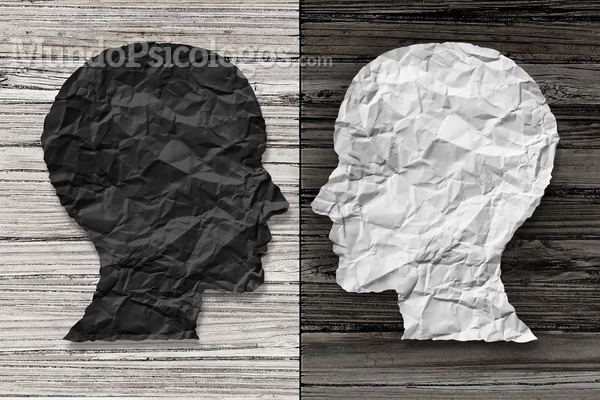
He Bipolar disorder It is a severe mental disorder in which two distinct states occur, depressive phases and phases of excessive euphoria or well-being called manic phase.
I would like to first explain what this mental illness is based on, since there is a tendency to say too easily that one person or another is bipolar, and it is a fairly important problem that is talked about without knowing much. who suffers Bipolar disorder You will do it all your life, but what can be achieved is that the symptoms are controlled. I compare it to diabetes, someone who is diabetic will be diabetic all their life, but treatment will help them not notice the symptoms.
The first of all is to indicate that there are different degrees and typologies; but they are all based on the same premise, a series of sudden mood changes without an apparent cause. These changes fluctuate between a deep depressive state that can have a different duration from one person to another and a state of euphoria in which one tends to think little, act impulsively and believe oneself capable of anything.
The main problem with bipolar disorder is that it is not easily recognized by oneself since when the person is in the manic phase they believe that they have no problem, they feel good about themselves and everything flows. However, from the outside the person is perceived as crazy, impulsive, you notice that ideas come gushing out of his mouth, he does not think about what he says and he can lose friends or relationships because of this. On other occasions they can perform self-destructive behaviors in which there is a tendency to search for sensations. Examples of this are: consumption of toxic substances, reckless driving, risky sexual practices, etc.
How many of these have you been "meaning to read" for months?
- 1
 Spiegel & GrauCodependent No MoreHow to Stop Controlling Others and Start Caring for Yourself (Revised and Updated)Listen Free On Audible
 - 2
 THOUGHT CATALOGThe Mountain Is YouTransforming Self-Sabotage Into Self-MasteryListen Free On Audible
 - 3
 TarcherThe Artist's Way30th Anniversary EditionListen Free On Audible
The person only feels discomfort when they are in depressive phase This state is usually quite accentuated and more so due to the contrast between the manic and depressive phases. You feel great apathy, you stop doing things to the point of losing your job, for example, or not taking care of your responsibilities, not eating well, and giving up completely. Many people with bipolar disorder think of themselves as simply depressed people who go through “slots.”
I am bipolar?
The first step is to realize those fluctuations Detect if you have times in which you feel unstoppable, perfect and very encouraged and other times in which you are totally dejected and without desire for anything. If all of this interferes with your life, go to a specialist who can help you clarify that doubt.
It must be remembered that bipolar disorder has a hereditary component You will not necessarily inherit the disease if your father, mother, uncles or grandparents suffer from it, but it may be a factor that makes it more likely. If there is a history of bipolar disorder or depression in your family, and you notice fluctuations in your mood without anything important happening in your life, consider seeing a specialist.
We must keep in mind that there are life circumstances that can make us feel euphoric or very sad and that does not mean we will be bipolar. Obviously, if you are given an expected job you will feel euphoric, or if you are fired from your job you may feel very sad. That doesn’t make you bipolar.
If I am bipolar, what treatment should I follow?
The most normal thing is that people come to therapy when they are in a depressive phase, since when they are in a manic phase they usually feel good. Depression is usually something that bothers and causes problems, but mania does not always pose a difficulty in a person’s life (apparently). In fact, many times these patients abandon therapy when they overcome the depressive phase. They often believe that therapy is no longer necessary and that they can take care of themselves. Which is a mistake, since in this way only the surface symptoms are resolved but the bipolar disorder is not addressed.
From my point of view, I consider that the most effective treatment for bipolar disorder, and for any serious mental illness, is combined between pharmacological treatment and psychological treatment Pharmacological treatment alone relieves symptoms and stabilizes emotional states, but the person will depend on medication to feel better and will not feel in control of their life.
On the other hand, psychological treatment alone is not the most effective either, since it is necessary for the person to stabilize a little emotionally to be able to work in therapy. I will not talk about pharmacological treatment, since I am not a psychiatrist and I am not specialized in psychotropic drugs. To do this, it is best to turn to a psychiatry specialist who will carry out a study and provide the drug that best suits the person. Regarding psychological treatment, empirically speaking the most effective treatment is cognitive-behavioral. Which means that new ways of acting are worked on in therapy based on how we think and how we feel. This is the treatment that is based on the most studies, but there are other psychological orientations that are also effective, although they are not as proven because not as many studies have been carried out. From my particular point of view (I say particular because it is still an opinion and does not have to be the only one), each person is different and depending on the person, one type of treatment or another is better. Therefore, I consider that the best option is to look for a therapist who has a integrative vision that is, it is not based on a single orientation and focuses on providing therapy adapted to the person.
In bipolar disorder, the fundamental thing is to alleviate the symptoms and once these are controlled, that is when the therapy really begins. At this moment is when self-destructive dynamics can be detected, recognize when the person is going to move from one phase to another, understand each other, listen to each other and learn to live with this disease that will accompany them for the rest of their life. The objective should be to ensure that the person has the maximum quality of life and that these fluctuations affect them as little as possible in their daily life.
Encarni Muñoz Silva
Health psychologist 16918
Use this citation format to reference the article clearly and help readers find the original source.
PsychologyFor. (2024). What is the Most Effective Treatment for Bipolar Disorder?. PsychologyFor. https://psychologyfor.com/what-is-the-most-effective-treatment-for-bipolar-disorder/