

See more of our articles in your search results.
Phobias are very common anxiety disorders, and one of the main causes of visits to Psychology centers. In addition to classic phobias, such as the fear of flying (aerophobia) or the fear of heights (acrophobia), there are less common phobias, which you can learn about in our article “The 15 strangest phobias that exist.”
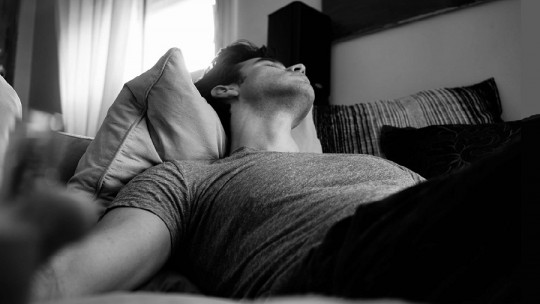
Some phobias may not be a big problem for the person who suffers from them, since the presence of the phobic stimulus is unusual. Now, other phobias are really disabling, such as This is the case of the fear of sleeping, which is called hypnophobia, oneirophobia and somniphobia
In this article we will talk about this phobia and explain its causes, symptoms and consequences.
What is hypnophobia
Phobias are anxiety disorders that are characterized because the person who suffers from them feels an irrational fear of a stimulus (situation, object, animal, etc.). One of its main symptoms is extreme anxiety and avoidance of the feared stimulus by the affected person as a result of the discomfort they suffer.
There are many types of phobias, as you can see in our article “Types of phobias: exploring fear disorders”, and one of the most disabling is the fear of sleeping, since this act is necessary for human beings and provides many benefits for us. health. People who do not rest properly see their quality of life and well-being, both physical and mental, deteriorate.
How many of these have you been "meaning to read" for months?
- 1
 MarinerSAS Survival Handbook, Third EditionThe Ultimate Guide to Surviving Anywhere ― The Classic Survival Handbook, Updated with Urban Su...Listen Free On Audible
- 2
 TarcherThe Artist's Way30th Anniversary EditionListen Free On Audible
- 3
 American GirlThe Care and Keeping of You 1The Body Book for Younger Girls (American Girl® Wellbeing)Listen Free On Audible
The phobia of sleeping usually occurs at any age, when the person has to go to bed, when they think that they may die during the night or because of the nightmares they suffer Extreme anxiety leads the subject to a state of panic and insomnia that can be highly harmful to their health. In this sense, it is necessary to treat this phobia, which usually requires not only psychological treatment, but in some cases also pharmacological treatment. This pathology is serious, so it usually requires professional help.
Causes of sleep phobia
Regardless of the type of phobia, the causes of developing these pathologies are usually common. The emotion of fear is learned, and the phobia can appear due to associative learning called “Classical Conditioning”. Therefore, Phobias develop by the association of an unconditioned stimulus that elicits a reflex response of fear and another that originally does not provoke it, called a neutral stimulus After both stimuli are presented together and as a consequence of the unpleasant experience, the neutral stimulus, now a conditioned stimulus, can elicit a fear response, called a conditioned response.
The first Classical Conditioning experiments with humans were carried out in the 1920s, when John Watson made a boy, named Albert, develop a phobia of a white rat with which he had previously played. This experiment could not be carried out today, since it would be considered unethical.
Other causes of this disorder
Although Classical Conditioning is the most common cause of this disorder, it can also appear due to vicarious conditioning, which is a type of observational learning. You can delve deeper into this concept by clicking on this link.
Experts also conclude that phobias have a biological origin, since the emotion of fear has an adaptive function, and has been very important for the survival of human beings throughout history. Phobias develop through primitive associations (in the primitive brain) and not in the rational brain (neocortex). This is the reason why they do not respond to logical arguments, which means that patients with this pathology are aware of what is happening to them but cannot overcome the phobia, in many cases, without professional help.
Symptoms
Phobias can appear when faced with different phobic stimuli; However, the symptoms do not vary from one type to another. This disorder affects a person in different ways, both cognitively, behaviorally and physically
Regarding cognitive symptoms, fear, anxiety, catastrophic thoughts, confusion and lack of concentration appear. Regarding behavioral symptoms, the person experiences a great need to avoid the feared stimulus in order to reduce discomfort. Finally, the characteristic physical symptoms are: headache, shortness of breath and hyperventilation, nausea or muscle tension, among others.
Treatment and therapy
Phobias are common disorders, but luckily they respond well to treatment. Psychological therapy has been shown to help patients, according to scientific studies. However, in the case of hypnophobia, drugs can also be administered that, as the treatment progresses, are gradually withdrawn.
Regarding psychological therapy, cognitive behavioral therapy is the treatment par excellence. In this therapeutic method, different techniques are used, such as relaxation techniques and exposure techniques, both of which are very useful to treat this pathology.
The best-known technique to help the patient overcome the phobia is systematic desensitization, which consists of exposing the patient to the phobic stimulus gradually but he previously receives training in coping strategies.
In addition to cognitive behavioral therapy, Mindfulness-based cognitive therapy and acceptance and commitment therapy work very well for the psychological treatment of phobias.
Use this citation format to reference the article clearly and help readers find the original source.
PsychologyFor. (2024). Fear of Sleeping (hypnophobia): Causes, Symptoms and Treatment. PsychologyFor. https://psychologyfor.com/fear-of-sleeping-hypnophobia-causes-symptoms-and-treatment/