


A man wakes up to the sound of an alarm. He rushes through his morning routine — coffee, clock-watching, commuting — barely pausing to notice anything around him. He is everywhere except where he is. And then, abruptly, something breaks the pattern. Time folds back on itself. He is given a second chance, and then another, and then another — not to achieve something great, but to simply be present in the life he was already living. That is the quiet, powerful premise of Destiny, a French animated short film created in 2012 by students Fabien Weibel, Sandrine Wurster, Victor Debatisse, and Manuel Alligné at Bellecour École d’Art. In roughly five minutes, with no dialogue and a single looping narrative, it communicates something that entire self-help libraries struggle to convey.
The film has circulated widely online and has been adopted by educators, therapists, and psychology writers as a visual tool for discussing mindfulness, present-moment awareness, and the psychological cost of living on autopilot. It resonates because it describes something almost everyone recognizes: the experience of moving through your own life as though you were watching it from a slight distance — technically present, emotionally elsewhere. This article explores what Destiny is about, why it touches something so deep in its viewers, and what the psychological science behind its central themes actually tells us about the human experience of time, attention, and the here and now.
Whether you’ve seen the short or not, what follows is genuinely useful. Because the questions it raises aren’t about animation — they’re about how you spend your days, where your attention goes, and whether the life you’re living is the one you’re actually experiencing.
What Happens in Destiny: A Summary of the Animated Short Film
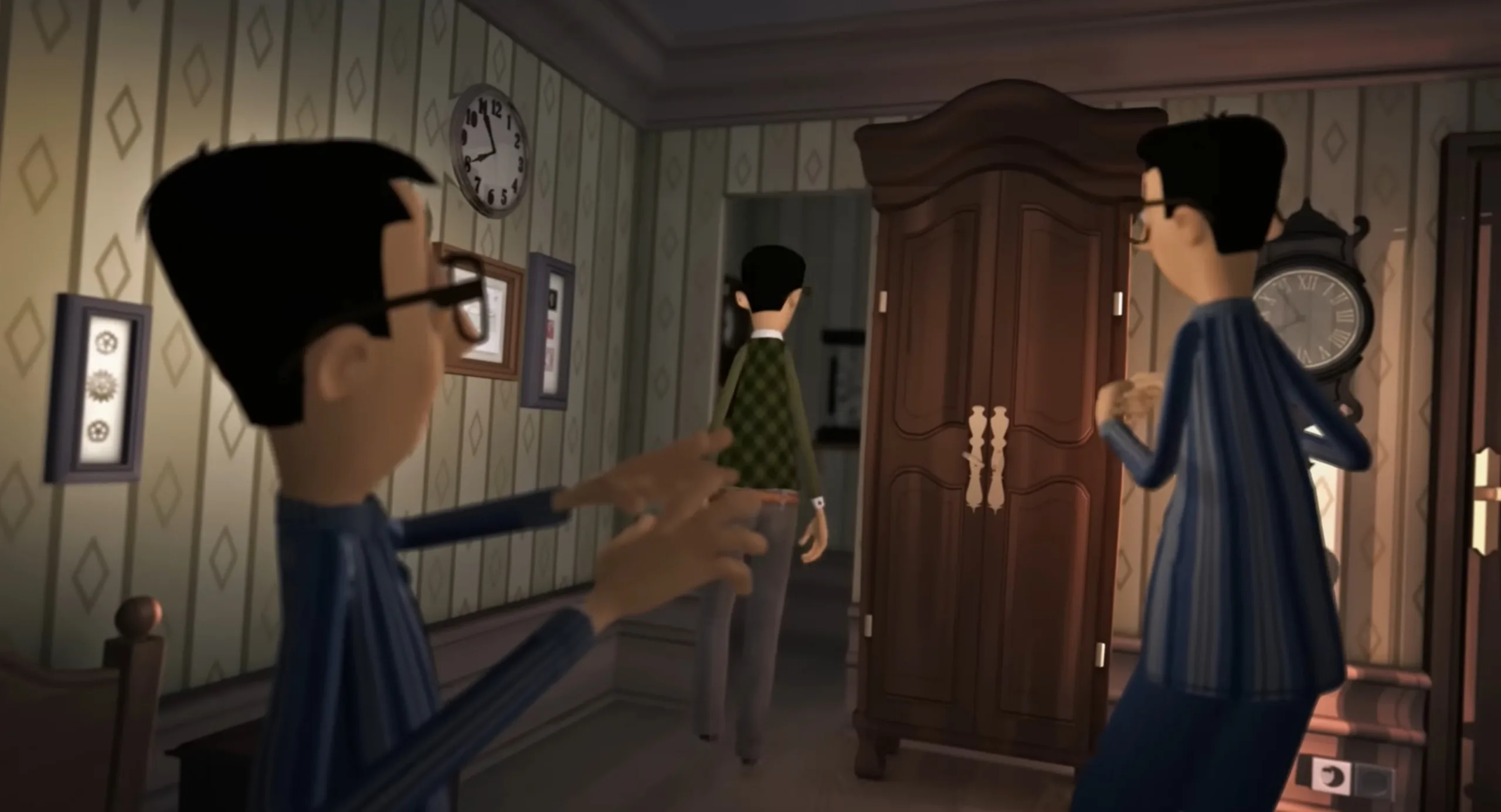
Destiny follows a man named Joe whose life is dominated by clocks. His apartment is filled with them. His morning is a sequence of timed mechanical actions — alarm, shower, coffee, rush — executed with the efficiency of someone who has optimized every minute out of any possibility of actually enjoying it. He is, in the most literal visual sense, a man living at the mercy of time rather than within it.
On what appears to be an ordinary morning, Joe is hit by a car and killed. But rather than ending there, the narrative loops. He wakes again to the same alarm, watches himself go through the same morning from an external vantage point, and witnesses his own death. The loop repeats. Each iteration, he experiences the same sequence of events from a slightly different perspective — initially as a bewildered observer, then gradually with growing awareness and intentionality.
The turning point comes when Joe stops trying to escape the loop or defeat the outcome, and instead begins to actually notice the morning he has been rushing through. He pauses. He breathes. He looks at things. He sets down his coffee cup without checking the clock. And in doing so — in the smallest, most mundane acts of genuine attention — the quality of his experience transforms entirely. The same events, the same apartment, the same ordinary Tuesday: but now inhabited rather than endured.
The film’s ending is deliberately open. What changes is not the external circumstances but Joe’s relationship with them. The message the filmmakers embed in this loop — which they describe as an invitation to do a STOP, to leave space for reflection instead of facing the day on autopilot — is one of the most elegant visual metaphors for mindfulness that exists in short-form animation.
The Psychology of Autopilot: Why We Stop Noticing Our Own Lives
Joe’s predicament is not fictional. Research in cognitive psychology has established that a substantial portion of daily experience — some estimates suggest more than 40% of waking hours — is spent in a state of habitual, automatic processing rather than conscious, present-moment engagement. This is the autopilot mode: the brain running familiar routines with minimal conscious involvement, freeing up cognitive resources for other tasks.
Autopilot is genuinely useful. It allows you to drive a familiar route, make breakfast, and navigate routine conversations without consuming the full bandwidth of conscious attention. Without it, daily life would be cognitively overwhelming. But there is a significant cost: when automatic processing becomes the default mode of living rather than a selective tool, you stop experiencing your life as it happens. You are present in body but absent in attention. The morning coffee you’ve made a thousand times becomes invisible. The commute evaporates. The day arrives at its end without having been truly inhabited.
Psychologists Matthew Killingsworth and Daniel Gilbert’s research on mind-wandering found that people spend nearly half their waking time thinking about something other than what they are currently doing — and that this mind-wandering, regardless of its content, is consistently associated with lower reported happiness than being engaged with the present moment. The implication is stark: the degree to which you are actually here has a measurable effect on how satisfied you feel with your life, independent of what is actually happening.
Joe’s clock-filled apartment is a perfect visual externalization of this internal state: a life so organized around measurement and control that the living itself has been crowded out. The practical takeaway: notice, today, how much of your experience you are actually registering versus moving through on autopilot. That noticing — without judgment — is precisely where change begins.

Time Loops and Second Chances: What the Film’s Structure Says About Awareness
The time loop is one of narrative fiction’s most psychologically resonant devices — and not only because of its dramatic potential. The loop structure forces a confrontation with repetition that ordinary linear storytelling cannot achieve. When Joe relives the same morning multiple times, he is not experiencing new events. He is experiencing the same events with changing levels of attention. And that shift in attention is what changes everything.
This is a precise visual analogy for what mindfulness practitioners describe as beginner’s mind — the practice of approaching familiar experiences as though encountering them for the first time. The opposite of beginner’s mind is the habituated perception that characterizes autopilot: the sense that because you’ve seen this before, there’s nothing here worth really looking at. Familiarity breeds invisibility. The loop in Destiny literalizes the possibility of disrupting that habituated perception — of seeing the ordinary morning again, genuinely, for the first time.
From an acceptance and commitment therapy (ACT) perspective, the film illustrates one of the central skills of psychological flexibility: present-moment awareness, or the capacity to make deliberate, full contact with experience as it unfolds rather than relating to it through the filter of past habit or future anticipation. The loop gives Joe what ACT practitioners help clients develop in therapy — multiple perspectives on the same experience, creating the psychological distance needed to notice what is actually happening rather than what habit predicts should be happening.
The loop is also a mercy. It says: you don’t have to get it right the first time. But you do have to eventually stop sleepwalking. Every loop is an invitation that expires. The film never specifies how many loops are available — which is perhaps its wisest narrative choice. Neither does life.
The Psychological Science of Present-Moment Awareness and Mindfulness
The central psychological concept that Destiny illustrates — present-moment awareness — is among the most extensively researched topics in contemporary psychology. It sits at the core of mindfulness-based interventions that have accumulated a substantial evidence base across the past three decades.
Mindfulness, as defined in the research literature most associated with Jon Kabat-Zinn, involves paying attention on purpose, in the present moment, without judgment. This deceptively simple description contains several important elements. On purpose distinguishes mindful attention from accidental noticing. In the present moment distinguishes it from rumination (dwelling on the past) or worry (anticipating the future). Without judgment distinguishes it from the evaluative, critical processing that typically accompanies conscious self-reflection.
The evidence for the benefits of cultivating present-moment awareness is substantial:
- Reduced anxiety and depression: Mindfulness-based cognitive therapy (MBCT) has been shown to significantly reduce the risk of depressive relapse in people with recurrent depression, with effects comparable to antidepressant medication in many studies.
- Improved stress regulation: Mindfulness-based stress reduction (MBSR), an eight-week structured program developed by Kabat-Zinn, consistently shows reductions in perceived stress, anxiety, and self-reported burnout across diverse populations.
- Enhanced emotional regulation: Present-moment awareness reduces the tendency toward emotional reactivity by creating a brief but meaningful gap between stimulus and response — the same gap that Joe develops across his loops.
- Greater life satisfaction: Multiple studies link dispositional mindfulness — the natural tendency to be present and aware in daily life — to higher levels of subjective wellbeing, relationship satisfaction, and sense of meaning.
What Destiny communicates visually in five minutes, the research literature confirms empirically across hundreds of studies: the quality of your attention to your own life determines the quality of your experience of it.
Fate vs. Free Will: The Deeper Philosophical Question the Film Raises
The film’s title is not accidental. Destiny invites the oldest philosophical question in human experience: is what happens to us predetermined, or do our choices shape our path? The narrative plays deliberately with this tension — Joe appears doomed to repeat a fixed sequence of events, yet the loops themselves suggest that something within the repetition can shift.
Most Western philosophical and psychological traditions take a position that the film ultimately affirms: that while we cannot always control external events, we retain agency over our response to them. This is not a new insight — it appears in Stoic philosophy (Epictetus: “It is not things that disturb us but our judgements about things”), in Viktor Frankl’s logotherapy (the freedom to choose one’s attitude toward any given circumstance, even in extremity), and in the contemporary psychological framework of acceptance and commitment therapy, which distinguishes between what you can control (your values, attention, and chosen actions) and what you cannot (external events, other people, the past).
The film’s most important message is precisely here: Joe cannot prevent the car. What changes across the loops is not the external event but his presence within the minutes that precede it — whether he moves through them as a sleepwalker or inhabits them as a person who is actually alive. The destiny that matters, the film suggests, is not the final event but the quality of attention brought to the moments that constitute a life.
This is a psychologically rich reframe. Many people expend enormous cognitive and emotional energy on outcomes they cannot control — worrying about the future, replaying the past — while remaining largely absent from the present moment where their actual life is taking place. Destiny poses the question gently but directly: what if the only destiny worth caring about is the one you’re constructing right now, with your attention?
The Symbolism of Clocks: What Joe’s Apartment Tells Us About Anxiety and Control
The visual design of Joe’s apartment — lined floor to ceiling with clocks, every surface time-marked, every action scheduled — is one of the film’s most psychologically precise choices. It externalizes an internal state that many people will recognize immediately: the anxious relationship with time that characterizes chronic stress, perfectionism, and the particular modern pathology of hyperproductivity.
When clocks dominate a person’s psychological landscape, time shifts from a neutral medium in which life happens into a source of threat and scarcity. There is never enough of it. Every moment not optimized is a moment wasted. The present becomes instrumentalized — valuable only as a means to some future outcome — rather than inhabited as an end in itself. This orientation is the psychological opposite of present-moment awareness, and it carries measurable costs: elevated cortisol, chronic low-grade anxiety, diminished capacity for pleasure and connection, and a persistent sense that life is always somewhere slightly ahead of where you currently are.
Psychologists studying what is sometimes called time urgency — a component of Type A behavioral patterns — have linked this orientation to higher rates of cardiovascular stress response, interpersonal difficulty, and reduced life satisfaction. The person who is always conscious of the clock is, in a very real sense, never quite present in the room they’re standing in.
Joe’s clocks are, of course, also a metaphor for mortality — the awareness of finitude that can either paralyze or liberate, depending on how it is metabolized. Terror management theory, developed by psychologists Jeff Greenberg, Sheldon Solomon, and Tom Pyszczynski, proposes that much of human behavior is driven by the need to manage the anxiety generated by awareness of death. The irony Destiny illuminates is that the strategy Joe uses to manage that anxiety — controlling every second, optimizing every minute — is precisely what strips those minutes of any experiential richness worth protecting.

Breathing as an Act of Presence: The Film’s Most Overlooked Moment
Among the film’s quieter moments — easily missed amid its dramatic structure — is the simple act of Joe stopping to breathe. No loop-breaking revelation. No cinematic insight. Just a pause, and a breath, and a moment of genuine stillness in the middle of a morning that has otherwise been a performance of busyness.
This moment is psychologically significant in a way that exceeds its visual simplicity. Deliberate conscious breathing is one of the most evidence-supported entry points into present-moment awareness available. When attention is brought to the breath — its rhythm, its physical sensation, the slight pause between inhale and exhale — the mind is anchored to the present moment in a way that is difficult to achieve through cognitive effort alone. Breathing cannot be done in the past or the future. It happens only now.
From a neuroscientific perspective, slow, deliberate breathing directly activates the parasympathetic nervous system through stimulation of the vagus nerve, reducing physiological arousal and creating the physiological conditions in which present-moment awareness becomes more accessible. The extended exhale, in particular, is associated with increased heart rate variability — a marker of nervous system flexibility that correlates with better emotional regulation.
The practical invitation here is as accessible as it is powerful: right now, wherever you are reading this, you can take one slow, deliberate breath. Not as a technique or a performance of wellness — simply as an act of arriving. That is what Joe discovers in the film. That breath is not a pause from living. It is living.
How to Use Destiny as a Tool for Personal Reflection and Growth
The film has been used effectively in therapeutic, educational, and personal development contexts as a catalyst for reflection. Its power lies in its brevity and its emotional accessibility — it demonstrates rather than argues, shows rather than instructs. Here are some structured ways to engage with it beyond simply watching:
- Watch it twice in succession. The first time, follow the story. The second time, pay attention to what Joe notices in his later loops that he missed in his earlier ones. What specifically changes? This parallels the mindfulness exercise of doing something familiar with deliberate, fresh attention.
- Map your own morning routine. After watching, spend five minutes writing down what you actually experience during your morning — not what you do, but what you notice, feel, and sense. How much of it registers consciously? Where does autopilot take over?
- Identify your own clocks. What are the mental equivalents of Joe’s apartment for you? What preoccupations, schedules, or productivity metrics dominate your psychological landscape in a way that may be crowding out presence?
- Practice a deliberate STOP. Once a day, for one week, pause for 60 seconds in the middle of a routine activity — eating, commuting, making coffee — and bring full sensory attention to it. Notice what you have been missing.
- Reflect on the loop question. If you were given the opportunity to relive today, what would you do differently — not in terms of decisions, but in terms of attention? That reflection often reveals where your presence is most consistently absent.
Why Animated Short Films Are Powerful Tools for Psychological Education
The use of short-form animation as a vehicle for psychological insight is not accidental, and the effectiveness of films like Destiny in communicating complex ideas is supported by what we know about how the brain processes narrative and visual information.
Narrative engagement activates what psychologists call transportation — a state of absorption in a story that reduces critical resistance and allows the emotional and cognitive content of the narrative to be processed more directly than didactic instruction. When you are transported by a story, you temporarily adopt the perspective of its protagonist. You feel what they feel. Their realizations become viscerally accessible in a way that reading about mindfulness in the abstract does not produce.
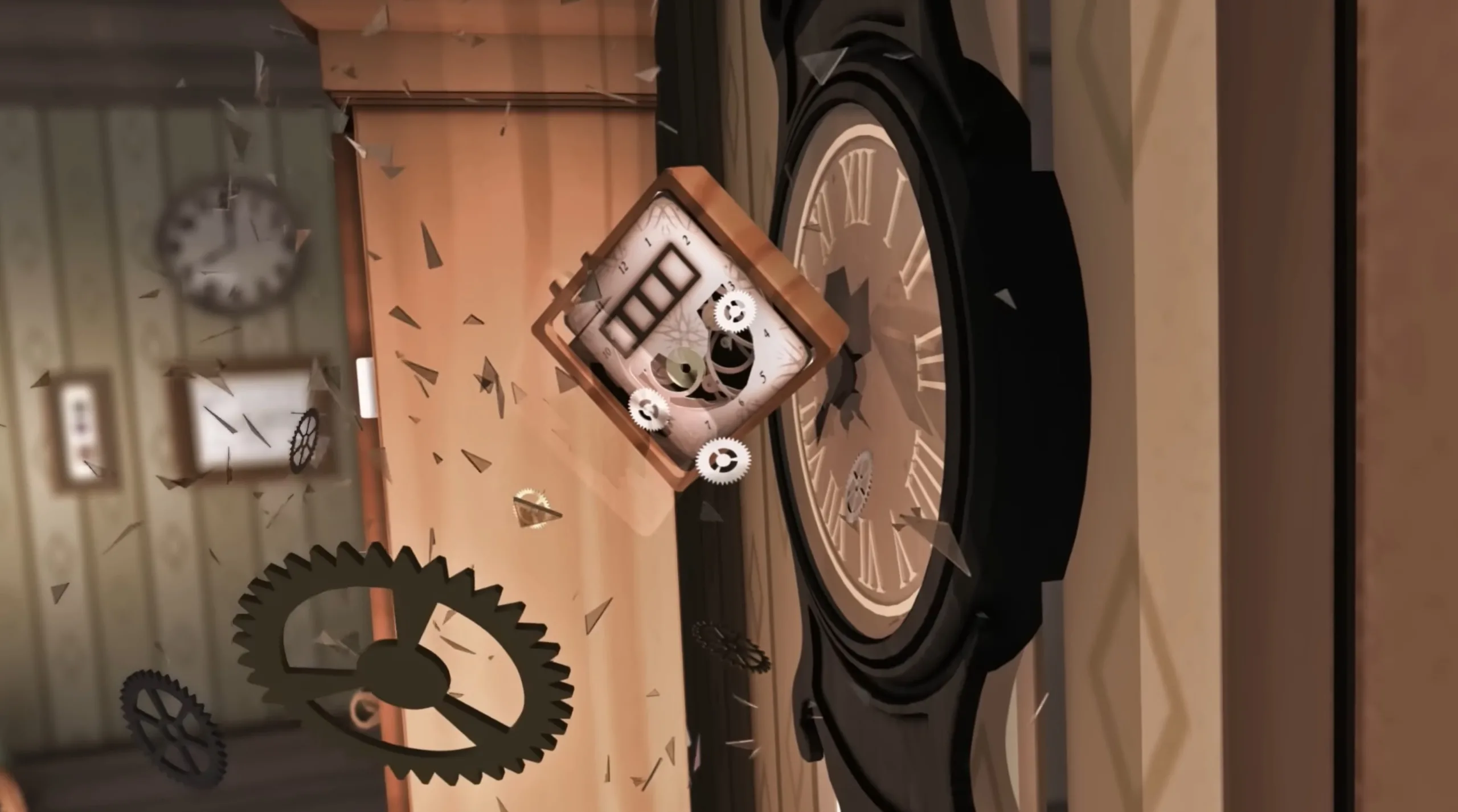
Animation specifically offers an additional dimension: it creates slightly exaggerated, stylized worlds that function as visual metaphors for internal states. Joe’s clock-filled apartment could not be a realistic domestic space — but as a representation of a clock-filled mind, it is immediately legible and emotionally resonant. The visual language of animation makes the invisible visible: it externalizes psychological states in ways that live-action realism typically cannot.
Research published in Frontiers in Psychology has examined the use of animation-guided mindfulness practices and found that animated interventions can meaningfully support mindfulness engagement, particularly for individuals who find traditional meditation instruction inaccessible or abstract. Destiny belongs to a long tradition of using visual narrative to communicate what language alone inadequately captures — a tradition that includes not only therapeutic animation but also the visual parables found in philosophy, mythology, and spiritual traditions across cultures.
FAQs About Destiny: The Animated Short Film and Its Psychological Themes
What is the Destiny animated short film about?
Destiny is a five-minute French animated short film created in 2012 by students Fabien Weibel, Sandrine Wurster, Victor Debatisse, and Manuel Alligné at Bellecour École d’Art. It follows a man named Joe who is obsessed with time and lives his mornings on complete autopilot. After a fatal accident, he is placed in a time loop that forces him to relive the same morning multiple times — each iteration bringing greater awareness, until he learns to be genuinely present in the life he had been rushing through. The film contains no dialogue and communicates its message entirely through visual storytelling, symbolism, and sound design.
What psychological themes does Destiny explore?
Destiny explores several interconnected psychological themes with considerable depth. Foremost among them is present-moment awareness and the cost of living on autopilot — the film illustrates what happens to experience when attention is perpetually elsewhere. It also explores the psychology of time anxiety and control, the relationship between fate and personal agency, the mindfulness concept of beginner’s mind, and the transformative potential of ordinary moments when they are genuinely inhabited rather than mechanically endured. The film’s loop structure is a particularly elegant metaphor for the ACT concept of multiple perspectives — the ability to step outside habitual patterns and perceive one’s own experience with fresh eyes.
What does the time loop in Destiny represent psychologically?
The time loop in Destiny functions as a visual metaphor for what mindfulness and acceptance-based therapies call present-moment awareness training. Each loop gives Joe — and by extension the viewer — a second chance to notice what was previously invisible due to habitual, automatic processing. From a psychological standpoint, the loop represents the capacity for awareness to transform experience without requiring any change in external circumstances. The same morning, approached with genuine attention rather than autopilot, becomes qualitatively different. This resonates with core principles of mindfulness: that what changes when you become present is not the world, but your relationship with it.
What does the film say about the concept of destiny and free will?
The film takes a psychologically nuanced position on the fate-versus-free-will question. While Joe appears initially bound to a fixed sequence of events, the loops reveal that his agency lies not in controlling outcomes but in how he inhabits the moments preceding them. This aligns closely with philosophical traditions from Stoicism to existential psychology and with contemporary frameworks like acceptance and commitment therapy — all of which emphasize that human freedom is exercised not in controlling external events but in choosing our orientation toward them. The film suggests that destiny, meaningfully understood, is not what happens to you but the quality of attention and presence you bring to what happens.
How can Destiny be used in a therapeutic or educational context?
Destiny is an effective catalyst for structured reflection in both therapeutic and educational settings. Therapists have used it to introduce concepts of mindfulness and present-moment awareness to clients who find abstract instruction inaccessible. Educators have used it to prompt discussion of time management, stress, and attentional habits. Its five-minute length makes it highly practical for group settings. Effective follow-up activities include mapping personal autopilot patterns, identifying individual equivalents of Joe’s clocks (sources of time anxiety and over-control), and practicing a deliberate sensory pause in a routine daily activity. The film works precisely because it demonstrates rather than instructs — it creates felt understanding rather than intellectual knowledge.
Is there a deeper message in the clocks that fill Joe’s apartment?
Yes — the clocks are the film’s most psychologically rich visual choice. They represent not just time pressure but the broader psychological orientation of anxious over-control: the attempt to manage life by measuring and optimizing every moment of it. This orientation, which psychologists associate with time urgency and Type A behavioral patterns, paradoxically drains experience of the very richness it is trying to protect. The clocks also carry a more universal symbolic weight: they evoke mortality, the awareness of finitude that can either create desperate busyness (Joe’s initial response) or deepen present-moment appreciation (his eventual shift). The apartment full of clocks shows a man who has filled his life with the measurement of time rather than with the experience of it.
What is the connection between Destiny and mindfulness practice?
Destiny is essentially a five-minute visual argument for mindfulness — for the radical act of being actually present in your own life. Every element of the film maps onto core mindfulness concepts: the autopilot mode (habitual, non-conscious processing), the loop (the opportunity to practice present-moment awareness), Joe’s breathing pause (anchor to the present through the breath), and the transformation of the ordinary morning through attention alone (the mindfulness insight that presence changes experience without requiring circumstances to change). The film has been widely used in psychology and therapy education precisely because it communicates in five minutes what formal mindfulness instruction often takes weeks to convey: that the here and now is not an obstacle to a better life somewhere in the future. It is the life.
Bibliography
- Kabat-Zinn, J. (2013). Full Catastrophe Living: Using the Wisdom of Your Body and Mind to Face Stress, Pain, and Illness (revised ed.). Bantam Books.
- Killingsworth, M. A., & Gilbert, D. T. (2010). A wandering mind is an unhappy mind. Science, 330(6006), 932. https://doi.org/10.1126/science.1192439
- Segal, Z. V., Williams, J. M. G., & Teasdale, J. D. (2013). Mindfulness-Based Cognitive Therapy for Depression (2nd ed.). Guilford Press.
- Hayes, S. C., Strosahl, K. D., & Wilson, K. G. (2012). Acceptance and Commitment Therapy: The Process and Practice of Mindful Change (2nd ed.). Guilford Press.
- Frankl, V. E. (1959). Man’s Search for Meaning. Beacon Press.
- Greenberg, J., Solomon, S., & Pyszczynski, T. (1997). Terror management theory of self-esteem and cultural worldviews: Empirical assessments and conceptual refinements. Advances in Experimental Social Psychology, 29, 61–139. https://doi.org/10.1016/S0065-2601(08)60016-7
- Green, M. C., & Brock, T. C. (2000). The role of transportation in the persuasiveness of public narratives. Journal of Personality and Social Psychology, 79(5), 701–721. https://doi.org/10.1037/0022-3514.79.5.701
- Weibel, F., Wurster, S., Debatisse, V., & Alligné, M. (2012). Destiny [Animated short film]. Bellecour École d’Art.
Use this citation format to reference the article clearly and help readers find the original source.
PsychologyFor. (2026). Destiny: an Animated Short About the Here and Now. PsychologyFor. https://psychologyfor.com/destiny-an-animated-short-about-the-here-and-now/