


A colleague once told me about a moment that stopped her cold. She’s Black, a successful attorney, and was standing in line at an upscale coffee shop when the barista looked past her to the white customer behind her and asked, “Can I help you?” When my colleague pointed out that she’d been there first, the barista apologized quickly—too quickly, that automatic sorry that means nothing—and took her order with obvious impatience. The white customer looked uncomfortable but said nothing. My colleague got her coffee and left, carrying that familiar weight she couldn’t quite name. Later that day, three separate people asked if she worked in the building where her law firm occupied two entire floors. She does work there. As a partner.
These aren’t the dramatic incidents that make headlines. Nobody used slurs. No one burned crosses or marched with torches. This is something quieter, more insidious, and far more common. This is normalized racism—the kind that’s woven so deeply into the fabric of daily life that many people don’t even recognize it’s happening. It’s the baseline hum of inequality that people of color navigate constantly while others remain blissfully unaware. And if you’re wondering whether this still happens in 2025, whether we’ve somehow moved past this as a society, let me be unequivocally clear: we haven’t.
What makes normalized racism particularly dangerous is precisely what makes it normal. It doesn’t announce itself. It doesn’t require conscious hatred or explicit prejudice. It operates through assumptions so deeply embedded that they feel like common sense. It functions through systems designed generations ago that continue producing racial disparities today. It perpetuates through silence—through all the moments when people witness unfairness and say nothing because speaking up feels awkward or confrontational.
As a psychologist, I’ve spent years studying how humans process social information, how we form categories and make quick judgments, how bias operates both consciously and unconsciously. I’ve worked with clients of color carrying trauma from a thousand small cuts, and white clients genuinely shocked to learn how their everyday behaviors contribute to harm. I’ve watched how racial trauma accumulates across a lifetime, how hypervigilance becomes a survival strategy, how explaining your own humanity becomes exhausting labor. And I’ve seen how normalization works—how something can be simultaneously everywhere and invisible, how injustice can hide in plain sight when society agrees not to look too closely. The question isn’t whether racism is still normalized. The question is whether we’re ready to see it clearly and do the uncomfortable work of dismantling it.
What Normalization Actually Means
Normalization is a psychological and social process through which something initially recognized as problematic gradually becomes accepted as ordinary. When behaviors, attitudes, or systems become normalized, they stop triggering the cognitive dissonance that usually signals “this is wrong.” Instead, they blend into the background of what we consider normal life.
From a psychological standpoint, normalization happens through repeated exposure without consequence. When you witness racial inequity consistently and nothing changes, your brain begins categorizing it as “just how things are” rather than “something requiring action.” This is a protective mechanism in some ways—we can’t maintain constant outrage about everything—but it allows injustice to continue unchallenged.
Social psychologists have documented how quickly humans adapt to their environments, even toxic ones. Studies on moral disengagement show that people can participate in or witness harmful behaviors while maintaining positive self-concepts by employing various psychological strategies. They minimize the harm, diffuse responsibility, dehumanize victims, or simply redirect attention elsewhere. When these strategies become collective—when entire communities or societies engage in them—you have normalized injustice.
Racism becomes normalized through institutions that systematically advantage one group while disadvantaging others, yet present these disparities as natural outcomes of individual merit or effort. It’s normalized through media representations that consistently portray certain racial groups in limited, stereotypical ways. It’s normalized through language that makes discussing race taboo in “polite” settings, ensuring that patterns go unexamined.
The brilliant manipulation of normalization is that it makes privilege invisible to those who have it while making discrimination exhausting to prove to those experiencing it. When something is normalized, pointing it out makes you the problem—you’re being “divisive” or “playing the race card” or “too sensitive.” The normalization itself becomes a tool to silence resistance.
Modern Manifestations in Daily Life
Walk into most major corporate offices and notice who occupies the C-suite versus who cleans the bathrooms. The pattern is so consistent across industries and regions that it can’t possibly reflect individual merit alone, yet we rarely interrogate it. This is occupational segregation, and it’s as normalized in 2025 as it was fifty years ago, just with better diversity statements posted on company websites.
Microaggressions represent perhaps the most common form of normalized racism that most people encounter. These are the brief, everyday exchanges that communicate hostile or derogatory messages to people of color. “Where are you really from?” asked to someone who’s lived their entire life in this country. “You’re so articulate” said with surprise to a Black professional. Clutching your purse tighter when a Black man enters the elevator. Touching a Black woman’s hair without permission. Each incident seems small, possibly unintentional, easily dismissed. But research shows these accumulate into significant psychological harm.
The normalization appears in how these incidents are discussed. When someone points out a microaggression, they’re often met with defensiveness: “I didn’t mean it that way,” “You’re being oversensitive,” “Not everything is about race.” The target of the behavior must then do emotional labor to explain why it was harmful, often while being told their feelings are invalid. This pattern repeats thousands of times, teaching people of color that speaking up costs more than staying silent, and teaching white people that their impact doesn’t matter if their intent was pure.
Education systems continue producing racial achievement gaps while framing them as natural differences in ability or family support rather than as products of profoundly unequal resource distribution. Schools serving predominantly Black and Latino students receive significantly less funding than those serving white students. They have fewer experienced teachers, larger class sizes, outdated materials, and crumbling infrastructure. Yet when students from these schools underperform compared to their well-resourced peers, we discuss cultural deficits or individual motivation rather than systemic resource starvation.
Healthcare presents another arena where normalized racism operates with deadly consequences. Racial health disparities persist across nearly every measure—maternal mortality, infant mortality, chronic disease rates, life expectancy. Black women are three to four times more likely to die from pregnancy-related causes than white women, even controlling for education and income. This isn’t about access to care alone; studies show that even when Black patients have insurance and present at the same hospitals, they receive different treatment. Their pain is taken less seriously. Their symptoms are dismissed more readily. This is so common it has a name: medical racism. Yet it remains largely invisible to those not experiencing it.
The Architecture of Systemic Inequality
Systemic racism refers to how racism is embedded in the normal functioning of institutions rather than depending on individual prejudice. The systems themselves produce racist outcomes even when no one involved harbors conscious racial animus. This makes it particularly difficult to address because you can’t simply remove a few “bad apples.”
The criminal justice system offers the clearest example. Black Americans are incarcerated at five times the rate of white Americans, despite using drugs at similar rates. At every stage—from initial police contact through sentencing and parole—racial disparities compound. Black children are more likely to be suspended or expelled from school for the same behaviors that earn white children warnings. Those suspensions feed into the school-to-prison pipeline, where disciplinary records follow students and increase their likelihood of justice system involvement.
Policing strategies like stop-and-frisk or broken windows policing concentrate enforcement in communities of color while similar violations in white neighborhoods go unaddressed. This creates statistics that appear to show higher crime rates in Black and Latino communities, which then justify more aggressive policing, creating a self-fulfilling prophecy. The normalization happens when we accept these disparities as reflecting actual differences in criminality rather than differences in enforcement.
Housing discrimination continues decades after the Fair Housing Act. Redlining—the practice of denying services to residents of certain areas based on racial composition—was officially outlawed in 1968, but its effects persist. The neighborhoods that were redlined remain underinvested and undervalued. Generational wealth, which for most Americans is held primarily in home equity, never accumulated in these communities. Modern discrimination is subtler: steering prospective buyers away from certain neighborhoods, higher interest rates and fees for borrowers of color, predatory lending concentrated in communities of color.
The wealth gap between white and Black families hasn’t closed; in some measures, it’s widened. The median white family holds approximately ten times the wealth of the median Black family. This isn’t because of different savings habits or financial literacy. It’s the cumulative effect of centuries of policies that built wealth for white families while systematically excluding Black families, followed by our collective refusal to acknowledge this history or implement remedies.
Environmental racism places the burden of pollution and environmental hazards disproportionately on communities of color. Toxic waste facilities, industrial pollution, contaminated water systems—these aren’t randomly distributed. Flint, Michigan’s water crisis exemplified this pattern. A majority-Black city experienced lead contamination affecting thousands of children because officials chose to save money at the expense of residents’ health. Similar patterns appear nationwide, yet we frame environmental issues as class-based rather than acknowledging their racial dimensions.

The Psychology of Implicit Bias
Most people genuinely believe they’re not racist. This belief can coexist with behaviors and judgments that perpetuate racism because much of human cognition operates below conscious awareness. Implicit bias refers to attitudes and stereotypes that affect our understanding, actions, and decisions unconsciously.
Your brain processes an enormous amount of information constantly. To manage this, it creates shortcuts—mental categories that allow quick judgments without deliberate analysis. These categories get shaped by culture, media exposure, personal experiences, and social messages absorbed throughout life. When society consistently associates certain racial groups with criminality, poverty, or incompetence, these associations become automatic, activating even in people who consciously reject racist beliefs.
The Implicit Association Test reveals that most people—including people of color—show pro-white bias, associating positive attributes with white faces and negative attributes with Black faces faster than the reverse. This doesn’t make someone a bad person, but it does affect real-world decisions. Studies show that résumés with traditionally Black names receive fewer callbacks than identical résumés with white names. Doctors spend less time with Black patients. Teachers have lower expectations for students of color.
What makes unconscious bias particularly challenging is that awareness alone doesn’t eliminate it. Simply knowing you have implicit biases doesn’t prevent them from influencing behavior. They operate too quickly for conscious intervention in many situations. Additionally, the normalization of racism means that many biased outcomes seem reasonable or justified through other explanations. The white candidate seemed more qualified. That Black student seemed less engaged. These judgments feel objective even when driven by bias.
People also engage in confirmation bias, selectively attending to information that confirms existing beliefs while dismissing contradictory evidence. If you believe racism is largely a thing of the past, you’ll notice instances of progress while overlooking ongoing discrimination. If you believe your own judgments are fair and objective, you’ll find alternative explanations for disparate outcomes rather than examining potential bias.
Digital Age Racism and Technology
Technology was supposed to be neutral, objective, free from human prejudice. Instead, it’s amplifying and automating bias at unprecedented scale. Algorithmic bias now affects everything from job applications to loan approvals to criminal sentencing recommendations.
Facial recognition technology shows significantly higher error rates for darker-skinned faces, particularly women of color. Some systems misidentify Black and Asian faces up to 100 times more often than white faces. This isn’t abstract; it has real consequences when facial recognition is used for security, law enforcement, or access control. People have been wrongly arrested based on faulty facial recognition matches.
Predictive policing algorithms are trained on historical crime data that reflects decades of biased enforcement patterns. The algorithm then directs more policing to the same communities that were over-policed historically, creating a feedback loop that masks bias as data-driven objectivity. We’re encoding historical discrimination into systems presented as neutral and scientific.
Social media algorithms optimize for engagement, which means they amplify divisive and emotionally charged content. Online hate speech and racist content spread faster than ever, normalizing extremist views that previously remained marginal. Studies document how exposure to racist content online increases prejudiced attitudes and behaviors. The anonymity of internet comments sections allows people to express views they’d suppress in face-to-face interactions, creating a culture where racism flourishes without social consequences.
Even artificial intelligence language models trained on internet text absorb and reproduce racial biases present in training data. They associate certain names with negative attributes, generate stereotypical responses, and perpetuate harmful assumptions. As AI becomes more integrated into decision-making across sectors, these biases scale exponentially.

Workplace Discrimination That Hides in Plain Sight
Modern workplace racism rarely involves overt slurs or explicit exclusion. Instead, it operates through patterns that are easy to deny individually but devastating cumulatively. People of color remain significantly underrepresented in leadership positions across industries. When they do reach senior roles, they report facing different standards and greater scrutiny than white peers.
The concept of “culture fit” often serves as a proxy for racial homogeneity. When hiring managers assess whether candidates will fit the existing culture, they frequently favor people who look like them, share similar backgrounds, and communicate in familiar ways. This reproduces existing demographics while appearing neutral. Workplace homogeneity then gets defended as natural rather than constructed.
People of color in professional settings often experience what researchers call “racial battle fatigue”—the psychological strain of constant vigilance and code-switching. They monitor how they dress, speak, and style their hair to avoid triggering stereotypes. They gauge whether it’s safe to speak up in meetings or whether doing so will confirm assumptions about being aggressive or difficult. This invisible labor exhausts employees while going unrecognized by colleagues who don’t face similar pressures.
Mentorship and sponsorship networks, crucial for career advancement, often operate along racial lines. Senior leaders tend to mentor people who remind them of their younger selves, inadvertently excluding those who don’t share their demographic characteristics. Without sponsors advocating for them behind closed doors, talented employees of color get passed over for opportunities and promotions.
Performance evaluations reveal racial bias in how identical behaviors are interpreted. Assertiveness in white employees becomes aggression in Black employees. Confidence becomes arrogance. Research shows that performance reviews for women of color contain more negative feedback and more personality criticism than reviews for white men with equivalent performance. These subjective assessments affect compensation, advancement, and retention.
The Toll on Mental and Physical Health
Experiencing racism isn’t just emotionally difficult—it has measurable effects on both mental and physical health. The chronic stress of navigating a society structured around racial hierarchy produces what public health researchers call “weathering,” the accelerated deterioration of health among marginalized groups.
Racial trauma resembles other forms of trauma in its psychological impacts. People experiencing persistent racism show higher rates of depression, anxiety, and PTSD symptoms. Hypervigilance—constantly scanning environments for threats—becomes automatic. Trust becomes difficult to extend. Self-worth gets eroded by messages suggesting your humanity is conditional or questionable.
For children, racial discrimination affects development profoundly. Kids who experience racial bullying or witness their parents facing discrimination show increased internalizing symptoms like anxiety and depression. They face an impossible bind: recognizing societal unfairness while being told to work hard and believe in meritocracy. This cognitive dissonance creates psychological stress with no easy resolution.
The physiological effects are equally serious. Chronic stress from discrimination keeps the body in heightened alert states, with elevated cortisol and inflammation. This contributes to higher rates of hypertension, cardiovascular disease, diabetes, and other stress-related conditions among people of color. Researchers have documented that even controlling for socioeconomic factors, experiences of discrimination predict worse health outcomes.
Importantly, the stress doesn’t come only from direct experiences. Vicarious trauma occurs when people witness violence or discrimination against others who share their identity. Viral videos of police brutality, hate crimes, or racist incidents trigger trauma responses in viewers. For people of color, these aren’t abstract news stories—they’re reminders that this could happen to them or their loved ones.

How Normalization Perpetuates Itself
Normalized racism maintains itself through several psychological and social mechanisms that make change difficult. Color-blind ideology—the belief that we should simply not see race—sounds appealing but functionally prevents acknowledging ongoing discrimination. If we’re not supposed to notice race, how can we address racial disparities? This framework benefits those already advantaged while asking those experiencing discrimination to ignore their reality.
Tone policing shifts focus from the substance of complaints about racism to how those complaints are expressed. When someone gets angry about discrimination, the conversation becomes about their anger rather than the discrimination itself. This teaches people that discussing racism makes others uncomfortable, so staying silent is easier than risking being labeled angry, divisive, or difficult.
The myth of meritocracy serves as perhaps the most powerful tool for normalizing inequality. If success reflects individual talent and effort, then disparate outcomes must reflect individual differences rather than systemic barriers. This allows people to believe the system is fair even while observing profoundly unequal results. The few people of color who do achieve success get held up as proof the system works, while the majority facing structural barriers get blamed for not trying hard enough.
Racial resentment emerges when modest efforts toward equity are characterized as unfair advantages. Affirmative action, diversity initiatives, or even discussions of racism get framed as reverse discrimination. This framing relies on ignoring centuries of explicit discrimination while treating any acknowledgment of race as itself racist.
Fragility around discussing race, particularly among white people, shuts down conversations before they become meaningful. When discussing racism triggers defensive reactions—crying, anger, withdrawal—the focus shifts to managing those emotions rather than examining the issues raised. People of color then face a choice: avoid the topic to maintain relationships, or raise concerns and deal with emotional fallout.
Recognizing Normalized Racism Around You
Developing awareness requires active effort because normalization works precisely by making patterns invisible. Start by noticing who holds power and resources in various settings. Who’s in leadership? Whose voices dominate conversations? Whose perspectives are centered as default and whose are treated as special interest? These patterns aren’t coincidental.
Pay attention to assumptions operating in your environment. What gets considered professional or appropriate? Whose cultural norms define the standard? When someone’s communication style, appearance, or behavior is judged as inappropriate or unprofessional, ask whether that judgment would apply equally to someone of a different race. Often what we call professionalism actually means conformity to white cultural norms.
Notice who does invisible labor in organizations. Who organizes social events? Who gets asked to join diversity committees on top of regular responsibilities? Who’s expected to educate others about their experiences? Often this work falls disproportionately on people of color without recognition or compensation.
Listen to how people discuss racial issues. Do conversations quickly shift to exceptions and individual cases rather than patterns? Do people become defensive when bias is mentioned? Is there resistance to collecting or examining data on racial disparities? These reactions often indicate normalization—the discomfort comes from having the invisible made visible.
Examine your own comfort levels. When do you feel uncomfortable? If it’s primarily when racism is being discussed rather than when racism is occurring, that discomfort itself reveals something about your relationship to normalized injustice. Growth requires sitting with that discomfort rather than avoiding it.
Moving Beyond Awareness to Action
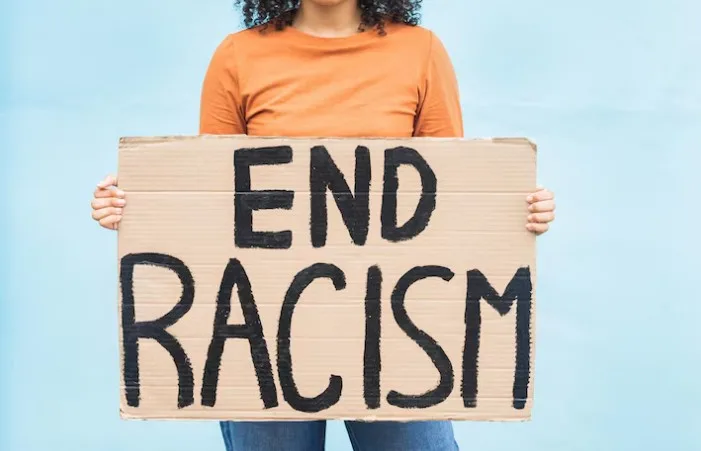
Recognizing normalized racism is necessary but insufficient. Change requires action, and action means disrupting comfortable patterns. This feels risky because normalization includes social consequences for those who challenge it. Speaking up often means being labeled divisive, aggressive, or oversensitive. But silence maintains the status quo, and the status quo is producing profound harm.
Start with education that goes beyond surface-level diversity training. Read work by scholars of color analyzing systemic racism. Understand the actual history you weren’t taught in school—redlining, convict leasing, medical experimentation on Black people, forced sterilization, land theft. This history directly created current conditions. Context makes present patterns intelligible rather than mysterious.
Interrupt bias when you witness it, even when it’s uncomfortable. If someone makes a racially insensitive comment, say something. If you notice a pattern of whose ideas get credited or ignored in meetings, name it. If hiring or promotion decisions seem to consistently favor one group, ask about the criteria and processes. These interventions don’t require aggression—asking genuine questions can surface bias without triggering defensive reactions.
Use whatever power and influence you have to change systems, not just individual attitudes. If you’re involved in hiring, examine every stage for potential bias. Use structured interviews with consistent questions. Remove identifying information from initial résumé screening. Set concrete diversity goals and track progress. If you have purchasing power, direct it toward businesses owned by people of color. If you vote, support policies addressing systemic inequity even when they don’t directly benefit you.
Support those experiencing racism rather than waiting for them to educate or lead. Don’t require people of color to prove discrimination is occurring or to fix systems they didn’t create. When someone shares their experience, listen without defensiveness. Believe them. Ask how you can help rather than explaining why things aren’t really that bad.
Understand that this work is ongoing, not a problem to solve and move past. Normalized racism accumulated across centuries; it won’t disappear through a few workshops or policy changes. Commit to sustained engagement rather than performative allyship that fades when attention shifts elsewhere.
FAQs about Racism and Normalization
Why do some people claim racism doesn’t exist anymore?
Several psychological and social factors contribute to this belief. First, progress bias causes people to focus on improvements from the past while minimizing ongoing problems. Since overt forms of racism like legal segregation have been eliminated, some conclude racism itself must be over. Second, those not experiencing discrimination often lack direct evidence of it, and absence of evidence becomes evidence of absence in their thinking. Third, acknowledging ongoing racism requires confronting uncomfortable truths about society and potentially one’s own complicity, which creates cognitive dissonance that denial resolves. Finally, political and media narratives actively promote the idea that discussions of racism are themselves the problem, not racism itself. For people benefiting from current arrangements, believing the system is fair protects their positive self-concept and justifies their advantages as earned rather than partially conferred by racial privilege.
What’s the difference between individual and systemic racism?
Individual racism involves personal prejudice, bias, or discriminatory actions by specific people against others based on race. This includes both explicit hostility and unconscious bias affecting individual decisions and behaviors. Systemic racism refers to how entire systems and institutions produce racially disparate outcomes regardless of individual intentions. A school funding system that distributes resources based on property taxes produces racial inequality because residential segregation means white neighborhoods have higher property values. This happens even if no individual involved is personally prejudiced. Systemic racism is particularly insidious because it operates through policies and practices that appear race-neutral while producing racialized results. It’s also harder to address since you can’t simply remove biased individuals—you must restructure systems themselves. Both forms of racism interact and reinforce each other, but addressing only individual prejudice while ignoring systemic structures leaves fundamental inequities intact.
How can I address my own implicit biases?
First, recognize that having implicit biases doesn’t make you a bad person—it makes you a human raised in a society with pervasive racial messages. Self-awareness is the starting point, not the destination. Take implicit association tests to identify specific biases you hold. Then actively work to counter them through several strategies. Increase exposure to counter-stereotypical examples—follow diverse voices on social media, read work by authors of color, consume media that centers people of color as complex humans rather than stereotypes. When making decisions, slow down and examine your reasoning. Ask yourself whether you’d make the same judgment about someone of a different race. Get feedback from trusted colleagues about patterns they notice in your behavior. Most importantly, understand that eliminating bias is likely impossible, but you can develop practices that prevent biases from determining outcomes. Structure decision-making to reduce opportunities for bias to operate—use checklists, standardized criteria, and accountability measures that make disparate treatment visible.
Isn’t focusing on race actually perpetuating racism?
This question reflects color-blind ideology, which sounds good in theory but fails in practice. Race matters because society has organized itself around racial categories for centuries, distributing resources, opportunities, and burdens along racial lines. Pretending not to see race doesn’t eliminate racial inequality—it just makes that inequality harder to name and address. Research shows that color-blind approaches actually correlate with more prejudiced attitudes and less support for policies addressing discrimination. Additionally, color-blindness asks people of color to suppress a fundamental aspect of their identity and experience. Their race profoundly shapes their lives whether we acknowledge it or not. The goal isn’t to eliminate racial categories through willful ignorance but to eliminate the hierarchy, discrimination, and disparities associated with those categories. We achieve that by examining how race functions, acknowledging racial injustice, and actively working to dismantle systems that produce inequality—none of which is possible if we refuse to see race at all.
What should I do if I’m accused of racism?
Being told your words or actions had racist impact typically triggers strong defensive reactions—shame, anger, denial. These feelings are understandable but shouldn’t dictate your response. First, pause before reacting. Take a breath. Resist the urge to immediately defend yourself or explain your intentions. Remember that impact matters more than intent—you can harm someone without meaning to, and the harm is real regardless of your intentions. Listen carefully to what’s being said. Ask clarifying questions if needed, but from genuine curiosity rather than attempting to prove the other person wrong. Apologize sincerely for the impact, even if you didn’t intend harm. Then reflect privately on what happened. What biases or assumptions might have been operating? What could you learn from this? What will you do differently? Importantly, don’t require the person who called out your behavior to comfort you, educate you, or reassure you that you’re not a bad person. Process your feelings with someone else. See the feedback as an opportunity for growth rather than an attack on your character. People invested in anti-racism make mistakes; the difference is they take responsibility and change behavior rather than becoming defensive.
Can people of color be racist toward white people?
This question requires distinguishing between prejudice and racism as systemic power. Anyone can hold prejudiced attitudes or biases toward people of different races, including people of color toward white people. However, many scholars define racism not merely as individual prejudice but as prejudice plus systemic power—the ability to enforce those prejudices through institutional structures. By this definition, racism specifically describes systems that subordinate people of color while privileging white people. People of color can certainly hold negative stereotypes about white people or treat individual white people unfairly, but they cannot leverage institutional power to systematically disadvantage white people as a group because they don’t control those institutions. This isn’t semantic—it’s about recognizing the difference between interpersonal bias, which anyone can exhibit, and systemic oppression, which operates in a specific direction. The impacts are also asymmetrical. A Black person’s prejudice against white people might hurt an individual’s feelings, but it doesn’t affect that white person’s ability to get a loan, job, quality education, or fair treatment in the justice system.
How do I talk to children about racism?
Children notice racial differences earlier than most parents realize—often by age three or four. Avoiding conversations about race doesn’t protect children; it leaves them to construct understanding from media, peer interactions, and observation without guidance. For white children, silence about race often gets interpreted as color-blindness, which research shows correlates with higher prejudice. For children of color, not discussing racism leaves them unprepared for discrimination they will likely encounter. Start conversations early and make them ongoing rather than a single talk. Use age-appropriate language. With young children, acknowledge that people look different and celebrate that diversity while explaining that everyone deserves kindness and respect. As children get older, discuss fairness and unfairness they can observe. Point out when rules apply differently to different groups and talk about why that’s wrong. For older children and teens, engage with history and current events, helping them understand systemic patterns. Answer questions honestly while monitoring for anxiety—provide context and hope without either dismissing racism or making it overwhelming. Model anti-racist behavior in your own actions and intervene when you witness bias. Children learn more from what you do than what you say.
What if I work somewhere with normalized racism but speaking up could cost me my job?
This represents a genuine dilemma, particularly for people with limited economic security. Your physical safety and ability to support yourself and dependents legitimately take priority. That said, there are often actions you can take that involve less risk than direct confrontation. Document patterns you observe—keep records of discriminatory incidents with dates, witnesses, and specifics. This protects you if you later need to report and creates evidence of patterns rather than isolated events. Build relationships with colleagues of color to understand their experiences and ask how you can support them, then follow their lead. Look for policy changes you can advocate for that address bias without naming specific individuals—proposing structured interview processes, bias training, or diversity initiatives. Consider whether there are external resources like HR, employee resource groups, or unions that might address issues. If your workplace truly won’t tolerate even modest efforts toward equity, acknowledge that staying there means some degree of complicity and consider whether long-term that’s tenable for you. Where possible, develop skills and networks that increase your options for moving to an environment better aligned with your values. Also recognize that people of color working in racist environments often can’t leave either but face daily harm—supporting them even in limited ways matters.
Use this citation format to reference the article clearly and help readers find the original source.
PsychologyFor. (2025). Is Racism Still Normalized?. PsychologyFor. https://psychologyfor.com/is-racism-still-normalized/