
If you are just starting out in biochemistry and feel like the subject is a labyrinth of enzymes, metabolic pathways, and molecular structures that make no immediate sense, you are in excellent company. Biochemistry is one of the most intellectually demanding and rewarding scientific disciplines — and the right book at the right moment can be the difference between confusion that compounds and clarity that builds. The ten books and manuals on this list were selected precisely for that purpose: to give beginners a genuine foothold in a field that rewards patience, curiosity, and good teaching materials.
What makes biochemistry particularly challenging for newcomers is not just the volume of information — though that is formidable — but the way it sits at the crossroads of biology and chemistry, demanding fluency in both before it begins to reveal its deeper logic. A student who feels solid in biology may struggle with the chemical mechanisms; one with a strong chemistry background may find the biological context disorienting. The best biochemistry books for beginners bridge that gap thoughtfully, providing enough context from both disciplines to make the connections feel natural rather than forced.
The books on this list range from sweeping comprehensive manuals that have accompanied generations of university students through their degrees, to more visual and accessible texts designed specifically for those encountering the subject for the first time. Some are classics that have been revised and updated for decades; others take a fresher, more illustrative approach. All of them share one quality that matters most: they make a genuinely difficult subject approachable without sacrificing scientific accuracy. Whether you are a health sciences student, a curious self-learner, or a professional looking to build foundational knowledge, there is something here for you.
Why Biochemistry Matters — And Why the Right Book Makes All the Difference
Biochemistry is not just an academic requirement for biology or medical students. It is, in a very real sense, the molecular language of life. Every process that keeps you alive — digestion, respiration, immune response, cellular repair, the firing of every neuron that allows you to read these words — is a biochemical event. Understanding biochemistry means understanding what your body actually does, at the level where it actually does it.
For healthcare professionals, this knowledge is not optional background. It is the foundation beneath pharmacology, pathology, nutrition science, and clinical diagnostics. A nurse who understands how enzymes work has a richer grasp of why certain medications interact the way they do. A doctor who understands metabolic pathways is better equipped to explain a diabetes diagnosis to a patient in terms that make mechanistic sense rather than just symptomatic ones.
For students in biology, chemistry, biotechnology, pharmacy, or any of the life sciences, biochemistry is the connecting tissue between disciplines — the subject that makes cellular biology and organic chemistry start talking to each other coherently. And for the genuinely curious non-specialist, it offers something rarer: a scientifically grounded answer to the question of how life, at its most fundamental level, actually works.
The catch, as most students discover quickly, is that biochemistry has a steep initial learning curve. The terminology is dense, the molecular mechanisms are intricate, and the sheer quantity of information can feel overwhelming before the conceptual architecture holding it all together becomes visible. This is why the choice of introductory text genuinely matters — a poorly chosen first book can make the subject feel inaccessible, while the right one reveals the underlying elegance and makes you want to go further.
1. Lehninger Principles of Biochemistry — David L. Nelson and Michael M. Cox
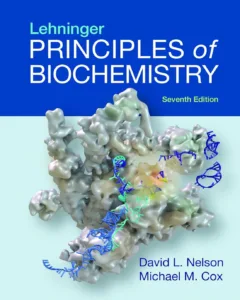
If there is a single biochemistry textbook that has shaped more scientists, physicians, and researchers than any other, it is this one. Originally written by Albert L. Lehninger, one of the most influential biochemists of the twentieth century, the book has been continued and updated across multiple editions by Nelson and Cox, who have kept it rigorous, current, and extraordinarily comprehensive without losing the clarity that made it a classic.
“Lehninger” — as it is universally known among students — covers the full scope of biochemistry with a depth and organizational coherence that few textbooks in any field can match. From the basic chemistry of biomolecules through enzyme kinetics, metabolic pathways, DNA replication, protein synthesis, and cell signaling, the book builds its explanations systematically, each chapter assuming and building on what came before.
At over a thousand pages, this is not a light commitment. But for anyone serious about building genuine foundational knowledge — rather than a surface familiarity — the investment pays dividends throughout any career in the life sciences. Each new edition integrates recent research advances, keeping the science current alongside the classic framework. Ideal for autodidactic learners and university students alike, Lehninger remains the standard against which other biochemistry texts are measured.
2. Biochemistry — Jeremy M. Berg, John L. Tymoczko, Lubert Stryer, and Gregory J. Gatto Jr.

Known simply as “Stryer” in most university biology and chemistry departments, this textbook is the other great pillar of introductory biochemistry education. Berg, Tymoczko, and Stryer created a book that is slightly more accessible in its presentation than Lehninger — a quality that has made it the preferred first choice for many instructors and students, particularly those without a strong prior chemistry background.
Stryer’s particular strength is its clarity of explanation. The authors have a gift for taking genuinely complex mechanisms — the allosteric regulation of enzymes, the coordinated reactions of the citric acid cycle, the molecular machinery of DNA repair — and presenting them in language and visual form that makes the logic feel almost inevitable once you have followed it through. The structural biochemistry sections, which explore how the three-dimensional shapes of proteins relate to their functions, are among the best written and most visually supported in any introductory text.
For anyone who finds Lehninger slightly overwhelming as a starting point, Stryer is an excellent and equally rigorous alternative. The two books cover broadly similar ground and are frequently used interchangeably in university curricula. Having access to both — and dipping into whichever presents a given concept more clearly — is a strategy many students find genuinely useful.
3. Human Biochemistry: Text and Atlas — Jan Koolman and Klaus-Heinrich Röhm

This book takes a fundamentally different approach from the comprehensive textbooks above, and for a significant subset of learners, that difference is transformative. Rather than relying primarily on text to explain biochemical processes, Koolman and Röhm build their entire presentation around color diagrams and visual representations — a format that makes complex metabolic processes not just understandable but genuinely memorable.
The book presents each biochemical topic as a two-page spread: the right page carries a detailed, color-coded diagram illustrating the process; the left page provides the explanatory text. The visual language used throughout is consistent and carefully designed — molecules, reactions, pathways, and cellular structures are all represented with a clarity that rewards the reader who takes time to learn the visual conventions.
For visual learners, this is arguably the best introductory biochemistry resource available. It is particularly strong on human physiology and clinical relevance, making it especially useful for medical, nursing, pharmacy, and health sciences students who want to connect biochemical mechanisms to their clinical implications. It does not replace a comprehensive text for exam preparation, but as a companion resource and a first approach to unfamiliar topics, it is exceptional.
4. Biochemistry — Donald Voet and Judith G. Voet

Donald Voet and his wife Judith G. Voet originally wrote this textbook for their students at the University of Pennsylvania, where both taught biochemistry. The result was so well-constructed — so carefully organized, so rich in structural detail, so thorough in its coverage of enzymatic mechanisms — that it quickly spread beyond their campus to become one of the most widely used advanced biochemistry texts in the world.
Voet and Voet is more technically demanding than either Lehninger or Stryer, and for that reason it is better suited to students who have already built some foundational knowledge and are ready to go deeper. The coverage of protein structure and enzyme mechanisms is particularly extensive and detailed, and the book’s treatment of molecular biology — DNA structure, replication, transcription, and translation — is rigorous without becoming inaccessible. There is also an abridged version, Fundamentals of Biochemistry, which covers the same core content in a more compact format better suited to introductory courses.
For students who find Lehninger or Stryer insufficiently detailed in specific areas and want to develop a genuinely advanced understanding of biochemical mechanisms, Voet and Voet provides the depth that those texts deliberately hold back.
5. Lippincott Illustrated Reviews: Biochemistry — Emine E. Abali, Susan D. Cline, David S. Franklin, and Susan M. Viselli

The Lippincott Illustrated Reviews series is one of the most trusted resources in health sciences education, and the biochemistry volume is one of its strongest entries. Designed specifically for medical and health professions students, this book prioritizes clinical relevance alongside scientific accuracy — every chapter connects the biochemical concepts being covered to their implications for disease, diagnosis, and treatment.
The format is highly visual, with color illustrations on virtually every page that clarify molecular structures, metabolic pathways, and cellular processes. Each chapter includes review questions and clinical cases that help students connect abstract biochemical principles to real patient scenarios. The writing is clear and efficiently organized — this is not a book that luxuriates in conceptual elaboration, but one that delivers information with the precision and economy that clinical learners need.
For medical, pharmacy, nursing, or allied health students who need biochemistry that translates directly into clinical understanding, Lippincott is often the most practical first choice. It covers somewhat less ground than Lehninger or Stryer but covers what it does address with exceptional clinical clarity.
6. Molecular Biology of the Cell — Bruce Alberts, Alexander Johnson, Julian Lewis, and colleagues

Molecular biology is the branch of biochemistry that focuses specifically on the macromolecules of life — proteins, DNA, RNA — and on the molecular processes through which genetic information is stored, expressed, and regulated. “Alberts,” as students typically call this book, is the definitive introduction to this dimension of biochemistry, written with a clarity and conceptual elegance that has made it one of the most admired textbooks in biological science.
The book approaches molecular biology from a cell-centered perspective — explaining molecular mechanisms always in the context of the cellular processes they support and the biological functions they enable. This integration of molecular detail with cellular and physiological context gives the reader a sense of how biochemical events connect to the living organism in ways that purely molecular treatments sometimes miss.
For beginners with limited prior background, Alberts may require supplementing with a chemistry primer. But for anyone interested specifically in the molecular biology dimension of biochemistry — in how DNA replicates and repairs itself, how genes are regulated, how proteins are made and directed to their cellular destinations — this book is essential and genuinely one of the great achievements of scientific pedagogy.
7. Molecular Biology of the Gene — James D. Watson and colleagues
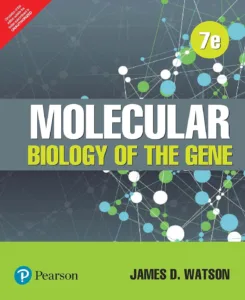
James Watson is one of the most consequential figures in the history of biochemistry — co-discoverer, with Francis Crick, of the double helical structure of DNA, work that opened the entire modern era of molecular biology. Watson’s textbook brings that foundational perspective to an introductory treatment of molecular genetics and biochemistry that is both scientifically rigorous and remarkably readable.
The book focuses heavily on nucleic acids — their structure, their replication, their role in heredity and gene expression — which makes it a natural complement to more metabolically focused texts like Lehninger or Stryer. Watson and his co-authors write with genuine enthusiasm for the subject matter, and that quality comes through in the prose, making complex mechanisms feel like unfolding narratives rather than catalogues of facts.
For beginners particularly interested in genetics, molecular biology, and the biochemistry of genetic information, this book is one of the most engaging entry points available. The historical context Watson provides — his firsthand perspective on the development of molecular biology as a discipline — adds a dimension of intellectual richness that purely technical texts cannot offer.
8. Essential Biochemistry — Charlotte W. Pratt and Kathleen Cornely

For students who want comprehensive coverage without the imposing weight of Lehninger or Voet, Essential Biochemistry offers a carefully distilled treatment of the core subject matter that covers everything a first course needs without the encyclopedic scope that can overwhelm beginners. Pratt and Cornely have made deliberate choices about what to include and what to leave for more advanced texts, and those choices reflect strong pedagogical judgment.
The writing is accessible and well-organized, the illustrations are clear and numerous, and each chapter is structured to build systematically on previous material. The book covers protein structure and function, enzyme mechanisms, metabolism, nucleic acid biochemistry, and cell signaling — the full core of the discipline — at a level of depth that is challenging without being intimidating.
Essential Biochemistry works particularly well for students in one-semester introductory courses or for self-learners who want to build solid foundational knowledge before approaching more comprehensive texts. It is also frequently recommended as a preparatory resource for students planning to take advanced biochemistry courses who want to establish a strong conceptual framework first.
9. Biochemistry: The Molecular Basis of Life — Trudy McKee and James R. McKee

The McKees’ textbook occupies a distinctive position in the landscape of biochemistry education: it is comprehensive enough for serious academic study but consistently emphasizes connections between molecular biochemistry and its implications for human health, making it feel considerably more grounded in lived relevance than many purely academic texts.
Each chapter is organized around a central question or theme — how do enzymes catalyze reactions? how does the body extract energy from food? how do cells divide and transmit genetic information? — and builds toward answers that connect molecular mechanisms to physiological and clinical outcomes. The writing is clear and the pedagogical structure is thoughtful, with multiple review mechanisms built into each chapter.
For students in health-related fields who want more depth than Lippincott provides without the purely academic orientation of Lehninger, McKee offers an excellent middle path. It is also one of the more engaging biochemistry texts for general readers with serious interest in the subject — the writing quality and the consistent effort to connect molecular detail to biological meaning make it more readable than most texts of comparable scope.
10. Fundamentals of Biochemistry: Life at the Molecular Level — Donald Voet, Judith G. Voet, and Charlotte W. Pratt

This abridged version of the comprehensive Voet and Voet textbook was designed specifically to make the Voets’ rigorous approach to biochemistry accessible to students in introductory courses who need real depth but cannot commit to the full 1,500-page treatment. It retains the structural detail and mechanistic rigor that distinguish the parent text while presenting the material in a more manageable scope and a format better suited to a single-semester course.
The three authors — Voet, Voet, and Pratt — bring complementary strengths to a text that covers all the essential topics: the chemistry of biomolecules, enzyme kinetics and mechanisms, metabolic pathways, DNA structure and replication, and protein synthesis. The level of molecular and structural detail is higher than in most introductory texts, which makes this book particularly valuable for students who already have some chemical background and are ready to engage with biochemistry at a more mechanistic level.
For beginners who know they are serious about biochemistry and want a text that will genuinely challenge them while remaining within the scope of an introductory course, Fundamentals of Biochemistry is one of the most rigorous and rewarding options available at this level.
Practical Tips for Studying Biochemistry as a Beginner
Choosing the right book is the first step. Knowing how to use it is the second — and for many students, equally important.
- Do not try to memorize everything at first. Biochemistry rewards understanding of mechanisms over rote memorization. If you understand why a metabolic pathway works the way it does, the details become considerably easier to retain.
- Draw diagrams actively. Biochemical processes are inherently spatial and sequential. Reproducing pathways, molecular structures, and reaction mechanisms by hand — rather than just reading about them — dramatically improves retention and comprehension.
- Connect everything to function. Every enzyme, every pathway, every molecular structure exists because it does something for the organism. Asking “what is this for?” and “what happens when it goes wrong?” turns abstract mechanisms into meaningful knowledge.
- Use multiple resources simultaneously. No single textbook explains every concept equally well. When something in Lehninger is unclear, checking how Stryer or Koolman presents the same material often produces the clarity that was missing.
- Review consistently rather than cramming. Biochemical knowledge builds cumulatively — later concepts depend on earlier ones in ways that make gaps in foundational understanding increasingly costly. Regular, shorter review sessions outperform marathon sessions before exams.
- Do not be discouraged by the initial difficulty. Every biochemist alive felt lost in their first weeks with this subject. The conceptual architecture that makes it coherent takes time to reveal itself. Persistence through the initial confusion is what separates those who master it from those who give up at the first wall.
FAQs About Biochemistry Books for Beginners
What is the single best biochemistry book for an absolute beginner?
For most beginners, “Lehninger Principles of Biochemistry” by Nelson and Cox is the strongest general starting point — it is comprehensive, clearly written, and has been refined over decades of teaching. However, if you find its scope initially overwhelming, Stryer’s “Biochemistry” is an equally rigorous but slightly more accessible alternative. For visually oriented learners, Koolman’s “Human Biochemistry: Text and Atlas” can be transformative as a first resource precisely because it explains mechanisms through diagrams rather than dense text. The best book is ultimately the one whose approach matches how you learn.
Do I need a strong chemistry background to start learning biochemistry?
A basic understanding of general chemistry — atomic structure, chemical bonding, acid-base reactions, and basic organic chemistry concepts — will make your introduction to biochemistry considerably smoother. Most comprehensive textbooks like Lehninger and Stryer include review chapters covering the essential chemistry background, so a strong prior foundation is helpful but not strictly required. Beginning with those review chapters before moving into the biochemistry proper is a strategy many successful self-learners use. If your chemistry background is very limited, spending a few weeks with a general chemistry primer before opening a biochemistry textbook is time well invested.
What is the difference between Lehninger and Stryer?
Both are comprehensive introductory biochemistry textbooks of comparable quality and scope, and both are widely used in university biochemistry courses worldwide. Lehninger tends to be slightly more detailed in its coverage of metabolism and is often considered the more encyclopedic of the two. Stryer is frequently praised for the clarity of its writing and the quality of its structural biochemistry sections, and is often recommended for students who find Lehninger’s density initially challenging. Many students and instructors use both, consulting whichever presents a given concept more clearly. Choosing between them is largely a matter of personal preference — both will give you an excellent foundation.
Are there biochemistry books specifically designed for medical students?
Yes — “Lippincott Illustrated Reviews: Biochemistry” is the most widely recommended biochemistry resource for medical, pharmacy, and health professions students specifically, because it consistently connects molecular mechanisms to clinical implications. The McKees’ “Biochemistry: The Molecular Basis of Life” also emphasizes health and clinical relevance throughout. For students in medicine or allied health, these two texts are often more immediately practical than the purely academic comprehensive textbooks, which cover more ground but with less explicit focus on clinical application.
How long does it take to work through an introductory biochemistry textbook?
This depends enormously on your prior background, the depth at which you engage with the material, and how much time you can dedicate each week. A motivated student working through Lehninger or Stryer systematically, spending time genuinely understanding each chapter before moving on, should expect to spend several months on a comprehensive text. Shorter, more focused texts like Essential Biochemistry or Lippincott can be covered more quickly — perhaps six to ten weeks of consistent study. The key variable is not speed but depth of engagement: biochemistry knowledge builds cumulatively, and moving on before foundational concepts are solid creates problems that compound as the material becomes more complex.
Can I learn biochemistry effectively from books alone, without formal courses?
Yes — many scientists have built strong foundational biochemistry knowledge through self-directed reading, and the textbooks on this list were designed to be used independently as well as in formal courses. Self-directed learners tend to succeed when they are systematic and consistent, work through problems and review questions at the end of each chapter, draw and redraw metabolic pathways from memory, and supplement reading with video lectures and online resources when a concept is not fully resolving in text form. The availability of high-quality supplementary resources — including lecture series from major universities posted freely online — means that self-directed biochemistry learning has never been more supported than it is today.
By citing this article, you acknowledge the original source and allow readers to access the full content.
PsychologyFor. (2026). 10 Books and Manuals on Biochemistry for Beginners. https://psychologyfor.com/10-books-and-manuals-on-biochemistry-for-beginners/