


Getting out of bed feels like negotiating with your own body, and once you’re up, the day ahead already feels impossibly heavy before it has even started. That flat, gray exhaustion is not laziness, and it is not a character flaw. Depression changes how the brain processes motivation, reward, and even memory, which is exactly why willpower alone so rarely fixes it. Understanding that distinction, illness rather than failure, is often the first real step toward something better.
The isolation compounds the difficulty considerably. Depression tends to convince the person experiencing it that no one else could possibly understand, that reaching out would burden others, or that things have simply always been this way and always will be. None of that is true, though it can feel completely true from the inside. Reading firsthand accounts and evidence-based frameworks from people who have lived through severe depression, and from clinicians who treat it directly, can interrupt that isolating certainty in a way generic encouragement rarely manages.
So which books actually help you understand, and eventually begin overcoming, depression?
This guide reviews 10 books to understand and overcome depression, covering the research, personal accounts, and named experts behind each one.
10 Books to Understand and Overcome Depression
Verified Top Picks- 1
 David D. Burns, MD Feeling Good: The New Mood Therapy The clinically proven cognitive behavioral therapy handbook for dismantling distorted thinkingCHECK TODAY'S PRICE
 - 2
 Andrew Solomon The Noonday Demon: An Atlas of Depression A National Book Award-winning masterpiece combining personal memoir with cross-cultural researchCHECK TODAY'S PRICE
 - 3Johann Hari Lost Connections: Uncovering the Real Causes of Depression Investigating the social, environmental, and relational disconnections that fuel depressionCHECK TODAY'S PRICE
- 4Williams, Teasdale, Segal & Kabat-Zinn The Mindful Way through Depression Clinical MBCT protocols designed to interrupt depressive rumination cycles and prevent relapseCHECK TODAY'S PRICE
- 5Richard O'Connor, PhD Undoing Depression Unlearning the ingrained behavioral habits, isolation, and self-criticism that outlast symptomsCHECK TODAY'S PRICE
- 6Kay Redfield Jamison An Unquiet Mind: A Memoir of Moods and Madness A renowned clinical psychologist and researcher chronicles her own lived journey with bipolar disorderCHECK TODAY'S PRICE
- 7Alex Korb, PhD The Upward Spiral Using neuroscience and small daily behavioral tweaks to reverse downward depression loopsCHECK TODAY'S PRICE
- 8Matt Haig Reasons to Stay Alive A direct, deeply honest, and nonlinear memoir of surviving suicidal crisis and finding hopeCHECK TODAY'S PRICE
- 9William Styron Darkness Visible: A Memoir of Madness A major American novelist's precise and harrowing literary account of severe depressionCHECK TODAY'S PRICE
- 10Tim Cantopher, PhD Depressive Illness: The Curse of the Strong A consultant psychiatrist reframes depression as an overwork consequence in conscientious peopleCHECK TODAY'S PRICE
What Is Depression, and Why Do These Books Matter?
Depression is a mood disorder characterized by persistent low mood, loss of interest in previously enjoyable activities, and changes in sleep, appetite, and concentration lasting at least two weeks, though many people experience it for far longer without ever naming it clearly.
It is also, importantly, a genuinely common human experience rather than a rare or shameful one. Major depressive disorder affects a substantial portion of adults at some point in their lives, cutting across income, education, and profession in ways that surprise people who assume depression only affects visibly struggling individuals. The books on this list approach the condition from strikingly different angles, clinical research, memoir, neuroscience, social critique, and together they demonstrate that no single framework fully captures such a complex mood disorder.
- Depression involves measurable changes in mood, motivation, sleep, and concentration, not simple sadness.
- It affects people across all income levels and professions, despite common assumptions otherwise.
- No single book or framework fully captures depression, which is why multiple perspectives genuinely help.
The 10 Best Books to Understand and Overcome Depression
The following selection spans cognitive behavioral therapy, mindfulness-based clinical protocols, neuroscience, and firsthand memoir, covering distinct angles on depression worth understanding before or alongside professional treatment.
1. Feeling Good: The New Mood Therapy — David D. Burns, MD
Feeling Good by psychiatrist David D. Burns popularized cognitive behavioral therapy for a general audience, teaching readers to identify specific distorted thinking patterns, all-or-nothing thinking, catastrophizing, mind reading, that quietly sustain depressive mood.
Burns provides structured worksheets for challenging these thoughts directly, treating depression as partly a thinking problem responsive to deliberate practice rather than purely a mood you passively endure.
- Identifies specific cognitive distortions that quietly sustain depressive thinking patterns.
- Provides structured worksheets for challenging distorted thoughts systematically.
- Remains one of the most widely recommended self-help CBT books by clinicians.
2. The Noonday Demon: An Atlas of Depression — Andrew Solomon
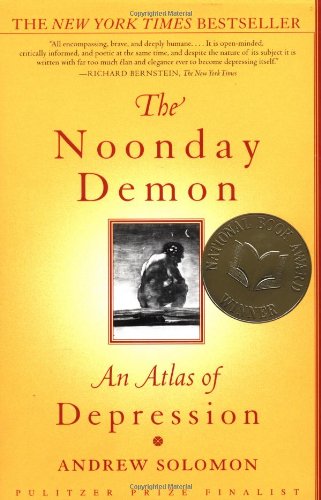
The Noonday Demon by Andrew Solomon, winner of the National Book Award, combines Solomon’s own experience with depression with extensive reporting on how the condition manifests across cultures, income levels, and historical periods.
The scope is genuinely comprehensive, covering biology, politics, poverty, and treatment access alongside personal narrative. Few books manage to feel both rigorously researched and deeply personal at the same time; this one does.
- Combines personal memoir with extensive cross-cultural depression research.
- Covers how poverty and politics shape access to depression treatment.
- Won the National Book Award for its comprehensive treatment of depression.
3. Lost Connections: Uncovering the Real Causes of Depression – and the Unexpected Solutions — Johann Hari
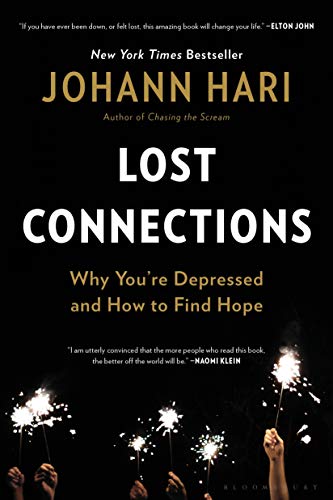
Lost Connections by journalist Johann Hari argues that depression often stems from disconnection, from meaningful work, community, nature, and a hopeful future, rather than purely a chemical imbalance requiring medication alone.
Hari interviewed researchers across the world, and the book has drawn both praise for humanizing social causes of depression and criticism for potentially understating the role of medication for some people. Read it alongside more clinically grounded titles.
- Frames depression partly as disconnection from meaningful work and community.
- Interviews researchers internationally about social and environmental depression triggers.
- Has drawn some clinical criticism for de-emphasizing medication’s role for certain patients.
4. The Mindful Way through Depression: Freeing Yourself from Chronic Unhappiness — Mark Williams, John Teasdale, Zindel Segal, and Jon Kabat-Zinn

Written by the four researchers who developed Mindfulness-Based Cognitive Therapy, this book explains why willpower-based approaches to depression often backfire, and how mindful awareness interrupts the rumination cycle that pulls people back into depressive episodes.
Because it directly addresses relapse prevention rather than a single depressive episode, this title carries more explicit clinical framing than most books on this list, including guided meditation practices tested in randomized trials.
- Explains the clinical mechanism behind Mindfulness-Based Cognitive Therapy.
- Targets rumination cycles that drive depressive relapse after recovery.
- Written by the actual researchers behind the underlying clinical protocol.
5. Undoing Depression: What Therapy Doesn’t Teach You and Medication Can’t Give You — Richard O’Connor
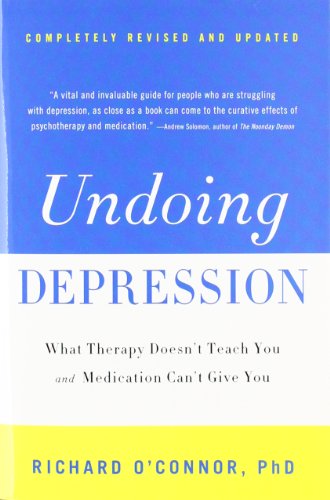
Undoing Depression by psychotherapist Richard O’Connor focuses on depressive habits, learned patterns of thinking, relating, and coping that persist even after therapy or medication successfully treats the underlying mood disorder.
O’Connor argues that many people remain stuck in depression-adjacent behaviors, isolation, procrastination, self-criticism, long after clinical symptoms technically improve, and the book offers specific exercises for unlearning those ingrained patterns.
- Addresses depressive habits that persist even after successful clinical treatment.
- Targets learned patterns like isolation and procrastination directly.
- Written by a practicing psychotherapist with decades of clinical experience.
6. An Unquiet Mind: A Memoir of Moods and Madness — Kay Redfield Jamison

An Unquiet Mind by clinical psychologist Kay Redfield Jamison, herself a researcher on mood disorders, chronicles her own experience with bipolar disorder from both the clinician’s and the patient’s perspective simultaneously.
That dual vantage point gives the memoir unusual credibility. Jamison does not romanticize the illness or oversimplify treatment, describing both the genuine difficulty of accepting medication and the real risks of stopping it.
- Written by a leading researcher on mood disorders from a patient’s lived perspective.
- Addresses the difficulty of accepting long-term medication honestly.
- Avoids romanticizing bipolar disorder while still conveying genuine emotional depth.
7. The Upward Spiral: Using Neuroscience to Reverse the Course of Depression, One Small Change at a Time — Alex Korb

The Upward Spiral by neuroscientist Alex Korb explains depression through specific brain circuits and neurotransmitter systems, translating dense research into small, testable daily actions that can interrupt a downward mood spiral.
Korb emphasizes that depression involves a genuinely vicious cycle, poor sleep worsens mood, worsened mood reduces activity, reduced activity worsens sleep further, and that breaking the cycle anywhere along that loop can start reversing the pattern.
- Explains depression through specific brain circuits and neurotransmitter research.
- Identifies the vicious cycle connecting sleep, mood, and activity levels.
- Offers small, testable daily actions rather than a single dramatic intervention.
8. Reasons to Stay Alive — Matt Haig

Reasons to Stay Alive by novelist Matt Haig recounts his own severe depression and suicidal crisis in his early twenties, followed by his gradual, nonlinear recovery over subsequent years.
Haig’s writing style is unusually direct and occasionally funny, which surprises some readers given the subject matter. That directness, though, is precisely what makes the book feel less isolating for readers in a similar crisis.
- Recounts a severe personal depressive crisis with unusual directness and honesty.
- Uses accessible, occasionally humorous writing despite the difficult subject matter.
- Emphasizes that recovery is genuinely nonlinear, with real setbacks along the way.
9. Darkness Visible: A Memoir of Madness — William Styron

Darkness Visible by novelist William Styron is a short, precise account of his own descent into severe depression in his sixties, written with the literary craft you would expect from a major American writer.
Styron pays particular attention to how inadequately the word ‘depression’ itself captures the actual experience, arguing the clinical term sounds far too mild for what he calls a ‘veritable howling tempest in the brain.’
- Written with the literary precision of a major American novelist.
- Critiques the word ‘depression’ itself for sounding too mild clinically.
- Offers one of the most frequently cited literary accounts of severe depression.
10. Depressive Illness: The Curse of the Strong — Tim Cantopher
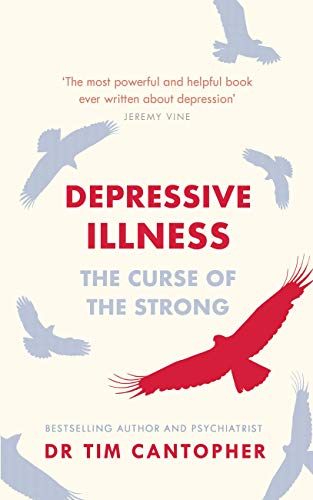
Depressive Illness by consultant psychiatrist Tim Cantopher specifically addresses high-achieving, conscientious people who often resist acknowledging depression precisely because they see themselves as strong, capable, and unlikely candidates for the condition.
Cantopher’s core argument reframes depression in these individuals as a consequence of prolonged overwork and unrealistic self-demand rather than personal weakness, a distinction that resonates strongly with readers who feel ashamed of needing help.
- Addresses high-achieving readers who resist acknowledging their own depression.
- Reframes depression as overwork consequence rather than personal weakness.
- Written by a practicing consultant psychiatrist with direct clinical authority.
What Does Cognitive Behavioral Therapy Teach About Changing Depressive Thoughts?
Cognitive behavioral therapy, or CBT, teaches that depressive mood is sustained partly by specific, identifiable distortions in thinking, not simply an accurate perception of a genuinely bleak reality.
Psychiatrist David D. Burns‘s work catalogs these distortions precisely: all-or-nothing thinking, where a single mistake feels like total failure; catastrophizing, where a setback feels like permanent disaster; and mind reading, assuming others judge you harshly without actual evidence. Naming a thought pattern this specifically makes it considerably easier to challenge than a vague, overwhelming sense of hopelessness ever is.
This does not mean depression is “just thinking wrong.” The distortions themselves are symptoms, not the root cause, but interrupting them consistently can genuinely lift mood over time, particularly alongside other treatment. Burns’s structured worksheets give readers a concrete starting point rather than asking them to simply “think more positively,” which rarely works for anyone dealing with genuine clinical depression.
- Cognitive distortions like all-or-nothing thinking sustain depressive mood beyond the initial trigger.
- Naming a specific distortion makes it easier to challenge than vague hopelessness.
- Structured worksheets provide a concrete starting point beyond simply “thinking positively.”
How Do Social and Environmental Factors Contribute to Depression?
Depression rarely emerges from brain chemistry in complete isolation from someone’s actual life circumstances, relationships, and sense of meaning.
Journalist Johann Hari‘s research documents several social contributors often underweighted in purely biological explanations: disconnection from meaningful work, weakened community ties, and a diminished sense of hopeful future. Andrew Solomon’s cross-cultural reporting adds another layer, showing how poverty and lack of treatment access shape depression’s prevalence and severity in ways that have nothing to do with individual brain chemistry.
None of this contradicts the biological reality of depression. It complicates it. A person can have both a genuine neurochemical vulnerability and a life situation, isolating work, fractured relationships, financial precarity, that makes depression considerably more likely to take hold and considerably harder to escape without addressing both dimensions simultaneously.
- Disconnection from meaningful work and community contributes to depression risk.
- Poverty and limited treatment access shape depression’s prevalence cross-culturally.
- Biological vulnerability and life circumstances typically interact rather than operate in isolation.

What Is Mindfulness-Based Cognitive Therapy and How Does It Prevent Relapse?
Mindfulness-Based Cognitive Therapy, or MBCT, developed by researchers Mark Williams, John Teasdale, and Zindel Segal, combines mindfulness training with cognitive therapy specifically to prevent depressive relapse after recovery from an initial episode.
The core insight is that a small dip in mood can trigger old rumination patterns, dwelling on past failures, catastrophizing about the future, that pull someone back into full depression even after successful treatment. MBCT teaches people to notice this early rumination and respond with mindful awareness rather than getting swept into the old spiral automatically. Jon Kabat-Zinn’s contribution grounds the mindfulness component in decades of clinical research on attention and present-moment awareness.
This matters especially for people who have experienced multiple depressive episodes, since relapse risk increases with each prior episode. Standard antidepressant treatment addresses an active episode well; MBCT specifically targets the mechanism behind recurrence once acute symptoms have already lifted.
- MBCT specifically targets rumination patterns that trigger depressive relapse.
- Relapse risk increases with each prior depressive episode, making prevention especially valuable.
- Mindful awareness interrupts automatic rumination before it escalates into full relapse.
How Does the Brain’s Neuroscience Explain the “Upward Spiral” Out of Depression?
Depression often functions as a genuinely vicious cycle, where each symptom worsens another, and understanding that cycle helps explain why breaking it anywhere can start meaningful improvement.
Neuroscientist Alex Korb describes how poor sleep worsens mood, worsened mood reduces physical activity and social contact, and reduced activity further disrupts sleep, creating a downward spiral that feels impossible to escape from the inside. Korb’s research-backed insight is that the cycle can run in reverse too. A single small change, five minutes of sunlight exposure, one brief social contact, a short walk, can nudge the entire system toward an upward spiral instead.
This reframes recovery considerably. It does not require one massive, heroic effort to “beat” depression in a single push. Small, specific, repeatable actions compound gradually, and Korb’s neuroscience explains precisely why that gradual compounding works at the level of actual brain circuitry rather than remaining a vague motivational slogan.
- Poor sleep, low activity, and depressed mood reinforce each other in a vicious cycle.
- Small, specific actions can nudge the same cycle toward an upward spiral instead.
- Recovery compounds gradually through repeated small changes, not one heroic effort.
What Do Memoirs Teach That Clinical Books Cannot?
Clinical books explain mechanisms; memoirs convey what depression actually feels like from the inside, and both forms of knowledge genuinely matter for different reasons.
William Styron‘s precise, literary account of his own depression captures a texture that clinical language struggles to convey, describing his mood as a “veritable howling tempest in the brain” rather than the clinically flat term “depression” ever manages. Matt Haig’s more contemporary memoir offers something different: proof that severe, suicidal-level depression can eventually give way to a genuinely livable, even joyful, life, even when recovery is nonlinear and includes real setbacks along the way.
Kay Redfield Jamison’s memoir occupies a unique middle ground, since she is both the person living with bipolar disorder and a leading clinical researcher studying it. That dual perspective lets her memoir do something clinical textbooks and personal accounts alone rarely manage together: validate the genuine difficulty of accepting treatment while still making an unambiguous case for staying on it.
- Memoirs convey depression’s lived texture in ways clinical language often cannot.
- Recovery narratives like Haig’s demonstrate that severe depression can improve, even nonlinearly.
- Dual clinician-patient perspectives, like Jamison’s, validate difficulty while still endorsing treatment.
Common Misconceptions About Depression These Books Correct
Popular understanding of depression contains a fair amount of oversimplification, and several books on this list directly push back against the most persistent myths.
The most common misconception treats depression as simple sadness that a person should be able to “snap out of” with enough effort or positive thinking. Andrew Solomon’s research and Styron’s memoir both demonstrate this framing is fundamentally wrong; clinical depression involves measurable changes in brain function that sheer willpower rarely overrides on its own. A second myth assumes only visibly struggling, low-achieving people experience depression. Tim Cantopher’s work directly counters this, describing how high-achieving, conscientious people frequently experience severe depression precisely because they resist acknowledging vulnerability in themselves.
A third misconception assumes recovery, once it begins, proceeds in a straight, steady line upward. Matt Haig’s account explicitly rejects that framing, describing genuine setbacks within an overall trajectory of improvement. Expecting linear progress sets people up for unnecessary despair when a difficult week inevitably arrives.
- Depression involves measurable brain changes, not simple sadness fixable through willpower alone.
- High-achieving, conscientious people experience severe depression despite outward appearances of success.
- Recovery genuinely includes setbacks; expecting a straight line upward sets people up for despair.
When Should Reading Stop and Professional Help Start?
These books offer genuine insight and comfort, but they are not a substitute for professional diagnosis or treatment, and recognizing that distinction can be genuinely life-saving.
If low mood has lasted more than two weeks, interferes significantly with work, relationships, or basic self-care, or comes with thoughts of self-harm or suicide, that pattern warrants an immediate conversation with a doctor, therapist, or psychiatrist rather than continued self-guided reading alone. Several authors on this list, including Kay Redfield Jamison and Tim Cantopher, are themselves clinicians who write explicitly in support of professional treatment, not as a replacement for the books they authored. If you are in the United States and experiencing thoughts of suicide, the 988 Suicide and Crisis Lifeline is available by call or text, any hour, for immediate support.
There is no shame in needing both these books and a qualified clinician. Reaching out for help, whether to a therapist, a psychiatrist, or a trusted person in your life, is itself a sign of genuine strength, not a failure that these books somehow should have prevented on their own.
- Low mood lasting more than two weeks, especially with self-harm thoughts, warrants immediate professional care.
- Several authors on this list are clinicians who explicitly endorse treatment alongside their books.
- Reaching out for support is a sign of genuine strength, not personal failure.
FAQs about Books to Understand and Overcome Depression
What is the best book for someone newly diagnosed with depression?
David Burns’s Feeling Good works well for someone newly diagnosed who wants practical, structured tools rather than dense theory, since it translates cognitive behavioral therapy into worksheets anyone can start using immediately. Andrew Solomon’s The Noonday Demon offers a more comprehensive understanding of the condition itself, useful for readers who want to understand depression broadly rather than jump straight into specific techniques. Many readers pair the two, starting with Solomon for context and Burns for practical tools, though either can genuinely stand alone depending on what a specific reader needs most in that moment.
Can reading books actually help treat depression, or is that unrealistic?
Books can provide genuinely useful frameworks, tools, and a sense of being understood, all of which matter during depression. That said, books work best as a complement to professional treatment rather than a replacement for it, particularly for moderate to severe depression. Cognitive behavioral therapy books like Feeling Good have research support as self-help tools, but that research generally studied them alongside or after professional guidance, not as a total substitute. If symptoms are significantly interfering with daily functioning, combining reading with therapy or medical care produces better outcomes than reading alone typically does.
Are memoirs about depression helpful, or just difficult to read?
Both, honestly, depending on the reader and the timing. Memoirs like Darkness Visible and Reasons to Stay Alive can feel genuinely validating, reducing the isolation that depression itself intensifies, since they demonstrate someone else survived a similarly severe experience. Some readers currently in a difficult episode find intense memoirs overwhelming rather than comforting, and that reaction is completely normal too. There is no requirement to read distressing material while actively struggling; returning to a memoir once you feel somewhat more stable is a perfectly reasonable choice.
Is depression caused by brain chemistry or life circumstances?
Current research generally supports both playing a role, rather than one fully explaining the other. Neuroscience-focused books like The Upward Spiral emphasize brain circuits and neurotransmitter systems, while books like Lost Connections emphasize social disconnection and life circumstances. Most clinicians now describe depression as emerging from an interaction between genetic vulnerability, brain chemistry, and environmental stressors, rather than any single cause. Reading books representing both angles tends to give a more complete picture than committing to only one explanatory framework.
What is Mindfulness-Based Cognitive Therapy, and who is it for?
Mindfulness-Based Cognitive Therapy, or MBCT, is a structured clinical program combining mindfulness meditation with cognitive therapy techniques, developed specifically to prevent depressive relapse in people who have already recovered from at least one prior episode. It works by helping people notice early warning signs of rumination before that rumination pulls them back into a full depressive episode. It is not primarily designed to treat an acute, current depressive episode from scratch, though the mindfulness skills it teaches can still offer some benefit during an active episode alongside other treatment.
Should I worry that reading about depression will make my symptoms worse?
For most people, reading thoughtful, research-grounded books about depression provides relief rather than harm, since understanding a confusing experience tends to reduce distress. That said, some readers, particularly during an acute crisis or with a trauma history, find certain intense memoirs temporarily overwhelming. If you notice reading is consistently increasing distress rather than providing insight or comfort, it is reasonable to pause and prioritize direct support from a therapist or trusted person instead. There is no obligation to push through material that feels actively harmful in the moment.
Bibliography
- Burns, D. D. (1999). Feeling Good: The New Mood Therapy. William Morrow Paperbacks.
- Cantopher, T. (2021). Depressive Illness: The Curse of the Strong. Sheldon Press.
- Hari, J. (2019). Lost Connections: Uncovering the Real Causes of Depression – and the Unexpected Solutions. Bloomsbury Publishing.
- Haig, M. (2016). Reasons to Stay Alive. Penguin Life.
- Jamison, K. R. (1996). An Unquiet Mind: A Memoir of Moods and Madness. Vintage Books.
- Korb, A. (2015). The Upward Spiral: Using Neuroscience to Reverse the Course of Depression, One Small Change at a Time. New Harbinger Publications.
- National Institute of Mental Health. Depression. NIMH.
- O’Connor, R. (2010). Undoing Depression: What Therapy Doesn’t Teach You and Medication Can’t Give You (2nd ed.). Little, Brown Spark.
- Solomon, A. (2002). The Noonday Demon: An Atlas of Depression. Scribner.
- Styron, W. (1992). Darkness Visible: A Memoir of Madness. Vintage Books.
- Williams, M., Teasdale, J., Segal, Z., and Kabat-Zinn, J. (2007). The Mindful Way through Depression: Freeing Yourself from Chronic Unhappiness. The Guilford Press.
Use this citation format to reference the article clearly and help readers find the original source.
PsychologyFor. (2026). 10 Books to Understand and Overcome Depression. PsychologyFor. https://psychologyfor.com/10-books-to-understand-and-overcome-depression/