

See more of our articles in your search results.
Although many do not know it, We don’t always eat what we think we are eating The food industry is a very lucrative business, and when our diet becomes a business, then a series of consequences appear, such as the one we are going to discuss in this article.
Our diet is a serious issue, because our health and well-being, not only physically, but also mentally, depends on it. Unfortunately, sometimes we may think we are eating French fries when in reality this product has everything but potatoes.
We can also eat what we think is healthy food and it is anything but that. Marketing and advertising play an important role in this regard And well…also the permissiveness of governments and regulatory bodies.
Foods that are not what you had always thought
It turns out that some foods are not what you have always thought they were, nor are they what they say they are, and the worst of all is that they contain additives and other products that lower the cost of production and that make these foods not very nutritious and, in some cases, unhealthy.
If you want to know which foods are not what you think they are, just read the list below.
How many of these have you been "meaning to read" for months?
- 1
 Sounds TrueHow to Carry What Can't Be FixedA Journal for GriefListen Free On Audible
 - 2
 AzujosThe Zen Monkey and the Lotus Flower52 Stories to Relieve Stress, Stop Negative Thoughts, Find Happiness, and Live Your Best LifeListen Free On Audible
 - 3
 MajostaDon't Believe Everything You ThinkWhy Your Thinking Is The Beginning & End Of Suffering (Beyond Suffering)Listen Free On Audible
1. Orange juice nectar
Many of us have at some point purchased a tetrabrick of orange juice nectar thinking that we were consuming a product that contained, at least in large part, orange juice. The first thing that usually comes to mind when we see its suggestive label is that it is enriched with vitamin C and, therefore, it is practically like consuming a piece of fruit and a healthy drink.
Well, none of that! Well, this product not only contains less than half the orange juice content, but It is a drink with high sugar content, which causes hyperglycemia. Nothing good if what we want is to carry out a healthy diet and lose weight.
2. Peanut butter
Peanut butter is a healthy product that contains a large amount of peanuts. However, there are industrial versions that not only contain a smaller amount of this nut, but are also made from sugar and hydrogenated oils, which have a high content of trans fats, which They are the least healthy fats and should be eliminated from the diet from all of us.
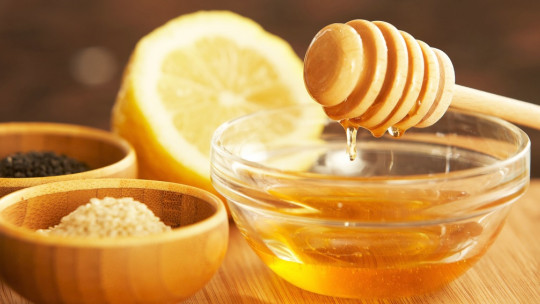
3. Honey
Honey is a natural product that, despite having a high glycemic index, is very healthy. An article published in the newspaper El País warned a few months ago that national producers denounce the low costs and suspicions of adulteration of the honey that arrives from the Asian country. There are many organizations that notice the increase in fake honey.
In fact, the Food Safety News conducted a study in which they found that 76% of all honey present in supermarkets had been treated with a process called ultra filtration so that its origin cannot be traced Which should raise consumers’ suspicions.
4. Potato chips
Potato chips are a very unhealthy food that, if not consumed in moderation, can cause harmful health effects This product, despite being called French fries, contains rather little potatoes, less than half. In reality, they contain other substances such as: rice, corn and potato flour mixed with wheat starch, vegetable oils, salt and spices.
5. Crab sticks
Crab is a very tasty and nutritious food, but the same is not true of crab sticks, which only imitate its flavor. These tasty sticks are made of surimi, a substance invented in Japan centuries ago.
Surimi is obtained by repeatedly washing various fish or poultry until a gelatinous mass is obtained, which is then It is mixed with additives to guarantee product preservation Likewise, other products such as paprika are added to give it that crab “look.”
6. White chocolate
No matter how good it is, white chocolate is not chocolate. For it to be chocolate, it should contain cocoa, and what comes closest to this substance in its composition is butter with cocoa aroma. Besides, cocoa is replaced by milk, which gives it that white color. So the next time you grab a “Milkibar” bar, know that, although it is a delicious sweet, it is not exactly chocolate.
7. Bacon pieces
The little pieces of bacon that you can add to baked potatoes or salads are not actually bacon. In fact, They are pieces of soy flour with bacon flavor Now, some brands do use bacon, but in small quantities. It may be a very tasty product, but it has nothing to do with bacon.
8. Truffle oil
Truffle oil is usually not made with truffles, but with other oils to which the truffle aroma is added. Truffle is an expensive product and, in fact, the strong smell and taste of truffle oil It is due to a chemical compound and not the actual truffles Although authentic truffle oil exists, its price is very expensive for the average consumer.
9. Wasabi
The greenish condiment they bring you with sushi in Japanese restaurants is wasabi, which is a mixture of horseradish, mustard, and food coloring. In reality, this product should be made from the silver that gives its name to this product, which grows only on the island of Sakhalin, in Japan.
It is estimated that Only 5% of the wasabi served in Japanese restaurants around the world contains this root So you should not stop going to Japanese food restaurants if you like exotic food.
10. Caviar
Caviar is sturgeon eggs from the rivers that flow into the Caspian Sea and Black Sea. Because this area has been overfished, it is rare to find this product, which has a very high price. Caviar that is not authentic is still on the market today However, neither its size, its aroma, its color or its flavor resemble the original.
Use this citation format to reference the article clearly and help readers find the original source.
PsychologyFor. (2024). 10 Foods That Are Not What They Seem. PsychologyFor. https://psychologyfor.com/10-foods-that-are-not-what-they-seem/