


See more of our articles in your search results.
It’s 2:40 a.m., the phone is face-down on the nightstand, and your brain has opened a meeting nobody scheduled. Rent, the email you didn’t answer, that thing you said in March. You’ve had four hours of sleep, skipped lunch, and haven’t spoken to anyone you like in a week. None of that is a diagnosis. But it’s the kind of ordinary pile-up that, stacked long enough, can tilt a vulnerable person toward depression, an anxiety disorder or worse.
Here’s the awkward truth about prevention: nobody can promise it. Genetics, childhood, trauma, poverty and plain bad luck all load the dice before you make a single choice. Anyone who claims that the right morning routine will make you immune is selling something. Yet the opposite claim, that habits don’t matter, is just as wrong. Protective factors are real, they add up, and several of them are within reach on a Tuesday afternoon.
Small things, repeated, change the odds.
This guide covers 10 habits to prevent mental disorders, with the research behind each one, honest limits on what the studies show, and a realistic way to start.
It won’t ask you to overhaul your life by Monday. Most of these take less time than a TV episode.
How many of these have you been "meaning to read" for months?
- 1
 TarcherThe Artist's Way30th Anniversary EditionListen Free On Audible
- 2
 Undercover Publishing HouseStop Letting Everything Affect YouHow to break free from overthinking, emotional chaos, and self-sabotage.Listen Free On Audible
- 3
 MajostaDon't Believe Everything You ThinkWhy Your Thinking Is The Beginning & End Of Suffering (Beyond Suffering)Listen Free On Audible
Can you really prevent a mental disorder?
Partly. You can’t eliminate the risk, but you can lower it and delay onset, and the strongest evidence is for depression and anxiety. The World Health Organization (WHO) says that many individual, social and environmental factors affect mental health across life, that protective factors such as social connection, safe surroundings, good nutrition and physical health help promote it, and that risk factors such as violence, poverty, chronic stress, social isolation and discrimination push the other way.
The timing matters more than most people realize. A large US survey led by Ronald C. Kessler found that about half of all lifetime cases of DSM-IV disorders had begun by age 14, and three-quarters by age 24. So prevention isn’t a midlife project. It starts with children, teenagers and young adults, and the habits they build in dorms, first jobs and shared apartments.
Prevention comes in layers, and it helps to know which one you’re in.
- Universal prevention targets everyone: school programs, sleep education, community design.
- Selective prevention targets people at higher-than-average risk, such as children of a parent with depression or people after a major loss.
- Indicated prevention targets people with early symptoms who don’t yet meet criteria for a disorder.
- Relapse prevention aims to keep a recovered person well.
That last layer is quietly the best-researched. Plenty of the habits below were tested first in people who had already been through an episode.
A word on honesty
Most of the findings here are associations from observational studies, with a smaller set of randomized trials. When someone who exercises has less depression, it may be the exercise, or it may be that people who feel well exercise more. Researchers try to untangle this, and sometimes can. Sometimes they can’t. I’ll flag which is which.
Take Elena, a composite example: 22, a university student who sleeps till noon, has stopped going to seminars and hasn’t answered her group chat in nine days. Her risk didn’t appear from nowhere. Every one of those behaviors is a lever, and each is also a symptom, which is exactly why a gentle first move beats a heroic plan.
Habit 1: Is protecting your sleep really that important?
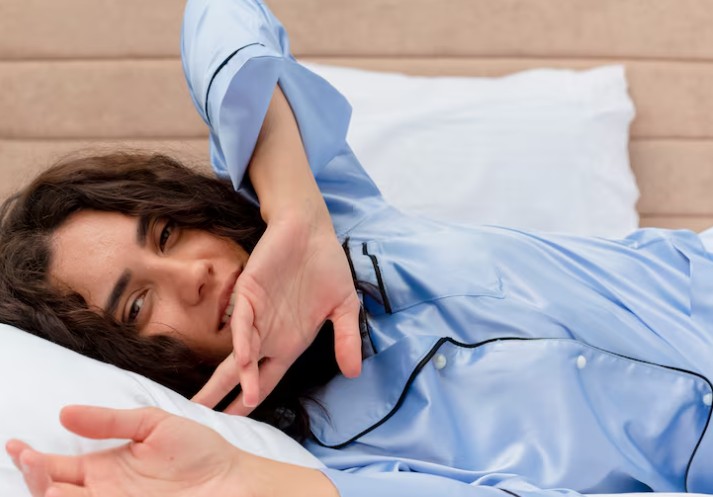
Yes. Sleep is probably the most underrated mental health habit, and insomnia is both an early warning sign and a modifiable risk factor for later depression.
The best direct test comes from a trial by Michael R. Irwin and colleagues, published in JAMA Psychiatry in 2022. They randomly assigned older adults with insomnia disorder to cognitive behavioral therapy for insomnia (CBT-I) or to sleep education, and followed them for years. CBT-I showed an overall benefit in preventing incident and recurrent major depression. A separate 2019 randomized trial of digital CBT-I reported that, among people with minimal or no depression at the start, 9.6% in the CBT-I group developed moderate-to-severe depression by one year, compared with 18.8% in the control group.
Those are striking numbers. But the samples were people with insomnia, so they can’t be stretched to everyone.
What does CBT-I actually involve? It isn’t a pill or a relaxation tape. It combines stimulus control (using the bed only for sleep), sleep restriction (temporarily limiting time in bed to consolidate sleep), changing unhelpful beliefs about sleep, and a stable wake time. It can feel harsh at first. Most people are tired for a week or two before it works.
What you can do tonight
Keep a fixed wake-up time, even on weekends, because it anchors your body clock more than bedtime does. Move screens and work email away from the last hour of the evening. If you’re awake and frustrated for roughly twenty minutes, get up, sit somewhere dim, and go back when you feel sleepy; lying there rehearsing worries teaches the bed to mean worry.
Consider Hassan, a composite 44-year-old warehouse supervisor on rotating shifts. He can’t control his schedule, so he controls what he can: a dark bedroom, caffeine cut-off eight hours before bed, a short wind-down routine that never changes. It doesn’t cure the shift work. It buys him back some hours.
If poor sleep has lasted more than a month, or comes with low mood, talk to a primary care doctor. Insomnia is treatable, and treating it is one of the few preventive moves with trial data behind it.
Don’t lean on alcohol as a sleep aid. It fragments sleep in the second half of the night, so you pay for the early drowsiness later.
Habit 2: How much exercise does it take to lower your risk?

Less than you think. The curve is steep at the low end.
A 2022 meta-analysis in JAMA Psychiatry pooled 15 prospective studies with more than 2 million person-years. Compared with adults who reported no activity, those accumulating half the recommended amount had an 18% lower risk of depression, and those meeting the recommended level (about 2.5 hours a week of brisk walking) had a 25% lower risk. Benefits flattened at higher levels. The authors estimated, assuming causality, that roughly 11.5% of depression cases might be prevented if less active adults reached current recommendations.
An earlier analysis by Felipe B. Schuch and colleagues, covering 49 prospective studies and nearly 267,000 people, found that those with high activity levels had lower odds of developing depression (adjusted odds ratio 0.83) and that the protective pattern held in youths, adults and older adults across regions. Good quality, consistent direction.
Now the caveat, which people tend to skip. A review of exercise-intervention meta-analyses found that they measured depressive symptoms, not new diagnoses, and concluded that evidence for true prevention of depression by exercise is still lacking, though early symptoms did appear to fall. So we have strong signals from observational research, moderate evidence for symptom reduction, and a gap on true prevention. The evidence is thinner than the fitness industry suggests.
- Start with walking. Ten minutes after lunch beats a gym membership you won’t use.
- Pick the version you can repeat. Dancing in the kitchen counts.
- Stack it on an existing habit, like walking while you take a call.
- Add strength or balance work once or twice a week as you get older, because falls and frailty bring their own distress.
- Skip the guilt spiral after a missed week. Restarting is the whole skill.
Priya, a composite 31-year-old accountant, tried a 6 a.m. workout plan and quit in nine days. What stuck was a twenty-minute evening walk with a podcast. Two years later she still does it, and she’d tell you the podcast mattered less than the not-quitting.
Habit 3: Why do close relationships protect your mind?
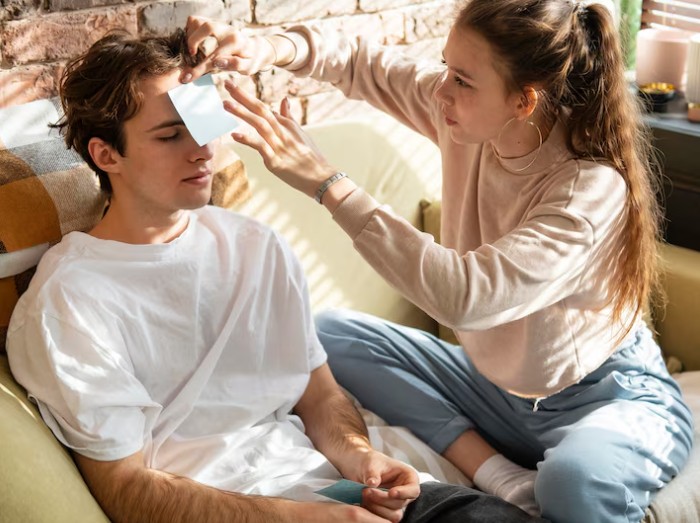
Because loneliness is a stressor and connection is a buffer, and the effects show up in outcomes as blunt as survival.
The landmark analysis here is a 2010 meta-analysis by Julianne Holt-Lunstad, Timothy Smith and Bradley Layton. Pooling 148 studies with more than 300,000 participants, they found that people with stronger social relationships had a 50% greater likelihood of survival across follow-up periods than people with weaker ties. They compared the size of the effect to well-known risks like smoking. It’s observational, so some of the link may run the other way (sick people withdraw), but the association is large and consistent.
For mental disorders specifically, the logic is practical. Friends notice when you’ve changed. They interrupt rumination. They bring soup. And the WHO lists social isolation among the major risk factors for poor mental health, while naming social connection and support as protective.
Quality matters more than quantity. One person who can hear “I’m not okay” without panicking is worth a crowded contact list.
Imagine Walter, a composite 67-year-old widower. His weeks had shrunk to the grocery store and the television. Then a neighbor invited him to a Thursday chess hour at the library, and he went, grudgingly, for a month. By spring he was the one arranging the boards.
Small ways to rebuild contact
Send one message a day to someone you haven’t spoken to in a while. Say yes to the invitation you’d normally decline, at least once a month. Join something with a built-in schedule, such as a class, a volunteer shift or a faith or hobby group, so that showing up doesn’t depend on motivation.
If your social world is thin because of moving, grief, a disability or caring for someone who is ill, the answer isn’t to blame yourself. It’s to start with one low-stakes, repeating contact, and let it grow slowly.
Online contact can help too, particularly for people who are housebound or in small communities, but it works best when it leads to real conversation rather than scrolling beside other people’s lives.
Habits 4 and 5: Can you train your mind to resist anxiety and low mood?

To a degree, yes. Two skill sets have the longest research track record: mindfulness-based approaches for stress and relapse, and cognitive skills for spotting distorted thinking.
Habit 4: Practice a stress-recovery skill
The clearest evidence is for people who have already had depression. Zindel V. Segal, Mark Williams and John Teasdale developed mindfulness-based cognitive therapy (MBCT) as an eight-week group program explicitly designed to prevent relapse. It teaches people to notice the early slide into rumination and respond differently, rather than to suppress thoughts. Trials suggest it can reduce relapse for people with repeated episodes, though results are weaker for those with only one or two, and a mindfulness app isn’t the same as a skilled teacher.
For everyone else, the evidence is more modest. Mindfulness helps some people with stress and anxiety symptoms; it isn’t a universal fix, and for a few people with trauma histories, sitting still with intense sensation can feel worse before it feels better. Slow breathing, a ten-minute walk without your phone, or progressive muscle relaxation are alternatives if sitting meditation doesn’t suit you.
Habit 5: Catch your thinking traps
The psychiatrist Aaron T. Beck argued in Cognitive Therapy of Depression (1979) that low mood is maintained by habitual patterns such as black-and-white thinking, catastrophizing and personalizing, which he linked to negative views of the self, the world and the future. The practical offshoot is simple: when you notice a harsh thought, write it down and ask what evidence supports it, what evidence doesn’t, and what you’d say to a friend.
That sounds trivial. It isn’t, because the habit is the point. Done weekly it becomes a reflex, and reflexes are what hold at 2:40 a.m.
Take Jonas, a composite 26-year-old on his first job. After one critical comment from his manager he decided he’d be fired by Friday. Writing the thought down, he noticed three earlier reviews that were mostly positive, and the story shrank to its real size. It didn’t vanish. It shrank.
Don’t treat these as willpower tricks. If anxiety or low mood is taking up most of your day, working with a therapist who uses cognitive behavioral therapy is a better first move than going it alone.
Habits 6 and 7: What should you eat and drink for a steadier mind?

Myth: there’s a superfood for mental health. Fact: the evidence points to overall dietary pattern, and it’s strongest for treatment, not prevention.
Habit 6: Eat in a Mediterranean-style pattern
The Australian researcher Felice N. Jacka led the SMILES trial, published in BMC Medicine in 2017, which randomly assigned adults with major depression to either dietary support based on a modified Mediterranean diet or a social-support control. After 12 weeks the diet group had greater improvement in depressive symptoms. It was a modest trial that treated existing depression, not a prevention study, so it shows the diet matters, not that it prevents anything. Observational studies link vegetables, fruit, legumes, fish, nuts and olive oil with lower depression risk, but diet is tangled up with income, time and mood.
Practical version: eat regular meals, add vegetables where you can, and cut the ultra-processed snack pile if you notice that it crowds out real food. Skipping meals and living on caffeine can intensify anxiety symptoms, and you’ll feel it within hours.
Habit 7: Treat alcohol and other substances with suspicion
The WHO names harmful use of alcohol and drugs as a risk factor for brain and mental health. In daily life, alcohol is the common one: it feels like relief and works like a loan with interest, worsening sleep, anxiety the next day and mood over time.
- Notice the reason you drink. Using it to cope with stress or loneliness is a warning sign.
- Keep alcohol-free days every week.
- Avoid self-medicating sleep and anxiety with alcohol, cannabis or sedatives.
- Tell your doctor the truth about use if you’re starting medication.
If you’ve tried to cut down and can’t, that is a reason to ask for help, not a character flaw.
Caffeine deserves a brief mention. Two coffees are fine for most people. Five, plus an energy drink at 4 p.m., may be driving the pounding heart you blame on your nerves.
Habit 8: Does having a purpose lower your risk?

Having something worth getting up for appears to protect mental health, and the absence of it shows up as a particular kind of flatness that clinicians call languishing.
Corey L. M. Keyes proposed that mental health and mental illness are two related but separate continua. In his 2002 work on the mental health continuum, adults who were languishing (low well-being without a diagnosable disorder) showed more psychosocial impairment than moderately mentally healthy adults, and those who were flourishing showed the least. That doesn’t prove that low purpose causes disorders later, but it does mean that “not depressed” isn’t the same as “well.” I find that framing useful: it gives you a target beyond the absence of symptoms.
Purpose doesn’t have to be grand. Caring for an aging parent, tending a garden, mentoring a younger colleague, practicing a craft, volunteering on Saturdays: all of these count, because what matters is the felt sense that your effort goes somewhere.
A related, evidence-supported tool is behavioral activation, a core component of treatment for depression. The idea is simple: schedule activities that give you a sense of pleasure or mastery, even when you don’t feel like it, because motivation tends to follow action rather than precede it. The same logic works as prevention when you notice yourself pulling back.
Take Dolores, a composite 63-year-old who retired last spring. At first she loved the freedom, then slowly noticed that Mondays and Fridays felt identical. She signed up to tutor adults in reading on Tuesday mornings. The tutoring itself is small; what changed is that the week now has a shape.
Ask yourself a plain question: what in my week would I miss if it disappeared? If the answer is nothing, that’s useful information, and not a verdict.
Write the answer down. Then add one thing.
Habits 9 and 10: Why do early warning signs and early help matter so much?
Because mental disorders rarely arrive overnight, and the sooner a change is noticed, the cheaper it is to address. Habit 9 is learning your own early warning signs. Habit 10 is acting on them, by asking for help before a crisis.
The WHO’s prevention work stresses that preventive interventions can strengthen protective factors and reduce risk factors, and are beginning to show reductions in the onset and recurrence of serious problems in at-risk groups. The earlier you act, the more options you have. That’s the entire argument.
Normal ups and downs and early warning signs overlap, so the pattern matters more than any single day.
| Looks like ordinary stress | Looks like an early warning sign |
|---|---|
| A bad week of sleep before a deadline | Sleep disrupted for more than a month with no clear cause |
| Feeling low after a disappointment | Low mood most days for two weeks or longer |
| Nerves before a presentation | Constant worry that feels impossible to switch off |
| Wanting a quiet weekend | Pulling away from friends and activities you used to enjoy |
| A glass of wine to unwind occasionally | Needing alcohol to cope, or drinking more than planned |
| Feeling irritable when tired | Outbursts, numbness or hopelessness that feel out of character |
Two weeks is a rough guideline, not a rule. Clinicians use symptom duration and impact on daily functioning to decide whether something is a disorder, so the question to ask is whether this is changing how you work, eat, sleep and relate to other people.
Consider Maya, a composite 38-year-old teacher. She’d been snapping at her kids and dreading Sunday nights for six weeks, and told herself it was January. A friend pointed out that she’d said the same thing in November. She booked a visit with her doctor, was screened for depression, and began therapy while her symptoms were still moderate. That timing probably saved her months.
If you have thoughts of harming yourself or feel unable to stay safe, contact local emergency services or a crisis line right away; this is not something to wait on.
Who to call first? A primary care doctor is a sound starting point in most places, since they can rule out medical causes such as thyroid problems and refer you on to a psychologist, licensed counselor or psychiatrist.
Who needs extra care, and where do habits stop being enough?
Habits are not a substitute for treatment, and they don’t overcome heavy risk by themselves. Some people carry a much higher load than others, and blaming them for “not doing enough” is both inaccurate and unkind.
- Family history of depression, bipolar disorder, psychosis or anxiety raises baseline risk; habits still help, but earlier screening makes sense.
- Childhood adversity, such as neglect, abuse or losing a parent, is a well-established risk factor and may call for trauma-informed therapy.
- Chronic illness or pain raises the likelihood of depression and anxiety.
- Poverty, discrimination and violence put people at higher risk, as the WHO notes; no morning routine fixes an unsafe neighborhood.
- Major transitions like postpartum periods, bereavement, job loss, migration or retirement deserve planned support.
There’s also a sharper limit on the evidence. Many prevention trials are small, run for short periods, or were tested in specific groups such as older adults with insomnia. Few follow people for decades, so we’re still guessing about lifelong effects. Publication bias exists, and effects shrink when results are replicated by independent teams.
Conditions like schizophrenia and bipolar disorder have strong biological components. Healthy habits, particularly regular sleep, can help reduce triggers and relapse in bipolar disorder, but they won’t prevent onset in someone with high genetic loading, and they certainly won’t replace medication when it’s needed.
So the sensible position is neither fatalism nor magical thinking. Habits shift the odds; treatment handles what habits can’t.
And if you’ve been doing “all the right things” and still feel unwell, that doesn’t mean you failed. It means the load is bigger than the tools, and a professional should help you carry it.
How can you start these 10 habits without burning out?
Pick one. Not three, not ten. Behavior change tends to collapse under its own ambition, and the habit you keep is better than the plan you abandon.
- Week one: sleep anchor. Fix your wake-up time and protect the last hour before bed from work.
- Week two: add a walk. Ten minutes, daily, same trigger (after lunch, after dinner).
- Week three: one contact. Message or call one person on a set day.
- Week four: write down warning signs. Three of your own, such as skipping meals, snapping at coworkers or canceling plans, and one person who’d be told.
After a month, add something from the second half of the list: a thought record, an alcohol-free evening schedule, a purpose activity. Keep the earlier ones going at a lower dose if they get hard.
Track just one number, such as nights of at least seven hours’ sleep or walks completed, and look at it weekly. Over-tracking becomes another source of pressure.
Expect setbacks, particularly in winter, during family strain, or when work spikes. A lapse isn’t proof you can’t change. The skill is returning on the next day, which sounds like a slogan but is actually the best predictor of lasting behavior change in the habit literature.
And do one more thing that has nothing to do with productivity: tell someone what you’re trying. Saying it aloud makes it real, and it hands a friend a small job. Who would you tell?
FAQs about Habits to Prevent Mental Disorders
Can mental illness actually be prevented?
Sometimes it can be delayed or made less likely, but not guaranteed away. Risk comes from genetics, early experiences, health and life circumstances, and habits only change part of that equation. The World Health Organization describes preventive interventions that strengthen protective factors and reduce risk factors, with early signs of lower onset and recurrence in at-risk groups. The best-supported targets are depression and anxiety, and the best evidence involves sleep treatment, physical activity, social connection and psychological skills training. Think of prevention as lowering odds, not building a wall.
What is the single most effective habit for mental health?
No one habit wins. If you push for an answer, protecting sleep has some of the strongest trial support for preventing depression in people with insomnia, and regular physical activity has large observational studies behind it. But the right first habit depends on your weak spot. Someone isolated gains more from reconnecting with people, while someone running on four hours of sleep gains more from fixing that. Start with the area where you are most depleted, because that’s where the return is usually highest.
How much exercise do I need to reduce my risk of depression?
A 2022 meta-analysis found that adults who got about half the recommended activity had an 18% lower risk of depression than inactive adults, and those meeting the guideline of roughly 2.5 hours of brisk walking weekly had a 25% lower risk. Benefits leveled off at higher amounts. In other words, going from nothing to something matters most. These are associations from observational studies, so they don’t prove that exercise causes the drop, though the pattern is consistent across many groups.
Is it normal to feel anxious or sad sometimes even if I do everything right?
Yes. Sadness, worry and stress are normal human responses, and healthy habits don’t erase them. What habits do is make those feelings easier to bear and less likely to harden into a disorder. If a low or anxious mood lasts several weeks, is hard to shake, or starts interfering with your work, sleep, appetite or relationships, that pattern deserves attention even when your lifestyle looks perfect. Doing everything right doesn’t make you immune, and needing help isn’t evidence that you slipped.
Do meditation and mindfulness really prevent depression?
Mindfulness-based cognitive therapy was designed to prevent relapse, and trials suggest it works best for people who have had several depressive episodes. For the general public, the evidence is more modest: mindfulness can reduce stress and anxiety symptoms for many, but results vary, and apps are less well studied than taught programs. A few people, especially those with trauma histories, find sitting meditation distressing. If it makes you worse, switch to another stress-recovery method such as walking, breathing exercises or relaxation training.
Can diet alone prevent mental disorders?
No. Diet is one factor among many. A Mediterranean-style pattern has been linked with lower depression risk in observational studies, and a randomized trial in adults with major depression found greater symptom improvement with dietary support than with a social-support control. That trial treated depression rather than preventing it, so it can’t speak to prevention. Eating regular, varied meals is sensible, but food won’t override genetics, trauma or severe stress.
Should I see a professional if I have no diagnosis but I’m struggling?
Yes, if the struggle is lasting or affecting your life. You don’t need a diagnosis to ask for support, and early conversations usually lead to simpler solutions. A primary care doctor can check for physical causes and refer you to a psychologist or licensed counselor. Some therapies, including cognitive behavioral approaches, are used to treat early or subthreshold symptoms. Waiting for things to get bad enough to “count” tends to cost more time and distress.
What happens if I only manage one or two of these habits?
You still get benefit. The research doesn’t suggest that the habits only work as a bundle, and the biggest gains often come from moving from none to some. Doing one thing consistently beats doing ten things for a week. Sleep and movement tend to support each other, and so do connection and purpose, so improving one often makes another easier. Add habits slowly, and don’t turn the list into a new reason to feel behind.
Bibliography
- Beck, A. T., Rush, A. J., Shaw, B. F., & Emery, G. (1979). Cognitive therapy of depression. Guilford Press.
- Holt-Lunstad, J., Smith, T. B., & Layton, J. B. (2010). Social relationships and mortality risk: A meta-analytic review. PLoS Medicine, 7(7), e1000316.
- Irwin, M. R., Carrillo, C., Sadeghi, N., Bjurstrom, M. F., Breen, E. C., & Olmstead, R. (2022). Prevention of incident and recurrent major depression in older adults with insomnia: A randomized clinical trial. JAMA Psychiatry, 79(1), 33-41.
- Jacka, F. N., O’Neil, A., Opie, R., Itsiopoulos, C., Cotton, S., Mohebbi, M., Castle, D., Dash, S., Mihalopoulos, C., Chatterton, M. L., Brazionis, L., Dean, O. M., Hodge, A. M., & Berk, M. (2017). A randomised controlled trial of dietary improvement for adults with major depression (the SMILES trial). BMC Medicine, 15, Article 23.
- Kessler, R. C., Berglund, P., Demler, O., Jin, R., Merikangas, K. R., & Walters, E. E. (2005). Lifetime prevalence and age-of-onset distributions of DSM-IV disorders in the National Comorbidity Survey Replication. Archives of General Psychiatry, 62(6), 593-602.
- Keyes, C. L. M. (2002). The mental health continuum: From languishing to flourishing in life. Journal of Health and Social Behavior, 43(2), 207-222.
- Schuch, F. B., Vancampfort, D., Firth, J., Rosenbaum, S., Ward, P. B., Silva, E. S., Hallgren, M., Ponce De Leon, A., Dunn, A. L., Deslandes, A. C., Fleck, M. P., Carvalho, A. F., & Stubbs, B. (2018). Physical activity and incident depression: A meta-analysis of prospective cohort studies. American Journal of Psychiatry, 175(7), 631-648.
- Segal, Z. V., Williams, J. M. G., & Teasdale, J. D. (2002). Mindfulness-based cognitive therapy for depression: A new approach to preventing relapse. Guilford Press.
- World Health Organization. (2022). World mental health report: Transforming mental health for all. World Health Organization.
Use this citation format to reference the article clearly and help readers find the original source.
PsychologyFor. (2026). 10 Habits to Prevent Mental Disorders. PsychologyFor. https://psychologyfor.com/10-habits-to-prevent-mental-disorders/