


You leave the party replaying every sentence you said, certain you sounded strange, and by the time you fall asleep you have already rehearsed three better versions of the conversation. That loop is exhausting. If you have ever frozen mid-introduction, forgotten how to make small talk once the weather comment runs dry, or watched someone else effortlessly work a room while you counted the minutes until you could leave, you already know what weak social skills feel like from the inside. It is not a character flaw. It is a set of trainable behaviors nobody taught you.
The discomfort tends to compound quietly. You avoid the networking event, which means you avoid the practice, which means the next event feels just as terrifying as the last one, and the cycle keeps feeding itself. Many people assume charisma is something you are simply born with, but interpersonal communication researchers have spent decades showing the opposite: it is closer to a skill stack, built from specific, observable micro-behaviors like eye contact timing, question-asking rhythm, and active listening. Once you see it that way, the shame around struggling starts to loosen its grip.
So where do you actually start learning this stuff? That is exactly what a good social skills book is for.
This guide walks through fourteen books that break down conversation skills, body language, emotional intelligence, and confidence into concrete, practicable steps.
14 Books to Improve Your Social Skills
Verified Top Picks- 1
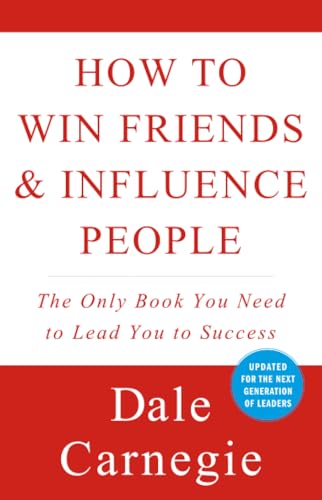 Dale Carnegie How to Win Friends and Influence People The foundational classic on human relations, genuine curiosity, and rapport buildingCHECK TODAY'S PRICE
 - 2
 Leil Lowndes How to Talk to Anyone: 92 Little Tricks for Big Success A tactical field manual offering ninety-two bite-sized techniques for everyday conversationCHECK TODAY'S PRICE
 - 3Debra Fine The Fine Art of Small Talk Practical conversation threads and transition phrases to overcome awkward silencesCHECK TODAY'S PRICE
- 4Malcolm Gladwell Talking to Strangers: What We Should Know About People We Don't Know A fascinating exploration of default-to-truth bias, transparency myths, and misread signalsCHECK TODAY'S PRICE
- 5Daniel Wendler Improve Your Social Skills A structured, step-by-step curriculum to master everyday interpersonal interactionsCHECK TODAY'S PRICE
- 6Chris MacLeod The Social Skills Guidebook Manage shyness, improve conversations, and make lasting friends without losing your identityCHECK TODAY'S PRICE
- 7Joe Navarro What Every BODY Is Saying An ex-FBI agent's guide to speed-reading nonverbal comfort and discomfort displaysCHECK TODAY'S PRICE
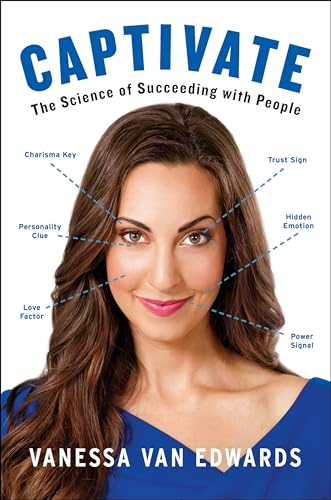
- 8Vanessa Van Edwards Captivate: The Science of Succeeding with People A science-backed manual for first impressions, conversation sparks, and decoding peopleCHECK TODAY'S PRICE
- 9Daniel Goleman Emotional Intelligence: Why It Can Matter More Than IQ Self-awareness, self-regulation, and empathy as the core pillars of relational successCHECK TODAY'S PRICE
- 10Marshall B. Rosenberg Nonviolent Communication: A Language of Life A four-step framework to express needs, resolve conflicts, and communicate with empathyCHECK TODAY'S PRICE
- 11Olivia Fox Cabane The Charisma Myth: How Anyone Can Master Personal Magnetism Breaking down personal magnetism into three trainable components: presence, power, and warmthCHECK TODAY'S PRICE
- 12Chris Voss Never Split the Difference Applying tactical empathy, mirroring, and emotion labeling from FBI hostage negotiationCHECK TODAY'S PRICE
- 13Susan Cain Quiet: The Power of Introverts in a World That Can't Stop Talking Reframing introversion and building authentic social strategies suited to quieter temperamentsCHECK TODAY'S PRICE
- 14Thomas Erikson Surrounded by Idiots: The Four Types of Human Behavior A four-color communication model to adapt your style across diverse personality typesCHECK TODAY'S PRICE
What Makes a Social Skills Book Actually Work?
The right book depends less on popularity and more on your specific sticking point. A person who freezes during small talk needs a different starting point than someone who reads a room fine but struggles to build lasting emotional intelligence in close relationships, and matching the book to the actual gap saves months of frustration.
Books that genuinely move the needle tend to share three qualities: they translate abstract advice into observable behaviors, they include some form of practice structure rather than pure theory, and they are written by someone with real clinical or field experience rather than borrowed anecdotes. Each author in this list built a narrow, tested framework rather than a grab-bag of generic tips, which is exactly why pairing your specific struggle with the right communication framework matters more than reading the most famous book on the shelf.
- Look for books that translate theory into observable, repeatable social behaviors rather than vague mindset advice.
- Prioritize authors with genuine clinical, research, or field experience in interpersonal communication.
- Choose books that include built-in practice structure, since knowledge without repetition rarely changes social confidence.
Top 14 Books to Improve Your Social Skills for Lasting Confidence
The following curated selection represents a well-rounded social skills bibliography, spanning classic rapport-building, small talk mechanics, body language, emotional intelligence, charisma, and strategies suited to introverts and difficult personalities alike.
1. How to Win Friends and Influence People — Dale Carnegie
How to Win Friends and Influence People by Dale Carnegie remains the foundational text that essentially created the modern social skills genre, first published in 1936 and still selling briskly nearly ninety years later. Carnegie’s central insight is almost embarrassingly simple: people care far more about feeling heard than about being impressed. His techniques, remembering names, asking genuine questions about the other person’s interests, avoiding direct criticism, sound almost old-fashioned on the page, but they map directly onto what modern researchers call reciprocal self-disclosure, the mechanism through which mutual sharing builds trust.
For anyone who has ever wondered why some people seem to make friends effortlessly while others struggle at every gathering, this book supplies the missing rapport vocabulary. It rewards patient, repeated re-reading rather than a single skim, since several techniques only click once you have tried and half-failed at them in a real conversation.
- Emphasizes genuine curiosity over scripted flattery, which prevents interactions from feeling manipulative.
- Teaches readers to remember names and small personal details as a foundation for likability.
- Frames criticism-avoidance as a practical tool for preserving rapport building in tense moments.
2. How to Talk to Anyone: 92 Little Tricks for Big Success in Relationships — Leil Lowndes

How to Talk to Anyone by Leil Lowndes takes Carnegie’s foundation and turns it into a tactical field manual for everyday conversation skills. The book breaks communication into ninety-two bite-sized, immediately usable techniques, from the well-known ‘epoxy eyes’ opener to specific phrasing for exiting a conversation gracefully.
Not every trick will resonate with every reader. Some feel a little gimmicky on a first pass. But the sheer volume means almost anyone can find three or four moves that fit their personality, and Lowndes frames each one around a concrete, observable social outcome rather than a vague principle.
- Offers specific body-language openers for the crucial first ten seconds of meeting someone.
- Breaks conversation into modular conversation techniques rather than one overarching, harder-to-apply philosophy.
- Targets small talk transitions that move interactions from surface pleasantries into real connection.
3. The Fine Art of Small Talk — Debra Fine

The Fine Art of Small Talk by communication coach Debra Fine attacks the single most dreaded part of socializing head-on: the awkward, low-stakes exchange that either opens a door or kills a conversation outright. Fine argues that most people abandon small talk too early, right at the point where one more follow-up question would have opened something genuinely interesting.
Her fix is refreshingly mechanical. Keep a mental list of go-to conversation threads, travel, food, recent projects, and pull one out whenever a silence starts to feel heavy. That structure alone removes a huge share of the anxiety around not knowing what to say next.
- Provides ready-made conversation threads for filling silences without resorting to forced small talk.
- Teaches specific transition phrases that move exchanges from pleasantries into genuine connection.
- Targets networking events and professional settings where social anxiety spikes hardest.
4. Talking to Strangers: What We Should Know About the People We Don’t Know — Malcolm Gladwell
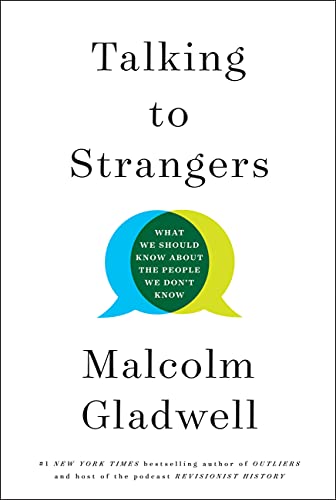
Talking to Strangers by Malcolm Gladwell approaches interpersonal misunderstanding from a very different angle than a typical how-to guide. Rather than offering scripts, Gladwell dissects why humans are so consistently bad at reading unfamiliar people, drawing on courtroom trials, espionage cases, and infamous real-world misjudgments to make his point about misread social signals.
It will not hand you a single conversation opener. It will, however, change how confident you are in your own snap judgments, which turns out to be a surprisingly useful shift for anyone who has ever badly misread a stranger’s intentions.
- Explains why default-to-truth bias makes humans systematically overconfident about reading strangers.
- Uses real case studies to illustrate how context blindness distorts first impressions.
- Encourages more humility and curiosity in ambiguous social interactions rather than snap certainty.
5. Improve Your Social Skills — Daniel Wendler
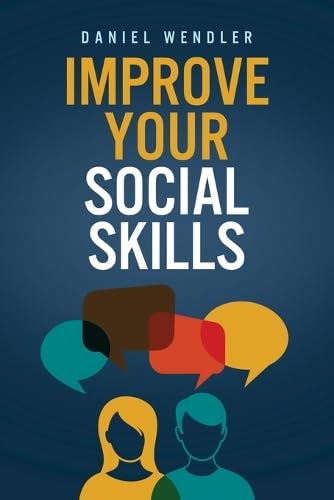
Improve Your Social Skills by psychologist Daniel Wendler, who has written openly about his own experience on the autism spectrum, was built as a step-by-step manual rather than a collection of loosely connected anecdotes. It covers everything from starting a conversation to reading disengagement cues, structured almost like a curriculum with explicit practice exercises closing every chapter.
That structure matters enormously for readers who feel overwhelmed by vague advice like ‘just be yourself.’ Wendler treats social anxiety as a genuine skills gap that responds to deliberate, incremental practice rather than a personality flaw to simply accept.
- Structures content as a true curriculum with sequential practice exercises after each chapter.
- Addresses beginners directly, assuming no prior explicit social skills training.
- Frames awkwardness as a solvable skills gap rather than a fixed, unchangeable trait.
6. The Social Skills Guidebook: Manage Shyness, Improve Your Conversations, and Make Friends, Without Giving Up Who You Are — Chris MacLeod
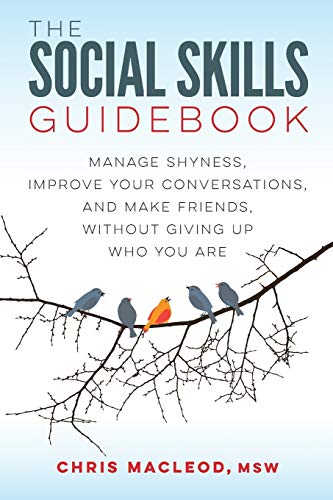
The Social Skills Guidebook by therapist Chris MacLeod, who runs the widely referenced site Succeed Socially, was written specifically for adults who feel behind their peers socially. MacLeod’s core argument is refreshing: you do not need to become an extrovert to build a satisfying social life; you need workable habits and realistic expectations.
The book walks through group settings, one-on-one meetups, and the slow work of maintaining friendships over years, treating each as a distinct social skill rather than one giant, undifferentiated problem called ‘being social.’
- Distinguishes between different social contexts instead of treating social confidence as one monolithic skill.
- Validates introverted and shy temperaments while still pushing for concrete behavioral change.
- Offers a realistic, non-toxic-positivity framing of what genuine social progress actually looks like.
7. What Every BODY Is Saying: An Ex-FBI Agent’s Guide to Speed-Reading People — Joe Navarro

What Every BODY Is Saying by Joe Navarro, a former FBI counterintelligence agent, distills two decades of interrogating suspects and reading defector behavior into a practical framework for everyday body language. His central concept, ‘comfort and discomfort displays,’ subtle shifts in foot direction, neck touching, or blocking gestures, reveals genuine feeling far more reliably than facial expressions, which people learn to fake early in life.
Navarro is careful to warn against reading a single gesture in isolation. The real skill lies in establishing a behavioral baseline for how a specific person normally behaves, then noticing meaningful deviations from it.
- Introduces discomfort displays like neck touching or foot withdrawal as reliable emotional cues.
- Warns against interpreting isolated gestures without first establishing a personal behavioral baseline.
- Draws on real FBI interrogation experience to ground claims in observed field behavior.
8. Captivate: The Science of Succeeding with People — Vanessa Van Edwards
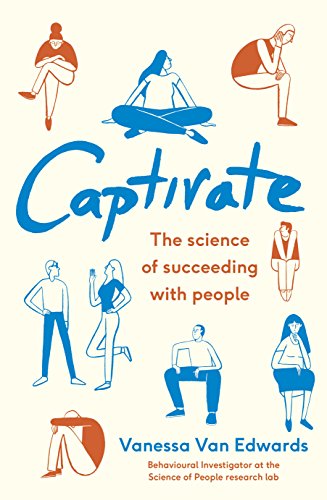
Captivate by behavioral researcher Vanessa Van Edwards runs her own People Lab and translates its findings into structured, repeatable social techniques rather than generic warmth advice. Her chapters on first impressions are especially practical, arguing that people form lasting judgments within roughly seven seconds, long before a word is spoken.
Van Edwards also devotes serious attention to conversational sparks, the small, specific questions that reliably produce more interesting answers than ‘how are you.’ The book reads more like an experiment log than a motivational manifesto, which is exactly its appeal.
- Offers a repeatable framework for the critical first ninety seconds of any social interaction.
- Explains how vocal energy and posture shape first impressions before any words are exchanged.
- Provides specific ‘conversational spark’ questions that outperform generic small talk openers.
9. Emotional Intelligence: Why It Can Matter More Than IQ — Daniel Goleman

Emotional Intelligence by psychologist Daniel Goleman, published in 1995, popularized a concept that has since reshaped how researchers talk about relational success. Goleman argues that self-awareness, self-regulation, empathy, and social skill together predict career and relationship outcomes better than raw intelligence alone, a claim that was controversial when the book first landed.
It has aged reasonably well since. Goleman’s framework does not target conversation mechanics directly, but it builds the underlying emotional intelligence that makes every other social technique land with more sincerity.
- Identifies self-regulation and empathy as trainable components of relational success.
- Argues that emotional intelligence predicts real-world outcomes as strongly as raw intelligence.
- Provides the psychological groundwork that makes surface-level conversation tactics feel authentic rather than hollow.
10. Nonviolent Communication: A Language of Life — Marshall B. Rosenberg

Nonviolent Communication by clinical psychologist Marshall B. Rosenberg teaches readers to separate observation from judgment, name feelings without blame, and state needs directly instead of through complaint or sarcasm. His four-step framework, observe, feel, need, request, sounds mechanical the first time you try it, and honestly it still feels that way for a while.
Most people report it starts feeling natural within a few weeks of deliberate use, particularly in close relationships where old communication habits have calcified into predictable, exhausting arguments about the same recurring issues.
- Breaks difficult conversations into an observe-feel-need-request sequence for reducing conflict.
- Separates factual observation from judgment, which lowers defensiveness in close relationships.
- Reframes complaints as unmet needs, giving partners a concrete actionable request instead of blame.
11. The Charisma Myth: How Anyone Can Master the Art and Science of Personal Magnetism — Olivia Fox Cabane
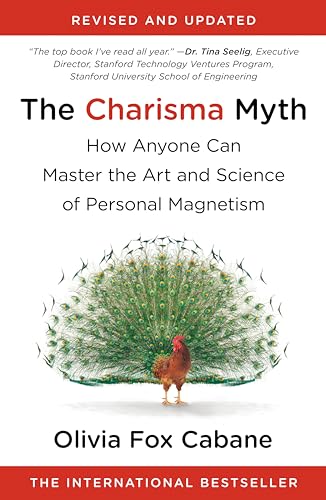
The Charisma Myth by Olivia Fox Cabane breaks charisma into three trainable components she calls presence, power, and warmth, arguing each can be developed independently through specific mental and physical techniques. One surprisingly simple exercise, focusing attention fully on physical sensations before entering a room, reportedly resolves a large share of visible nervousness almost instantly.
Cabane draws on techniques originally developed for Harvard and MIT executive training, which gives the book a slightly more corporate, performance-oriented flavor than most titles on this list, though the underlying skills transfer easily to ordinary social settings.
- Breaks charisma into three separately trainable components: presence, power, and warmth.
- Offers a body-sensation exercise for reducing visible nervousness before high-stakes interactions.
- Draws on corporate executive training research while remaining useful for everyday social presence.
12. Never Split the Difference: Negotiating As If Your Life Depended On It — Chris Voss

Never Split the Difference by former FBI lead hostage negotiator Chris Voss was written for boardrooms and salary negotiations, but its core technique, ‘tactical empathy,’ mirroring language back and labeling emotions out loud, translates surprisingly well to ordinary social friction. Saying ‘it sounds like you’re frustrated’ defuses tension in a way generic advice rarely manages.
It works in hostage standoffs. It also works when a roommate is annoyed about dishes, which is a strange but genuinely useful thing to learn about tactical empathy from a book about high-stakes negotiation.
- Introduces ‘tactical empathy,’ labeling emotions aloud to defuse interpersonal tension.
- Teaches mirroring language as a low-effort way to build rapport during difficult conversations.
- Applies hostage-negotiation research to everyday disputes, not just professional negotiation.
13. Quiet: The Power of Introverts in a World That Can’t Stop Talking — Susan Cain

Quiet by Susan Cain reframes the entire conversation around introversion, arguing that Western culture over-values extroverted expression and, in doing so, pressures quieter people into performing a social style that drains them. Cain does not ask introverts to become louder or more outgoing.
She asks them to build strategies suited to their actual temperament, including deliberate recovery time after socializing and choosing smaller, deeper interactions over large gatherings whenever that option genuinely exists.
- Validates lower-stimulation social preferences instead of treating introversion as a deficit.
- Recommends deliberate recovery time as a legitimate part of sustainable social skills practice.
- Encourages choosing smaller, deeper interactions over large gatherings when personality temperament allows.
14. Surrounded by Idiots: The Four Types of Human Behavior — Thomas Erikson

Surrounded by Idiots by Thomas Erikson uses a simplified color-based behavioral model, drawing loosely on DISC personality theory, to help readers quickly identify whether someone is dominant, social, stable, or analytical, and adjust their communication style accordingly. Critics note the framework oversimplifies personality science considerably.
As a quick, practical mental shortcut for adjusting tone in a meeting or family gathering, though, it works reasonably well for a surprising number of readers, even ones who know the underlying personality science is imperfect.
- Offers a simplified four-color model for quickly reading someone’s communication style.
- Helps readers adjust tone for dominant, social, stable, or analytical personality temperament types.
- Works best as a rough mental shortcut rather than a precise clinical personality framework.
The Science Behind Learnable Social Skills
Social skill is not a fixed trait handed out at birth. It is closer to a stack of separable, trainable competencies that researchers have studied for decades, and understanding the underlying science makes the techniques in these books far easier to trust and apply.
Psychologist Daniel Goleman‘s concept of emotional intelligence anchors much of this science, breaking social competence into self-awareness, self-regulation, empathy, and social skill as four distinct, measurable components. Dale Carnegie’s decades-old advice about remembering names and showing genuine interest turns out to align closely with what researchers call reciprocal self-disclosure, the finding that mutual, gradually escalating sharing builds trust far faster than either oversharing or staying guarded. Vanessa Van Edwards’ research on first impressions adds a physiological layer: people form lasting judgments about warmth and competence within roughly seven seconds, which means posture and vocal energy often matter more than the actual words spoken.
Marshall Rosenberg’s nonviolent communication model contributes a different but complementary piece, showing that separating observation from judgment measurably reduces defensiveness in conflict. None of these frameworks work in isolation. They stack. A person who improves their active listening through Goleman’s model but ignores Van Edwards’ first-impression research will still stumble in the opening seconds of an interaction, before the deeper skills even get a chance to matter.
- Emotional intelligence breaks social competence into self-awareness, self-regulation, empathy, and social skill.
- Reciprocal self-disclosure explains why mutual, gradual sharing builds trust faster than oversharing.
- First impressions form within roughly seven seconds, making posture and vocal energy as important as word choice.
Reading Body Language Without Overinterpreting It
Nonverbal cues carry an enormous share of any conversation, but misreading a single gesture in isolation is one of the most common mistakes readers make after finishing a body language book.
Former FBI agent Joe Navarro‘s framework centers on what he calls comfort and discomfort displays: subtle shifts in foot direction, neck touching, or blocking behaviors that reveal genuine emotional state more reliably than facial expressions, which people learn to consciously control from early childhood. Navarro insists on establishing a personal baseline first. Someone who habitually fidgets is not necessarily anxious in a given moment; the deviation from their normal pattern is what actually carries information, and skipping that step is exactly how well-meaning readers turn a useful skill into an inaccurate parlor trick.
Vanessa Van Edwards extends this into a more structured system in Captivate, pairing observed body language cues with specific conversational responses rather than leaving readers to guess what to do once they notice a signal. Used together, these two frameworks turn abstract nonverbal theory into something genuinely actionable during a real conversation, not just an interesting party fact to mention later.
- Establish a personal behavioral baseline before interpreting any single gesture as meaningful.
- Watch for clusters of discomfort displays rather than reacting to one isolated cue.
- Pair observed nonverbal signals with a concrete conversational response, not just passive observation.
Why Some Advice Backfires: Common Misconceptions About Social Skills
Not all popular advice about socializing holds up, and some of it actively backfires for the people who need social skills training most.
The phrase “just be yourself” is probably the single most common piece of well-intentioned but useless advice given to socially anxious people, since it offers no concrete behavior to practice and implicitly blames the person for a skills gap rather than a personality flaw. Chris MacLeod’s work directly counters this by insisting that social confidence comes from specific, learnable habits, not from waiting to feel naturally comfortable. Susan Cain challenges a different misconception: the assumption that introverts must become more extroverted to succeed socially. That pressure, she argues, often produces worse outcomes than simply building strategies suited to an introvert’s actual personality temperament.
A third misconception deserves equal attention. Many readers assume that reading enough books will eventually produce social ease on its own, without ever testing anything in a real interaction. That almost never happens. Reading builds vocabulary and reduces uncertainty, which genuinely helps, but the actual behavior change requires practice, feedback, and repetition in situations that carry at least a little real social risk.
- “Just be yourself” offers no actionable step and often deepens shame around social anxiety.
- Introverts do not need to become extroverted; they need strategies suited to their own personality temperament.
- Reading alone rarely changes behavior without deliberate, repeated real-world practice.
Practical Exercises to Apply These Books Daily
Reading a social skills book without practicing it is a bit like reading a swimming manual and expecting to float. The information has to travel from the page into an actual social interaction before it changes anything.
To translate the core lessons from these fourteen books into daily behavior, try building a rotation around five evidence-informed social skills practices:
- Pick one technique per week, such as Lowndes’ epoxy-eyes opener, and apply it in a low-stakes setting like a coffee order.
- Ask one genuine follow-up question in every conversation this week, borrowing directly from Fine’s conversation threads method.
- Practice labeling a friend’s emotion out loud once a day using Voss’ tactical empathy to build conversational rapport.
- Notice one comfort or discomfort display per conversation using Navarro’s framework, without acting on it, just to build observation skill.
- Write down what happened after each attempt, tracking whether the exchange felt warmer, to reinforce genuine behavioral feedback.
Progress here rarely moves in a straight line. Expect a strong week followed by an awkward one, because that unevenness is completely normal, and it does not mean the social skills training isn’t working. Small, consistent reps beat occasional heroic efforts almost every time.
When to Seek Professional Support Alongside These Books
Books help most people build workable habits, but they are not designed to treat clinical social anxiety disorder, and knowing that distinction matters.
If avoidance has narrowed your world considerably, if you are skipping meals, work, or medical care because facing people feels unbearable, or if the anxiety comes with panic attacks, that pattern points toward something a book alone cannot resolve. A licensed therapist trained in cognitive behavioral therapy or exposure-based treatment can address the underlying anxiety mechanisms directly, something even the best-written guide cannot replicate through a page. Books remain a genuinely useful complement to therapy for many people. They were never meant to replace it.
There is no shame in needing both a good book and a good clinician. Reaching for support, whether that is a workbook or a licensed professional, is itself a sign of self-awareness, not weakness, and treating it that way changes how sustainable the whole process feels.
FAQs about Books to Improve Your Social Skills
What is the best book to improve social skills for a complete beginner?
For someone starting from scratch, Daniel Wendler’s Improve Your Social Skills or Chris MacLeod’s The Social Skills Guidebook tend to work best because they are structured as step-by-step curricula rather than collections of loosely connected tips. Both authors assume the reader has never received explicit social coaching before, so they explain basics that more advanced books skip entirely, like how to start a conversation without a rehearsed line or how to notice when someone wants to end an interaction. Starting there before moving to more advanced titles like Captivate or The Charisma Myth generally produces better results, since those later books assume some baseline comfort already exists.
Can reading books actually improve social skills, or do you need practice too?
Reading alone rarely produces lasting change. The books on this list work best as a source of specific techniques you then test in real conversations, adjust based on what happens, and repeat. Cognitive knowledge about conversation mechanics helps reduce anxiety by making interactions feel less unpredictable, but the behavioral change comes from practice, feedback, and repetition, not from reading alone. Think of these books as instruction manuals rather than finished solutions. Most authors, including Dale Carnegie and Leil Lowndes, explicitly build practice exercises into their chapters for exactly this reason.
How long does it typically take to see results from a social skills book?
Most readers notice small shifts within two to four weeks of deliberate practice, particularly with concrete techniques like asking better follow-up questions or reading basic body language cues. Deeper changes, like feeling genuinely comfortable in group settings or building lasting friendships, usually take several months of consistent effort rather than a single reading. Progress rarely moves in a straight line, and setbacks after a promising week are common and expected, not a sign that the approach has failed.
Are social skills books helpful for people with diagnosed social anxiety disorder?
They can be a helpful supplement, but they generally work best alongside professional treatment rather than as a standalone fix for a diagnosed condition. Books focused on practical skill-building, like Wendler’s or MacLeod’s, can reduce the skills-deficit component of social anxiety, while cognitive behavioral therapy addresses the underlying fear response more directly. If avoidance is significantly limiting daily functioning, work, relationships, or basic errands, speaking with a licensed therapist is a reasonable next step alongside any reading.
What is the real difference between social skills and charisma?
Social skills refer to the specific behaviors that make interactions run smoothly, things like active listening, appropriate eye contact, and knowing how to keep a conversation moving. Charisma is closer to the overall impression those behaviors create, a felt sense of warmth, confidence, and presence that makes people want to keep talking to you. Olivia Fox Cabane’s research suggests charisma breaks down into trainable components like presence, power, and warmth, meaning it is less an innate trait and more the visible result of specific social skills applied consistently over time.
Should introverts choose different social skills books than extroverts?
Not necessarily different books entirely, but different emphasis. Introverts often benefit from titles like Susan Cain’s Quiet, which validates lower-stimulation social preferences before introducing skill-building, whereas more tactical books like How to Talk to Anyone work well for readers of any temperament since the techniques themselves are largely temperament-neutral. The core skills, listening, curiosity, reading nonverbal cues, apply regardless of where someone falls on the introversion-extroversion spectrum, even if the pacing and recovery needs differ.
Can body language books really help you understand people better in everyday situations?
Yes, though the honest caveat is that no single gesture reliably means one thing in isolation. Joe Navarro’s work, built on decades of FBI interviewing experience, emphasizes reading clusters of behavior and establishing a baseline for how a specific person normally acts before drawing conclusions from a single cue. Used that way, body language knowledge genuinely improves everyday interactions, helping you notice discomfort earlier or recognize genuine interest more accurately, rather than relying on guesswork or ignoring nonverbal signals altogether.
Bibliography
- Carnegie, D. (1936). How to Win Friends and Influence People. Simon & Schuster.
- Lowndes, L. (2003). How to Talk to Anyone: 92 Little Tricks for Big Success in Relationships. McGraw-Hill.
- Fine, D. (2005). The Fine Art of Small Talk. Hyperion.
- Gladwell, M. (2019). Talking to Strangers: What We Should Know about the People We Don’t Know. Little, Brown and Company.
- Wendler, D. (2014). Improve Your Social Skills. CreateSpace Independent Publishing Platform.
- MacLeod, C. (2016). The Social Skills Guidebook: Manage Shyness, Improve Your Conversations, and Make Friends, Without Giving Up Who You Are. Chris MacLeod.
- Navarro, J. (2008). What Every BODY Is Saying: An Ex-FBI Agent’s Guide to Speed-Reading People. William Morrow.
- Van Edwards, V. (2017). Captivate: The Science of Succeeding with People. Portfolio/Penguin.
- Goleman, D. (1995). Emotional Intelligence: Why It Can Matter More Than IQ. Bantam Books.
- Rosenberg, M. B. (2015). Nonviolent Communication: A Language of Life. PuddleDancer Press.
- Cabane, O. F. (2012). The Charisma Myth: How Anyone Can Master the Art and Science of Personal Magnetism. Portfolio/Penguin.
- Voss, C. (2016). Never Split the Difference: Negotiating As If Your Life Depended On It. Harper Business.
- Cain, S. (2012). Quiet: The Power of Introverts in a World That Can’t Stop Talking. Crown Publishing.
- Erikson, T. (2019). Surrounded by Idiots: The Four Types of Human Behavior. St. Martin’s Essentials.
Use this citation format to reference the article clearly and help readers find the original source.
PsychologyFor. (2026). 14 Books to Improve Your Social Skills. PsychologyFor. https://psychologyfor.com/14-books-to-improve-your-social-skills/