

I was cleaning out my kitchen drawer last week and found this old Post-it Note stuck to the back of a measuring cup. On it, I’d written a reminder from three years ago that I never saw because it got stuck in the wrong place. And I thought—wait, Post-it Notes themselves were an accident, weren’t they? Someone trying to create a super-strong adhesive ended up making one that barely stuck at all, and instead of throwing it away, they realized that barely-sticking glue had its own perfect use. Sometimes the best discoveries come from things going wrong in exactly the right way.
That’s serendipity—finding something valuable when you weren’t looking for it, or when you were looking for something else entirely. The word comes from a Persian fairy tale about three princes of Serendip (now Sri Lanka) who kept making discoveries by accident and sagacity. And honestly? Some of humanity’s most important breakthroughs happened because someone made a mistake, left something out overnight, noticed something weird, or had the wisdom to recognize that their “failure” was actually something extraordinary.
What fascinates me as a psychologist is what these serendipitous discoveries reveal about cognition and creativity. They require a particular kind of mindset—one that’s observant, curious, flexible, and willing to explore unexpected results rather than dismissing them as errors. Most people would have thrown away the moldy petri dish or ignored the melted candy bar. The discoverers didn’t, and that made all the difference.
So let’s talk about fourteen of the most remarkable serendipitous discoveries in history—accidents that changed medicine, technology, and daily life in ways their discoverers never imagined. These stories aren’t just fun trivia. They’re lessons about staying curious, paying attention, and recognizing opportunity when it shows up wearing the disguise of failure.
1. Penicillin: The Moldy Petri Dish That Saved Millions

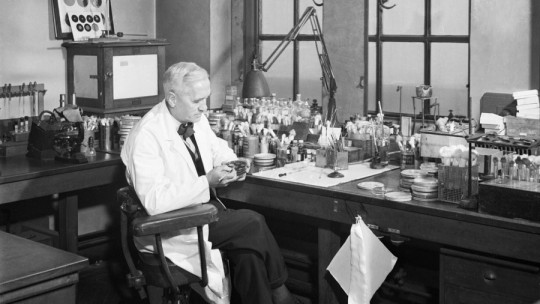
This is probably the most famous serendipitous discovery in medical history. In 1928, Scottish bacteriologist Alexander Fleming went on vacation for two weeks, leaving his lab at St. Mary’s Hospital in London in its usual state of disarray. Fleming was not, by all accounts, a tidy researcher. When he returned in September, he was sorting through petri dishes containing cultures of Staphylococcus bacteria, preparing to clean them.
One dish caught his attention—it had mold growing on it, which wasn’t unusual in Fleming’s messy lab. But what was unusual was that the bacteria colonies around the mold had been destroyed. The area around this particular mold was completely clear of bacteria. A sloppier scientist might have just thrown the contaminated dish away. Fleming didn’t. He isolated the mold, which turned out to be a strain of Penicillium notatum, and discovered it produced a substance that killed bacteria.
Penicillin, as he named it, became the first true antibiotic. By World War II, it was being mass-produced and was saving countless lives from bacterial infections that had previously been fatal. Fleming shared the Nobel Prize in Medicine in 1945 for this discovery that literally happened because he was messy and observant. The accident: a spore of mold floating through an open window and landing in an unwashed petri dish. The result: one of the most important medical advances in human history.
2. X-Rays: The Mysterious Glow Nobody Expected

In 1895, German physicist Wilhelm Röntgen was experimenting with cathode ray tubes in his laboratory—trying to understand how electricity behaved in vacuum tubes. During one experiment, he noticed something strange: a fluorescent screen across the room was glowing, even though it was too far away to be affected by the cathode rays and he’d covered the tube with black cardboard.
Röntgen realized he’d discovered a new type of invisible radiation that could pass through materials that blocked normal light. He called them “X-rays” because “X” represents the unknown in mathematics. He spent weeks experimenting obsessively, even bringing his equipment home. In one famous experiment, he asked his wife to place her hand on a photographic plate while he directed the X-rays at it. The resulting image showed her bones and wedding ring—the first X-ray photograph of the human body.
Within months, X-rays were being used in medicine and surgery worldwide. Röntgen received the first Nobel Prize in Physics in 1901 for this accidental discovery that revolutionized medical diagnosis. He never patented his discovery, believing it should benefit all humanity. The accident: noticing an unexpected glow. The result: the ability to see inside the human body without surgery.
3. The Microwave Oven: The Candy Bar That Melted

Percy Spencer was an engineer working for Raytheon in the 1940s, developing radar technology for the military. One day in 1945, he was standing near an active magnetron—a vacuum tube that generates microwaves for radar—when he noticed something odd. The chocolate bar in his pocket had melted.
Most people would have been annoyed about the ruined candy and moved on. Spencer got curious. He brought popcorn kernels into the lab and placed them near the magnetron—they popped. He tried an egg next—it exploded. He realized that microwaves could heat food quickly by agitating water molecules. Within a year, Raytheon had filed a patent for the first microwave oven.
The first commercial microwaves were massive—six feet tall, weighing 750 pounds, and costing $5,000. But eventually the technology was miniaturized and became one of the most common appliances in modern kitchens. The accident: a melted candy bar. The result: a cooking technology that changed food preparation worldwide.
4. Vulcanized Rubber: The Accidental Hot Stove Moment

Charles Goodyear spent years in the 1830s trying to make natural rubber more durable. Natural rubber got sticky and smelly in summer heat and brittle and cracked in winter cold. Investors had given up on rubber, but Goodyear was obsessed. He tried mixing rubber with everything—magnesium, lime, nitric acid, turpentine—with varying degrees of failure.
In 1839, while working with a mixture of rubber and sulfur, Goodyear accidentally dropped some of the compound onto a hot stove. Instead of melting, the rubber charred like leather but remained elastic around the edges. He had discovered that heat and sulfur transformed rubber into a stable, weather-resistant material. He called the process “vulcanization” after Vulcan, the Roman god of fire.
Despite this discovery, Goodyear died in debt—he was better at inventing than business. But vulcanized rubber became the foundation of the modern tire industry and countless other applications. The accident: dropping rubber on a stove. The result: making rubber practical for industrial use.
5. Radioactivity: The Drawer That Changed Physics

In 1896, French physicist Henri Becquerel was investigating the relationship between phosphorescence and X-rays, which had just been discovered. He was working with uranium salts, which he would expose to sunlight and then test to see if they would expose photographic plates.
But one day, the weather in Paris was cloudy. Becquerel put his uranium samples in a drawer along with wrapped photographic plates, intending to wait for sunny weather. After several cloudy days, he developed the plates anyway, expecting them to be blank or only faintly exposed. Instead, they showed strong exposure. The uranium had exposed the plates without any sunlight at all.
Becquerel had accidentally discovered radioactivity—the spontaneous emission of radiation from certain elements. This discovery led to Marie and Pierre Curie’s work isolating radium and polonium, and eventually to nuclear physics, cancer treatment, and nuclear energy. The accident: cloudy weather forcing him to check plates he expected to be blank. The result: an entirely new understanding of atomic physics.
6. Saccharin: The Sweet Mistake

In 1879, chemist Constantin Fahlberg was working at Johns Hopkins University researching coal tar derivatives. One evening, he went home after a long day in the lab without thoroughly washing his hands. At dinner, he noticed that his bread tasted unusually sweet. His wife tasted nothing unusual, so he realized the sweetness must be on his hands.
Fahlberg rushed back to the lab and started tasting compounds from his experiments (which, let’s be clear, is incredibly dangerous and not something scientists should do). He identified the sweet-tasting substance as the compound that would become saccharin—the first artificial sweetener, about 300 times sweeter than sugar.
Fahlberg patented saccharin and became wealthy, though he controversially didn’t credit his supervisor, Ira Remsen, who had been overseeing the research. Saccharin became especially important during World War I and II when sugar was rationed. The accident: not washing his hands before dinner. The result: a sugar substitute that revolutionized the diet industry.
7. Teflon: The Failed Refrigerant

In 1938, Roy Plunkett was a young chemist at DuPont working on developing new refrigerants. He was experimenting with tetrafluoroethylene (TFE) gas, which was stored in pressurized cylinders. One day, he opened a cylinder expecting gas to come out, but nothing happened. The cylinder still had its original weight, so the gas hadn’t leaked.
A less curious person might have assumed the equipment was faulty and moved on. Plunkett cut open the cylinder and found it coated with a white, waxy powder. The TFE gas had polymerized into a substance with remarkable properties—it was incredibly slippery, highly resistant to heat and chemicals, and virtually inert.
This substance, polytetrafluoroethylene (PTFE), was trademarked as Teflon. Initially used for military applications like the Manhattan Project, it eventually found its way into non-stick cookware and countless other applications from spacecraft to medical implants. The accident: a mysteriously empty gas cylinder. The result: one of the most versatile synthetic materials ever created.
8. Post-it Notes: The Adhesive That Failed Successfully

In 1968, 3M scientist Spencer Silver was trying to develop a super-strong adhesive for the aerospace industry. Instead, he accidentally created an adhesive that was incredibly weak—it stuck to surfaces but could be easily removed without leaving residue. Silver couldn’t figure out what to do with this “failed” adhesive, but he had a hunch it might be useful for something, so he kept talking about it to colleagues.
Six years later, another 3M scientist named Art Fry was singing in his church choir and getting frustrated with bookmarks that kept falling out of his hymnal. He remembered Silver’s weak adhesive and realized it was perfect for bookmarks that needed to stick temporarily but not permanently. After more development, Post-it Notes were born.
The product initially failed in test markets because people didn’t understand the concept. But once they tried them, they couldn’t live without them. Post-it Notes became one of 3M’s most successful products. The accident: creating weak adhesive when trying to make strong adhesive. The result: billions of colorful sticky notes covering desks worldwide.
9. Viagra: The Heart Medicine That Worked Elsewhere
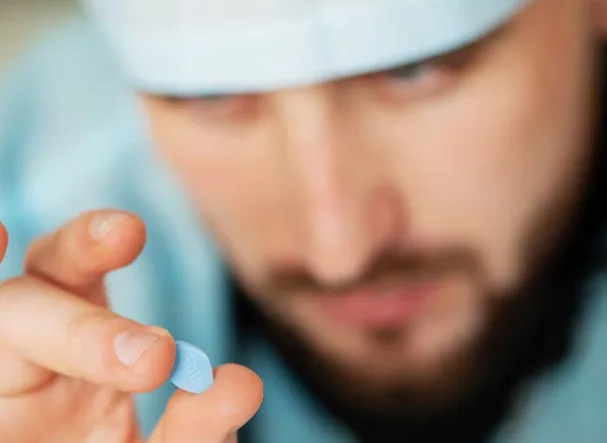
In the early 1990s, Pfizer was developing a drug called sildenafil to treat angina (chest pain from heart disease) by dilating blood vessels. During clinical trials, the drug showed disappointing results for heart conditions. But male participants reported an unusual side effect—the drug was dramatically improving their erectile function.
The researchers quickly realized they had stumbled onto something more valuable than their original target. After additional studies, sildenafil was approved in 1998 under the brand name Viagra as a treatment for erectile dysfunction. It became a blockbuster drug and transformed treatment for a condition that affected millions of men but had been difficult to discuss or treat effectively.
The original heart disease application never panned out, but later research found sildenafil could treat pulmonary hypertension. The accident: a heart medication that didn’t work for hearts. The result: a treatment that improved quality of life for millions and opened conversations about sexual health.
10. Coca-Cola: The Failed Headache Cure

In 1886, Atlanta pharmacist John Pemberton was trying to create a cure for headaches and nervousness. He developed a syrup made from coca leaves and kola nuts that he claimed would relieve headaches, cure morphine addiction, and calm nerves. He mixed it with plain water and called it Pemberton’s French Wine Coca.
When Atlanta passed prohibition legislation, Pemberton had to remove the alcohol from his formula. One day, a customer with a headache came into the pharmacy where Pemberton’s syrup was being sold, and the clerk accidentally mixed the syrup with carbonated water instead of plain water. The customer loved it, and Coca-Cola as a carbonated beverage was born.
The drink never proved effective for headaches or nerves, but it became one of the most recognizable and valuable brands in the world. The medicinal claims were eventually dropped, but the formula (somewhat modified over the years) remains closely guarded. The accident: mixing syrup with the wrong kind of water. The result: a beverage empire.
11. Super Glue: The Sticky Gun Sight Failure

During World War II, chemist Harry Coover was trying to develop clear plastic gun sights for soldiers. He was working with cyanoacrylates, but they were impossibly sticky and ruined every piece of equipment they touched. Coover abandoned the project as a failure.
Nine years later in 1951, Coover was supervising research on heat-resistant aircraft canopy materials when he and his team rediscovered cyanoacrylates. This time, instead of seeing them as a problem, Coover realized the instant-bonding property could itself be valuable. He tested it by gluing two pieces of equipment together and hanging them from a crane—they held his weight.
Super Glue was introduced commercially in 1958. It became invaluable not just for household repairs but also in medical applications—field surgeons in Vietnam used it to quickly seal wounds. The accident: a substance that ruined experiments by sticking too well. The result: one of the strongest and most useful adhesives ever created.
12. Pacemakers: The Failed Heart Recorder

In 1958, electrical engineer Wilson Greatbatch was building a device to record irregular heartbeats. He reached into a box for a resistor to complete the circuit, but he accidentally grabbed one with the wrong resistance value—1 megohm instead of 10,000 ohms.
When he installed the wrong resistor, the circuit produced electrical pulses at regular intervals that sounded almost exactly like a human heartbeat. Greatbatch immediately realized this “mistake” could be used to regulate irregular heartbeats rather than just record them. Within two years, he had developed the first implantable pacemaker.
The device revolutionized cardiology, allowing millions of people with heart rhythm problems to live normal lives. Modern pacemakers are descendants of this accidental discovery. The accident: grabbing the wrong resistor. The result: a life-saving medical device that’s been implanted in millions of patients.
13. Insulin Treatment: The Unexpected Pancreas Extract

In 1921, Canadian surgeon Frederick Banting and medical student Charles Best were conducting experiments to understand the pancreas’s role in diabetes. They were trying to isolate the hormone they believed regulated blood sugar by removing dog pancreases and creating extracts.
The experiments weren’t going as planned. But when they injected their pancreatic extract into diabetic dogs, the dogs’ blood sugar levels dropped dramatically and the animals improved. They had accidentally isolated insulin in a form that could be administered as treatment, even though they hadn’t fully understood the mechanism.
By 1922, they successfully treated the first human patient, a 14-year-old boy named Leonard Thompson who was dying from diabetes. Before insulin, diabetes was a death sentence. This serendipitous breakthrough transformed diabetes from a fatal disease to a manageable chronic condition. Banting and Best’s supervisor, J.J.R. Macleod, shared the Nobel Prize with them in 1923. The accident: isolating a working treatment before fully understanding the science. The result: millions of lives saved and extended.
14. Silly Putty: The Failed Rubber Substitute

During World War II, the United States faced a rubber shortage because Japan controlled rubber-producing regions. The government asked scientists to develop synthetic alternatives. In 1943, engineer James Wright at General Electric was trying to create synthetic rubber by mixing boric acid with silicone oil.
What he got was a stretchy, bouncy substance that could copy newspaper print, bounce higher than rubber, and stretch without breaking—but couldn’t be used for any practical wartime purpose. GE sent samples to engineers worldwide asking for applications, but nobody found one.
The substance sat unused until 1949, when marketing consultant Peter Hodgson saw it at a party and recognized its potential as a toy. He borrowed $147, bought the rights, packaged it in plastic eggs, and called it “Silly Putty.” It became one of the most popular toys of the 1950s and 60s. The accident: trying to make synthetic rubber and getting a toy instead. The result: a product that’s entertained generations of children and even went to space with Apollo 8 astronauts.
What These Discoveries Teach Us About Creativity and Innovation
Looking at these fourteen examples, several patterns emerge that have implications beyond just scientific discovery. First, preparation matters. These weren’t purely random accidents—they happened to people who were actively working on problems, who had the expertise to recognize when something unexpected was actually significant. As Louis Pasteur said, “Chance favors the prepared mind.”
Second, curiosity is essential. Fleming could have thrown away the moldy dish. Röntgen could have ignored the glowing screen. Spencer could have just bought a new candy bar. But they asked “What’s happening here?” instead of dismissing anomalies as errors or contamination. The psychological flexibility to investigate unexpected results rather than treating them as failures is crucial for serendipitous discovery.
Third, these discoveries often required recognizing that a “failure” for one purpose could be a success for another. The adhesive that was too weak for aerospace became perfect for temporary notes. The heart medication that didn’t work for hearts worked for something else. This requires cognitive flexibility—the ability to see possibilities beyond your original goal.
Fourth, timing and persistence matter. Silver talked about his weak adhesive for six years before someone found a use for it. Many serendipitous discoveries sat unused for years until someone recognized their potential. You have to be willing to keep exploring even when the value isn’t immediately obvious.
Finally, these stories remind us that innovation rarely follows a straight line. We plan, we hypothesize, we experiment—and then something unexpected happens, and if we’re paying attention and willing to follow where it leads, we might discover something more valuable than what we were originally seeking. The key is maintaining enough openness and curiosity to recognize opportunity when it appears in unexpected forms.
FAQs About Serendipitous Discoveries
Are serendipitous discoveries really just luck, or is there skill involved?
Serendipitous discoveries involve both chance and skill. The chance element is the unexpected event—the contaminated petri dish, the melted candy bar, the wrong resistor. But recognizing the significance of that unexpected event requires knowledge, expertise, observational skills, and cognitive flexibility. Most people would have dismissed these anomalies as errors or contamination. What made these discoverers special was their ability to recognize that something interesting was happening and their willingness to investigate instead of ignoring it. As Pasteur famously said, “Chance favors the prepared mind.” The luck creates the opportunity, but skill and preparation are required to recognize and capitalize on it. Many accidental discoveries probably go unnoticed because people aren’t paying attention or don’t have the expertise to understand what they’re seeing.
Can serendipity be cultivated, or do you just have to get lucky?
While you can’t control random events, you can create conditions that make serendipitous discovery more likely. Stay curious and observant—pay attention to unexpected results instead of dismissing them. Maintain diverse interests and knowledge bases, because serendipity often involves connecting ideas from different domains. Allow yourself to explore and experiment without rigid attachment to specific outcomes. Create environments that tolerate “productive failure” where mistakes can be examined rather than immediately discarded. Collaborate and share ideas with others, because someone else might recognize significance in something you’re dismissing. Most importantly, develop what psychologists call “cognitive flexibility”—the ability to shift perspectives and see possibilities beyond your original intentions. Organizations can cultivate serendipity by encouraging exploration, tolerating failures, promoting cross-disciplinary collaboration, and rewarding curiosity alongside goal-achievement.
Why don’t more modern discoveries happen by serendipity like they used to?
Modern scientific research is actually still full of serendipitous discoveries, though they might be less dramatic than historical examples or harder for non-scientists to appreciate. Post-it Notes and Viagra are relatively recent examples. The difference is that modern science is more specialized, expensive, and focused on specific goals due to funding pressures. Researchers have less freedom to explore unexpected results because they’re accountable to grants with specific objectives. Additionally, modern discoveries often require sophisticated equipment and theoretical understanding that makes them less accessible as stories—it’s harder to explain the accidental discovery of graphene’s properties than penicillin mold killing bacteria. Finally, there’s survivorship bias in historical examples—we remember the dramatic serendipitous discoveries from the past while forgetting the equally systematic and planned discoveries. Serendipity still happens, but the context and constraints of modern research have changed.
Have any serendipitous discoveries been harmful rather than beneficial?
Yes, unfortunately. Some accidental discoveries had negative consequences, particularly in weapons development. The discovery of chlorine gas’s toxicity led to its use as a chemical weapon in World War I. Some pharmaceutical discoveries that seemed beneficial initially proved harmful—thalidomide was discovered to help with morning sickness but caused severe birth defects. The development of CFCs (chlorofluorocarbons) seemed like a beneficial discovery for refrigeration but later proved devastating to the ozone layer. Even beneficial discoveries can have dual-use implications—nuclear fission discovered through basic research led to both nuclear medicine and nuclear weapons. This highlights that serendipitous discoveries are morally neutral; their impact depends on how humans choose to use them. It also emphasizes the importance of careful testing and ethical consideration of new discoveries before widespread implementation.
Why did it take so long for some accidental discoveries to be recognized as valuable?
Several factors delay recognition of serendipitous discoveries’ value. First, the discoverer might lack the perspective to see applications outside their field—Spencer Silver’s weak adhesive needed someone thinking about bookmarks to recognize its value. Second, the discovery might be ahead of available technology or infrastructure needed to exploit it. Third, cultural or market conditions might not be ready—Post-it Notes initially failed because people didn’t understand temporary adhesive notes as a concept. Fourth, the discoverer might lack resources or business skills to develop the discovery commercially. Fifth, scientific or professional communities might resist ideas that challenge existing paradigms. Finally, some discoveries require additional advances or combinations with other technologies before their value becomes apparent. Patents sometimes expire before commercial applications are found. This time lag emphasizes that discovery is just the first step; recognition, development, and implementation are separate challenges that require different skills and resources.
Are serendipitous discoveries more common in certain scientific fields?
Serendipitous discoveries appear most commonly in chemistry, pharmacology, and materials science, likely because these fields involve working with substances whose properties can surprise researchers in observable ways. A unexpected chemical reaction, a drug with unexpected effects, or a material with unusual properties is easier to notice than serendipity in more abstract fields. Physics and biology also have notable serendipitous discoveries, particularly in experimental work. Fields involving direct observation and manipulation of materials seem to offer more opportunities for unexpected results to become apparent. By contrast, purely theoretical or computational fields have fewer obvious serendipitous discoveries, though unexpected patterns in data or computational results can still lead to breakthroughs. The nature of the field matters less than whether it involves empirical experimentation where unexpected results can be directly observed and investigated.
Do scientists actively try to replicate the conditions that led to famous serendipitous discoveries?
Not systematically, because by definition you can’t plan serendipity. However, some organizations try to create environments where serendipity is more likely by encouraging exploratory research, tolerating failures, promoting diverse collaborations, and giving researchers freedom to pursue unexpected results. Google’s famous “20% time” policy (allowing employees to spend work time on side projects) was meant to enable serendipity, though its effectiveness is debated. Some research institutions specifically fund “high-risk, high-reward” projects that might fail but could lead to unexpected breakthroughs. Academic tenure systems were partly designed to give scientists freedom to explore without immediate pressure for results. However, modern research funding increasingly emphasizes specific goals and deliverables, which can constrain the exploratory work that enables serendipity. The challenge is balancing accountability for resources with freedom to explore the unexpected.
How do we know about serendipitous discoveries that failed or were never recognized?
We largely don’t, which creates significant survivorship bias in our understanding of serendipity. We know about discoveries that were eventually recognized and developed, but countless accidental findings were probably dismissed, ignored, or lost. Some might be sitting in lab notebooks or patent files, unrecognized. Others were discarded before anyone recorded them. Some discoverers probably lacked resources to pursue unexpected findings. Many “failed” projects might have contained valuable serendipitous discoveries that nobody recognized. This is one argument for better documentation of negative results and unexpected findings in scientific literature, publishing “failed” experiments, and maintaining curiosity about anomalies even when they don’t fit current research goals. The serendipitous discoveries we know about represent an unknown fraction of potential discoveries that occurred but weren’t recognized or developed.
Use this citation format to reference the article clearly and help readers find the original source.
PsychologyFor. (2025). 14 Examples of Serendipity Discoveries. PsychologyFor. https://psychologyfor.com/14-examples-of-serendipity-discoveries/