


You have finished another grammar workbook, memorized another list of fifty vocabulary words, and somehow still freeze the moment an actual English speaker asks you an unscripted question. That gap between studying English and genuinely understanding it frustrates learners at every level. Learning a language is not primarily a memorization problem; it is a gradual process of pattern recognition that happens largely below conscious awareness, which is exactly why some study methods produce fluency and others produce only test scores.
The frustration compounds because most classroom instruction emphasizes explicit grammar rules over the kind of immersive exposure that actually builds intuitive fluency. You can recite the rule for the present perfect tense perfectly and still hesitate mid-sentence trying to apply it in real conversation. That disconnect is not a personal failing; it reflects how language acquisition actually works in the brain, favoring repeated, meaningful exposure over isolated rule memorization. Choosing the right books, ones that provide genuine input alongside targeted reference support, can shift that entire dynamic considerably.
So which books actually build real, usable English fluency rather than just test-taking knowledge?
This guide reviews 15 books in English ideal for learning the language, spanning grammar reference, vocabulary building, extensive reading, and the psychology behind language acquisition itself.
15 Books in English Ideal for Learning the Language
Verified Top Picks- 1
 Raymond Murphy English Grammar in Use The world's bestselling self-study grammar reference pairing explanations with exercisesCHECK TODAY'S PRICE
 - 2
 Michael Swan Practical English Usage The authoritative reference guide answering subtle grammar, vocabulary, and usage questionsCHECK TODAY'S PRICE
 - 3Norman Lewis Word Power Made Easy Building advanced vocabulary through Greek and Latin roots and transferable decoding skillsCHECK TODAY'S PRICE
- 4Michael McCarthy & Felicity O'Dell English Collocations in Use (Intermediate) Mastering natural-sounding word pairings and phrases that native speakers use automaticallyCHECK TODAY'S PRICE
- 5Gabriel Wyner Fluent Forever: How to Learn Any Language Fast A cognitive science methodology combining pronunciation, spaced repetition, and immersionCHECK TODAY'S PRICE
- 6Ernest Hemingway The Old Man and the Sea A Nobel Prize-winning classic written in clean, concise prose ideal for intermediate learnersCHECK TODAY'S PRICE
- 7E. B. White Charlotte's Web Clear, precise, and beautiful storytelling providing accessible extensive reading practiceCHECK TODAY'S PRICE
- 8Antoine de Saint-Exupéry The Little Prince A short, completable philosophical novella that builds authentic confidence in reading EnglishCHECK TODAY'S PRICE
- 9Roald Dahl Charlie and the Chocolate Factory Playful, inventive vocabulary and British English idioms in an engaging, fast-moving storyCHECK TODAY'S PRICE
- 10John Steinbeck Of Mice and Men Dialogue-heavy naturalistic American prose providing exposure to casual conversational EnglishCHECK TODAY'S PRICE
- 11Jayme Adelson-Goldstein & Norma Shapiro Oxford Picture Dictionary Visual vocabulary learning connecting everyday English words directly to illustrationsCHECK TODAY'S PRICE
- 12Thomas R. Beyer Jr., PhD 501 English Verbs Comprehensive conjugation charts for five hundred common regular and irregular English verbsCHECK TODAY'S PRICE
- 13Susan M. Gass & Larry Selinker Second Language Acquisition: An Introductory Course The academic foundation exploring interlanguage, input theory, and cognitive language processingCHECK TODAY'S PRICE
- 14Richard R. Day & Julian Bamford Extensive Reading in the Second Language Classroom The research-backed case for building fluency and vocabulary by reading high volumes of easy textsCHECK TODAY'S PRICE
- 15Adam Robinson / The Princeton Review Word Smart: Building an Educated Vocabulary Building sophisticated vocabulary through memorable context sentences and word associationsCHECK TODAY'S PRICE
Why Do Some English Learners Progress Faster Than Others?
Progress differences often trace back to how much genuine, comprehensible exposure a learner receives, not simply how many hours they spend studying grammar rules in isolation.
Linguist Stephen Krashen‘s comprehensible input hypothesis argues that language acquisition happens primarily through understanding meaningful messages slightly above a learner’s current level, rather than through explicit grammar instruction or conscious memorization drills. Learners who read extensively, even simple material, often progress faster than those who exclusively study grammar textbooks, since reading provides the repeated, contextualized exposure the brain actually needs to internalize patterns.
- Comprehensible input drives acquisition more reliably than explicit grammar memorization alone.
- Extensive reading provides repeated, contextualized exposure that isolated drills cannot replicate.
- Progress often reflects exposure volume more than raw study hours logged.
The 15 Best Books in English for Learning the Language
The following selection spans grammar reference, vocabulary building, accessible literature, and the underlying research on second language acquisition itself.
1. English Grammar in Use — Raymond Murphy
English Grammar in Use by Raymond Murphy remains the most widely used self-study grammar reference for intermediate learners, pairing clear explanations on the left page with practice exercises on the right.
This layout lets learners study a specific grammar point and immediately test their understanding, rather than reading dense rules disconnected from actual application. Decades of continuous revision keep the examples genuinely current.
- Pairs clear explanations with immediate practice exercises on facing pages.
- Targets intermediate learners specifically, avoiding overly advanced technical grammar terms.
- Remains the most widely adopted self-study grammar reference worldwide.
2. Practical English Usage — Michael Swan

Practical English Usage by Michael Swan functions less as a course book and more as a reference dictionary for specific grammar and usage questions, organized alphabetically by topic for quick lookup.
Learners typically keep this on hand rather than reading it cover to cover, consulting specific entries whenever a genuine usage question arises during writing or conversation practice.
- Organizes entries alphabetically for quick reference rather than sequential reading.
- Addresses subtle usage questions general grammar books often skip entirely.
- Works best as an ongoing reference rather than a single study session.
3. Word Power Made Easy: The Complete Handbook for Building a Superior Vocabulary — Norman Lewis
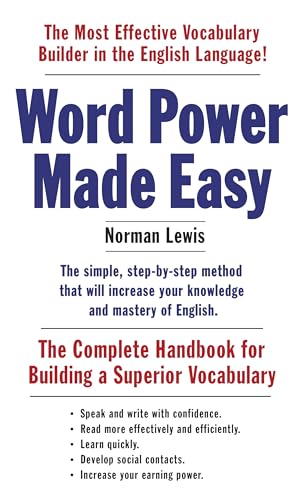
Word Power Made Easy by Norman Lewis builds vocabulary through etymology and word roots, teaching learners to recognize Latin and Greek components that recur across thousands of English words.
This approach helps learners decode unfamiliar words independently later on, rather than memorizing an isolated list that offers no transferable pattern for words not explicitly covered in the book.
- Teaches vocabulary through recurring Latin and Greek word roots.
- Builds transferable decoding skills rather than isolated word memorization.
- Suits learners aiming for advanced, academic-level vocabulary specifically.
4. English Collocations in Use (Intermediate) — Michael McCarthy and Felicity O’Dell

English Collocations in Use by Michael McCarthy and Felicity O’Dell teaches word combinations that native speakers use automatically, phrases like ‘heavy rain’ rather than ‘strong rain,’ which non-native speakers often get subtly wrong.
Collocation errors rarely block comprehension but consistently signal non-native speech, so this book targets a specific, often overlooked gap between grammatical accuracy and genuinely natural-sounding fluency.
- Teaches natural word combinations native speakers use automatically.
- Targets subtle errors that signal non-native speech without blocking meaning.
- Bridges the gap between grammatical correctness and natural fluency.
5. Fluent Forever: How to Learn Any Language Fast and Never Forget It — Gabriel Wyner

Fluent Forever by opera singer and language learner Gabriel Wyner outlines a specific method combining pronunciation training, spaced repetition flashcards, and immersive input to build lasting language retention.
Wyner draws on cognitive science research about memory consolidation, arguing that most language courses fail because they ignore how the brain actually encodes and retains new information over time.
- Combines pronunciation training with spaced repetition memory techniques.
- Draws on cognitive science research about how memory actually consolidates.
- Offers a complete learning methodology, not just English-specific content.
6. The Old Man and the Sea — Ernest Hemingway

The Old Man and the Sea by Ernest Hemingway uses famously short sentences and simple, direct vocabulary, making it one of the most accessible literary classics for intermediate English learners.
Hemingway’s minimalist style means learners encounter genuine literary English without the dense, complex sentence structures that make many classic novels frustrating for non-native readers to work through.
- Uses short, direct sentences with deliberately simple vocabulary.
- Offers genuine literary English without overwhelming grammatical complexity.
- Works well as a first classic novel for intermediate learners.
7. Charlotte’s Web — E. B. White

Charlotte’s Web by E. B. White, originally written for children, offers exceptionally clean, precise prose that many adult learners find genuinely enjoyable despite its intended younger audience.
White’s own writing guide, The Elements of Style, praised simplicity and clarity above all else, and this novel demonstrates that philosophy directly, making it ideal extensive reading practice.
- Offers exceptionally clean, precise prose suitable for extensive reading.
- Remains enjoyable for adult learners despite its children’s book origins.
- Demonstrates the clarity-focused writing style White advocated in his own style guide.
8. The Little Prince — Antoine de Saint-Exupéry

The Little Prince by Antoine de Saint-Exupéry, translated into English, uses simple vocabulary and short chapters while addressing genuinely adult themes, making it appealing across a wide age and proficiency range.
Its brevity means learners can realistically finish an entire novel, which builds genuine confidence compared to abandoning a longer book partway through out of frustration or fatigue.
- Uses simple vocabulary while addressing genuinely adult philosophical themes.
- Offers a short, completable novel that builds reading confidence.
- Appeals across a wide range of ages and proficiency levels.
9. Charlie and the Chocolate Factory — Roald Dahl
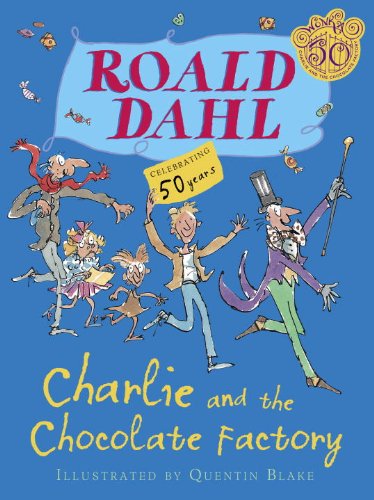
Charlie and the Chocolate Factory by Roald Dahl combines playful, inventive vocabulary with a fast-moving plot, making it genuinely entertaining rather than merely instructive for learners working through extensive reading practice.
Dahl’s distinctive voice introduces learners to British English idiom and humor, a register many textbooks skip entirely in favor of more neutral, standardized language.
- Combines playful, inventive vocabulary with a genuinely entertaining plot.
- Introduces British English idiom and humor often absent from textbooks.
- Motivates continued reading through genuine enjoyment rather than pure obligation.
10. Of Mice and Men — John Steinbeck

Of Mice and Men by John Steinbeck uses accessible, dialogue-heavy prose to explore themes of friendship and marginalization, offering learners exposure to naturalistic American speech patterns within a short, focused novel.
Its heavy reliance on dialogue exposes learners to how English actually sounds in casual conversation, rather than the more formal register typical of academic reading materials.
- Uses dialogue-heavy prose reflecting naturalistic American speech patterns.
- Remains short and focused, ideal for a first extensive reading attempt.
- Exposes learners to casual register often missing from formal textbook English.
11. Oxford Picture Dictionary — Jayme Adelson-Goldstein and Norma Shapiro

Oxford Picture Dictionary by Jayme Adelson-Goldstein and Norma Shapiro pairs everyday vocabulary directly with illustrations, covering practical topics like grocery shopping, healthcare, and workplace communication that many textbooks address only superficially.
Visual vocabulary learning bypasses translation entirely, connecting the English word directly to its meaning rather than routing comprehension through a learner’s first language.
- Pairs everyday vocabulary directly with illustrations across practical topics.
- Covers real-world domains like healthcare and workplace communication specifically.
- Bypasses translation, connecting English words directly to visual meaning.
12. 501 English Verbs — Thomas R. Beyer Jr.
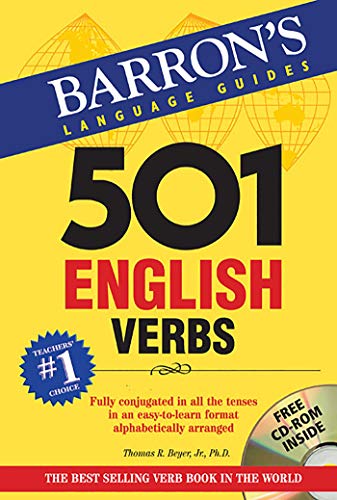
501 English Verbs by Thomas R. Beyer Jr. conjugates the five hundred most common regular and irregular English verbs across every tense, providing a reference for the irregular forms that consistently trip up learners.
English’s irregular verbs, went, seen, brought, resist the predictable patterns most grammar rules describe, making a dedicated reference genuinely useful rather than redundant with standard grammar books.
- Conjugates the five hundred most common verbs across every tense.
- Focuses specifically on irregular forms that resist predictable grammar patterns.
- Functions as a targeted reference rather than a general grammar overview.
13. Second Language Acquisition: An Introductory Course — Susan M. Gass and Larry Selinker
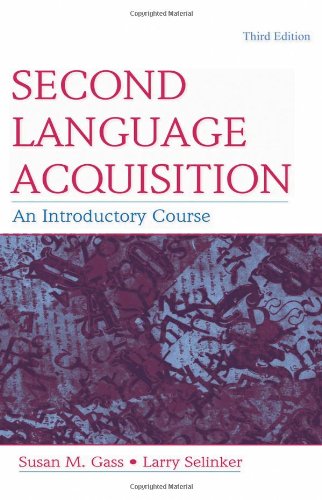
Second Language Acquisition by researchers Susan M. Gass and Larry Selinker offers the academic foundation behind why certain learning methods work, covering theories of input, interlanguage, and cognitive processing during language learning.
This is not a practical study guide but a genuinely useful resource for learners who want to understand the psychology behind their own learning process, rather than simply following instructions blindly.
- Covers academic theories explaining why certain learning methods succeed.
- Introduces interlanguage, the systematic, evolving grammar learners construct temporarily.
- Suits learners curious about the psychology behind language acquisition itself.
14. Extensive Reading in the Second Language Classroom — Richard R. Day and Julian Bamford

Extensive Reading in the Second Language Classroom by Richard R. Day and Julian Bamford makes the research case for reading large volumes of easy material as a primary vocabulary and fluency-building method.
The authors argue that reading below one’s frustration level, rather than constantly challenging material, produces more consistent, sustainable gains than difficult texts that require constant dictionary consultation.
- Makes the research case for reading large volumes of easy material.
- Argues comfortable reading level outperforms constantly challenging texts for retention.
- Provides the theoretical basis behind graded readers and simplified literature.
15. Word Smart — Adam Robinson / The Princeton Review
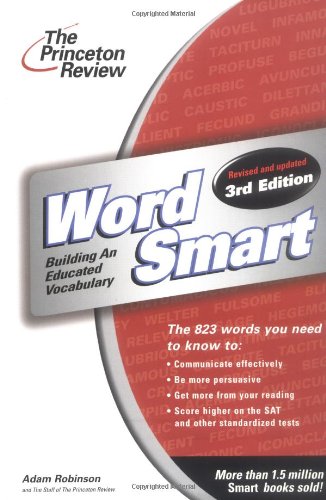
Word Smart by Adam Robinson and The Princeton Review builds advanced vocabulary through memorable example sentences and word associations, originally designed for standardized test preparation but genuinely useful for serious learners.
Its structured, incremental approach to challenging vocabulary suits learners who have moved past basic communication and want to sound genuinely articulate in professional or academic contexts.
- Builds advanced vocabulary through memorable sentences and word associations.
- Originally designed for standardized test preparation, still broadly useful.
- Suits learners aiming for articulate, professional-level English specifically.
What Is Comprehensible Input, and Why Does It Matter for Fluency?
Comprehensible input refers to language material a learner mostly understands, with just enough unfamiliar vocabulary or structure to stretch their current ability without overwhelming it entirely.
Stephen Krashen’s research suggests this specific difficulty level, often described using the notation i+1, meaning current ability plus one small step, produces more reliable acquisition than material that is either too easy or too difficult. Reading The Little Prince or Charlotte’s Web at an intermediate level provides exactly this kind of input, since the vocabulary stays largely accessible while still introducing new words in genuinely meaningful context.
This explains why forcing yourself through a dense, unabridged novel far above your level often backfires. Constant dictionary lookups interrupt the flow that makes input genuinely comprehensible, turning what should be enjoyable reading into frustrating decoding work instead.
- Comprehensible input sits just slightly above a learner’s current ability level.
- Constant dictionary lookups interrupt the flow that makes reading genuinely comprehensible.
- Choosing appropriately leveled material matters more than choosing impressively difficult material.
How Does Extensive Reading Build Vocabulary Without Memorization?
Extensive reading means reading large volumes of easy, enjoyable material rather than intensively studying shorter, difficult texts word by word with a dictionary constantly open.
Researchers Richard R. Day and Julian Bamford make the case directly that this approach builds vocabulary incidentally, through repeated exposure to the same words across different contexts, rather than through deliberate memorization drills. Vocabulary researcher Paul Nation’s work supports this pattern, showing that learners typically need to encounter a word multiple times in varied contexts before it becomes genuinely usable rather than simply recognizable.
Practically, this means choosing books like Of Mice and Men or Charlie and the Chocolate Factory specifically because they are enjoyable enough to read quickly and extensively, not because they are the most literarily prestigious option available. Enjoyment sustains the volume of reading that actually builds lasting vocabulary retention.
- Extensive reading builds vocabulary incidentally through repeated, varied context exposure.
- Words typically need multiple encounters before becoming genuinely usable, not just recognizable.
- Enjoyment sustains reading volume, which matters more than literary prestige.
Which Books Work Best for Grammar Versus Vocabulary Goals?
Grammar and vocabulary require genuinely different study approaches, and matching the right book to the right specific goal saves considerable frustration.
For grammar, Raymond Murphy‘s English Grammar in Use works well as a primary study tool, since its side-by-side explanation and exercise format directly targets rule application rather than passive recognition. Michael Swan’s Practical English Usage complements this as a reference for specific edge cases Murphy’s more systematic approach does not always cover in depth. For vocabulary, Norman Lewis’s root-based method in Word Power Made Easy suits learners aiming for advanced, academic vocabulary, while Word Smart targets similarly sophisticated words through memorable example sentences.
Collocations deserve separate attention entirely. Michael McCarthy and Felicity O’Dell’s English Collocations in Use addresses a specific gap standard grammar and vocabulary books rarely cover: which words naturally combine, since grammatically correct combinations can still sound distinctly unnatural to native speakers.
| Learning Goal | Best Book Match |
|---|---|
| Systematic grammar practice | English Grammar in Use |
| Specific usage questions | Practical English Usage |
| Advanced academic vocabulary | Word Power Made Easy or Word Smart |
| Natural-sounding word combinations | English Collocations in Use |
How Do You Choose Books at the Right Reading Level?
Choosing material at the appropriate difficulty level matters more than choosing impressively advanced literature that ends up abandoned halfway through, unread and discouraging.
A reasonable test involves reading a random page and counting unfamiliar words. If more than roughly five words per page are genuinely unknown, the material likely sits above comprehensible input range and will feel more like decoding than reading. The Little Prince and Charlotte’s Web work well for lower-intermediate learners precisely because their vocabulary stays deliberately restrained despite covering genuinely meaningful themes.
More advanced learners ready for authentic literary style without excessive difficulty should consider The Old Man and the Sea, given Hemingway’s famously restrained vocabulary and short sentence structure. Of Mice and Men and Charlie and the Chocolate Factory occupy a similar middle ground, offering genuine literary voice without overwhelming grammatical complexity or obscure vocabulary.
- Count unfamiliar words per page; more than five suggests material is too difficult.
- The Little Prince and Charlotte’s Web suit lower-intermediate reading levels well.
- Hemingway’s restrained style suits advanced learners avoiding overwhelming complexity.
Common Mistakes English Learners Make When Choosing Study Materials
Several recurring habits quietly slow down otherwise motivated learners, and correcting them often produces faster progress than simply studying harder within a flawed approach.
The most common mistake involves choosing material based on perceived prestige rather than actual comprehensibility, forcing through an unabridged classic novel far above one’s current level out of a sense that anything easier does not count as real progress. Richard Day and Julian Bamford’s research directly contradicts this instinct, showing that comfortable, extensive reading produces more consistent gains than occasional, exhausting struggles through overly difficult text. A second mistake treats grammar study as sufficient on its own, without pairing it with genuine reading or listening input that builds intuitive pattern recognition.
A third mistake abandons vocabulary lists entirely in favor of pure immersion, missing genuine value in structured resources like the Oxford Picture Dictionary or 501 English Verbs for filling specific, identifiable gaps that immersion alone addresses slowly and inconsistently.
- Choosing overly difficult material for prestige slows progress more than easier alternatives.
- Grammar study alone, without reading input, rarely builds intuitive pattern recognition.
- Structured vocabulary resources still add value alongside broader immersive practice.
How Can You Build a Sustainable Daily Reading Habit?
Consistency matters more than intensity for language acquisition, and a sustainable daily habit built around genuinely enjoyable material outperforms sporadic, exhausting study sessions over time.
Start small. Fifteen to twenty minutes of comfortable, comprehensible reading daily, using something like Charlotte’s Web or Charlie and the Chocolate Factory, builds far more consistent exposure than an occasional two-hour session with a dense, difficult text. Susan Gass and Larry Selinker’s research on second language acquisition emphasizes that consistent, moderate exposure over time outperforms sporadic intensive study, since the brain needs repeated, spaced encounters with language patterns to consolidate them into lasting usable knowledge.
Pair daily reading with occasional grammar reference consultation rather than separate, dedicated grammar sessions. When a genuine question arises during reading, checking Practical English Usage or English Grammar in Use in that exact moment connects the rule directly to real context, reinforcing it far more effectively than abstract, disconnected study.
- Read fifteen to twenty minutes daily using genuinely enjoyable, comfortable material.
- Consult grammar references only when a specific question arises during actual reading.
- Prioritize consistency over occasional intensive sessions for lasting pattern consolidation.
FAQs about Books in English for Learning the Language
What is the best book for a complete beginner learning English?
Complete beginners generally benefit more from structured, visual resources than literature at this stage. The Oxford Picture Dictionary works well since it connects everyday vocabulary directly to images without requiring translation. Once basic vocabulary and simple sentence structures feel comfortable, English Grammar in Use offers a manageable next step, since its exercises build directly on foundational grammar rather than assuming extensive prior knowledge. Attempting literature, even simplified literature, too early in the process often produces more frustration than genuine progress, since the vocabulary demands typically exceed what a true beginner has developed yet.
Should I focus on grammar books or reading novels to improve faster?
Most research on language acquisition suggests both matter, but reading tends to build genuine fluency more effectively than grammar study alone. Grammar references like English Grammar in Use help you understand and correct specific errors, while extensive reading through books like Charlotte’s Web or The Old Man and the Sea builds the intuitive pattern recognition that grammar study alone rarely develops. A balanced approach uses grammar references reactively, checking specific questions as they arise during reading, rather than treating grammar study as the primary engine of overall progress.
Is it better to read difficult, authentic literature or simplified graded readers?
For most learners, material at or slightly above their current comfortable reading level produces better results than either extreme. Overly simplified graded readers designed purely for language learners can feel artificial and less engaging, while authentic literature written for native speakers can overwhelm learners with unfamiliar vocabulary and complex sentence structures. Books like The Little Prince or The Old Man and the Sea occupy a genuinely useful middle ground, offering real literary quality without excessive difficulty, making them reasonable entry points into more advanced reading over time.
How many new words should I expect to learn from reading alone?
Vocabulary research suggests learners typically need multiple exposures to a word across different contexts before it becomes genuinely usable rather than simply vaguely familiar. Reading extensively exposes you to common words repeatedly and naturally, which is precisely why extensive reading builds vocabulary more reliably than isolated word lists, even though the process feels less deliberate or countable in the moment. Supplementing reading with structured vocabulary resources like Word Power Made Easy can accelerate specific, advanced vocabulary growth that pure reading alone might take considerably longer to cover.
Why do I understand written English better than spoken English?
Written text allows you to control your own pace, reread difficult passages, and process language without the time pressure real-time speech imposes. Spoken English also includes contractions, reduced pronunciation, and regional accents that written text simply does not need to represent. Building listening comprehension alongside reading, through audiobooks, podcasts, or the audio components some grammar books include, helps close this common gap. Reading remains genuinely valuable for vocabulary and grammar, but it addresses a different skill than the real-time processing spoken comprehension actually requires.
Is it worth reading academic books about language acquisition as an actual English learner?
It can be, particularly for motivated learners curious about why certain study methods work better than others. Books like Second Language Acquisition by Susan Gass and Larry Selinker are written primarily for researchers and teachers, so the writing itself can be denser than typical study material. That said, understanding concepts like comprehensible input or interlanguage can help learners make more informed choices about how they structure their own study time, even if the academic prose itself is not always the easiest reading practice.
Bibliography
- Adelson-Goldstein, J., and Shapiro, N. (2008). Oxford Picture Dictionary (2nd ed.). Oxford University Press.
- Beyer, T. R. (2013). 501 English Verbs (3rd ed.). Barron’s Educational Series.
- Day, R. R., and Bamford, J. (1998). Extensive Reading in the Second Language Classroom. Cambridge University Press.
- Gass, S. M., and Selinker, L. (2008). Second Language Acquisition: An Introductory Course (3rd ed.). Routledge.
- Krashen, S. D. (1985). The Input Hypothesis: Issues and Implications. Longman.
- Lewis, N. (2014). Word Power Made Easy: The Complete Handbook for Building a Superior Vocabulary. Anchor Books.
- McCarthy, M., and O’Dell, F. (2005). English Collocations in Use: Intermediate. Cambridge University Press.
- Murphy, R. (2019). English Grammar in Use (5th ed.). Cambridge University Press.
- Nation, I. S. P. (2001). Learning Vocabulary in Another Language. Cambridge University Press.
- Robinson, A., and The Princeton Review. (2001). Word Smart (3rd ed.). Princeton Review.
- Swan, M. (2017). Practical English Usage (4th ed.). Oxford University Press.
- Wyner, G. (2014). Fluent Forever: How to Learn Any Language Fast and Never Forget It. Harmony.
Use this citation format to reference the article clearly and help readers find the original source.
PsychologyFor. (2026). 15 Books in English Ideal for Learning the Language. PsychologyFor. https://psychologyfor.com/15-books-in-english-ideal-for-learning-the-language/