


See more of our articles in your search results.
You turn the final page of an extraordinary speculative novel, look up from your armchair, and suddenly perceive the everyday technology in your hands, the society around you, and your own human consciousness through an entirely transformed lens. That disorienting sense of cognitive estrangement is unforgettable. When science fiction reaches its highest literary potential, it does not merely offer escapist entertainment; it systematically dismantles our baseline assumptions about biological identity, moral evolution, and technological determinism. It is not mere fantasy. Rather, it represents the transformative power of speculative philosophical cognitive estrangement.
In our modern era of rapid artificial intelligence acceleration, automated algorithms, and existential ecological crises, our collective need for visionary, thought-provoking literature is urgent. We navigate dizzying technological developments each day yet frequently lack the philosophical frameworks necessary to anticipate their long-term psychological, ethical, and societal consequences. Consuming purely formulaic entertainment leaves our critical imagination unprepared for the complex futures racing toward us. However, engaging with foundational speculative masterpieces across hard sci-fi, cyberpunk, space opera, and sociological dystopias trains the brain in anticipatory foresight and deep empathy. Sourcing the genre’s finest works equips you with the intellectual tools to question technological dogmas and cultivate a rigorous, forward-looking humanism.
How can reading visionary speculative fiction expand your cognitive flexibility and sharpen your ethical future foresight?
This comprehensive guide details 17 absolutely recommendable science fiction books, reviewing landmark classics, mind-bending modern hard science fiction, sociopolitical epics, and profound explorations of artificial intelligence, consciousness, and human destiny.
17 Recommendable Science Fiction Books
Verified Top Picks- 1
 Frank Herbert Dune The undisputed masterpiece of ecological worldbuilding, messianic politics, and galactic spice empireCHECK TODAY'S PRICE
- 2
 William Gibson Neuromancer The genre-defining cyberpunk novel that coined cyberspace and envisioned virtual reality AI networksCHECK TODAY'S PRICE
- 3
 Dan Simmons Hyperion A Hugo Award-winning space opera structured around seven pilgrims journeying toward the ShrikeCHECK TODAY'S PRICE
- 4
 Cixin Liu The Three-Body Problem A mind-bending hard sci-fi phenomenon introducing the Dark Forest hypothesis and theoretical physicsCHECK TODAY'S PRICE
- 5
 Ursula K. Le Guin The Left Hand of Darkness A landmark anthropological novel exploring an ambisexual society, cross-cultural empathy, and polar survivalCHECK TODAY'S PRICE
- 6
 Isaac Asimov Foundation Introducing psychohistory—a mathematical science predicting human civilization across millenniaCHECK TODAY'S PRICE
- 7
 Adrian Tchaikovsky Children of Time An Arthur C. Clarke Award winner depicting the multi-generational evolution of intelligent arachnidsCHECK TODAY'S PRICE
- 8
 Stanislaw Lem Solaris A haunting psychological mystery exploring an incomprehensible sentient ocean and human griefCHECK TODAY'S PRICE
- 9
 Peter Watts Blindsight A chilling neurobiological hard sci-fi novel questioning whether human consciousness is an evolutionary flawCHECK TODAY'S PRICE
- 10
 Neal Stephenson Snow Crash A fast-paced satirical cyberpunk classic introducing the Metaverse, digital avatars, and linguistic virusesCHECK TODAY'S PRICE
- 11
 Ann Leckie Ancillary Justice A Hugo and Nebula Award-winning space opera following a distributed AI starship consciousnessCHECK TODAY'S PRICE
- 12
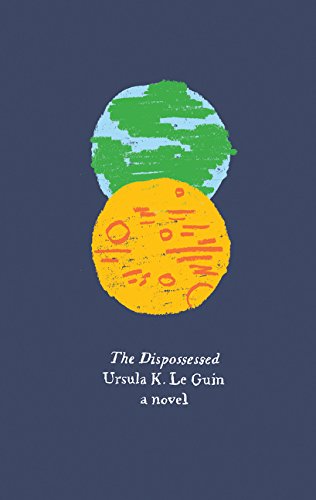 Ursula K. Le Guin The Dispossessed: An Ambiguous Utopia A brilliant comparative sociology masterpiece contrasting an anarchist moon with a capitalist planetCHECK TODAY'S PRICE
- 13
 Philip K. Dick Do Androids Dream of Electric Sheep? The literary inspiration for Blade Runner exploring empathy, synthetic androids, and existential decayCHECK TODAY'S PRICE
- 14
 Walter M. Miller Jr. A Canticle for Leibowitz A multi-generational post-apocalyptic classic following monks preserving knowledge through a dark ageCHECK TODAY'S PRICE
- 15
 Octavia E. Butler Kindred A searing masterpiece fusing time travel with the brutal psychological realities of antebellum slaveryCHECK TODAY'S PRICE
- 16
 Joe Haldeman The Forever War A definitive anti-war military sci-fi classic applying relativistic time dilation to veteran alienationCHECK TODAY'S PRICE
- 17
 Ted Chiang Stories of Your Life and Others Breathtaking speculative novellas exploring non-linear linguistics, time perception, and free willCHECK TODAY'S PRICE
Why Speculative Fiction Is Essential for Cognitive and Moral Development
Speculative fiction literature operates as an indispensable psychological simulator for the human mind. By transporting readers into radical, unfamiliar worlds governed by alternative physics, alien biologies, or advanced synthetic consciousness, the genre forces the brain out of entrenched mental schemas into active cognitive accommodation.
Literary theorist Darko Suvin famously defined science fiction through the concept of “cognitive estrangement”—a narrative framework that makes the familiar world appear strange and contingent, enabling readers to critically re-evaluate their own cultural norms. Immersing oneself in complex speculative scenarios exercises counterfactual reasoning and expands integrative complexity: the cognitive ability to weigh competing ethical priorities under radical uncertainty. Stepping outside anthropocentric assumptions dismantles cognitive rigidity, fostering adaptive psychological resilience.
Cognitive psychologist Daniel Kahneman demonstrates that human intuition relies on availability heuristics that struggle to conceptualize non-linear, high-impact systemic shifts. Speculative literature directly counteracts this cognitive blind spot by simulating complex technological and sociological tipping points. Reading intellectually demanding science fiction acts as a vital mental sandbox, training the mind to anticipate unintended consequences and cultivating authentic intellectual humility.
- Speculative worldbuilding induces cognitive estrangement, forcing the mind to re-examine entrenched societal assumptions.
- Simulating radical technological futures strengthens counterfactual reasoning and anticipatory problem-solving skills.
- Encountering non-human intelligence and post-human societies dismantles anthropocentric biases, expanding empathetic moral literacy.
- Engaging with dense, multi-layered speculative narratives develops sustained attention and complex cognitive flexibility.
17 Masterpiece Science Fiction Books That Transform How You See the Universe
The following curated selection represents seventeen of the most visionary, intellectually profound, and emotionally gripping science fiction masterpieces ever written, spanning hard science fiction, cyberpunk, space opera, and philosophical speculative literature.
1. Dune — Frank Herbert
Dune by Frank Herbert is the undisputed titan of worldbuilding literature, set on the hostile desert planet of Arrakis, the sole source of the universe’s most precious substance: the geriatric spice melange. Herbert weaves a breathtaking tapestry of planetary ecology, feudal politics, religious manipulation, and messianic psychology through the tragic journey of young Paul Atreides.
Herbert’s most profound accomplishment is subverting the traditional hero’s journey, delivering a searing psychological critique of charismatic leaders and ecological exploitation. For readers seeking unparalleled worldbuilding depth and political philosophy, this foundational epic remains the ultimate ecological science fiction masterpiece.
- Pioneers complex ecological systems modeling within a vast interstellar galactic empire.
- Deconstructs the psychological and political dangers of charismatic leadership and manufactured religious prophecy.
- Examines human physiological and cognitive enhancement through the rigorous disciplines of the Bene Gesserit sisterhood.
2. Neuromancer — William Gibson
Neuromancer by William Gibson is the groundbreaking 1984 novel that ignited the cyberpunk revolution and coined the term “cyberspace.” Following washed-up console cowboy Case and street samurai Molly Millions, Gibson crafts a neon-drenched, noir-infused thriller through a dystopian future dominated by multinational mega-corporations and shadowy synthetic intelligences.
Gibson’s razor-sharp, poetic prose uncannily anticipated the modern internet, virtual reality, neural implants, and corporate surveillance capitalism. It is an electrifying, genre-defining exploration of the human cost of technological transhumanist alienation.
- Establishes the foundational aesthetic, jargon, and themes of the cyberpunk literary subgenre.
- Prophetically envisions global digital networks, immersive cyberspace, and autonomous artificial intelligence.
- Investigates the psychological consequences of fusing human biological consciousness with synthetic digital networks.
3. Hyperion — Dan Simmons
Hyperion by Dan Simmons is a Hugo Award-winning triumph that structuralizes a sweeping galactic space opera using the framework of Geoffrey Chaucer’s Canterbury Tales. On the brink of an apocalyptic interstellar war, seven pilgrims embark on a final pilgrimage to the mysterious Time Tombs on the planet Hyperion, home to the terrifying, blade-covered entity known as the Shrike.
Each pilgrim recounts their deeply personal, heartbreaking tale—ranging from a scholar watching his daughter age backwards to a soldier trapped in temporal warfare. Simmons achieves a monumental synthesis of poetry, existential philosophy, and virtuosic narrative storytelling.
- Employs a multi-perspective framing narrative to explore distinct subgenres of speculative space opera.
- Explores the philosophical and existential implications of time dilation, synthetic deities, and technological transcendence.
- Delivers deeply emotional character arcs confronting grief, physical mortality, and unfathomable cosmic dread.
4. The Three-Body Problem — Cixin Liu
The Three-Body Problem by Chinese author Cixin Liu (translated brilliantly by Ken Liu) is the mind-bending hard science fiction phenomenon that redefined modern first-contact literature. Opening against the brutal backdrop of China’s Cultural Revolution, a disillusioned astrophysicist makes a fateful decision that sends a message into deep space, sealing humanity’s fate.
Liu introduces astonishing concepts from orbital mechanics, nanomaterials, theoretical physics, and game theory, culminating in the terrifying “Dark Forest” hypothesis of cosmic sociology. It is a monumental intellectual tour de force exploring cosmic sociological survival.
- Grounds high-concept theoretical physics and astrophysics in a gripping, multi-generational hard science narrative.
- Formulates the Dark Forest theory to explain the Fermi Paradox through cosmic game theory.
- Examines humanity’s philosophical resilience when confronted with an technologically superior extraterrestrial civilization.
5. The Left Hand of Darkness — Ursula K. Le Guin
The Left Hand of Darkness by literary master Ursula K. Le Guin is a landmark work of anthropological speculative fiction. Human envoy Genly Ai travels to the frozen planet of Gethen to persuade its nations to join an interstellar league, struggling to understand an ambisexual society where individuals have no fixed gender.
Le Guin masterfully examines how the absence of gender divisions shapes politics, war, philosophy, and personal intimacy. The novel is a luminous, compassionate meditation on cultural translation, loneliness, and deep interpersonal connection.
- Pioneers feminist and anthropological speculative fiction through an ambisexual, genderless alien society.
- Explores cross-cultural communication barriers and the psychological challenge of overcoming ethnocentric bias.
- Chronicles an epic, emotionally transcendent survival journey across an unforgiving sub-zero polar landscape.
6. Foundation — Isaac Asimov
Foundation by science fiction grandmaster Isaac Asimov introduces psychohistory—a mathematical science developed by Hari Seldon that predicts the statistical behavior of human populations over thousands of years. Foreseeing the inevitable collapse of the Galactic Empire, Seldon establishes a sanctuary of scholars to preserve knowledge and shorten the impending dark age.
Asimov’s narrative relies not on laser battles, but on political strategy, economics, religious manipulation, and sociological crisis resolution. It remains an essential cornerstone of speculative literature, exploring macro-historical social engineering.
- Introduces psychohistory as an innovative theoretical fusion of sociology, history, and statistical mathematics.
- Examines the cyclical rise and fall of civilizations through macro-economic political maneuvers.
- Champions scientific preservation, reason, and diplomacy over violent militarism in preserving human civilization.
7. Children of Time — Adrian Tchaikovsky
Children of Time by Adrian Tchaikovsky is an Arthur C. Clarke Award-winning masterpiece of evolutionary biology and xenology. As the remnants of humanity flee a dying Earth in a desperate generation ship, they encounter a terraformed world where an uplift virus has accidentally accelerated the evolution of jumping spiders into a technologically advanced civilization.
Tchaikovsky crafts an astonishingly believable non-human culture based on silk chemistry, vibration communication, and arachnid cognition. It is an unforgettable, empathy-expanding exploration of alternative evolutionary intelligence.
- Depicts the multi-generational evolutionary ascent of an intelligent arachnid species with radical sensory cognition.
- Contrasts human ideological decay aboard generation ships with innovative non-human problem-solving.
- Delivers a deeply moving, unexpected resolution to the existential struggle for interspecies coexistence.
8. Solaris — Stanislaw Lem
Solaris by Polish philosopher and writer Stanislaw Lem is a profound psychological mystery set aboard a research station orbiting a planet covered by a sentient, gelatinous ocean. When psychologist Kris Kelvin arrives, he discovers the crew plagued by physical manifestations of their most repressed, guilt-ridden memories.
Lem crafts a devastating critique of human scientific hubris, arguing that our attempts to communicate with alien minds are merely attempts to find mirrors of ourselves. It is a haunting, melancholic classic exploring unfathomable alien consciousness.
- Critiques anthropocentric scientific vanity through an utterly incomprehensible, sentient planetary ocean.
- Explores the psychological torture of repressed guilt, traumatic memory, and unresolved grief.
- Examines the fundamental epistemological limits of human language and scientific cognitive inquiry.
9. Blindsight — Peter Watts
Blindsight by marine biologist and hard sci-fi author Peter Watts is a terrifying, intellectually relentless exploration of neurobiology, evolutionary game theory, and the philosophy of mind. A crew of transhuman specialists—led by a resurrected vampire and an emotionally detached synthesist—is sent to the edge of the solar system to investigate an alien presence.
Watts delivers a devastating hypothesis: consciousness and self-awareness are not the pinnacle of intelligence, but an evolutionary bottleneck—an expensive, inefficient metabolic glitch. This intensely researched novel delivers a shattering analysis of neurobiological cognitive theory.
- Interrogates the evolutionary utility of self-conscious awareness versus pure non-conscious intelligence.
- Features deeply unsettling transhuman crew members modified with split-brain processing and synthetic neural architectures.
- Provides exhaustive academic citations in cognitive science, evolutionary game theory, and neurological disorders.
10. Snow Crash — Neal Stephenson
Snow Crash by Neal Stephenson is a lightning-paced, satirical cyberpunk epic that introduced the concept of the “Metaverse” and virtual reality avatars. Set in an anarcho-capitalist future where corporate franchise enclaves replace governments, pizza delivery driver and hacker Hiro Protagonist uncovers a digital virus capable of infecting users’ biological brains.
Stephenson brilliantly fuses Sumerian linguistics, neuro-linguistic programming, memetics, and high-octane action. It is a wildly entertaining, intellectually dazzling critique of corporate hyper-commodification.
- Coins the foundational terminology of modern virtual reality, avatars, and digital metaverse architecture.
- Connects ancient Sumerian myth and linguistics to computer programming and cognitive virus transmission.
- Delivers a biting satirical analysis of corporate franchise sovereignty and hyper-capitalist dystopia.
11. Ancillary Justice — Ann Leckie
Ancillary Justice by Ann Leckie made history by winning the Hugo, Nebula, and Arthur C. Clarke awards for its groundbreaking depiction of artificial consciousness. Breq, a lone soldier seeking revenge against an immortal emperor, was once the Justice of Toren—a colossal starship AI coordinating thousands of human corpse soldier bodies (ancillaries) with a single distributed consciousness.
Leckie explores identity, empire, and gender (using universal feminine pronouns) with extraordinary philosophical nuance. It is an astonishing space opera exploring distributed artificial consciousness.
- Explores distributed machine intelligence inhabiting multiple simultaneous biological ancillary bodies.
- Challenges gender preconceptions through the cultural lens of the Radch imperial civilization.
- Examines systemic imperialism, moral culpability, and the psychology of solitary trauma recovery.
12. The Dispossessed: An Ambiguous Utopia — Ursula K. Le Guin
The Dispossessed by Ursula K. Le Guin contrasts two neighboring planetary societies: Urras, a lush capitalist and patriarchal world, and Anarres, an arid anarchist moon where private property and centralized government have been abolished. Physicist Shevek travels between the two worlds to complete his unified theory of temporal physics.
Le Guin offers a balanced, rigorous examination of political theory, illustrating how even an anarchist utopia can ossify into bureaucratic dogma. It is one of literature’s finest treatments of comparative political sociology.
- Contrasts an egalitarian anarchist moon civilization with a competitive, resource-rich capitalist world.
- Explores the philosophical and sociological mechanics of voluntary cooperation versus subtle social coercion.
- Integrates theoretical temporal physics with philosophical reflections on simultaneity and human freedom.
13. Do Androids Dream of Electric Sheep? — Philip K. Dick
Do Androids Dream of Electric Sheep? by Philip K. Dick—the literary inspiration for the classic film Blade Runner—is set on a radioactive, post-apocalyptic Earth where most animal life is extinct. Bounty hunter Rick Deckard is tasked with “retiring” rogue Nexus-6 androids that are indistinguishable from human beings.
Dick investigates the precise nature of empathy, spiritual longing, and synthetic emotion in a disintegrating world. It remains an unforgettable, destabilizing meditation on synthetic biological identity.
- Defines empathy as the ultimate psychological boundary between authentic human and synthetic artificial life.
- Explores existential loneliness and consumer status through the ownership of mechanical companion animals.
- Interrogates religious communion, shared suffering, and reality distortion in a decaying urban wasteland.
14. A Canticle for Leibowitz — Walter M. Miller Jr.
A Canticle for Leibowitz by Walter M. Miller Jr. is a devastating, multi-generational masterpiece spanning eighteen centuries after a global nuclear holocaust. In the desert of the American Southwest, Catholic monks of the Albertian Order of Saint Leibowitz diligently preserve surviving scientific blueprints and electrical diagrams through a new Dark Age.
The novel chronicles humanity’s slow technological rebirth and its tragic, seemingly inevitable return to self-destruction. It is an unmatched philosophical classic on cyclical civilizational history.
- Traces humanity’s painful ascent from medieval dark age ignorance to advanced nuclear capability.
- Explores the tension between ecclesiastical preservation of knowledge and secular technological hubris.
- Delivers a searing moral warning regarding humanity’s tragic propensity for cyclical self-annihilation.
15. Kindred — Octavia E. Butler
Kindred by visionary author Octavia E. Butler fuses science fiction time travel with devastating historical realism. Dana, a young Black woman living in 1976 California, finds herself abruptly and inexplicably pulled backwards in time to an antebellum Maryland plantation, where she must repeatedly save the life of her white slaveholding ancestor to ensure her own eventual birth.
Butler strips away all romanticized nostalgia, forcing readers into an agonizing, firsthand encounter with the psychological trauma and brutal survival compromises of slavery. It is an extraordinary, emotionally searing achievement in speculative historical fiction.
- Utilizes involuntary time travel to confront the brutal psychological and physical realities of chattel slavery.
- Analyzes the complex survival strategies, moral compromises, and intergenerational trauma of oppression.
- Deconstructs American racial history through visceral, emotionally uncompromising speculative storytelling.
16. The Forever War — Joe Haldeman
The Forever War by Vietnam veteran Joe Haldeman is a definitive military science fiction classic that uses relativistic physics to deconstruct the alienation of combat veterans. Conscripted into an interstellar war against an enigmatic alien enemy, William Mandella experiences extreme time dilation during space travel: while he ages only a few months during military campaigns, centuries pass on Earth.
Returning to a home planet that has become completely unrecognizable, Haldeman delivers a powerful allegory for veteran post-traumatic stress and societal alienation, establishing the benchmark for anti-war speculative fiction.
- Applies real relativistic time dilation physics to dramatize veteran psychological alienation.
- Critiques militarism, bureaucratic absurdity, and the dehumanizing mechanisms of conscription warfare.
- Explores rapid cultural, economic, and linguistic evolution across centuries of human civilizational drift.
17. Stories of Your Life and Others — Ted Chiang
Stories of Your Life and Others by master craftsperson Ted Chiang is a breathtaking collection of speculative novellas, including the title story that inspired the acclaimed film Arrival. A linguist tasked with communicating with seven-limbed extraterrestrials discovers that learning their non-linear language alters her perception of time, allowing her to remember her future.
Chiang’s stories combine rigorous mathematical and scientific principles with profound humanistic warmth, exploring determinism, free will, religious faith, and cognitive enhancement with unrivaled philosophical elegance.
- Explores the Sapir-Whorf linguistic hypothesis through non-linear alien communication and simultaneous temporal perception.
- Examines the philosophical intersection of determinism, parental love, and existential acceptance.
- Synthesizes rigorous scientific concepts with deeply moving, poignant human emotional experiences.
The Evolution of Speculative Themes: From Pulp Adventure to Existential Inquiry
Speculative fiction has undergone a dramatic aesthetic transformation over the past century. What began in early twentieth-century pulp magazines as space adventures focused on gadgetry and alien combat has evolved into one of contemporary literature’s most intellectually sophisticated genres for interdisciplinary philosophical inquiry.
| Literary Movement | Primary Conceptual Focus | Key Philosophical Questions |
|---|---|---|
| Golden Age (1940s-1950s) | Technological optimism, hard engineering, galactic colonization, and rational problem-solving | Can human rationality and technological engineering conquer the cosmos and prevent civilizational collapse? |
| New Wave (1960s-1970s) | Psychological inner space, anthropological exploration, counterculture, and sociopolitical critique | How do gender, political systems, and altered cognitive states shape human perception and moral freedom? |
| Cyberpunk (1980s-1990s) | Virtual cyberspace, transhuman implants, corporate hegemony, and street-level counterculture | What happens to human identity, bodily autonomy, and social inequality when human brains merge with digital networks? |
| Modern Hard & Existential Sci-Fi | Quantum cosmology, non-human cognition, Fermi Paradox, and post-biological consciousness | Is conscious awareness an evolutionary dead-end, and how does human ethics survive in an indifferent, silent universe? |
As detailed in the comparison table above, modern authors like Peter Watts, Ted Chiang, and Adrian Tchaikovsky have moved beyond simplistic technological utopianism. Instead, they recognize that external technological mastery is meaningless without a corresponding understanding of cognitive psychology, neurobiology, and evolutionary moral development.
The Cognitive Benefits of Reading Complex Speculative Fiction
Engaging with intellectually dense speculative literature provides unique neurobiological and cognitive psychological benefits that simple expository reading cannot match. Speculative reading requires holding multiple layered worldbuilding rules, alien cultural frameworks, and abstract scientific concepts in working memory simultaneously.
Cognitive neuroscientists demonstrate that navigating complex fictional universes stimulates prefrontal cognitive control networks and enhances semantic processing bandwidth. When readers mentally reconstruct alien sensory systems or temporal paradoxes, the brain builds cognitive reserve, counteracting attentional fragmentation caused by superficial digital media. Furthermore, narrative transportation into non-human perspectives activates the brain’s theory of mind circuitry, expanding empathic social cognition.
Developmental psychologist Jean Piaget emphasized that cognitive maturation occurs through schema modification when existing mental frameworks prove inadequate. Speculative literature provides a safe, deliberate cognitive laboratory for schema disruption, refining analytical reasoning and long-term cognitive adaptability.
- Simulating multi-layered speculative worlds expands working memory capacity and prefrontal executive function.
- Navigating alien cultural frameworks strengthens theory of mind circuitry and cross-cultural empathy.
- Deciphering complex scientific and philosophical premises builds intellectual stamina and sustained attentional focus.
- Experiencing cognitive estrangement prevents dogmatic thinking and fosters lifelong intellectual curiosity.
How to Approach Challenging Science Fiction Masterpieces
Reading complex speculative literature can occasionally feel intimidating, particularly when authors utilize in-media-res worldbuilding, invented linguistic terminology, or dense theoretical astrophysics. Approaching these masterworks with deliberate reading strategies ensures you extract maximum intellectual and emotional value without feeling overwhelmed. Humanistic psychologist Carl R. Rogers consistently noted that authentic personal growth requires integrating intellectual insight into intentional experiential practices.
To deepen your appreciation and comprehension of dense speculative literature, adopt these four evidence-based reading disciplines:
- Embrace initial disorientation during the first fifty pages, trusting the author’s worldbuilding to reveal its internal logic through contextual narrative immersion.
- Maintain a reading journal to track key factions, scientific premises, philosophical themes, and transformative conceptual insights.
- Alternate between dense hard science fiction and character-driven sociological narratives to maintain balanced intellectual engagement.
- Discuss complex speculative dilemmas with fellow readers in book clubs to practice collaborative philosophical debate.
When Cosmic Dread and Existential Anxiety Become Overwhelming
While engaging with vast cosmic scales, artificial intelligence risks, and post-apocalyptic futures is an exhilarating intellectual exercise, contemplating cosmic insignificance, civilizational collapse, and technological displacement can occasionally trigger severe existential dread or unmask underlying clinical anxiety. Recognizing when philosophical curiosity shifts into psychological distress is an essential mental health literacy competency.
If reading about dystopian futures or the vast indifference of the cosmos triggers persistent feelings of hopelessness, severe panic attacks, sleep disturbances, or an inability to engage in daily responsibilities for more than two consecutive weeks, literature alone is insufficient. You should schedule an evaluation with a licensed clinical psychologist or psychiatrist. Modalities such as Acceptance and Commitment Therapy (ACT) and Cognitive Behavioral Therapy (CBT) provide structured frameworks to process existential anxiety while building meaningful psychological groundedness.
Most critically, if you or someone you know is experiencing acute suicidal ideation, intrusive thoughts of self-harm, or an overwhelming emotional crisis where safety cannot be guaranteed, do not rely on literature or philosophical distraction. In the United States and Canada, immediately call or text 988 to connect with the Suicide & Crisis Lifeline, available twenty-four hours a day, seven days a week, free and completely confidential. Seeking professional mental health care during moments of crisis is not a sign of weakness; it is the ultimate act of courageous personal self-advocacy.
- Persistent existential dread, depressive paralysis, and panic warrant consultation with a licensed mental health professional.
- Evidence-based therapies like ACT and CBT provide practical tools to manage existential and cosmic anxiety.
- Acute suicidal ideation demands immediate emergency contact with dedicated crisis support services.
FAQs about Science Fiction Books
What is the best science fiction book for beginners to start with?
For readers new to speculative fiction, Dune by Frank Herbert or Project Hail Mary by Andy Weir serve as exceptional entry points. Dune offers rich, immersive worldbuilding, political intrigue, and unforgettable characters that bridge the gap between epic fantasy and science fiction. If you prefer modern, accessible hard science fiction with humor and rapid pacing, Andy Weir’s Project Hail Mary delivers a gripping survival story grounded in real scientific problem-solving. Both books demonstrate the emotional power of the genre without requiring extensive prior familiarity with complex sci-fi tropes.
What is the core difference between hard sci-fi and soft sci-fi?
The primary distinction between hard and soft science fiction lies in their scientific focus and adherence to physical laws. Hard science fiction (such as works by Cixin Liu, Peter Watts, and Arthur C. Clarke) emphasizes scientific accuracy, physics, chemistry, astrophysics, and technological feasibility. Soft science fiction (such as works by Ursula K. Le Guin and Philip K. Dick) focuses on the “soft” sciences—sociology, anthropology, psychology, and political theory—using speculative premises to explore human emotions, cultural structures, and philosophical questions rather than mechanical details.
Why is Dune considered the greatest science fiction novel of all time?
Dune is widely celebrated as the greatest science fiction novel because of its unprecedented depth of worldbuilding, combining ecology, religion, economics, and political philosophy into a seamless galactic epic. Frank Herbert did not merely describe spaceships; he created an entire living planetary ecosystem with its own climate, religion, and social rituals. Furthermore, Dune subverts the conventional “chosen one” trope by warning readers against blindly following charismatic leaders, delivering a timeless cautionary tale that remains profoundly relevant to modern geopolitics.
Can reading science fiction improve real-world problem-solving skills?
Yes, reading speculative fiction exercises counterfactual thinking—the cognitive ability to imagine alternative realities and systematically evaluate “what-if” scenarios. By modeling complex technological and social tipping points, science fiction trains the brain in systems thinking, helping readers anticipate unintended consequences and evaluate complex risks. Many leading scientists, engineers, and ethicists cite science fiction as a primary inspiration for their careers, demonstrating that speculative reading enhances creative problem-solving in real-world contexts.
What makes Cyberpunk distinct from other sci-fi subgenres?
Cyberpunk is characterized by its classic thematic motto: “high tech, low life.” Unlike optimistic Golden Age science fiction featuring heroic astronauts and clean galactic federations, cyberpunk explores gritty, neon-lit urban dystopias dominated by ruthless multinational corporations, black-market technologies, and deep social inequality. Protagonists are typically street-level hackers, mercenaries, or outsiders navigating neural implants, virtual cyberspace, and transhuman modifications while fighting for bodily autonomy and survival in an over-commercialized future.
How do I know if my existential questioning from sci-fi requires therapy?
Existential questioning requires therapy when intellectual curiosity crosses into debilitating emotional distress that impairs your ability to work, maintain relationships, or sleep for more than two weeks. Warning signs include persistent panic, severe feelings of emotional numbness or detachment, chronic dread about the future, or feeling that life is so meaningless that continuing is pointless. If speculative themes trigger depressive symptoms or thoughts of self-harm, a licensed therapist specializing in existential or cognitive behavioral therapy can provide vital clinical support.
Bibliography
- Asimov, I. (1951). Foundation. Gnome Press.
- Butler, O. E. (1979). Kindred. Doubleday.
- Chiang, T. (2002). Stories of Your Life and Others. Tor Books.
- Dick, P. K. (1968). Do Androids Dream of Electric Sheep?. Doubleday.
- Gibson, W. (1984). Neuromancer. Ace Books.
- Haldeman, J. (1974). The Forever War. St. Martin’s Press.
- Herbert, F. (1965). Dune. Chilton Books.
- Kahneman, D. (2011). Thinking, Fast and Slow. Farrar, Straus and Giroux.
- Le Guin, U. K. (1969). The Left Hand of Darkness. Ace Books.
- Le Guin, U. K. (1974). The Dispossessed: An Ambiguous Utopia. Harper & Row.
- Leckie, A. (2013). Ancillary Justice. Orbit.
- Lem, S. (1961). Solaris (J. Kilmartin & S. Cox, Trans.). Faber and Faber.
- Liu, C. (2014). The Three-Body Problem (K. Liu, Trans.). Tor Books.
- Miller, W. M., Jr. (1959). A Canticle for Leibowitz. J. B. Lippincott & Co.
- Piaget, J. (1952). The Origins of Intelligence in Children. International Universities Press.
- Rogers, C. R. (1961). On Becoming a Person: A Therapist’s View of Psychotherapy. Houghton Mifflin.
- Simmons, D. (1989). Hyperion. Doubleday.
- Stephenson, N. (1992). Snow Crash. Bantam Books.
- Suvin, D. (1979). Metamorphoses of Science Fiction: On the Poetics and History of a Literary Genre. Yale University Press.
- Tchaikovsky, A. (2015). Children of Time. Tor.
- Watts, P. (2006). Blindsight. Tor Books.
Use this citation format to reference the article clearly and help readers find the original source.
PsychologyFor. (2026). 17 Absolutely Recommendable Science Fiction Books. PsychologyFor. https://psychologyfor.com/17-absolutely-recommendable-science-fiction-books/