

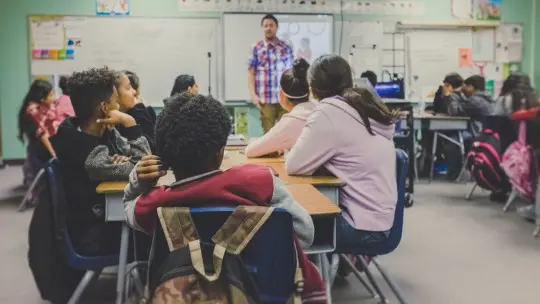
Debating is healthy is an activity that allows us to think and look for both arguments and counterarguments that allow us to defend our ideas, or modify them if others seem better to us.
And not always those with which we agree: it is possible to debate trying to defend an opposing idea in such a way that we understand its arguments and weaknesses. This activity can also be very suitable for teenagers, given that, among other things, it promotes their ability to reflect.
Throughout this article we are going to see some possible topics for debates for teenagers in order to give ideas about it.
What is a debate?
Before starting to evaluate some examples of topics to be discussed in debates between adolescents, it is worth doing a brief review of what exactly we want to generate.
We understand debate to be that situation or communicative technique in which two or more subjects express, share and even confront each other with their opinions and perspectives on a given, usually controversial topic.
It is an act that aims to contrast diverse opinions and perspectives in a fluid manner, expressing positions that can either be similar or opposed, although they always tend to differ from each other. The aim is for each of the parties to generate arguments in order to defend their position.
Why is it good to debate?
It is an exercise that allows each of the different parties to visualize positions different from their own and see their own counterarguments, something that can allow the modification of their own position or a deeper reflection or argumentation regarding the topic discussed.
In addition, it helps to exercise executive functions, cognitive abilities in general (for example, reasoning, reflection and planning) and the ability to understand and anticipate reactions and value the opinions of others. It also helps to foster the ability to defend one’s own position, as well as to be tolerant and critical of both one’s own position and that of others.
That is why debating is an enriching and very useful activity in all moments of life, such as in adolescence. And at a time when the most complex mental abilities begin to flourish and develop, it can be useful in training them and helping to enhance them.
Debates are an excellent way for teenagers to develop critical thinking, communication skills, and confidence while learning to defend their viewpoints. Whether in a classroom setting or an informal gathering, debating allows young people to analyze different perspectives, challenge assumptions, and engage in meaningful discussions.
Below, we present 18 thought-provoking debate topics suitable for teenagers, covering social, ethical, technological, and personal issues.
The Importance of Debating for Teenagers
Debating is more than just arguing—it is a structured way of presenting ideas and defending opinions based on logic and evidence. Some benefits of debating include:
- Improving communication skills: Teens learn to articulate their thoughts clearly and persuasively.
- Enhancing critical thinking: It encourages evaluating multiple perspectives before forming an opinion.
- Building confidence: Speaking in front of an audience boosts self-esteem and public speaking skills.
- Encouraging respect for different viewpoints: Debates foster open-mindedness and tolerance.
- Developing research and argumentation skills: Teens learn to support their ideas with facts and logical reasoning.
Now, let’s explore 18 debate topics that will spark engaging discussions among teenagers.
Social and Ethical Debate Topics
With concerns about online safety and mental health, should teenagers under a certain age be allowed to use social media?
2. Is cancel culture fair or harmful?
Does holding public figures accountable for their actions encourage social justice, or does it promote unfair punishment?
3. Should school uniforms be mandatory?
Do uniforms create a sense of equality, or do they limit students’ freedom of expression?
4. Is it ethical to keep animals in zoos?
Do zoos serve an educational and conservation purpose, or do they exploit animals for entertainment?
5. Should teenagers have the right to vote?
If 16-year-olds can work and pay taxes, should they also have the right to participate in elections?
Technology and Science Debate Topics
6. Is artificial intelligence (AI) a threat to humanity?
Will AI replace jobs and make decisions for us, or will it improve our quality of life?
7. Should schools ban smartphones in classrooms?
Do smartphones help with learning, or are they just a distraction?
8. Are video games beneficial or harmful for teenagers?
Do they improve problem-solving skills, or do they encourage violence and addiction?
9. Should genetic modification in humans be allowed?
Is altering genes to prevent diseases an ethical advancement or a dangerous experiment?
10. Should space exploration be prioritized over solving problems on Earth?
Should governments spend billions on exploring other planets while issues like poverty and climate change remain unresolved?

Education and Lifestyle Debate Topics
11. Should homework be abolished?
Does homework reinforce learning, or does it place unnecessary stress on students?
12. Should schools start later in the morning?
Would later school hours improve students’ health and academic performance, or would they disrupt schedules?
13. Should students be graded based on effort rather than performance?
Is grading based on hard work fairer, or should only results matter?
14. Is it better to study online or in a traditional classroom?
Which method provides a better learning experience for students?
15. Should physical education be optional in schools?
Should students be required to participate in physical activities, or should it be a personal choice?
Personal and Cultural Debate Topics
16. Is it better to have a small circle of close friends or a large group of acquaintances?
Which type of social life leads to greater happiness and support?
17. Should celebrities and influencers be considered role models?
Do they inspire people positively, or do they promote unrealistic lifestyles?
18. Can money buy happiness?
Is financial stability the key to happiness, or are emotional and social factors more important?

How to Structure a Debate
A well-organized debate follows a clear structure to ensure both sides present their arguments effectively. Here’s a simple format for a classroom or group debate:
Introduction (2-3 minutes per team)
Each team states their position (for or against) and presents their main argument.
Arguments and Counterarguments (5 minutes per team)
- Teams take turns explaining their points with supporting evidence.
- Opposing teams have the chance to rebut arguments.
Closing Statements (2 minutes per team)
Each team summarizes their key points and reinforces why their argument is stronger.
Judgment or Discussion
The teacher, judge, or audience votes on which side presented the best case.
Tips for a Successful Debate
- Research thoroughly: Use facts, statistics, and expert opinions to support arguments.
- Listen carefully: Understanding opposing viewpoints helps in creating strong counterarguments.
- Stay respectful: Disagreements should be expressed politely without personal attacks.
- Practice speaking skills: Clear pronunciation and confident body language improve presentation.
- Be open-minded: Even if you disagree with an idea, try to understand the reasoning behind it.
Debates provide an exciting way for teenagers to express their opinions, develop logical reasoning, and improve public speaking skills. The topics listed above cover a range of social, ethical, technological, and personal issues that are relevant to young people today.
By encouraging healthy discussions, debates empower teens to think critically and engage in meaningful conversations, skills that will benefit them throughout their lives.
FAQs About Debates for Teenagers
1. What are the benefits of debating for teenagers?
Debating helps teenagers develop critical thinking, communication, and public speaking skills, while also teaching them how to research and defend their viewpoints.
2. How do I choose a good debate topic for teenagers?
Pick topics that are relevant to their interests, challenge their thinking, and allow for strong arguments on both sides.
3. How can I improve my debating skills?
Practice by researching different perspectives, speaking confidently, listening actively, and learning how to structure arguments logically.
4. What is the best way to prepare for a debate?
- Research your topic thoroughly.
- Gather credible evidence to support your position.
- Anticipate counterarguments and prepare rebuttals.
- Practice delivering your speech with confidence and clarity.
5. Can debates help students in their future careers?
Yes! Strong debate skills are valuable in many careers, including law, politics, journalism, business, and public speaking.
By citing this article, you acknowledge the original source and allow readers to access the full content.
PsychologyFor. (2025). 18 Debates for Teenagers (to Argue in Class or in a Gathering). https://psychologyfor.com/18-debates-for-teenagers-to-argue-in-class-or-in-a-gathering/