

When you look around at the breathtaking diversity of the natural world and wonder how microscopic cellular machinery orchestrates consciousness, ecosystems, and human behavior, exploring 20 biology books for beginners provides an indispensable gateway to scientific clarity. Many curious readers feel intimidated by dense academic jargon, complex biochemical pathways, and statistical genetics, assuming that understanding the fundamental principles of life requires an advanced medical or laboratory degree. You might find yourself fascinated by evolutionary adaptations or recent genetic breakthroughs, yet struggle to find accessible literature that bridges the gap between basic curiosity and rigorous biological insight.
This feeling of intellectual overwhelm is entirely natural given the staggering complexity of biological systems, which span thirteen orders of magnitude from subatomic molecular bonds to global biomes. When foundational concepts like natural selection, DNA transcription, and cellular respiration are presented as isolated textbook facts rather than dynamic evolutionary narratives, the natural human impulse for scientific discovery and ecological understanding becomes lost beneath rote memorization. Engaging with masterfully written popular science and foundational biology texts transforms this learning curve, equipping you with intuitive mental models to decode how living organisms adapt, reproduce, and interact within dynamic ecosystems.
How can reading accessible biological literature deepen your everyday appreciation of human nature and the living biosphere?
Exploring foundational introductory biology reading lists empowers you to understand genetics, evaluate environmental challenges critically, and appreciate the profound evolutionary mechanisms that shape our physical and psychological existence.
Top 20 Biology Books for Beginners
Verified Top Picks- 1
 Charles Darwin On the Origin of Species The foundational masterpiece outlining the theory of evolution by natural selectionCHECK TODAY'S PRICE
 - 2
 Richard Dawkins The Selfish Gene The classic gene-centric perspective on natural selection, evolution, and animal behaviorCHECK TODAY'S PRICE
 - 3Siddhartha Mukherjee The Gene: An Intimate History A sweeping historical and clinical chronicle of the fundamental code of biological lifeCHECK TODAY'S PRICE
- 4Robert M. Sapolsky Behave: The Biology of Humans at Our Best and Worst A monumental, interdisciplinary exploration of the neurobiology and evolution of human behaviorCHECK TODAY'S PRICE
- 5Ed Yong I Contain Multitudes The groundbreaking exploration of the microbiome and symbiotic partnerships within all animalsCHECK TODAY'S PRICE
- 6Elizabeth Kolbert The Sixth Extinction: An Unnatural History Pulitzer Prize-winning investigation into anthropogenic mass extinction and biodiversity lossCHECK TODAY'S PRICE
- 7Erwin Schrödinger What Is Life? The landmark monograph bridging quantum physics, negative entropy, and molecular geneticsCHECK TODAY'S PRICE
- 8Rachel Carson Silent Spring The classic exposé of synthetic pesticides that launched the modern environmental movementCHECK TODAY'S PRICE
- 9James D. Watson The Double Helix A personal, firsthand account of the discovery of the structure of DNACHECK TODAY'S PRICE
- 10Lisa A. Urry et al. Campbell Biology The undisputed global gold standard textbook for comprehensive biological science educationCHECK TODAY'S PRICE
- 11Neil Shubin Your Inner Fish A journey into the 3.5-billion-year evolutionary history of the human bodyCHECK TODAY'S PRICE
- 12Merlin Sheldrake Entangled Life How fungi make our worlds, change our minds, and shape our planetary futureCHECK TODAY'S PRICE
- 13Nick Lane Life Ascending: The Ten Great Inventions of Evolution The biochemical and bioenergetic marvels that transformed four billion years of lifeCHECK TODAY'S PRICE
- 14Richard Dawkins The Extended Phenotype The long reach of the gene beyond the anatomical boundaries of the individual organismCHECK TODAY'S PRICE
- 15Siddhartha Mukherjee The Song of the Cell An exploration of medicine, cytology, cellular pathology, and the new humanCHECK TODAY'S PRICE
- 16Edward O. Wilson The Diversity of Life A masterwork on adaptive radiation, biodiversity creation, and planetary conservationCHECK TODAY'S PRICE
- 17David Quammen Spillover: Animal Infections and the Next Human Pandemic A gripping investigation into zoonotic diseases, viral transmission, and disease ecologyCHECK TODAY'S PRICE
- 18Michael Pollan The Botany of Desire A plant's-eye view of reciprocal co-evolution, agricultural history, and human desiresCHECK TODAY'S PRICE
- 19Nick Lane The Vital Question: Energy, Evolution, and the Origins of Complex Life How bioenergetics and mitochondrial evolution unlocked the origins of complex lifeCHECK TODAY'S PRICE
- 20David Quammen The Song of the Dodo A definitive masterpiece on island biogeography, evolutionary ecology, and extinctionsCHECK TODAY'S PRICE


How Studying Biological Science Enhances Critical Thinking and Environmental Literacy
Studying biological science cultivates a profound transformation in how individuals observe, analyze, and interact with the natural world. Pioneering evolutionary biologist Ernst Mayr demonstrated that biological thinking requires a unique philosophical framework known as population thinking, where individual variation is recognized as the ultimate engine of evolutionary adaptation rather than mere noise. By engaging with beginner-friendly biological literature, readers develop empirical scientific inquiry skills that protect against misinformation, pseudoscience, and ecological apathy.
Furthermore, understanding biological systems provides the essential foundation for navigating contemporary ethical and environmental dilemmas. Sociobiologist Edward O. Wilson emphasized that biological literacy fosters biophilia—an innate affinity for the living world that directly motivates conservation and ecological stewardship. When you comprehend how genetic diversity, trophic cascades, and microbial ecosystems sustain planetary health, personal decision-making shifts from detached consumption to an active alignment with evidence-based ecological principles.
To maximize the educational value of introductory biological reading, students should focus on three foundational biological objectives:
- Mastering the core principles of natural selection and evolutionary adaptation.
- Understanding cellular biology and molecular genetic inheritance pathways.
- Cultivating ecological literacy to comprehend complex interdependent ecosystem dynamics.
Developing these core competencies enables readers to evaluate medical advancements, biotechnological innovations, and climate change policies through an informed lens of contemporary biological science.
Top 20 Biology Books for Beginners and Curious Minds
The following curated selection represents the most engaging, foundational introductory biology books available today. Each volume explores vital dimensions of the life sciences, from classical evolutionary theory and genomics to microbiome ecology, mycology, and neurobiology.
1. On the Origin of Species — Charles Darwin
On the Origin of Species by Charles Darwin stands as the single most revolutionary text in the history of the biological sciences. First published in 1859, Darwin’s masterwork outlines the theory of evolution by natural selection with extraordinary literary elegance, meticulous empirical observation, and compelling logical rigor. Darwin explains how gradual, inherited variations that enhance an organism’s survival and reproductive success accumulate over geological time, generating the staggering diversity of earthly life.
Darwin’s arguments remain surprisingly accessible to modern general readers, relying on everyday examples from pigeon breeding, geology, and embryology rather than complex mathematical formulas. He directly addresses potential objections to his theory, including the imperfections of the geological record and the evolution of complex organs like the eye. For any beginner seeking to understand the foundational architecture of all modern biology, this historic masterpiece provides an unmatched foundational evolutionary framework.
- Introduces natural selection as the primary mechanism of gradual biological speciation and adaptation.
- Demonstrates the universal common ancestry uniting all extant and extinct living organisms.
- Provides exhaustive field observations deconstructing the geological distribution of species.
2. The Selfish Gene — Richard Dawkins

The Selfish Gene by evolutionary biologist Richard Dawkins transformed popular and academic understanding of evolutionary biology by shifting the focal unit of selection from the individual organism or species to the gene. Dawkins brilliantly argues that organisms are temporary survival machines constructed by immortal replicators—genes—to facilitate their own transmission across generations. This gene-centric perspective resolves long-standing evolutionary puzzles, such as the emergence of altruistic behavior, through kin selection and evolutionary game theory models.
Dawkins writes with exceptional clarity, utilizing vivid analogies and engaging thought experiments that make complex population genetics immediately intuitive. The book also coined the term meme, introducing the concept of cultural transmission units that replicate and evolve through human minds. For beginners seeking to understand the ruthless logic of natural selection, this classic volume offers a profound shift in biological perception.
- Establishes the gene-centric perspective of natural selection and evolutionary dynamics.
- Explains the evolutionary origins of altruism through inclusive fitness and kin selection.
- Introduces memetics as a biological framework for cultural information replication.
3. The Gene: An Intimate History — Siddhartha Mukherjee
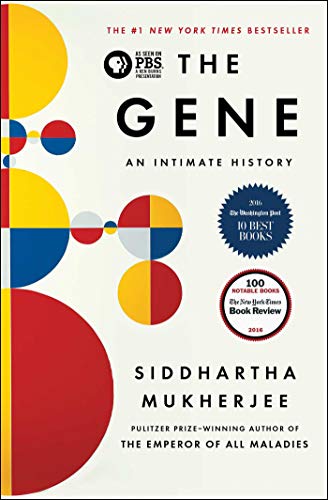
The Gene: An Intimate History by Pulitzer Prize-winning physician and oncologist Siddhartha Mukherjee weaves together scientific history, clinical biography, and personal narrative to chronicle humanity’s quest to understand heredity. Mukherjee traces genetics from Gregor Mendel’s humble pea-plant hybridization experiments in a Moravian monastery to the discovery of the DNA double helix and contemporary CRISPR gene-editing breakthroughs. This sweeping narrative humanizes the science of genetics while demystifying the fundamental code of biological life.
Mukherjee contextualizes genetic discoveries within their ethical and political ramifications, including the tragic history of the eugenics movement. He explores how genes interact dynamically with environmental context, dismantling simplistic biological determinism in favor of nuanced epigenetics. This masterfully written book is essential reading for beginners who want to understand how genetics shapes human health, identity, and future medical biotechnology frontiers.
- Chronicles the historical discovery of the gene as the fundamental unit of biological heredity.
- Examines the dark history of eugenics and modern genetic engineering ethics.
- Explains how gene-environment interactions govern complex phenotypic trait expression.
4. Behave: The Biology of Humans at Our Best and Worst — Robert M. Sapolsky
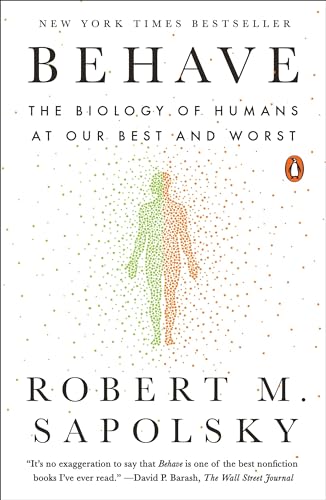
Behave: The Biology of Humans at Our Best and Worst by Stanford neurobiologist and primatologist Robert M. Sapolsky provides a monumental, interdisciplinary account of the biological forces driving human behavior. Sapolsky examines human actions across expanding temporal scales, moving backward from the neurochemical reactions occurring seconds before a behavior, to the hormonal primes of hours prior, the neuroplastic shifts of months prior, the developmental conditioning of childhood, and the evolutionary pressures of millennia. This comprehensive approach delivers an unparalleled masterclass in integrative human behavioral biology.
Sapolsky explores the neurobiology of empathy, aggression, tribalism, and morality with wit, empathy, and encyclopedic scientific mastery. He dismantles the artificial divide between nature and nurture, showing that genes and environment are inextricably intertwined at every level of neural processing. For beginners interested in the biological roots of human psychology and social conflict, this book provides an essential neurobiological roadmap.
- Analyzes human behavior through multi-layered timescales of neurochemistry, endocrinology, and evolution.
- Deconstructs the neural circuitry of the amygdala and prefrontal cortex during moral choices.
- Examines the evolutionary biology underlying in-group favoritism and out-group hostility.
5. I Contain Multitudes: The Microbes Within Us and a Grander View of Life — Ed Yong

I Contain Multitudes by acclaimed science journalist Ed Yong explores the invisible, ubiquitous world of the microbiome, revealing that every animal is not a solitary individual, but a walking ecosystem teeming with trillions of symbiotic microorganisms. Yong illuminates how bacteria shape immune system development, digest food, synthesize vitamins, calibrate neural development, and even influence behavior. This fascinating book dismantles the outdated cultural myth that microbes are exclusively germs to be eradicated, establishing them as essential partners in biological survival.
Yong ranges across the entire animal kingdom, detailing extraordinary symbiotic partnerships, from deep-sea tube worms that rely entirely on chemotrophic bacteria to wasps that utilize viral genes for reproduction. He investigates contemporary microbiome therapies, including fecal microbiota transplants, while explaining how modern hygiene, antibiotics, and dietary changes have disrupted ancient microbial alliances. This beautifully written work provides beginners with an expansive ecological view of organismal biology.
- Reveals how the human microbiome regulates immune maturation and metabolic homeostasis.
- Explores mutualistic symbiosis across diverse terrestrial and marine animal species.
- Examines how disrupted microbial ecosystems contribute to contemporary autoimmune inflammatory disorders.
6. The Sixth Extinction: An Unnatural History — Elizabeth Kolbert
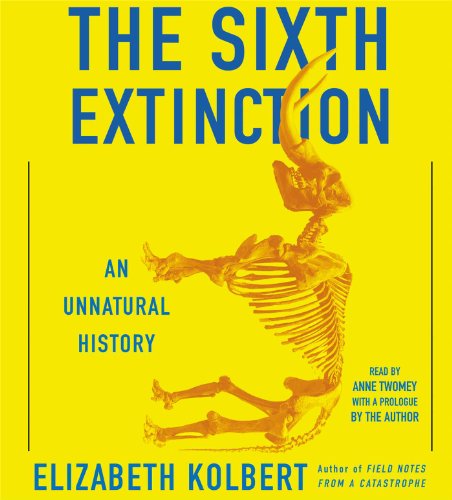
The Sixth Extinction by Pulitzer Prize-winning journalist Elizabeth Kolbert investigates how human activity is precipitating the planet’s sixth major mass extinction event, rivaling the asteroid impact that eliminated the dinosaurs sixty-six million years ago. Combining field reporting from remote rainforests and coral reefs with historical analysis of paleontological discovery, Kolbert explains how habitat fragmentation, ocean acidification, global warming, and species translocation are driving extinction rates hundreds of times above the historical background rate, fundamentally altering the future evolutionary trajectory of Earth.
Kolbert traces the conceptual history of extinction itself, showing how naturalists like Georges Cuvier and Charles Lyell gradually recognized that species could vanish entirely from the fossil record. She provides vivid accounts of critically endangered species, from Panamanian golden frogs to Sumatran rhinos, highlighting the fragility of complex ecological webs. For beginners seeking to comprehend the global biodiversity crisis, this volume offers a lucid and urgent ecological analysis.
- Documents anthropogenic drivers of contemporary global biodiversity loss and species extinction.
- Traces the historical emergence of paleontology and mass extinction scientific theories.
- Examines the catastrophic impacts of ocean acidification on calcifying marine reef ecosystems.
7. What Is Life?: With Mind and Matter and Autobiographical Sketches — Erwin Schrödinger

What Is Life? by Nobel laureate physicist Erwin Schrödinger is one of the most influential scientific monographs of the twentieth century, bridging quantum physics, thermodynamics, and molecular biology. Based on public lectures delivered at Trinity College, Dublin, in 1943, Schrödinger asks how living organisms resist the inevitable decay toward thermodynamic entropy. He famously deduced that genetic information must be encoded within an aperiodic crystal—a conceptual breakthrough that directly inspired James Watson and Francis Crick to discover the structure of the DNA molecule.
Schrödinger introduces the concept of negative entropy, explaining that living systems maintain order and organization by constantly drawing energy and matter from their surrounding environment. Despite its profound physical insights, the text is remarkably brief and written in accessible prose that requires no advanced mathematics. For curious beginners interested in the fundamental physical laws governing biological systems, this short masterpiece provides an enduring philosophical and physical foundation.
- Applies quantum mechanics and thermodynamics to the fundamental nature of living systems.
- Predicted the molecular structure of genetic material as an information-encoding aperiodic crystal.
- Explains how living organisms maintain structural order by metabolizing environmental negative entropy.
8. Silent Spring — Rachel Carson

Silent Spring by marine biologist and conservationist Rachel Carson is the landmark work that launched the modern environmental movement and established the critical importance of ecological toxicology. Published in 1962, Carson meticulously documents the catastrophic ecological consequences of widespread, indiscriminate synthetic pesticide application, particularly DDT. She demonstrates how chemical toxins bioaccumulate and biomagnify through food webs, poisoning soil microbes, aquatic life, birds, and ultimately threatening human physiological health and well-being.
Carson’s courageous, poetic, and scientifically rigorous writing exposed the hubris of viewing humanity as separate from and dominant over natural ecological systems. She challenged corporate and governmental claims of pesticide safety, advocating instead for biological pest control and ecosystem management. For beginners seeking to understand the deep interconnectedness of ecology, toxicology, and public health, this timeless classic provides an unmatched lesson in ecological responsibility.
- Documents the devastating ecological impacts of synthetic chemical pesticides and bioaccumulation.
- Demonstrates how industrial pollutants biomagnify across interdependent ecological trophic levels.
- Established the foundational principles of modern environmental protection and toxicology.
9. The Double Helix: A Personal Account of the Discovery of the Structure of DNA — James D. Watson
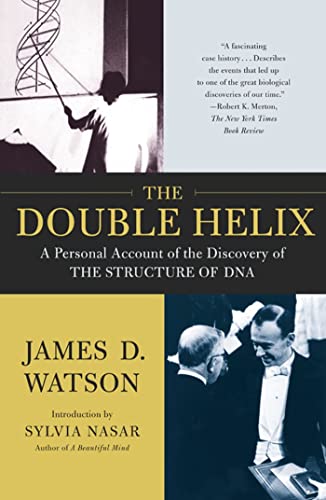
The Double Helix by Nobel laureate James D. Watson provides an unvarnished, candid, and fast-paced first-person memoir detailing the race to discover the molecular structure of deoxyribonucleic acid (DNA). Watson recounts his collaboration with Francis Crick at Cambridge University’s Cavendish Laboratory, culminating in their 1953 breakthrough that revealed the double-helical architecture of genetic replication. This gripping account pulls back the curtain on scientific discovery, showing the mix of ambition, rivalry, luck, and brilliant physical model-building intuition.
Watson’s narrative is famous for its honesty, capturing the human drama, social rivalries, and intellectual debates that accompanied one of the greatest scientific breakthroughs in human history. While historical retrospectives have rightly highlighted the essential, undercredited contributions of crystallographer Rosalind Franklin, Watson’s book remains an exhilarating look at how scientific hypotheses are tested and refined. For beginners, it provides an unforgettable window into real-world molecular biology discovery.
- Recounts the historic discovery of the double-helical DNA molecular structure.
- Details the essential role of X-ray crystallography in deciphering macromolecular geometry.
- Provides a vivid insider depiction of the competitive reality of scientific research.
10. Campbell Biology — Lisa A. Urry, Michael L. Cain, Steven A. Wasserman, Peter V. Minorsky, and Jane B. Reece

Campbell Biology is the undisputed global gold standard for introductory college-level biology education, trusted by millions of students, educators, and science enthusiasts worldwide. Authored by a distinguished team of biologists including Lisa A. Urry and Jane B. Reece, this comprehensive reference textbook covers the entire breadth of the biological sciences, from basic chemistry and cell physiology to genetics, plant biology, animal anatomy, and global ecology. Its clear prose, exceptional full-color diagrams, and pedagogical structure make it an essential reference for serious beginners.
What sets Campbell Biology apart is its conceptual focus on major unifying biological themes: evolution, information flow, cellular energy transfer, and emergent properties of biological systems. Rather than presenting biology as an endless catalog of facts, the textbook organizes complex topics around inquiry-based learning and clinical case studies. For any self-directed learner seeking a comprehensive, structured foundation in the life sciences, this book remains the definitive academic biology textbook.
- Provides exhaustive coverage of biochemistry, cytology, genetics, organismal physiology, and ecology.
- Utilizes detailed anatomical and molecular diagrams to illustrate complex biological pathway mechanisms.
- Connects foundational laboratory experiments to modern applications in biotechnology, medicine, and conservation.
11. Your Inner Fish: A Journey into the 3.5-Billion-Year History of the Human Body — Neil Shubin
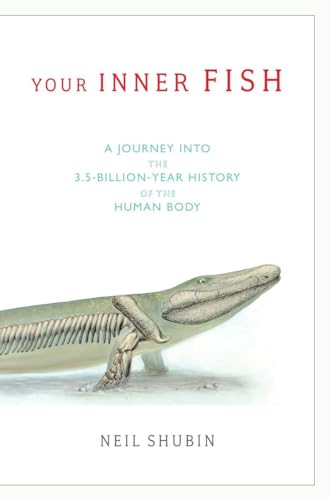
Your Inner Fish by paleontologist and anatomist Neil Shubin is an exhilarating exploration of comparative anatomy and evolutionary developmental biology (evo-devo). Shubin, who led the expedition that discovered Tiktaalik roseae—the famous transitional fossil bridging water-dwelling fish and land-walking tetrapods—shows how human hands, cranial nerves, inner ears, and reproductive organs are direct modifications of ancient anatomical structures found in fish, amphibians, and reptiles. This brilliant book proves that the human body makes sense only when viewed through deep evolutionary anatomical history.
Shubin writes with contagious enthusiasm, explaining how genetic switches like the Sonic hedgehog gene orchestrate limb formation across vastly different species. He connects evolutionary anomalies—such as hiccups, hernias, and sleep apnea—to imperfect evolutionary adaptations inherited from our aquatic and mammalian ancestors. For beginners curious about how paleontology and genetics unite to explain human anatomy, this book provides an unforgettable journey through comparative biology.
- Details the discovery of the transitional fossil Tiktaalik to explain tetrapod limb evolutionary origins.
- Connects human anatomical vulnerabilities and quirks to ancient ancestral fish physiology.
- Explains how regulatory genetic switches control embryonic developmental morphology across species.
12. Entangled Life: How Fungi Make Our Worlds, Change Our Minds & Shape Our Futures — Merlin Sheldrake

Entangled Life by biologist Merlin Sheldrake opens a magnificent window into the mysterious, overlooked kingdom of fungi. Sheldrake demonstrates that fungi are not merely passive decomposers, but active ecological architects that connect forests through underground mycorrhizal networks, regulate global carbon cycles, and challenge traditional definitions of biological individuality. His lyrical, scientifically rigorous prose transforms how readers perceive the interconnectedness of terrestrial plant and fungal ecosystems.
Sheldrake investigates the astonishing problem-solving capabilities of slime molds, the biochemical complexity of lichens, and the revolutionary potential of mycoremediation and fungal materials. He explores how psilocybin and fungal neurochemistry alter human consciousness, blending ecology with neurobiology and philosophy. This award-winning volume is an essential addition for beginners who want to expand their biological horizons beyond traditional animal and plant-centric scientific perspectives.
- Explores underground mycorrhizal networks that facilitate inter-plant nutrient and chemical communication.
- Examines fungal metabolic versatility in driving global biogeochemical decomposition cycles.
- Highlights groundbreaking applications of mycology in bioremediation, construction, and medicine.
13. Life Ascending: The Ten Great Inventions of Evolution — Nick Lane

Life Ascending by biochemist Nick Lane is a breathtaking synthesis of evolutionary biology and bioenergetics, exploring the ten greatest biological inventions that transformed planetary history: the origin of life, DNA, photosynthesis, the complex eukaryotic cell, sex, movement, sight, hot blood, consciousness, and death. Lane utilizes cutting-edge biochemical evidence to explain how natural selection engineered these miraculous adaptations to overcome fundamental thermodynamic energetic constraints.
Lane’s explanations are lucid, deeply philosophical, and grounded in rigorous biophysical principles, showing how proton gradients and chemiosmotic coupling across membranes unite all living organisms. He demystifies the origin of eukaryotic complexity, demonstrating how endosymbiosis provided the massive energetic surge necessary for multicellular life. For beginners seeking to understand the biochemical marvels that underpin evolutionary milestones, this book provides an indispensable masterclass in evolutionary bioenergetics.
- Reconstructs the ten greatest biochemical innovations in the four-billion-year history of life.
- Explains how proton gradients and bioenergetics power all cellular metabolic energy transformations.
- Examines the evolutionary origins of sex, vision, warm-blooded metabolism, and programmed cellular death.
14. The Extended Phenotype: The Long Reach of the Gene — Richard Dawkins

The Extended Phenotype by Richard Dawkins represents the profound sequel and theoretical culmination of the ideas introduced in The Selfish Gene. Dawkins argues that phenotypic expression should not be limited to the physical boundary of an individual organism’s body, but extended to include all effects that a gene has on its environment and other living beings. Beaver dams, spider webs, caddisfly houses, and the behavioral manipulation of hosts by parasites are all legitimate phenotypic expressions of underlying genetic replicator instructions.
Dawkins explores extraordinary cases of parasitic manipulation—such as Toxoplasma gondii altering rodent behavior or fluke parasites hijacking snail physiology—to demonstrate how genes project their phenotypic reach across species boundaries. This conceptually daring text challenges beginners to rethink the fundamental nature of biological individuality, presenting a truly expansive framework for advanced evolutionary behavioral analysis.
- Expands the concept of the phenotype beyond the anatomical boundaries of the organism.
- Analyzes parasitic behavioral manipulation as direct extended genetic phenotypic expression.
- Reframes the organism as an adaptive vehicle serving immortal selfish genetic replicators.
15. The Song of the Cell: An Exploration of Medicine and the New Human — Siddhartha Mukherjee
The Song of the Cell by Siddhartha Mukherjee explores the fundamental unit of biological life: the cell. Mukherjee traces cellular biology from the pioneering seventeenth-century microscopic observations of Robert Hooke and Antonie van Leeuwenhoek to the formulation of cell theory and modern cellular immunotherapy. Combining clinical case histories with lyrical prose, he illustrates how cellular physiology governs immunity, reproduction, tissue repair, pathology, and the emergent phenomenon of human consciousness.
Mukherjee examines how disruptions in cellular communication produce devastating human illnesses, including cancer, autoimmune disorders, and infectious diseases. He details revolutionary medical therapies—such as CAR-T cell engineering and stem cell transplantation—that are transforming contemporary medicine by treating the body at the cellular level. This illuminating book provides beginners with a deeply humanized, comprehensive education in contemporary cytology and molecular medicine.
- Traces the historical and scientific emergence of cellular theory and cytology.
- Explains how cellular dysfunction underlies complex human pathologies like cancer and autoimmune diseases.
- Explores the cutting edge of cellular medicine, including stem cell biology and immunotherapy.
16. The Diversity of Life — Edward O. Wilson

The Diversity of Life by legendary entomologist and Harvard sociobiologist Edward O. Wilson is a magnificent, authoritative exploration of biodiversity and ecological speciation. Wilson eloquently guides readers through the intricate evolutionary processes that generate biological richness, detailing how adaptive radiation, ecological niches, and geographical isolation create complex rainforest and oceanic ecosystems. He combines natural history storytelling with rigorous ecology to explain how life rebounds from historic planetary extinction crises.
Wilson delivers an urgent, impassioned warning regarding the modern anthropogenic biodiversity crisis, demonstrating how habitat destruction and species loss destabilize global ecosystem services. He outlines concrete, science-based conservation strategies to preserve Earth’s genetic heritage before critical ecological tipping points are breached. For beginners seeking to understand the vital importance of biodiversity, this volume stands as an essential masterpiece of ecological literature.
- Explains the evolutionary mechanisms driving adaptive radiation and global biodiversity generation.
- Analyzes the ecological and economic value of vital planetary ecosystem services.
- Outlines comprehensive conservation frameworks to mitigate contemporary anthropogenic species loss.
17. Spillover: Animal Infections and the Next Human Pandemic — David Quammen

Spillover: Animal Infections and the Next Human Pandemic by acclaimed science writer David Quammen is a gripping, prescient investigation into zoonotic diseases—pathogens that jump from non-human animals into humans. Quammen tracks disease ecologists, virologists, and epidemiologists around the globe as they investigate the origins of Ebola, Marburg, SARS, Hendra, and HIV. He demonstrates that zoonotic spillovers are not random freak occurrences, but the predictable biological consequence of human encroachment into pristine, biodiverse wild ecosystems.
Quammen explains complex epidemiological concepts—such as basic reproduction numbers ($R_0$), viral mutation dynamics, and reservoir host ecology—with thrilling narrative clarity. The book emphasizes the profound biological unity connecting human health to animal populations and intact habitats, establishing the foundational principles of the One Health framework. For beginners curious about virology, public health, and disease ecology, this masterpiece delivers a compelling masterclass in zoonotic disease biology.
- Explains the biological mechanisms of zoonotic spillover and viral pathogen transmission dynamics.
- Deconstructs how ecological disruption accelerates the emergence of novel global human epidemics.
- Introduces the principles of disease ecology, reservoir hosts, and evolutionary epidemiological modeling.
18. The Botany of Desire: A Plant’s-Eye View of the World — Michael Pollan
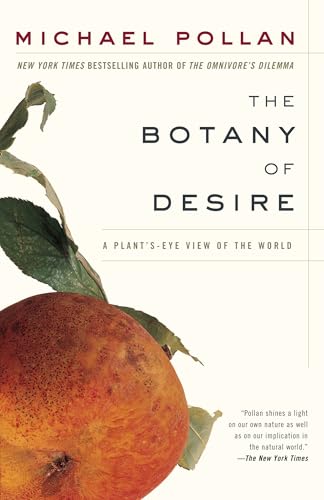
The Botany of Desire by Michael Pollan brilliantly flips the conventional anthropocentric view of agriculture by presenting a plant’s-eye view of co-evolution. Pollan explores how four domesticated plant species—the apple (for sweetness), the tulip (for beauty), cannabis (for intoxication), and the potato (for control)—have successfully manipulated human desires to propagate themselves across the globe. This witty, philosophically profound book shows that humans are not sovereign masters of nature, but active partners in reciprocal co-evolutionary relationships.
Pollan combines agricultural history, evolutionary biology, and cultural commentary to illustrate how artificial selection mirrors natural selection. He examines the perils of monoculture farming and genetic modification, contrasting industrial uniformity with the resilience of biological diversity. For beginners seeking an engaging, unconventional introduction to plant biology and evolutionary mutualism, this charming book provides an illuminating perspective on plant-human co-evolution.
- Reframes plant domestication as a dynamic process of reciprocal evolutionary co-adaptation.
- Explores the biochemical and evolutionary basis of sweetness, beauty, and plant intoxication.
- Critiques modern industrial monoculture farming from an ecological and genetic diversity perspective.
19. The Vital Question: Energy, Evolution, and the Origins of Complex Life — Nick Lane
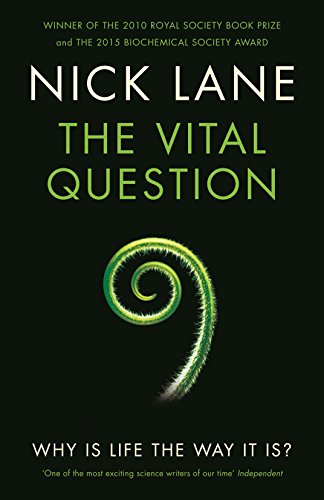
The Vital Question by biochemist Nick Lane addresses the deepest unsolved conundrum in biology: why did complex eukaryotic life arise only once in four billion years of planetary history? Lane argues that the answer lies in bioenergetics—specifically, the energetic constraints imposed by cell volume and membrane surface area. He proves that the singularity of the eukaryotic transition was made possible exclusively by an ancient, singular endosymbiosis, where an archaeal host cell engulfed a bacterium that became the ATP-generating mitochondrion organelle.
Lane reconstructs the origin of life within alkaline hydrothermal vents on the ancient ocean floor, demonstrating how natural proton gradients catalyzed the first metabolic reactions before the evolution of genetic code. His work bridges biochemistry, geophysics, and evolutionary theory into a unified explanation of life’s fundamental traits, including sex, aging, and speciation. For beginners seeking deep scientific insight into the energetic foundations of life, this monograph provides an awe-inspiring biophysical framework.
- Solves the evolutionary bottleneck of eukaryotic complexity through mitochondrial bioenergetic scaling.
- Reconstructs the origin of life within ancient seabed alkaline hydrothermal vent environments.
- Explains how proton gradients across membranes unite all terrestrial cellular biochemical metabolisms.
20. The Song of the Dodo: Island Biogeography in an Age of Extinctions — David Quammen

The Song of the Dodo by David Quammen is a monumental, globe-trotting classic of natural history and evolutionary science centered on island biogeography. Quammen traces how islands serve as natural evolutionary laboratories, from Alfred Russel Wallace’s historic discoveries in the Malay Archipelago to the mathematical theory of island biogeography developed by Robert MacArthur and E.O. Wilson. He explains how geographic isolation accelerates speciation while leaving island populations uniquely vulnerable to rapid ecological collapse and extinction.
Quammen connects the principles of island biogeography directly to modern conservation biology, showing that human habitat fragmentation is turning mainland national parks and reserves into isolated ecological islands. He examines why small, fragmented populations inevitably succumb to the extinction vortex driven by genetic drift, inbreeding depression, and environmental stochasticity. This epic, masterfully written book provides beginners with a definitive, highly engaging education in macroevolutionary ecology and conservation biology.
- Chronicles the history of island biogeography from Alfred Russel Wallace to modern spatial ecology models.
- Explains the species-area relationship and the mechanics of insular evolutionary dwarfism.
- Demonstrates how habitat fragmentation creates vulnerable ecological islands in terrestrial mainland reserves.
Core Principles of Evolution: Natural Selection, Adaptation, and Speciation
Evolutionary theory is the unifying conceptual framework that connects every subdiscipline of the biological sciences, famously summarized by geneticist Theodosius Dobzhansky’s dictum that nothing in biology makes sense except in the light of evolution. Evolution describes the change in the heritable characteristics of biological populations over successive generations. Driven by four fundamental mechanisms—natural selection, genetic mutation, gene flow, and genetic drift—evolution explains both the unity of life through shared ancestry and its staggering phenotypic diversity.
Natural selection, the primary mechanism driving adaptive evolution, operates whenever three conditions are met: phenotypic variation exists within a population, that variation is heritable, and differences in traits lead to differential reproductive success. Organisms with traits that confer enhanced fitness within a specific environment survive and reproduce at higher rates, passing favorable alleles to subsequent generations. Evolutionary biologist Stephen Jay Gould emphasized that evolutionary history is shaped by both gradual adaptation and punctuated equilibria, demonstrating that life’s history is a dynamic balance between stasis and rapid diversification.
Understanding the core principles of evolutionary biology requires recognizing several foundational evolutionary mechanisms:
- Natural selection acts on individual phenotypes, but evolution occurs as shifts in population allele frequencies.
- Allopatric and sympatric speciation mechanisms generate new species through reproductive isolation and divergence.
- Vestigial traits and homologous anatomical structures provide conclusive evidence of common macroevolutionary descent.
- Co-evolutionary arms races shape predator-prey dynamics and complex mutualistic symbiotic partnerships.
Mastering evolutionary principles equips beginners to understand why biological adaptations are never perfect designs, but functional compromises shaped by historical evolutionary contingency.
Genetics and Cellular Machinery: From DNA Transcription to Epigenetics
At the microscopic level, all living organisms are composed of cells—the fundamental membrane-bound units of structure and function in biological life. The central dogma of molecular biology, formulated by Francis Crick, describes the flow of genetic information within cells: deoxyribonucleic acid (DNA) is transcribed into messenger ribonucleic acid (mRNA), which is subsequently translated by ribosomes into functional proteins. These protein molecules serve as structural components, signaling receptors, and catalytic enzymes that drive all metabolic cellular biochemical reactions.
Contemporary genetics has expanded beyond Mendelian inheritance to uncover the sophisticated world of epigenetics—heritable modifications in gene expression that occur without altering the underlying DNA sequence. Epigenetic mechanisms, such as DNA methylation and histone acetylation, act as molecular switches that turn genes on or off in response to environmental inputs, developmental timing, and physiological stress. Neuroscientist Lisa Feldman Barrett notes that gene-environment interactions constantly reshape neural circuitry, showing that biological inheritance is a dynamic and responsive process.
Understanding cellular genetics involves mastering several essential molecular biology concepts:
- DNA double-helix base pairing ensures accurate replication during mitotic and meiotic cell divisions.
- Ribosomal translation synthesizes complex polypeptide chains according to triplet nucleotide codon sequences.
- Epigenetic modifications regulate tissue-specific gene expression without changing underlying genomic sequences.
- Cellular respiration in mitochondria generates ATP to power all endergonic physiological processes.
Decoding the molecular machinery of the cell allows beginners to appreciate how microscopic biochemical instructions manifest as living, breathing, and reproducing organismal systems.
Ecology and Symbiosis: How Interconnected Ecosystems Sustain Life
Ecology is the scientific study of the interactions between living organisms and their abiotic and biotic environments across expanding scales of biological organization: organisms, populations, communities, ecosystems, and the biosphere. Energy flows unidirectionally through ecosystems—entering as solar radiation captured by photosynthetic autotrophs and dissipating as metabolic heat across trophic levels—while essential chemical nutrients like carbon, nitrogen, and phosphorus cycle endlessly through biogeochemical ecosystem pathways.
A foundational insight of modern ecology is the vital role of symbiosis—close and long-term biological interactions between different species. These relationships span a spectrum from mutualism (where both partners benefit), to commensalism (where one benefits without harming the other), to parasitism. Microscopic symbiotic alliances, such as mycorrhizal fungi networks in plant root systems and nitrogen-fixing bacteria in legumes, form the biological foundation that makes terrestrial plant life possible.
Comprehending ecological dynamics requires examining several vital ecosystem stabilization principles:
- Keystone species exert disproportionately large impacts on maintaining overall community biodiversity structure.
- Trophic cascades demonstrate how top predators regulate plant biomass by controlling herbivore population densities.
- Ecological succession describes the predictable, gradual process of community recovery following environmental disturbances.
- Biogeochemical cycles continuously recycle water, nitrogen, and carbon through atmospheric and geological reservoirs.
Appreciating the profound interconnectedness of ecosystems reinforces why protecting biodiversity is essential for sustaining planetary climate stability and human ecological survival.
Practical Exercises to Apply Biological Thinking in Daily Life
Studying biology creates lasting intellectual value only when theoretical knowledge is integrated into active observation of the living world. Developing an empirical mindset allows you to observe natural phenomena with curiosity, evaluate health and nutrition claims with scientific skepticism, and appreciate the intricate biology operating within your own body. Psychiatrist Viktor Frankl famously noted that discovering meaning in nature requires cultivating intentional, receptive awareness toward the magnificence of the living world.
To integrate the core lessons from these 20 biology books into your everyday life, practice these five evidence-based biological disciplines:
- Observe local biodiversity by identifying five native plant and insect species utilizing digital citizen science tools.
- Support your gut microbiome by incorporating diverse plant fibers and fermented foods to optimize symbiotic microbial metabolic health.
- Practice evolutionary thinking by analyzing human behavioral quirks and emotional responses as ancestral survival adaptations.
- Audit your household chemical consumption to reduce synthetic pesticide runoff and protect local aquatic ecological health.
- Track your circadian biology by aligning light exposure and sleep schedules with innate neuroendocrine hormonal rhythms.
Consistently practicing these observational and lifestyle disciplines deepens your scientific literacy, fosters ecological mindfulness, and connects you directly to the grand tapestry of life.
FAQs about Biology Books for Beginners
What is the absolute best biology book for a complete beginner?
For a complete beginner with no background in science, The Gene: An Intimate History by Siddhartha Mukherjee or I Contain Multitudes by Ed Yong provides the most engaging and accessible starting point. Both books are written by masterful science communicators who use compelling human stories and vivid analogies to explain complex genetics and microbiology without dense technical jargon. If you are looking for a comprehensive textbook to study biological systems systematically from the ground up, Campbell Biology is the undisputed global gold standard, offering clear explanations, exceptional visual diagrams, and an intuitive conceptual structure suitable for self-directed learners.
Do I need a strong background in chemistry or physics to understand biology books?
You do not need an advanced background in chemistry or physics to read and enjoy beginner-friendly biology books. Most introductory popular science volumes, such as those by Charles Darwin, Richard Dawkins, and Robert Sapolsky, focus on high-level concepts like evolutionary adaptation, animal behavior, and ecological relationships, which require only curiosity and basic logic. While molecular biology and cell physiology involve foundational chemistry concepts—such as molecular bonding and pH—introductory textbooks like Campbell Biology explain these chemical basics within the opening chapters before progressing to complex cellular pathways.
Is Charles Darwin’s On the Origin of Species difficult for modern readers?
Charles Darwin’s On the Origin of Species is surprisingly readable and engaging for modern audiences. Unlike contemporary specialized academic papers filled with dense mathematical modeling, Darwin wrote for the educated general public of Victorian England. His prose is clear, persuasive, and supported by relatable examples from agriculture, dog breeding, and bird observation. While some of the nineteenth-century sentence structures are longer than modern writing, Darwin’s logical progression and transparent enthusiasm for natural history make it a deeply rewarding read for anyone interested in evolutionary science.
What is the difference between evolutionary biology and molecular biology?
Evolutionary biology is the macro-level study of how populations and species change over generations through natural selection, genetic drift, and adaptation, focusing on species diversity, fossils, and ecological interactions over deep time. Molecular biology is the micro-level study of biological activity at the molecular and cellular scale, focusing on the interactions between DNA, RNA, proteins, and organelles within individual cells. Both fields are deeply complementary: molecular biology reveals the biochemical mechanisms of genetic mutation and expression, while evolutionary biology explains how those genetic variations are selected and distributed across populations.
How does understanding biology help with personal health and psychology?
Understanding biological science provides essential insights into human physiology, nutrition, sleep, and mental health. Books like Robert Sapolsky’s Behave explain how hormones, neurotransmitters, and evolutionary pressures shape stress, empathy, and decision-making, helping individuals understand their emotional triggers. Furthermore, learning about the microbiome, genetics, and epigenetics empowers individuals to evaluate medical advice critically, recognize the physical impacts of chronic stress, and adopt lifestyle habits that support gut health, metabolic balance, and long-term neurobiological well-being.
Which biology book is best for learning about ecology and environmental science?
The two most impactful books for understanding ecology and environmental conservation are Silent Spring by Rachel Carson and The Sixth Extinction by Elizabeth Kolbert. Carson’s classic work provides a foundational understanding of food webs, bioaccumulation, and the ecological dangers of industrial pollutants. Kolbert’s book offers a contemporary, field-reported analysis of how modern human activities—such as deforestation, ocean acidification, and climate change—are driving a global biodiversity crisis. Together, they provide a comprehensive understanding of ecological interdependence and the vital importance of planetary conservation.
Bibliography
- Barrett, L. F. (2017). How Emotions Are Made: The Secret Life of the Brain. Houghton Mifflin Harcourt.
- Carson, R. (1962). Silent Spring. Houghton Mifflin.
- Darwin, C. (1859). On the Origin of Species by Means of Natural Selection. John Murray.
- Dawkins, R. (1976). The Selfish Gene. Oxford University Press.
- Frankl, V. E. (1959). Man’s Search for Meaning. Beacon Press.
- Gould, S. J. (1977). Ever Since Darwin: Reflections in Natural History. W. W. Norton & Company.
- Kolbert, E. (2014). The Sixth Extinction: An Unnatural History. Henry Holt and Company.
- Lane, N. (2009). Life Ascending: The Ten Great Inventions of Evolution. Profile Books.
- Mayr, E. (1982). The Growth of Biological Thought: Diversity, Evolution, and Inheritance. Harvard University Press.
- Mukherjee, S. (2016). The Gene: An Intimate History. Scribner.
- Pollan, M. (2001). The Botany of Desire: A Plant’s-Eye View of the World. Random House.
- Quammen, D. (1996). The Song of the Dodo: Island Biogeography in an Age of Extinctions. Scribner.
- Sapolsky, R. M. (2017). Behave: The Biology of Humans at Our Best and Worst. Penguin Press.
- Schrödinger, E. (1944). What Is Life?: The Physical Aspect of the Living Cell. Cambridge University Press.
- Sheldrake, M. (2020). Entangled Life: How Fungi Make Our Worlds, Change Our Minds & Shape Our Futures. Random House.
- Shubin, N. (2008). Your Inner Fish: A Journey into the 3.5-Billion-Year History of the Human Body. Pantheon Books.
- Urry, L. A., Cain, M. L., Wasserman, S. A., Minorsky, P. V., & Reece, J. B. (2016). Campbell Biology (11th ed.). Pearson.
- Watson, J. D. (1968). The Double Helix: A Personal Account of the Discovery of the Structure of DNA. Atheneum.
- Wilson, E. O. (1984). Biophilia. Harvard University Press.
- Yong, E. (2016). I Contain Multitudes: The Microbes Within Us and a Grander View of Life. Ecco.
Use this citation format to reference the article clearly and help readers find the original source.
PsychologyFor. (2026). 20 Biology Books for Beginners. PsychologyFor. https://psychologyfor.com/20-biology-books-for-beginners/