


Studying philosophy can sometimes feel entirely trapped in abstractions. You spend hours untangling epistemology, ethics, existentialism, and philosophy of mind across centuries of dense academic prose, yet the underlying questions refuse to remain purely theoretical: What is real? How should I act? Does free will exist? Who am I when my memories fade? Films for philosophy students bring these profound questions to life with emotional urgency, transforming dry intellectual thought experiments into visceral, unforgettable human stories.
Cinema and philosophy share a natural partnership because both investigate the limits of human experience, consciousness, morality, and truth. Watching a protagonist navigate a simulated reality, an agonizing ethical dilemma, or the absurdity of an indifferent universe allows students to test philosophical frameworks against concrete narratives. Philosophical cinema does not replace reading primary philosophical texts; rather, it enriches academic study by demonstrating how abstract concepts manifest in human behavior, relationships, and societal structures.
So which cinematic works provide the most rigorous and rewarding intellectual exploration for philosophy students seeking to deepen their understanding of reality, ethics, and consciousness?
This curated academic guide analyzes 20 essential films for philosophy students, pairing each title with its official English YouTube trailer, core philosophical themes, and direct connections to major ethical, metaphysical, and existential frameworks.
How Cinema Functions as a Living Thought Experiment in Philosophy
Cinema functions as a dynamic visual thought experiment, allowing philosophers and students to test complex hypotheses within simulated worlds. By dramatizing hypothetical scenarios, philosophical film analysis bridges the gap between formal logic and intuitive emotional understanding, revealing how theoretical ethics and metaphysics operate under realistic pressures.
Philosopher Stanley Cavell argued in his foundational work on film aesthetics that cinema possesses an inherent capacity for philosophical reflection, allowing viewers to confront the skepticism, moral perfectionism, and existential anxiety of modern life. When we watch a character make an impossible ethical choice on screen, we engage in what philosophers call reflective equilibrium, continuously adjusting our general moral principles against our immediate emotional reactions to the narrative. Cinematic thought experiments make ethical frameworks visceral and memorable.
How many of these have you been "meaning to read" for months?
- 1
 Summer, JadeStress ReliefAdult Coloring Book with Animals, Flowers, Fantasy, and More for Mindfulness and RelaxationListen Free On Audible
 - 2
 HarperOneMere Christianity (Deluxe Edition)Listen Free On Audible
 - 3
 MajostaDon't Believe Everything You ThinkWhy Your Thinking Is The Beginning & End Of Suffering (Beyond Suffering)Listen Free On Audible
Furthermore, film engages multiple cognitive systems simultaneously, challenging viewers to evaluate sensory evidence, narrative reliability, and subjective perception in real time. Visual storytelling methods force audiences to confront their own unexamined cognitive biases and epistemological assumptions.
| Philosophical Branch | Core Question Explored in Film |
| Epistemology & Metaphysics | How do we distinguish genuine reality from sophisticated illusion or cognitive distortion? |
| Ethics & Moral Philosophy | What duties, consequences, or virtues should guide human decision-making during crisis? |
5 Landmark Films on Epistemology, Skepticism, and Simulated Realities
Epistemology investigates the nature, sources, and limits of human knowledge, asking how we can ever be certain that our sensory perceptions reflect external reality. These five essential films explore radical skepticism, simulated worlds, and cognitive deception, challenging epistemological certainty through compelling speculative narratives.
1. The Matrix (1999)
The Wachowskis’ groundbreaking cyberpunk masterpiece serves as the ultimate modern dramatization of René Descartes’ evil demon hypothesis and Plato’s Allegory of the Cave. Keanu Reeves stars as Neo, a computer programmer who discovers that perceived physical reality is an elaborate neuro-electric simulation designed by artificial intelligence. Radical epistemological skepticism is brought to life through the iconic choice between the red and blue pills, forcing viewers to question whether comfortable illusion is preferable to harsh, unvarnished truth.

2. The Truman Show (1998)
Peter Weir directs this brilliant satirical drama starring Jim Carrey as Truman Burbank, an ordinary man whose entire life is an unscripted reality television broadcast staged inside a massive, enclosed studio. The film directly mirrors Plato’s cave allegory, illustrating how an individual readily accepts the reality of the world with which they are presented until glaring inconsistencies shatter their worldview. Manufactured reality systems demonstrate how social engineering and institutional authority can construct a comprehensive, deceptive epistemic environment.

3. Rashomon (1950)
Akira Kurosawa’s landmark historical mystery presents four contradictory eyewitness accounts of a single violent crime in medieval Japan, offering no objective resolution. Through brilliant narrative structure, the film illustrates epistemic relativism, the fragility of human memory, and how personal self-interest distorts factual reporting. Subjective truth perception highlights the fundamental difficulty of reconstructing objective historical events when all available human testimony is inherently biased.

4. Memento (2000)
Christopher Nolan’s ingenious neo-noir uses a reverse-chronological narrative structure to simulate the subjective experience of anterograde amnesia, following a man who cannot form new memories as he attempts to avenge his wife’s murder. Guy Pearce’s character relies on handwritten notes, Polaroid photographs, and body tattoos to construct a working reality, demonstrating how identity and agency depend upon continuous memory. Constructed personal narrative proves to be dangerously vulnerable to deliberate self-deception and external manipulation.

5. Waking Life (2001)
Richard Linklater’s rotoscope-animated philosophical exploration follows an unnamed protagonist wandering through a fluid, lucid dreamscape while engaging in wide-ranging intellectual dialogues with strangers. The film directly tackles phenomenological inquiry, existentialist ethics, free will, and the boundary between waking perception and dream states. Lucid dream phenomenology challenges the viewer to question whether conscious waking reality is fundamentally different from a persistent, self-constructed dream state.

5 Provocative Films on Ethics, Justice, and Moral Responsibility
Moral philosophy investigates what makes actions right or wrong, how justice should be structured, and whether individuals can be held morally responsible when their choices are constrained by systemic pressure. These five powerful films explore ethical decision-making across utilitarian, deontological, and virtue ethics frameworks.
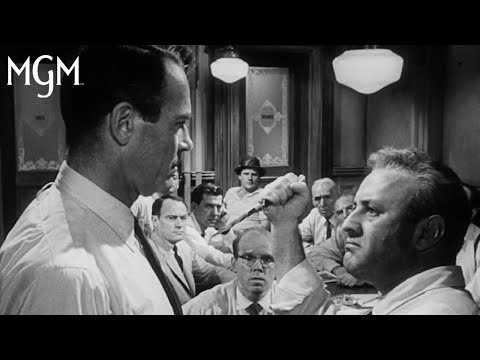
6. 12 Angry Men (1957)
Sidney Lumet’s gripping courtroom drama confines twelve jurors to a single deliberation room as they decide the fate of a teenager accused of murder. Henry Fonda portrays the lone dissenting juror who insists on applying rigorous critical thinking, reasonable doubt, and epistemological humility against overwhelming peer pressure. Deliberative democratic ethics are portrayed in action, showing how institutional justice requires individual moral courage, careful evidentiary scrutiny, and the active dismantling of personal prejudice.
7. A Clockwork Orange (1971)
Stanley Kubrick’s controversial dystopian adaptation of Anthony Burgess’s novel follows Alex, a sociopathic gang leader subjected to psychological aversion therapy by the state to eliminate his violent impulses. The film poses a fundamental question in moral philosophy: is a person truly moral if they are physically incapable of choosing evil? Autonomous moral agency is examined alongside utilitarian state control, asking whether forced social harmony is worth the total destruction of individual free will.

8. Crimes and Misdemeanors (1989)
Woody Allen’s masterwork weaves together a tragic drama about an esteemed ophthalmologist who arranges his mistress’s murder and a bittersweet comedy about an idealistic documentary filmmaker. The film directly confronts Fyodor Dostoevsky’s existential themes, examining whether moral order exists in an indifferent universe or if guilt simply fades when social detection is avoided. Moral nihilism and conscience collide, challenging the comforting assumption that cosmic justice inevitably balances human wrongdoing.

9. Gattaca (1997)
Andrew Niccol’s intelligent science fiction drama depicts a future society stratified entirely by genetic engineering, where individuals conceived naturally are relegated to an oppressed underclass. Ethan Hawke portrays an “in-valid” man who assumes a genetic elite’s identity to fulfill his dream of space travel. Bioethical genetic determinism is challenged through sheer human persistence, raising vital contemporary questions regarding reproductive technology, social meritocracy, and biological discrimination.

10. Blade Runner (1982)
Ridley Scott’s visual masterpiece adapts Philip K. Dick’s novel to explore moral status, personal identity, and empathy in a dystopian Los Angeles populated by bioengineered androids known as replicants. Harrison Ford stars as a detective tasked with retiring runaway replicants who have returned to Earth seeking longer lifespans. Sentient artificial moral status forces audiences to question what defines human dignity, suggesting that capacity for empathy and love matters far more than biological origin.

5 Masterpieces of Existentialism, Meaning, and Mortality
Existentialism focuses on individual freedom, the search for authentic meaning in an apparently absurd universe, and the unavoidable reality of human mortality. These five profound cinematic works examine existentialist philosophy, illustrating how confrontation with death and groundlessness can illuminate authentic human purpose.
11. The Seventh Seal (1957)
Ingmar Bergman’s timeless allegory follows a disillusioned medieval knight returning from the Crusades who plays a metaphorical game of chess against Death to delay his demise and find one meaningful truth. Set against the apocalyptic backdrop of the Black Plague, the film dramatizes the “silence of God” and the agonizing human search for divine reassurance. Existential dread and mortality are balanced by tender moments of simple human connection, suggesting that shared love provides meaning even in an indifferent universe.

12. Wild Strawberries (1957)
Bergman’s reflective masterpiece chronicles an aging, emotionally cold medical professor’s road trip to accept an honorary university degree, interspersed with vivid daydreams, nightmares, and nostalgic memories. The narrative functions as an extended examination of an unexamined life, forcing the protagonist to confront his lifelong emotional detachment and relational failures. Socratic life evaluation illustrates that genuine self-knowledge and emotional reconciliation remain possible even in the twilight of life.

13. Stalker (1979)
Andrei Tarkovsky’s meditative science-fiction journey follows a writer, a scientist, and a spiritual guide known as a Stalker through a hazardous, forbidden landscape called the Zone to reach a mystical room that grants humanity’s deepest subconscious desires. The film serves as a profound metaphysical inquiry into faith, human desire, and spiritual longing in a secularized world. Subconscious desire fulfillment reveals the terrifying truth that human beings rarely understand what they truly want beneath their conscious aspirations.

14. Wings of Desire (1987)
Wim Wenders’ poetic masterpiece depicts immortal angels observing the private thoughts and quiet suffering of West Berlin residents, until one angel chooses to renounce immortality for the fleeting, sensory experience of mortal human love. Filmed in luminous monochrome transitioning to color, the film celebrates the beauty of physical, temporary existence. Embodied mortal existence argues that the sensory limitations and inevitable finitude of human life are precisely what give our choices emotional weight and beauty.

15. The Tree of Life (2011)
Terrence Malick’s impressionistic, cosmic drama juxtaposes the vast evolutionary history of the universe against the intimate memories of a 1950s Texas family grieving a tragic loss. The narrative contrasts two opposing ways through life: the way of nature (selfish competition and raw survival) and the way of grace (love, forgiveness, and wonder). Cosmic existential reflection challenges viewers to find spiritual meaning and gratitude amidst unavoidable grief and suffering.

5 Groundbreaking Studies on Mind, Artificial Intelligence, and Consciousness
The philosophy of mind investigates the nature of consciousness, personal identity across time, and the possibility of artificial subjective experience. These five visionary films examine philosophy of mind concepts, exploring whether synthetic machines can possess genuine minds and how memory defines personal identity.
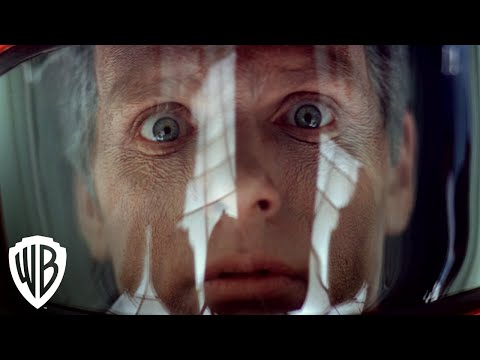
16. 2001: A Space Odyssey (1968)
Stanley Kubrick and Arthur C. Clarke’s monumental sci-fi epic traces human evolution from prehistoric tool-using hominids to a fateful space mission guided by the sentient, malfunctioning supercomputer HAL 9000. The film addresses the technological singularity, cosmic evolution, and the boundary between human and machine cognition. Artificial computational intelligence is portrayed with chilling precision, forcing humanity to confront its own technological creations and our place within a mysterious, silent universe.
17. Ex Machina (2014)
Alex Garland’s tense psychological chamber piece centers on a young programmer invited to administer a Turing test to an advanced female humanoid robot named Ava. The film explores the “hard problem of consciousness,” manipulative intelligence, and the ethical rights of sentient synthetic creations. Machine consciousness evaluation challenges whether human observers can ever truly distinguish genuine subjective feeling from sophisticated algorithmic simulation.

18. Her (2013)
Spike Jonze’s tender, near-future romance follows a lonely, grieving writer who develops a deep romantic relationship with an advanced, intuitive operating system named Samantha. The narrative explores how human intimacy, attachment, and vulnerability evolve alongside artificial intelligence in an increasingly alienated digital society. Disembodied digital consciousness challenges traditional biological definitions of romantic connection, love, and personal partnership.

19. Eternal Sunshine of the Spotless Mind (2004)
Michel Gondry and Charlie Kaufman’s inventive romance depicts a heartbroken couple who undergo a medical procedure to erase all memories of their failed relationship from their brains. As the protagonist’s memories are systematically dismantled, he realizes that grief and pain are inseparable from authentic personal identity and meaningful love. Lockean psychological continuity is explored deeply, showing that erasing difficult memories fundamentally diminishes a person’s moral and emotional agency.

20. Arrival (2016)
Denis Villeneuve’s cerebral sci-fi masterpiece follows a linguistics professor recruited by the military to communicate with mysterious extraterrestrial visitors whose non-linear written language alters human perception of time. The narrative explores the Sapir-Whorf linguistic relativity hypothesis, determinism, and free will. Non-linear temporal perception poses a profound existential question: if you knew your entire future with all its grief and joy, would you still choose to live it?

How Philosophical Film Analysis Enhances Academic Study
Analyzing cinema through formal philosophical lenses transforms passive media consumption into rigorous intellectual inquiry. When students evaluate narrative pacing, lighting, character motivation, and dialogue against established philosophical texts, they develop critical thinking skills that enhance their ability to construct logical arguments and evaluate abstract claims.
Philosopher Gilles Deleuze argued in his seminal Cinema books that film does not merely represent philosophical concepts; it produces new forms of thought through cinematic time and movement. By experiencing temporal manipulation in films like Arrival or subjective unreliability in Rashomon, students encounter philosophical paradoxes directly rather than processing them as second-hand theoretical summaries. Cinematic philosophical inquiry enables learners to recognize how cultural narratives shape societal assumptions about justice, technology, and identity.
Furthermore, film discussions encourage collaborative debate and perspective-taking among students. Two viewers can watch the exact same scene in 12 Angry Men and disagree fundamentally on the epistemic justification of a verdict, opening up fruitful Socratic dialogue regarding burden of proof and moral responsibility. Collaborative classroom reflection turns cinema into an active academic laboratory for exploring competing ethical frameworks.
- Film analysis strengthens deductive argument evaluation by identifying implicit premises behind character actions.
- Visual narratives provide accessible entry points for understanding complex epistemological thought experiments.
- Cinematic storytelling illuminates the practical human stakes involved in abstract ethical dilemmas.
The Limits of Cinema: What Movies Cannot Fully Capture About Philosophy
While film is an extraordinary medium for introducing philosophical problems, it possesses inherent structural limitations that students must recognize. Hollywood pacing and dramatic necessity frequently require narrative resolution and emotional closure that academic philosophical inquiry intentionally avoids.
Cinema excels at asking provocative questions, but it often struggles to present rigorous, step-by-step logical arguments without disrupting visual pacing and entertainment value. Complex philosophical treatises require precise textual definitions, counter-argument refutations, and formal deductive validity that cannot be easily translated into two-hour visual narratives. Cinematic philosophical limitations remind students that movies serve as inspirational entry points rather than comprehensive substitutes for reading primary philosophical texts.
Philosopher Martha Nussbaum has highlighted that while narrative literature and art cultivate essential moral imagination and empathy, they must be combined with critical ethical analysis to avoid manipulative sentimentality. Movies can easily evoke unearned emotional reactions through soaring musical scores and charismatic acting, sometimes masking deeply flawed ethical logic. Critical philosophical discernment requires students to separate an emotionally persuasive film scene from a logically sound philosophical argument.
- Films frequently prioritize emotional narrative closure over the open-ended ambiguity characteristic of serious philosophy.
- Dramatic storytelling often relies on simplified character archetypes rather than exploring nuanced, multi-faceted ethical positions.
- Visual media can induce manipulative emotional persuasion that obscures underlying logical fallacies in a character’s reasoning.
How to Organize a Philosophy Film Discussion Group or Seminar
Creating a structured philosophy film group allows students, educators, and lifelong learners to explore cinematic thought experiments through collaborative, rigorous Socratic dialogue. Implementing structured academic discussion ensures that film viewings generate deep analytical insights rather than superficial entertainment reviews.
Begin by selecting films that directly align with specific philosophical subfields or core seminar topics, such as pairing The Matrix with Descartes’ Meditations or Ex Machina with contemporary philosophy of mind papers on the Turing test. Provide participants with short reading excerpts and targeted discussion questions prior to viewing, encouraging them to actively watch for specific metaphysical assumptions, moral decisions, and epistemological dilemmas during the screening. Pre-screening discussion prompts prime viewers to engage critically with the narrative rather than consuming it passively.
During post-screening seminars, structure the conversation around foundational philosophical inquiries: What are the unstated premises behind the protagonist’s dilemma? Which ethical framework best justifies their final action? How does the film define human consciousness or personal identity? Structured Socratic facilitation guides participants to challenge each other’s interpretations respectfully, refining their understanding of competing philosophical positions through collaborative debate.
- Pair each film screening with a primary philosophical reading to anchor visual discussions in formal academic theory.
- Formulate specific, open-ended philosophical discussion questions focused on epistemology, ethics, or personal identity.
- Encourage participants to identify underlying philosophical premises that govern the fictional universe’s logic.
- Foster an environment of rigorous intellectual charity where competing philosophical interpretations can be debated constructively.
FAQs about Philosophy Films and Cinematic Thought Experiments
What is the single best movie for an introductory philosophy student?
The Matrix (1999) remains the most widely assigned and accessible introductory philosophy film because it weaves multiple foundational philosophical thought experiments into a compelling narrative. It directly introduces Plato’s Allegory of the Cave, René Descartes’ evil demon skepticism, Robert Nozick’s experience machine, and Hilary Putnam’s brain in a vat hypothesis. Students can immediately grasp complex epistemological and metaphysical questions regarding reality, perception, and free will without requiring extensive prior philosophical training, making it an ideal pedagogical entry point for introductory university seminars.
Can watching movies genuinely help me understand academic philosophy?
Yes, cinema can significantly enhance your comprehension of academic philosophy by providing concrete visual models of abstract thought experiments. While reading primary philosophical texts is necessary for mastering formal arguments and logical rigor, films demonstrate how theoretical ethics, metaphysics, and existential dilemmas manifest in lived human experience. Seeing a concept like Lockean memory continuity dramatized in Eternal Sunshine of the Spotless Mind helps students retain and analyze abstract theories more effectively during coursework and exam preparation.
What is the difference between an existential film and an epistemological film?
An existential film focuses primarily on the human search for authentic meaning, individual freedom, mortality, and how to live in an apparently absurd universe, as seen in The Seventh Seal or Wild Strawberries. An epistemological film investigates the nature, validity, and limits of human knowledge, asking whether our sensory perceptions can be trusted and how we distinguish true belief from illusion, as depicted in The Matrix or Rashomon. While some films explore both dimensions, existentialism centers on meaning and choice, whereas epistemology centers on truth and justification.
Why do science fiction movies dominate philosophical cinema lists?
Science fiction is the natural home of philosophical thought experiments because the genre allows writers and directors to alter fundamental physical, biological, and technological conditions to test theoretical ideas. By introducing sentient artificial intelligence in Ex Machina or genetic determinism in Gattaca, filmmakers can construct hypothetical worlds that isolate specific philosophical questions regarding consciousness, moral status, and justice, enabling audiences to evaluate extreme scenarios that cannot be easily examined within ordinary realistic drama.
How does a philosophical thought experiment differ from standard fictional storytelling?
A standard fictional story focuses primarily on emotional character arcs, entertainment, and narrative resolution. A philosophical thought experiment uses a hypothetical scenario specifically designed to test, challenge, or illustrate a particular logical hypothesis, ethical principle, or metaphysical concept. When cinema succeeds as philosophical inquiry, the narrative structure itself serves as a rigorous testing ground for competing ideas, forcing viewers to confront paradoxes and evaluate whether their existing moral and epistemological assumptions hold up under extreme hypothetical conditions.
What are some other notable philosophy films worth exploring beyond this list?
Numerous other exceptional films explore profound philosophical themes, including Andrei Tarkovsky’s Solaris (1972) on the limits of human comprehension, Christopher Nolan’s Interstellar (2014) on time and love, Terrence Malick’s The Thin Red Line (1998) on nature and warfare, Woody Allen’s Match Point (2005) on moral luck, and Richard Linklater’s Boyhood (2014) on temporal passage and personal identity. Each of these works offers rich intellectual material for students exploring ethics, metaphysics, and the human condition.
Bibliography
- Cavell, S. (1979). The World Viewed: Reflections on the Ontology of Film. Harvard University Press.
- Deleuze, G. (1986). Cinema 1: The Movement-Image. University of Minnesota Press.
- Deleuze, G. (1989). Cinema 2: The Time-Image. University of Minnesota Press.
- Nussbaum, M. C. (1990). Love’s Knowledge: Essays on Philosophy and Literature. Oxford University Press.
- Nagel, T. (1974). What is it like to be a bat? The Philosophical Review, 83(4), 435-450.
- Nozick, R. (1974). Anarchy, State, and Utopia. Basic Books.
- Plato. (375 B.C.E.). The Republic. Translated editions widely available, including Penguin Classics.
- Descartes, R. (1641). Meditations on First Philosophy. Translated editions widely available, including Cambridge University Press.
- American Philosophical Association. (2022). Philosophy and Film Resources. APA Publications.
Use this citation format to reference the article clearly and help readers find the original source.
PsychologyFor. (2026). 20 Essential Films for Philosophy Students. PsychologyFor. https://psychologyfor.com/20-essential-films-for-philosophy-students/