


See more of our articles in your search results.
You read a headline about a medical breakthrough, watch a hospital drama, or leave a doctor’s appointment with three new words you do not fully understand, and suddenly you want to know how the body, disease, and treatment actually work. That curiosity is valuable. Medical science affects every life eventually, and learning its basic ideas can make the healthcare system feel less mysterious without pretending that a book can replace clinical expertise.
The difficult part is finding information between two extremes: oversimplified health content that offers little useful context and dense textbooks written for people already deep into professional training. That gap leaves many curious readers stranded. The best medical books turn real research, difficult ethical questions, and technical physiology into stories and explanations that a non-specialist can follow, while remaining honest about uncertainty, evidence, and the limits of current treatment.
So which titles make medicine genuinely understandable without reducing it to trivia?
This guide reviews 20 medical books recommended for the curious, spanning disease history, clinical memoir, anatomy, neuroscience, ethics, public health, and medical decision-making.
20 Medical Books Recommended for the Curious
Verified Top Picks- 1
 Siddhartha Mukherjee The Emperor of All Maladies: A Biography of Cancer A Pulitzer Prize-winning history of cancer research, treatment breakthroughs, and resilienceCHECK TODAY'S PRICE
 - 2
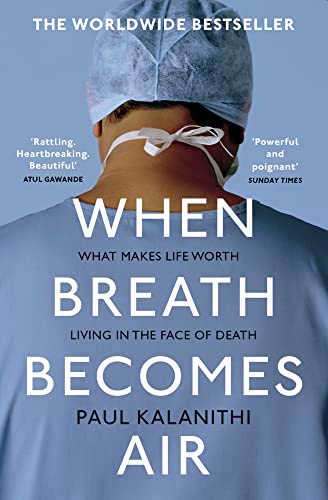 Paul Kalanithi When Breath Becomes Air A young neurosurgeon reflects on medicine, mortality, and meaning after a terminal diagnosisCHECK TODAY'S PRICE
 - 3
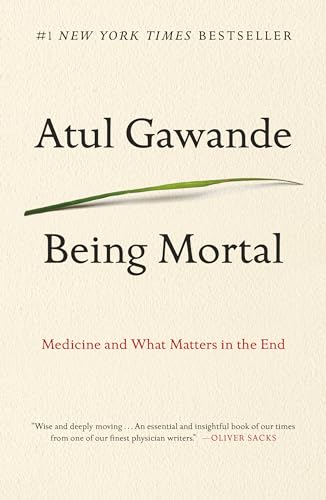 Atul Gawande Being Mortal: Medicine and What Matters in the End A surgeon's profound examination of end-of-life care, aging, autonomy, and quality of lifeCHECK TODAY'S PRICE
 - 4
 Rebecca Skloot The Immortal Life of Henrietta Lacks Investigative reporting uncovering the origin of HeLa cells and enduring questions of bioethicsCHECK TODAY'S PRICE
 - 5
 Richard L. Drake, A. Wayne Vogl et al. Gray's Anatomy for Students A richly illustrated and clinically focused foundational textbook mapping human anatomyCHECK TODAY'S PRICE
 - 6
 Bill Bryson The Body: A Guide for Occupants A witty, conversational, and comprehensive tour of human physiology and organ systemsCHECK TODAY'S PRICE
 - 7
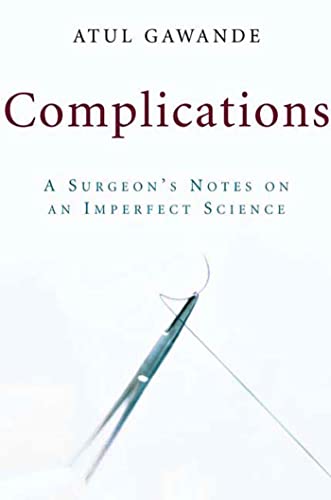 Atul Gawande Complications: A Surgeon's Notes on an Imperfect Science Honest reflections on the clinical uncertainty, error, and fallibility inherent in surgical practiceCHECK TODAY'S PRICE
 - 8
 Henry Marsh Do No Harm: Stories of Life, Death, and Brain Surgery A senior neurosurgeon's candid memoir confronting failure, fear, and high-stakes operationsCHECK TODAY'S PRICE
 - 9
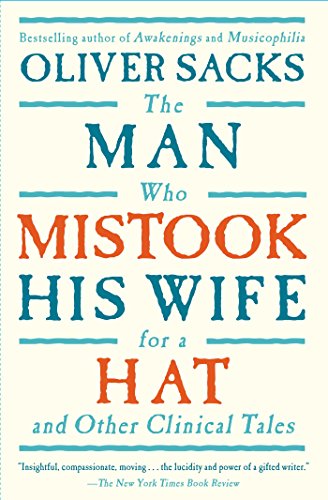 Oliver Sacks The Man Who Mistook His Wife for a Hat Unforgettable, compassionate clinical case studies illuminating the fragility of human consciousnessCHECK TODAY'S PRICE
 - 10
 Jerome Groopman How Doctors Think Exploring the cognitive shortcuts, heuristic biases, and reasoning behind medical diagnosisCHECK TODAY'S PRICE
 - 11
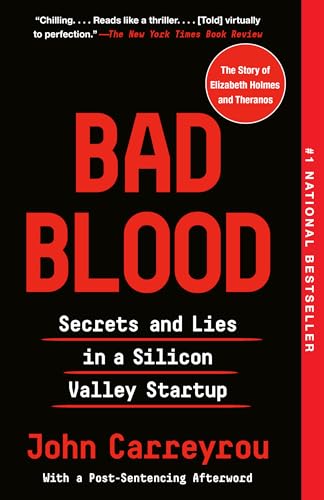 John Carreyrou Bad Blood: Secrets and Lies in a Silicon Valley Startup Investigative reporting on the rise and fall of Theranos and the dangers of unverified health techCHECK TODAY'S PRICE
 - 12
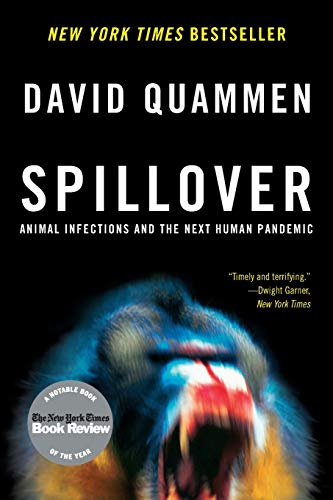 David Quammen Spillover: Animal Infections and the Next Human Pandemic A prescient investigation into zoonotic disease ecology, viral spillover, and pandemic originsCHECK TODAY'S PRICE
 - 13
 Richard Preston The Hot Zone: The Origins of the Ebola Virus A gripping, factual narrative recounting the emergence of the Ebola virus and containment effortsCHECK TODAY'S PRICE
 - 14
 Siddhartha Mukherjee The Song of the Cell Exploring cellular biology, cytology, immunotherapy, and the microscopic building blocks of medicineCHECK TODAY'S PRICE
 - 15
 Abraham Verghese Cutting for Stone: A Novel A sweeping medical fiction masterpiece following twin brothers, surgery, and human dedicationCHECK TODAY'S PRICE
 - 16
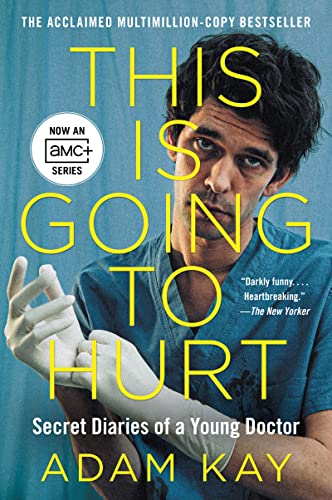 Adam Kay This Is Going to Hurt: Secret Diaries of a Junior Doctor Hilarious and heartbreaking diary entries exposing the real-world burnout and strain of hospital medicineCHECK TODAY'S PRICE
 - 17
 Atul Gawande The Checklist Manifesto: How to Get Things Right Proving that simple checklists dramatically reduce preventable medical errors in high-stakes systemsCHECK TODAY'S PRICE
 - 18
 James Nestor Breath: The New Science of a Lost Art Exploring the pulmonology, health impact, and evolutionary history of human breathing patternsCHECK TODAY'S PRICE
 - 19
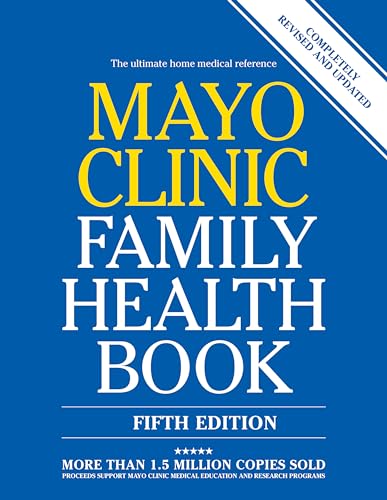 Mayo Clinic Mayo Clinic Family Health Book A comprehensive, trusted household medical reference covering prevention, symptoms, and careCHECK TODAY'S PRICE
 - 20
 American Psychiatric Association Diagnostic and Statistical Manual of Mental Disorders (DSM-5-TR) The standardized psychiatric diagnostic criteria and classification system used worldwideCHECK TODAY'S PRICE
What Makes a Medical Book Accessible to Curious Readers?
The best books for medically curious readers explain complex mechanisms through clear examples, lived experience, and responsible storytelling without pretending that complicated medical questions always have simple answers.
Some books use a physician’s personal experience to show the uncertainty behind clinical practice. Others use investigative journalism, patient stories, or history to explain why a disease, treatment, or ethical question matters. Atul Gawande, Siddhartha Mukherjee, and Oliver Sacks each take a different route, but all show that medicine is not merely a collection of facts; it is a changing human practice built around evidence, judgment, and care.
- Look for books that preserve scientific accuracy while explaining complex ideas clearly
- Choose memoirs for the emotional reality of clinical work and history for broader context
- Treat every medical book as educational material, not a tool for self-diagnosis
The 20 Best Medical Books for Curious Readers
These books cover the human body, disease, clinical uncertainty, medical ethics, and the history of healthcare through a mix of narrative nonfiction, memoir, science writing, and trusted reference material.
1. The Emperor of All Maladies: A Biography of Cancer — Siddhartha Mukherjee
The Emperor of All Maladies by oncologist Siddhartha Mukherjee traces cancer’s long history through laboratory discoveries, treatment failures, patient experiences, and the gradual development of chemotherapy and targeted therapies.
Mukherjee makes oncology readable without making it simplistic. Cancer appears here not as one illness but as a constantly evolving group of diseases shaped by genetics, cells, treatment history, and human persistence.
- Explores cancer across five thousand years of medical history
- Blends patient narrative with rigorous scientific explanation
- Won the Pulitzer Prize for nonfiction
2. When Breath Becomes Air — Paul Kalanithi
When Breath Becomes Air by neurosurgeon Paul Kalanithi reflects on meaning, identity, mortality, and medicine after he becomes a terminal cancer patient in the middle of his own medical career.
The book’s power comes from its rare dual perspective. Kalanithi writes as both a physician and a patient, making the familiar medical language of prognosis and treatment feel newly human.
- Written by a neurosurgeon confronting terminal illness
- Explores the changing relationship between doctor and patient
- Examines meaning when life becomes finite
3. Being Mortal: Medicine and What Matters in the End — Atul Gawande
Being Mortal by surgeon Atul Gawande asks whether modern medicine has become too focused on extending life at any cost while overlooking what patients value most about quality of life.
Gawande combines clinical cases with his own family experience to argue for honest conversations about independence, risk, serious illness, and end-of-life care. It is difficult reading. It is also deeply useful.
- Explores medicine’s approach to aging and dying
- Centers patient priorities instead of treatment escalation alone
- Encourages honest conversations about life at the end
4. The Immortal Life of Henrietta Lacks — Rebecca Skloot
The Immortal Life of Henrietta Lacks by Rebecca Skloot investigates the HeLa cell line, derived from Henrietta Lacks’s cancer cells without her consent in 1951 and later used throughout global medical research.
Skloot connects scientific breakthroughs to ethics, consent, race, and family history. The result is a powerful reminder that research can create genuine progress while still failing individual people.
- Explains the global importance of HeLa cells
- Raises enduring questions about consent and compensation
- Combines investigative reporting with medical ethics
5. Gray’s Anatomy for Students — Richard L. Drake, A. Wayne Vogl, and Adam W. M. Mitchell
Gray’s Anatomy for Students is a richly illustrated reference built for learners who want a clinically relevant map of the body’s structures rather than the more intimidating density of an advanced anatomy atlas.
It is not casual bedtime reading. Still, motivated readers will find its diagrams and clinical explanations invaluable for moving from broad curiosity toward real anatomical literacy.
- Offers an illustrated guide to human anatomy
- Emphasizes clinical relevance throughout
- Best for motivated readers seeking detailed reference material
6. The Body: A Guide for Occupants — Bill Bryson
The Body by Bill Bryson tours the human body system by system, explaining organs, immunity, microbes, sleep, pain, and physiology with clear language and genuine enthusiasm.
Bryson turns complex biology into a story of improbable survival. He does not replace a formal medical textbook, but he makes human physiology feel understandable and astonishing.
- Explains physiology in accessible prose
- Covers the immune system, organs, and body systems
- Ideal first book for readers without science training
7. Complications: A Surgeon’s Notes on an Imperfect Science — Atul Gawande
Complications by Atul Gawande confronts the uncertainty, fallibility, and judgment calls behind real clinical practice, showing why medicine remains an imperfect science even in highly trained hands.
The essays are striking because they avoid the fantasy of medical omniscience. Gawande presents diagnosis and surgery as forms of reasoned uncertainty, not flawless technical execution.
- Examines uncertainty inherent in clinical practice
- Offers honest reflection on surgical judgment
- Shows medicine as an evolving science
8. Do No Harm: Stories of Life, Death, and Brain Surgery — Henry Marsh
Do No Harm by neurosurgeon Henry Marsh recounts decades of brain surgery with unusual candor about fear, error, pride, failure, and the irreversible consequences of high-stakes operations.
Marsh’s stories are sometimes uncomfortable. They should be. His honesty makes the emotional burden of neurosurgical practice tangible without romanticizing doctors as heroes beyond ordinary human limitation.
- Recounts decades of brain surgery
- Documents the emotional toll of clinical work
- Avoids romanticizing surgical heroism
9. The Man Who Mistook His Wife for a Hat — Oliver Sacks
The Man Who Mistook His Wife for a Hat by neurologist Oliver Sacks presents unforgettable cases involving perception, memory, movement, identity, and neurological difference.
Sacks’s great strength is compassion. His patients are never reduced to medical curiosities; they remain people whose unusual conditions illuminate the extraordinary fragility of human consciousness.
- Presents rare neurological conditions with compassion
- Blends neuroscience with literary storytelling
- Treats patients as people rather than clinical cases
10. How Doctors Think — Jerome Groopman
How Doctors Think by physician Jerome Groopman explores the cognitive shortcuts and assumptions that can guide, and sometimes derail, medical diagnosis.
Groopman gives readers a practical window into clinical decision-making, explaining why a clear patient history and well-timed questions can genuinely improve communication with healthcare professionals.
- Examines diagnostic bias and cognitive shortcuts
- Helps patients ask better medical questions
- Useful for curious readers and clinicians alike
11. Bad Blood: Secrets and Lies in a Silicon Valley Startup — John Carreyrou
Bad Blood by investigative journalist John Carreyrou documents the rise and collapse of Theranos, whose false blood-testing claims endangered patients and deceived investors.
The story demonstrates why impressive branding and celebrity support should never substitute for transparent validation of medical technology claims.
- Documents the collapse of Theranos
- Shows how unverified claims can endanger patients
- Encourages healthy skepticism about health technology
12. Spillover: Animal Infections and the Next Human Pandemic — David Quammen
Spillover by science writer David Quammen investigates zoonotic infections that move from animals to humans, explaining the ecological and biological conditions behind pandemic risk.
Published before COVID-19, it became newly relevant afterward. Quammen shows that pandemics are not unpredictable surprises so much as foreseeable outcomes of human-animal contact and global systems.
- Explains zoonotic disease transmission
- Connects ecology to pandemic risk
- Provides context for the COVID-19 era
13. The Hot Zone: The Terrifying True Story of the Origins of the Ebola Virus — Richard Preston
The Hot Zone by journalist Richard Preston recounts the emergence of Ebola and the efforts to contain outbreaks using the pacing of a thriller while remaining rooted in factual events.
It is vivid and occasionally disturbing. Readers interested in virology, outbreak response, and biosafety will find it difficult to put down.
- Recounts the history of Ebola virus outbreaks
- Uses vivid scientific storytelling
- Best for readers comfortable with intense medical detail
14. The Song of the Cell: An Exploration of Medicine and the New Human — Siddhartha Mukherjee
The Song of the Cell by Siddhartha Mukherjee explains how cellular biology transformed modern medicine, from the understanding of cancer to gene therapy and immune treatment.
Mukherjee connects laboratory science to lived experience, showing how tiny cellular mechanisms eventually become real changes in patient care.
- Explores the history of cellular biology
- Connects lab discovery to patient care
- Covers cancer treatment and gene therapy
15. Cutting for Stone: A Novel — Abraham Verghese
Cutting for Stone by physician Abraham Verghese is a sweeping novel about twin brothers, surgery, family, betrayal, and medicine across Ethiopia and the United States.
Verghese’s clinical knowledge gives the story a rare medical authenticity without turning it into a textbook, making it ideal for readers who prefer fiction.
- Blends family saga with medical detail
- Written by a physician with real clinical experience
- Offers a rich fictional medical narrative
16. This Is Going to Hurt: Secret Diaries of a Junior Doctor — Adam Kay
This Is Going to Hurt by former physician Adam Kay chronicles life as a junior doctor through diary entries that balance dark humor with the genuine exhaustion of modern healthcare work.
Kay’s account exposes punishing schedules and emotional strain without losing its sense of comedy, making medical burnout visible to readers outside the profession.
- Uses candid, humorous diary entries
- Documents junior doctor burnout
- Shows the systemic strain behind modern healthcare
17. The Checklist Manifesto: How to Get Things Right — Atul Gawande
The Checklist Manifesto by surgeon Atul Gawande argues that simple checklists reduce preventable error in surgery, aviation, and other high-stakes systems.
Its central lesson is humbling: expertise does not eliminate the need for safeguards. In fact, complex work often makes simple safety systems more necessary.
- Explains how checklists reduce surgical error
- Draws on aviation safety practices
- Inspired global surgical safety standards
18. Breath: The New Science of a Lost Art — James Nestor
Breath by journalist James Nestor explores breathing patterns, pulmonology, sleep, and historical breathing practices through accessible scientific reporting.
The book gives a fresh perspective on an ordinary process most people never examine. It is a compelling entry into respiratory health, though readers should distinguish its educational content from individualized medical advice.
- Explores breathing patterns and respiratory science
- Combines pulmonology with historical practice
- Offers an accessible entry into body awareness
19. Mayo Clinic Family Health Book — Mayo Clinic
The Mayo Clinic Family Health Book provides a broad household reference from the Mayo Clinic, covering symptoms, common conditions, prevention, and treatment discussions across the lifespan.
It works best as a reliable resource for context, not as a substitute for an appointment. Its value lies in helping readers frame more informed questions for a healthcare provider.
- Covers common conditions across the lifespan
- Offers a trusted home medical reference
- Supports informed questions for clinical appointments
20. Diagnostic and Statistical Manual of Mental Disorders, Fifth Edition, Text Revision (DSM-5-TR) — American Psychiatric Association
The DSM-5-TR, published by the American Psychiatric Association, provides standardized diagnostic criteria used by clinicians to identify and classify mental health conditions.
It is useful for readers curious about formal psychiatric classification. It is not a self-diagnosis tool, and its criteria require professional context, history, and clinical judgment.
- Provides standardized diagnostic criteria
- Published by the American Psychiatric Association
- Explains classification without replacing professional evaluation
Why Do Physician Memoirs Offer a Unique Window Into Medicine?
Physician memoirs reveal the uncertainty, moral strain, and emotional reality behind medicine in a way textbooks rarely can, showing that clinical practice is lived by imperfect people making difficult decisions.
Paul Kalanithi writes from the extraordinary position of being both treating physician and dying patient, while Henry Marsh documents the anxiety and failure that accompany brain surgery. These books matter because popular culture often turns doctors into heroes with perfect judgment, when real medicine is full of incomplete information, hard trade-offs, and human vulnerability.
Reading more than one memoir reveals a pattern. The physicians who openly acknowledge uncertainty often inspire more trust than those who project flawless confidence, because uncertainty is not a defect in medicine; it is part of its reality.
- Memoirs reveal the emotional weight of clinical work
- Honesty about uncertainty can build real trust
- Medical decisions often involve incomplete information
How Have Medical History Books Changed Our Understanding of Disease?
Medical history books show how slowly and unevenly treatment advances, revealing that current therapies emerged from long periods of failed experiments, ethical disputes, and unexpected scientific breakthroughs.
Siddhartha Mukherjee’s cancer history shows how recent chemotherapy and targeted therapy really are relative to humanity’s long struggle with cancer. David Quammen’s Spillover describes zoonotic transmission before COVID-19 made the subject familiar worldwide, while Richard Preston’s Ebola narrative demonstrates how outbreak science can become urgent public reality.
These books help readers develop realistic expectations. Medical progress is neither hopelessly stagnant nor magically instantaneous; it is a difficult, nonlinear process shaped by evidence, funding, institutions, and human persistence.
- History reveals how recently many effective treatments emerged
- Spillover explains the mechanisms behind zoonotic outbreaks
- Progress involves setbacks alongside real breakthroughs
How Do Doctors Actually Reason Through a Diagnosis?
Doctors use pattern recognition, probability, patient history, physical examination, and testing to develop a diagnosis; they do not usually receive immediate certainty from a single symptom or scan.
Jerome Groopman shows how cognitive shortcuts can produce both efficiency and error. Atul Gawande adds the surgeon’s perspective, explaining why medicine remains an evolving practice even when clinicians possess deep expertise. These books are particularly useful for readers who want to understand why a doctor may ask seemingly unrelated questions before reaching a conclusion.
Gawande’s checklist research provides an important counterpoint. High skill does not remove error risk, which is why structured safety systems can protect patients even in expert settings.
- Diagnosis involves probability, not perfect certainty
- Cognitive shortcuts can guide or distort clinical reasoning
- Checklists reduce preventable mistakes in high-stakes care
What Ethical Questions Do These Books Raise About Medical Research?
Medical progress has often included ethical failures, and the most important medical books do not hide the harm done in the name of scientific advancement.
Rebecca Skloot’s account of Henrietta Lacks shows how cells collected without consent became central to global research, raising enduring questions about informed consent, race, ownership, and compensation. John Carreyrou’s Bad Blood tells a more recent story of patients endangered by fabricated technology claims and institutional failures to challenge them early.
Both books make the same larger point. Scientific institutions deserve respect, but not blind trust. Ethical scrutiny is not an obstacle to medical progress; it is part of what makes progress legitimate.
- Henrietta Lacks’s story centers informed consent and race
- Theranos shows how hype can harm real patients
- Ethical scrutiny strengthens legitimate research
Which Books Explain How the Body Actually Works?
For readers curious about anatomy and physiology, the best path is usually to begin with an accessible overview and then move gradually toward more detailed reference material.
Bill Bryson’s The Body offers the most approachable entry point. Gray’s Anatomy for Students provides a richer anatomical map for readers ready for clinical detail, while Siddhartha Mukherjee’s The Song of the Cell explains how cellular science has changed cancer therapy, immunology, and gene-based treatment.
These books complement each other. Bryson builds broad curiosity, Gray’s adds structural detail, and Mukherjee explains how the microscopic world of cells shapes modern patient care.
- The Body is ideal for physiology beginners
- Gray’s provides detailed anatomy for motivated readers
- Cell biology explains modern cancer and gene therapy
Common Misconceptions About Medicine These Books Correct
Medical books for curious readers are valuable partly because they correct popular myths about certainty, progress, authority, and the limits of clinical knowledge.
Doctors do not always know the answer immediately, even when they are highly trained. Medical progress does not move in a smooth upward line. Institutions are not automatically trustworthy merely because they are scientific or prestigious. Books by Groopman, Mukherjee, Skloot, and Carreyrou all demonstrate that good medicine requires continual questioning, evidence review, and willingness to acknowledge uncertainty.
This does not mean medicine is untrustworthy. It means that genuine trust is built through transparency, evidence, and accountability rather than through the illusion of certainty.
- Diagnostic confidence is not the same as diagnostic certainty
- Medical progress includes failed treatments and dead ends
- Institutions require evidence-based accountability
Should Curious Readers Also Own Medical Reference Books?
Narrative books explain medicine through story, but reference books have a different purpose: helping readers look up a condition, symptom, or diagnosis with better context than a typical search result provides.
The Mayo Clinic Family Health Book offers broad, non-technical medical information across the lifespan. The DSM-5-TR offers a more specialized window into formal psychiatric classification. Both are useful for learning, but neither is a substitute for professional evaluation or individualized medical advice.
Use reference books selectively. They work best when a specific question arises, not as continuous narrative reading or a method of self-diagnosis.
- Reference books support contextual medical learning
- Mayo Clinic covers common family health questions
- DSM criteria require professional interpretation
How Can You Build a Sustainable Medical Reading Habit?
Medical literacy develops gradually through varied reading, not by attempting to replace years of formal training with a single dense textbook or a weekend of online research.
Start with accessible narrative titles such as The Body or Complications. Mix memoir, history, science writing, and investigative journalism so that technical material remains connected to real human stakes. This variety builds more durable curiosity than reading only one genre of medical writing.
Keep expectations realistic. If a book about disease or diagnosis creates genuine anxiety about your own symptoms, pause and speak to a healthcare provider rather than continuing to search for certainty through reading alone.
- Start with accessible narrative titles before dense reference material
- Mix memoir, history, and investigative journalism
- Consult a professional if reading triggers persistent health anxiety
FAQs about Medical Books Recommended for the Curious
What is the best medical book for a complete beginner with no science background?
Bill Bryson’s The Body works well for genuine beginners, since it translates complex human physiology into accessible, conversational prose without assuming any prior scientific training. Atul Gawande’s Complications also serves as a strong entry point, offering short essays on medical uncertainty that do not require deep background knowledge to follow. Denser reference material like Gray’s Anatomy for Students should generally wait until after reading a few accessible narrative titles first, since attempting technical reference material too early often produces frustration rather than genuine understanding.
Are physician memoirs reliable, or do they exaggerate for dramatic effect?
Most well-regarded physician memoirs, including those by Paul Kalanithi, Henry Marsh, and Atul Gawande, are written by practicing clinicians with direct firsthand experience, lending genuine credibility to their accounts. That said, memoir inherently involves selective storytelling and personal interpretation, so readers should treat these books as honest personal perspective rather than comprehensive medical fact. Cross-referencing memoir accounts with more research-based titles, like those focused on medical history or clinical research, provides a more complete and balanced picture of how modern medicine actually functions.
Can reading medical books actually help me communicate better with my own doctor?
Yes, particularly books like How Doctors Think, which explains the specific cognitive reasoning behind diagnosis and offers concrete questions patients can ask to clarify uncertain situations. Understanding basic anatomy and physiology from books like The Body also helps patients follow medical explanations more easily during actual appointments. That said, these books supplement rather than replace genuine medical consultation, and readers should always defer to their own healthcare provider’s specific guidance rather than self-diagnosing based on general reading.
Is it worth reading about medical history if I am mainly interested in current treatments?
Understanding medical history genuinely helps calibrate realistic expectations about current treatment, since books like The Emperor of All Maladies reveal how recently, and how nonlinearly, many now-standard treatments actually developed. Recognizing that current medicine still involves considerable uncertainty and ongoing research, rather than settled, complete knowledge, helps readers approach new treatment claims with appropriate skepticism rather than either blind faith or unwarranted dismissal. History also provides useful context for understanding why certain medical practices persist despite known limitations.
Should I be concerned about reading books involving disease outbreaks or medical scandals?
Books like The Hot Zone or Spillover cover genuinely alarming subject matter, hemorrhagic fever viruses and pandemic risk respectively, but they are written to inform rather than needlessly frighten readers. Most readers find these books more fascinating than distressing, since understanding the actual mechanisms behind disease transmission tends to reduce anxiety rather than increase it. That said, if you know you tend toward health anxiety or hypochondria, pacing your reading and avoiding these more intense titles during particularly stressful periods is a reasonable precaution.
What is the difference between reading these books and just researching symptoms online?
Books written by credentialed physicians and researchers, like those on this list, generally offer more accurate, contextualized information than typical internet symptom searches, which often lack the nuance and clinical judgment genuine medical training provides. Online symptom research frequently produces unnecessary alarm, since search algorithms tend to surface worst-case scenarios rather than statistically likely explanations. Books also provide the broader context, historical, scientific, ethical, that helps readers understand why medicine works the way it does, rather than offering an isolated, decontextualized fact.
Bibliography
- American Psychiatric Association. (2022). Diagnostic and Statistical Manual of Mental Disorders, Fifth Edition, Text Revision (DSM-5-TR).
- Bryson, B. (2021). The Body: A Guide for Occupants. Anchor.
- Carreyrou, J. (2018). Bad Blood: Secrets and Lies in a Silicon Valley Startup. Knopf.
- Drake, R. L., Vogl, A. W., and Mitchell, A. W. M. (2023). Gray’s Anatomy for Students (5th ed.). Elsevier.
- Gawande, A. (2002). Complications: A Surgeon’s Notes on an Imperfect Science. Metropolitan Books.
- Gawande, A. (2010). The Checklist Manifesto: How to Get Things Right. Metropolitan Books.
- Gawande, A. (2014). Being Mortal: Medicine and What Matters in the End. Metropolitan Books.
- Groopman, J. (2007). How Doctors Think. Houghton Mifflin.
- Kalanithi, P. (2016). When Breath Becomes Air. Random House.
- Kay, A. (2018). This Is Going to Hurt: Secret Diaries of a Junior Doctor. Picador.
- Marsh, H. (2015). Do No Harm: Stories of Life, Death, and Brain Surgery. Thomas Dunne Books.
- Mayo Clinic. (2018). Mayo Clinic Family Health Book (5th ed.). Mayo Clinic Press.
- Mukherjee, S. (2011). The Emperor of All Maladies: A Biography of Cancer. Scribner.
- Mukherjee, S. (2022). The Song of the Cell: An Exploration of Medicine and the New Human. Scribner.
- Nestor, J. (2020). Breath: The New Science of a Lost Art. Riverhead Books.
- Preston, R. (1995). The Hot Zone: The Terrifying True Story of the Origins of the Ebola Virus. Anchor.
- Quammen, D. (2013). Spillover: Animal Infections and the Next Human Pandemic. W. W. Norton & Company.
- Sacks, O. (1998). The Man Who Mistook His Wife for a Hat: And Other Clinical Tales. Touchstone.
- Skloot, R. (2011). The Immortal Life of Henrietta Lacks. Crown.
- Verghese, A. (2010). Cutting for Stone: A Novel. Vintage.
Use this citation format to reference the article clearly and help readers find the original source.
PsychologyFor. (2026). 20 Medical Books Recommended for the Curious. PsychologyFor. https://psychologyfor.com/20-medical-books-recommended-for-the-curious/