


The nervous system is, by almost any measure, the most complex structure in the known universe. Three pounds of electrochemical tissue orchestrate every thought you’ve ever had, every memory you’ve ever formed, every movement you’ve ever made — and when something goes wrong within it, the consequences can be as subtle as a fleeting tremor or as profound as a complete transformation of personality. Neurology is the branch of medicine devoted to understanding, diagnosing, and treating disorders of this system, and the books written about it span an extraordinary range — from lyrical accounts of clinical encounters to dense anatomical atlases used in hospital wards around the world.
Whether you’re a medical student bracing for your first neurology rotation, a pre-med undergraduate trying to build a solid foundation, a curious non-specialist who finished Oliver Sacks and wants to go deeper, or a healthcare professional looking to sharpen your clinical reasoning, the right book can be genuinely transformative. Neurology books are not all created equal, however. Some are built for board exam preparation; others reward slow, contemplative reading. Some use stunning illustrations to make neuroanatomy click; others rely on clinical storytelling to make abstract pathology feel real and human.
This list brings together 20 of the most valuable neurology books across three distinct categories: accessible reads for the curious and newly initiated, core academic texts for students and medical trainees, and advanced clinical references for residents and practitioners. Each entry includes what the book actually delivers, who it’s best suited for, and what makes it stand out in a crowded field. Think of this as a curated map through one of medicine’s most fascinating — and most demanding — disciplines.
For the Curious and the Newly Initiated: Neurology Books That Don’t Require a Medical Degree
Not every reader approaching neurology comes with a stethoscope or a set of anatomy flashcards. Some of the most rewarding neurology books ever written were crafted specifically for curious non-specialists — people who want to understand the brain and nervous system without needing to pass a board exam. These titles prioritize narrative, wonder, and accessibility without sacrificing intellectual depth.
1. The Man Who Mistook His Wife for a Hat — Oliver Sacks

No list of neurology books is complete without Oliver Sacks, and this is the title that introduced millions of general readers to the strange beauty of clinical neurology. Through a series of case studies — patients with visual agnosia, Tourette’s syndrome, amnesia, and other neurological conditions — Sacks illuminates what the failures of the nervous system reveal about its ordinary functioning. His writing is compassionate, curious, and deeply literary. The central insight of the book is that neurological disorders are not simply deficits — they are, in many cases, windows into the architecture of identity, perception, and consciousness. Required reading for anyone who wants to understand what neurology actually feels like from the inside.
2. An Anthropologist on Mars — Oliver Sacks

Sacks’s follow-up to his most famous work explores seven paradoxical neurological conditions, including cases of people who regain sight after decades of blindness, a colorblind painter who loses all perception of color, and an autistic savant with extraordinary abilities. An Anthropologist on Mars takes its title from a description given by Temple Grandin — herself one of the subjects — of how she experiences social interaction. Each case challenges the reader to question what counts as normal neurological function and what counts as disorder. It is a more nuanced, philosophically richer companion to The Man Who Mistook His Wife for a Hat.
3. The Brain That Changes Itself — Norman Doidge
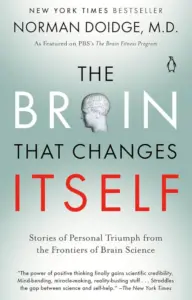
Before the word neuroplasticity entered common usage, Norman Doidge’s 2007 book was already making the concept accessible to general readers. The central thesis — that the brain is not a fixed, hardwired organ but a dynamic structure capable of profound reorganization throughout life — was genuinely revolutionary at the time of publication and remains deeply relevant. Doidge profiles scientists and patients whose work and experiences illustrate the brain’s capacity to compensate for injury, overcome learning disabilities, and rewire itself through targeted practice. A landmark popular neuroscience book that holds up remarkably well, particularly for readers interested in rehabilitation, learning, and recovery from neurological injury.
4. Livewired — David Eagleman

Neuroscientist David Eagleman argues in Livewired that the brain is not simply plastic — it is livewired, meaning it is in a constant state of dynamic competition and reorganization, shaped by every experience, every deprivation, every skill acquired or lost. Eagleman writes with infectious enthusiasm and ranges widely — covering sensory substitution, phantom limbs, dreaming, and the neuroscience of learning. His central metaphor, that the brain is less like a computer and more like a living city constantly demolishing and rebuilding its own infrastructure, is as illuminating as any formal definition. An ideal second or third neuroscience book for curious readers who want more depth than a general introduction provides.
5. Behave: The Biology of Humans at Our Best and Worst — Robert Sapolsky

Robert Sapolsky’s magnum opus is not a neurology book in the traditional clinical sense, but it is one of the most comprehensive and brilliantly written examinations of the biological underpinnings of human behavior ever published. Working backward from the moment a behavior occurs — through seconds, minutes, days, years, and evolutionary millennia — Sapolsky integrates neuroscience, endocrinology, genetics, and evolutionary biology into a unified account of why humans do what they do. The chapters on the frontal cortex, the limbic system, and the neurobiology of aggression, empathy, and tribalism are particularly illuminating. Dense but deeply rewarding, this is a book that genuinely expands the reader’s understanding of what the nervous system is for.
Neurology Books for Medical Students: Building the Academic Foundation
Medical students approaching neurology for the first time face a steep learning curve. Neuroanatomy is notoriously difficult to visualize; the clinical presentations of neurological disease are complex and often subtle; and the volume of material required for examinations is substantial. The books in this section have earned their reputations by making that learning process more efficient, more enjoyable, or more clinically relevant — ideally all three.
6. Clinical Neuroanatomy Made Ridiculously Simple — Stephen Goldberg

The title is not false advertising. Goldberg’s slim, cartoon-illustrated guide strips neuroanatomy down to its most clinically essential elements and presents them through memorable diagrams and mnemonics. It will not make you an expert in neuroanatomy — it was never designed to — but it will give you a working mental map of the nervous system that makes clinical case presentations suddenly comprehensible. One of the most recommended first texts for medical students beginning their neurology studies, and genuinely usable in a single concentrated weekend of reading.
7. Neuroanatomy Through Clinical Cases — Hal Blumenfeld

Blumenfeld’s textbook takes the opposite approach from Goldberg — it is comprehensive, detailed, and richly illustrated — but it earns its weight by organizing all neuroanatomical content around real clinical cases. Each chapter introduces anatomy through patient presentations, making the material clinically relevant from the very first page. The full-color neuroimaging integrated throughout is particularly valuable for students learning to interpret MRI and CT findings. This is the text that many medical schools now use as their primary neuroanatomy resource, and for good reason. Considered the gold standard for clinically contextualised neuroanatomy education.
8. Duus’ Topical Diagnosis in Neurology — Mathias Baehr and Michael Frotscher

Topical diagnosis — the ability to localize a neurological lesion based on clinical signs and symptoms — is the core cognitive skill of neurology. Duus’ text is organized precisely around this skill, guiding the reader through the anatomy of neurological pathways and showing how dysfunction at specific locations produces specific clinical findings. The illustrations are exceptional, and the logical structure of the book mirrors the thought process a neurologist uses when approaching a new patient. For students who want to think like a neurologist rather than simply memorize facts, this book provides the essential framework.
9. Blueprints Neurology — Frank W. Drislane and Juan Acosta

Part of the widely trusted Blueprints clinical series, this concise volume is designed specifically for the demands of clinical rotations and Step examinations. It covers the breadth of clinical neurology in a format that is organized, scannable, and exam-focused without feeling hollow. Its case-based learning approach grounds every topic in clinical application, which helps students connect classroom knowledge to ward presentations. For students with limited time and a high-stakes exam approaching, Blueprints Neurology is one of the most efficient resources available.
10. High-Yield Neuroanatomy — James Fix

Designed explicitly for Step 1 preparation, High-Yield Neuroanatomy distills the most examination-relevant neuroanatomical content into a compact, well-organized package. The high-yield format prioritizes the concepts most likely to appear on licensing examinations, making it an excellent companion to more comprehensive texts rather than a standalone resource. Students consistently report that reading this alongside a larger neuroanatomy text reinforces retention and helps them identify which material deserves the deepest attention. Concise, focused, and reliably useful.
11. Neurology PreTest Self-Assessment and Review — David J. Anschel

Active recall is one of the most evidence-supported strategies for long-term retention, and Neurology PreTest is built entirely around it. The book presents hundreds of clinical vignettes and multiple-choice questions that challenge students to apply their knowledge to realistic patient scenarios — the same format used in USMLE Step examinations. Crucially, it provides detailed explanations for both correct and incorrect answers, turning each question into a learning opportunity rather than a simple test. An essential self-assessment tool for any medical student preparing for neurology shelf examinations or Step 2 CK.
12. Pocket Neurology — M. Brandon Westover

The Pocket series from Lippincott Williams & Wilkins is a medical staple, and the neurology edition lives up to the reputation. Small enough to carry in a white coat pocket, Pocket Neurology covers the full range of neurological topics — examinations, diagnoses, and treatments — in a quick-reference format designed for the clinical environment. Updated editions include expanded coverage of neurology subspecialties and neuroimaging. Students and junior residents consistently cite it as their most-used bedside reference. It is not a book to read cover to cover, but one to reach for constantly throughout clinical training.
13. Neuroscience: Exploring the Brain — Bear, Connors, and Paradiso
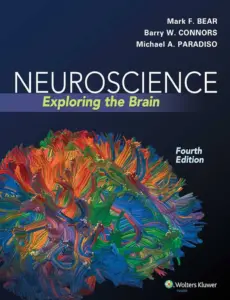
For students who want a rigorous academic foundation in neuroscience before diving into clinical neurology, Neuroscience: Exploring the Brain is the most widely used and widely praised undergraduate and early graduate-level textbook in the field. It covers cellular and molecular neuroscience, systems neuroscience, and behavioral neuroscience with consistent clarity and excellent visual support. The writing is more engaging than most textbooks at this level, and the authors are careful to connect basic science to clinical relevance throughout. A comprehensive first textbook for anyone pursuing neuroscience or medicine seriously.
Advanced Neurology Textbooks for Residents and Practitioners
The books in this section are built for a different kind of reader — one who already has a working knowledge of neuroanatomy and clinical medicine and needs resources that can function as authoritative references, deepen subspecialty expertise, or support the complex clinical reasoning demanded at the resident and attending level.
14. Adams and Victor’s Principles of Neurology — Ropper, Samuels, Klein, and Prasad

Long regarded as the definitive comprehensive neurology textbook, Adams and Victor’s Principles of Neurology has guided generations of neurologists through the full breadth of clinical neurology. It covers the anatomy, physiology, and pathology of neurological disease with a thoroughness and clarity that few texts match. The current edition is richly illustrated in full color and includes the most recent advances in neuroimaging, genetics, and treatment. Whether used as a clinical reference or as sustained reading, this is the text that belongs on every serious neurology resident’s shelf. Universally considered the gold standard of comprehensive neurology education.
15. Merritt’s Textbook of Neurology — Rowland and Pedley

A classic alternative to Adams and Victor, Merritt’s Textbook has its own devoted following among clinical neurologists. It is generally considered more readable and slightly less dense than Adams and Victor, making it a preferred primary text for many residents who want breadth without sacrificing accessibility. The coverage of vascular neurology and movement disorders is particularly praised. For residents choosing between these two comprehensive texts, the most practical answer is often to own one and use the other in the library — both reward deep engagement and neither can fully replace the other.
16. Localization in Clinical Neurology — Brazis, Masdeu, and Biller

If neuroanatomy is the grammar of neurology, then localization is the skill of forming coherent sentences from it. Localization in Clinical Neurology by Brazis, Masdeu, and Biller is considered the definitive text on this core clinical skill — the systematic reasoning process by which a neurologist identifies where in the nervous system a lesion must be located based on a patient’s symptoms and signs. This is not a book for reading passively; it rewards active, case-based engagement. Neurology residents consistently describe it as one of the texts that most fundamentally changed how they think at the bedside.
17. Plum and Posner’s Diagnosis and Treatment of Stupor and Coma — Posner, Saper, and Schiff

Disorders of consciousness represent some of the most urgent and diagnostically complex situations a neurologist encounters. Plum and Posner, as it is universally known, is the definitive reference on this topic — covering the neuroanatomy of arousal and consciousness, the clinical assessment of comatose patients, and the differential diagnosis of altered states of consciousness with extraordinary rigor. A genuine classic that every neurology resident should engage with, even if only through the foundational first few chapters that outline the conceptual framework for understanding consciousness and its disorders.
18. Principles of Neural Science — Kandel, Schwartz, Jessell, Siegelbaum, and Hudspeth

Known simply as “Kandel” throughout neuroscience departments worldwide, Principles of Neural Science is the most comprehensive and authoritative neuroscience textbook in existence. At over 1,700 pages in its most recent edition, it spans cellular and molecular neuroscience, sensory and motor systems, higher brain function, and the neurobiology of disease. It is dense and demands serious commitment, but for residents and researchers who want the deepest possible foundation in the science underlying clinical neurology, nothing else comes close. Consider a digital edition for practical usability — the physical book is, famously, almost too large to comfortably read.
19. Electromyography and Neuromuscular Disorders — David Preston and Barbara Shapiro

Neuromuscular disease is a complex neurology subspecialty requiring its own dedicated literature, and Preston and Shapiro’s text is the standard reference. It covers the principles and practice of electrodiagnostic medicine — nerve conduction studies and electromyography — with exceptional clarity, supported by detailed anatomical drawings and practical guidance on interpreting electrodiagnostic findings. Essential reading for neurology residents rotating through EMG labs, and a valued reference for practicing neurologists and physiatrists who perform or interpret electrodiagnostic studies regularly.
20. Principles and Practice of Movement Disorders — Fahn, Jankovic, and Hallett

Movement disorders — Parkinson’s disease, essential tremor, dystonia, Huntington’s disease, and related conditions — constitute one of the richest and most rapidly evolving areas of clinical neurology. Fahn, Jankovic, and Hallett’s text is the subspecialty reference of choice, covering clinical phenomenology, pathophysiology, and treatment with a depth that reflects the authors’ combined decades of expertise at the world’s leading movement disorders centers. The accompanying video content, which demonstrates clinical presentations of various movement disorders, is a particularly powerful teaching tool in a subspecialty where visual recognition is central to diagnosis.
How to Build a Neurology Reading List That Works for You
Twenty books is, admittedly, a substantial list — and no one should feel obligated to read them all, or to read them in any particular order. The most effective approach is to match your reading to your current stage of training and your most pressing needs.
| Reader Type | Best Starting Points |
|---|---|
| Curious non-specialist | Sacks, Doidge, Eagleman, Sapolsky |
| Pre-clinical medical student | Goldberg, Bear/Connors/Paradiso, Fix |
| Clinical-year medical student | Blumenfeld, Blueprints, PreTest, Pocket Neurology |
| Neurology resident (early) | Adams and Victor, Brazis Localization, Duus |
| Neurology resident (advanced) | Kandel, Plum and Posner, Preston EMG, Fahn Movement Disorders |
A note on depth versus breadth: early in your neurology education, breadth matters more. You need a working mental model of the whole system before the details of any single disorder become meaningful. As you advance, depth becomes the priority — and subspecialty texts like Fahn or Preston allow you to develop genuine expertise in the areas most relevant to your practice. The journey through neurology literature mirrors the journey through the specialty itself: start with the architecture, then explore the rooms.
FAQs About Neurology Books for Students and the Curious
What is the best neurology book for an absolute beginner?
For someone coming to the subject with no medical background at all, Oliver Sacks’s The Man Who Mistook His Wife for a Hat remains the most universally recommended starting point. It requires no prior knowledge of medicine or neuroscience, yet it delivers profound insight into how the nervous system works by showing what happens when it doesn’t. Sacks writes with the narrative skill of a novelist and the clinical precision of the practicing neurologist he was — a combination that makes even the most complex neurological concepts feel vivid and graspable. After Sacks, Norman Doidge’s The Brain That Changes Itself is a natural next step, introducing the concept of neuroplasticity in a format that is equally accessible and equally illuminating.
Which neurology textbook do most medical schools use?
There is no single universal standard, as neurology curricula vary significantly across medical schools and countries. However, Neuroanatomy Through Clinical Cases by Hal Blumenfeld is widely used in North American medical schools for its clinically integrated approach to neuroanatomy. For broader clinical neurology, Adams and Victor’s Principles of Neurology is the most frequently cited comprehensive reference at the resident level, while Blueprints Neurology and Pocket Neurology are popular student-facing resources during clinical rotations. Many programs also use Neuroscience: Exploring the Brain by Bear, Connors, and Paradiso for foundational basic science neuroscience in pre-clinical years. The best strategy is to confirm your program’s recommended reading list and supplement it with the titles here that match your learning style.
Is it possible to learn neurology from books without formal medical training?
It depends entirely on what you mean by “learn neurology.” If the goal is to develop a rich, conceptually grounded understanding of how the nervous system works, what can go wrong with it, and how clinicians think about it — then yes, books like those by Sacks, Doidge, Eagleman, and Sapolsky can take you remarkably far. If the goal is to develop the clinical skills needed to actually diagnose and treat neurological disease — taking a history, performing a neurological examination, interpreting imaging and electrodiagnostic studies — then books alone are insufficient, and supervised clinical training is essential. The popular science and narrative neurology titles on this list are genuinely educational; the clinical textbooks are tools designed to support hands-on clinical practice, not replace it.
What is the difference between neurology and neuroscience books?
Neuroscience is the broad scientific study of the nervous system — encompassing cellular and molecular biology, systems neuroscience, cognitive neuroscience, and behavioral neuroscience. It is primarily a research discipline. Neurology is the clinical medical specialty devoted to diagnosing and treating diseases of the nervous system. Books in neuroscience (like Kandel’s Principles of Neural Science or Bear’s Neuroscience: Exploring the Brain) focus on the biology of how the nervous system works. Books in clinical neurology (like Adams and Victor or Blueprints) focus on disease, diagnosis, and treatment. Many of the most rewarding books — Sacks, van der Kolk, Doidge — draw from both traditions, which is part of what makes them so illuminating for general readers. For most beginners, starting with books that bridge both worlds is more engaging than starting with either pure domain alone.
How long does it take to read a comprehensive neurology textbook like Adams and Victor?
Adams and Victor’s Principles of Neurology runs to well over 1,500 pages in its current edition. Most neurology residents read it over the course of their three-year residency program, working through sections systematically alongside relevant clinical cases and rotations. Reading it cover to cover in a compressed period is not the typical or recommended approach — the book is more valuable as a companion to clinical experience than as a standalone reading project. Many programs suggest completing either Adams and Victor or Merritt’s Textbook by the end of residency, with the understanding that deep engagement with specific sections will come as clinical exposure to relevant patient presentations creates the context that makes the reading meaningful.
Are there any neurology books specifically focused on neuroimaging for students?
Yes — while not covered as standalone titles in this list, neuroimaging is addressed within several of the books here. Blumenfeld’s Neuroanatomy Through Clinical Cases integrates CT and MRI imaging throughout its clinical case presentations, making it one of the best resources for students beginning to interpret neuroimaging. Pocket Neurology also includes updated neuroimaging chapters. For students and residents who want dedicated neuroimaging instruction, additional specialist texts on neuroradiology exist, but for most medical students and early residents, the imaging content within comprehensive neurology textbooks like Adams and Victor provides a solid functional foundation. Neuroimaging interpretation deepens most rapidly through supervised clinical exposure — reading scans alongside experienced radiologists and neurologists remains irreplaceable.
Do neurology books address mental health and psychiatric conditions as well?
The boundary between neurology and psychiatry is more porous than it once was, and many modern neurology texts acknowledge this overlap explicitly. Conditions like epilepsy, traumatic brain injury, and neurodegenerative diseases have significant psychiatric dimensions, and books like Adams and Victor address the psychiatric manifestations of neurological disease in dedicated sections. For readers specifically interested in the intersection of brain disease and mental health, the works of Oliver Sacks — particularly An Anthropologist on Mars — navigate this territory beautifully. Bessel van der Kolk’s The Body Keeps the Score, while not a neurology text per se, draws heavily on neurological research to explain trauma’s effects on the brain and is widely read by both neurologists and mental health practitioners. This is a rich and rapidly evolving space in both fields.
By citing this article, you acknowledge the original source and allow readers to access the full content.
PsychologyFor. (2026). 20 Neurology Books for Students and the Curious. https://psychologyfor.com/20-neurology-books-for-students-and-the-curious/