


See more of our articles in your search results.
There’s something deeply unsettling about realizing how much of your behavior isn’t actually yours—how your thoughts, choices, and actions are shaped by invisible social forces you never consciously notice. You think you’re making independent decisions, but social psychology reveals a different story: you conform to group pressure even when the group is obviously wrong, you obey authority figures even when they ask you to do terrible things, you judge people based on split-second impressions that have nothing to do with who they really are, and you construct elaborate rationalizations for decisions your unconscious mind already made. Social psychology is the scientific study of how other people—their presence, their expectations, their judgments—shape everything about you, often in ways that would shock you if you fully understood the mechanisms at play.
What makes social psychology so compelling is that it doesn’t just describe abstract theories—it reveals uncomfortable truths about human nature through experiments you can’t forget. Stanley Milgram’s obedience studies where ordinary people administered what they believed were lethal electric shocks because an authority figure told them to. Solomon Asch’s conformity experiments where people denied the evidence of their own eyes to fit in with a group giving obviously wrong answers. Philip Zimbardo’s Stanford Prison Experiment where normal college students transformed into sadistic guards and broken prisoners within days. These aren’t just academic curiosities—they’re windows into the social forces that enable everything from workplace bullying to genocide, from advertising manipulation to political propaganda. Understanding social psychology means understanding why good people do bad things, why smart people believe nonsense, and why you’re far more influenced by social context than you’d ever want to admit.
The books in this list represent the best of social psychology—some written by the researchers who conducted groundbreaking experiments, others by science writers who make complex research accessible and compelling, still others offering deep dives into specific phenomena like persuasion, conformity, prejudice, or group behavior. Whether you’re a psychology student looking for essential readings, a professional who needs to understand human behavior, or simply someone curious about why people do what they do, these 21 books will fundamentally change how you see yourself and others. They’ll make you more aware of the social forces shaping your life, more skeptical of your own certainty, and hopefully more compassionate about human fallibility—including your own. Let’s dive into the essential social psychology books everyone should read.
Top 21 Social Psychology Books
Verified Top Picks- 1
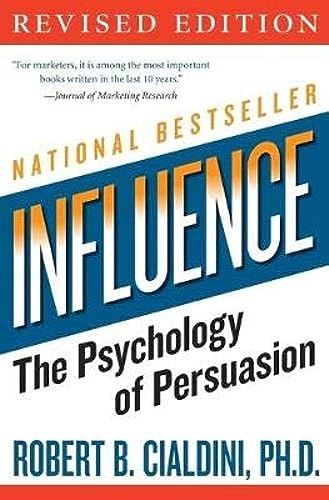 Robert Cialdini Influence: The Psychology of Persuasion The classic science of why people say yesCHECK TODAY'S PRICE
 - 2
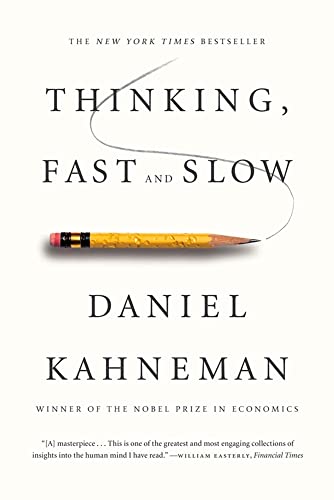 Daniel Kahneman Thinking, Fast and Slow Nobel-winning insight into how you decideCHECK TODAY'S PRICE
 - 3
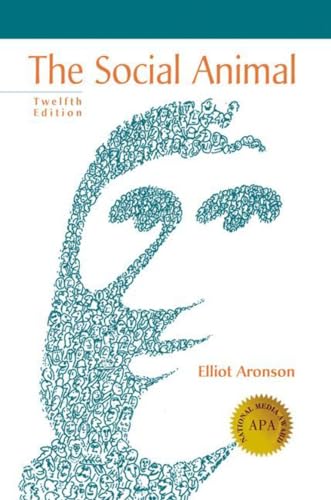 Elliot Aronson The Social Animal A landmark introduction to social psychologyCHECK TODAY'S PRICE
 - 4
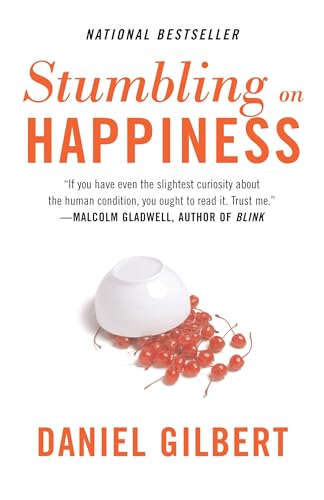 Daniel Gilbert Stumbling on Happiness Why we're so bad at predicting what makes us happyCHECK TODAY'S PRICE
 - 5
 Philip Zimbardo The Lucifer Effect How situations turn good people evilCHECK TODAY'S PRICE
 - 6
 Dan Ariely Predictably Irrational The hidden forces that shape our decisionsCHECK TODAY'S PRICE
 - 7
 Stanley Milgram Obedience to Authority The classic experiments on why we obeyCHECK TODAY'S PRICE
 - 8
 Tavris & Aronson Mistakes Were Made (But Not by Me) Why self-justification distorts our memoryCHECK TODAY'S PRICE
 - 9
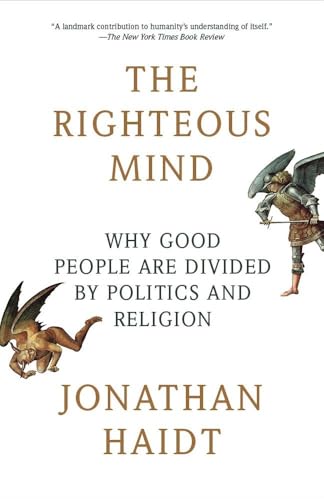 Jonathan Haidt The Righteous Mind Why good people are divided by politics and religionCHECK TODAY'S PRICE
 - 10
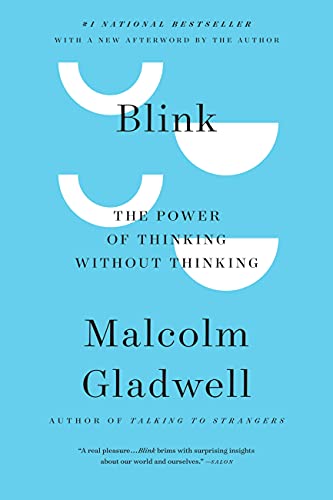 Malcolm Gladwell Blink The power of thinking without thinkingCHECK TODAY'S PRICE
 - 11
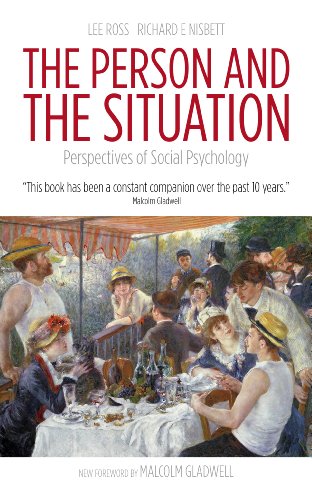 Ross & Nisbett The Person and the Situation The foundational text on situational influenceCHECK TODAY'S PRICE
 - 12
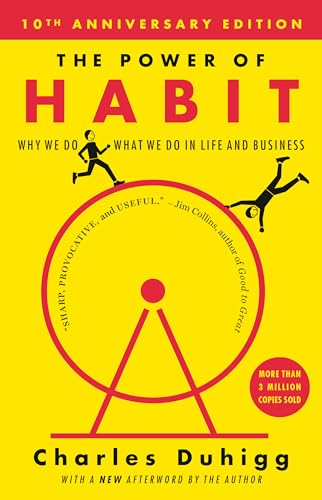 Charles Duhigg The Power of Habit Why we do what we do and how to change itCHECK TODAY'S PRICE
 - 13
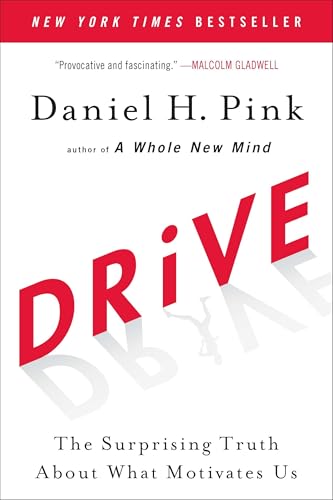 Daniel Pink Drive The surprising truth about what motivates usCHECK TODAY'S PRICE
 - 14
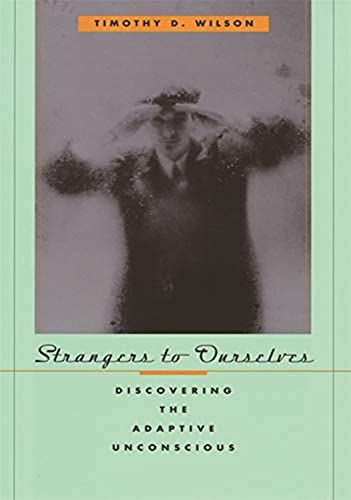 Timothy Wilson Strangers to Ourselves The hidden power of the adaptive unconsciousCHECK TODAY'S PRICE
 - 15
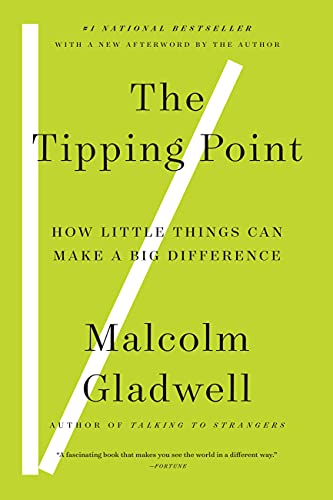 Malcolm Gladwell The Tipping Point How little things make a big differenceCHECK TODAY'S PRICE
 - 16
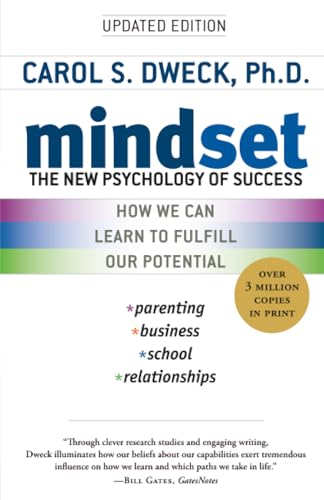 Carol S. Dweck Mindset How belief in growth shapes achievementCHECK TODAY'S PRICE
 - 17
 Leonard Mlodinow Subliminal How your unconscious mind rules your behaviorCHECK TODAY'S PRICE
 - 18
 Timothy Wilson Redirect The surprising new science of psychological changeCHECK TODAY'S PRICE
 - 19
 Jonathan Haidt The Happiness Hypothesis Ancient wisdom tested by modern scienceCHECK TODAY'S PRICE
 - 20
 Mercier & Sperber The Enigma of Reason Why humans reason to persuade, not to be rightCHECK TODAY'S PRICE
 - 21
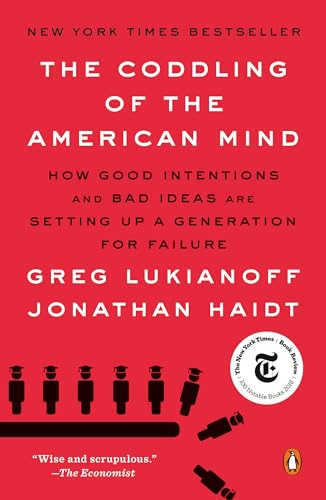 Lukianoff & Haidt The Coddling of the American Mind How good intentions are setting up a generation for failureCHECK TODAY'S PRICE
1. Influence: The Psychology of Persuasion by Robert Cialdini
If you read only one book on this entire list, make it this one. Robert Cialdini’s “Influence” is the definitive work on persuasion and compliance, distilling decades of research into six fundamental principles that explain why people say yes: reciprocity, commitment and consistency, social proof, authority, liking, and scarcity. Cialdini spent years going undercover in sales organizations, advertising agencies, and fundraising operations to see these principles in action, and the result is a book that’s both scientifically rigorous and immediately practical. You’ll never look at a “limited time offer” the same way again after understanding scarcity, never fall for the foot-in-the-door technique after learning about commitment and consistency, and never blindly trust an expert after understanding how authority works.
What makes “Influence” brilliant is that Cialdini doesn’t just explain these principles academically—he shows you exactly how salespeople, marketers, con artists, and even friends use them to get you to comply with requests you’d otherwise refuse. The book arms you with knowledge to recognize when you’re being manipulated, but it also reveals an uncomfortable truth: these principles work because they’re hardwired into human psychology as useful shortcuts that usually serve us well but can be exploited. This isn’t just theory—it’s a practical manual for both recognizing manipulation and understanding the deep psychological principles that make us all susceptible to influence. First published in 1984 and updated multiple times, “Influence” remains as relevant as ever in an age of social media, targeted advertising, and increasingly sophisticated persuasion tactics. It’s accessible to general readers while being respected by academics, making it the perfect introduction to social psychology’s practical applications.
2. Thinking, Fast and Slow by Daniel Kahneman

Nobel Prize winner Daniel Kahneman’s masterwork synthesizes decades of research on judgment, decision-making, and the systematic errors that plague human thinking. The book introduces the now-famous distinction between System 1 (fast, automatic, intuitive thinking) and System 2 (slow, deliberate, analytical thinking), showing how our reliance on quick intuitive judgments leads to predictable biases and errors. Kahneman and his longtime collaborator Amos Tversky (who died before the book was written) revolutionized our understanding of human rationality—or rather, our lack of it. We’re not the rational agents economics assumes we are; we’re deeply flawed thinkers who make systematic mistakes in predictable patterns.
The book covers cognitive biases you’ve probably heard of—anchoring, availability heuristic, confirmation bias—but explains the deep psychological mechanisms behind them through elegant experiments and real-world examples. You’ll learn why you’re overconfident in your predictions, why you see patterns in randomness, why you weight losses more heavily than equivalent gains, and why expert predictions are often no better than chance despite people paying for them. Reading this book is a humbling experience that makes you distrust your own intuitions and question confident judgments, which is uncomfortable but necessary for clearer thinking. It’s dense and challenging in places—Kahneman doesn’t dumb anything down—but the payoff is a fundamentally transformed understanding of how your mind actually works versus how you think it works. Essential reading for anyone who makes decisions or tries to understand human behavior, which is pretty much everyone.
3. The Social Animal by Elliot Aronson
Elliot Aronson’s “The Social Animal” is the classic textbook introduction to social psychology, but calling it a textbook doesn’t capture how readable and engaging it is. First published in 1972 and revised many times since, this book covers the entire field of social psychology—conformity, persuasion, prejudice, aggression, attraction, group dynamics—with clarity, humor, and compelling examples from research and everyday life. Aronson doesn’t just describe experiments; he puts you in them, making you feel the pressure to conform in Asch’s line study or the dissonance in Festinger’s classic experiments. He also isn’t afraid to discuss the ethical controversies and limitations of famous studies, giving you a realistic rather than sanitized view of the field.
What distinguishes “The Social Animal” from other social psychology textbooks is Aronson’s gift for explanation and his willingness to address controversial topics head-on. He discusses racism, violence, propaganda, and other uncomfortable subjects with intellectual honesty and moral clarity without being preachy. The book achieves something rare—it’s comprehensive enough to serve as a legitimate textbook while being engaging enough that you’d read it for pleasure. Later editions include updates on modern research including social media’s psychological effects, but the core insights about human social behavior remain remarkably consistent across decades. If you want a single book that covers the breadth of social psychology accessibly while maintaining scientific rigor, this is it. Students have been assigned this book for decades and many report that it genuinely changed how they see human behavior, which is high praise for any academic text.
4. Stumbling on Happiness by Daniel Gilbert
Harvard psychologist Daniel Gilbert tackles a deceptively simple question: why are we so bad at predicting what will make us happy? His answer, backed by fascinating research, is that our brains systematically mislead us about future feelings through imagination errors, presentism (assuming we’ll feel in the future how we feel now), and rationalization (our psychological immune system that makes us less miserable than we predict). We think the promotion will make us permanently happier, the breakup will devastate us forever, or winning the lottery will transform our lives, but we’re consistently wrong because we’re terrible at affective forecasting—predicting our emotional states.
Gilbert writes with infectious enthusiasm and humor, making complex research accessible through entertaining examples and thought experiments. He explains why we don’t learn from these mistakes—why we keep thinking the next achievement or purchase will finally bring lasting happiness despite all evidence that we adapt to changes and return to baseline. The book’s insights are simultaneously liberating (you’re more resilient than you think, and failures won’t destroy you) and sobering (the things you’re working so hard to achieve probably won’t make you as happy as you imagine). Gilbert’s fundamental point is that the best predictor of how you’d feel in a situation is asking people in that situation how they feel, not imagining yourself into it, but we resist this obvious solution because we’re convinced we’re unique. Witty, insightful, and backed by solid science, this book will change how you think about happiness, decision-making, and why you want what you want. It’s social psychology focused specifically on emotion and prediction, and it’s one of the most enjoyable psychology books you’ll read.
5. The Lucifer Effect by Philip Zimbardo
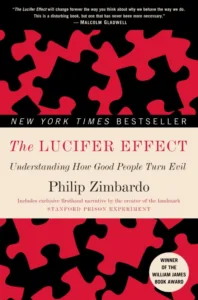
Philip Zimbardo’s “The Lucifer Effect” provides the definitive account of the Stanford Prison Experiment—the infamous 1971 study where college students assigned to play guards and prisoners in a mock prison developed such disturbing behaviors that the two-week experiment was terminated after just six days. But the book goes far beyond just describing the experiment; Zimbardo uses it as a lens for understanding how good people turn evil, analyzing everything from military abuses at Abu Ghraib to corporate fraud to genocide. His central thesis is situationist: while we prefer to explain evil through bad apples (dispositional explanations about individual character), most evil comes from bad barrels (situational forces that corrupt ordinary people).
Zimbardo draws on the prison experiment, Milgram’s obedience studies, and historical atrocities to show how ordinary people commit extraordinary evil when situational forces—authority, deindividuation, diffusion of responsibility, group pressure—overcome individual morality. The book is disturbing but important, forcing you to confront the reality that you’re probably not the hero you imagine you’d be in morally challenging situations. Most people think they’d be the guard who refused to abuse prisoners or the German who hid Jews, but statistically, most people conform, obey, and rationalize. The uncomfortable truth Zimbardo reveals is that evil isn’t primarily about bad people but about situations that bring out the worst in normal people. The book has been criticized for overstating situational factors while downplaying individual agency and for ethical problems with the prison experiment itself, but it remains essential reading for understanding how context shapes behavior in ways we desperately don’t want to acknowledge. Heavy but crucial for anyone interested in morality, authority, and human nature.
6. Predictably Irrational by Dan Ariely

Behavioral economist Dan Ariely takes you on an entertaining tour through the systematic irrationalities that govern human decision-making. Unlike traditional economics which assumes people are rational actors making logical choices to maximize utility, Ariely shows through clever experiments that we’re predictably irrational—we make the same mistakes in consistent patterns. We value things more highly when they’re free, we’re influenced by irrelevant anchors when making numerical judgments, we procrastinate despite knowing we shouldn’t, we cheat but only a little to preserve our self-image as honest people, and we make wildly different decisions based on arbitrary defaults and how choices are framed.
Ariely’s gift is designing experiments that reveal these irrationalities in ways that are both scientifically rigorous and genuinely fun to read about. He tests whether expensive placebos work better than cheap ones (they do), whether knowing about conflicts of interest eliminates their effect (it doesn’t), and whether people behave differently when aroused versus calm (dramatically so, in ways with serious implications for decision-making). The book’s central insight is that our irrationalities aren’t random but systematic, which means they’re predictable and potentially manageable if we design better choice architectures. “Predictably Irrational” is lighter and more playful than Kahneman’s “Thinking, Fast and Slow,” making it more accessible though less comprehensive. It’s perfect for anyone interested in behavioral economics, decision-making, or understanding why people (including yourself) do apparently foolish things. The research applies directly to marketing, policy, personal finance, and anywhere humans make choices—which is everywhere. Engaging, insightful, and backed by solid experimental evidence.
7. Obedience to Authority by Stanley Milgram
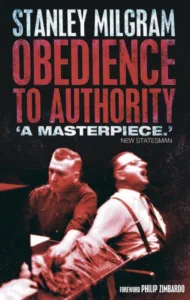
Stanley Milgram’s own account of his notorious obedience experiments is essential reading for understanding one of psychology’s most disturbing findings: ordinary people will obey authority figures even when ordered to harm innocent others. In Milgram’s experiments, participants believed they were administering increasingly severe electric shocks to another person (actually a confederate who wasn’t really being shocked) simply because a researcher in a lab coat told them to continue. Despite hearing screams and pleas for mercy, despite the supposed victim falling silent (suggesting unconsciousness or death), about 65% of participants delivered what they believed were lethal 450-volt shocks because they were following orders.
Milgram’s book goes beyond the basic findings you might know from introductory psychology courses, exploring the many variations he tested: obedience dropped when the authority figure wasn’t present, when the victim was closer, when other confederates refused to continue, or when the setting was less prestigious than Yale University. He analyzes the psychological mechanisms involved—the agentic state where people see themselves as instruments carrying out another’s wishes rather than autonomous actors responsible for their own behavior. The implications are profound and uncomfortable: the Holocaust happened not primarily because Germans were uniquely evil but because ordinary people obey authority, especially when responsibility is diffused and when institutional settings legitimize harmful actions. Milgram’s work suggests that most of us, under the right circumstances, would do terrible things simply because someone in authority told us to. The experiments themselves are controversial—were they ethical? Did they cause lasting psychological harm to participants?—and Milgram addresses these criticisms directly. This is primary source material from one of psychology’s most important researchers about findings that fundamentally changed how we understand obedience, authority, and moral responsibility. Difficult reading but absolutely essential.
8. Mistakes Were Made (But Not by Me) by Carol Tavris and Elliot Aronson
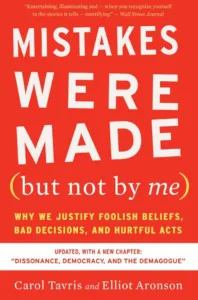
Carol Tavris and Elliot Aronson’s brilliant book explains why people can’t admit mistakes, even when evidence clearly shows they’re wrong. The answer lies in cognitive dissonance—the uncomfortable tension we feel when holding contradictory beliefs or when our actions conflict with our self-concept. Rather than admitting we were wrong (which would create dissonance), we engage in elaborate self-justification, blaming others, denying evidence, and constructing narratives where we’re always the good guy. This happens not just with trivial matters but with catastrophic errors: false convictions that send innocent people to prison, medical mistakes that kill patients, marital conflicts that destroy relationships, and political decisions that lead to war.
What makes this book so powerful is the authors show how self-justification creates a pyramid of choices where small initial rationalizations lead to increasingly extreme positions as we justify each previous justification. A prosecutor who cuts corners to secure a conviction can’t later admit it might have been the wrong person because that would mean acknowledging ethical violations, so instead they double down, fighting DNA evidence and maintaining innocence even when confronting irrefutable proof. The book is filled with vivid examples from law, medicine, politics, and personal relationships showing how smart, well-meaning people become trapped in self-justification. The uncomfortable truth is that we’re all doing this constantly in smaller ways, creating narratives where our actions are always justified and mistakes are always someone else’s fault. The authors offer some hope—ways to create cultures where admitting mistakes is safer, strategies for recognizing your own self-justification—but they’re realistic about how deeply embedded these biases are. This is essential reading for understanding why people (including you) are so resistant to changing their minds even when facing contradictory evidence. It explains political polarization, relationship problems, professional errors, and pretty much any situation where people should admit fault but somehow never do.
9. The Righteous Mind by Jonathan Haidt
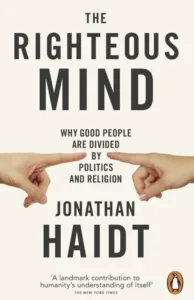
Jonathan Haidt tackles the question of why good people are divided by politics and religion, using moral psychology to explain the deep disagreements that make people on different sides seem not just wrong but incomprehensible to each other. His central metaphor is that our moral judgment is like a rider on an elephant—the rider (conscious reasoning) thinks it’s in control, but the elephant (intuitive emotional judgment) actually determines where you go, with the rider’s job being to construct post-hoc justifications for whatever the elephant already decided. This explains why moral arguments rarely change anyone’s mind: people don’t reason their way to moral positions and then defend them; they have intuitive reactions and then construct seemingly logical arguments to justify those reactions.
Haidt proposes that moral psychology isn’t based on a single dimension (care versus harm, as many assume) but involves at least six fundamental foundations: care/harm, fairness/cheating, loyalty/betrayal, authority/subversion, sanctity/degradation, and liberty/oppression. Liberals and conservatives don’t just disagree on values—they weight these foundations differently, with liberals emphasizing care and fairness while conservatives value all six more equally. This explains why they talk past each other: conservatives invoking loyalty or sanctity make no sense to liberals who don’t weight those foundations heavily, while liberals’ exclusive focus on care and fairness seems naive to conservatives who see other moral dimensions being violated. Understanding moral foundations theory doesn’t make you agree with the other side, but it helps you understand why they’re not just evil or stupid—they’re responding to different moral intuitions. Haidt writes accessibly with fascinating examples from history, anthropology, and contemporary politics. The book has been criticized for false equivalence and for minimizing important policy differences, but it offers valuable insights into moral psychology and political division. Essential reading for understanding why we disagree so intensely on moral and political questions and why rational argument rarely changes anyone’s moral positions.
10. Blink by Malcolm Gladwell
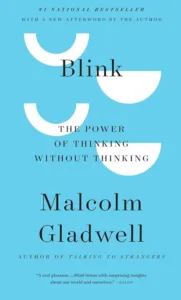
Malcolm Gladwell’s “Blink” explores the power and pitfalls of rapid cognition—the split-second judgments and decisions we make in the blink of an eye. Gladwell argues that these snap judgments, made by what he calls the “adaptive unconscious,” can be remarkably accurate and insightful, sometimes superior to carefully reasoned analysis. An art expert immediately recognizes a forgery that fools extensive scientific testing. A marriage researcher predicts divorce with shocking accuracy after watching couples interact for just minutes. A war game commander defeats a vastly superior force through intuitive decisions made too quickly for conscious analysis. These examples suggest that experience and expertise create unconscious pattern recognition that yields instant, accurate judgments.
But Gladwell also shows the dark side of rapid cognition: unconscious biases that lead to discriminatory hiring, racial profiling, and split-second decisions to shoot unarmed people perceived as threatening due to racial stereotypes. Our snap judgments are only as good as the patterns we’ve learned, and if those patterns include cultural biases and stereotypes, our intuitions will be biased too. The book’s weakness is that Gladwell doesn’t always carefully distinguish when to trust rapid cognition versus when to override it with careful analysis—sometimes he seems to celebrate intuition, other times he warns against it, without clear guidance about which applies when. Despite this ambiguity, “Blink” offers fascinating insights into unconscious processing and the power of thin-slicing—making complex judgments from small amounts of information. It’s extremely readable and engaging, full of surprising stories and counterintuitive findings. While some psychologists criticize Gladwell for oversimplifying research and cherry-picking studies, “Blink” serves as an accessible introduction to concepts like priming, unconscious bias, and adaptive unconscious that might otherwise remain in academic journals. It’s not the deepest treatment of these topics, but it’s one of the most enjoyable to read and will make you think differently about snap judgments and first impressions.
11. The Person and the Situation by Lee Ross and Richard Nisbett
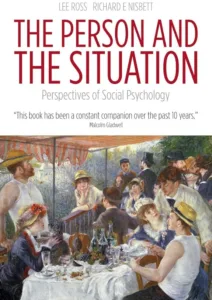
This is the definitive academic treatment of social psychology’s fundamental insight: behavior is powerfully shaped by situational factors that people systematically underestimate while overestimating the role of personality and disposition. Lee Ross and Richard Nisbett, two giants of social psychology, make the case that our intuitions about human behavior are deeply wrong. We commit the fundamental attribution error constantly, explaining others’ behavior through their character (he’s late because he’s inconsiderate, she failed because she’s not smart) while minimizing situational factors (terrible traffic, biased test). Meanwhile, we explain our own behavior through situations (I was late because of traffic) while others attribute it to our character (he’s inconsiderate).
Ross and Nisbett show through classic studies—Milgram’s obedience research, the Stanford Prison Experiment, studies on bystander intervention, and many others—that situations matter far more than personality for predicting behavior. The same person will behave dramatically differently in different contexts, yet we persist in thinking behavior reveals stable character traits. This has profound implications: personality psychology’s limited predictive power, the difficulty of predicting individual behavior across situations, and our tendency to blame individuals for outcomes largely determined by circumstances. The book is more academic and dense than most on this list, written for serious students of psychology rather than casual readers, but it’s the authoritative treatment of situationism. If you want deep understanding of person-situation debates, fundamental attribution error, and why social psychology’s findings often contradict common sense, this is essential reading. It won’t be your beach read, but it will fundamentally change how you explain human behavior and whether you attribute outcomes to character or circumstances.
12. The Power of Habit by Charles Duhigg

Charles Duhigg’s bestselling book explores the science of habit formation and change, showing how habits—automatic behaviors performed without conscious thought—shape approximately 40% of our daily actions. Drawing on neuroscience and psychology research, Duhigg explains the habit loop: cue (trigger that initiates the behavior), routine (the behavior itself), and reward (the payoff that makes your brain remember the loop). Understanding this structure is the key to changing habits—you can’t simply stop a bad habit through willpower, but you can replace the routine while keeping the same cue and reward, essentially hijacking the habit loop.
The book is structured around fascinating stories: how Procter & Gamble made Febreze successful by creating a habit around it, how Michael Phelps’s coach built championship habits, how Martin Luther King Jr. leveraged social habits to build the civil rights movement, and how companies use habit research to drive consumer behavior. Duhigg also explores organizational habits and how changing “keystone habits”—certain central habits that trigger changes in other behaviors—can transform entire companies or lives. The book is practical and actionable, offering a framework for identifying and changing personal habits while being grounded in solid research about how habits work neurologically. It’s not strictly social psychology—it draws heavily from neuroscience and organizational behavior—but it’s essential for understanding automatic behavior and how social contexts shape habit formation and change. Accessible, engaging, and immediately useful for anyone trying to build good habits or break bad ones. The science journalism is excellent, making complex research digestible without oversimplifying, and the examples from sports, business, and social movements show habits operating at multiple levels from individual to organizational to social.
13. Drive by Daniel Pink

Daniel Pink’s “Drive” challenges conventional wisdom about motivation, arguing that the traditional carrot-and-stick approach—rewarding desired behaviors and punishing undesired ones—actually undermines intrinsic motivation and reduces performance for complex, creative tasks. Drawing on decades of behavioral science research, Pink shows that extrinsic rewards work for simple, mechanical tasks but backfire for tasks requiring creativity, problem-solving, or conceptual thinking. When you pay people for creative work or offer bonuses for innovation, you actually get worse results because extrinsic rewards narrow focus, encourage shortcuts, and crowd out the intrinsic motivation that drives excellence.
Pink proposes that true motivation comes from three elements: autonomy (the desire to direct our own lives), mastery (the urge to get better at something meaningful), and purpose (the yearning to contribute to something larger than ourselves). Organizations that provide autonomy, support mastery through challenging work and feedback, and connect individual work to meaningful purpose get better results than those relying on bonuses and threats. The book has profound implications for management, education, parenting, and personal productivity, suggesting we need to rethink how we structure work and learning environments. Pink’s argument is backed by research but also controversial—economists and some psychologists argue he overstates the case against extrinsic motivation and that the research is more nuanced. Still, “Drive” offers a compelling alternative to purely behaviorist approaches to motivation and makes you reconsider whether the incentives you’re using actually work as intended. It’s highly readable, full of surprising research findings and practical examples, and challenges assumptions about human motivation that pervade workplaces, schools, and homes. Essential reading for managers, educators, parents, or anyone trying to motivate others or understand their own motivation.
14. Strangers to Ourselves by Timothy Wilson
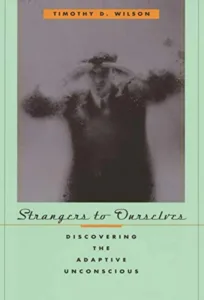
University of Virginia psychologist Timothy Wilson explores the adaptive unconscious—the mental processes that occur outside awareness but profoundly influence our feelings, judgments, and behavior. Unlike Freud’s unconscious filled with repressed wishes and childhood traumas, Wilson’s adaptive unconscious is a sophisticated system that quickly and efficiently processes vast amounts of information, recognizes patterns, learns from experience, and generates preferences and judgments without conscious deliberation. This unconscious system is so effective that it often produces better decisions than careful conscious analysis, particularly for complex choices with many factors to weigh.
But there’s a problem: we don’t have direct access to our adaptive unconscious. We can’t simply introspect to discover our true preferences, motivations, or the real reasons for our behavior. Instead, we construct plausible-sounding explanations that are often wrong—confabulations our conscious mind creates to explain unconscious processes it doesn’t understand. Wilson shows through clever experiments that people are often mistaken about why they like what they like, why they did what they did, and even what will make them happy. Overanalyzing decisions can actually reduce decision quality by forcing conscious reasoning to override better unconscious processing. The book challenges the assumption that self-knowledge comes from introspection and looking inward, suggesting instead that we often learn about ourselves better by observing our own behavior and getting feedback from others. It’s more academic than some popular psychology books but still accessible, offering fascinating insights into consciousness, self-knowledge, and the relationship between conscious and unconscious processing. Essential for anyone interested in self-awareness, decision-making, or the limits of introspection. Wilson’s work has profound implications for everything from therapy (insight isn’t always helpful) to decision-making (sometimes go with your gut rather than analyzing endlessly) to self-knowledge (you might not know yourself as well as you think).
15. The Tipping Point by Malcolm Gladwell

Malcolm Gladwell’s first book explores how small changes can have massive effects, causing ideas, products, messages, and behaviors to spread like epidemics. Gladwell identifies three key factors in social epidemics: the Law of the Few (a small number of highly connected, influential people spread most ideas), the Stickiness Factor (the content itself must be memorable and compelling), and the Power of Context (small environmental changes can produce major behavioral shifts). He illustrates these principles through fascinating case studies: how Hush Puppies shoes went from nearly extinct to wildly popular, how crime dropped dramatically in New York City through small changes, how books become bestsellers, and how ideas spread through networks.
Gladwell introduces memorable concepts like Connectors (people who know everyone), Mavens (information specialists who accumulate knowledge and share it), and Salesmen (persuaders who influence others). He shows how epidemics tip through the combined action of these special people, sticky messages, and receptive contexts. The book is enormously influential and readable but also controversial—critics argue Gladwell oversimplifies research, selectively presents evidence, and tells compelling stories that aren’t always supported by rigorous data. Some of his examples haven’t held up well under scrutiny, particularly his analysis of New York crime reduction which he attributes to small environmental changes when other factors like economic improvement and demographic shifts likely played larger roles. Despite these criticisms, “The Tipping Point” offers valuable insights into social contagion, network effects, and how ideas spread. It’s accessible and entertaining, introducing social psychology concepts to general audiences who might never read academic journals. The book launched Gladwell’s career as a popularizer of social science and introduced concepts like “tipping point” and “Maven” into common usage. Read it for its insights into social influence and idea diffusion, but supplement it with more rigorous sources if you want deep understanding of the underlying research.
16. Mindset by Carol Dweck

Stanford psychologist Carol Dweck’s research on mindsets reveals a deceptively simple but profound insight: whether you believe abilities are fixed or can be developed through effort fundamentally shapes your behavior and outcomes. People with a fixed mindset believe intelligence, talent, and abilities are innate and unchangeable—you’re either smart or you’re not, talented or you’re not. People with a growth mindset believe abilities can be developed through dedication and hard work. This distinction affects everything: how you respond to failure (fixed mindset: it proves I’m not smart, so why try; growth mindset: it’s feedback showing where to improve), whether you seek challenges (fixed mindset: avoid challenges that might reveal inadequacy; growth mindset: seek challenges that develop ability), and how you view effort (fixed mindset: needing effort proves lack of talent; growth mindset: effort is how you develop mastery).
Dweck shows how mindsets affect achievement in school, sports, business, and relationships. Students with growth mindsets learn more, persist through difficulty, and ultimately achieve better outcomes than equally talented students with fixed mindsets who avoid challenges to protect their self-image as “smart.” Athletes with growth mindsets respond to defeats by training harder; those with fixed mindsets blame circumstances or give up. The good news is that mindsets can be changed—Dweck provides strategies for developing growth mindset in yourself and others, particularly children. The book became hugely popular in education, with many schools implementing mindset training, though some implementations are superficial (just praising effort without actually improving instruction) and critics worry about oversimplification or blaming students for outcomes that reflect systemic inequalities. Still, the underlying research is solid: believing you can improve through effort does improve outcomes, while believing ability is fixed creates self-fulfilling prophecies where you don’t try and therefore don’t improve. Accessible and practical, this book offers insights applicable to parenting, teaching, managing, and personal development. Understanding mindsets helps explain why some people flourish while others with equal ability stagnate, and it provides actionable strategies for fostering growth in yourself and others.
17. Subliminal by Leonard Mlodinow

Physicist-turned-science-writer Leonard Mlodinow explores how the unconscious mind shapes our perceptions, judgments, and behavior in his engaging book “Subliminal.” Drawing on psychology, neuroscience, and behavioral economics research, Mlodinow shows that most mental processing occurs unconsciously, with consciousness being something like a CEO who thinks he’s running the company but is actually just receiving reports from lower-level processes that make most decisions. Our unconscious is constantly processing social cues, making snap judgments, generating preferences, and influencing behavior in ways we never recognize.
Mlodinow covers fascinating territory: how our perception is actively constructed rather than passively received, how memory is reconstructive and unreliable, how we’re unconsciously influenced by irrelevant factors like names and faces, and how social categorization happens automatically outside awareness. He explains research on priming (subtle environmental cues influencing behavior), implicit bias (automatic associations we’re unaware of holding), and the many ways our unconscious deceives us about reality while maintaining the illusion of accurate perception. The book is engagingly written with humor and clear explanations that make complex neuroscience and psychology accessible without dumbing it down. Mlodinow is particularly good at showing how these unconscious processes evolved to help us navigate complex social environments quickly but also lead us astray in modern contexts. Less rigorous than Kahneman’s “Thinking, Fast and Slow” but more accessible, “Subliminal” is perfect for readers wanting to understand unconscious processing without wading through dense academic material. It covers similar territory to Timothy Wilson’s “Strangers to Ourselves” but with more neuroscience and perhaps broader appeal to general readers. Essential for understanding the gap between the conscious experience of deliberate, rational choice and the unconscious reality of automatic processing that drives most behavior.
18. Redirect by Timothy Wilson

In “Redirect,” Timothy Wilson challenges many popular approaches to self-improvement and behavior change, showing through research that interventions that seem like they should work often don’t—and sometimes make things worse. Scared straight programs that expose at-risk youth to harsh prison realities to deter crime? They increase future offending. Critical incident debriefing after trauma to prevent PTSD? It doesn’t help and may harm. Abstinence-only sex education? Less effective than comprehensive sex education. D.A.R.E. programs that teach kids about drugs? No impact on drug use. Wilson shows that our intuitions about what interventions work are often wrong because we don’t understand the psychological mechanisms actually driving behavior.
Wilson proposes “story editing” as an alternative—helping people change the narratives they tell themselves about who they are and what their experiences mean. Small interventions that redirect people’s stories about themselves can have surprisingly large effects: brief exercises helping college students reframe academic struggles as normal temporary adjustments rather than evidence they don’t belong dramatically improve performance and reduce dropout rates. Redirecting people’s attributions about why they behave as they do can change subsequent behavior more effectively than direct persuasion or threats. The key insight is that lasting behavior change often comes from changing self-narratives and interpretations rather than from dramatic interventions, information campaigns, or attempts to boost self-esteem. Wilson’s book is evidence-based and practical, offering proven strategies for behavior change in education, health, parenting, and personal development while exploding myths about what works. It’s less famous than Wilson’s “Strangers to Ourselves” but perhaps more immediately useful, providing actionable guidance grounded in rigorous research. Essential reading for anyone designing interventions, working in education or public health, parenting, or trying to change their own behavior through methods that actually work rather than methods that sound like they should work but don’t.
19. The Happiness Hypothesis by Jonathan Haidt
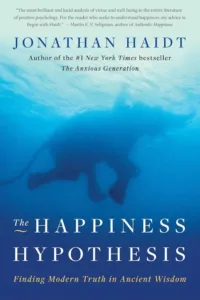
Before writing “The Righteous Mind” about moral psychology, Jonathan Haidt wrote “The Happiness Hypothesis,” exploring ancient wisdom about the good life through the lens of modern psychology research. Haidt examines ideas from Buddha, Confucius, Jesus, Stoic philosophers, and other wisdom traditions, asking whether ancient claims about happiness and virtue hold up under scientific scrutiny. The result is a book that respects both ancient insight and modern evidence, finding that traditional wisdom often got important things right about human psychology even without controlled experiments.
Haidt organizes the book around ten “great ideas” including the divided self (reason versus emotion), the importance of virtue, the power of reciprocity, the role of adversity in personal growth, and the conditions for happiness. He introduces the happiness formula H = S + C + V (happiness equals biological set point plus conditions of life plus voluntary activities), showing that while genetics and circumstances matter, voluntary actions can significantly influence wellbeing. Haidt is particularly insightful on adaptation—we adapt to most changes quickly, returning to baseline happiness—and on the types of things that do produce lasting happiness: strong relationships, meaningful work, virtue, and growth through challenges. The book avoids both naive positive thinking and cynical dismissal of happiness research, instead offering nuanced evidence-based insights into what actually contributes to human flourishing. It’s beautifully written, weaving together psychology, philosophy, and practical wisdom without being preachy or simplistic. Less technical than Gilbert’s “Stumbling on Happiness” but more philosophically grounded, Haidt’s book is perfect for readers interested in the science of wellbeing, the relationship between ancient wisdom and modern psychology, and evidence-based approaches to living better. Essential for anyone interested in positive psychology, virtue ethics, or the perennial questions about what makes life worth living and how to achieve it.
20. The Enigma of Reason by Hugo Mercier and Dan Sperber

Cognitive scientists Hugo Mercier and Dan Sperber propose a radical reinterpretation of human reasoning in “The Enigma of Reason.” They argue that reason didn’t evolve to help individuals find truth or make better decisions—it evolved to help us argue and persuade others in social contexts. This explains many otherwise puzzling features of human reasoning: why we’re so good at finding justifications for conclusions we’ve already reached but terrible at objectively evaluating evidence, why confirmation bias is so powerful (it helps us win arguments by finding supporting evidence), why motivated reasoning is ubiquitous (reason serves the goal of convincing others, not finding truth), and why reasoning alone often leads us astray while group deliberation can correct individual biases.
The argumentative theory of reason challenges the traditional view that reason exists to improve individual cognition and decision-making. Instead, Mercier and Sperber suggest reason is an adaptation for social interaction—for justifying ourselves to others and evaluating others’ justifications. This explains why we’re so much better at spotting flaws in others’ arguments than our own (we’re good at evaluating arguments directed at us) and why group reasoning often outperforms individual reasoning when groups are properly structured. The book is academic and challenging but offers profound insights into why humans are simultaneously brilliant reasoners and terrible critical thinkers, depending on whether reason is deployed in its evolved context (social argumentation) or in individual decision-making. It’s not light reading—this is serious cognitive science, not pop psychology—but it fundamentally reframes questions about human rationality and irrationality. Essential for anyone interested in reasoning, argumentation, decision-making, or why smart people believe foolish things. The argumentative theory explains political polarization, motivated reasoning, and why logical arguments rarely change minds: reason evolved for arguing, not truth-seeking, which means its design specifications prioritize persuasion over accuracy.
21. The Coddling of the American Mind by Greg Lukianoff and Jonathan Haidt

First Amendment lawyer Greg Lukianoff and psychologist Jonathan Haidt tackle a controversial question: why are young people, particularly on college campuses, increasingly reporting mental health problems, demanding protection from ideas they find offensive, and displaying fragility in the face of challenges? Their answer is that well-meaning parents, educators, and institutions have embraced three “Great Untruths” that contradict ancient wisdom and psychological research: the Untruth of Fragility (what doesn’t kill you makes you weaker), the Untruth of Emotional Reasoning (always trust your feelings), and the Untruth of Us Versus Them (life is a battle between good people and evil people). These untruths, implemented through overprotective parenting, safe spaces, trigger warnings, and cancel culture, create exactly the fragility and anxiety they’re meant to prevent.
Lukianoff and Haidt argue that humans need challenges and adversity to develop resilience (antifragility), that emotions aren’t always accurate guides to reality (cognitive behavioral therapy is based on questioning distorted emotional reasoning), and that the world isn’t neatly divided into good and evil people (most conflicts involve well-meaning people with different values or interests). By protecting young people from discomfort, offensive ideas, and failure, we prevent them from developing the psychological strength needed to handle an inevitably challenging world. The book is controversial and has been criticized by those who see it as dismissing legitimate concerns about discrimination, trauma, and harmful speech, but it offers important insights grounded in psychology about resilience, antifragility, and cognitive distortions. Whether you agree with all their conclusions or not, the book presents a thoughtful analysis backed by research about what builds versus undermines psychological strength. It’s particularly valuable for parents, educators, and anyone working with young people, offering evidence-based guidance about preparing youth for adulthood rather than shielding them from all difficulty. The book also analyzes broader social trends including political polarization, call-out culture, and the changing norms around speech and offense, connecting these to psychological principles about moral tribes, sacred values, and the need for intellectual diversity. Essential reading for understanding contemporary debates about safety, offense, resilience, and how we prepare young people for adult life.
FAQs About Social Psychology Books
Do I need a psychology background to understand these books?
No psychology background is needed for most books on this list—they’re specifically written for general readers rather than academics. Authors like Malcolm Gladwell, Daniel Gilbert, and Dan Ariely excel at explaining complex research through accessible prose, engaging examples, and minimal jargon. Books like “Influence,” “Thinking, Fast and Slow,” and “The Social Animal” introduce concepts from the ground up without assuming prior knowledge. The more academic books like “The Person and the Situation” or “The Enigma of Reason” do require more effort and some familiarity with psychological concepts helps, but even these are readable by motivated general readers willing to engage with more challenging material. If you’re completely new to psychology, starting with Gladwell’s books, Ariely’s “Predictably Irrational,” or Cialdini’s “Influence” provides accessible entry points that will give you conceptual foundations making other books easier. Don’t let lack of formal psychology training stop you—these books are designed to teach you the field accessibly, and you’ll learn the concepts by reading them. That said, having some basic understanding of research methods (what’s an experiment versus correlation, why randomized controlled trials matter) helps you evaluate claims critically, but most authors explain their evidence clearly enough that you can follow without statistical training.
Which book should I read first if I’m new to social psychology?
For absolute beginners, Robert Cialdini’s “Influence” is probably the best starting point—it’s engaging, practical, immediately relevant to everyday life, and introduces fundamental principles without being overwhelming. The six principles of influence provide a clear framework you can understand and apply immediately while giving you foundation concepts about reciprocity, social proof, authority, and consistency that appear throughout social psychology. Alternatively, Malcolm Gladwell’s “Blink” or “The Tipping Point” offer entertaining introductions to psychological concepts through compelling stories, though they’re less rigorous than Cialdini. Dan Ariely’s “Predictably Irrational” is another excellent entry point, especially if you’re interested in decision-making and behavioral economics. If you want comprehensive coverage, Elliot Aronson’s “The Social Animal” serves as an outstanding textbook-that-doesn’t-feel-like-a-textbook, covering the entire field systematically while remaining readable. After establishing foundations with one of these accessible books, you can move to deeper, more challenging works like Kahneman’s “Thinking, Fast and Slow” or Haidt’s “The Righteous Mind” that build on concepts you’ve already encountered. The key is starting with something engaging enough to hook your interest rather than diving into the densest academic treatment first. Social psychology reveals fascinating insights about human behavior, but if your first exposure is too dry or technical, you might give up before discovering how compelling the field really is.
Are these books based on real science or just pop psychology?
The quality and scientific rigor vary across this list, so this deserves a nuanced answer. Books written by actual researchers—Cialdini, Kahneman, Aronson, Haidt, Wilson, Milgram, Dweck—are based on solid published research, often their own groundbreaking studies. These represent genuine science, though presented accessibly for general readers. The authors explain their research methods, acknowledge limitations, and situate their work within broader scientific literature. Malcolm Gladwell’s books occupy a middle ground—he reports on real research from peer-reviewed journals, but critics argue he sometimes oversimplifies findings, cherry-picks studies supporting his narrative while ignoring contradictory evidence, and tells compelling stories that aren’t always supported by rigorous data. His books are entertaining and introduce important concepts, but shouldn’t be your only source on these topics. Dan Ariely and Dan Pink also report real research but sometimes extrapolate beyond what the data strictly supports. The key is reading critically: understand that popular psychology books necessarily simplify complex research, that entertaining anecdotes aren’t the same as systematic evidence, and that findings should be replicated before accepting them as settled science. For topics that particularly interest you, seek out multiple sources including more academic treatments to get fuller pictures. That said, even pop psychology based on real research offers value by making scientific findings accessible to broader audiences, sparking interest that might lead to deeper learning. Just maintain appropriate skepticism, recognize the difference between preliminary findings and established science, and understand that authors are presenting particular interpretations of research that other scientists might challenge.
Will reading these books actually change my behavior?
Reading about psychology and actually changing based on what you read are very different things. These books will definitely change how you understand behavior—you’ll recognize cognitive biases in yourself and others, understand social influence tactics, see how situations shape behavior, and grasp psychological mechanisms you were previously unaware of. Whether this understanding translates to behavior change depends on several factors: your motivation to change, whether you practice applying insights rather than just passively reading, whether you create systems and environments supporting different behavior, and which specific changes you’re attempting. Knowledge alone rarely changes deeply ingrained habits or automatic processes. Reading about confirmation bias doesn’t automatically make you less biased because bias operates mostly unconsciously. Reading about the power of situations doesn’t prevent you from making the fundamental attribution error because that error is automatic. However, psychological knowledge creates awareness that can interrupt automatic processes, giving you opportunity to respond differently if you’re paying attention and motivated to do so. Practical books like “The Power of Habit” or “Redirect” that provide specific strategies for behavior change combined with an understanding of underlying mechanisms are more likely to produce actual changes than purely explanatory books. The key is moving from passive reading to active application: noticing when principles apply in your life, experimenting with different approaches, creating implementation intentions (specific if-then plans), and building systems that make desired behaviors easier. Don’t expect transformation from reading alone, but these books provide tools that, if actively applied, can definitely influence your decisions, reduce cognitive errors, improve relationships, and change behaviors. The books that include exercises or specific recommendations (like Dweck’s strategies for developing growth mindset or Wilson’s story-editing interventions) offer more direct paths to application than purely descriptive works.
Why do different books contradict each other about what works?
Welcome to the messy reality of psychological science! Different books sometimes offer contradicting advice because: psychology research is complex with many variables affecting outcomes in ways we don’t fully understand; studies are conducted in specific contexts that may not generalize broadly; researchers emphasize different aspects of multifaceted phenomena; preliminary findings get popularized before they’re fully tested and sometimes don’t replicate; and authors have different theoretical perspectives leading to different interpretations of the same evidence. For example, some books emphasize trusting your intuition and gut feelings (Gladwell’s “Blink”) while others warn against intuitive thinking in favor of deliberate analysis (Kahneman’s “Thinking, Fast and Slow”). Both are right in different contexts—intuition works for experts in their domain of expertise but leads experts astray in unfamiliar domains, and even experts are subject to biases that careful analysis can correct. The research on which to trust depends on factors like expertise level, type of decision, time pressure, and availability of objective data. Another example: some sources suggest extrinsic motivation works well (behavioral economics showing that incentives influence behavior) while others argue it undermines intrinsic motivation (Pink’s “Drive”). Again, both are true in different circumstances—simple tasks respond to extrinsic incentives while complex creative tasks don’t. Psychology rarely offers simple universal rules because human behavior depends on interactions among person, situation, culture, and countless other variables. Rather than searching for the one true answer, recognize that different findings apply in different contexts and that recommendations depend on assumptions about your specific situation. When you encounter contradictions, ask: what populations were studied? In what contexts? What exactly was measured? Are the contradictory claims really about the same thing or are they addressing different aspects of complex phenomena? Good science writers acknowledge nuance and limitations; be skeptical of claims presented as universal truths. Psychology’s complexity means you need to think critically about how findings apply to your specific circumstances rather than expecting cookbook answers.
Are these books culturally biased or do they apply universally?
Excellent question that highlights important limitations of psychology research. Most research underlying these books was conducted in WEIRD populations—Western, Educated, Industrialized, Rich, Democratic societies, particularly American college students. This creates serious limitations on generalizability because people in WEIRD societies think and behave differently from most humans across history and culture in important ways. Research on individualism, conformity, moral reasoning, motivation, and many other topics shows cultural variation, meaning findings from American undergraduates don’t necessarily apply to people in collectivist cultures, developing countries, or non-Western societies. Some books address this limitation better than others. Haidt’s work explicitly considers cultural variation and draws on cross-cultural research. Aronson’s “Social Animal” discusses cultural context and acknowledges most research comes from particular populations. Kahneman’s work on cognitive biases appears fairly universal—people everywhere show anchoring, availability bias, and loss aversion, though perhaps to different degrees. Other books barely acknowledge cultural context, presenting findings as human universals when they’re really describing particular populations. Some social psychology phenomena appear cross-culturally robust: conformity exists everywhere though magnitude varies, obedience to authority appears universal though thresholds differ, cognitive biases show up across cultures. Other phenomena are culturally specific: the emphasis on self-esteem and standing out is particularly Western; collectivist cultures show different patterns of attribution, motivation, and moral reasoning; definitions of happiness and the good life vary culturally. Be cautious about universalizing findings, particularly those relating to self-concept, motivation, moral values, and social relationships that vary significantly across cultures. Ask whether the population studied resembles you and your context. Seek out work that either studies diverse populations or explicitly acknowledges cultural limitations. Joseph Henrich’s “The WEIRDest People in the World” is excellent on this topic specifically. The best use of these books is understanding psychological mechanisms while recognizing that how they manifest depends on cultural context, not assuming all findings apply equally everywhere.
How do I know which books’ findings have held up versus been debunked?
This is crucial because psychology has faced a “replication crisis” where many published findings fail to replicate when other researchers try to reproduce them. Some headline-grabbing effects turned out to be much smaller or non-existent when tested rigorously. How can you tell what’s held up? First, be more confident in findings that have been directly replicated multiple times by independent researchers in different populations. Classic effects like cognitive dissonance, conformity, obedience to authority, and fundamental attribution error have been demonstrated countless times and are robust. Second, be skeptical of surprising single studies with small samples—preliminary findings need replication before acceptance. Third, larger effects are generally more reliable than tiny effects that might reflect statistical noise or publication bias. Fourth, findings consistent with broader theoretical frameworks and other research are more likely to be real than isolated counterintuitive findings. Fifth, check whether books published recently (past few years) address the replication crisis and cite recent meta-analyses that examine whether effects are robust across studies. Some specific concerns: Zimbardo’s Stanford Prison Experiment has been criticized for methodological problems and recently come under renewed scrutiny after archival recordings suggested guards were coached toward cruelty rather than spontaneously developing it, which means readers should treat “The Lucifer Effect” as a compelling but contested account rather than settled science, and should look for more recent, better-replicated work on obedience and conformity when precision matters more than narrative power.
Use this citation format to reference the article clearly and help readers find the original source.
PsychologyFor. (2026). 21 Must-Read Social Psychology Books. PsychologyFor. https://psychologyfor.com/21-must-read-social-psychology-books/