


When habitual self-limiting beliefs, communication breakdowns, and persistent emotional triggers hold you back from achieving your true potential, exploring 23 totally recommendable books on NLP offers an actionable, transformative methodology for psychological change. Many high-achieving individuals struggle with internal friction, feeling trapped by unconscious behavioral loops and ineffective communication habits that traditional talk therapy often takes years to address. You might find yourself searching for practical mental tools to manage emotional states, build rapid rapport, and reframe negative past experiences, yet feel bewildered by the sheer volume of conflicting self-help literature available today.
The internal resistance and communicative hesitation you experience are rarely a reflection of low capability; rather, they stem from outdated cognitive programming stored in your subjective representational system. Neuro-Linguistic Programming (NLP), developed in the early 1970s by Richard Bandler and John Grinder, reveals that human experience has a discernible structure governed by language patterns, sensory representations, and unconscious neurological filters. Without explicit mental frameworks to recode these internal patterns, individuals repeatedly default to reactive emotional states and missed opportunities. Engaging with foundational NLP literature bridges this gap, providing you with precise linguistic and cognitive tools to reprogram unhelpful internal mental scripts.
How can reading systematic Neuro-Linguistic Programming literature help you master unconscious cognitive patterns and communication in high-stakes environments?
Discovering transformative NLP books for personal mastery equips you with proven modeling techniques, hypnotic language patterns, and perceptual reframing exercises to unlock peak performance and cultivate unshakeable self-confidence.
Top 23 Books on Neuro-Linguistic Programming (NLP)
Verified Top Picks- 1
 Richard Bandler & John Grinder Frogs into Princes: Neuro Linguistic Programming The legendary transcript of live training seminars introducing NLP to the worldCHECK TODAY'S PRICE
 - 2
 Richard Bandler & John Grinder The Structure of Magic, Vol. 1 A book about language and therapy establishing the foundational Meta ModelCHECK TODAY'S PRICE
 - 3Joseph O'Connor & John Seymour Introducing NLP: Psychological Skills for Understanding and Influencing People The most structured, comprehensive, and accessible introductory orientation guideCHECK TODAY'S PRICE
- 4Tony Robbins Unlimited Power: The New Science of Personal Achievement High-energy modeling strategies for mastering personal physiology, state, and successCHECK TODAY'S PRICE
- 5Richard Bandler & John Grinder Reframing: Neuro-Linguistic Programming and Transformation of Meaning The definitive clinical manual on six-step reframing and altering psychological perceptionCHECK TODAY'S PRICE
- 6Connirae Andreas & Steve Andreas Heart of the Mind: Engaging Your Inner Power to Change with NLP A compassionate step-by-step handbook for emotional self-healing and personal changeCHECK TODAY'S PRICE
- 7Richard Bandler Using Your Brain—for a Change The breakthrough text that introduced submodalities and the classic Swish PatternCHECK TODAY'S PRICE
- 8Robert Dilts Sleight of Mouth: The Magic of Conversational Belief Change The definitive manual on fourteen conversational patterns to transform limiting beliefsCHECK TODAY'S PRICE
- 9John Grinder & Richard Bandler Trance-Formations: NLP and the Structure of Hypnosis The classic clinical work decoding Ericksonian hypnotherapy through NLPCHECK TODAY'S PRICE
- 10Tom Hoobyar, Tom Dotz & Susan Sanders NLP: The Essential Guide to Neuro-Linguistic Programming A practical, modern manual filled with discovery exercises for everyday personal growthCHECK TODAY'S PRICE
- 11Connirae Andreas & Tamara Andreas Core Transformation: Reaching the Wellspring Within A breakthrough protocol for spontaneous emotional healing and inner wholenessCHECK TODAY'S PRICE
- 12Robert Dilts, Tim Hallbom & Suzi Smith Beliefs: Pathways to Health and Well-Being Exploring the impact of unconscious belief systems on physiological health and healingCHECK TODAY'S PRICE
- 13Richard Bandler Get the Life You Want Fast-acting techniques to eliminate anxiety, break habits, and build unshakeable confidenceCHECK TODAY'S PRICE
- 14Steve Andreas Transforming Your Self: Becoming Who You Want to Be A groundbreaking investigation into the cognitive sensory structure of self-conceptCHECK TODAY'S PRICE
- 15Steven Heller & Terry Lee Steele Monsters and Magical Sticks: There's No Such Thing As Hypnosis? An unorthodox and brilliant exploration of unconscious conversational influenceCHECK TODAY'S PRICE
- 16Tad James & Wyatt Woodsmall Time Line Therapy and the Basis of Personality The seminal clinical text on spatial memory storage, clearing trauma, and temporal psychologyCHECK TODAY'S PRICE
- 17Sue Knight NLP at Work: The Difference That Makes a Difference in Business The premier handbook applying NLP principles to corporate leadership and managementCHECK TODAY'S PRICE
- 18Shelle Rose Charvet Words That Change Minds: 14 Patterns for Mastering Language of Influence A masterclass in behavioral profiling and influence based on the LAB ProfileCHECK TODAY'S PRICE
- 19Bob G. Bodenhamer & L. Michael Hall The User's Manual for the Brain, Vol. 1 The complete encyclopedic curriculum manual for NLP Practitioner CertificationCHECK TODAY'S PRICE
- 20Connirae Andreas & Steve Andreas Change Your Mind and Keep the Change Advanced clinical masterclass on utilizing sensory submodalities for deep changeCHECK TODAY'S PRICE
- 21Richard Bandler & John La Valle Persuasion Engineering Applying conversational hypnosis and NLP to high-stakes sales and commercial negotiationsCHECK TODAY'S PRICE
- 22Richard Bandler & John Grinder Patterns of the Hypnotic Techniques of Milton H. Erickson, M.D., Vol. 1 The groundbreaking volume codifying the Milton Model of indirect therapeutic languageCHECK TODAY'S PRICE
- 23Steve Andreas & Charles Faulkner NLP: The New Technology of Achievement A structured, actionable master plan synthesizing decades of behavioral modelingCHECK TODAY'S PRICE
The Foundations of Neuro-Linguistic Programming: Structure, Language, and Subjective Experience
Neuro-Linguistic Programming emerged from the rigorous observational modeling of three world-renowned psychotherapeutic masters: family therapy pioneer Virginia Satir, Gestalt therapy founder Fritz Perls, and legendary hypnotherapist Milton Erickson. Linguist John Grinder and information scientist Richard Bandler sought to understand why these master clinicians produced extraordinary therapeutic breakthroughs that other practitioners could not replicate. Their inquiry revealed that human excellence leaves a repeatable structural trail encoded within specific linguistic and behavioral patterns.
At its philosophical core, NLP operates on the foundational epistemological presupposition formulated by semanticist Alfred Korzybski: “The map is not the territory.” Human beings do not experience objective reality directly; rather, we experience internal sensory representations filtered through neurological deletions, distortions, and generalizations. Anthropologist Gregory Bateson contributed cybernetic and systems theory to this framework, demonstrating that individual behavior is an interconnected feedback loop where small cognitive shifts produce profound systemic personal transformations.
To master the foundational principles of Neuro-Linguistic Programming, practitioners must develop three core sensory and linguistic competencies:
- Calibrating sensory acuity to observe subtle non-verbal physiological and micro-behavioral communication shifts.
- Mastering the Meta Model to deconstruct linguistic deletions, distortions, and limiting unconscious generalizations.
- Utilizing sensory submodalities to modify the emotional intensity of internal visual and auditory memories.
Developing these foundational competencies enables individuals to transition from passive recipients of emotional reactions to active architects of their subjective internal cognitive architecture.
Top 23 Books on Neuro-Linguistic Programming (NLP)
The following comprehensive reading list presents the 23 definitive NLP books, spanning foundational historical texts, advanced hypnotic language models, submodality interventions, and executive business applications.
1. Frogs into Princes: Neuro Linguistic Programming — Richard Bandler and John Grinder
Frogs into Princes is the legendary transcript of Richard Bandler and John Grinder’s early live training seminars that introduced NLP to the world in 1979. Edited by Steve Andreas, this electric, humorous, and provocative book demonstrates rapid psychological change in real time. The authors illustrate core NLP concepts, including sensory representational systems (Visual, Auditory, Kinesthetic), eye accessing cues, and anchoring, demonstrating how phobias and trauma can be neutralized through systematic sensory submodality reprogramming.
The book provides an intimate look at Bandler and Grinder’s dynamic teaching style, challenging conventional psychiatric assumptions regarding the necessity of prolonged, painful therapy. Readers witness live demonstrations of reframing, behavioral elicitation, and hypnotic induction that demystify therapeutic genius. For anyone beginning their NLP journey, this classic volume offers the most vivid, accessible introduction to foundational Neuro-Linguistic Programming techniques.
- Introduces primary sensory representational systems and neurological eye accessing cues.
- Demonstrates the classic visual-kinesthetic dissociation technique for rapid phobia and trauma cures.
- Details the mechanics of psychological anchoring to create instant resourceful emotional states.
2. The Structure of Magic, Vol. 1: A Book About Language and Therapy — Richard Bandler and John Grinder

The Structure of Magic, Vol. 1 is the foundational academic treatise that inaugurated the field of Neuro-Linguistic Programming in 1975. Applying Noam Chomsky’s transformational generative grammar to psychotherapeutic dialogue, Bandler and Grinder construct the Meta Model—a systematic linguistic framework for uncovering how spoken surface structure language deletes, distorts, and generalizes underlying deep structure experience. This rigorous text explains how language both shapes and limits individual subjective reality models.
The book provides precise questioning syntax to challenge universal quantifiers, mind reading, lost performatives, and cause-effect distortions. By helping clients recover deleted experiential information, therapists and communicators expand impoverished cognitive maps into rich landscapes of possibility. Featuring an enthusiastic introduction by Gregory Bateson, this volume is essential for serious practitioners seeking a rigorous linguistic foundation in NLP.
- Constructs the Meta Model to challenge limiting linguistic surface structure distortions.
- Applies transformational generative grammar to decode unconscious experiential deep structures.
- Provides systematic question frameworks to expand constricted subjective mental maps.
3. Introducing NLP: Psychological Skills for Understanding and Influencing People — Joseph O’Connor and John Seymour
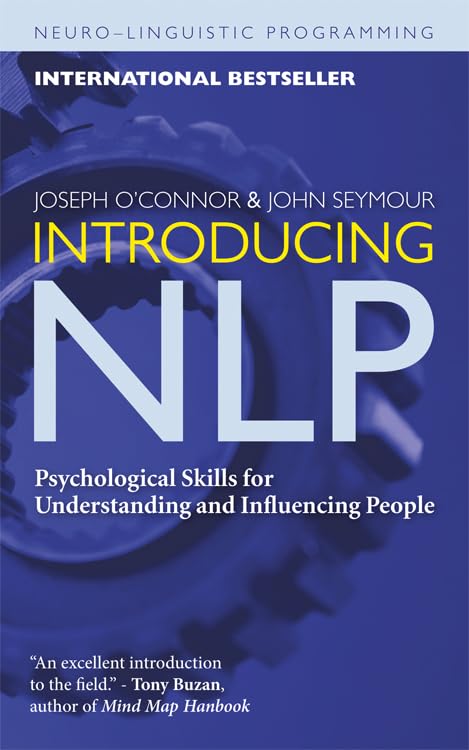
Introducing NLP by Joseph O’Connor and John Seymour is widely recognized as the clearest, most structured, and comprehensive introductory textbook on Neuro-Linguistic Programming ever published. The authors systematically guide readers through the core tenets of NLP, including rapport building, pacing and leading, sensory acuity, Milton Model language patterns, and timeline concepts. Written in elegant, accessible prose, this book bridges theoretical modeling and practical everyday behavioral application.
What sets this book apart is its balanced, non-dogmatic presentation of NLP as a collection of practical tools for enhancing human communication, learning, and personal health. The authors provide clear diagnostic exercises and real-world examples that illustrate how to apply NLP in business negotiations, education, and psychotherapy. For students, coaches, and general readers, this classic text remains the single most reliable orientation guide.
- Provides structured instruction on building deep rapport through physiological pacing and leading.
- Explains the Milton Model of conversational hypnosis for persuasive interpersonal communication.
- Details perceptual positions (first, second, and third person) to resolve complex interpersonal relationship conflicts.
4. Unlimited Power: The New Science of Personal Achievement — Tony Robbins

Unlimited Power by peak performance strategist Tony Robbins popularized Neuro-Linguistic Programming into a global phenomenon of personal transformation and peak performance. Robbins translates Bandler and Grinder’s complex clinical modeling techniques into high-energy, actionable strategies for mastering personal physiology, emotional states, and belief systems. The book demonstrates that human excellence is reproducible by identifying and adopting the exact mental syntax and physical modeling habits of top performers.
Robbins provides detailed walkthroughs of NLP submodality interventions, anchoring protocols, and the Ultimate Success Formula. He introduces metaprograms as internal perceptual filters that govern motivation, decision-making, and communication styles. For readers seeking to unleash explosive motivation and achieve extraordinary personal and professional goals, this groundbreaking bestseller serves as a masterclass in applied behavioral modeling.
- Outlines the Ultimate Success Formula to achieve measurable personal and financial goals.
- Teaches physiological state management to overcome paralyzing fear and procrastination.
- Decodes individual metaprogram filters to enhance leadership and persuasive influence.
5. Reframing: Neuro-Linguistic Programming and the Transformation of Meaning — Richard Bandler and John Grinder
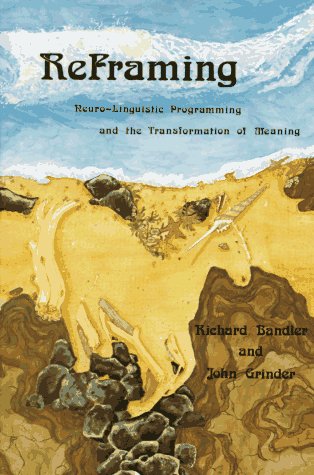
Reframing: Neuro-Linguistic Programming and the Transformation of Meaning by Richard Bandler and John Grinder is the definitive clinical text on altering psychological perception and subjective meaning. The authors demonstrate that the meaning of any event or behavior depends entirely on the context or frame in which it is perceived. By changing the frame, practitioners immediately transform the emotional response and behavioral outcome, providing an indispensable tool for resolving deep-seated internal conflicts.
The book details the famous six-step reframing model, which negotiates with unconscious parts of the personality to satisfy positive intentions through constructive new behaviors. Bandler and Grinder explore context reframing, content reframing, and perceptual reframing through live seminar transcripts and clinical case studies. This profound text is essential for therapists, negotiators, and leaders seeking to dissolve rigid mental resistance.
- Details the six-step reframing protocol to resolve compulsive self-sabotaging behavioral patterns.
- Distinguishes between context reframing and content reframing for rapid psychological perspective shifts.
- Establishes communication with unconscious parts to honor positive underlying protective intentions.
6. Heart of the Mind: Engaging Your Inner Power to Change with Neuro-Linguistic Programming — Connirae Andreas and Steve Andreas
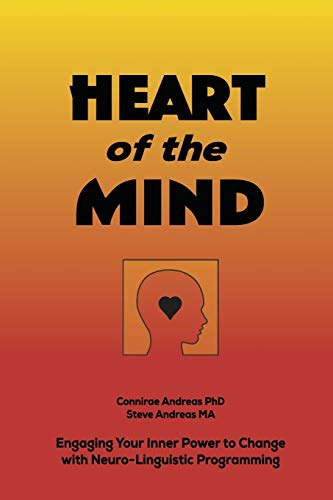
Heart of the Mind by master NLP trainers Connirae Andreas and Steve Andreas is an exceptionally warm, practical, and compassionate handbook demonstrating NLP applications across a wide array of human struggles. Each chapter focuses on a specific emotional challenge—including trauma, grief, shame, phobias, habit control, and relationship conflicts—providing detailed case transcripts followed by step-by-step self-help protocols. This accessible structure makes complex psychological interventions immediately usable for personal self-healing.
The Andreases emphasize the gentle, respectful nature of NLP, demonstrating that emotional healing does not require reliving painful memories through years of catharsis. By teaching readers how to reorganize internal mental imagery, shift auditory self-talk, and integrate conflicting internal voices, they provide an empowering roadmap for emotional renewal. This volume is universally recommended for individuals seeking a compassionate, practical guide to self-transformation.
- Provides step-by-step protocols for resolving childhood trauma and unresolved grief.
- Teaches submodality shifts to eliminate chronic internal self-critical voices.
- Offers structured exercises for building positive habits and enduring personal self-worth.
7. Using Your Brain—for a Change: Neuro-Linguistic Programming — Richard Bandler

Using Your Brain—for a Change by Richard Bandler, edited by Connirae and Steve Andreas, is the groundbreaking text that introduced submodality interventions to the NLP canon. Bandler reveals that the human brain processes experience not only through sensory modalities (seeing, hearing, feeling), but through fine-grained submodalities such as brightness, distance, location, tone, and volume. By altering these qualitative perceptual parameters, individuals can rapidly alter their emotional reactions to past memories.
Bandler introduces legendary NLP techniques, including the Swish Pattern, which automatically redirects the brain from a cue of distress to a self-image of empowered capability. Through entertaining, provocative seminar transcripts, Bandler demonstrates that changing how you think is far more powerful than analyzing why you feel broken. This short, brilliant volume provides an exhilarating education in direct neuro-cognitive software programming.
- Introduces sensory submodalities as the fundamental code of internal subjective emotional states.
- Details the step-by-step execution of the classic NLP Swish Pattern.
- Teaches contrastive analysis to map differences between limiting beliefs and absolute certainties.
8. Sleight of Mouth: The Magic of Conversational Belief Change — Robert Dilts
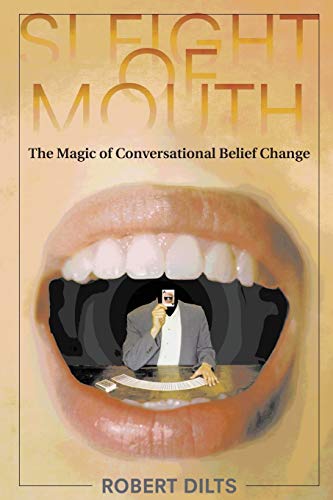
Sleight of Mouth by master modeler Robert Dilts is the definitive treatise on conversational belief change and linguistic persuasion. Dilts systematically models the fourteen distinct verbal patterns utilized by exceptional communicators like Socrates, Mahatma Gandhi, and Milton Erickson to effortlessly disarm limiting beliefs and expand cognitive maps. This sophisticated text bridges cognitive linguistics, neuropsychology, and philosophy to create an unrivaled manual of persuasive communication.
The book deconstructs complex belief statements into cause-effect and complex equivalence linkages, providing readers with precise verbal reframing patterns such as chunking up, chunking down, changing outcome, and redefining. Dilts illustrates how each pattern shifts the listener’s perceptual focus, creating cognitive flexibility and opening new avenues for agreement. For leaders, negotiators, coaches, and therapists, this volume is an indispensable masterclass in conversational influence.
- Identifies the fourteen Sleight of Mouth patterns for conversational limiting belief transformation.
- Deconstructs complex equivalences and cause-effect linkages in restrictive cognitive belief statements.
- Teaches hierarchical reframing to align communication with core human values and criteria.
9. Trance-Formations: Neuro-Linguistic Programming and the Structure of Hypnosis — John Grinder and Richard Bandler
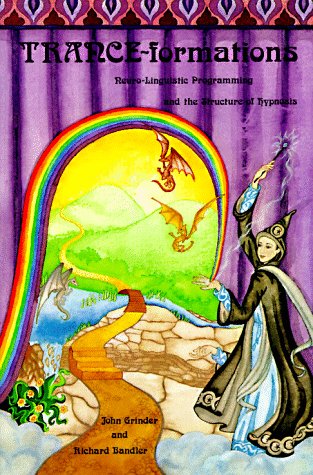
Trance-Formations by John Grinder and Richard Bandler is the seminal clinical work that demystified Ericksonian hypnotherapy through the analytical lens of Neuro-Linguistic Programming. Based on live training transcripts edited by Connirae Andreas, this book demonstrates that hypnotic trance is not an artificial sleep state, but an everyday phenomenon characterized by focused internal attention. The authors decode how indirect language patterns systematically bypass conscious resistance to access vast unconscious healing resources.
Grinder and Bandler explain hypnotic induction, pacing and leading, embedded commands, and post-hypnotic suggestions through practical, real-world demonstrations. They emphasize the ethical utilization of client behavior, showing how to transform spontaneous symptoms into doorways for therapeutic change. For clinicians, hypnotherapists, and communicators seeking to master indirect conversational hypnosis, this classic text remains an essential foundation in Ericksonian NLP.
- Demystifies hypnotic trance as a natural state of deep internal sensory absorption.
- Details the Milton Model syntax for constructing artfully vague therapeutic suggestions.
- Teaches anchoring and unconscious signaling for rapid clinical symptom resolution.
10. NLP: The Essential Guide to Neuro-Linguistic Programming — Tom Hoobyar, Tom Dotz, and Susan Sanders

NLP: The Essential Guide by Tom Hoobyar, Tom Dotz, and Susan Sanders provides a modern, highly engaging, and structured journey through contemporary NLP practices. Created by leaders of NLP Comprehensive, this book emphasizes lived experience over dry theory, offering readers interactive thought experiments, case studies, and practical discovery exercises. The authors organize the material around real-life applications, showing how NLP transforms career progression, emotional wellness, and interpersonal relationship satisfaction.
The book covers essential techniques including circle of excellence anchoring, logical levels of change, perceptual positioning, and timeline recalibration in an accessible step-by-step format. Its warm, conversational tone demystifies technical terminology, making it an ideal companion for daily personal growth. For modern readers seeking a comprehensive, friendly manual to apply NLP in twenty-first-century life, this guide delivers an invaluable, practical self-improvement toolkit.
- Outlines the circle of excellence technique for instant situational confidence and poise.
- Applies Robert Dilts’s logical levels to align identity, values, and daily behaviors.
- Provides actionable frameworks to improve public speaking, sales, and interpersonal leadership skills.
11. Core Transformation: Reaching the Wellspring Within — Connirae Andreas and Tamara Andreas

Core Transformation by Connirae Andreas and Tamara Andreas introduces a breakthrough psychological process that bridges NLP, depth psychology, and spiritual inquiry. Rather than viewing self-defeating behaviors, anger, anxiety, and addictions as enemies to be eradicated, the Core Transformation process recognizes that every limitation is an attempt by an unconscious part to achieve a profound Core State of being—such as Peace, Presence, Love, or Wholeness. This gentle protocol guides parts to their highest purpose, producing spontaneous, effortless emotional healing.
The book provides meticulous, step-by-step instructions and poignant case studies demonstrating how accessing Core States resolves trauma, physical tension, and relationship conflicts from the inside out. The process dissolves internal conflict without willpower or struggle, creating a lasting sense of inner alignment. This transformative masterpiece is widely regarded as one of the most spiritually profound and clinically effective advancements in contemporary NLP methodology.
- Guides unconscious parts to discover core states of inner peace, presence, and wholeness.
- Resolves self-sabotaging behaviors by fulfilling their highest underlying spiritual intention.
- Provides a non-adversarial methodology for deep emotional healing and permanent psychological integration.
12. Beliefs: Pathways to Health and Well-Being — Robert Dilts, Tim Hallbom, and Suzi Smith

Beliefs: Pathways to Health and Well-Being by Robert Dilts, Tim Hallbom, and Suzi Smith is the definitive clinical manual exploring the profound impact of unconscious belief systems on physical health and psychological resilience. The authors demonstrate that beliefs operate as neurological filters that directly modulate autonomic nervous system function, immune response, and emotional well-being. By utilizing precise NLP modeling techniques, this book provides actionable protocols to identify and remodel toxic health-limiting belief systems.
The authors detail advanced interventions, including the reimprinting protocol, conflict integration, and the belief installation cycle. Through transcripts of live therapeutic sessions with individuals facing severe chronic illnesses, the book demonstrates how resolving past emotional trauma and installing empowering beliefs fosters systemic healing. For healthcare professionals, therapists, and coaches, this volume is an essential guide to mind-body psychoneuroimmunology.
- Details the reimprinting protocol to heal deeply rooted developmental childhood beliefs.
- Explains how unconscious belief structures modulate physiological immune and nervous system health.
- Provides step-by-step techniques to install resilient beliefs regarding capability, worthiness, and recovery.
13. Get the Life You Want: The Secrets to Quick and Lasting Life Change with Neuro-Linguistic Programming — Richard Bandler
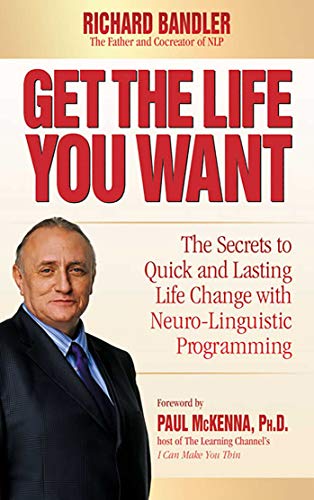
Get the Life You Want by NLP co-creator Richard Bandler synthesizes over thirty-five years of clinical innovation into a fast-paced, highly accessible manual of personal reinvention. Bandler presents his latest streamlined techniques for eliminating anxiety, breaking bad habits, conquering depression, and building magnetic self-confidence. The book emphasizes that emotional suffering is caused by running bad mental movies, showing readers how to take control of their internal visual and auditory software.
Bandler provides clear, straightforward exercises that can be completed in minutes, including spinning feelings to reverse panic, running movies backward to neutralize trauma, and using the fast phobia cure. His witty, irreverent style strips away psychological jargon, giving readers direct control over their mental processes. For anyone seeking fast, practical relief from emotional distress without lengthy theoretical analysis, this book offers an empowering manual of practical neuro-engineering.
- Teaches the feeling spin technique to rapidly neutralize acute panic and anxiety surges.
- Provides simple mental movie editing protocols to erase painful traumatic memory charges.
- Details fast-acting interventions for breaking addictions, phobias, and chronic depressive mental habits.
14. Transforming Your Self: Becoming Who You Want to Be — Steve Andreas

Transforming Your Self by master NLP researcher Steve Andreas is a groundbreaking investigation into the cognitive structure of self-concept and identity. Andreas demonstrates that how we feel about ourselves is not an abstract philosophical mystery, but a tangible psychological structure composed of specific sensory representations, spatial locations, and counter-example processing systems. By decoding this structural architecture, Andreas teaches readers how to construct a durable, resilient sense of self-esteem.
Andreas provides meticulous clinical exercises to transform fragile, defensive self-concepts into robust, positive qualities that effortlessly withstand criticism and external setbacks. The book addresses the psychological mechanics of self-worth, boundary formation, and character development with extraordinary scientific precision. For psychologists, coaches, and self-reflective individuals, this brilliant monograph stands as one of the most original and impactful contributions to self-concept psychology.
- Decodes the structural sensory architecture comprising individual human self-concept and identity.
- Teaches how to install positive personal qualities that resist external criticism and self-doubt.
- Provides actionable exercises to dismantle defensive ego structures and build authentic self-esteem.
15. Monsters and Magical Sticks: There’s No Such Thing As Hypnosis? — Steven Heller and Terry Lee Steele
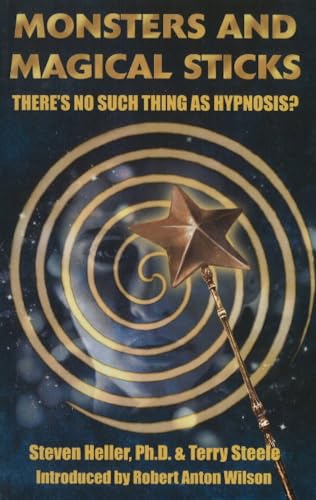
Monsters and Magical Sticks by clinical psychologist Dr. Steven Heller and Terry Lee Steele is a delightfully unorthodox, provocative, and brilliant exploration of hypnosis and unconscious communication. Heller argues that hypnosis is not a mystical power or a special state of consciousness, but an inescapable feature of everyday human interaction. Through engaging anecdotes, clinical metaphors, and case histories, the authors show how we are constantly hypnotizing ourselves and others through the magical sticks of human language.
The book integrates Ericksonian hypnotherapy with NLP principles, teaching readers how to utilize hypnotic storytelling, pacing, and indirect suggestion to dissolve psychological resistance. Heller emphasizes the role of the unconscious mind as a benevolent, highly creative partner in personal healing. Featuring an introduction by Robert Anton Wilson, this entertaining and profound book is a must-read for anyone wanting to master unconscious conversational influence and storytelling.
- Demystifies hypnotic phenomena as natural occurrences in daily interpersonal verbal communication.
- Teaches the therapeutic use of embedded metaphors and indirect multi-level clinical storytelling.
- Explains how self-hypnotic loops construct personal reality and perpetuate unconscious emotional limitations.
16. Time Line Therapy and the Basis of Personality — Tad James and Wyatt Woodsmall

Time Line Therapy and the Basis of Personality by Tad James and Wyatt Woodsmall is the seminal text that introduced timeline work to the field of Neuro-Linguistic Programming. The authors explore how the human brain encodes and stores chronological memories across spatial internal timelines (In-Time and Through-Time). By discovering how an individual maps their past, present, and future, practitioners can rapidly release repressed negative emotions and limiting decisions.
James and Woodsmall detail structured protocols to float above the timeline and clear root causes of anger, sadness, fear, hurt, and guilt across a person’s entire life history in a single session. The book also provides in-depth analysis of personality metaprograms and value hierarchies, showing how timeline alignment drives goal manifestation. For NLP practitioners and hypnotherapists, this volume is an indispensable clinical manual of temporal psychology.
- Introduces spatial timeline elicitation and the distinction between In-Time and Through-Time orientations.
- Provides clinical protocols to release negative emotions from gestalt memory chains across time.
- Details methods for installing compelling future goals directly into the subconscious personal timeline.
17. NLP at Work: The Difference That Makes a Difference in Business — Sue Knight

NLP at Work by executive coach Sue Knight is the definitive, internationally acclaimed guide applying Neuro-Linguistic Programming to corporate leadership, organizational culture, and workplace excellence. Knight demonstrates how NLP principles—such as modeling excellence, non-judgmental feedback, sensory calibration, and clean questioning—transform corporate management, team collaboration, and executive coaching. Written with humor, warmth, and real-world commercial savvy, this book strips away therapy jargon to deliver practical business leadership strategies.
Knight illustrates how to foster high-performance corporate cultures by aligning individual values with organizational missions. She provides practical guidance on leading meetings, managing difficult negotiations, delivering constructive appraisals, and cultivating creative problem-solving under pressure. For managers, executives, HR professionals, and workplace leaders, this volume stands as the premier handbook of organizational NLP.
- Translates NLP communication principles into high-impact corporate leadership and coaching techniques.
- Teaches sensory calibration and clean language for effective workplace negotiation and collaboration.
- Provides frameworks for organizational modeling to replicate top-performer business success patterns.
18. Words That Change Minds: The 14 Patterns for Mastering the Language of Influence — Shelle Rose Charvet
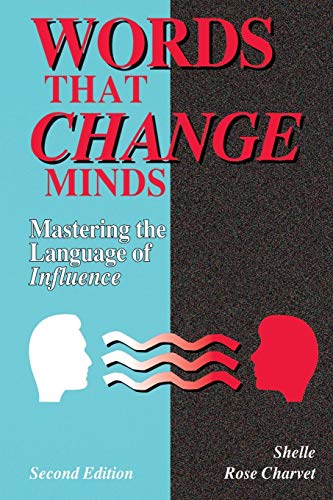
Words That Change Minds by international communication consultant Shelle Rose Charvet is a masterclass in behavioral profiling based on the Language and Behavior (LAB) Profile developed by Rodger Bailey. Charvet outlines fourteen distinct motivational patterns and internal mental filters that determine how individuals make decisions, process information, and respond to verbal communication. By learning to decode these patterns through normal conversation, readers can tailor their language to influence and motivate anyone effortlessly.
Charvet provides concrete verbal markers and specific phrasing strategies to match whether someone is motivated toward goals or away from problems, whether they prefer options or procedures, and whether they operate internally or externally. The book delivers immense value for hiring managers, sales professionals, marketing strategists, and executive negotiators. For anyone seeking to master persuasive language in professional contexts, this book provides an indispensable behavioral profiling system.
- Decodes the Language and Behavior (LAB) Profile to identify subconscious workplace motivational triggers.
- Teaches how to customize verbal language to match toward versus away-from motivational patterns.
- Provides diagnostic scripts for executive hiring, marketing copywriting, and high-stakes sales negotiations.
19. The User’s Manual for the Brain, Vol. 1: The Complete Manual for Neuro-Linguistic Programming Practitioner Certification — Bob G. Bodenhamer and L. Michael Hall
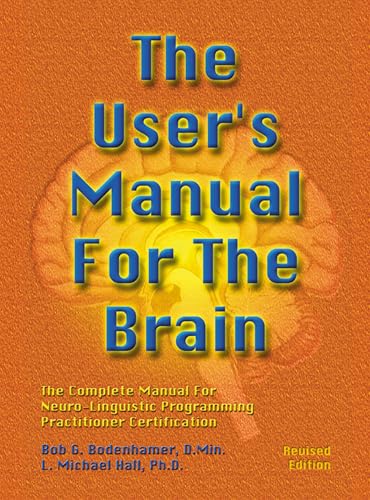
The User’s Manual for the Brain, Vol. 1 by Bob G. Bodenhamer and Dr. L. Michael Hall is the most comprehensive, encyclopedic curriculum manual written for standard NLP Practitioner certification. Spanning over four hundred detailed pages, this textbook methodically covers the entire foundational scope of NLP, from sensory representation systems and calibration to the Meta Model, Milton Model, anchoring, submodalities, and strategy elicitation. The authors combine academic rigor with clear, structured lesson plans for thorough practitioner mastery.
Bodenhamer and Hall integrate their own developments in Neuro-Semantics, providing rich theoretical explanations and detailed diagnostic checklists that deepen understanding of subjective cognitive architecture. Each chapter includes practical exercises, glossary definitions, and clinical case studies that ensure complete pedagogical clarity. For students undertaking professional certification or practitioners wanting a definitive reference manual, this volume is an unrivaled foundational reference textbook.
- Provides complete curriculum coverage for standard NLP Practitioner certification training.
- Integrates Neuro-Semantics theory to explain how meaning and meta-states modulate neurology.
- Features exhaustive diagnostic checklists, glossaries, and step-by-step clinical intervention scripts.
20. Change Your Mind and Keep the Change: Advanced NLP Submodalities Interventions — Connirae Andreas and Steve Andreas

Change Your Mind and Keep the Change by Connirae Andreas and Steve Andreas is an advanced clinical masterclass on utilizing sensory submodalities for deep structural personality transformation. Building upon Richard Bandler’s early discoveries, the Andreases demonstrate how subtle qualitative changes in internal sensory representation—such as location, brightness, focal depth, and auditory tone—create profound shifts in core internal belief systems.
The book details specialized submodality interventions for threshold patterns, designer swish patterns, mapping across, and resolving grief and shame. Through verbatim seminar transcripts, the authors show how to diagnose fine-grained sensory distinctions and design custom interventions that produce permanent, ecology-sound psychological change. This volume is essential reading for advanced practitioners seeking to master high-level clinical submodality engineering.
- Details advanced submodality threshold techniques to eliminate compulsive behavioral patterns.
- Provides specialized protocols for resolving complicated grief and unresolved interpersonal resentment.
- Teaches contrastive mapping across modalities to rapidly install resilient empowering beliefs.
21. Persuasion Engineering — Richard Bandler and John La Valle

Persuasion Engineering by NLP co-creator Richard Bandler and corporate trainer John La Valle is a fast-paced, high-impact manual on applying Neuro-Linguistic Programming and conversational hypnosis to sales, negotiation, and business persuasion. Bandler and La Valle show that successful selling is not about memorizing scripted closing techniques, but about engineering the customer’s internal mental processing and leading them into decisive buying states.
The authors explain how to calibrate eye accessing cues, elicit customer buying strategies, and embed linguistic suggestions into normal sales dialogue. With trademark humor and irreverent case studies, Bandler demonstrates how to install unconscious anchors that associate excitement and urgency with your product or service. For entrepreneurs, sales professionals, and business leaders, this book delivers an electrifying education in commercial persuasion.
- Teaches how to elicit and match customer subconscious decision-making and buying strategies.
- Details the integration of hypnotic language patterns into natural commercial sales presentations.
- Shows how to install positive emotional anchors to accelerate decisive customer purchasing action.
22. Patterns of the Hypnotic Techniques of Milton H. Erickson, M.D., Vol. 1 — Richard Bandler and John Grinder
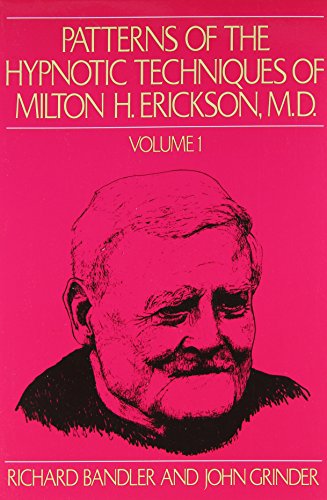
Patterns of the Hypnotic Techniques of Milton H. Erickson, M.D., Vol. 1 is the historic collaborative study in which Richard Bandler and John Grinder modeled the linguistic brilliance of Dr. Milton H. Erickson, the father of modern hypnotherapy. Published in 1975, this groundbreaking volume formally extracted and codified the Milton Model—the inverse of the Meta Model—showing how deliberately vague, artful language patterns induce trance and facilitate profound unconscious healing.
Bandler and Grinder deconstruct Erickson’s use of nominalizations, unspecified referents, embedded commands, conversational post-hypnotic suggestions, and double binds. By analyzing verbatim transcripts of Erickson’s therapeutic inductions, the authors reveal the precise linguistic mechanics behind hypnotic phenomena. For hypnotherapists, psychoanalysts, and serious students of NLP, this text is the foundational holy grail of indirect hypnotic language.
- Codifies the Milton Model of indirect language for effortless therapeutic trance induction.
- Deconstructs embedded commands, phonological ambiguities, and conversational double bind syntax.
- Demonstrates the utilization approach to turn client resistance into a pathway for unconscious change.
23. NLP: The New Technology of Achievement — Steve Andreas and Charles Faulkner

NLP: The New Technology of Achievement, developed by the Comprehensive Training Team and edited by Steve Andreas and Charles Faulkner, is one of the most structured, user-friendly, and actionable self-help manuals in the NLP canon. The authors synthesize decades of behavioral modeling into an empowering step-by-step master plan designed to help readers achieve peak performance in business, sports, and personal life. The book systematically presents the mindsets, mental strategies, and habitual daily routines of top achievers.
The volume features comprehensive exercises for discovering personal passion, designing compelling life missions, eliminating self-doubt through the fast phobia cure, and mastering relationship rapport. Its clear formatting and practical exercises make it an ideal starting point for readers who want to experience the benefits of NLP immediately. For personal growth enthusiasts seeking an inspiring, comprehensive roadmap to excellence, this classic book delivers an enduring blueprint for human achievement.
- Provides a 21-day structured program to install high-performance cognitive mental habits.
- Teaches the fast phobia cure and submodality shifts to conquer paralyzing fears and anxieties.
- Outlines precise goal-setting frameworks to align subconscious motivations with conscious life aspirations.
The Meta Model vs. The Milton Model: Mastering the Spectrum of Influence
The core linguistic engine of Neuro-Linguistic Programming operates across a fascinating dialectical spectrum defined by two complementary linguistic frameworks: the Meta Model and the Milton Model. While the Meta Model is designed to make language specific, precise, and conscious, the Milton Model is engineered to make language artfully vague, hypnotic, and accessible to the unconscious mind. Mastering both models provides an unparalleled foundation for transformative communication and psychotherapeutic intervention.
The Meta Model, modeled by Bandler and Grinder from Virginia Satir and Fritz Perls, recovers missing information and challenges cognitive distortions by identifying deletions, nominalizations, modal operators of necessity, and lost performatives. In stark contrast, the Milton Model, modeled from Milton Erickson, deliberately utilizes these exact linguistic omissions to bypass conscious critical resistance, pacing the listener’s subjective experience and allowing their unconscious to fill in the meaning with deep personal healing resources.
To appreciate how these two models function in practice, consider their defining linguistic characteristics:
- The Meta Model brings unconscious generalizations into conscious awareness through precise analytical clarification questioning.
- The Milton Model induces relaxed, receptive trance states using artfully vague conversational hypnotic suggestions.
- Pacing and leading allows communicators to mirror a client’s current reality before guiding them toward resourceful states.
- Conversational postulates and embedded commands deliver suggestions that bypass conscious critical analytical resistance.
Fluently navigating between the precision of the Meta Model and the evocative power of the Milton Model allows practitioners to achieve effortless interpersonal rapport and influence.
Submodalities, Anchoring, and State Management in Clinical Practice
At the operational level, NLP intervenes in human psychology through submodalities—the fine-grained sensory components that make up our internal mental representations. A visual memory is not just a picture; it has specific submodality parameters such as brightness, color saturation, frame size, distance, location, and motion. Neuroscientist Lisa Feldman Barrett has demonstrated that the brain is a predictive organ that constructs emotional reality from sensory inputs, a finding that validates NLP’s insight that changing sensory submodalities directly alters autonomic physiological emotional responses.
Complementing submodality shifts, psychological anchoring establishes reliable associative triggers that allow individuals to access peak emotional states on demand. Grounded in Ivan Pavlov’s classical conditioning principles, an anchor pairs an intense internal emotional state with a unique kinesthetic, auditory, or visual stimulus. When the anchor is fired, the nervous system instantly recreates the associated resourceful state, providing an indispensable tool for overcoming situational performance anxiety.
Clinical applications of submodalities and anchoring incorporate several foundational behavioral protocols:
- The Swish Pattern rewires automatic triggers by replacing compulsive images with an empowered ideal self-image.
- Collapse anchoring neutralizes chronic negative emotional triggers by firing a powerful positive resource anchor simultaneously.
- Visual-kinesthetic dissociation (the fast phobia cure) detaches traumatic memories from overwhelming visceral somatic panic.
- Submodality contrastive analysis identifies the critical driver submodality that governs internal subjective certainty and doubt.
Mastering submodality calibration and state anchoring gives individuals direct executive control over their emotional neurology, transforming how they respond to high-stress environmental challenges.
Critical and Scientific Perspectives on NLP: What Modern Psychology Says
While Neuro-Linguistic Programming has achieved massive worldwide popularity in executive coaching, sales training, and self-help literature, academic psychology maintains a critical, nuanced perspective regarding its scientific validity. Clinical researchers and cognitive scientists emphasize that early NLP claims—such as infallible lie detection via eye accessing cues or rigid primary representational system categorizations—have failed to receive consistent support in empirical laboratory trials. Leading cognitive psychologists like Aaron Beck established that while cognitive reframing is clinically effective, it operates through systematic cognitive restructuring rather than literal neurological brain reprogramming.
Nevertheless, many core NLP techniques heavily overlap with evidence-based therapeutic modalities that enjoy robust empirical validation. The Meta Model directly mirrors the cognitive dispute methods of Cognitive Behavioral Therapy (CBT), while visual-kinesthetic dissociation closely resembles modern imaginal exposure and EMDR protocols for trauma desensitization. Furthermore, NLP’s emphasis on rapport, pacing, and empathic attunement aligns with clinical psychologist Carl Rogers’s person-centered therapy, proving that much of NLP’s practical effectiveness stems from established common therapeutic change factors.
Understanding the scientific reality of NLP requires maintaining an objective evidence-informed psychological perspective:
- Recognize NLP as an pragmatic collection of behavioral modeling tools rather than an academically validated scientific theory.
- Discard rigid pseudoscientific dogmas regarding eye accessing cues as definitive lie detection instruments.
- Embrace evidence-based components like cognitive reframing, visualization, and somatic relaxation state anchoring.
- Utilize NLP as a creative communication enhancement framework alongside rigorous contemporary psychological science.
By adopting a critical, evidence-informed mindset, readers can extract the immense practical value of NLP while remaining grounded in contemporary clinical psychology standards.
Practical Exercises to Apply NLP Techniques Daily
Reading Neuro-Linguistic Programming literature creates genuine personal transformation only when theoretical models are integrated into daily behavioral practice. As psychiatrist Viktor Frankl emphasized, true personal growth requires active self-transcendence and intentional action in response to life’s demands. By practicing structured sensory exercises, individuals bridge the gap between cognitive comprehension and embodied behavioral mastery.
To integrate the core lessons from these 23 NLP books into your everyday routine, practice these five evidence-based psychological disciplines:
- Install a kinesthetic confidence anchor by intensely recalling a peak achievement moment and squeezing your thumb and forefinger together.
- Apply the Meta Model to your internal dialogue by challenging absolute words like never, always, and impossible.
- Practice the Swish Pattern to replace compulsive urges with a vivid, compelling image of your empowered, capable future self.
- Use perceptual positions during interpersonal conflict by mentally stepping into the other person’s shoes to understand their underlying positive intentions.
- Audit your daily language patterns to ensure you state goals in positive terms rather than focusing on what you want to avoid.
Consistently practicing these actionable NLP exercises empowers you to master your emotional states, cultivate profound empathy, and achieve long-term personal and professional flourishing.
FAQs about Books on NLP (Neuro-Linguistic Programming)
What is the best NLP book for an absolute beginner?
For someone completely new to Neuro-Linguistic Programming, Introducing NLP by Joseph O’Connor and John Seymour or NLP: The Essential Guide by Tom Hoobyar provides the most structured and accessible starting point. Both volumes present foundational concepts—such as rapport, sensory representational systems, the Meta Model, and submodalities—in clear, organized language without overwhelming readers with dense academic linguistics. If you prefer a more dynamic, seminar-style read with live demonstrations of rapid psychological change, Frogs into Princes by Richard Bandler and John Grinder is the ultimate historic classic that captures the original excitement of the field.
Can Neuro-Linguistic Programming replace professional psychotherapy for mental illness?
Neuro-Linguistic Programming offers powerful communication tools, self-regulation techniques, and mental reframing exercises, but it is not a substitute for licensed medical or psychological treatment. While NLP techniques like the fast phobia cure and submodality shifts can rapidly relieve mild situational anxiety and bad habits, severe clinical conditions—such as major depressive disorder, bipolar disorder, psychosis, or complex post-traumatic stress disorder—require comprehensive care from a licensed psychiatrist or clinical psychologist. NLP is best utilized as a complementary personal development methodology alongside evidence-based medical and psychological healthcare.
What is the difference between the Meta Model and the Milton Model in NLP?
The Meta Model and the Milton Model represent opposite yet complementary approaches to language in NLP. The Meta Model, modeled from Virginia Satir and Fritz Perls, uses specific probing questions to challenge deletions, distortions, and generalizations, bringing unconscious assumptions into sharp conscious focus. In contrast, the Milton Model, modeled from hypnotherapist Milton Erickson, uses artfully vague, hypnotic language patterns that bypass conscious analytical resistance, allowing the listener’s unconscious mind to access personal inner resources. While the Meta Model seeks precision and clarity, the Milton Model utilizes ambiguity to induce receptive trance states.
How does the NLP fast phobia cure work?
The NLP fast phobia cure, technically known as visual-kinesthetic dissociation, works by separating the visual memory of a traumatic event from its associated somatic emotional panic. The client is guided to imagine sitting in a movie theater watching a black-and-white film of their younger self going through the phobic experience from a safe, detached vantage point. By viewing the memory from an observer perspective and running it backward rapidly in full color, the brain recalibrates the memory’s sensory submodalities. This neurological rewiring neutralizes the autonomic fight-or-flight trigger, allowing the person to recall the event without experiencing physical terror.
Is Neuro-Linguistic Programming scientifically proven?
Academic psychology views NLP with significant scientific skepticism because many of its foundational concepts—such as rigid eye accessing cues and primary sensory modalities—have failed to show consistent statistical reliability in controlled laboratory trials. However, many individual techniques within NLP directly mirror empirically validated therapies. For example, NLP reframing is virtually identical to cognitive restructuring in Cognitive Behavioral Therapy (CBT), while visual-kinesthetic dissociation aligns with imaginal exposure therapy. NLP is best understood as a pragmatic collection of behavioral modeling tools rather than a validated scientific theory.
How long does it take to learn and apply NLP techniques?
Basic NLP techniques—such as resource anchoring, sensory submodality adjustments, and simple linguistic reframing—can be learned and applied within a few hours of focused reading and practice. Many individuals notice immediate shifts in their emotional states and communication effectiveness after practicing exercises from books like Using Your Brain—for a Change or Heart of the Mind. However, achieving advanced unconscious competence in linguistic calibration, complex conversational hypnosis, and behavioral modeling requires several months of consistent real-world practice, interactive seminar training, or formal practitioner certification.
Bibliography
- Andreas, C., & Andreas, S. (1987). Change Your Mind and Keep the Change: Advanced NLP Submodalities Interventions. Real People Press.
- Andreas, C., & Andreas, S. (1989). Heart of the Mind: Engaging Your Inner Power to Change with Neuro-Linguistic Programming. Real People Press.
- Andreas, C., & Andreas, T. (1994). Core Transformation: Reaching the Wellspring Within. Real People Press.
- Andreas, S. (2002). Transforming Your Self: Becoming Who You Want to Be. Real People Press.
- Andreas, S., & Faulkner, C. (1994). NLP: The New Technology of Achievement. William Morrow and Company.
- Bandler, R. (1985). Using Your Brain—for a Change: Neuro-Linguistic Programming. Real People Press.
- Bandler, R. (2008). Get the Life You Want: The Secrets to Quick and Lasting Life Change with Neuro-Linguistic Programming. Health Communications, Inc.
- Bandler, R., & Grinder, J. (1975). The Structure of Magic, Vol. 1: A Book About Language and Therapy. Science and Behavior Books.
- Bandler, R., & Grinder, J. (1975). Patterns of the Hypnotic Techniques of Milton H. Erickson, M.D., Vol. 1. Meta Publications.
- Bandler, R., & Grinder, J. (1979). Frogs into Princes: Neuro Linguistic Programming. Real People Press.
- Bandler, R., & Grinder, J. (1981). Trance-Formations: Neuro-Linguistic Programming and the Structure of Hypnosis. Real People Press.
- Bandler, R., & Grinder, J. (1982). Reframing: Neuro-Linguistic Programming and the Transformation of Meaning. Real People Press.
- Bandler, R., & La Valle, J. (1996). Persuasion Engineering. Meta Publications.
- Barrett, L. F. (2017). How Emotions Are Made: The Secret Life of the Brain. Houghton Mifflin Harcourt.
- Beck, A. T. (1979). Cognitive Therapy of Depression. Guilford Press.
- Bodenhamer, B. G., & Hall, L. M. (1999). The User’s Manual for the Brain, Vol. 1. Crown House Publishing.
- Charvet, S. R. (1997). Words That Change Minds: The 14 Patterns for Mastering the Language of Influence. Kendall Hunt Publishing.
- Dilts, R. (1999). Sleight of Mouth: The Magic of Conversational Belief Change. Meta Publications.
- Dilts, R., Hallbom, T., & Smith, S. (1990). Beliefs: Pathways to Health and Well-Being. Metamorphous Press.
- Frankl, V. E. (1959). Man’s Search for Meaning. Beacon Press.
- Heller, S., & Steele, T. L. (1987). Monsters and Magical Sticks: There’s No Such Thing As Hypnosis?. New Falcon Publications.
- Hoobyar, T., Dotz, T., & Sanders, S. (2013). NLP: The Essential Guide to Neuro-Linguistic Programming. William Morrow Paperbacks.
- James, T., & Woodsmall, W. (1988). Time Line Therapy and the Basis of Personality. Meta Publications.
- Knight, S. (1995). NLP at Work: The Difference That Makes a Difference in Business. Nicholas Brealey Publishing.
- O’Connor, J., & Seymour, J. (1990). Introducing NLP: Psychological Skills for Understanding and Influencing People. Aquarian Press.
- Robbins, A. (1986). Unlimited Power: The New Science of Personal Achievement. Simon & Schuster.
- Rogers, C. R. (1961). On Becoming a Person: A Therapist’s View of Psychotherapy. Houghton Mifflin.
Use this citation format to reference the article clearly and help readers find the original source.
PsychologyFor. (2026). 23 Totally Recommendable Books on NLP. PsychologyFor. https://psychologyfor.com/23-totally-recommendable-books-on-nlp/