

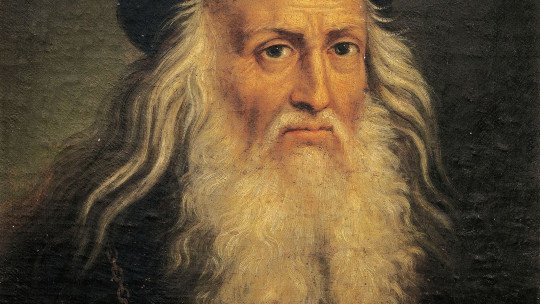
No one doubts that the Renaissance was a time of renewal. Because, although classical wisdom was preserved in the Middle Ages, It was in the Renaissance period when both its artistic and philosophical concepts were recovered and reinterpreted, to the point of configuring a new cultural panorama. Renaissance artists were fully aware that their time was a time of renovatio. A language recovered for a new world.
It is in Florence at the beginning of the 15th century where the change occurs. Specifically, the competition to design the doors of the Baptistery is a turning point for the arts. Numerous artists participated, but only Filippo Brunelleschi (1377-1446) and Lorenzo Ghiberti (1378-1455) remained as finalists, who finally won the prize. Currently, the reliefs presented by these two artists are preserved in the Florentine Bargello Museum.
Brunelleschi and Ghiberti were the first, but there are many more. What are the names that led this great cultural change? Below, you will find the lives of 5 of the most important Renaissance artists, whose works were basic to building this new artistic language.
Renaissance artists to keep in mind
When we are asked to name an artist, probably the first one that comes to mind is one of the great names of the Italian Renaissance. And these creators have a fair reputation; Not only because they participated in one of the crucial moments in the history of art, but because they represent the fullness of the intellectual and the artist, combining diverse skills in the same person.
Most Renaissance artists were architects, painters and sculptors, with special mention to Leonardo da Vinci and Michelangelo Buonarroti, authentic “Renaissance men.” Let’s see below what the contributions of all of them were.
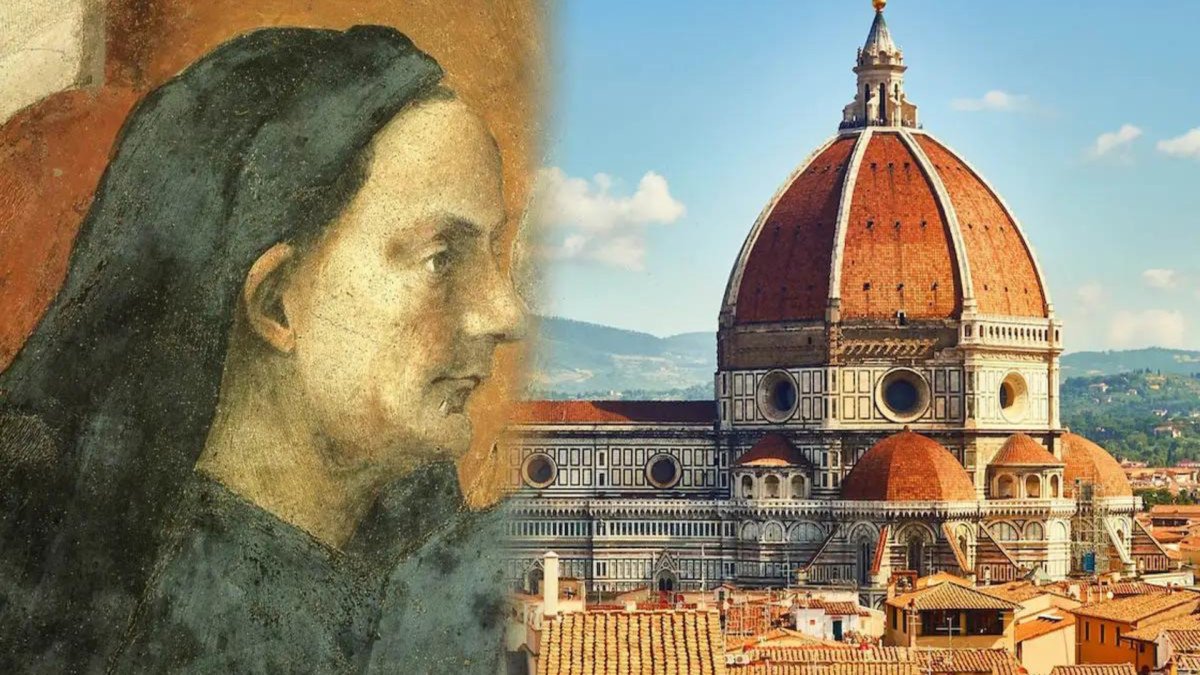
1. Filippo Brunelleschi (1377-1446)
The first big name we must mention is Filippo Brunelleschi, one of the great intellectuals of the Renaissance. After the defeat in the Baptistery contest, Brunelleschi travels to Rome, where he studies the ruins of ancient Roman culture. Twenty years later, he returns to Florence and participates in the competition for the design of the dome of the cathedral of Santa Maria del Fiore. On this occasion, Brunelleschi wins and receives the commission, fortunately for the history of art, since its dome is a true milestone in Western architecture. The Renaissance had begun and, with it, the intellectualization of art.
Brunelleschi demonstrated that he could build a dome without the need for falsework or scaffolding. The result was surprising; Nothing like it had ever been seen since the erection of Agrippa’s Pantheon in Rome in the 2nd century AD. Recently, a scale model of the dome has appeared in the extension of the Duomo Opera Museum in Florence, which is possibly the model with which Brunelleschi gave his demonstration to the competition jury.
Why is Brunelleschi one of the great names of the Florentine Renaissance? The answer is clear. With the construction of this dome he creates a turning point in architecture since it was able to cover a space of 43 meters in diameter, dimensions that, in previous centuries (since Agrippa’s Pantheon) no one had been able to cover.
On the other hand, Brunelleschi will be the one who codifies the mathematical perspective, by which all lines converge at a single vanishing point. This innovation represented a true revolution in the representation of space, and in fact it continued to be applied until the 19th century, when the first avant-gardes put an end to this concept of perspective.
We have, then, Brunelleschi as the great innovator of the Renaissance. Not only is he responsible for a dome whose diameter practically equals that of the Pantheon (there is only a few centimeters of difference) and creates the rules of perspective that will lay the foundations of all Western art in the following centuries, but he also , applied the square and the circle in his colossal creations, the perfect shapes according to Vitruvius (1st century BC) and which were recovered in the Renaissance. Specifically, we can see these geometric shapes inserted in the dome of the Pazzi chapel in Santa Croce in Florence and in the old sacristy or pantheon of Cosimo de Medici the Elder.
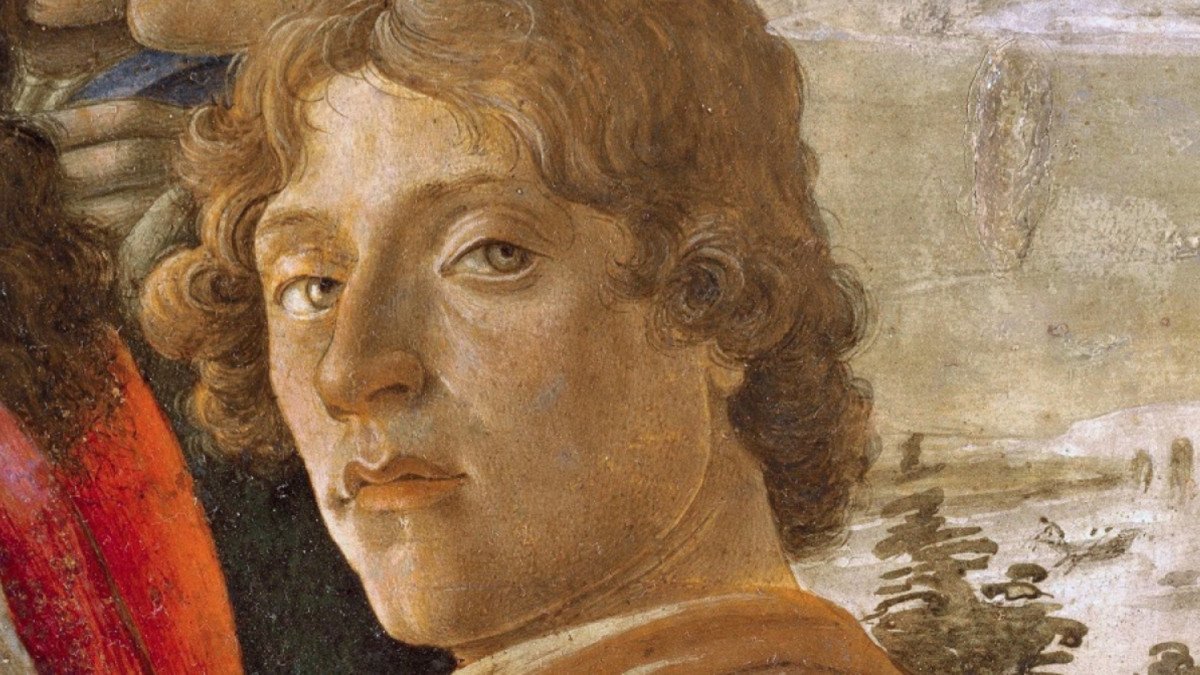
2. Sandro Botticelli (1445-1510)
One of the most outstanding painters of Quattrocento Florence is undoubtedly Sandro Botticelli, an artist absolutely committed to the philosophical school of the moment and who put his painting at the service of the ideals of Neoplatonism. Around the Florentine Neoplatonic Academy, sponsored by the powerful Medici, moved the humanist intellectuals whose work would establish the foundations of the official ideology of the time. We are talking about figures of the magnitude of Marsilio Ficino (1433-1499) or Angelo Poliziano (1454-1494).
The Neoplatonic theories of the Florentine Academy converge in Botticelli’s great works. Specifically, his Birth of Venus (1482-1485) is his most representative work. In it, the artist presents the nude of a pagan goddess almost life-size, which meant a true revolution. Let us remember that, although in the Middle Ages (and contrary to what is widely believed) female nudes were represented, these had to do with characters from the Old Testament, especially with the figure of Eve. Botticelli’s nude, on the other hand, shows a radiant Aphrodite being born from the waters, modestly covering her breasts and genitals, in the style of the famous Aphrodites of Praxiteles (4th century BC).
Botticelli’s model par excellence, which the painter will use for numerous characters in his paintings, is the Florentine Simonetta Vespucci (1453-1476), a beautiful young woman who represented the Renaissance ideal of feminine beauty. Simonetta appears not only in her Venus, but also as an enthroned Virgin and as the allegorical figure of Truth in the panel The Calumny of Apelles (1495). Her premature death, when she was only twenty-three years old, contributed to increasing the idealization of her by Botticelli and his other admirers.
The end of the 15th century is a dark time for Botticelli’s Florence. Because those were going to be the years of the fall of the Medici and the rise to power of the city of the Dominican friar Girolamo Savonarola (1452-1498), a disturbing figure who disrupted the cultural panorama of the city. His fiery harangues against everything “superficial” took deep root in the Florentines, who were forced into a period of unprecedented austerity in which bonfires were lit (known as “bonfires of the vanities”) where cosmetics were thrown, dresses, jewelry and works of art.
Sandro Botticelli himself was greatly affected by the friar’s preaching, to the point that he himself, with his own hands, threw some of his leftovers into the fire. And, although Savonarola fell from grace and was hanged in 1498, the aesthetics of Botticelli’s work were never the same and evolved towards more devotional models.
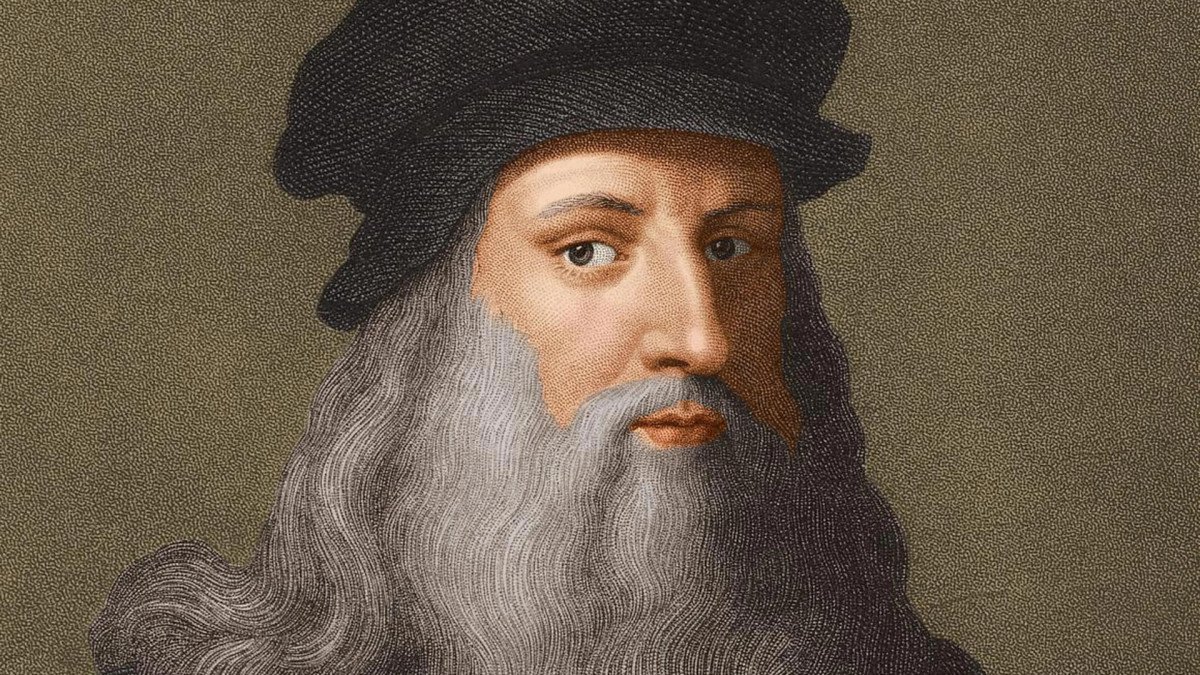
3. Leonardo da Vinci (1452-1519)
There is no doubt that Leonardo is one of the best-known artists, not only of the Renaissance, but of the entire history of art. The illegitimate son of a notary, the artist trained in the workshop of Andrea del Verrochio (1435-1488), a multidisciplinary artist, who not only offered him pictorial training, but also immersed him in other disciplines such as architecture, engineering or sculpture. This solid training gave Leonardo a global vision that allowed him to stand out in multiple fields.
An exceptional draftsman and a great intellectual, his restless and curious mind contributed to him leaving many of his works unfinished, which was possibly the reason why he was not chosen as one of those responsible for the paintings in the Sistine Chapel. Determined to make a living as an engineer, Leonardo offers his services to Ludovico Sforza, Duke of Milan, in a long letter that the artist presents as what today we would call a curriculum vitae. At the end of the letter the artist makes a brief reference to his status as a painter and, curiously, it is for this function that he is finally hired.
In Milan he carried out what would be one of his greatest works, the Last Supper in the refectory of Santa Maria delle Grazie. Unfortunately, the work experienced severe conservation problems during the artist’s lifetime, so it had to be intervened shortly after its completion. Leonardo’s uncontrollable concerns have a lot to do with this, which led him to constantly investigate new creation processes. Thus, to create the work, the painter experiments with the combination of water and oil, which, in the long run, proved fatal for the preservation of the painting.
As a painter, Leonardo has a place of honor in the history of art. Among his best-known works are the two versions of The Virgin of the Rocks (one kept in the Louvre Museum and the other in the National Gallery), and his extraordinary portraits, of which The Mona Lisa is probably his most famous work. known. A fame that, by the way, contributed to increasing the notorious theft of the work, which occurred in 1911 and which made the Mona Lisa appear in all the newspapers and magazines in the world.
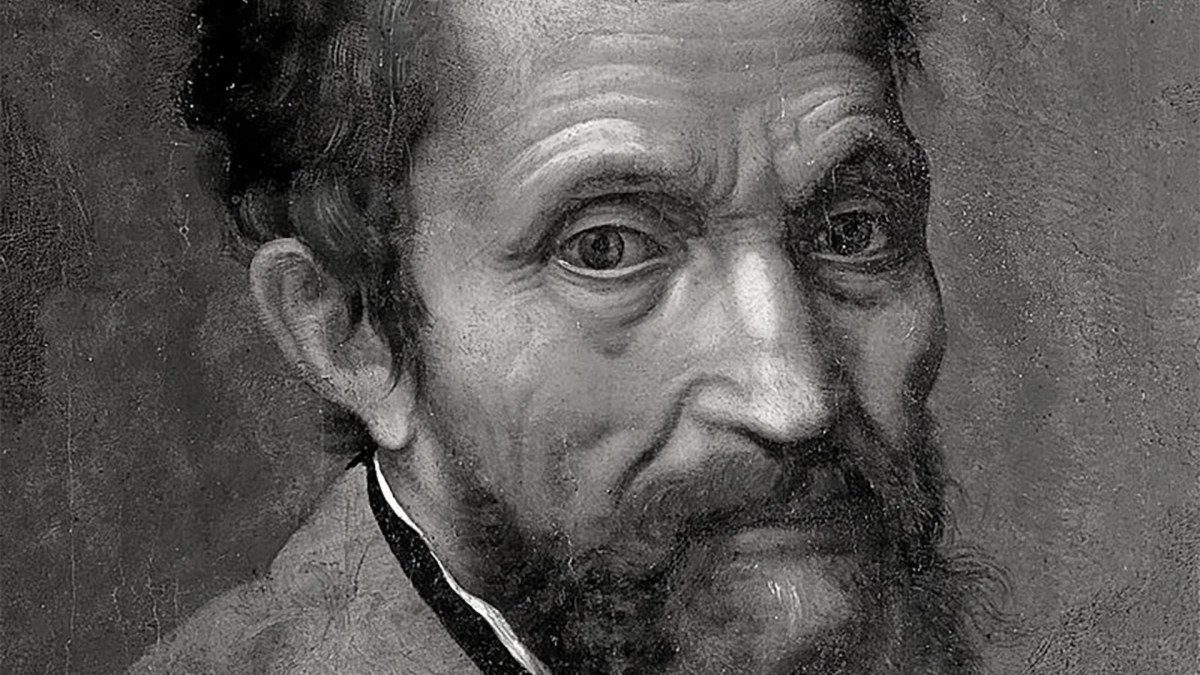
4. Michelangelo Buonarroti (1475-1564)
Michelangelo is, without a doubt, one of the great geniuses in the history of art. His talent used numerous disciplines, although he stood out above all in sculpture. In fact, if we think of a masterpiece of sculpture in general, David, the Vatican Pieta or Moses will probably come to mind. But also, Let us not forget that one of the most important pictorial groups in the history of art are the frescoes of the Sistine Chapel, and that one of the great architectural works of the Renaissance is the dome of Saint Peter’s in the Vatican, both made by the Florentine genius.
Michelangelo came from a wealthy family and, as expected, his father did not welcome his dedication to art, which was still considered a “mechanical trade” in his time, comparable to that carried out by artisans. However, already at a very young age we find Michelangelo training with Domenico Ghirlandaio (1448-1494), one of the most outstanding painters of the Florentine Quattrocento.
But Michelangelo was very clear that his true vocation was sculpture. Very soon he left the master’s workshop to join the Medici sculpture garden, which was directed by the sculptor Bertoldo di Giovanni, a disciple of Donatello. His art caught the attention of Lorenzo de Medici, who welcomed him and became his main supporter. The death of the Magnificent and the rise to power of Girolamo Savonarola deeply impacted Michelangelo, as the young man, who in those years was practically a teenager, suddenly found himself without the father figure that Lorenzo de Medici had represented, in a convulsed Florence. by the preachings of the Dominican friar.
After his first Florentine stay he traveled to Rome, where he created the Bacchus for Cardinal Riario that we can see today in the Bargello Museum. Also from this time is the execution of the magnificent Vatican Pieta, which he sculpted for another of the cardinals. However, Michelangelo’s true goal was to obtain a papal commission. Failing to do so, in 1501 he left the Eternal City and returned to Florence, where he carried out one of his greatest works: David.
It was in his second Roman stay that he received what he considered the commission of his life: the tomb of Pope Julius II, a free-standing pavilion designed for the ancient Basilica of Saint Peter in the Vatican, decorated by forty marble sculptures. Michelangelo sets to work with real enthusiasm, but unfortunately for him, the pontiff changes his mind and decides to go down to posterity with the construction of the new St. Peter’s Basilica. The ambitious commission is therefore cancelled.
As compensation, the pope offers the artist the execution of the frescoes on the vault of the Sistine Chapel. Michelangelo appears displeased; He is a sculptor, not a painter. But his protests are of no use; Julius II is inflexible and Michelangelo is forced to create the frescoes for which he will go down in history and to which he dedicates practically every hour of the day.
The canceled commission for the tomb was finally carried out in a simplified manner at the request of the della Rovere family, to which the pontiff belonged. It is in this monument where we can find the famous Moses, which has served as a model for numerous later sculptures.
During his last stay in Florence, Michelangelo returned to work for the Medici, for whom he designed the tombs of the New Sacristy of San Lorenzo and the Laurentian Library. The last years of his life were spent in Rome, where he designed the dome of St. Peter’s Basilica in the Vatican, as well as other works, such as the Rondanini Pietà, on which he worked until a few days before he died, shortly before his birthday. 89 years old.
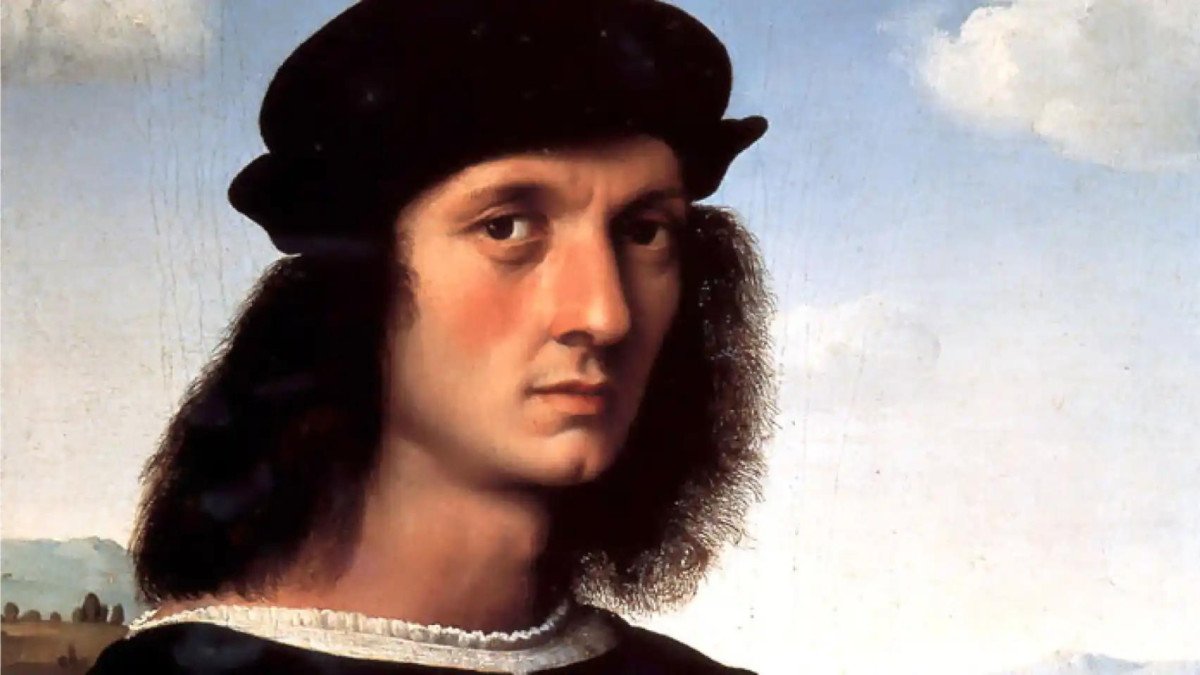
5. Raphael Sanzio (1483-1520)
He was the son of a modest painter, but he soon stood out in the art of painting as a child prodigy. He began his artistic training as a disciple of Pietro Perugino (1446-1423), and soon his exceptional talent caught the attention of Bramante (1444-1514), who placed him under his protection in Rome.
It will be in that city where Pope Julius II commissions him to do what is probably his most famous work: the frescoes of the papal rooms. The best known is the one found in the Stanza della Segnatura, in which Raphael represents the main thinkers of the Athenian school and which constitutes a work closely linked to the Renaissance mentality.
Many of the faces of the philosophers represented correspond to artists of the time, such as Leonardo (represented as Plato by Raphael) and Michelangelo (represented as Heraclius). The latter was included later, after Raphael contemplated the wonderful frescoes he had made in the Sistine vault and was captivated by his talent. The admiration that the man from Urbino always felt for Michelangelo is well known, although the recipient of his fascination was not always pleased. The art historian Anthony Blunt (1907-1983) collects a letter written by Michelangelo in which he complains that everything Raphael knows about art he learned from him.
Unlike Botticelli, the canon of feminine beauty that Raphael captures (mainly, in his Madonnas) is not inspired by any specific woman. The artist from Urbino composes an ideal face based on a perfect facial oval in which completely balanced and idealized features stand out. Perhaps it is this almost ethereal presence that gives Raphael’s virgins this unmatched beauty.
Rafael Sanzio died very young, at only 37 years old, when he enjoyed his full creative maturity. For this reason, his work is less extensive than that of some of his contemporaries, although it is no less important. Many later painters (especially Jean-Auguste-Dominique Ingres) considered him the master of masters, and the Pre-Raphaelite movement of the 19th century took his work as a reference for the radical change that Western art had undergone in the 16th century.
Use this citation format to reference the article clearly and help readers find the original source.
PsychologyFor. (2024). 5 Famous Artists of the Renaissance: What Was Their Art Like?. PsychologyFor. https://psychologyfor.com/5-famous-artists-of-the-renaissance-what-was-their-art-like/