

See more of our articles in your search results.
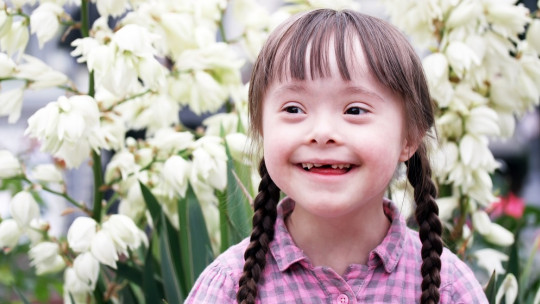
As a psychologist specializing in developmental disabilities, I’ve witnessed countless moments where the right activity transforms not just a child’s day, but their entire developmental trajectory. When working with children who have Down syndrome, the power of purposeful, engaging activities cannot be overstated. These aren’t just ways to pass time—they’re carefully designed interventions that support cognitive development, motor skills, social interaction, and emotional well-being.
Down syndrome, also known as Trisomy 21, affects approximately 1 in 700 babies born in the United States each year. While each child is unique with their own strengths, interests, and challenges, there are common developmental patterns that inform our approach to activity selection. Children with Down syndrome often experience delays in gross motor development, fine motor skills, speech and language, and may have differences in cognitive processing speed. However, what consistently impresses me in my practice is how these children respond to structured, meaningful activities that meet them where they are developmentally.
The activities I’m sharing today aren’t random suggestions—they’re evidence-based interventions rooted in decades of research in developmental psychology, occupational therapy, and special education. Each activity is designed to target multiple developmental domains simultaneously, recognizing that children learn best through integrated, multisensory experiences. Whether you’re a parent, educator, therapist, or caregiver, these activities can be adapted to meet individual needs while providing the scaffolding necessary for growth and learning. Remember, the goal isn’t perfection—it’s progress, engagement, and joy in the learning process.

The importance of play in Down syndrome
As we mentioned previously, play is essential at all stages of child development. The reason is that is not only useful for entertaining the little ones and ensuring they have a good time but because they also favor the correct development of personality and cognitive skills.
How many of these have you been "meaning to read" for months?
- 1
 THE LOST SKILLS ACADEMYThe Lost Skills of IndependenceBe Ready for Anything Life Throws at You - Hardcover-SpiralListen Free On Audible
 - 2
 A Navy SEALs Bug-In GuideA Navy SEAL's Bug-In GuideHow to Turn Your House into the Safest Place on EarthListen Free On Audible
 - 3
 Clarkson PotterHomemaking with BabsTips and Tricks for Making a House a HomeListen Free On Audible
Through play, all children learn to know themselves as well as everything around them, including other people. They acquire all kinds of knowledge about their body and how objects, instruments and utensils work.
As a general rule, children without any type of special health or psychological condition have the ability to learn to play on their own, although the fact of doing so with an adult reinforces the ability to interact with others as well as the bonds between them. However, this is not the case with children with Down syndrome.
In these cases the child do not usually present their own initiative when starting the game, so the collaboration and support of another person is recommended. Due to the physical and psychological characteristics of this syndrome, the child may have certain difficulties learning to play.
As a consequence, the amount of time and effort invested to enhance the game is essential to promote all types of cognitive skills; from personal autonomy to language, attention and psychomotor abilities.
During the first months of life, is advisable to start play routines without the need to use toys In this way, through the gestures, expressions and words of the adult we promote the development of the capacity for representation and symbolization.
Children with Down syndrome require special play dynamics that emphasize these gestures and oral language, so that through imitation they can learn to make appropriate gestures and movements. Finally, when games with objects and materials are introduced, the adult must guide the child to teach them how to use these tools correctly.
Art and Creative Expression Activities for Fine Motor and Cognitive Skills
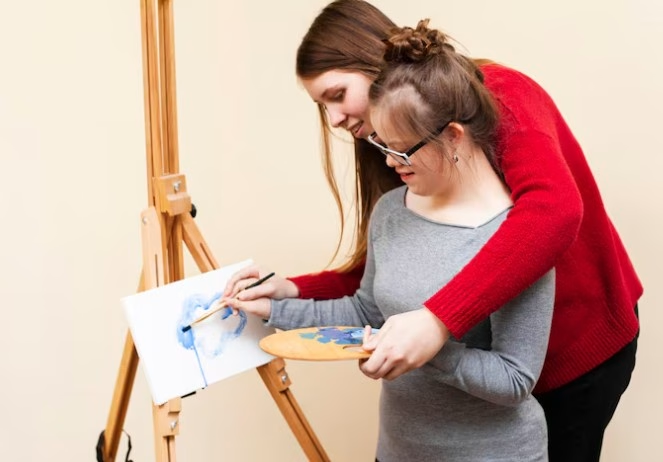
Creative arts provide a universal language for self-expression while addressing multiple developmental goals simultaneously. For children with Down syndrome, who may struggle with traditional academic tasks, art offers an alternative pathway to learning and communication.
Finger painting and brush painting activities develop hand strength, finger isolation, and bilateral coordination while encouraging creativity and color recognition. Start with large paper and thick brushes or sponges, gradually introducing smaller tools as skills develop. The sensory aspect of finger painting provides additional tactile input while the visual feedback supports cause-and-effect learning. Create themed painting sessions around seasons, holidays, or the child’s interests to maintain engagement and build vocabulary.
Collage and cutting activities address multiple developmental domains. Using safety scissors strengthens the intrinsic hand muscles necessary for fine motor control while teaching visual-motor integration and motor planning. Start with thick paper and progress to thinner materials as skills develop. Tearing paper provides an alternative for children not yet ready for scissors while still building bilateral coordination. The act of gluing pieces together teaches spatial relationships and sequencing.
Stamping and printing activities offer success-oriented art experiences while building hand strength and visual-motor skills. Use large stamps with easy-grip handles, sponges dipped in paint, or even vegetables cut into shapes for printing. These activities teach patterns, counting, and color mixing while providing the deep pressure input many children with Down syndrome find organizing. The predictable nature of stamping can be calming for children who struggle with sensory regulation.
Three-dimensional art projects using materials like clay, cardboard, or recycled materials challenge spatial reasoning and problem-solving skills. These projects require motor planning and executive function skills as children must hold multiple steps in mind while manipulating materials. Start with simple projects like decorating boxes or making playdough sculptures, gradually increasing complexity. The tangible nature of these projects provides immediate feedback and a sense of accomplishment.
Music and Movement Activities for Physical and Emotional Development
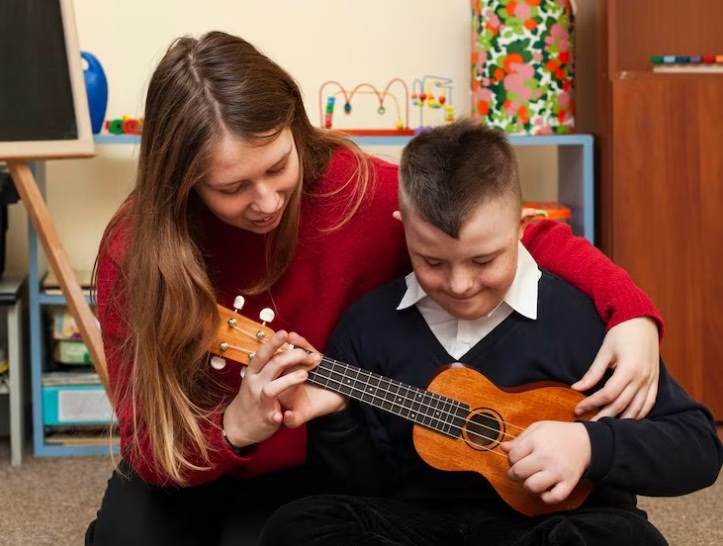
Music transcends developmental differences, speaking to the emotional centers of the brain in ways that traditional therapies sometimes cannot reach. For children with Down syndrome, who often have natural musical aptitude and respond well to rhythm and melody, music-based activities provide multiple developmental benefits wrapped in pure enjoyment.
Rhythm and beat activities form the cornerstone of music-based interventions. Using simple instruments like drums, shakers, or even homemade containers filled with rice, children learn to match beats, anticipate patterns, and coordinate movements. These activities strengthen auditory processing, improve motor planning, and build working memory. Start with simple, steady beats and gradually increase complexity as skills develop. The key is consistency and patience—some children may need hundreds of repetitions before internalizing a rhythm pattern.
Movement songs with actions combine music with gross motor challenges. Songs like “Head, Shoulders, Knees and Toes” or “If You’re Happy and You Know It” teach body awareness, bilateral coordination, and following multi-step directions. Create visual cues or picture cards to accompany songs, supporting children who are visual learners or those with auditory processing challenges. The repetitive nature of these songs builds motor memory while the social aspect encourages peer interaction and turn-taking.
Dance and creative movement activities allow for emotional expression while building cardiovascular fitness and muscle tone. Children with Down syndrome often have low muscle tone (hypotonia), making regular movement crucial for overall health. Put on various types of music—fast, slow, classical, contemporary—and encourage free movement. Introduce scarves, ribbons, or lightweight props to add visual interest and encourage fuller range of motion. This activity supports emotional regulation, creative expression, and gross motor development.
Singing and vocalization exercises specifically target speech and language development. Children with Down syndrome often have oral motor challenges that affect speech clarity. Singing exercises the same muscles used for speaking while being more enjoyable than traditional speech therapy exercises. Use songs with exaggerated mouth movements, varying pitch patterns, and repetitive lyrics. The melody helps children remember words and phrases, building both vocabulary and articulation skills.
Sensory Play Activities for Cognitive and Motor Development
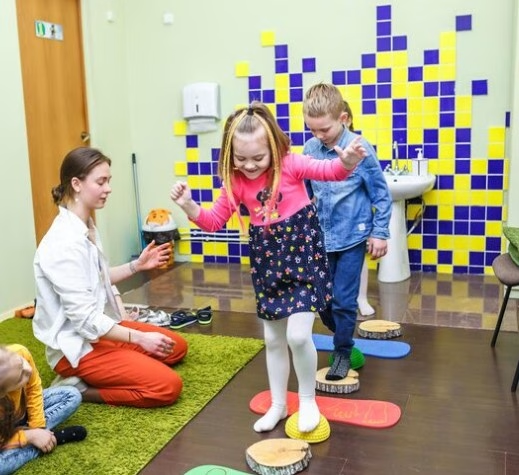
Sensory play forms the foundation of learning for all children, but it holds particular significance for children with Down syndrome. Their sensory processing may differ from typically developing peers, making it essential to provide rich, varied sensory experiences that support brain development and body awareness.
Water play activities offer exceptional benefits for children with Down syndrome. Fill large containers with water of different temperatures and textures—warm soapy water for washing toys, cool water with floating objects, or water mixed with safe materials like cornstarch to create different consistencies. These activities enhance tactile processing, improve hand-eye coordination, and provide calming proprioceptive input. The resistance of water also strengthens muscles and improves bilateral coordination as children reach across their bodies to manipulate objects.
Playdough and modeling clay activities deserve special attention in any developmental program. The act of kneading, rolling, and shaping clay provides deep pressure input that many children with Down syndrome crave. This activity strengthens the small muscles of the hands—crucial for future writing and self-care skills. Create themed playdough sessions where children make letters, shapes, or objects related to their interests. The three-dimensional manipulation helps with spatial awareness and problem-solving skills.
Textured treasure hunts engage multiple senses simultaneously while building categorization skills and vocabulary. Fill bins with materials like rice, beans, or shredded paper, then hide small objects for children to find. This activity improves tactile discrimination, sustained attention, and following directions. The unpredictability of what they’ll find next maintains engagement while the motor act of searching builds hand strength and dexterity.
Sand and kinetic sand play provides unique sensory input while supporting cause-and-effect learning. Children can bury and uncover objects, create patterns, or use tools to move and shape the sand. The flowing properties of kinetic sand provide continuous sensory feedback, helping children understand spatial relationships and motor planning. These materials also offer emotional regulation benefits—many children find the repetitive nature of sand play soothing and organizing.
Outdoor and Physical Activities for Gross Motor Strength
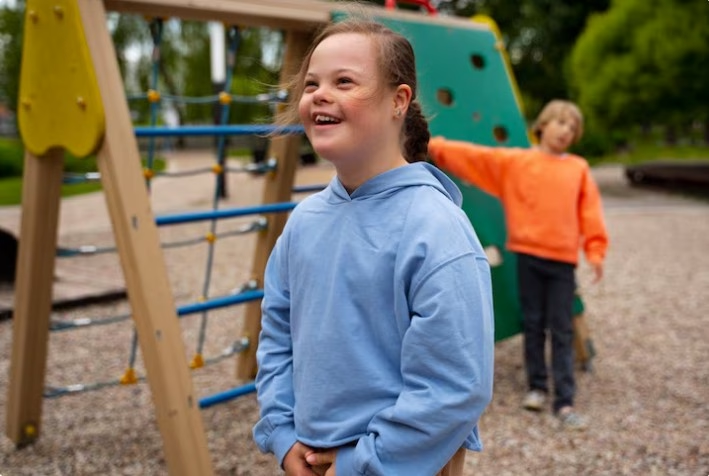
Physical activity takes on special importance for children with Down syndrome, who often have low muscle tone, joint hypermobility, and cardiovascular considerations. Outdoor activities provide natural motivation for movement while addressing these physical challenges in enjoyable ways.
Nature exploration and scavenger hunts combine physical activity with cognitive challenges and sensory experiences. Create lists using pictures for non-readers, focusing on items children can safely collect or observe. Walking on uneven terrain improves balance and proprioception while searching for items challenges visual scanning and attention to detail. The changing environment of outdoor spaces provides rich sensory input and opportunities for language development.
Playground activities offer structured opportunities for gross motor development. Swings provide vestibular input while building core strength and motor planning. Slides teach body awareness and spatial concepts like up, down, fast, and slow. Climbing structures challenge bilateral coordination, strength, and problem-solving skills. The social environment of playgrounds also provides natural opportunities for peer interaction and social skill development.
Ball games and sports activities adapted for individual skill levels build eye-hand coordination, motor planning, and team cooperation. Start with large, lightweight balls and simple activities like catching, throwing, or kicking. Gradually introduce more complex games as skills develop. The key is maintaining success while providing appropriate challenges. These activities also support cardiovascular fitness and muscle tone while building confidence and social connections.
Gardening and outdoor work projects provide meaningful physical activity while teaching responsibility and life skills. Digging, planting, watering, and harvesting involve multiple motor skills while connecting children to natural cycles and processes. The tangible results of gardening provide motivation and sense of accomplishment while the sensory aspects support regulation and attention. These activities also create opportunities for vocabulary development and scientific thinking.
Social and Communication Games for Language Development
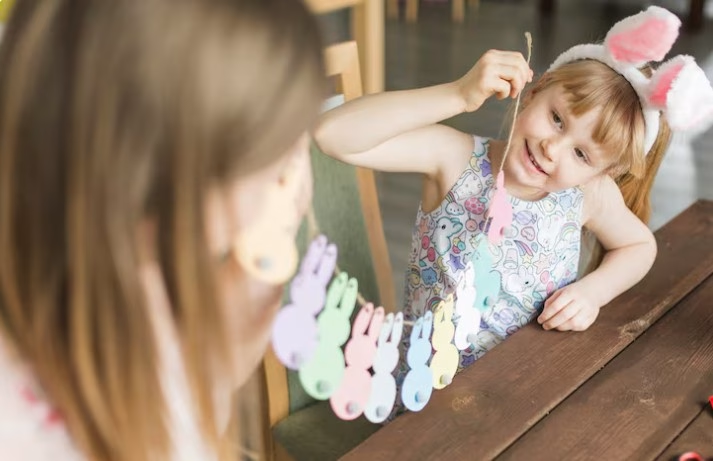
Language development represents one of the most critical areas of intervention for children with Down syndrome. Rather than relying solely on traditional therapy approaches, incorporating social games and interactive activities can accelerate progress while making learning enjoyable.
Turn-taking games form the foundation of all social communication. Simple games like rolling a ball back and forth, taking turns with musical instruments, or alternating placing blocks in a container teach the fundamental principles of conversation. These activities build joint attention, social referencing, and anticipation—all crucial prerequisites for language development. The key is maintaining engagement through varied materials and consistent positive reinforcement.
Picture-based communication games support children who are visual learners or those working toward verbal communication. Create matching games using family photos, favorite objects, or preferred activities. These games build vocabulary, categorization skills, and memory while providing natural opportunities for verbal expression. Even children who are not yet speaking can participate by pointing, gesturing, or using alternative communication methods.
Dramatic play and role-playing activities encourage imaginative thinking and language expansion. Set up simple scenarios like a pretend kitchen, doctor’s office, or store. These activities naturally elicit functional vocabulary, social scripts, and problem-solving behaviors. Children learn to use language in meaningful contexts while practicing social skills and emotional understanding. The repetitive nature of dramatic play helps consolidate learning while the variety keeps children engaged.
Interactive storytelling combines literacy exposure with active participation. Choose books with repetitive phrases, clear illustrations, and familiar themes. Encourage children to fill in familiar words, make sound effects, or act out story elements. This approach builds phonological awareness, vocabulary, and comprehension skills while supporting attention and listening skills. The predictable structure of many children’s books provides security while introducing new concepts and language patterns.
Daily Living Skills Activities for Independence
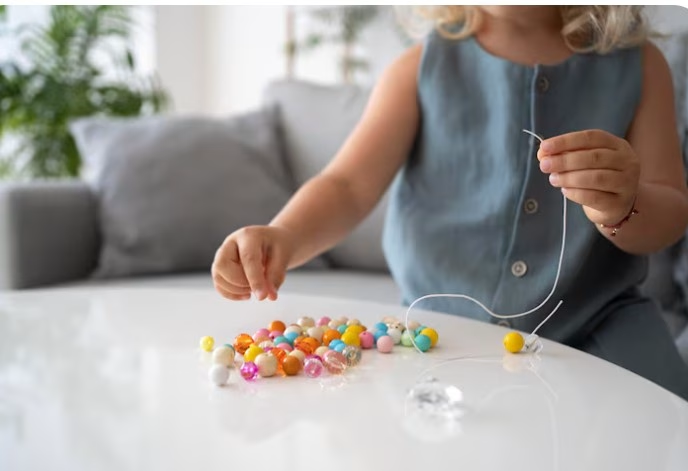
Independence in daily activities represents a primary goal for children with Down syndrome, building confidence and practical skills for lifelong success. These activities address executive function, motor skills, and self-confidence while teaching essential life skills.
Cooking and food preparation activities provide rich learning opportunities across multiple domains. Simple tasks like washing fruits, mixing ingredients, or assembling sandwiches build fine motor skills, following directions, and safety awareness. The sequential nature of cooking teaches organization and planning skills while the sensory aspects support attention and engagement. Measuring ingredients introduces math concepts while discussing nutrition builds health awareness.
Self-care and hygiene activities should be practiced regularly with appropriate supports and modifications. Break complex routines like teeth brushing or hair washing into smaller steps, using visual schedules and verbal prompts as needed. The goal is gradual independence rather than immediate perfection. These activities build body awareness, fine motor skills, and personal responsibility while supporting health and social acceptance.
Household chores and organizational tasks teach valuable life skills while building work habits and pride in contribution. Simple tasks like sorting laundry by color, matching socks, or organizing toys by category build categorization skills and attention to detail. The completion of these tasks provides sense of accomplishment and family belonging while building motor skills and endurance.
Money and shopping skills can be introduced through games and real-life practice opportunities. Start with coin recognition and simple counting, gradually building toward making purchases and understanding value. These activities build math skills, social interaction, and community participation while preparing children for greater independence in adulthood.
FAQs about Activities for Children with Down Syndrome
How do I know if an activity is appropriate for my child’s developmental level?
Developmental appropriateness depends on your child’s individual strengths and challenges rather than chronological age. Look for activities that provide appropriate challenge without causing frustration. A good rule is that your child should be successful about 80% of the time with some support. If they’re successful 100% of the time independently, the activity may be too easy. If they’re struggling more than 50% of the time even with support, consider breaking the activity into smaller steps or choosing something slightly easier. Observe your child’s engagement level—appropriate activities should maintain interest and motivation while building skills gradually.
What modifications can I make for children with more significant support needs?
Modifications should focus on maintaining the essential learning objectives while adjusting the method of participation. Use larger materials for children with motor challenges, provide extra processing time for those with cognitive differences, and incorporate visual supports for children with communication needs. Consider partial participation—your child doesn’t need to complete every aspect of an activity to benefit from it. Focus on what they can do rather than what they can’t, and celebrate small progress consistently. Adaptive equipment like built-up handles, weighted materials, or communication devices can enable participation in activities that might otherwise be inaccessible.
How long should activity sessions last for optimal benefit?
Attention spans vary significantly among children with Down syndrome, generally ranging from 5-20 minutes depending on age, interest level, and individual characteristics. Start shorter and gradually increase duration as your child builds sustained attention skills. Multiple short sessions throughout the day are often more effective than one long session. Follow your child’s cues—if they’re losing interest, take a break or switch activities. Quality engagement is more important than quantity of time. Some children may benefit from movement breaks during longer activities, while others may be able to sustain attention longer with preferred materials or topics.
Should I focus on areas of weakness or build on strengths?
The most effective approach combines both strategies through strength-based interventions. Identify your child’s natural interests and abilities, then use these as motivation for working on challenging areas. For example, if your child loves music but struggles with fine motor skills, use musical instruments or rhythm activities that require hand coordination. This approach maintains motivation while addressing needs. However, don’t ignore areas of strength—continue developing these as they contribute to self-confidence and may become vocational or recreational interests. Balanced programming addresses both strengths and challenges while maintaining your child’s dignity and joy in learning.
How can I tell if activities are making a difference in my child’s development?
Progress measurement should focus on functional improvements in daily life rather than just performance during activities. Look for generalization—skills learned during activities should begin appearing in other contexts. Document progress through photos, videos, or simple data collection, noting not just what your child can do but how they approach tasks, their persistence, problem-solving attempts, and social engagement. Celebrate small wins—development may be slower than typical but is equally meaningful. Consider both skill acquisition and quality of life indicators like increased independence, social connections, and emotional regulation. Regular communication with teachers, therapists, and healthcare providers can help you recognize progress that might be gradual or subtle.
What should I do if my child seems frustrated or uninterested in activities?
Frustration and disinterest are normal responses that provide important information about activity selection and presentation. Analyze the cause—is the activity too difficult, too easy, or simply not aligned with current interests? Modify immediately rather than pushing through resistance. Break tasks into smaller steps, provide additional supports, or switch to a preferred activity to rebuild positive associations. Timing matters—some children are more receptive at certain times of day or when basic needs are met. Follow your child’s lead while gently encouraging participation. Respect refusal while continuing to offer opportunities. Remember that relationship is more important than any single activity—maintaining trust and enjoyment in shared experiences supports long-term learning and development.
Use this citation format to reference the article clearly and help readers find the original source.
PsychologyFor. (2025). 6 Activities for Children with Down Syndrome. PsychologyFor. https://psychologyfor.com/6-activities-for-children-with-down-syndrome/