

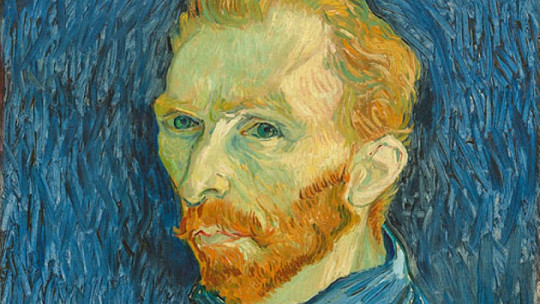
Content note: This article discusses historical cases of suicide for educational purposes. If you or someone you know is struggling, please reach out to a mental health professional or a crisis helpline in your country. You are not alone, and help is available.
Throughout human history, some of the most brilliant, powerful, and creatively gifted individuals have ended their own lives — leaving behind legacies that the world continues to wrestle with, mourn, and remember. Suicide is one of the most complex and painful phenomena in human experience, and its presence across every civilization, every social class, and every era of recorded history reminds us that no achievement, no fame, and no external circumstance immunizes a person against the depths of inner suffering. Understanding these historical cases is not about romanticizing tragedy. It is about recognizing, with honesty and compassion, that mental health struggles are part of the human condition — and that they have always been so, long before we had the language or the clinical frameworks to name them.
The seven individuals examined in this article come from radically different worlds: ancient Egypt and twentieth-century New York, the baroque architecture of Rome and the wheat fields of southern France, the drawing rooms of imperial Russia and the expressionist studios of Manhattan. What they share is not a common psychology, a common circumstance, or a common method, but a common place in the historical record — and the questions their deaths continue to raise about suffering, creativity, despair, and the limits of what any human being can endure. These are not cautionary tales, nor are they stories of weakness. They are chapters in the vast, unfinished story of what it means to be human, told with the gravity and the care they deserve.
Cleopatra VII (69–30 BC): The Last Queen of Egypt

Of all the suicides in recorded history, perhaps none has been more mythologized, more dramatized, or more persistently misrepresented than that of Cleopatra VII — the last ruler of an independent Egypt, and one of the most formidable political minds of the ancient world.
The historical reality of her final days is considerably more complex than the iconic image of a queen serenely placing a snake to her breast. After the Battle of Actium in 31 BC, where the combined forces of Cleopatra and Mark Antony were decisively defeated by Octavian (the future Emperor Augustus), the political situation became irreversible. Mark Antony, having received a false report of Cleopatra’s death, fell on his own sword — dying in her arms shortly afterward. Cleopatra, now a prisoner of Octavian’s designs, understood precisely what awaited her: she would be transported to Rome and paraded through the streets in chains as a trophy of conquest. For a woman who had ruled one of the ancient world’s great civilizations and who had allied herself with two of Rome’s most powerful men, the prospect of that public humiliation was insupportable.
How many of these have you been "meaning to read" for months?
- 1
 Summer, JadeStress ReliefAdult Coloring Book with Animals, Flowers, Fantasy, and More for Mindfulness and RelaxationListen Free On Audible
 - 2
 HarperOneMere Christianity (Deluxe Edition)Listen Free On Audible
 - 3
 MajostaDon't Believe Everything You ThinkWhy Your Thinking Is The Beginning & End Of Suffering (Beyond Suffering)Listen Free On Audible
She chose death over subjugation. Ancient sources, including Plutarch, suggest the method was poison — likely from a cobra smuggled to her in a basket of figs — though modern historians and toxicologists have debated whether the snake theory holds up to scrutiny, with some proposing a toxic ointment as a more plausible alternative. The precise method matters less than the act itself: a deliberate, clear-eyed decision made by a woman who had spent her entire adult life exercising agency over her own fate, and who refused to surrender that agency in her final moments.
Cleopatra was 39 years old. With her death, the Ptolemaic dynasty that had ruled Egypt for nearly three centuries came to an end, and Egypt became a Roman province. Her legacy — distorted for centuries by Roman propaganda that cast her as a dangerous seductress rather than the astute, multilingual, politically gifted ruler she actually was — continues to be reclaimed and reexamined by historians today.
Francesco Borromini (1599–1667): Genius in the Shadow of Rivalry
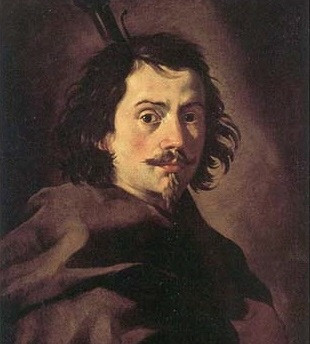
To understand Francesco Borromini’s death, you first need to understand the particular torment of his life — and specifically, the lifelong shadow cast over it by his great rival, Gian Lorenzo Bernini.
Both men were titans of the Roman baroque. Borromini — born Francesco Castelli in the canton of Ticino — was arguably the more original architectural thinker of the two, a visionary whose undulating facades, complex geometric interiors, and spatial inventiveness pushed the boundaries of what stone and brick could express. His Church of Sant’Ivo alla Sapienza, his San Carlo alle Quattro Fontane, his contributions to Sant’Agnese in Agone — these are among the most extraordinary architectural achievements of the seventeenth century. And yet, during his lifetime, it was Bernini who dominated: Bernini who charmed popes and patrons, Bernini who received the grand commissions, Bernini whose social grace and political intelligence translated talent into institutional power in ways that the introverted, abrasive, chronically depressed Borromini could never manage.
The accumulation of perceived professional slights, the chronic sense of underrecognition, and what contemporary accounts describe as deepening episodes of melancholy — what we would today recognize as severe depression — eroded Borromini over the final years of his life. On the night of August 2, 1667, Francesco Borromini fell on the blade of his own sword. He did not die immediately. According to contemporary accounts, he survived long enough to dictate an account of his own death to his secretary — a final act of documentation from a man who had spent his life attending to precise and meticulous detail. He died later that day.
He was 68 years old. His architectural legacy, largely unappreciated in his own time, would go on to influence generations of architects and is now recognized as one of the foundational bodies of work in Western architectural history. Borromini’s story remains one of the most poignant illustrations of how profoundly the experience of being professionally unseen can damage a person who has given everything to their work.
Mariano José de Larra (1809–1837): Spain’s Most Caustic Voice
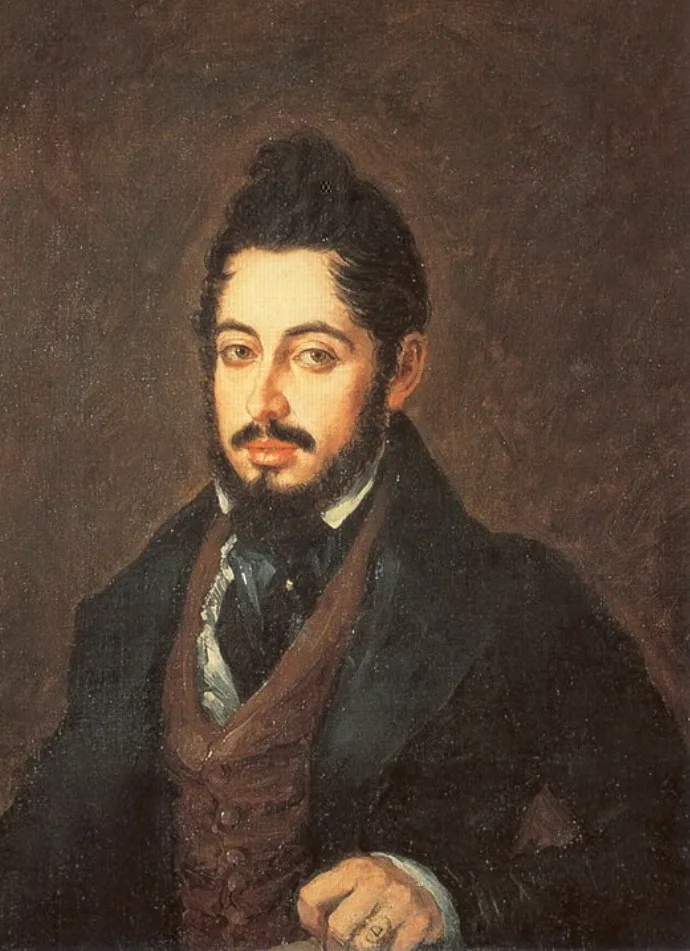
Mariano José de Larra was only 27 years old when he died — but in those 27 years he had become the sharpest, most incisive, and most brilliantly caustic journalistic voice in Spain’s literary history. His articles, published under the pseudonym “Fígaro,” dissected Spanish society with a precision and a wit that made him simultaneously celebrated and despised, widely read and deeply lonely.
Born in Madrid to a family that had been exiled to France during the Peninsular War, Larra grew up between two cultures and fully at home in neither — a condition that perhaps sharpened his outsider’s eye. His writing combined fierce political engagement with a deep personal pessimism; his celebrated essay Vuelva usted mañana (Come Back Tomorrow), a devastating satire of Spanish bureaucratic inertia, remains as recognizable and as painfully funny today as it was in 1833.
His personal life was a study in accumulating misery. His marriage was a failure, his finances were precarious, and his passionate affair with a married woman, Dolores Armijo, had become the central emotional fact of his existence. On the night of February 13, 1837, Dolores came to his apartment to return his letters and end the relationship definitively. After she left, Larra took a pistol and shot himself in the head. His young daughter Adela found his body the following morning.
The funeral brought out the literary establishment of Madrid in mourning — and among the young writers who stood at his graveside was a nineteen-year-old José Zorrilla, who read a poem aloud and launched his own literary career in the shadow of Larra’s death. Larra’s work has never gone out of print. His despair, his brilliance, and his inability to find peace in a society he both loved and found unbearable continue to speak to readers nearly two centuries after his death.
Vincent van Gogh (1853–1890): Light and Shadow in Auvers
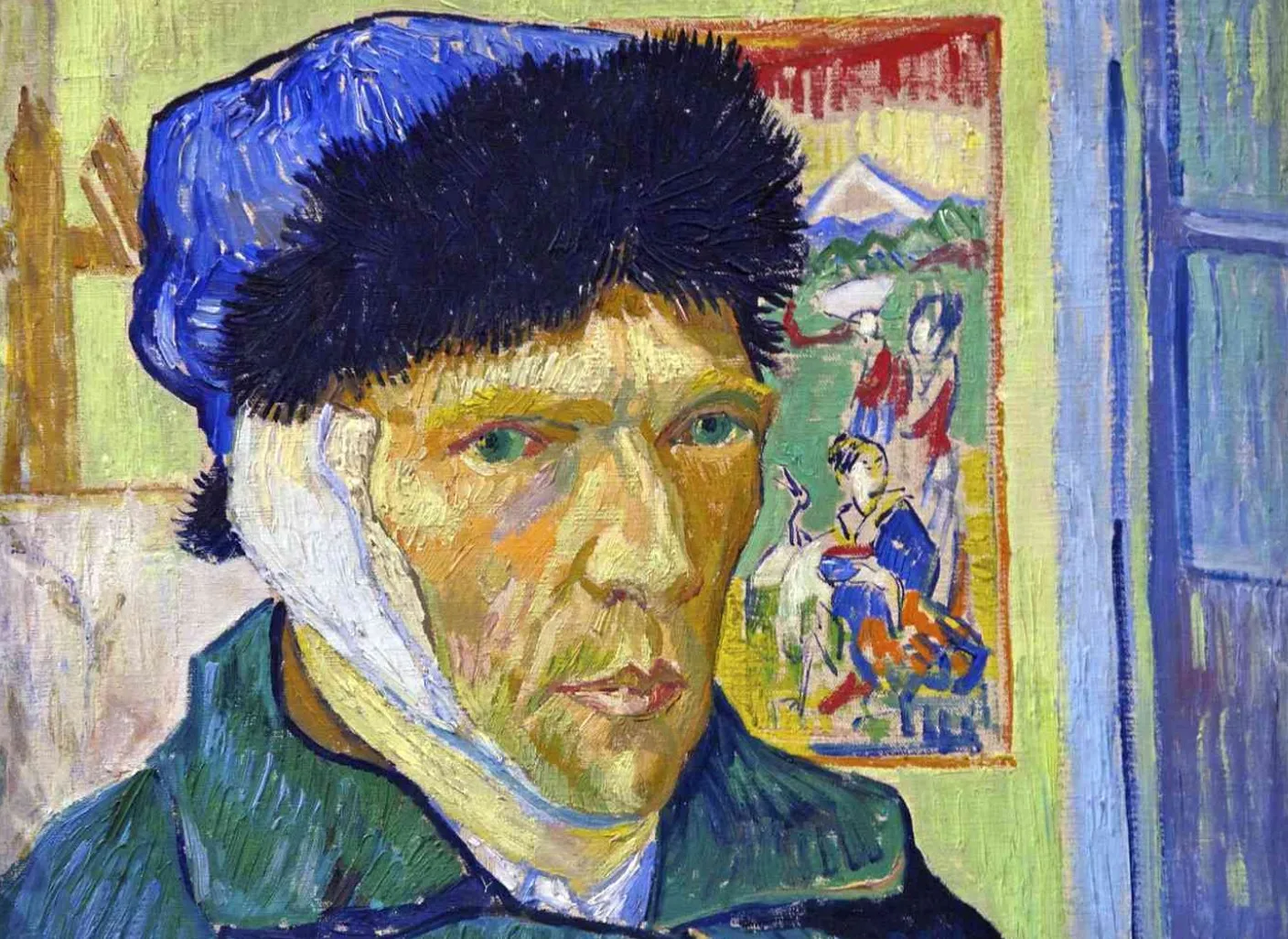
Few deaths in the history of art have been as exhaustively analyzed, as romantically mythologized, or as genuinely contested as that of Vincent van Gogh — and the contestation itself says something important about how reluctant we are to let the stories we have built around our cultural icons be complicated by inconvenient facts.
The traditional account is well known. Van Gogh, having spent time in the asylum at Saint-Rémy-de-Provence following his breakdown in Arles, arrived in the small village of Auvers-sur-Oise in May 1890, apparently recovered and painting with extraordinary productivity. On July 27, he walked into the surrounding wheat fields and returned to his lodgings with a bullet wound in his abdomen. He died two days later, with his devoted brother Theo at his side. The death was assumed to be suicide, and for more than a century it was treated as such — a tragic, almost inevitable conclusion to a life marked by mental illness, poverty, and artistic isolation.
In 2011, however, biographers Steven Naifeh and Gregory White Smith raised serious questions about this narrative, suggesting that the wound’s trajectory and location — inconsistent with a self-inflicted shot — pointed to the involvement of a local teenage boy with whom Van Gogh had a troubled relationship. The theory remains controversial and has not achieved consensus among art historians and biographers. The truth of Van Gogh’s final hours may never be fully established.
What is not contested is the depth of Van Gogh’s suffering throughout his life — the severe depression, the episodes of psychosis, the loneliness, the financial dependence on Theo, and the persistent fear that his illness was an irreparable burden on the people he loved. His letters to Theo, among the most remarkable correspondence in art history, document all of this with heartbreaking clarity. They also document, alongside the suffering, an almost superhuman capacity for beauty — a conviction, expressed in paint with a fervor that has never been matched, that the world was worth looking at, worth rendering, worth the effort of staying alive to see.
He was 37 years old. He had sold one painting in his lifetime.
Sylvia Plath (1932–1963): The Bell Jar and What Came After

Sylvia Plath is one of the defining literary voices of the twentieth century — and one of the figures whose death has been most harmfully romanticized by a culture that has sometimes confused the intensity of her art with a glamorization of her suffering. It is worth being direct about this: Plath’s death was a tragedy, not a literary conclusion. She was a 30-year-old woman with two small children, in the grip of a severe depressive episode, without adequate mental health support, in the coldest winter London had seen in decades. She did not die because she was a poet. She died because she was ill, and the help she needed did not reach her in time.
Born in Boston in 1932, Plath demonstrated prodigious literary talent from childhood. Her first suicide attempt came at 20, following a breakdown that led to electroconvulsive therapy — an experience she would document with devastating precision in her semi-autobiographical novel The Bell Jar, published in January 1963 under the pseudonym Victoria Lucas. The novel, now recognized as one of the most significant American novels of the century, appeared less than a month before her death.
The final months of her life were marked by the collapse of her marriage to the poet Ted Hughes following his infidelity, a physically brutal winter, financial stress, single parenthood, and the return of the severe depression that had first hospitalized her a decade earlier. On the morning of February 11, 1963, having sealed her children’s bedroom against gas fumes and left them milk and bread, she placed her head in the gas oven. She had asked her downstairs neighbor to check on her that morning; he arrived too late.
Plath’s poetry — particularly the late collection Ariel, published posthumously — remains among the most powerful writing in the English language. Her legacy has been complicated by decades of debate about Ted Hughes’s role in her archive and her posthumous reputation. But the most important thing her story communicates is not about the relationship between creativity and suffering. It is about what happens when a person in crisis does not receive the support they need.
Adolf Hitler (1889–1945): The End of the Reich
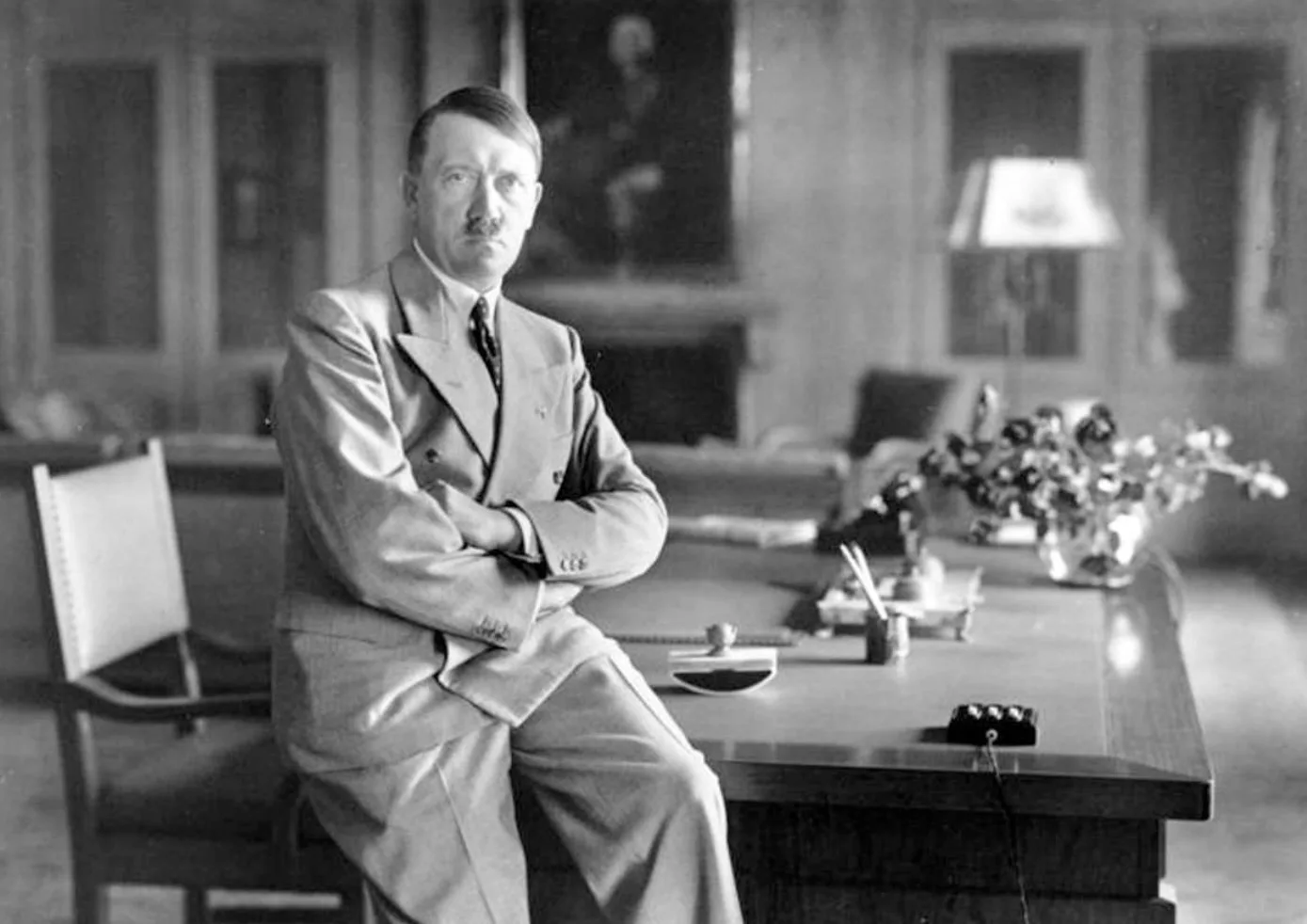
The suicide of Adolf Hitler occupies a category entirely its own in this list — not because of any sympathy that his death commands, but because of its historical significance and the context of world-historical catastrophe within which it occurred.
By the last days of April 1945, the military situation of the Third Reich was irretrievably lost. Soviet forces were advancing on Berlin from the east; Allied forces were closing from the west. The city was in ruins. In the Führerbunker beneath the Reich Chancellery, Hitler — visibly aged, physically deteriorating, and still issuing orders to armies that no longer existed — had made his decision. He would not be captured. He would not be put on trial. He would not be paraded before the world as a prisoner.
On the evening of April 29, he married his longtime companion Eva Braun in a brief civil ceremony. He dictated his political testament, in which he blamed the Jewish people for the war — maintaining, even in his final hours, the genocidal ideology that had driven the murder of six million Jews and millions of others. On the afternoon of April 30, 1945, both Hitler and Eva Braun took their lives — she by cyanide capsule, he by a combination of cyanide and a gunshot wound to the head. Their bodies, per his instructions, were carried to the garden of the Chancellery and burned.
Within days, Germany surrendered unconditionally, ending nearly six years of war in Europe and closing the chapter on the most destructive regime in modern history. Hitler’s suicide was, in the simplest terms, an act of cowardice — a final evasion of accountability for crimes of almost incomprehensible magnitude. It left no possibility for the kind of reckoning that the Nuremberg trials would impose on his surviving subordinates, and its historical significance lies precisely in what it avoided rather than in what it represented.
Mark Rothko (1903–1970): Color Fields and Darkness
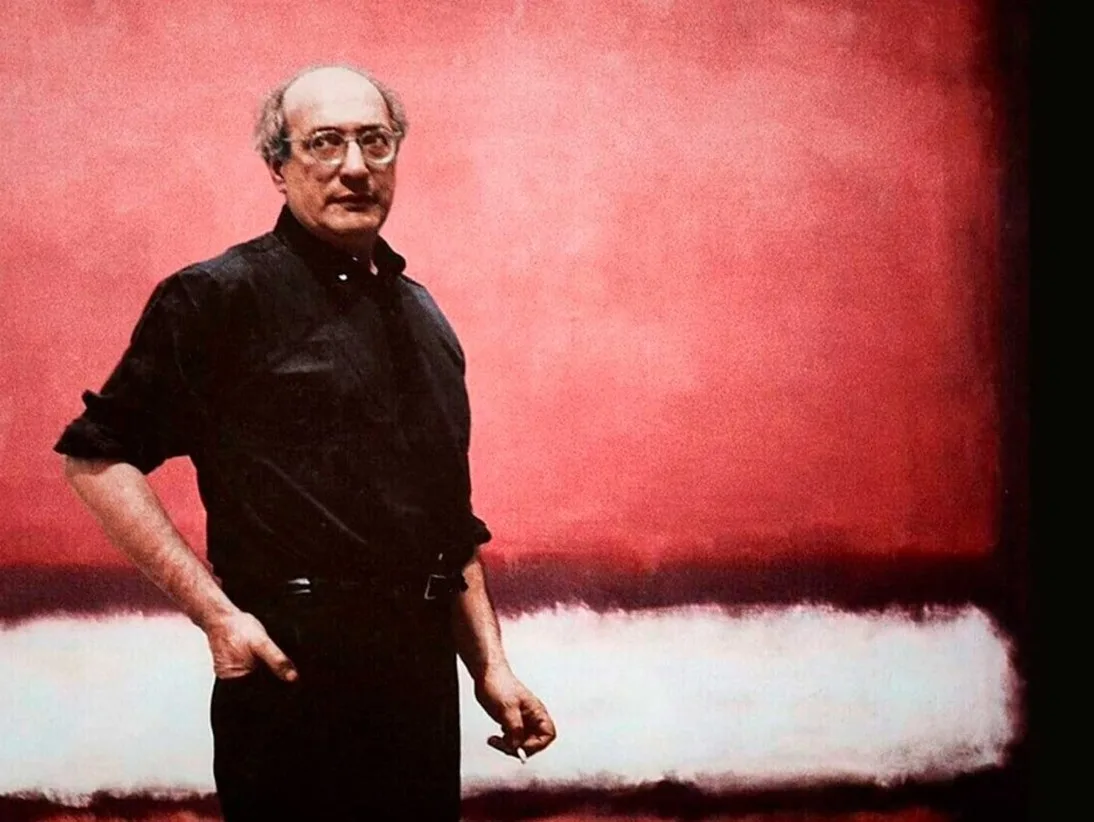
Mark Rothko was one of the foundational figures of abstract expressionism — an artist whose large-scale color field paintings, with their luminous rectangular forms hovering against one another in depths of saturated color, invite a quality of contemplative emotion that few works in the Western tradition have achieved. Rothko himself spoke of his paintings as containing “tragedy, ecstasy, doom.” The darkness he painted was not merely aesthetic.
Born Marcus Yakovlevich Rothkowitz in Dvinsk (present-day Latvia) in 1903, Rothko emigrated to the United States as a child and spent his life moving between poverty and artistic struggle before achieving, in his fifties, the recognition and financial success he had long sought. By the late 1960s, that success had not resolved the depression, the alcoholism, or the deepening existential despair that characterized his later years. His health was deteriorating — an aortic aneurysm had been diagnosed in 1968, and his doctors had restricted his ability to work on the large-scale paintings he loved. His marriage had ended. He was increasingly isolated.
On the morning of February 25, 1970, his studio assistant found Rothko’s body on the floor of his New York studio. He had taken a massive overdose of barbiturates and had cut the veins in his arms. He was 66 years old. There was no note. The scene — the vast pools of blood against the studio floor, the paintings looking on in silence — has been described by those who witnessed it in terms that evoke the painter’s own canvases: a dark field, a stillness, an absence of explanation.
The Rothko Chapel in Houston, Texas — fourteen large canvases in a non-denominational space he considered his most important commission — was completed and dedicated in 1971, the year after his death. It stands today as a place of meditation and interfaith dialogue, visited by hundreds of thousands of people annually. It is, perhaps, the closest thing to a testament he left: a space built from darkness that people enter in order to be still, to feel, and, sometimes, to be consoled.
What History’s Cases Teach Us About Mental Health Today
These seven stories, separated by centuries and continents and circumstances, share a thread that is neither poetic nor mythological but deeply clinical: each of these individuals was suffering, and in most cases that suffering was either unrecognized, undertreated, or entirely unsupported by the resources we now know can make a genuine difference.
Cleopatra faced a political situation with no survivable exit; her death was as much a geopolitical act as a personal one. But Borromini’s chronic melancholy, Larra’s devastating loneliness, Van Gogh’s recurring psychotic episodes, Plath’s severe depression, and Rothko’s late-life despair — these are not mysteries. They are recognizable clinical presentations that, with contemporary understanding and treatment, carry very different prognoses than they did in the centuries when these individuals lived.
The study of these historical cases is valuable precisely because it dismantles the dangerous myth that mental health struggles are signs of weakness, or that they afflict only certain kinds of people. They do not.They affect the brilliant and the powerful, the celebrated and the obscure, the ancient and the modern. What has changed — and what continues to change — is our capacity to recognize suffering, to name it without shame, and to offer genuine help to those who are experiencing it.
If you are struggling, or if someone you care about is struggling, the most important thing you can do is reach out — to a mental health professional, to a trusted person in your life, or to a crisis service. Seeking help is not a surrender. It is, in the fullest sense, an act of self-determination. It is choosing to stay.
FAQs About Famous Suicides in History
Why do we study famous suicides in history?
Studying historical cases of suicide serves several legitimate educational and psychological purposes. It allows us to examine how mental health, political despair, social isolation, and personal crisis have manifested across different cultures and eras. It humanizes historical figures who are often reduced to their professional achievements, reminding us that behind every biography there is a full interior life. It also contributes to what researchers call postvention — the process of making sense of a suicide after it has occurred — and can help us identify risk factors, understand the limits of the support systems available in different historical periods, and appreciate how far our understanding of mental health has advanced. None of this requires romanticizing or glorifying the act itself; it requires approaching it with the same rigor, empathy, and intellectual honesty we bring to any other dimension of human experience.
Is there a link between creativity and mental health struggles?
This is one of the most debated questions in the psychology of creativity, and the research is more nuanced than popular culture tends to suggest. There is evidence from several large-scale studies that certain mental health conditions — particularly bipolar disorder and unipolar depression — are somewhat more prevalent among people working in creative fields than in the general population. However, it is critically important to note that mental illness does not cause creativity, and creativity does not cause mental illness. The relationship is correlational, not causal, and it is mediated by many variables. The romanticization of the “suffering artist” trope is actively harmful because it implies that mental health treatment might diminish creative capacity — a belief that has led many creatively gifted people to avoid seeking help they genuinely needed. Creativity and mental wellbeing are not in opposition. Many extraordinarily creative individuals have lived long, mentally healthy lives.
How should we discuss suicide responsibly when talking about historical figures?
Responsible discussion of historical suicides follows the same basic principles that guide responsible contemporary reporting on the subject. These include: avoiding detailed descriptions of methods; not presenting the act as a solution to suffering; contextualizing the death within the person’s full life and circumstances rather than reducing their legacy to their manner of dying; acknowledging the mental health dimensions without stigmatizing them; and including references to support resources when the subject is discussed in public contexts. The goal is to inform and to humanize, not to sensationalize or romanticize. It is also important to acknowledge that historical figures did not have access to the mental health resources available today — and that this matters enormously when we reflect on their stories.
What is the “Werther effect” and is it relevant to historical cases?
The Werther effect refers to the phenomenon of suicide contagion — the documented tendency for publicized suicides, particularly those of prominent or admired individuals, to be followed by increases in suicide rates among people who identified with the deceased. The term comes from Johann Wolfgang von Goethe’s 1774 novel The Sorrows of Young Werther, whose publication was followed by a wave of reported suicides among young European men who identified with its protagonist. The effect has been documented in multiple modern studies and is the reason why media guidelines for reporting on suicide exist. In historical cases, the Werther effect reminds us that the way we discuss and narrate these deaths has real consequences — that storytelling about suicide is not a neutral act and carries genuine responsibility, particularly when the person who died was famous or widely admired.
What mental health resources existed for people in earlier historical periods?
Mental health support as we understand it today — psychotherapy, psychiatric medication, crisis intervention, community mental health services — simply did not exist for most of the individuals discussed in this article. In earlier centuries, what passed for mental health care ranged from benign neglect to actively harmful interventions: confinement in asylums, bloodletting, moral condemnation, and religious exhortation. Even in the twentieth century, the mental health treatment available to figures like Sylvia Plath and Mark Rothko was limited and sometimes counterproductive by today’s standards. This historical context is essential for understanding these deaths with appropriate compassion — and for appreciating how genuinely transformative the development of modern psychiatry and psychotherapy has been. Today, effective treatments exist for depression, bipolar disorder, and other conditions that claimed many of these historical figures. Seeking them out is one of the most important decisions a person can make.
Where can someone go if they are experiencing thoughts of suicide?
If you or someone you know is experiencing thoughts of suicide, please reach out for help immediately. You do not need to be in immediate crisis to seek support — talking to a mental health professional before a crisis develops is always worthwhile. In most countries, crisis helplines are available 24 hours a day, seven days a week. In the United States, you can call or text 988 to reach the Suicide and Crisis Lifeline. In the United Kingdom, the Samaritans can be reached at 116 123. In Spain, the Telèfon de l’Esperança operates at 93 414 48 48, and the Cruz Roja crisis line is available at 900 107 917. International resources are available at findahelpline.com. Speaking with a mental health professional — a psychologist, psychiatrist, or counselor — is always the most appropriate and most effective first step. Reaching out is a sign of strength, not weakness, and the help available today is genuinely capable of making a difference.
Use this citation format to reference the article clearly and help readers find the original source.
PsychologyFor. (2026). 7 Famous Suicides in History. PsychologyFor. https://psychologyfor.com/7-famous-suicides-in-history/