


See more of our articles in your search results.
Post-traumatic stress is a disorder that appears after having lived a traumatic experience, understood as an event that generates a hard emotional blow, such as exposing ourselves to a real death, suffering danger of death, or being a victim of sexual violence.
Given the impairment of functionality and discomfort caused by this disorder, it will be necessary to receive professional treatment, both psychological and, if necessary, psychiatric. But as a complement to psychological treatment, habits can be established that help us achieve a better and speedy recovery.
In this article We will see what habits we can carry out to help overcome post-traumatic stress disorder more easily.
What is PTSD?
Post-traumatic stress disorder (PTSD) is defined as a mental disorder that appears when a trauma occurs, an unusual aversive event. The fifth edition of the Diagnostic Manual of the American Psychiatric Association (DSM 5) specifies that this situation is due to exposure to actual death or danger of death, serious injury or sexual violence, directly, as a witness, being aware of the events that have happened to someone close to you or repeatedly experiencing or being exposed to aversive details of a traumatic event, such as being an ambulance worker.
Given the traumatic event experienced, the subject shows different symptoms that are defining criteria of PTSD, such as re-experiencing the event either during sleep, through intrusive memories or dissociative reactions in which the subject believes he is reliving the event; There is also an avoidance of both thoughts and external stimuli (places, people…) that can remind them of the trauma, and negative cognitions and affect and hyperactivation arise. When reminded of the traumatic event, the person appears irritable, startled, and has difficulty sleeping and concentrating.
How many of these have you been "meaning to read" for months?
- 1
 TarcherThe Artist's Way30th Anniversary EditionListen Free On Audible
- 2
 New Harbinger PublicationsThe Dialectical Behavior Therapy Skills WorkbookPractical DBT Exercises for Learning Mindfulness, Interpersonal Effectiveness, Emotion Regulation...Listen Free On Audible
- 3
 New Harbinger PublicationsAdult Children of Emotionally Immature ParentsHow to Heal from Distant, Rejecting, or Self-Involved ParentsListen Free On Audible
Apart from the symptoms already mentioned, in order to make the diagnosis it is necessary that these occur for more than a month and generate deterioration or discomfort in the subject.
Habits that can help overcome post-traumatic stress
When post-traumatic stress is considered a disorder, psychological treatment will be necessary to achieve a correct overcoming of the problem. In addition to professional intervention, we can and must also establish habits and routines that help us improve our situation.
Now that we know what the characteristic symptoms of PTSD are, let’s see what behaviors can help us in our recovery by complementing therapy attendance.
1. Practice relaxation
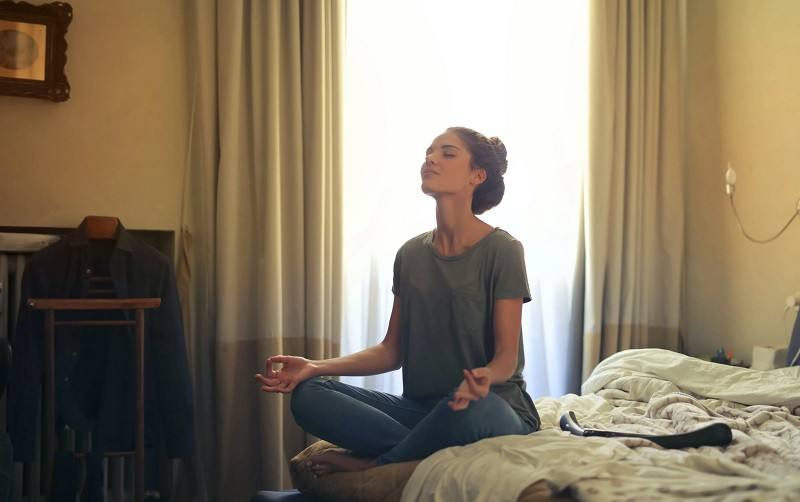
The training and use of relaxation techniques is common in therapy for this disorder. We can also use these techniques outside of the office during our daily lives. to reduce tensions and negative thoughts or memories.
We can use breathing strategies where we use the diaphragm or abdomen to reduce the possibility of hyperventilating. It consists of slowly breathing in through the nose while counting to three, noticing how the abdomen swells, taking a short pause and slowly releasing the air while counting to three. We will try to make exhalations (expel) longer than inhalations (intake).
2. Maintain social contact
People are social beings and, therefore, We need contact with others to feel and be well. Likewise, even if you don’t feel like seeing anyone, it is important that you maintain contact with your loved ones and those closest to you, since they can support you during the complicated situation and the recovery process. It may be good for you to talk to them and express how you feel. Apart from feeling shielded, it will also help you organize your thoughts and be more aware of how you are, or simply their presence will help you not feel alone.
3. Do activities that you like
In the same way that we cannot isolate ourselves socially, it is not good to stay at home locked up, so little by little try to do activities that you like, that distract you and help you improve both your cognitive state, not repeatedly dwelling on negative thoughts since activation helps improve our mood.
Start with simpler activities that take less time and make you feel more confident and gradually introduce others that are more complex or require more time, do it progressively.
4. Try to reduce high-stress situations
Your state of activation and affectation means that you are at risk, your condition can worsen with any external stimulus, no matter how minimal. So it will be advisable not to force yourself and do the activities that we think we can handle, avoiding situations that can cause us stress. As far as possible, try to control or stay distant from family or economic aspects that alter your status or control the hours you dedicate to work and if you find yourself overwhelmed, ask for leave.
5. Follow a healthy routine
External control and organization helps to have greater control and be better internally. It is important to establish healthy habits that benefit our speedy recovery, so try to eat a variety and eat different times a day, set a routine for going to bed and waking up so that your body gets used to it and reduce any sleep problems you may have. Practice sports and try to exercise at least three times per day. This practice helps release endorphins that make us feel better and also helps us clear our heads mentally and reduce our worries for a while.
Similarly, eliminate unhealthy habits such as drinking alcohol frequently as a means of escape or staying in bed all day doing nothing.
6. Stay active
For psychological therapy to achieve good results, it is essential that we collaborate with the therapist and with the techniques and treatments he proposes. Under the recommendation of the professional introduce the strategies that you train in therapy, such as exposure. This technique is one of the most effective in the treatment of post-traumatic stress, and it will work so that the patient can expose himself to feared situations and stimuli or even to thoughts that cause discomfort, given that avoiding certain places and interactions only makes the problem increase.
Little by little, introduce activities, places, people… that make you uncomfortable, to be able to face and overcome the situation.
7. Dedicate time
It is important to take care of yourself, since no one better than us can know how we are or how we feel. It can help you write down your thoughts, your emotions, experiences… To organize your mind. Using this technique it may also be easier for you to express yourself and bring out everything you have inside, since it will be the only way to heal it.
Likewise, as we have noted previously, try to do activities that you like that help you reduce tension and disconnect, such as going for a walk or going to the pool. Relaxing activities such as yoga, meditation or even listening to music can also help you.
Are you looking for professional psychological support?
If you are interested in having services in the field of psychology, contact us. In Psychoconsulting We serve adults and the elderly both in person and online.
Use this citation format to reference the article clearly and help readers find the original source.
PsychologyFor. (2024). 7 Routines and Habits to Overcome Post-traumatic Stress More Easily. PsychologyFor. https://psychologyfor.com/7-routines-and-habits-to-overcome-post-traumatic-stress-more-easily/