


You can have a clear strategy, intelligent people, a growing market, and still wake up at 4 a.m. wondering whether the decision you made yesterday will cost the company six months from now. Leadership feels lonely precisely because the person at the top is expected to project certainty while managing information nobody else fully sees. Business leadership is not simply about confidence; it is about making responsible choices amid incomplete data, competing priorities, and real human consequences.
That pressure explains why generic motivational advice often lands poorly with executives. A CEO does not need another reminder to “think big” when they are already managing cash flow, talent retention, board expectations, market shifts, and their own capacity to stay calm under pressure. What helps is a sharper framework: books that explain how organizations work, how teams fail, how leaders make decisions, and how culture gets built through small repeated behavior rather than a single inspiring presentation.
So which books offer genuine executive insight instead of management slogans?
This guide reviews 8 books for business leaders and CEOs, covering strategy, decision-making, culture, operations, and the psychology of leading people.
8 Books for Business Leaders and CEOs
Verified Top Picks- 1
 Andrew S. Grove High Output Management Treats management as a production system, explaining leverage, one-on-ones, and team outputCHECK TODAY'S PRICE
 - 2
 Ben Horowitz The Hard Thing About Hard Things Unflinching executive guidance on handling crises, layoffs, firings, and high-stakes CEO decisionsCHECK TODAY'S PRICE
 - 3Jim Collins Good to Great Research-backed principles on Level 5 leadership, disciplined thought, and the Hedgehog ConceptCHECK TODAY'S PRICE
- 4Simon Sinek Start With Why The Golden Circle framework connecting core organizational purpose to trust and long-term loyaltyCHECK TODAY'S PRICE
- 5Ray Dalio Principles: Life and Work Systematized decision-making, radical transparency, and thoughtful disagreement for organizationsCHECK TODAY'S PRICE
- 6Patrick Lencioni The Five Dysfunctions of a Team A powerful business framework tackling trust, fear of conflict, accountability, and team resultsCHECK TODAY'S PRICE
- 7John Doerr Measure What Matters The definitive guide to OKRs (Objectives and Key Results) for strategic alignment and executionCHECK TODAY'S PRICE
- 8Kim Scott Radical Candor Balancing direct challenge with personal care to deliver clear feedback and build high trustCHECK TODAY'S PRICE
What Makes a Leadership Book Worth a CEO’s Time?
The most useful leadership books give readers a framework they can test against real decisions, difficult conversations, hiring choices, product bets, and cultural problems, rather than simply describing the qualities of famous founders after the fact.
Some books focus on operational execution, helping leaders build systems that make performance more predictable. Others focus on the human side of leadership: trust, culture, communication, and the emotional pressure of responsibility. Andrew Grove represents the operations side of this list, while books by Simon Sinek and Patrick Lencioni focus more on meaning, purpose, and team behavior.
- Choose books that provide repeatable frameworks, not only founder anecdotes
- Match operational books to execution problems and culture books to people challenges
- Use a leadership book to test real decisions, not simply to collect inspiration
The 8 Best Books for Business Leaders and CEOs
These books cover CEO decision-making, high-performing teams, organizational culture, difficult conversations, strategy, systems, and the personal resilience required to lead during uncertainty.
1. High Output Management — Andrew S. Grove
High Output Management by former Intel CEO Andrew S. Grove treats management as a production system, showing how leaders can improve the output of teams through clear indicators, leverage, meetings, and managerial training.
Grove’s central insight is that a manager’s output includes not only their own work but the work of everyone they influence. That makes coaching, one-on-ones, and systems design forms of managerial leverage, not administrative distractions.
- Frames management as a measurable production system
- Explains managerial leverage and team output
- Offers practical guidance for one-on-one meetings
2. The Hard Thing About Hard Things — Ben Horowitz

The Hard Thing About Hard Things by investor and former CEO Ben Horowitz focuses on decisions without clean answers: firing executives, managing layoffs, confronting weak performance, and running a company when optimism is no longer enough.
Horowitz does not pretend that leadership can always be converted into a neat decision tree. His value comes from acknowledging that some choices are simply painful, then showing how leaders can make them with greater clarity and responsibility.
- Addresses difficult CEO decisions with no easy answer
- Discusses hiring, firing, and organizational crisis
- Offers unusually honest founder-level operating advice
3. Good to Great — Jim Collins

Good to Great by researcher Jim Collins examines companies that made sustained performance improvements, identifying recurring themes such as disciplined people, disciplined thought, and disciplined action.
Its famous concepts, including Level 5 leadership and the Hedgehog Concept, remain useful prompts for executives asking what their organization can do best without becoming distracted by every available growth opportunity.
- Introduces Level 5 leadership
- Explains the Hedgehog Concept for strategic focus
- Emphasizes disciplined execution over scattered expansion
4. Start With Why — Simon Sinek
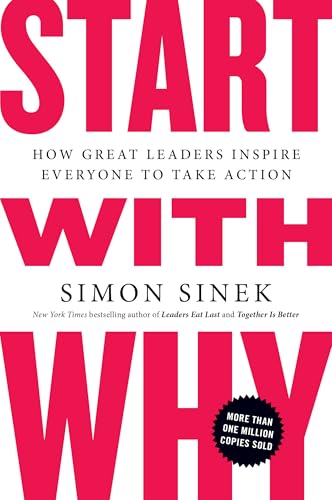
Start With Why by Simon Sinek argues that strong organizations communicate from purpose outward, beginning with why they exist before explaining how they operate or what they sell.
Sinek’s Golden Circle is simple, sometimes almost too simple, but it remains useful for leaders trying to connect strategy, culture, and public communication around a shared organizational purpose.
- Introduces the Golden Circle framework
- Connects purpose to trust and loyalty
- Useful for aligning culture with public communication
5. Principles: Life and Work — Ray Dalio

Principles by Bridgewater Associates founder Ray Dalio presents a highly systematized approach to decision-making, transparency, and organizational learning.
Dalio’s concept of radical transparency is not suitable for every organization exactly as written, but it raises useful questions about whether leaders receive honest feedback or merely socially safe information.
- Offers systematic decision-making principles
- Explores transparency and feedback culture
- Challenges leaders to seek honest disagreement
6. The Five Dysfunctions of a Team — Patrick Lencioni

The Five Dysfunctions of a Team by Patrick Lencioni uses a business fable to explain how absence of trust, fear of conflict, weak commitment, avoidance of accountability, and inattention to results damage teams.
The framework is deliberately straightforward. Its usefulness comes from giving leaders a shared language for discussing team dysfunction without turning every conflict into a personal accusation.
- Identifies five recurring forms of team dysfunction
- Builds a shared language for accountability
- Useful for leadership teams facing conflict avoidance
7. Measure What Matters — John Doerr

Measure What Matters by investor John Doerr explains Objectives and Key Results, or OKRs, a goal-setting system used by organizations including Google and Intel.
Doerr emphasizes that goals only work when they are visible, measurable, and connected to real organizational priorities. A metric without purpose becomes measurement theater; a good key result creates focus.
- Explains the OKR framework
- Connects measurable goals to strategic priorities
- Warns against metric-driven performance theater
8. Radical Candor — Kim Scott
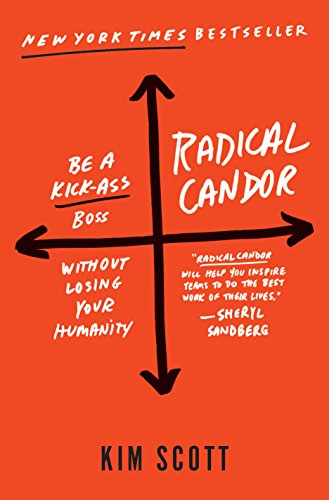
Radical Candor by former Google and Apple executive Kim Scott argues that useful feedback requires both caring personally and challenging directly.
Scott distinguishes direct honesty from cruelty. The goal is not bluntness for its own sake; it is creating a culture where people can receive clear feedback without feeling dismissed or humiliated.
- Combines personal care with direct challenge
- Explains why vague feedback harms performance
- Builds a culture of clear communication
Why Is Leadership So Emotionally Demanding?
Leadership is emotionally demanding because executives hold responsibility for decisions that affect livelihoods, identity, culture, and the future of an organization, often without complete information.
Books by Horowitz and Grove make this visible. The difficult work is not merely generating ideas; it is deciding what to stop, confronting weak performance, absorbing uncertainty, and communicating honestly when the future remains unclear. This creates a burden of executive responsibility that cannot be fully delegated.
Strong leaders need systems, trusted advisors, and psychological space for reflection. Endless urgency can produce reactive choices that look decisive but fail to serve long-term organizational health.
- Leadership includes responsibility under uncertainty
- Urgency can create reactive decision-making
- Reflection and trusted feedback protect executive judgment
How Can CEOs Build a High-Trust Culture?
High-trust culture develops through repeated behavior: leaders keeping commitments, sharing context, inviting disagreement, and responding to mistakes with learning rather than automatic blame.
Kim Scott and Patrick Lencioni emphasize that trust is not merely warmth. It includes the confidence that difficult conversations can happen openly, that feedback will be specific, and that leaders will not punish people for raising legitimate concerns.
Ray Dalio’s radical transparency takes this principle to an extreme. Most organizations need a more balanced version, but all benefit when leaders make psychological safety compatible with high standards and accountability.
- Trust requires consistent follow-through
- Feedback must be both clear and respectful
- Psychological safety should coexist with accountability
What Is the Difference Between Strategy and Execution?
Strategy defines the choices an organization will make; execution turns those choices into coordinated behavior, systems, priorities, and measurable outcomes.
Jim Collins helps leaders focus strategy through the Hedgehog Concept. John Doerr helps translate that focus into visible OKRs. Andrew Grove shows how managers then create the operating rhythm, meetings, training, and feedback loops that produce actual output.
Organizations often confuse a presentation with a strategy or a metric dashboard with execution. Neither is enough. Strong execution requires people knowing what matters, why it matters, and how their work connects to shared results.
- Strategy defines choice and focus
- Execution requires systems and operating rhythm
- Metrics matter only when linked to genuine priorities
How Should Leaders Handle Difficult Conversations?
Difficult conversations work best when leaders state the issue clearly, describe its impact specifically, listen seriously, and establish the next accountable action rather than avoiding conflict or becoming needlessly harsh.
Radical candor does not mean saying everything that comes to mind. It means refusing to hide useful feedback behind politeness while keeping the other person’s dignity intact. Lencioni’s work adds that teams often avoid productive conflict because they confuse disagreement with disrespect.
Preparation helps. Before the conversation, leaders can identify the observable behavior, the business impact, the desired change, and the support available. This turns a vague confrontation into a more constructive dialogue.
- Describe the observable behavior, not the person’s identity
- Explain the specific impact on work or team outcomes
- Agree on a clear next action and follow-up point
Common Leadership Myths These Books Correct
Leadership books repeatedly challenge the myth that CEOs must be charismatic visionaries with immediate answers to every problem.
Andrew Grove shows that leadership often looks like operational discipline. Ben Horowitz shows that hard decisions are sometimes painful no matter how skilled the leader is. Kim Scott shows that niceness without honest feedback can quietly damage both people and performance.
The strongest leaders are not always the loudest. They are often the people willing to learn, ask hard questions, change direction when evidence changes, and remain responsible for consequences.
- Leadership does not require constant certainty
- Kindness without honesty can undermine performance
- Strong leaders adapt to new evidence
FAQs about Books for Business Leaders and CEOs
What is the best business book for a first-time CEO?
High Output Management by Andrew Grove is one of the strongest choices for a first-time CEO because it explains how management systems, one-on-one meetings, training, and operational leverage work in practical terms. The Hard Thing About Hard Things is another useful option for leaders facing difficult decisions without easy answers, especially in startup environments. A good first choice depends on whether the immediate need is building an operating system for the company or managing the emotional pressure and people challenges that come with executive responsibility.
Are these books relevant for leaders outside technology startups?
Yes. While books like The Hard Thing About Hard Things and Measure What Matters emerged from technology contexts, their core lessons apply across industries. Operational leverage, clear feedback, organizational culture, accountability, and decision-making under uncertainty matter in nonprofit organizations, healthcare, retail, manufacturing, professional services, and public institutions. The examples may need adapting, but the leadership principles themselves are not exclusive to venture-backed companies or Silicon Valley environments.
Should a CEO focus more on culture or operational execution?
Both are necessary, and treating them as separate is often a mistake. Operational systems determine whether priorities become real work, while culture determines how people behave when no leader is present to supervise every detail. High Output Management helps with execution, while Radical Candor and The Five Dysfunctions of a Team help clarify the people side. A strong CEO connects the two by ensuring that operational practices reinforce the values and behaviors the organization claims to care about.
What is the GROW model, and should business leaders use it?
The GROW model is a coaching framework built around Goal, Reality, Options, and Will. It can be useful for CEOs and managers because it shifts conversations away from giving instant advice toward helping employees think through their own situations. While it is not one of the core books in this list, it complements the coaching and feedback principles found in High Output Management and Radical Candor. It works especially well in one-on-one conversations where leaders want to build ownership rather than simply issue instructions.
Can reading business books replace executive coaching or mentorship?
No. Books provide frameworks, language, examples, and perspective, but they cannot observe your organization, challenge your blind spots in real time, or understand the specific pressures of your leadership context. Executive coaching, board relationships, peer groups, and trusted mentors can add the personalized feedback books cannot provide. Reading works best as preparation for better reflection and better conversations with real people, not as a replacement for those relationships.
How many leadership books should a CEO read at once?
Usually one or two at a time is enough. The value comes from applying a concept to an actual leadership challenge rather than collecting frameworks without changing behavior. A CEO might read High Output Management while improving operating cadence, then move to Radical Candor while addressing feedback culture. Taking notes on one practical experiment per chapter can be more useful than finishing several books quickly. Leadership improves through deliberate application, reflection, and adjustment over time.
Bibliography
- Collins, J. (2001). Good to Great. HarperBusiness.
- Dalio, R. (2017). Principles: Life and Work. Simon & Schuster.
- Doerr, J. (2018). Measure What Matters. Portfolio.
- Grove, A. S. (1983). High Output Management. Vintage.
- Horowitz, B. (2014). The Hard Thing About Hard Things. HarperBusiness.
- Lencioni, P. (2002). The Five Dysfunctions of a Team. Jossey-Bass.
- Scott, K. (2017). Radical Candor. St. Martin’s Press.
- Sinek, S. (2009). Start With Why. Portfolio.
Use this citation format to reference the article clearly and help readers find the original source.
PsychologyFor. (2026). 8 Books for Business Leaders and CEOs. PsychologyFor. https://psychologyfor.com/8-books-for-business-leaders-and-ceos/