


Few phrases have traveled as far through history, or been quoted with as much confidence by people who may not fully grasp what it means, as “I only know that I know nothing.” Attributed to the Greek philosopher Socrates, this short sentence carries within it an entire philosophy of humility, self-awareness, and the pursuit of genuine understanding — one that remains strikingly relevant to modern psychology, particularly to how we think about intellectual humility, cognitive bias, and personal growth.
At first glance, the phrase sounds like a logical trap. How can someone claim to know something — that they know nothing — while simultaneously asserting they know nothing at all? This apparent contradiction, sometimes called the Socratic paradox, has puzzled readers, students, and philosophers for over two thousand years. But the paradox dissolves once its true meaning becomes clear: it is not a statement about total ignorance, but a profound acknowledgment of the limits of human certainty.
Understanding where this phrase came from, what Socrates actually meant by it, and why it continues to resonate today offers something valuable beyond historical curiosity. It offers a psychological framework for approaching knowledge, ego, and self-understanding with far greater honesty than most of us practice by default. This article explores the origin of the phrase, its true philosophical meaning, and what modern psychology has to say about the mindset it represents.
What Does “I Only Know That I Know Nothing” Actually Mean?
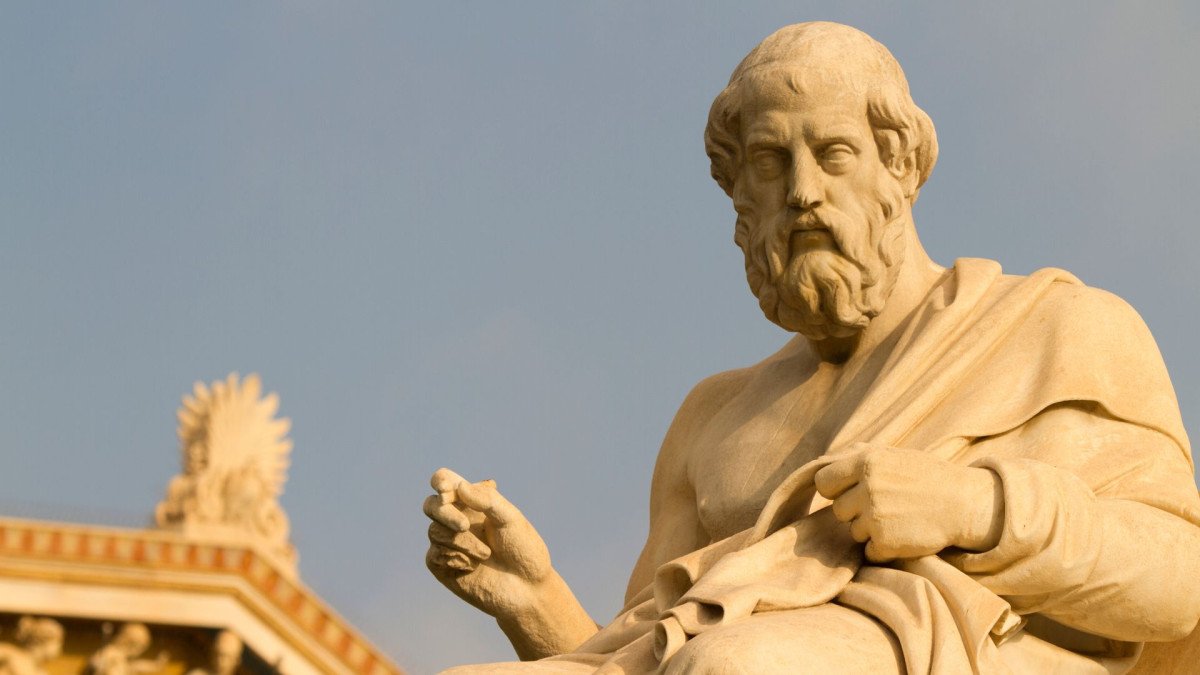
The phrase does not mean that Socrates believed he possessed literally zero knowledge. It means that he recognized the difference between believing you know something and actually possessing justified, examined, and certain knowledge — and that this recognition of one’s own limits is itself a form of wisdom.
This distinction is the philosophical core of the statement, and it matters enormously. Socrates was surrounded, according to Plato’s accounts, by people in Athens — politicians, poets, craftsmen — who were widely regarded as wise and who regarded themselves as wise. When Socrates questioned them closely about the concepts they claimed expertise in — justice, courage, beauty, virtue — he consistently found that their confident answers fell apart under scrutiny. They held opinions, often strongly, but could not defend those opinions when pressed to examine them rigorously.
Socrates’ own position, in contrast, was that he did not possess this false confidence. He knew that he did not know — and crucially, he did not mistake his uncertainty for knowledge, the way so many people around him did. This is the precise nuance that most casual repetitions of the phrase miss: Socratic ignorance is not about knowing nothing; it is about knowing the boundary between what you understand and what you merely assume.
Philosophers have long debated whether the phrase, as commonly rendered in English, is strictly logical. If Socrates truly knew nothing, how could he know that fact — since knowing it would itself constitute a piece of knowledge? This apparent self-referential contradiction is why some scholars prefer the more precise formulation found in Plato’s actual text: “I neither know nor think that I know.” This version avoids the paradox entirely. It simply states that Socrates does not possess knowledge and, importantly, does not fall into the trap of believing he possesses it when he does not.
Practical takeaway: The next time you feel completely certain about something complex — a person’s motives, a political issue, a diagnosis you read about online — pause and ask whether that certainty reflects genuine, examined understanding or simply an untested assumption you have not yet questioned.
Where Does the Phrase “I Know That I Know Nothing” Come From?
The phrase originates from ancient Greek philosophy, specifically from accounts of the trial of Socrates recorded in Plato’s dialogue known as the Apology, written in the early 4th century BCE. It reflects the philosophical position Socrates took in defending himself before the Athenian courts, though the exact wording popularly attributed to him does not appear verbatim in Plato’s original Greek text.
The most detailed origin story behind the phrase involves the Oracle of Delphi, one of the most revered religious authorities in the ancient Greek world. According to the account Socrates gives in the Apology, his friend Chaerephon traveled to the Oracle and asked whether anyone was wiser than Socrates. The Oracle answered that no one was wiser. Socrates, who believed he possessed no particular wisdom at all, was genuinely puzzled by this pronouncement and set out to test it — questioning politicians, poets, and skilled craftsmen throughout Athens who were reputed to be wise, in order to understand what the Oracle could possibly have meant.
What he discovered, according to his own account, was that each of these supposedly wise people believed they knew a great deal, but under close philosophical questioning, their claimed knowledge dissolved into unexamined assumption and contradiction. Socrates concluded that his own advantage over these men was narrow but significant: he, at least, did not believe he knew what he did not know. This single distinction — the awareness of one’s own ignorance rather than a false confidence in one’s understanding — was, in his interpretation, the very wisdom the Oracle had identified in him.
Interestingly, historical and classical scholarship has raised legitimate questions about whether Socrates ever spoke the exact English phrase now attributed to him. Some scholars trace the more compact, paradox-flavored formulation to the Roman philosopher Cicero, writing several centuries after Socrates’ death in 399 BCE, rather than to Plato’s original Greek texts. This matters for historical accuracy, even though it does not diminish the philosophical substance the phrase captures, which is well documented in Plato’s earlier and more reliable account.
It is also worth remembering that Socrates himself wrote nothing down. Everything we know of his teachings comes through the writings of his students, principally Plato and Xenophon, which means the phrase as popularly known has passed through multiple layers of interpretation, translation, and paraphrase across more than two thousand years.

What Is Socratic Ignorance, and Why Is It Considered a Form of Wisdom?
Socratic ignorance is the philosophical stance of recognizing and openly acknowledging the limits of one’s own knowledge, rather than defaulting to false confidence or unexamined belief. It is considered wisdom precisely because most people do the opposite — they mistake opinion, assumption, or partial information for genuine understanding, and this mistake closes off the possibility of further learning.
Socratic ignorance involves two interconnected components that give it philosophical structure. The first is self-awareness of ignorance — actively recognizing when you do not truly understand something, rather than papering over that gap with confident-sounding assertions. The second is holding a rigorous standard for what counts as knowledge: for Socrates, genuinely knowing something meant being able to explain, defend, and justify it clearly under sustained questioning, not simply holding an opinion that feels intuitively correct.
This stands in sharp contrast to what philosophers call double ignorance — a state in which a person is not only ignorant of a given subject but is also unaware of that ignorance, and consequently believes, often with considerable confidence, that they understand something they do not. Socrates considered double ignorance far more dangerous than simple, acknowledged ignorance, because it closes the door to inquiry, learning, and genuine growth. A person who knows they don’t know remains curious and open. A person who wrongly believes they know stops asking questions altogether.
This distinction has an unmistakably modern psychological echo. Contemporary research on metacognition — our awareness and understanding of our own thought processes — has documented a similar phenomenon: people with limited expertise in a subject often significantly overestimate their competence, precisely because a lack of deep knowledge also limits their ability to recognize the gaps in their own understanding. This effect, widely known today as the Dunning-Kruger effect, following the research of David Dunning and Justin Kruger, describes almost exactly the pattern Socrates identified among Athens’ confidently “wise” citizens more than two millennia earlier.
Practical takeaway: Try distinguishing, in your own internal dialogue, between “I have an opinion about this” and “I have deeply examined and understood this.” Both are valid states of mind — but confusing one for the other is exactly the trap Socrates identified as false wisdom.

How Does the Socratic Method Relate to This Famous Phrase?
The Socratic method — a form of cooperative dialogue built on asking a sustained series of probing questions — is the practical philosophical tool through which Socrates put his stated ignorance into action. Rather than lecturing or asserting conclusions, Socrates questioned his interlocutors relentlessly about the concepts they claimed to understand, systematically revealing the gaps, contradictions, and unexamined assumptions in their thinking.
This method, sometimes called elenchus (from the Greek term for cross-examination or refutation), typically followed a recognizable pattern. Socrates would ask someone to define a concept they claimed expertise in — justice, piety, courage. He would accept their definition provisionally, then ask further questions that tested the definition against specific examples or logical implications. Almost invariably, the definition would reveal internal inconsistencies, forcing the person to revise, refine, or ultimately abandon their original claim to understanding.
The philosophical purpose of this process was not to humiliate or defeat opponents in argument for its own sake, though it certainly earned Socrates enemies among Athens’ elite, who found the process embarrassing and threatening. Its deeper purpose was to model, through demonstration, exactly the epistemic humility captured in “I know that I know nothing” — showing, again and again, that confident claims to knowledge often could not survive careful scrutiny, and that recognizing this was itself the beginning of genuine philosophical progress.
The Socratic method remains directly relevant to modern therapeutic and educational practice. In psychotherapy, particularly within Cognitive Behavioral Therapy (CBT), therapists frequently use a technique explicitly called Socratic questioning — a structured series of open, exploratory questions designed to help clients examine and test the validity of their own automatic thoughts and beliefs, rather than having those beliefs directly challenged or corrected by the therapist. This technique works precisely because it mirrors the ancient method: it invites people to discover, through their own reasoning, where their confident assumptions may not hold up — a far more durable form of insight than being told directly that a belief is wrong.
Practical takeaway: The next time you hold a strong belief about yourself or a situation, try applying a simplified version of Socratic questioning: ask yourself what evidence actually supports this belief, whether there are alternative explanations, and how you would explain your reasoning to someone who respectfully disagreed.
Why Does Intellectual Humility Matter for Psychological Wellbeing?
Intellectual humility — the psychological trait of recognizing the limits of one’s own knowledge and remaining genuinely open to being wrong — has become an active area of research in contemporary psychology, and it maps directly onto the Socratic ideal captured in this ancient phrase. Far from being a sign of weakness or low self-esteem, intellectual humility is consistently associated with a range of positive psychological and interpersonal outcomes.
Research on intellectual humility, building on the broader psychological literature on humility as a character strength, has documented associations between this trait and more accurate self-assessment, improved decision-making, greater resilience to persuasion by low-quality information, and healthier interpersonal relationships. People higher in intellectual humility tend to be better able to update their beliefs in response to new evidence, engage more constructively with people who disagree with them, and experience less defensive reactivity when their views are challenged.
This connects meaningfully to concepts within Acceptance and Commitment Therapy (ACT), developed by Steven Hayes, which emphasizes cognitive flexibility — the capacity to hold thoughts and beliefs lightly, as mental events rather than absolute truths, and to remain open to changing perspective when circumstances call for it. Rigid, overconfident thinking — the psychological opposite of Socratic humility — is associated across multiple therapeutic frameworks with increased anxiety, interpersonal conflict, and difficulty adapting to new or unexpected situations.
There is also a compelling connection to growth mindset theory, developed through the research of Carol Dweck, which distinguishes between a “fixed mindset” — the belief that one’s abilities and understanding are static and already largely determined — and a “growth mindset,” which holds that abilities and knowledge can continue to develop through effort and inquiry. Socratic ignorance is, in essence, a growth mindset applied to knowledge itself: the belief that what you currently know is provisional, incomplete, and open to expansion, rather than a fixed and finished picture of reality.
None of this suggests that certainty is always inappropriate or that all beliefs should be held with equal tentativeness. It suggests something more precise: that psychological wellbeing benefits from an honest, ongoing relationship with the actual limits of your own understanding, rather than a defensive insistence on certainty you have not genuinely earned.
Practical takeaway: Notice moments of defensiveness when your ideas are questioned. That defensive reaction is often a signal worth examining — not necessarily because you are wrong, but because certainty defended too fiercely can indicate an unexamined assumption rather than genuine understanding.

How Can You Apply Socratic Wisdom to Everyday Life?
Applying the spirit of “I know that I know nothing” to daily life does not require studying ancient philosophy in depth. It requires cultivating specific habits of mind that gradually shift how you relate to your own beliefs, assumptions, and certainties.
- Practice distinguishing opinion from examined knowledge. Before speaking with confidence on a topic, ask yourself honestly whether your position comes from careful thought and evidence, or from an assumption you absorbed without scrutiny. Both are legitimate starting points, but naming the difference internally builds genuine intellectual honesty.
- Ask more questions than you answer in conversations that matter. When discussing complex or emotionally significant topics — with a partner, a colleague, or during a disagreement — resist the urge to immediately assert your conclusion. Ask what the other person actually means, what led them to their view, and what evidence would change their mind. This mirrors the Socratic method directly and tends to de-escalate conflict rather than intensify it.
- Notice the physical and emotional signature of defensiveness. When someone challenges a belief and you feel a surge of irritation or the urge to shut the conversation down, treat that reaction as useful data rather than simply reacting to it. It often signals an assumption you have not fully examined.
- Seek out disconfirming information deliberately. Confirmation bias — our natural tendency to seek information that supports what we already believe — works directly against Socratic humility. Actively seeking out well-reasoned perspectives that challenge your views is an intentional counterbalance.
- Hold your self-concept with the same humility. Socratic ignorance applies not only to external facts but to self-knowledge. Assuming you fully understand your own motivations, patterns, or emotional reactions can close off genuine insight — a posture of curious self-examination, rather than fixed self-certainty, tends to support deeper personal growth.
This orientation toward humble inquiry is not about paralysis or endless doubt — Socrates himself held firm ethical convictions and acted on them, even at the cost of his life. It is about maintaining a clear, honest distinction between conviction earned through genuine examination and certainty adopted by default.
Why Does This Ancient Phrase Still Resonate in Modern Psychology?
The endurance of “I know that I know nothing” across more than two thousand years reflects something psychologically timeless: human beings have always struggled with the gap between how much we believe we understand and how much we actually do, and every generation rediscovers versions of the same insight in new language.
Modern cognitive psychology has given us increasingly precise vocabulary for phenomena that Socrates identified through observation and dialogue alone. The Dunning-Kruger effect describes the tendency of people with limited competence in a domain to overestimate their ability, precisely because their limited knowledge also limits their capacity for accurate self-assessment — an almost perfect modern echo of Socrates’ observation about the falsely wise citizens of Athens. Research on confirmation bias, first systematically studied by psychologist Peter Wason, documents our persistent tendency to seek and favor information that confirms existing beliefs while discounting contradictory evidence — precisely the pattern of unexamined certainty that the Socratic method was designed to interrupt.
The concept has also found renewed relevance in the context of the modern information environment, where access to vast amounts of information can create an illusion of comprehensive understanding that does not match actual depth of knowledge. Brief exposure to headlines, social media posts, or superficial summaries can produce a confident sense of “knowing about” a topic that Socrates would likely have recognized immediately as the same false wisdom he encountered among Athens’ politicians and poets.
In therapeutic contexts, the Socratic spirit persists directly in techniques like Socratic questioning within CBT, and more broadly in the therapeutic value placed on curiosity, non-judgment, and openness to alternative interpretations of one’s own experience. Mental health treatment at its best does not tell people what to think about themselves; it helps them examine their own assumptions with the same rigorous, compassionate curiosity that Socrates modeled — and this, ultimately, is why a phrase spoken (or at least attributed) in ancient Athens continues to offer something genuinely useful to anyone navigating the complexities of modern life.
FAQs about “I Only Know That I Know Nothing”
Did Socrates actually say “I know that I know nothing”?
There is no direct textual evidence that Socrates spoke this exact phrase in the form it is popularly known today. The closest documented source is Plato’s Apology, in which Socrates states, in a more precise formulation, “I neither know nor think that I know” — a statement that avoids the logical paradox embedded in the more commonly quoted version. Some historians trace the compact, paradox-flavored phrasing to the Roman philosopher Cicero, writing roughly three centuries after Socrates’ death, rather than to Plato’s original Greek. Since Socrates never wrote anything himself, everything attributed to him passed through the interpretation of his students, meaning some imprecision in translation and phrasing across centuries is expected and well documented by classical scholars.
What is the Socratic paradox, and is it a logical contradiction?
The Socratic paradox refers to the apparent self-referential contradiction in the phrase “I know that I know nothing” — if a person truly knew nothing, they could not simultaneously know that fact, since that would itself constitute a piece of knowledge. This apparent contradiction largely dissolves when the phrase is understood as Socrates likely intended it: not as a literal claim to total ignorance, but as a recognition that he did not falsely believe he possessed knowledge he had not genuinely examined and justified. The more accurate formulation drawn from Plato’s actual text, “I neither know nor think that I know,” is logically consistent and avoids the paradox altogether, expressing the same underlying idea of intellectual humility without the contradictory structure.
What is Socratic ignorance in philosophy?
Socratic ignorance is a philosophical stance characterized by consciously recognizing and acknowledging the limits of one’s own knowledge, rather than mistaking unexamined opinion or assumption for genuine understanding. It involves two key elements: self-awareness of what one does not truly know, and a rigorous standard for what qualifies as real knowledge — namely, the ability to explain and defend a claim clearly under sustained questioning. Socrates considered this state preferable to what philosophers call double ignorance, in which a person is unaware of their own ignorance and consequently overestimates their understanding. Far from representing intellectual defeat, Socratic ignorance was, for Socrates, the very foundation of genuine philosophical inquiry and the pursuit of deeper truth.
How does the Dunning-Kruger effect relate to Socratic wisdom?
The Dunning-Kruger effect, documented by psychologists David Dunning and Justin Kruger, describes how people with limited competence or knowledge in a given domain often significantly overestimate their own ability, largely because their limited expertise also limits their capacity to accurately assess the gaps in their understanding. This closely mirrors what Socrates described more than two thousand years earlier when he questioned Athens’ reputedly wise citizens and found that their confident claims to understanding consistently failed under careful scrutiny. Both concepts point to the same underlying psychological reality: genuine expertise often comes paired with awareness of the complexity and limits of a subject, while limited knowledge can paradoxically produce inflated confidence, precisely because it lacks the depth needed to recognize its own boundaries.
What is the Socratic method, and how does it connect to this phrase?
The Socratic method is a structured form of dialogue in which a person asks a sustained series of probing questions to examine the validity, consistency, and foundations of another person’s beliefs or claims, rather than simply asserting counterarguments or conclusions. Socrates used this method extensively throughout Athens, repeatedly demonstrating that people who confidently claimed expertise in concepts like justice or virtue could not defend their definitions once questioned rigorously. This practical demonstration is the living embodiment of “I know that I know nothing” — it shows, through direct experience rather than abstract assertion, how frequently confident claims to knowledge dissolve under careful examination. The method remains influential today, notably in Cognitive Behavioral Therapy’s use of Socratic questioning to help people examine their own automatic thoughts and beliefs.
Why is intellectual humility considered psychologically healthy?
Intellectual humility — the trait of recognizing the limits of your own knowledge and remaining genuinely open to being wrong — is associated in psychological research with more accurate self-assessment, better decision-making, greater resistance to being misled by low-quality information, and healthier, less defensive relationships with others. It stands in contrast to rigid overconfidence, which is linked across multiple therapeutic frameworks, including Acceptance and Commitment Therapy, to increased anxiety and interpersonal conflict. Importantly, intellectual humility is not the same as low self-esteem or chronic self-doubt; it is a stable, secure orientation that allows a person to hold beliefs firmly while remaining genuinely open to revising them when good evidence calls for it — precisely the psychological posture Socrates modeled through his own famous acknowledgment of ignorance.
Bibliography
- Plato. Apology. Translated by Benjamin Jowett. (Original work composed c. 399 BCE).
- Plato. Meno. Translated by G. M. A. Grube. (Original work composed c. 380 BCE).
- Vlastos, G. (1991). Socrates: Ironist and Moral Philosopher. Cornell University Press.
- Dunning, D., & Kruger, J. (1999). Unskilled and unaware of it: How difficulties in recognizing one’s own incompetence lead to inflated self-assessments. Journal of Personality and Social Psychology, 77(6), 1121–1134.
- Wason, P. C. (1960). On the failure to eliminate hypotheses in a conceptual task. Quarterly Journal of Experimental Psychology, 12(3), 129–140.
- Dweck, C. S. (2006). Mindset: The New Psychology of Success. Random House.
- Hayes, S. C., Strosahl, K. D., & Wilson, K. G. (1999). Acceptance and Commitment Therapy: An Experiential Approach to Behavior Change. Guilford Press.
- Beck, A. T. (1979). Cognitive Therapy of Depression. Guilford Press.
- Leary, M. R., et al. (2017). Cognitive and interpersonal features of intellectual humility. Personality and Social Psychology Bulletin, 43(6), 793–813.
- Cicero, M. T. Academica. (Original work composed c. 45 BCE).
Use this citation format to reference the article clearly and help readers find the original source.
PsychologyFor. (2026). “I Only Know That I Know Nothing”: What is the Meaning and Origin of This Phrase?. PsychologyFor. https://psychologyfor.com/i-only-know-that-i-know-nothing-what-is-the-meaning-and-origin-of-this-phrase/