


See more of our articles in your search results.
It’s the second week of January, and the planner you bought in December already has a crack in its spine and nothing written after the 9th. Sound familiar? You had energy, a color-coded list, a sincere promise to yourself. Then a cold, a deadline, a bad Wednesday. Now the planner sits under a pile of mail, mildly accusing.
That small scene carries most of what’s wrong with how we talk about personal growth. We treat it as a mood, a burst of resolve, a personality upgrade you either have or lack. Magazines promise total reinvention in thirty days. Real change tends to look duller and works better: a clear direction, a plan with a specific time and place, a few repeated actions, and a way of handling the days you blow it.
Most of us have never been shown that part.
Growth is a skill set, not a trait.
This guide lays out how to transform your life in 6 steps, the one practical tool behind most successful change, and the pillars that keep growth from tipping into burnout.
How many of these have you been "meaning to read" for months?
- 1
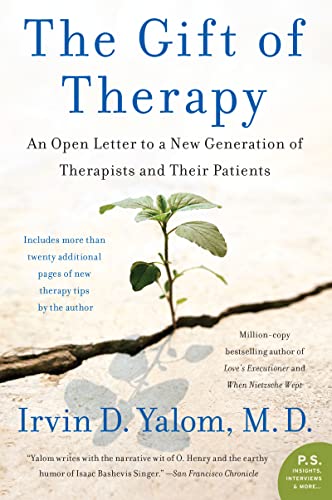 Irvin D. YalomThe Gift of Therapy85 practical, warm clinical insights from a master therapistListen Free On Audible
- 2
 Lori GottliebMaybe You Should Talk to SomeoneA bestselling memoir on the shared humanity of therapist and clientListen Free On Audible
- 3
 Oliver SacksThe Man Who Mistook His Wife for a HatUnforgettable clinical case studies on perception and identityListen Free On Audible
Each step draws on research that has been tested in more than one study, and where the evidence is thinner than the hype, I’ll say so.
What does personal growth actually mean in psychology?
Personal growth is the ongoing process of developing your abilities, self-awareness, relationships and sense of direction so that your life fits your values better over time. It isn’t a finish line, and it isn’t about becoming a “better” person by someone else’s standards.
Psychology has given the idea some structure. Carol D. Ryff proposed a model of psychological well-being in 1989 that treats personal growth as one of six dimensions, alongside self-acceptance, positive relations with others, autonomy, environmental mastery and purpose in life. In her framing, personal growth means feeling that you’re continuing to develop, being open to new experiences, and seeing improvement in yourself and your behavior over time. Notice that it sits next to self-acceptance rather than replacing it. You’re allowed to want to change and to be okay as you are, at the same moment.
That pairing matters, because the opposite mix is common. People who push hard on self-improvement while despising who they currently are tend to burn out, or to feel perpetually behind. Growth that runs on shame is expensive.
What growth is not
- Not constant productivity. Rest, play and boredom are part of a healthy life, not leaks in the system.
- Not perfectionism with better branding. Collecting courses and routines while avoiding actual change is just a polished form of stalling.
- Not a replacement for treatment. If depression, anxiety or trauma is driving the stuckness, growth habits help but won’t carry the load alone.
- Not a competition. Your comparison is the person you were last year.
Take Nadia, a composite example: 34, an operations coordinator who has read every habit book and changed none of her habits. What she called a motivation problem was a clarity problem. She couldn’t say what she was growing toward. Once she could, the books mattered less.

Is changing your life always a big, dramatic overhaul?
No. Myth: transformation requires a clean break, a new city, a dawn routine, a different personality. Fact: most durable change is built from small, boring adjustments repeated in a stable setting, which is why “transform” is a stronger word than the process feels.
The psychologist Carol S. Dweck has spent decades on a related idea. In her work on mindset, she distinguishes a fixed mindset (abilities are set, so failure signals limits) from a growth mindset (abilities develop through effort and strategy, so failure signals information). Her book Mindset (2006) popularized the contrast. A fair warning: the research on mindset interventions is mixed. Large studies show small average effects, and the bigger claims in popular media outrun the data. Still, the underlying habit of reading setbacks as feedback rather than verdicts is useful, whatever label you give it.
Here’s the practical difference. Picture Tomas, a composite 27-year-old who is trying to learn to code. After failing his third practice problem he thinks, “I’m not a numbers person.” That thought ends the session. A year later, a friend in the same class thinks, “I haven’t found the pattern yet,” and takes a break and tries again. Same failure. Different story told about it, and a different next hour.
Why small beats dramatic
Big overhauls have three problems. They depend on high motivation, which is unreliable. They change many things at once, which makes it hard to know what’s working. And they create a cliff: miss two days and the whole plan feels dead.
Small changes, by contrast, can slip under the radar of your own resistance. Five minutes of stretching or one page of reading doesn’t trigger the dread that “start running every morning” does. The first step can feel almost silly. That’s the point.
So what is the minimum version of what you want to do? Hold that question. We’ll use it in Step 5.

Where are you in the process of change right now?
Before the six steps, a quick diagnostic. Not everyone who wants to grow is ready to act, and pushing action on someone still deciding is a recipe for resentment.
James O. Prochaska and Carlo DiClemente built the transtheoretical model (the “stages of change”) from studies of people trying to quit smoking, publishing key work in 1983. It describes change as a sequence of stages rather than a single decision. Later versions were applied to exercise, diet, and many other behaviors. The model has critics, who argue that real change is messier than any set of stages and that evidence for stage-matched interventions is mixed. Even so, it gives a useful map.
- Precontemplation: you’re not planning to change in the near future, perhaps because you don’t see a problem or have given up.
- Contemplation: you’re thinking about it seriously and weighing the pros and cons. Many people stay here for a long time.
- Preparation: you’re planning, gathering information, taking small steps like booking a first appointment.
- Action: you’re actively changing behavior, which takes visible effort.
- Maintenance: you’re working to keep the change going and prevent relapse.
The common mistake is skipping ahead. A person in contemplation signs up for six commitments because they feel guilty. Two weeks later the whole structure collapses and they decide they “lack discipline.”
It’s more accurate to say they were acting from the wrong stage. If you’re in contemplation, the useful work is clarifying what you want and what’s in the way. If you’re in preparation, you need a concrete plan. If you’re in action, protect it.
The model also treats relapse as typical, not shameful. Many people cycle back through earlier stages before the change lasts, a spiral rather than a straight line.
Which stage sounds like you today? Write it down. You’ll find it changes by area of life, too: you might be in action with exercise, and in precontemplation about your finances.
Steps 1 and 2: How do you decide what to change and why?
Start with an honest audit, then pick a direction based on your own values. Those are the first two of the six steps, and skipping them is the most reliable way to waste months.
Step 1: Take an honest inventory
Set aside thirty minutes with a notebook. Not a screen, because it invites tab-hopping. Rate, on a simple scale of 1 to 10, how satisfied you are in a handful of areas: health, relationships, work or study, money, rest, meaning. Then write one sentence for each area on what’s working and what isn’t. The aim is accuracy, not drama.
A few questions sharpen it:
- What have I been tolerating that I wouldn’t accept in a friend’s life?
- What do I complain about most often, and what does that suggest?
- What would I regret not trying in five years?
- What am I avoiding, and what is the avoidance protecting me from?
Step 2: Choose a direction that’s actually yours
Here the research is helpful. Edward L. Deci and Richard M. Ryan, the developers of self-determination theory, argue that people thrive when three basic psychological needs are met: autonomy (acting from your own choice), competence (feeling effective) and relatedness (feeling connected). Their work distinguishes goals that come from within (intrinsic or well-internalized) from goals driven by pressure, guilt or image. The first kind tends to be sustained more readily and linked to better well-being; the second kind often produces effort without satisfaction.
A fast test: if you reached this goal and no one ever found out, would you still want it? If the answer is no, you may be chasing someone else’s approval.
Imagine Rafael, a composite 48-year-old accountant who decides to run a marathon because his brother did. Training is miserable and he drops out. Later he joins a hiking group because he misses being outdoors with people, and he never skips a weekend. The activity matters less than whether it fits what he values.
Pick one area. Not three. Growth in one place usually leaks into others, but the reverse rarely works.

Step 3: How do you set a goal that you will actually follow?
Make it specific, a little hard, and tied to a time frame you can see.
That recipe comes from the research of Edwin A. Locke and Gary P. Latham, whose decades of work on goal setting, summarized in a 2002 paper in American Psychologist, found that specific, challenging goals lead to higher performance than vague “do your best” goals, provided people have the ability and commitment, receive feedback, and the task isn’t overwhelmingly complex. Their finding is among the more consistent ones in applied psychology, though most of it comes from workplaces and lab tasks rather than personal-life change, so treat the transfer with some care.
“Be healthier” is not a goal. “Walk for 20 minutes after dinner, five days a week, for the next month” is.
A good growth goal has a few features:
- Specific: you could tell, from the outside, whether it happened.
- Measurable: a number, a count or a yes/no.
- Challenging but plausible: roughly a 70 percent chance of success feels about right to many people.
- Time-bounded: a review date, not an endless “someday.”
Be careful with outcome goals you can’t control. “Get promoted this year” depends on other people. “Ask my manager for feedback every month and complete one stretch project” depends on you.
Break big goals into proximal goals, the nearer targets that tell you whether you’re on track. Someone learning a language can’t feel progress from “become fluent,” but can feel it from “hold a five-minute conversation by March.”
One more caution, drawn from Locke and Latham’s own caveats: when a task is new and complex, pushing for a high performance target can backfire, because people cut corners or panic. In that case, set learning goals (“try three different methods and note which works”) instead of performance ones.
Finally, write the goal down in a sentence you can read in ten seconds. If you can’t, it’s still too fuzzy.
Step 4: What is the tool of change that makes plans work?
If I had to name one tool, it would be the if-then plan, which psychologists call an implementation intention. It is a sentence of the form “If situation X happens, then I will do Y,” and it’s the most dependable gap-closer between wanting and doing that I know of.
Peter M. Gollwitzer developed the concept in the 1990s, and a 2006 meta-analysis he conducted with Paschal Sheeran, covering 94 independent tests, found a medium-to-large positive effect on goal attainment (d = .65) compared with holding the goal alone. The explanation is almost mundane: the plan hands the decision to the situation. When the cue arrives, the action starts with little deliberation, so you don’t have to win an argument with yourself at 6:45 a.m.
Compare two versions of the same intention.
Vague: “I’ll exercise more.” If-then: “If I put my shoes on after the 7:15 alarm on weekdays, then I’ll walk around the block before I check my phone.”
The second names a cue, a place and a behavior. It also quietly handles the obstacle, since checking the phone first is how mornings disappear.
How to write a good one
Choose a cue that reliably happens: finishing breakfast, sitting down at your desk, a notification, arriving home. Pick a small action. Add a second plan for the main obstacle: “If I feel too tired in the evening, then I’ll do only five minutes.” These if-then coping plans are among the strongest parts of the approach.
Consider Mei, a composite 21-year-old in shared student housing who wants to study before gaming. Her plan: “If I finish dinner, then I’ll open my notes at the kitchen table for 25 minutes before I go to my room.” Not glamorous. By week three she was starting without thinking about it.
Limits exist. Implementation intentions help with starting and protecting a goal, but they don’t create the goal. If you don’t want it, the plan will be quietly ignored. And in very complex or emotional situations, such as grief or addiction, you’ll likely need more support than a sentence.
Write three if-then plans for your goal tonight. Put one on your phone lock screen.

Step 5: How long does it take to turn a change into a habit?
Longer than the internet says. The famous “21 days” figure is a myth with no good research behind it.
The best-known real data come from Phillippa Lally and colleagues at University College London, who in 2010 followed 96 volunteers as they tried to perform a chosen eating, drinking or activity behavior every day for 12 weeks. For participants whose data fit the model, the median time to reach a plateau of automaticity was 66 days, but the estimates ranged from 18 to 254 days. Missing a single day did not materially harm the process, while simpler behaviors became automatic faster than complex ones. The caveat people forget: 66 isn’t a deadline, and the upper figures were model estimates beyond the observation window.
Translate that into life. A glass of water with breakfast may become automatic in weeks. A daily workout may take months. Both are normal.
What helps:
- Stable context. Same cue, same place, same time, as often as possible.
- Tiny starting dose. Aim for a version you could do on your worst day.
- Frequency over intensity. Five short repetitions per week beat one heroic session.
- Easy environment. Put the guitar on a stand, the running shoes by the door, the phone in another room.
- Reward you actually feel. A song you love, a checkmark, a coffee afterward.
Anya, a composite 52-year-old nurse working nights, wanted to read before bed. She began with one page. Not one chapter. By the second month it was ten pages, and she was irritated if she skipped it. That irritation, oddly, is what an emerging habit feels like.
The finding about missed days deserves emphasis because it removes a major source of shame. One lapse is not a reset. Two or three in a row can slow things, but you restart; the curve doesn’t care about your streak counter.
How would the smallest version of your habit look?

Step 6: What do you do when you slip, stall or lose motivation?
Review, adjust and be decently kind to yourself. That is the whole step, and it’s the one most people skip.
Set a regular check-in, weekly if you can, monthly at minimum. Ask: What worked? What got in the way? What will I change? Treat the answers like data, not like a court transcript. If the plan failed on Thursdays, the problem might be Thursday, not you.
Confidence plays a bigger part than people think. Albert Bandura argued in 1977 that self-efficacy, your belief that you can carry out the behavior needed to reach a goal, shapes which tasks you attempt, how long you persist and how you handle obstacles. His analysis identified several sources of that belief, with actual mastery experiences being the strongest: doing the thing, even a small version, raises confidence more than pep talks do. That is another argument for small first steps.
Self-criticism versus self-compassion
Many people assume that being harsh with themselves keeps them on track. The evidence points the other way. Kristin Neff defines self-compassion as having three parts: self-kindness rather than self-judgment, a sense of common humanity rather than isolation, and mindful awareness of painful feelings without over-identifying with them. Her 2003 paper introduced a scale to measure it. Research linked to this concept generally associates higher self-compassion with lower anxiety and depression and with a willingness to try again after failure, although much of it is correlational.
It doesn’t mean lowering standards. It means treating a slip as a normal event.
- Name what happened without adjectives like “pathetic” or “lazy.”
- Ask what you’d say to a friend in the same spot.
- Choose the next smallest action within 24 hours.
- Adjust the plan if it was unrealistic.
A quick story. Luis, a composite 39-year-old, wanted to cut back on late-night scrolling. After a bad week he deleted his tracking app in disgust and went back to square one. His partner suggested a different approach: log the bad nights without commentary, find the pattern, change the charging spot. Within a month, three bad nights a week became one.
Failure is information. It’s also inevitable.
What are the pillars of balance in personal growth?
Growth tilts easily. You can sprint ahead in one area while another quietly crumbles, and the collapse usually arrives from the neglected side. A balanced approach keeps several supports in place at once.
The pillars below are an editorial framework, not a single published model, built from well-supported ideas in well-being research including Ryff’s dimensions and Deci and Ryan’s basic needs. Use them as a checklist, not a scoreboard.
| Pillar | What it covers | Sign it’s neglected | Small repair |
|---|---|---|---|
| Body | Sleep, movement, food, medical care | Constant fatigue, frequent illness | Fixed wake time, daily walk |
| Emotions | Awareness, regulation, self-compassion | Irritability, numbness, outbursts | Short daily check-in, journaling |
| Relationships | Family, friends, community | Isolation, resentment, loneliness | One planned contact each week |
| Purpose and work | Meaningful effort, learning, contribution | Drift, Sunday-night dread | One value-linked project |
| Rest and play | Leisure, humor, unstructured time | Guilt when relaxing, joyless routines | Protected unscheduled hour |
| Autonomy and money | Practical control over daily life | Chronic worry about bills or choices | Monthly budget review |
Look at the right-hand column. None of those repairs takes more than twenty minutes.
Balance doesn’t mean equal time. It means no pillar falls below a floor. During a new job, relationships may get a smaller share for a while. During a family illness, work may. The test is whether you notice and correct the lean.
Consider Hannah, a composite 31-year-old startup employee. She hit every professional goal in a year and then found she hadn’t had a real conversation with a friend in months. Her sleep was thin and her laugh felt rusty. Success in one pillar had been financed by the others.
A monthly question helps: which pillar has been running on fumes? Start there.
When is it not just a growth problem?
Sometimes stuckness isn’t about technique. It’s a signal that something else needs attention first, and a better planner won’t touch it.
Watch for patterns like these:
- Low mood, loss of interest or hopelessness lasting more than two weeks.
- Anxiety or panic that blocks you from doing things you want to do.
- Sleep, appetite or energy changes you can’t explain.
- Using alcohol or other substances to get through the day.
- A history of trauma that surfaces whenever you try to change.
In those cases, the habit of “just trying harder” can deepen the shame. A conversation with a primary care doctor, therapist or licensed counselor is a better first step than a new routine. Therapy itself is a recognized form of personal growth, not a sign you’ve failed at it. If you ever feel unable to keep yourself safe, contact local emergency services or a crisis line immediately.
There is also a limit to what self-help can do, and an honest article should say so. Most of the research above comes from short studies, often with university students or volunteers, and effect sizes in real life tend to be smaller than in the lab. Books and apps can help, but they work best as scaffolding, not as a replacement for human support.
Culture and circumstance matter too. Growth advice assumes you have some control over your time, income and environment. If you’re caring for a sick parent or working two jobs, the realistic goal may be maintenance, and that’s legitimate.
Ask yourself one more honest question: is this a skills problem, a circumstances problem, or a health problem? The answer changes the next step.
FAQs about Personal Growth and How to Change Your Life
What are the 6 steps to personal growth?
The six steps in this guide are: take an honest inventory of your life, choose a direction based on your own values, set a specific and challenging goal, write if-then plans for when and where you’ll act, repeat small actions until they become habits, and review and adjust regularly with some self-compassion. The order matters. Many people jump straight to habits without clarifying what they want or why, and then drop the effort when motivation dips. Starting with the first two steps takes about an hour and makes everything else easier to sustain.
How long does it take to change your life?
There’s no fixed timetable. Research on habit formation found that the time needed for a behavior to become automatic ranged from about 18 to 254 days, with a median near 66 days in one study, and simple behaviors formed faster than complex ones. Larger life changes, such as shifting careers or relationships, take much longer and move in fits and starts. A realistic expectation is that you’ll notice small shifts within weeks, solid habits within a few months, and deeper changes over a year or more.
Why can’t I stick with self-improvement goals?
Often because the goal is vague, borrowed from someone else, or too large for your current energy. Another common reason is relying on motivation, which fluctuates, instead of on cues and routines. Starting too many things at once also backfires. Look at which of those fits you. Sometimes the cause is health related: depression, anxiety, poor sleep or ADHD can all make follow-through harder, and in those cases effort alone isn’t the fix.
Is personal growth the same as self-improvement?
Not exactly. Self-improvement often implies fixing flaws, while personal growth in the psychological sense includes developing capacities, deepening relationships and finding meaning, alongside accepting yourself as you are. Researchers such as Carol Ryff list personal growth next to self-acceptance as parts of well-being. A person can be improving a skill and still be at war with themselves, which is not growth in this broader sense. The difference shows up in how you talk to yourself while you change.
Can you change your personality as an adult?
Yes, within limits. Personality traits are fairly stable but not fixed, and studies show gradual shifts across adulthood, often toward more conscientiousness and emotional stability. Deliberate effort, therapy and major life roles can also nudge traits, though changes tend to be modest and slow. You don’t need to become a different person to grow. Changing specific behaviors and habits is more realistic and often more useful than trying to rewrite your whole temperament.
What is an implementation intention?
It’s an if-then plan that links a specific situation to a specific action, such as “If it’s 8 p.m. and the dishes are done, then I’ll write for ten minutes.” Peter Gollwitzer and Paschal Sheeran’s meta-analysis of 94 tests found a medium-to-large effect on goal attainment. The plan works partly because it makes the action more automatic when the cue appears. It helps most with starting and persisting; it doesn’t replace wanting the goal.
Should I see a therapist for personal growth?
You can. Many people work with a therapist on growth goals such as confidence, boundaries, career direction or life transitions, even without a diagnosable condition. Therapy is especially useful if the same pattern keeps repeating despite good effort, if past experiences are interfering, or if you’re feeling low or anxious. It isn’t needed for everyone. Plenty of people grow through reflection, mentors, peer groups and practice. The question is whether you have enough support for the size of the change you’re attempting.
What if I fall back into old habits?
That’s expected, and it’s not a reset. Research on habit formation found that missing a single day didn’t materially affect the process, and models of behavior change treat relapse as a common part of the spiral. Name what happened, check what triggered it, and take the smallest next step within a day. If you keep sliding back in the same circumstances, change the circumstances: the cue, the setting, the plan. Shame rarely helps, and curiosity usually does.
Bibliography
- Bandura, A. (1977). Self-efficacy: Toward a unifying theory of behavioral change. Psychological Review, 84(2), 191-215.
- Deci, E. L., & Ryan, R. M. (2000). The “what” and “why” of goal pursuits: Human needs and the self-determination of behavior. Psychological Inquiry, 11(4), 227-268.
- Dweck, C. S. (2006). Mindset: The new psychology of success. Random House.
- Gollwitzer, P. M., & Sheeran, P. (2006). Implementation intentions and goal achievement: A meta-analysis of effects and processes. Advances in Experimental Social Psychology, 38, 69-119.
- Lally, P., van Jaarsveld, C. H. M., Potts, H. W. W., & Wardle, J. (2010). How are habits formed: Modelling habit formation in the real world. European Journal of Social Psychology, 40(6), 998-1009.
- Locke, E. A., & Latham, G. P. (2002). Building a practically useful theory of goal setting and task motivation: A 35-year odyssey. American Psychologist, 57(9), 705-717.
- Neff, K. D. (2003). The development and validation of a scale to measure self-compassion. Self and Identity, 2(3), 223-250.
- Prochaska, J. O., & DiClemente, C. C. (1983). Stages and processes of self-change of smoking: Toward an integrative model of change. Journal of Consulting and Clinical Psychology, 51(3), 390-395.
- Ryff, C. D. (1989). Happiness is everything, or is it? Explorations on the meaning of psychological well-being. Journal of Personality and Social Psychology, 57(6), 1069-1081.
Use this citation format to reference the article clearly and help readers find the original source.
PsychologyFor. (2026). Personal Growth: How to Transform Your Life in 6 Steps. PsychologyFor. https://psychologyfor.com/personal-growth-how-to-transform-your-life-in-6-steps/