


You wander through a bookstore’s psychology section, overwhelmed by hundreds of spines promising to explain the human mind, and you have no idea which voice actually deserves your limited reading time. That paralysis is real, and it wastes hours. Not every popular psychology author brings rigorous research or lasting clinical insight; some simply repackage recycled self-help clichés under a scientific-sounding title. It is not a trivial distinction. Knowing which psychology authors genuinely shaped the field separates books that transform how you think from books that merely occupy shelf space.
Understanding human behavior, emotion, and motivation requires more than scrolling through fragmented social media summaries of “groundbreaking research.” The authors who truly matter spent decades conducting controlled studies, treating real patients, or synthesizing entire subfields into accessible, evidence-grounded narratives. Their work has influenced how therapists practice, how organizations train leaders, and how millions of ordinary readers make sense of their own anxiety, grief, or relationship patterns. Learning to recognize these foundational voices protects you from wasted reading time and gives you a reliable map for building genuine psychological literacy.
Which foundational psychology authors have earned a permanent place on every serious reader’s shelf?
This comprehensive guide introduces 9 authors of psychology books that you should know, exploring their landmark works, core theoretical contributions, and why their ideas remain essential decades after publication.
9 Essential Psychology Authors & Masterpieces
Verified Top Picks- 1
 Daniel Kahneman Thinking, Fast and Slow The Nobel laureate's dual-process model explaining intuitive heuristics and cognitive decision biasesCHECK TODAY'S PRICE
 - 2
 Viktor E. Frankl Man's Search for Meaning A psychiatrist's timeless memoir on logotherapy, existential resilience, and purpose amid sufferingCHECK TODAY'S PRICE
 - 3
 Bessel van der Kolk The Body Keeps the Score The groundbreaking masterwork revealing how trauma reshapes brain neurocircuitry and the bodyCHECK TODAY'S PRICE
 - 4
 Daniel Goleman Emotional Intelligence: Why It Can Matter More Than IQ Identifying five core components of emotional regulation, empathy, and interpersonal successCHECK TODAY'S PRICE
 - 5
 Eric Berne Games People Play: The Psychology of Human Relationships The classic transactional analysis handbook analyzing Parent-Adult-Child ego states and social gamesCHECK TODAY'S PRICE
 - 6
 Jonathan Haidt The Righteous Mind Moral Foundations Theory explaining why good people are divided by politics, religion, and intuitionCHECK TODAY'S PRICE
 - 7
 Susan Cain Quiet: The Power of Introverts Challenging cultural extroversion bias by exploring temperament science and introverted strengthsCHECK TODAY'S PRICE
 - 8
 Robert M. Sapolsky Behave: The Biology of Humans at Our Best and Worst A comprehensive neurobiological timeline examining human aggression, tribalism, and moral empathyCHECK TODAY'S PRICE
 - 9
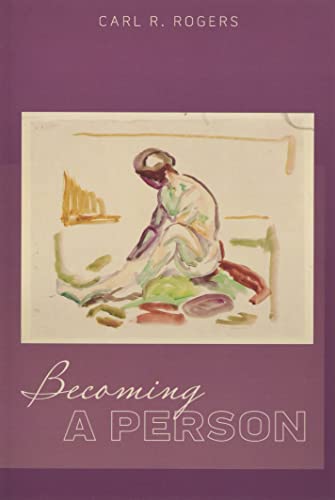 Carl R. Rogers On Becoming a Person: A Therapist's View of Psychotherapy The landmark humanistic text establishing unconditional positive regard, empathy, and congruenceCHECK TODAY'S PRICE
Why Does It Matter Which Psychology Authors You Read?
Choosing credible psychology authors matters because the field is saturated with pop-psychology content that sounds authoritative but lacks empirical grounding. A reader who cannot distinguish rigorous research synthesis from anecdotal self-help risks internalizing oversimplified or outright inaccurate models of how the mind actually works.
Psychologist and behavioral economist Daniel Kahneman spent a career demonstrating how easily human judgment falls prey to predictable, systematic errors, a lesson that applies directly to how readers evaluate psychology books themselves. Authors who cite primary research, acknowledge nuance, and resist overpromising tend to produce work that holds up under scrutiny years later. Books that promise instant transformation through a single technique, by contrast, rarely survive replication or long-term clinical validation.
Building genuine psychological literacy also means reading across theoretical traditions rather than settling into a single ideological camp. Cognitive, humanistic, existential, and social-psychological perspectives each illuminate different facets of the same complex human experience. No single author’s framework fully captures the totality of the mind, which is exactly why exposure to multiple foundational voices produces a richer, more balanced understanding.
- Credible psychology authors ground their claims in peer-reviewed research rather than anecdotal self-help promises.
- Reading across theoretical traditions prevents the narrow thinking that comes from single-framework reliance.
- Landmark authors typically influence clinical practice, organizational training, and public mental health literacy simultaneously.
- Distinguishing rigorous research synthesis from repackaged clichés protects readers from wasted time and misinformation.
9 Authors of Psychology Books That You Should Know
The following curated selection introduces nine of the most influential psychology authors whose landmark books continue to shape clinical practice, public understanding, and academic research across multiple decades.
1. Daniel Kahneman — Thinking, Fast and Slow
Daniel Kahneman, a Nobel laureate in economic sciences, transformed how psychologists and economists alike understand human judgment through his landmark book Thinking, Fast and Slow. Kahneman synthesizes decades of research conducted with the late Amos Tversky, introducing the dual-process model that distinguishes fast, intuitive System 1 thinking from slow, deliberate System 2 reasoning.
His work exposed dozens of predictable cognitive biases, from anchoring to loss aversion, reshaping fields from behavioral economics to clinical decision-making. It remains an essential text for anyone seeking to understand systematic errors in human judgment.
- Introduces the dual-process framework distinguishing intuitive System 1 from deliberate System 2 reasoning.
- Documents dozens of predictable cognitive biases that distort financial and clinical decision-making.
- Provides the theoretical foundation for the field of behavioral economics.
2. Viktor E. Frankl — Man’s Search for Meaning
Viktor E. Frankl, a psychiatrist and Holocaust survivor, developed logotherapy, an existential psychotherapeutic approach centered on humanity’s fundamental drive to discover meaning rather than pursue pleasure or power alone. His memoir Man’s Search for Meaning recounts his time in Nazi concentration camps while illustrating this theory through devastating firsthand testimony.
Frankl demonstrated that even under unimaginable suffering, individuals retain the freedom to choose their attitude toward circumstance. This slim volume remains foundational reading for existential and meaning-centered psychotherapy.
- Introduces logotherapy as a meaning-centered alternative to pleasure-driven psychoanalytic frameworks.
- Demonstrates psychological resilience mechanisms under conditions of extreme existential suffering.
- Provides a foundational framework still used in treating grief and terminal illness distress.
3. Bessel van der Kolk — The Body Keeps the Score
Bessel van der Kolk, a psychiatrist and pioneering trauma researcher, revolutionized clinical understanding of psychological trauma through The Body Keeps the Score. Van der Kolk demonstrates that overwhelming experiences are stored somatically within the nervous system, often resisting purely verbal, cognitive processing methods.
His synthesis of neuroimaging research with body-based interventions like EMDR and yoga pushed the entire trauma treatment field beyond talk therapy alone. It remains essential reading for understanding modern trauma-informed care.
- Explains how traumatic memory becomes encoded within the autonomic nervous system.
- Reviews neuroimaging evidence supporting somatic interventions like EMDR and yoga therapy.
- Advocates for integrating body-based approaches alongside traditional talk therapy models.
4. Daniel Goleman — Emotional Intelligence
Daniel Goleman, a psychologist and science journalist, popularized and expanded the concept of emotional intelligence with his bestselling book of the same name. Goleman argues that self-awareness, self-regulation, motivation, empathy, and social skill often predict life success as powerfully as traditional cognitive intelligence measures.
His accessible synthesis of neuroscience and developmental psychology brought emotional competency into corporate training rooms, classrooms, and therapy offices worldwide. It remains a foundational text for understanding emotional regulation and interpersonal effectiveness.
- Identifies five core components of emotional intelligence including self-awareness and social skill.
- Synthesizes neuroscience research explaining how emotion regulation develops across the human lifespan.
- Demonstrates practical applications for education, leadership, and clinical therapeutic settings.
5. Eric Berne — Games People Play
Eric Berne, a psychiatrist, developed transactional analysis and introduced it to a mass audience through his classic Games People Play. Berne identifies recurring, often unconscious social “games” that people play in relationships, describing predictable patterns of manipulation, self-sabotage, and interpersonal dysfunction.
Despite being written over five decades ago, Berne’s model of Parent, Adult, and Child ego states continues to inform modern couples counseling and communication training. It remains a genuinely original contribution to social and relational psychology.
- Introduces transactional analysis and the Parent-Adult-Child model of ego states.
- Catalogs recurring relational “games” that produce predictable patterns of interpersonal dysfunction.
- Continues to inform modern couples counseling and communication skills training.
6. Jonathan Haidt — The Righteous Mind
Jonathan Haidt, a social psychologist, investigates the evolutionary origins of human morality in The Righteous Mind, explaining why intelligent, well-intentioned people so often hold fiercely opposing political and religious convictions. Haidt establishes that moral judgments arise primarily from immediate intuition, with rational justification following after the fact.
His Moral Foundations Theory identifies six universal psychological dimensions—care, fairness, loyalty, authority, sanctity, and liberty—that shape political and cultural identity. It remains essential reading for understanding ideological polarization and moral psychology.
- Establishes the social intuitionist model showing moral judgment precedes rational justification.
- Introduces Moral Foundations Theory identifying six universal psychological moral dimensions.
- Explains why political tribes struggle to understand opposing moral and cultural worldviews.
7. Susan Cain — Quiet: The Power of Introverts in a World That Can’t Stop Talking
Susan Cain, a writer and former corporate attorney, challenges the cultural bias favoring extroversion in Quiet, synthesizing personality psychology research to demonstrate that introverted temperament carries genuine cognitive and creative advantages. Cain draws on the work of temperament researchers to explain differing sensitivity thresholds to external stimulation.
Her book sparked a broader cultural reevaluation of leadership, education, and workplace design, arguing that quiet reflection deserves as much respect as assertive extroversion. It remains a landmark text in personality psychology and temperament research.
- Synthesizes temperament research explaining differing sensitivity to external stimulation levels.
- Challenges cultural bias favoring extroversion in leadership and educational environments.
- Demonstrates the genuine cognitive and creative strengths associated with introverted temperament.
8. Robert M. Sapolsky — Behave: The Biology of Humans at Our Best and Worst
Robert M. Sapolsky, a neuroendocrinologist and primatologist, delivers an exhaustive account of human behavioral biology in Behave, explaining actions across a backward timeline spanning seconds, hours, days, years, and evolutionary millennia. Sapolsky integrates neuroscience, endocrinology, genetics, and evolutionary theory into a single coherent framework.
His meticulous deconstruction of tribalism, aggression, empathy, and free will combines academic rigor with genuine wit. It stands as an indispensable resource for understanding human behavioral neurobiology.
- Constructs a multi-layered timeline explaining behavior from split-second neurochemistry to deep evolutionary genetics.
- Examines the biological mechanisms underlying tribalism, aggression, and prosocial moral empathy.
- Critically evaluates the neurobiological limits of free will and moral accountability.
9. Carl R. Rogers — On Becoming a Person
Carl R. Rogers, a founding figure of humanistic psychology, established person-centered therapy as a rigorous clinical alternative to both psychoanalysis and behaviorism through On Becoming a Person. Rogers argues that genuine empathy, unconditional positive regard, and therapist congruence constitute the necessary conditions for psychological growth.
Decades before “therapeutic alliance” entered standard clinical vocabulary, Rogers demonstrated empirically that the relationship itself, not technique alone, drives therapeutic outcomes. It remains foundational reading for cultivating authentic relational presence.
- Establishes unconditional positive regard and congruence as necessary conditions for change.
- Provides empirical grounding for the centrality of the therapeutic relationship.
- Challenges rigid, diagnosis-driven approaches in favor of client-centered collaborative growth.
How These Nine Authors’ Theories Complement Each Other
Mapping how these nine authors’ contributions intersect reveals a surprisingly coherent picture of human psychology, even though each approached the mind from a distinct angle. Understanding these connections helps readers build an integrated theoretical framework rather than collecting isolated facts.
| Author | Core Theoretical Contribution |
|---|---|
| Daniel Kahneman | Dual-process cognition and systematic judgment biases |
| Viktor E. Frankl | Meaning-centered existential resilience under suffering |
| Bessel van der Kolk | Somatic encoding of trauma and body-based healing |
| Daniel Goleman | Emotional intelligence and interpersonal competency |
| Eric Berne | Transactional analysis and relational communication patterns |
| Jonathan Haidt | Moral intuition and the psychology of political division |
| Susan Cain | Temperament science and introvert-extrovert differences |
| Robert M. Sapolsky | Behavioral neurobiology across evolutionary timescales |
| Carl R. Rogers | Humanistic relational conditions for psychological growth |
As the table above illustrates, Kahneman’s cognitive biases and Rogers’s relational warmth address entirely different layers of the same mind. Combining insights from automatic thinking, embodied trauma, moral intuition, and relational healing produces a far richer clinical and personal understanding than any single author could provide alone.
How to Read Psychology Books for Genuine Understanding, Not Just Entertainment
Simply consuming psychology books passively rarely produces lasting behavioral or clinical insight. Genuine understanding requires active engagement, critical evaluation, and deliberate application to real situations rather than treating these books as casual entertainment reading.
Approaching each book with a critical eye means asking whether the author cites primary research, acknowledges limitations, and distinguishes correlation from causation. Many popular psychology books simplify complex findings for readability, which is reasonable, but readers should remain alert to oversimplification that crosses into misleading certainty. Cross-referencing claims across multiple authors, rather than accepting any single narrative uncritically, builds genuine intellectual discernment.
- Take notes while reading, translating each author’s core concept into your own everyday language and examples.
- Cross-reference claims across at least two authors before accepting a theory as well-established science.
- Apply one specific insight to a real relationship or work situation within a week to test its practical validity.
- Discuss key concepts with a friend, therapist, or reading group to deepen retention through social reinforcement.
Building a Personal Reading Plan Across These Nine Authors
Deciding where to begin among nine influential voices can feel overwhelming without a structured approach. Building a deliberate reading sequence based on your current interests and immediate needs produces far better retention than randomly picking whichever title looks most appealing on a given week.
Readers primarily interested in decision-making and workplace performance benefit most from starting with Kahneman before moving to Goleman, since both authors address how the mind processes information and regulates emotional responses under pressure. Those drawn to relationship dynamics and communication patterns should pair Berne’s transactional analysis with Rogers’s humanistic emphasis on empathy, since one identifies dysfunctional patterns while the other models a healthier relational alternative. Readers processing grief, trauma, or major life transitions often find the combination of Frankl and van der Kolk particularly powerful, since existential meaning-making and somatic trauma healing frequently intersect in real clinical recovery work.
Haidt, Cain, and Sapolsky round out a reading plan focused on understanding social and biological dimensions of human difference, whether that difference expresses itself through political conviction, introverted temperament, or evolutionary behavioral drives. There is no single correct order. What matters more is choosing a sequence that connects to a genuine question currently active in your own life, since motivated reading produces dramatically better comprehension and retention than reading purely out of obligation.
- Pair Kahneman with Goleman when your primary interest involves decision-making and emotional regulation.
- Combine Berne with Rogers to understand both dysfunctional patterns and healthier relational alternatives.
- Read Frankl alongside van der Kolk when processing grief, trauma, or major life transitions.
- Group Haidt, Cain, and Sapolsky together to explore social and biological dimensions of human difference.
Notable Secondary Works Worth Exploring From These Authors
Once you have absorbed each author’s flagship title, several secondary works deepen and extend the same core ideas in valuable directions. Exploring these follow-up texts prevents the common mistake of treating a single book as an author’s complete and final contribution to the field.
Kahneman’s collaborative research with Amos Tversky produced dozens of academic papers that predate Thinking, Fast and Slow, while Goleman later expanded his emotional intelligence framework into leadership-specific applications for organizational settings. Van der Kolk’s earlier academic publications on developmental trauma provide more clinical detail than his mainstream bestseller, useful for practitioners seeking technical depth beyond the popular narrative. Rogers similarly authored numerous academic papers refining his core therapeutic conditions decades after On Becoming a Person first appeared, reflecting how his thinking continued to evolve throughout a long career.
Readers who found Haidt’s moral psychology compelling often gravitate toward his more recent work examining social media’s impact on adolescent mental health, extending his moral intuition framework into contemporary digital contexts. Sapolsky has published extensively on stress physiology in academic contexts that complement Behave’s broader evolutionary narrative with more granular biochemical detail. Exploring these secondary works rewards curious readers with a fuller, more nuanced picture of how each author’s thinking developed over an entire career rather than a single publication.
- Kahneman and Tversky’s original academic papers predate and inform the popular Thinking, Fast and Slow narrative.
- Van der Kolk’s earlier clinical publications provide technical depth beyond his mainstream bestselling synthesis.
- Rogers continued refining his therapeutic conditions across decades of subsequent academic publication.
- Haidt’s more recent work extends moral psychology into contemporary digital and social media contexts.
Common Misconceptions About Popular Psychology Authors
Even well-regarded psychology authors are sometimes misunderstood or oversimplified by readers seeking quick takeaways. Correcting these misconceptions ensures you extract the genuine value these authors intended rather than a distorted, watered-down version.
- Assuming Kahneman’s biases mean human judgment is hopelessly irrational, when his actual point emphasizes predictable, correctable patterns.
- Reducing Frankl’s logotherapy to generic positive thinking, ignoring its roots in genuine existential confrontation with suffering.
- Treating emotional intelligence as a fixed personality trait rather than Goleman’s actual claim of a trainable, developing skill set.
- Interpreting Rogers’s unconditional positive regard as permissiveness rather than genuine respect paired with honesty.
Recognizing these common distortions helps readers engage with the original source material more carefully. Not always. Sometimes a quick summary genuinely captures the essence. But when a concept feels too simple to be useful, that is usually a signal to return to the primary text.
When Reading About Psychology Isn’t Enough: Recognizing the Need for Professional Support
Reading foundational psychology books can provide genuine insight and validation, but self-education has real limits when facing significant mental health challenges. Recognizing when personal distress requires professional intervention rather than more reading is a crucial psychological literacy skill in itself.
If concepts from trauma literature, existential despair, or persistent low mood resonate uncomfortably with your own daily experience, and these feelings persist for more than two consecutive weeks while interfering with work, relationships, or basic functioning, books alone are insufficient. Scheduling an evaluation with a licensed clinical psychologist, psychiatrist, or licensed counselor provides the individualized assessment that no book, however well-researched, can replace. Psychologist Bessel van der Kolk himself has repeatedly emphasized that trauma healing requires professional guidance alongside self-education, not instead of it.
Most critically, if you or someone you know is experiencing acute suicidal ideation, intrusive thoughts of self-harm, or an overwhelming emotional crisis where safety cannot be guaranteed, do not rely on reading alone. In the United States and Canada, immediately call or text 988 to reach the Suicide & Crisis Lifeline, available twenty-four hours a day, seven days a week, free and completely confidential. Seeking professional support during a crisis reflects genuine strength, not a failure of self-sufficiency.
- Persistent distress lasting more than two weeks warrants evaluation by a licensed mental health professional.
- Self-education through psychology books complements but never replaces individualized clinical assessment.
- Acute suicidal ideation demands immediate emergency contact with dedicated crisis support services.
FAQs about Authors of Psychology Books
Which psychology author should I read first if I am completely new to the field?
Daniel Kahneman’s Thinking, Fast and Slow is widely recommended as an excellent starting point for newcomers to psychology. It introduces core concepts about how the mind processes information through accessible, well-organized chapters built around concrete everyday examples rather than dense academic jargon. Because cognitive biases affect virtually every area of decision-making, from finances to relationships, understanding this framework provides a practical foundation that makes subsequent psychology reading easier to contextualize and apply to daily life.
Are these nine authors’ books scientifically credible, or are they just popular self-help?
All nine authors discussed here hold legitimate academic credentials and base their work on peer-reviewed research, clinical practice, or both, distinguishing them from purely anecdotal self-help writing. Daniel Kahneman won a Nobel Prize, Bessel van der Kolk conducted decades of clinical trauma research, and Jonathan Haidt’s work is extensively cited in academic social psychology literature. While these books are written for general audiences and therefore simplify some technical details for readability, the underlying claims are grounded in verifiable research rather than unsupported opinion.
Do I need a psychology background to understand these books?
No, all nine books discussed in this guide were specifically written for general audiences without requiring prior psychology coursework or clinical training. Authors like Susan Cain and Daniel Goleman deliberately avoid excessive technical jargon, using storytelling, case examples, and accessible analogies to convey complex research findings. That said, readers with some background in psychology may notice additional nuance and appreciate methodological details that casual readers might skim past without losing the core message.
How do I know if a psychology book is trustworthy before buying it?
Look for authors with verifiable academic credentials, clinical licensure, or a substantial publication record in peer-reviewed journals before investing time in a psychology book. Trustworthy authors typically cite specific studies, acknowledge limitations or areas of ongoing debate, and avoid promising guaranteed transformation through a single technique. Checking whether a book has been reviewed favorably by other psychologists or cited in academic literature, rather than relying solely on marketing claims or bestseller status, also helps distinguish credible work from oversimplified content.
Can reading these psychology books replace therapy?
No, reading psychology books provides valuable education and self-reflection tools, but it cannot replace the individualized assessment, diagnosis, and personalized treatment planning that a licensed mental health professional provides. Books offer general frameworks that apply broadly across populations, while therapy addresses your specific history, symptoms, and circumstances through an ongoing collaborative relationship. Many people find that combining psychoeducational reading with professional therapy produces better outcomes than relying on either approach exclusively.
Why do some of these books, like Games People Play, remain relevant decades after publication?
Books like Eric Berne’s Games People Play remain relevant because they describe fundamental patterns of human relational behavior that transcend specific cultural or technological eras. While the language and examples may feel dated, the underlying psychological dynamics, such as manipulation patterns, self-sabotage, and communication breakdowns, reflect enduring aspects of human nature rather than era-specific phenomena. This durability across decades is often a strong indicator that an author identified genuine psychological principles rather than a fleeting cultural trend.
Bibliography
- Berne, E. (1964). Games People Play: The Basic Handbook of Transactional Analysis. Grove Press.
- Cain, S. (2012). Quiet: The Power of Introverts in a World That Can’t Stop Talking. Crown Publishers.
- Frankl, V. E. (2006). Man’s Search for Meaning. Beacon Press.
- Goleman, D. (1995). Emotional Intelligence: Why It Can Matter More Than IQ. Bantam Books.
- Haidt, J. (2012). The Righteous Mind: Why Good People Are Divided by Politics and Religion. Pantheon Books.
- Kahneman, D. (2011). Thinking, Fast and Slow. Farrar, Straus and Giroux.
- Rogers, C. R. (1961). On Becoming a Person: A Therapist’s View of Psychotherapy. Houghton Mifflin.
- Sapolsky, R. M. (2017). Behave: The Biology of Humans at Our Best and Worst. Penguin Press.
- van der Kolk, B. (2014). The Body Keeps the Score: Brain, Mind, and Body in the Healing of Trauma. Viking Press.
Use this citation format to reference the article clearly and help readers find the original source.
PsychologyFor. (2026). 9 Authors of Psychology Books That You Should Know. PsychologyFor. https://psychologyfor.com/9-authors-of-psychology-books-that-you-should-know/