

See more of our articles in your search results.
The senses are the means through which we acquire information about the world and also relate to it. Sight, hearing, touch… all the senses are used to know our immediate environment and also how to respond to it.
It usually happens that in many mental disorders and brain diseases there are certain alterations in the way of perceiving the environment, usually due to cognitive impairment, something that if not managed properly can lead to a significant reduction in the patient’s well-being.
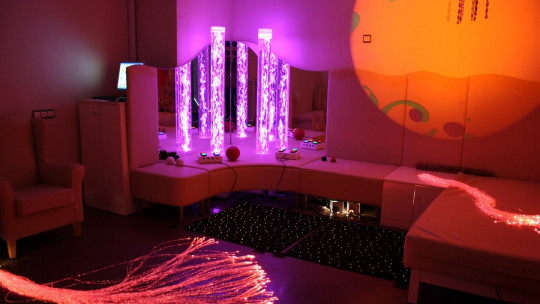
With the intention of avoiding it, there are Snoezelen multi-sensory stimulation rooms, a type of perfect tools both for applying therapy to people with different perception and cognition problems and for recreational purposes. Let’s discover what they are and their great usefulness.
What are Snoezelen multisensory stimulation rooms?
The senses of the human body allow us to perceive what is around us, in addition to perceiving ourselves and our relationship with space.
The organs in which these senses are located constitute the vehicle through which we can receive information from the environment and emit a response according to what is perceived. Sight, touch, hearing, smell and taste are the well-known classic senses, although there are more: balance, heat perception, proprioception, nociception…
How many of these have you been "meaning to read" for months?
- 1
 Workman PublishingNo More Mr Nice GuyA Proven Plan for Getting What You Want in Love, Sex, and LifeListen Free On Audible
 - 2
 Sounds TrueNo Bad PartsHealing Trauma and Restoring Wholeness with the Internal Family Systems ModelListen Free On Audible
 - 3
 New Harbinger PublicationsThe Dialectical Behavior Therapy Skills WorkbookPractical DBT Exercises for Learning Mindfulness, Interpersonal Effectiveness, Emotion Regulation...Listen Free On Audible
The senses activate our brain and allow us to train it, teach you new concepts and skills, new sensations. They are a very important factor for the development, interaction and learning in our species, which is why if they have any altered sense, whether congenital or acquired, the affected person has great disadvantages when it comes to processing and understanding the world that surrounds them.
People who have a mental disorder, dementia, cognitive impairment or developmental disorders may suffer alterations in one or more of their sensory systems, which results in having certain difficulties in receiving sensations, which causes alterations in their development and ability. to acquire new knowledge. Added to this, they may also present alterations in their behavior and mood.
One of the most widespread ideas in clinical psychology, especially applied in the treatment of people with cognitive impairment, is that sensations can help us reconnect with the reality that surrounds them, despite presenting alterations in their perception. It is because of that Many therapies take sensory stimulation as a very useful tool. being what is carried out in the Snoezelen multisensory stimulation rooms.
The Snoezelen rooms are used with the main objective of promoting the feeling of well-being of the participants through sensory stimulation, providing stimuli that enter through different senses. The idea is to create a rich and varied experience, in which all types of stimulation take part. in the form of sounds, lights, colors, smells, textures or even flavors. Thanks to the multisensory stimulation carried out in these rooms, people who present some cognitive alteration are helped to interact with the environment and to be aware of their own body and being.
Origins of the Snoezelen rooms
The therapeutic concept behind Snoezelen multisensory stimulation rooms It has its origins in the 70s with the Dutch therapists Jan Hulsegge and Ad Verheul. This strange word comes from Dutch, being the fusion of “snuffelen”, which means “to smell” and “doezelen” which means “to snooze”, and combined they give rise to something like “permeating yourself with relaxing sensations”.
Hulsegge and Verheul’s multisensory stimulation proposal began to have relevance in the 1990s, being approached scientifically and acquiring greater therapeutic and recreational interest.
It arrived in Spain around the year 2000, and in the last two decades it has not stopped acquiring greater relevance. thanks to its great usefulness in the treatment and improvement of the mental health of patients with diseases and disorders where cognitive abilities are compromised.

What can we find in one of these rooms?
The multisensory stimulation activity is carried out in specifically enabled physical spaces these being the Snoezelen multisensory stimulation rooms themselves.
These rooms are prepared to provide sensory experiences through sounds, tactile interactions, smells, light sensations, tastes and other stimuli that are normally distributed in various areas of the room depending on the senses that you want to stimulate, although they are also You can find elements used to stimulate several senses at the same time.
Between the elements that we can find in a Snoezelen room have:
The great variety of objects and effects they produce allow those who enter this type of room to receive all types of stimuli, multisensory stimulation useful both in therapy and for purely recreational purposes. In a therapeutic context, it may happen that the therapists are the ones who conduct the session and direct the application of the stimuli. helping the patient to become aware of what is happening around them and inviting them to interact with objects while in others patients are left completely free to browse and use the objects in the room at their free will.
But, as can be deduced from all the furniture that is usually in these rooms, these spaces are more expensive to set up. For this reason, you can resort to the alternative of using multisensory stimulation carts, which have objects that can be used in an analogous way to those found in the Snoezelen rooms. Although these carts do not generate as great a degree of immersion or stimulation as the rooms specifically set up for this purpose, they have the advantage that they are transportable, allowing a multisensory stimulation environment to be created anywhere.
What are the benefits of multisensory stimulation?
Since Snoezelen multisensory stimulation rooms have been the focus of scientific research, different benefits have been attributed to them. Among the main ones we can highlight the following:
- Relaxation
- Greater independence
- Developing self-confidence
- Self-control
- Greater exploration of the environment
- Greater performance of creative abilities
- Improving communication skills
- Contributes to well-being
- It’s a fun activity
- Promotes choice
- Increases attention and concentration time
- Reduces changes in mood
- Avoid behavioral alterations
Although it has been assumed that rooms of this type bring all these benefits, it is worth mentioning that they are still the subject of scientific research to determine their true effectiveness. However, scientific literature indicates that Snoezelen multisensory stimulation rooms turn out to be useful in people with mental disorders, chronic pain, people with intellectual disabilities and older people with cognitive impairment in addition to helping to regulate the mood and behavior in both children and adults without any psychopathology, enjoying them as leisure.
It has been especially studied in patients with Alzheimer’s disease and in cases of cognitive impairment, conditions in which people have severe difficulties controlling their psychomotor skills. In Alzheimer’s, cognitive, behavioral and emotional abilities are affected, aspects that Snoezelen multisensory rooms allow us to address and stimulate.
When Alzheimer’s is in a very advanced stage, it is difficult for the person to understand the world around them. For this reason, stimuli as basic as a scent or a song that evokes memories, or a moving light that awakens interest and curiosity can be a great advance, especially because they motivate the user to interact with the environment and feel better. Other benefits that Snoezelen spaces provide in patients with Alzheimer’s are:
- Improves behavior and mood.
- Reduces apathy
- Attenuates behavioral alterations
- Reduces anxiety
- Improves balance in people with dementia
Example of intervention with Snoezelen
Although each psychopedagogical office, nursing home or play center may have its own intervention protocol using Snoezelen multisensory stimulation, we can give the following guideline as a fairly general example, in this specific case with older people and in sessions of between 30 and 45 minutes. Sessions can be structured as follows:
- At the beginning of the session, give information in advance to the participant: where they are, who they are with, and what they are going to do.
- Breathe being aware of it. The goal is to relax the person.
- Show affection
- Go naming the parts of the body that you are working with.
- Take care of the participant’s posture, ensuring that they feel comfortable and relaxed.
During the sessions It is essential to take into account the following aspects:
- Give the participant the opportunity to choose, based on their preferences.
- Right to have your time.
- Repeat an action as many times as you want
- Someone to supervise the session, whether or not taking an active role.
- Allow time for the participant to express themselves and give their response.
Use this citation format to reference the article clearly and help readers find the original source.
PsychologyFor. (2024). Snoezelen Multisensory Stimulation Rooms: What They Are and What They Are for. PsychologyFor. https://psychologyfor.com/snoezelen-multisensory-stimulation-rooms-what-they-are-and-what-they-are-for/