

See more of our articles in your search results.
Not long ago, psychiatric centers were dark places isolated from the rest of society where people whose mental disorder was a nuisance to “normal” people were locked up.
Victims of often inhuman treatment, psychiatric patients had a life typical of a prisoner, whose opinion and well-being was barely taken into account and the possibility that their psychological discomfort was the product of a dysfunctional life was not considered.
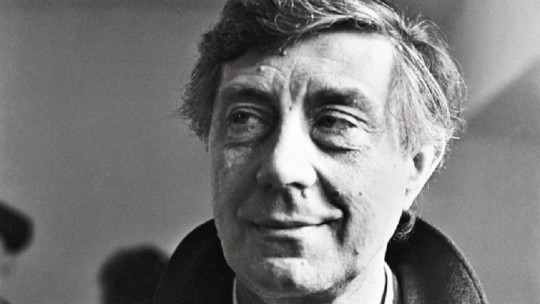
Fortunately, this changed with the political and social activism of a psychiatrist named Franco Basaglia, who not only denounced the unfair treatment that patients received but also contributed to legal changes to provide them with better treatment. Let’s find out what his story was through a biography of Franco Basaglia
Brief biography of Franco Basaglia
Franco Basaglia is one of the key figures of the movement against the hospitalization and internment of psychiatric patients. This Italian psychiatrist opposed the dehumanized treatment that people with mental disorders received in asylums and brought with it a new approach to the care of these patients, representing a great revolution not only in its native country but also in many developed countries.
Franco Basaglia is considered one of the fathers of “anti-psychiatry” along with Ronald D. Laing and David G. Cooper, although not in a derogatory sense towards the discipline of psychiatry but rather against the methods and treatments used in its more traditional side. Basaglia did not see mental disorders as purely medical diseases, but rather the result of some type of social dysfunction that had led the patient to suffer from a disorder and end up hospitalized.
How many of these have you been "meaning to read" for months?


Basaglia was a prolific scientist, writer and humanist as well as a tireless activist. Thanks to his fight for the rights of psychiatric patients, he got Italy to apply a new law that initiated more ethical and effective treatment in the treatment of mental disorders.
Early years and professional training
Franco Basaglia born in Venice, Italy, on March 11, 1924 He was the second of three children in a wealthy family and grew up in the San Polo neighborhood of Venice, the same district in which he attended secondary school. His childhood was quiet, typical of a family with resources in pre-war Italy.
In 1943, at the age of 19, he entered the Faculty of Medicine of the University of Padua His university student years were spent in an Italy at war, marked by the development of the Second World War.
Active in the underground anti-fascist movement, Basaglia was arrested in 1944 after being betrayed by a colleague. He did not receive a fair trial and He ended up imprisoned until Benito Mussolini’s Italy ended in 1945 His stay in prison greatly influenced his position on the illegitimacy of mandatory confinement and deprivation of liberty as forms of psychiatric “treatment.”
In 1950 he worked at the psychiatric clinic of the University of Padua. A little later, in 1952, he obtained his specialization degree in “nervous and mental diseases”, a merit that would be equivalent to the qualification of a psychiatrist. In 1953 he married Franca Ongaro, with whom he would enjoy a long marriage that would give him two children: Enrico and Alberta.
In 1958 Franco Basaglia became a professor at the University of Padua but, just three years later, he left the academy and moved to Gorizia, right on the border with the former Yugoslavia. He arrived there to take charge of the direction of the local psychiatric hospital, where he discovered the sad and harsh reality that psychiatric patients faced whose treatment he received, although not identical, was similar to that which he himself had received as a political prisoner during fascist Italy.
By then Basaglia already had his own idea about mental disorders. Unlike what most psychiatrists of the time considered, Basaglia refused to accept that they were physical illnesses but rather a consequence of social injustices, marginalization and dysfunctional environments. His first speech in the hospital where he ended up is remembered to this day, being a faithful reflection of his opinion on the treatment that was applied to psychiatric patients:
“A person with a mental illness enters the asylum as a ‘person’ to become a ‘thing’ there. The patient, first of all, is a ‘person’ and as such must be considered and cared for (…) And we are here to forget that we are psychiatrists and to remember that we are people.”
Democratic psychiatry
In August 1971 Basaglia assumed the direction of the San Giovanni psychiatric hospital in Trieste, a few kilometers from Gorizia. For the municipality, this hospital was the place where all individuals who did not fit into society ended up and, since they were not considered useful people or adapted to social life, they were annoying. The best thing was to keep them away from the rest of the “normal” people…
Faced with this situation, Basaglia, far from accepting what the center did with patients, began a process of change both inside and outside the hospital. In 1973 Franco Basaglia founded the “Democratic Psychiatry” movement, dedicated not only to intellectual and theoretical production and the development of public health models, but also focused on political conquest with the aim of closing psychiatric institutions and achieving better treatment. human towards patients with mental disorders.
Basaglia considered that psychiatric hospitals were centers that could not be reformed and that, therefore, it was necessary to completely destroy them, returning freedom to patients and designing a new psychotherapeutic support system. His revolutionary ideas in the field of psychiatry gained the support of many professionals, governments, institutions and associations that saw the need to stop treating psychiatric patients as people who were not going to contribute to the community and take them for what they were. people.
Among the activities that had been developed in San Giovanni during its depsychiatrization process, the “artistic laboratory” stands out, in which both inmates and people from the community, neighbors, students and hospital staff participated under the direction of the plastic artist Vittorio Basaglia. , cousin of Franco Basaglia.
It was during the sessions of this laboratory that a huge paper mache horse was built whose belly was filled with the patients’ wishes. They called this monument “Marco Cavallo” and with it they broke into the San Giovanni hospital, tearing down its walls in a march through the city where Franco Basaglia and the patients demanded the definitive closure of the center. This event, still remembered by Triestine residents, became a symbol of the anti-psychiatric movement.
In 1977, this movement led to the closure of the San Giovanni hospital. Shortly after, On May 13, 1978, Basaglia’s political activism reached the Italian parliament where law 180 was approved, which completely reformed the management of psychiatry and prohibited the confinement of psychiatric patients against their will. The point was to convert asylums, which were places isolated and marginalized from social dynamics, into centers that would help their inmates reintegrate into society effectively.
Franco Basaglia created an open hospital system, in which the center’s inmates could go out and interact with the rest of society instead of being isolated from it. At the same time, many patients were able to return home. Basaglia, always interested in the opinions, wishes and feelings of his patients, organized assemblies within the hospital to find out what the inmates thought and look for alternatives based on consensus among all
This clashed with the ideas of those who defended the existence of asylums, defenders of intervention in isolated and totally controlled environments. The same ones who thought that all the inmates were there because they were not and would not be capable of living in society.
International impact and recent years
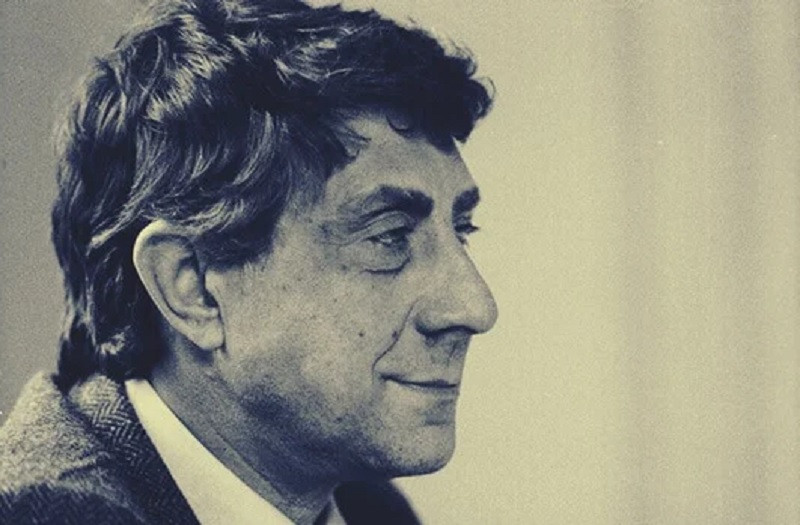
In 1980, the Trieste hospital was totally different from what it was. The old services and procedures had been changed for cheaper, more efficient and, very importantly, humane ones. Although Basaglia had left the direction of this center and had gone to Rome to assume the position of regional coordinator of psychiatric services in the Lazio region, his influence in that center and in many others in Italy was profound.
The old asylum was replaced by 40 different services, almost completely abandoning the idea of forced confinement The new approach used new resources and tools, including home care. Acute cases were treated in apartments where small groups of patients met and received psychosocial rehabilitation.
Franco Basaglia He died on August 29, 1980 at his home in Venice while still quite young, only 56 years old The cause of his death was a brain tumor that developed rapidly and only two months after his diagnosis led to his death. His mortal remains rest in his hometown, in the San Michele cemetery.
His death did not mark the end of the influence of his ideas, since to this day it continues to have a great impact on psychiatry internationally. There are those who have compared him to Nicholas Copernicus, who realized that neither the Earth nor man were the center of the Universe. In the case of Basaglia the situation is paradoxical, since he came to say that, although we were not the center of the universe, no one deserved to be belittled and separated from society because of their mental condition.
Law 180 of 1978
Franco Basaglia’s fight for the freedom of psychiatric patients acquired a strong political character that became a true social movement. Basaglia sought precise legal changes and made his fight become part of the ideology of the Italian left. Law 180, which today is known as the “Basaglia law,” was approved in May 1978, marking a before and after in the treatment of psychiatric patients in the country.
Italian Law 180 constitutes the first legal text worldwide in which the rights of people with mental disorders are recognized and established After four decades of being approved and despite having raised several controversies, this law is still in force in Italy. The changes that this law introduced not only initiated a process of de-mentalization of patients with mental disorders, but have also led to an improvement in the treatment and recovery of people with mental illness.
It is a direct consequence of this law that Italy is the developed country with the lowest number of hospital beds per inhabitant for psychiatric conditions. It is also the Italian country that has the largest number of social intervention centers, with state support in their financing and the participation of the patients themselves in their management.
The Basaglia law stipulates the gradual and sustained closure of psychiatric hospitals, and prohibits the construction of new psychiatric hospitals. This law has been applied successfully, especially in the first twenty years in which more than 90,000 psychiatric beds were eliminated. This same text provides for the opening of small departments for hospitalization within general hospitals, as well as the offer of shelters or other centers for people who are not able to live alone.
The public service maintains the duty to guarantee care in the area of mental health to people who require it, although patients have the right to reject it since the Basaglia law establishes that all treatment must be therapeutic and voluntary. This does not mean that there is no forced hospitalization in some exceptions, but if they occur they are strictly delimited and are considered extreme situations, in which the patient’s life is in danger in the short term.
Use this citation format to reference the article clearly and help readers find the original source.
PsychologyFor. (2024). Franco Basaglia: Biography of This Italian Psychiatrist and Activist. PsychologyFor. https://psychologyfor.com/franco-basaglia-biography-of-this-italian-psychiatrist-and-activist/