


See more of our articles in your search results.
You stand outside beneath a clear, star-filled night sky or look at the intricate veins of a single fallen leaf, struck by a sudden, breathtaking realization of how much hidden complexity hums beneath the surface of ordinary daily existence. That profound sense of awe is extraordinary. In an era saturated with sensationalized headlines, fragmented social media feeds, and persistent anti-scientific misinformation, finding comprehensive literature that illuminates the fundamental laws of nature feels genuinely transformative. It is not an abstract academic pursuit. Rather, it represents our deepest biological and cognitive drive for empirical scientific discovery.
For inquisitive readers, science is not a dry collection of static facts or laboratory jargon; it is an active, self-correcting method of questioning reality, dismantling superstitions, and expanding human empathy. Yet navigating dense technical papers or oversimplified pop-science articles often leaves readers feeling alienated, overwhelmed, or patronized by commercial superficiality. True scientific literacy requires masterfully written treatises—works where world-class researchers, investigative journalists, and visionary thinkers translate intricate physics, evolutionary biology, and neuroscience into captivating narratives. Discovering the world’s premier science literature equips you with the cognitive tools to evaluate evidence objectively, appreciate the interconnected web of life, and cultivate an enlightened, evidence-based worldview.
How can reading foundational popular science books sharpen your critical thinking and deepen your understanding of complex natural systems?
This comprehensive guide details the 20 best books about science, reviewing celebrated masterpieces across astrophysics, evolutionary biology, neuroscience, genetics, ecology, and the philosophy of scientific inquiry that permanently reshape how you perceive reality.
The 20 Best Books About Science
Verified Top Picks- 1
 Carl Sagan Cosmos A luminous, poetic masterpiece tracing 15 billion years of cosmic evolution and human wonderCHECK TODAY'S PRICE
- 2
 Stephen Hawking A Brief History of Time A landmark international classic demystifying black holes, general relativity, and quantum spacetimeCHECK TODAY'S PRICE
- 3
 Brian Greene The Elegant Universe An exhilarating introduction to superstring theory, hidden spatial dimensions, and quantum physicsCHECK TODAY'S PRICE
- 4
 Neil deGrasse Tyson Astrophysics for People in a Hurry A witty, bite-sized guide breaking down dark matter, quantum mechanics, and the cosmic perspectiveCHECK TODAY'S PRICE
- 5
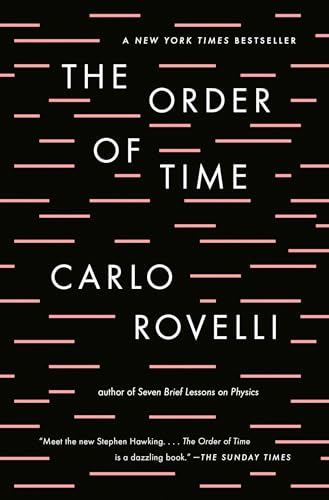 Carlo Rovelli The Order of Time A poetic, profound treatise on loop quantum gravity, entropy, and the dissolution of linear timeCHECK TODAY'S PRICE
- 6
 Richard Dawkins The Selfish Gene Reframing natural selection through gene replication, evolutionary altruism, and cultural memesCHECK TODAY'S PRICE
- 7
 Charles Darwin On the Origin of Species The monumental 1859 masterwork establishing empirical natural selection and common ancestryCHECK TODAY'S PRICE
- 8
 Siddhartha Mukherjee The Gene: An Intimate History A gripping history of heredity from Mendel's pea plants to CRISPR gene editing and bioethicsCHECK TODAY'S PRICE
- 9
 Yuval Noah Harari Sapiens: A Brief History of Humankind A provocative, sweeping history of how cognitive myths and culture enabled human species dominanceCHECK TODAY'S PRICE
- 10
 Merlin Sheldrake Entangled Life A mind-expanding exploration of underground mycelial networks, fungi symbioses, and ecological websCHECK TODAY'S PRICE
- 11
 Oliver Sacks The Man Who Mistook His Wife for a Hat Compassionate clinical case studies exploring neurological lesions, visual agnosia, and human identityCHECK TODAY'S PRICE
- 12
 Robert M. Sapolsky Behave: The Biology of Humans at Our Best and Worst A definitive neurobiological timeline explaining human aggression, tribalism, and empathyCHECK TODAY'S PRICE
- 13
 Daniel Kahneman Thinking, Fast and Slow A Nobel laureate's masterwork on cognitive architecture, heuristics, and the dual-process mindCHECK TODAY'S PRICE
- 14
 Jonathan Haidt The Righteous Mind Moral Foundations Theory explaining why good people are divided by politics and religionCHECK TODAY'S PRICE
- 15
 Douglas R. Hofstadter Gödel, Escher, Bach A Pulitzer Prize-winning exploration of Strange Loops, self-reference, and the emergence of consciousnessCHECK TODAY'S PRICE
- 16
 Siddhartha Mukherjee The Emperor of All Maladies: A Biography of Cancer A Pulitzer Prize-winning biography of oncology tracing humanity's 5,000-year war against cancerCHECK TODAY'S PRICE
- 17
 Rachel Carson Silent Spring The courageous 1962 ecological exposé that launched the modern global environmental movementCHECK TODAY'S PRICE
- 18
 Elizabeth Kolbert The Sixth Extinction: An Unnatural History A Pulitzer Prize-winning investigation into mass extinction events and humanity's geological impactCHECK TODAY'S PRICE
- 19
 Rebecca Skloot The Immortal Life of Henrietta Lacks The astonishing bioethical investigation into the immortal HeLa cells that revolutionized modern medicineCHECK TODAY'S PRICE
- 20
 Bill Bryson The Body: A Guide for Occupants A witty, comprehensive tour of human anatomy, physiological systems, and medical breakthroughsCHECK TODAY'S PRICE
Why Is Scientific Literacy Essential for Psychological and Cognitive Health?
Scientific literacy operates as a vital psychological cognitive anchor, protecting individuals from the destabilizing effects of confirmation bias, magical thinking, and sensationalist anxiety. When a person learns how the scientific method tests hypotheses through empirical observation and controlled experimentation, the mind develops an adaptive tolerance for nuance, complexity, and provisional uncertainty.
Developmental and cognitive psychologists demonstrate that understanding scientific principles activates prefrontal executive networks, replacing reactive emotional assumptions with structured analytical evaluation. Learning about deep cosmic time, biological evolution, and neurochemistry provides what psychologists term an “epistemic grounding”—a coherent cognitive framework that reduces existential dread by connecting individual human experience to the broader material cosmos. Embracing empirical rigor dismantles cognitive distortions, cultivating enduring intellectual resilience.
Astronomer and science communicator Carl Sagan famously argued that science is far more than a body of knowledge; it is an essential candle in the dark that protects democratic societies from irrational manipulation and superstition. Without a grounded understanding of empirical skepticism, individuals become vulnerable to pseudoscientific exploitation and cognitive panic. Reading authoritative science literature acts as a rigorous mental workout, fostering authentic intellectual humility.
- Scientific literacy strengthens prefrontal analytical networks and protects against cognitive confirmation biases.
- Understanding evolutionary biology and astrophysics provides an expansive, awe-inspiring existential cosmic perspective.
- Empirical skepticism equips readers to evaluate health claims critically, avoiding harmful pseudoscientific exploitation.
- Engaging with dense scientific narratives develops sustained focus and integrative analytical complexity.
The 20 Best Books About Science Categorized by Discipline
The following curated directory presents twenty of the most celebrated, intellectually rigorous, and beautifully written science books in publishing history, spanning astrophysics, genetics, evolutionary biology, neuroscience, environmental science, and the philosophy of scientific discovery.
| Scientific Domain | Recommended Definitive Masterworks |
|---|---|
| Astrophysics & Cosmology | Cosmos, A Brief History of Time, The Elegant Universe, Astrophysics for People in a Hurry, The Order of Time |
| Evolutionary Biology & Genetics | The Selfish Gene, The Origin of Species, The Gene, Sapiens, Entangled Life |
| Neuroscience & Cognitive Psychology | The Man Who Mistook His Wife for a Hat, Behave, Thinking Fast and Slow, The Righteous Mind, Gödel Escher Bach |
| Medicine, Ecology & Earth Science | The Emperor of All Maladies, Silent Spring, The Sixth Extinction, The Immortal Life of Henrietta Lacks, The Body |
Astrophysics, Cosmology, and the Fabric of Reality
These foundational masterworks explore the origin of the cosmos, the mechanics of quantum spacetime, and humanity’s enduring quest to understand the fundamental laws of physics.
1. Cosmos — Carl Sagan
Cosmos by legendary astronomer Carl Sagan is the luminous, poetic masterpiece that introduced millions of readers to the grandeur of the universe. Sagan traces fifteen billion years of cosmic evolution, interweaving astrophysics, anthropology, history, and philosophy to chronicle how matter evolved into self-conscious beings capable of contemplating their own cosmic origins.
Sagan’s lyrical prose famously reminds us that “we are a way for the cosmos to know itself.” It remains the gold standard of scientific communication, blending empirical rigor with breathtaking humanistic wonder.
- Traces fifteen billion years of cosmic evolution from the Big Bang to human technological civilization.
- Synthesizes planetary astronomy, historical exploration, and the philosophical search for extraterrestrial intelligence.
- Celebrates science as an essential tool for human survival, peaceful diplomacy, and global ecological preservation.
2. A Brief History of Time — Stephen Hawking
A Brief History of Time by theoretical physicist Stephen Hawking is the landmark international publishing phenomenon that brought complex theoretical physics into popular culture. Hawking demystifies the universe’s ultimate questions, explaining black holes, the Big Bang, general relativity, quantum mechanics, and the arrow of time without relying on complex mathematical equations.
Hawking’s witty, accessible narrative invites readers into the search for a unified “Theory of Everything.” It is an indispensable classic of modern cosmological inquiry.
- Explores the theoretical foundations of black hole thermodynamics and quantum gravitational mechanics.
- Deconstructs the cosmic arrow of time and the boundary conditions of the early expanding universe.
- Examines the ongoing scientific quest to unify general relativity with quantum field theory.
3. The Elegant Universe — Brian Greene
The Elegant Universe by theoretical physicist Brian Greene is the definitive, exhilarating introduction to superstring theory and the hidden dimensions of spacetime. Greene explains how the microscopic quantum realm of uncertainty clashes fundamentally with Einstein’s smooth, warpable spacetime, and how vibrating multidimensional strings offer a breathtaking mathematical solution.
Using brilliant visual analogies, Greene makes eleven-dimensional physics, Calabi-Yau manifolds, and parallel universes accessible and awe-inspiring. It is a tour de force in theoretical quantum physics.
- Illuminates the fundamental mathematical conflict between general relativity and quantum mechanics.
- Introduces superstring theory, vibrating energy filaments, and hidden spatial dimensions.
- Translates complex geometric concepts like Calabi-Yau spaces into intuitive visual analogies.
4. Astrophysics for People in a Hurry — Neil deGrasse Tyson
Astrophysics for People in a Hurry by astrophysicist Neil deGrasse Tyson delivers a quick, witty, and deeply informative overview of the cosmos designed for busy modern readers. In twelve concise chapters, Tyson breaks down dark matter, dark energy, quantum mechanics, the cosmic microwave background, and the elemental origin of the periodic table.
Tyson concludes with an unforgettable reflection on the “cosmic perspective,” reminding readers that recognizing our tiny place in the universe fosters humility and empathy. It is the ultimate accessible introductory astrophysics guide.
- Explains dark matter, dark energy, and cosmic background radiation in concise, bite-sized chapters.
- Traces the nucleosynthesis of chemical elements forged inside ancient exploding stars.
- Advocates for the transformative philosophical benefits of cultivating a grounded cosmic perspective.
5. The Order of Time — Carlo Rovelli
The Order of Time by theoretical physicist Carlo Rovelli is an extraordinarily lyrical, philosophical exploration of the nature of temporal reality. Rovelli shatters common-sense intuitions about time, demonstrating that time does not flow uniformly, does not exist independently of events, and loses all meaning at the fundamental quantum scale.
Blending quantum loop gravity with existential philosophy, Rovelli shows that our perception of time is a macroscopic perspective born of entropy and memory. It is a breathtaking, poetic treatise on quantum temporal physics.
- Demonstrates how relativistic physics dismantles the universal concept of a synchronized present moment.
- Explores loop quantum gravity and the relational nature of spacetime granularity.
- Examines how thermodynamic entropy and human consciousness generate the subjective illusion of passing time.
Evolutionary Biology, Genetics, and the Web of Life
Understanding biological evolution and molecular genetics provides the essential key to understanding human behavior, ecological interdependence, and our deep shared evolutionary ancestry.
6. The Selfish Gene — Richard Dawkins
The Selfish Gene by evolutionary biologist Richard Dawkins completely revolutionized popular and academic understanding of evolutionary theory upon its publication in 1976. Dawkins reframes natural selection from the perspective of the gene rather than the individual organism, arguing that bodies are temporary “survival machines” constructed by replicating genes.
Dawkins brilliantly explains how altruistic behavior, kin selection, and game theory evolve naturally from gene-centric competition, while also coining the word “meme” to describe cultural evolution. It is an indispensable classic of modern evolutionary theory.
- Reframes natural selection through the gene’s perspective, explaining kin selection and evolutionary altruism.
- Applies evolutionary game theory to explain cooperation, conflict, and evolutionarily stable strategies.
- Coins the foundational concept of “memes” to model the replication of cultural information units.
7. On the Origin of Species — Charles Darwin
On the Origin of Species by naturalist Charles Darwin is the monumental 1859 treatise that laid the foundation for modern biological science. Darwin meticulously synthesizes decades of global naturalistic observations, selective breeding records, and fossil evidence to prove that all living species evolved from common ancestors through the mechanism of natural selection.
Darwin’s prose remains remarkably readable, persuasive, and profound, concluding with his famous vision of “endless forms most beautiful.” It is the ultimate foundational masterpiece of biological evolutionary science.
- Establishes the empirical evidence for descent with modification and natural selection mechanisms.
- Synthesizes vast evidence from comparative anatomy, embryology, paleontology, and geographical species distribution.
- Permanently transforms humanity’s philosophical understanding of our place within the natural living world.
8. The Gene: An Intimate History — Siddhartha Mukherjee
The Gene: An Intimate History by physician and Pulitzer Prize-winning author Siddhartha Mukherjee weaves the history of genetics from Gregor Mendel’s pea plants to modern CRISPR gene editing. Mukherjee pairs historical scientific triumphs with his own family’s history of hereditary mental illness, grounding abstract molecular biology in poignant human reality.
Mukherjee provides a gripping, ethical analysis of eugenics, recombinant DNA, stem cell research, and human genetic enhancement. It is a monumental, emotionally gripping history of molecular genetic science.
- Chronicles the historical discovery of the gene as the fundamental unit of biological heredity.
- Explores the dark ethical history of eugenics and the profound promises of modern CRISPR technology.
- Integrates medical genetics with poignant personal reflections on hereditary mental illness.
9. Sapiens: A Brief History of Humankind — Yuval Noah Harari
Sapiens: A Brief History of Humankind by historian Yuval Noah Harari delivers a groundbreaking, interdisciplinary overview of how an insignificant African ape became the ruler of planet Earth. Harari synthesizes evolutionary anthropology, cognitive science, and economics to explain how the Cognitive, Agricultural, and Scientific Revolutions shaped human society.
Harari’s central thesis is that Homo sapiens conquered the globe because of our unique capacity to construct and collectively believe in “fictional myths” like money, nations, corporations, and human rights. It is an extraordinary masterclass in evolutionary anthropology.
- Identifies the Cognitive Revolution and symbolic storytelling as the key drivers of human species dominance.
- Explores how shared cultural myths enable flexible large-scale social cooperation among strangers.
- Critically examines the ecological, psychological, and nutritional impacts of the agricultural transition.
10. Entangled Life: How Fungi Make Our Worlds, Change Our Minds & Shape Our Futures — Merlin Sheldrake
Entangled Life by biologist Merlin Sheldrake is an astonishing, mind-expanding exploration of the kingdom of fungi—organisms that sustain our biosphere, decompose toxins, and challenge traditional concepts of biological individuality. Sheldrake investigates underground mycelial networks (the “Wood Wide Web”), lichen symbioses, and mind-altering psilocybin mushrooms.
Sheldrake’s poetic, rigorously researched writing demonstrates that life is not composed of isolated individual organisms, but of dynamic, cooperative webs of relationship. It is a stunning, paradigm-shifting work in symbiotic ecological biology.
- Investigates underground mycelial networks facilitating nutrient and signal exchange across complex forest ecosystems.
- Explores how fungal metabolism drives soil creation, biological decomposition, and bioremediation technologies.
- Challenges biological reductionism by illustrating radical symbiotic cooperation in lichens and mycorrhizae.
Neuroscience, Cognitive Psychology, and the Human Mind
The human brain is the most complex physical structure in the known universe. These landmark books explore how neural circuits generate subjective consciousness, cognitive bias mechanisms, and moral intuitions.
11. The Man Who Mistook His Wife for a Hat — Oliver Sacks
The Man Who Mistook His Wife for a Hat by neurologist Oliver Sacks is a compassionate, deeply humane classic that explores the profound mysteries of neurological disorders. Sacks presents clinical case studies of patients with visual agnosia, Tourette’s syndrome, amnesia, and phantom limbs, transforming strange neurological symptoms into intimate portraits of human resilience.
Sacks illustrates how damage to specific cerebral networks fundamentally alters how an individual constructs reality and identity. It remains an unforgettable masterpiece of narrative clinical neurology.
- Documents clinical case studies of visual agnosia, memory loss, and phantom limb phenomena.
- Explores how specific neurological lesions alter subjective perception, identity, and daily reality construction.
- Combines rigorous clinical neurology with profound literary empathy and humanistic psychological care.
12. Behave: The Biology of Humans at Our Best and Worst — Robert M. Sapolsky
Behave by neuroendocrinologist and primatologist Robert M. Sapolsky is a monumental, comprehensive examination of human behavioral biology. Sapolsky explains human actions across a backward timeline: what happened in the brain seconds before an act (neurobiology), hours before (hormones), days before (neural plasticity), childhood (epigenetics), and millennia before (evolutionary genetics).
Sapolsky meticulously deconstructs tribalism, violence, empathy, and free will with humor and academic mastery. It is an indispensable, definitive treatise on human behavioral neurobiology.
- Constructs a multi-layered timeline explaining human behavior from split-second neurochemistry to deep evolutionary genetics.
- Examines the biological mechanisms governing tribalism, outgroup hostility, and prosocial moral empathy.
- Critically evaluates the neurobiological foundations of impulse control, stress hormones, and moral accountability.
13. Thinking, Fast and Slow — Daniel Kahneman
Thinking, Fast and Slow by Nobel laureate Daniel Kahneman is the definitive masterwork on behavioral decision-making and cognitive bias mechanics. Kahneman synthesizes decades of landmark collaborative research with Amos Tversky, deconstructing the dual-process architecture of thought: System 1 (fast, intuitive, emotional, automatic) versus System 2 (slow, deliberate, logical, effortful).
Kahneman exposes how cognitive heuristics systematically distort financial, medical, and political choices, providing readers with indispensable tools for rigorous cognitive self-monitoring.
- Delineates the dual-process cognitive framework governing automatic versus deliberate analytical thinking.
- Exposes systematic cognitive heuristics, anchoring effects, hindsight bias, and prospect theory.
- Provides actionable tools to identify and mitigate flawed intuitive cognitive shortcuts.
14. The Righteous Mind: Why Good People Are Divided by Politics and Religion — Jonathan Haidt
The Righteous Mind by social psychologist Jonathan Haidt investigates the evolutionary origins of human morality, providing a groundbreaking explanation for political and religious polarization. Haidt establishes the fundamental principle: “Intuitions come first, strategic reasoning second.”
Haidt introduces Moral Foundations Theory, demonstrating that human morality is built upon six universal psychological taste receptors (Care, Fairness, Loyalty, Authority, Sanctity, and Liberty). It is an essential volume for understanding ideological conflict and cultivating empathetic moral literacy.
- Articulates the social intuitionist model: moral judgments are driven by visceral gut intuitions followed by post-hoc rationalization.
- Delineates the six psychological axes of Moral Foundations Theory across diverse cultural populations.
- Explains how moral systems bind social groups into cohesive tribes while blinding them to opposing viewpoints.
15. Gödel, Escher, Bach: An Eternal Golden Braid — Douglas R. Hofstadter
Gödel, Escher, Bach: An Eternal Golden Braid by cognitive scientist Douglas R. Hofstadter is an astonishing, Pulitzer Prize-winning intellectual tour de force exploring how self-conscious awareness emerges from inanimate matter. Hofstadter weaves mathematical logic, Escher’s paradoxical lithographs, and Bach’s contrapuntal music.
At the center of the book is the concept of “Strange Loops”—self-referential recursive feedback systems that Hofstadter argues form the core architecture of human consciousness. It is an incomparable masterpiece of cognitive systems science.
- Interweaves mathematical logic, visual paradoxes, and contrapuntal fugues into an exploration of human consciousness.
- Introduces “Strange Loops” to explain how self-awareness emerges from recursive neural networks.
- Examines computational theory, linguistics, and the philosophical foundations of artificial intelligence.
Medicine, Ecology, and the Planet
These acclaimed books document humanity’s epic struggle against disease, the delicate complexity of ecological systems, and our profound impact on global planetary biodiversity.
16. The Emperor of All Maladies: A Biography of Cancer — Siddhartha Mukherjee
The Emperor of All Maladies by oncologist Siddhartha Mukherjee is a Pulitzer Prize-winning “biography” of cancer, tracing humanity’s five-thousand-year war against oncology. Mukherjee combines medical history, cellular biology, and harrowing clinical accounts of his own patients.
Mukherjee illustrates how cancer is not an foreign invader, but an evolutionary perversion of our own cellular replication machinery. It is a breathtaking, compassionate classic of modern medical literature.
- Chronicles the multi-millennium medical history of oncology from ancient Egyptian papyri to targeted immunotherapy.
- Explains how oncogenes and tumor suppressor genes regulate cellular replication pathways.
- Combines cutting-edge cellular biochemistry with deeply moving, humane clinical patient narratives.
17. Silent Spring — Rachel Carson
Silent Spring by marine biologist and conservationist Rachel Carson is the courageous 1962 exposé that launched the modern global environmental movement. Carson painstakingly documented the devastating ecological damage caused by indiscriminate synthetic pesticide use, specifically DDT.
Carson demonstrated how synthetic toxins bioaccumulate through the food chain, poisoning avian reproduction and threatening human health. It is an enduring, courageous masterpiece of investigative ecological science.
- Exposes the ecological dangers of synthetic chemical pesticides and toxic bioaccumulation in food webs.
- Launched the modern grassroots environmental movement and inspired the creation of the US Environmental Protection Agency.
- Champions scientific integrity against aggressive political and corporate chemical industry pushback.
18. The Sixth Extinction: An Unnatural History — Elizabeth Kolbert
The Sixth Extinction by journalist Elizabeth Kolbert is a Pulitzer Prize-winning investigation into the five historic mass extinction events and the cataclysmic, human-driven sixth extinction currently underway. Kolbert travels to coral reefs, rainforests, and underground caves alongside field scientists tracking rapid species loss.
Kolbert demonstrates how ocean acidification, deforestation, climate disruption, and invasive species transport are permanently altering planetary geology. It is a sobering, indispensable work of contemporary planetary science.
- Reviews the geological evidence behind the previous five mass extinction events in Earth’s planetary history.
- Investigates ocean acidification, habitat fragmentation, and the devastating loss of global amphibian populations.
- Establishes humanity’s role as a geologic force fundamentally transforming the planetary biosphere.
19. The Immortal Life of Henrietta Lacks — Rebecca Skloot
The Immortal Life of Henrietta Lacks by science writer Rebecca Skloot uncovers the astonishing, painful story of Henrietta Lacks, a poor Black tobacco farmer whose cervical cancer cells—taken without her knowledge in 1951—became the immortal “HeLa” cell line that revolutionized medical science.
HeLa cells were vital for developing the polio vaccine, cloning, gene mapping, and in vitro fertilization, yet Henrietta’s family remained impoverished and unaware of her contribution. Skloot weaves a masterpiece of medical bioethics and racial justice.
- Uncovers the medical origins of the immortal HeLa cell line that transformed twentieth-century biotechnology.
- Examines systemic racial disparities, informed consent ethics, and commercial biological tissue ownership.
- Delivers a deeply compassionate, investigative portrait of the surviving Lacks family descendants.
20. The Body: A Guide for Occupants — Bill Bryson
The Body: A Guide for Occupants by beloved non-fiction author Bill Bryson is a dazzling, witty, and comprehensive journey through the extraordinary machinery of human anatomy and physiology. Bryson explores how our organs, immune defenses, gut microbiome, and brain work tirelessly to keep us alive.
Packed with mind-boggling statistics, medical history anecdotes, and hilarious insights, Bryson transforms human biology into an accessible celebration of life. It is an utterly delightful guide to human physiological anatomy.
- Details the intricate biological machinery of human organ systems, genetics, and the gut microbiome.
- Explores the fascinating historical breakthroughs and catastrophic blunders of modern medical science.
- Translates complex physiological mechanics into an engaging, comedic celebration of human biology.
The Scientific Method vs. Pseudoscience: Building a Baloney Detection Kit
In The Demon-Haunted World, Carl Sagan introduced what he called the “Baloney Detection Kit”—a set of cognitive tools for skeptical thinking that enables readers to distinguish authentic scientific evidence from deceptive pseudoscientific assertions. Understanding these principles is essential for evaluating claims in an era saturated with health fads, algorithmic misinformation, and unverified wellness claims.
| Skeptical Thinking Tool | Core Epistemological Principle |
|---|---|
| Independent Verification | Where possible, facts must be confirmed by independent, competing observers and experimental replications. |
| Substantive Debate | Encourage knowledgeable proponents of all points of view to engage in open, transparent critical debate. |
| No Untestable Hypotheses | Claims that cannot be proven false in principle are completely useless for empirical scientific inquiry. |
| Occam’s Razor | When two competing hypotheses explain data equally well, choose the simpler hypothesis with fewer assumptions. |
| Quantification & Measurement | Claims linked to measurable numerical values are far more testable than vague qualitative assertions. |
As outlined in the comparative table above, scientific inquiry relies on rigorous falsifiability, peer review, and statistical replication. Pseudoscience, in contrast, relies on emotional anecdotes, unfalsifiable claims, and defensive hostility toward critical inquiry. Developing a disciplined Baloney Detection Kit protects your mind from intellectual and financial exploitation.
How to Read Science Literature for Maximum Cognitive Benefit
Reading dense scientific literature creates lasting cognitive transformation only when complex concepts are actively integrated into your mental models. Simply skimming text leaves abstract principles fragmented in short-term memory. Humanistic psychologist Carl R. Rogers consistently noted that authentic personal development requires integrating intellectual insight into structured experiential habits.
To deepen your comprehension and retention of complex scientific literature, practice these four evidence-based analytical reading disciplines:
- Practice the “Feynman Technique” by explaining a complex scientific concept (such as natural selection or general relativity) in plain language to a non-expert, identifying and fixing knowledge comprehension gaps.
- Maintain an active “Science Reading Journal” to record key formulas, conceptual metaphors, and paradigm-shifting insights.
- Alternate between cosmological physics and micro-level molecular biology to maintain an integrated understanding of hierarchical natural systems.
- Cross-check cited studies and author claims using peer-reviewed scientific journals to practice independent empirical verification.
When Scientific and Existential Anxiety Becomes Overwhelming
While engaging with vast cosmic scales, climate disruption, mass extinction, and evolutionary biology is intellectually exhilarating, contemplating deep time, human insignificance, and biological vulnerability can occasionally trigger severe existential dread, eco-anxiety, or unmask underlying clinical depression. Recognizing when intellectual curiosity shifts into debilitating distress is an essential mental health literacy competency.
If reading about climate change, cosmic entropy, or mortality triggers persistent feelings of hopeless despair, severe panic attacks, sleep disruptions, or an inability to engage in daily responsibilities for more than two consecutive weeks, books alone are insufficient. You should schedule an evaluation with a licensed clinical psychologist or psychiatrist. Modalities such as Acceptance and Commitment Therapy (ACT) and Cognitive Behavioral Therapy (CBT) provide structured frameworks to process existential anxiety while cultivating grounded psychological resilience.
Most critically, if you or someone you know is experiencing acute suicidal ideation, intrusive thoughts of self-harm, or an overwhelming emotional crisis where safety cannot be guaranteed, do not rely on literature or intellectual distraction. In the United States and Canada, immediately call or text 988 to connect with the Suicide & Crisis Lifeline, available twenty-four hours a day, seven days a week, free and completely confidential. Seeking professional mental health care during emotional crises is not a sign of weakness; it is the ultimate act of courageous personal self-advocacy.
- Persistent existential dread, severe eco-anxiety, and depressive paralysis warrant an evaluation by a licensed mental health professional.
- Evidence-based therapies like ACT and CBT provide structured clinical support for managing existential and mortality dread.
- Acute suicidal ideation demands immediate emergency contact with dedicated crisis support services.
FAQs about the Best Books About Science
What is the single best science book for a beginner with no technical background?
For a beginner looking for an entertaining, accessible, and comprehensive entry point, A Short History of Nearly Everything by Bill Bryson or Cosmos by Carl Sagan are universally considered the ideal starting points. Bryson uses laugh-out-loud humor and captivating storytelling to explain geology, chemistry, physics, and evolutionary biology, profiling the quirky scientists who made humanity’s greatest discoveries. Carl Sagan’s Cosmos offers a more poetic, philosophical perspective on astronomy and humanity’s place in the universe. Both books explain profound scientific concepts without relying on intimidating mathematical formulas.
Can reading science books improve mental health and critical thinking?
Yes. Reading rigorous science literature enhances mental health and cognitive clarity by training the brain in analytical skepticism, pattern recognition, and counterfactual thinking. Engaging with deep cosmic time and biological evolution cultivates a “cosmic perspective” that shrinks everyday rumination, reduces anxiety, and fosters profound existential awe. Furthermore, learning the principles of the scientific method equips individuals to detect cognitive biases and pseudoscientific misinformation, enhancing real-world decision-making and emotional groundedness.
What is the difference between pop-science books and academic science textbooks?
Academic science textbooks are designed for university students and researchers, emphasizing mathematical derivations, technical terminology, specialized laboratory methodologies, and exhaustive problem sets. In contrast, popular science books are written by world-class scientists or skilled science journalists for general readers, translating complex empirical research into engaging narrative prose, conceptual metaphors, and historical storytelling. Popular science prioritizes conceptual comprehension, philosophical implications, and societal relevance over dense mathematical problem-solving.
Why is The Selfish Gene considered such a landmark book in biology?
The Selfish Gene by Richard Dawkins is a landmark masterwork because it fundamentally shifted how scientists and the public understand evolutionary mechanisms. Prior to Dawkins, many people mistakenly believed that natural selection operated for the “good of the species” or group. Dawkins clarified that the gene is the fundamental unit of selection, explaining how evolutionary altruism, kin cooperation, and mating strategies emerge from gene replication dynamics. Additionally, Dawkins coined the term “meme,” laying the theoretical foundation for the field of cultural evolutionary studies.
How do I know if my eco-anxiety from reading about climate science requires therapy?
Eco-anxiety requires professional therapy when distress about climate disruption, mass extinction, or planetary health crosses into chronic clinical anxiety, debilitating depression, insomnia, panic attacks, or feelings of complete hopelessness that impair your daily life for more than two weeks. If environmental literature leads to profound emotional paralysis, compulsive doomscrolling, or an inability to function at work and in relationships, a licensed therapist specializing in eco-anxiety or Acceptance and Commitment Therapy can provide vital psychological support.
What is the core message of Carl Sagan’s Baloney Detection Kit?
The core message of Carl Sagan’s Baloney Detection Kit is that healthy scientific skepticism is a vital cognitive tool for discovering truth and protecting freedom. Sagan outlines key intellectual rules—such as demanding independent verification of facts, encouraging open debate, avoiding arguments from authority, relying on quantifiable data, and testing hypotheses for falsifiability. The kit serves as a cognitive defense mechanism against dogma, superstition, and political manipulation in modern democratic societies.
Bibliography
- Bryson, B. (2003). A Short History of Nearly Everything. Broadway Books.
- Bryson, B. (2019). The Body: A Guide for Occupants. Doubleday.
- Carson, R. (1962). Silent Spring. Houghton Mifflin.
- Darwin, C. (1859). On the Origin of Species by Means of Natural Selection. John Murray.
- Dawkins, R. (1976). The Selfish Gene. Oxford University Press.
- Greene, B. (1999). The Elegant Universe: Superstrings, Hidden Dimensions, and the Quest for the Ultimate Theory. W. W. Norton & Company.
- Haidt, J. (2012). The Righteous Mind: Why Good People Are Divided by Politics and Religion. Pantheon Books.
- Harari, Y. N. (2014). Sapiens: A Brief History of Humankind. Harvill Secker.
- Hawking, S. (1988). A Brief History of Time: From the Big Bang to Black Holes. Bantam Books.
- Hofstadter, D. R. (1979). Gödel, Escher, Bach: An Eternal Golden Braid. Basic Books.
- Kahneman, D. (2011). Thinking, Fast and Slow. Farrar, Straus and Giroux.
- Kolbert, E. (2014). The Sixth Extinction: An Unnatural History. Henry Holt and Company.
- Mukherjee, S. (2010). The Emperor of All Maladies: A Biography of Cancer. Scribner.
- Mukherjee, S. (2016). The Gene: An Intimate History. Scribner.
- Rogers, C. R. (1961). On Becoming a Person: A Therapist’s View of Psychotherapy. Houghton Mifflin.
- Rovelli, C. (2018). The Order of Time (E. Segre & S. Carnell, Trans.). Riverhead Books.
- Sacks, O. (1985). The Man Who Mistook His Wife for a Hat and Other Clinical Tales. Summit Books.
- Sagan, C. (1980). Cosmos. Random House.
- Sagan, C. (1995). The Demon-Haunted World: Science as a Candle in the Dark. Random House.
- Sapolsky, R. M. (2017). Behave: The Biology of Humans at Our Best and Worst. Penguin Press.
- Sheldrake, M. (2020). Entangled Life: How Fungi Make Our Worlds, Change Our Minds & Shape Our Futures. Random House.
- Skloot, R. (2010). The Immortal Life of Henrietta Lacks. Crown Publishing Group.
- Tyson, N. d. (2017). Astrophysics for People in a Hurry. W. W. Norton & Company.
Use this citation format to reference the article clearly and help readers find the original source.
PsychologyFor. (2026). The 20 Best Books About Science (Recommended). PsychologyFor. https://psychologyfor.com/the-20-best-books-about-science-recommended/