


See more of our articles in your search results.
It’s 11 p.m. on a Sunday and you’re reading a fourth article about morning routines. The tab count is embarrassing. A half-finished course sits in your downloads, a book you meant to start leans against the lamp, and the unspoken promise from January (this year will be different) has quietly gone stale. You aren’t lazy; nobody would call you lazy who has watched you handle a full inbox and a sick relative in the same week. You’re stuck between wanting to change and having no clear idea which part to change first.
That gap explains why personal development has become a billion-dollar shelf of advice, much of it confident and little of it tested. Plenty of it treats growth as a performance: wake earlier, optimize harder, become a better product. Real change is slower, less photogenic, and often a bit boring to describe at a dinner table. It usually starts with honest self-observation, one or two specific goals, and a willingness to repeat small actions on days when nobody is watching and you’d rather not. The industry also likes to imply that every free hour should be turned into self-improvement, which is a quick way to make plain rest feel like failure.
Good news exists, but it’s modest.
This guide covers what personal development means, how to reach your inner potential, how to write a workable personal development plan, five reasons self-reflection pays off, and how growth connects to satisfaction, well-being and performance.
Along the way you’ll also see why personality development matters, and where the self-improvement habit itself can backfire.
How many of these have you been "meaning to read" for months?
- 1
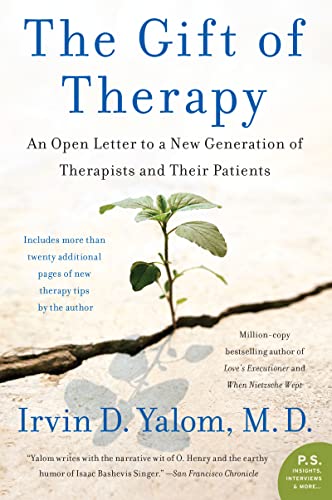 Irvin D. YalomThe Gift of Therapy85 practical, warm clinical insights from a master therapistListen Free On Audible
- 2
 Lori GottliebMaybe You Should Talk to SomeoneA bestselling memoir on the shared humanity of therapist and clientListen Free On Audible
- 3
 Oliver SacksThe Man Who Mistook His Wife for a HatUnforgettable clinical case studies on perception and identityListen Free On Audible
What is personal development, and what does it actually include?
Personal development is the deliberate, ongoing effort to improve your skills, self-awareness, habits, relationships and sense of purpose so that your life works better for you. That’s the plain definition. It covers learning a language, getting better at hard conversations, building a savings habit, and sitting with a feeling you’ve avoided for years.
A useful map comes from psychologist Carol Ryff, who proposed in 1989 that psychological well-being has six parts: self-acceptance, positive relations with others, autonomy, environmental mastery, purpose in life, and personal growth. Notice that growth is only one of the six. A person can add certificates every year and still dislike themselves, which tells you something about how narrow the popular definition has become.
Think of Lena, 29, who worked through a productivity book, then a time-blocking app, then a second book (an illustrative example). Her calendar looked magnificent. Her friendships had thinned out, and she couldn’t say what any of the effort was for. Ryff’s model would flag two gaps immediately: relationships and purpose.
So what falls inside the field? Roughly, skills (communication, time management, financial habits), inner work (emotional regulation, values clarification, self-compassion), health behaviors (sleep, movement), and meaning (contribution, spirituality, creative work). You don’t need all four active at once. Most people work on one area for months while the others tick over.
Two boundaries are worth drawing. First, personal development is not psychotherapy. If you’re dealing with persistent depression, panic, trauma or addiction, a book or a planner won’t do the job, and treating it as such can delay real help. Second, it isn’t a moral scorecard. Wanting to grow doesn’t mean you were broken before.
Add the fact that the industry is largely unregulated (anyone can call themselves a coach) and you can see why quality varies so widely. Honestly, the term is vague enough that almost anything can be sold under it. A fair test is to ask of any program: what specific change will I be able to observe in my own behavior within eight weeks?

How do you reach your inner potential without falling for hype?
Blunt version: potential isn’t a hidden treasure waiting for the right affirmation. It is the gap between what you can do now and what you could do with deliberate practice, good feedback and enough time, and you close it by working on specific skills rather than by “believing in yourself” in general.
The most famous modern idea here comes from Carol Dweck at Stanford, who contrasted a fixed mindset (abilities are set) with a growth mindset (abilities can be developed through effort and good strategies). Her book Mindset made the contrast famous. Students who believe intelligence can grow tend to treat setbacks as information. Those who think it’s fixed tend to read the same setback as a verdict, and they avoid the next hard thing to protect their image.
Now the caveats, because this field has earned some skepticism. A large 2018 meta-analysis found that the average link between mindset and achievement is weak, and that brief mindset interventions produce small effects overall, with somewhat larger ones for struggling students. Dweck herself has cautioned against a shallow “just praise effort” version. The sensible reading is that mindset is a modest lever, not a master key.
What does seem to hold up in practice? Several habits show up repeatedly:
Pick a skill that’s slightly beyond you, such as giving feedback, writing clearly or staying calm in meetings. Practice it in small, repeatable doses rather than occasional heroic bursts. Get feedback from someone who will be honest (a colleague, a friend with a straight face, a coach). Track one or two behavioral measures instead of vague feelings of progress. And expect a dip. Skills often get clumsier before they improve, because you’re replacing an automatic habit with a deliberate one.
Consider Rashid, 47, who wants to speak up in leadership meetings (an illustrative example). His first target isn’t “become confident.” It is: make one prepared comment in each of the next six meetings. By the fourth, his heart still thumps, but the comment lands, and that experience does more than any pep talk.
Notice too what potential is not. It isn’t unlimited. Age, health, money, caregiving duties and the job market all shape what’s realistic, and a plan that ignores them is a fantasy with a deadline. The aim is a better version of your actual life, not someone else’s highlight reel.
What would one small, observable skill look like for you this month?

What is a personal development plan, and how do you write one?
A personal development plan (PDP) is a short written document that names where you are now, where you want to be, and the specific steps, resources and deadlines that connect the two. One to two pages is plenty. Most plans fail because they’re too long, too vague or never looked at again after the first weekend.
The strongest evidence behind planning comes from Edwin Locke and Gary Latham, whose decades of research on goal-setting theory found that specific, challenging goals lead to better performance than vague “do your best” goals, provided you have the ability, you commit, and you receive feedback. Their 2002 summary also notes limits: very complex tasks can suffer when people fixate on outcome targets instead of learning the strategy.
A second ingredient is implementation intentions, studied by Peter Gollwitzer. These are “if-then” plans: if it is 7 a.m. and I’ve made coffee, then I’ll write for twenty minutes. By pre-deciding the trigger, you cut the daily negotiation with yourself. A later meta-analysis found a medium-to-large effect on goal attainment (around d = 0.65), though the research mostly covers simple, concrete behaviors rather than sweeping life changes.
Here’s a workable sequence:
- Take stock. Rate eight areas (work, health, money, relationships, learning, rest, purpose, home life) from 1 to 10, and note one sentence on why.
- Choose one or two priorities, never five. The lowest score isn’t automatically the right pick; choose what you’d most regret ignoring.
- Write the goal specifically: “Complete a beginner course in data analysis by June 30” beats “learn more about data.”
- Break it into weekly actions, each small enough to finish in under an hour.
- Add if-then triggers and name the obstacle you expect, such as tiredness after work.
- Set a review date every two to four weeks, and put it in your calendar before you close the document.
Be honest about the plan’s lifespan. It’s a draft, not a contract. If the goal turns out to be wrong after a month, changing it is learning, not failure. What matters is that the review actually happens; skipped reviews are where most plans quietly die.
One last test: could a friend read your plan and tell, in ten seconds, what you’ll do on Tuesday?

Why is self-reflection worth the effort? Five reasons
Self-reflection is the habit of examining your own thoughts, feelings, motives and actions in order to learn from them. People who do it well make better decisions and repeat fewer mistakes. People who do it badly just ruminate. The difference decides whether it helps or hurts.
The following five reasons are the ones with the best support:
- It builds self-awareness. Without it, you plan around a version of yourself that doesn’t exist.
- It turns experience into learning. A bad meeting teaches nothing until you ask what happened and why.
- It clarifies values and priorities, so your plan reflects what matters to you and not what looks impressive.
- It improves emotional regulation by putting words to a feeling before it drives your behavior.
- It strengthens relationships, since noticing your own patterns makes you less likely to blame others by default.
On the first point, organizational psychologist Tasha Eurich has argued that self-awareness has two sides: internal self-awareness (seeing your own values, reactions and patterns clearly) and external self-awareness (knowing how others see you). In her research, about 95 percent of people said they were self-aware, while she estimated only around 10 to 15 percent actually met her criteria. Treat that figure as a provocative estimate, not a precise measurement, but the gap between confidence and accuracy is well documented across psychology.
Now the warning label. Anthony M. Grant and colleagues, in their 2002 study that introduced the Self-Reflection and Insight Scale, found that reflecting on yourself doesn’t automatically produce insight, and that reflection without insight tended to go along with more stress and anxiety. Brooding over “why am I like this?” is reflection’s evil twin. Eurich’s practical fix is to swap “why” questions for “what” questions: not “why am I so anxious before presentations?” but “what situations make me most anxious, and what exactly happens?”
Say Joon-ho, 31, replays an awkward exchange with his manager for three evenings (an illustrative example). That’s rumination. When he instead writes down what was said, what he felt, what he wanted, and one thing he’d try next time, he’s reflecting. Ten minutes. A notebook. Done.
A simple routine: pick the same time each day or week, answer two or three written prompts, and stop when the timer ends. Evening works for some, a Friday afternoon for others. If reflection leaves you spiraling rather than clearer, that’s a signal to switch to a talking partner or a therapist.
How do personal development, satisfaction, well-being and performance connect?
They connect, but not in a neat line. Growth tends to raise life satisfaction and well-being when it’s tied to your own values and builds real skills, and it can improve performance too. Pursued as a frantic fix for feeling inadequate, though, it can lower all three.
Take the well-being piece first. Psychologist Martin Seligman, in his 2011 book Flourish, proposed the PERMA model: positive emotion, engagement, relationships, meaning and accomplishment. It’s useful because it shows that well-being isn’t only feeling good. A growth plan that includes only accomplishment is missing four fifths of the picture. The model has critics, who question whether the five parts are truly separate, but as a checklist it works.
Performance is a different animal. Albert Bandura spent decades on self-efficacy, your belief in your ability to carry out a specific task. In his 1997 book he identified four sources: mastery experiences (doing it successfully), vicarious experience (watching someone similar succeed), verbal persuasion and your physiological and emotional state. Mastery matters most. That is why small wins beat motivational speeches, and why a stretch goal sized correctly is more useful than one sized for applause.
| Outcome | What it means | How growth work helps |
|---|---|---|
| Satisfaction | Your overall judgment that life is going reasonably well | Aligning goals with values; reducing the gap between what you do and what you care about |
| Well-being | Feeling well and functioning well day to day | Relationships, meaning, rest, and autonomy |
| Performance | Results at work, study or a craft | Skill practice, feedback, self-efficacy |
One caution about the “happy workers are productive workers” claim. Studies do link well-being and performance, but the association is modest, and the causal direction runs both ways. Success makes people happier as well. Anyone selling a guaranteed leap in both is overreaching.
Imagine Dolores, 58, who retrains as a bookkeeper after a redundancy (an illustrative example). Her first month brings anxiety and clumsy errors. By month four, small wins have raised her confidence, an evening class has given her new friends, and her days have shape again. Skill, relationships and purpose moved together, which is exactly what the research would predict.
So when you plan, check all three outcomes. Which one is quietly being sacrificed?

Why does motivation fade, and how do you keep going?
Motivation fades because it’s a feeling, and feelings change with sleep, weather and workload. Habits that rely on feeling inspired collapse by the third week. Durable change relies on intrinsic motivation, meaning you do the thing because it matters or interests you, backed by systems that work on tired days.
The best-known framework is self-determination theory, developed by Richard M. Ryan and Edward L. Deci. Their 2000 paper argued that three basic psychological needs drive lasting motivation and well-being: autonomy (feeling that you choose your actions), competence (feeling effective) and relatedness (feeling connected to others). When a goal satisfies these, you persist with less force. When a goal is driven by guilt, a boss, or social comparison, you may comply for a while, then burn out or rebel.
Apply that to a stalled goal. Is it yours? Many people chase targets inherited from a parent, a social feed or a promotion track. Can you see yourself getting better at it? If every attempt feels like failing, the step size is probably too big. And do you have anyone to share it with, even one person who asks how it’s going?
Tactics worth trying:
Shrink the habit until it’s almost embarrassing, like two minutes of practice. Link it to something already in your routine. Remove one obstacle you can name (lay out your running shoes the night before, delete the app). Decide in advance what you’ll do after a missed day, because the real danger is the second miss, the one that starts the story “I always quit.” Reward the effort, not only the result.
Setbacks deserve their own mention. A lapse isn’t evidence that you lack discipline; it’s usually evidence that your plan didn’t allow for life, such as a sick child, a deadline crunch or a bad week with a parent in hospital. Adjust the plan, not your character. Ask what got in the way, write down the answer, and make the next attempt a little easier than the last one.
A skeptic’s note: self-determination theory is well supported across cultures, but most studies are correlational or short-term. It describes conditions that help; it does not guarantee persistence. And needs can conflict: a job may give you competence and little autonomy, so the fix is sometimes to renegotiate the work rather than to push harder.
Tonight’s question: what’s one goal on your list that you’d keep even if no one ever found out?

Why is personality development important, and can personality really change?
Personality development matters because the traits you carry into work, friendships and conflict shape how those things go, and the research shows they aren’t fixed. Myth to retire: “people never change.” Traits shift gradually across adulthood, and some of that change is influenced by choices and roles.
A landmark meta-analysis by Brent W. Roberts, Kate Walton and Wolfgang Viechtbauer, published in 2006, pooled longitudinal studies and found that, on average, people become more conscientious, more emotionally stable and more socially dominant (confident, assertive) from young adulthood into middle age, with agreeableness also tending to rise later. The authors called this pattern social investment: taking on commitments such as a job, a partnership or a family nudges people toward more mature traits.
What does “personality development” mean in everyday language? Usually a blend of the following, and it helps to separate them:
The first is deep traits, the Big Five tendencies (conscientiousness, extraversion, openness, agreeableness, neuroticism) that change slowly and modestly. The second is social and professional skills, such as communication, assertiveness, listening and conflict handling, which can change a lot with practice. The third is self-presentation, meaning grooming, confidence and manners. Selling a personality makeover often swaps the second and third for the first, which is why results disappoint.
Why does it matter in practice? Because conscientiousness predicts a range of outcomes including job performance and health habits, and because interpersonal skills determine whether a talented person gets heard. Someone shy at 25 who practices speaking up may never become the loudest person in the room, and doesn’t need to. The goal is to behave in line with your values more often, which is an achievable standard.
Picture Keisha, 24, in her first job, who freezes in group chats and open-plan banter (an illustrative example). She won’t turn into a natural extravert. She can, though, learn to ask one question per meeting and to send a quick thank-you note, and colleagues will begin to read her as warm and engaged.
Limits: much of the evidence is from Western samples, effect sizes for deliberate change are modest, and some traits resist change when the environment doesn’t change. A new habit inside an old, hostile workplace has a hard time.

When does personal development backfire?
It backfires when it becomes a way to avoid living. If you’ve read forty self-help books and changed nothing, the reading itself has become the habit. Researchers sometimes call this a form of productive procrastination, and it feels virtuous while it lasts.
Several patterns deserve attention. One is perfectionism: raising the bar every time you reach it, so no achievement ever counts. Another is toxic positivity, the insistence on reframing every painful feeling, which blocks the very emotions you need to process after a loss or a betrayal. A third is comparison-driven growth. When your goals come from other people’s feeds, you’re measuring against edited footage.
There’s also a cost to the endless project of fixing yourself. If the underlying message is “I’m not enough yet,” more strategies deepen that message instead of repairing it. Self-compassion, treating yourself with the kindness you’d offer a friend, tends to support change better than harsh self-criticism, and the research linking self-compassion and persistence is reasonably consistent, even if effect sizes vary.
A harder issue is the line between growth and treatment. Persistent low mood, loss of interest, panic, intrusive memories, heavy drinking or thoughts of self-harm aren’t personal development problems. They are health problems, and they respond to professional care. A primary care doctor, therapist or psychologist is the right first stop, and urgent situations call for local emergency services or a crisis line without delay.
Think of Omar, 36, who responds to a layoff by building a rigid 5 a.m. schedule and an elaborate vision board (an illustrative example). Underneath, he’s not sleeping and has stopped seeing friends. His routine looks disciplined; it’s actually a way to avoid grief. A good week for him would include a long dinner with a friend and a session with a counselor.
Warning signs your growth project has turned on you: you feel worse after each “improvement” session; rest brings guilt; you can’t enjoy a win; or you hide how much time you spend on it. When two or more apply, pause the optimization and ask what you’re running from.

How can you start personal development this week?
Start smaller than seems worthwhile. Seven days is enough for a first experiment, and a first experiment beats a perfect plan that never begins.
- Day 1: Write down one thing that feels off in your life and one that works. Ten minutes, no editing.
- Day 2: Ask a trusted person what they see as your strength and one blind spot. Listen without defending yourself.
- Day 3: Choose one skill or habit that would matter in three months, and write it as a specific, measurable goal.
- Day 4: Write an if-then plan for the first step, plus the likeliest obstacle.
- Day 5: Do the step. Whatever happens, jot down what you noticed.
- Day 6: Do a ten-minute self-reflection with “what” questions rather than “why” questions.
- Day 7: Review, adjust, and book your two-week check-in.
Before day one, set up the practical side: a notebook or a notes file, a reminder at a fixed time, and a short list of two people you could ask for honest feedback. Preparation of this kind takes fifteen minutes and removes the usual excuse that you didn’t know where to start. Choose a week with ordinary demands, not your busiest one, since a plan designed for a perfect week will break on the first normal Wednesday.
Keep the stakes low. You are collecting data about yourself, which is the part most people skip. Over a month, patterns appear: the time of day you do your best work, the excuses that repeat, the tasks you quietly love.
Share the plan with one person. Research on motivation suggests that relatedness helps, and a friend who asks “how’s the Spanish going?” is cheaper than any app. Pick someone kind, not someone who will judge.
Finally, protect rest. Sleep, meals and time with people you like aren’t rewards for finishing the plan; they’re part of the plan. A tired brain is a poor teacher.
The first step can be small enough to feel silly. Take it anyway, tonight if you can.
FAQs about Personal Development
What is personal development in simple words?
It’s the ongoing effort to get better at living: building skills, understanding yourself, improving habits and relationships, and working toward things that matter to you. It isn’t a single program or a personality makeover. Some people focus on career skills, others on emotional health or fitness, and many mix several areas over time. The test is practical. A year from now, can you point to something you do differently because of the effort? If the answer is only that you feel more inspired, the work probably hasn’t touched your behavior yet.
How do I start a personal development plan if I don’t know what I want?
Begin with information instead of a destination. Rate areas of your life such as work, health, money, relationships and rest on a 1 to 10 scale, and note what bothers you most. Then run a two-week experiment on a single small habit and see how it feels. Direction often shows up through action, not through thinking harder. Ask two people who know you well what they think your strengths are. Patterns usually appear within a month. You can change the goal later; a plan is a draft, and the first version is nearly always wrong in some small way that only practice reveals.
Is it normal to feel worse when I start self-reflecting?
Sometimes. Looking honestly at your habits, regrets or unmet needs can stir up discomfort, especially if you’ve been avoiding them. A short dip is common. What matters is the quality of reflection: asking what happened and what you could try next tends to help, while circling around why you’re flawed tends to make people feel worse. Shorten the sessions to ten minutes, write instead of thinking in circles, and stop on a practical next step. If reflection regularly leaves you hopeless, anxious or ashamed for days, talking with a therapist is a better route than doing it alone.
How long does it take to see results from personal development?
It depends on what you’re changing. Simple behaviors like a short daily walk can feel routine within a few weeks, although the time varies a lot from person to person; a well-known study of habit formation found a wide range, with an average around two months. Skills such as public speaking or writing improve over months. Deeper patterns, like how you handle conflict, may take a year or more. Expect uneven progress: quick early gains, a plateau, then slow improvement. Track a measurable behavior, not your mood, because mood moves with many other things. A simple weekly tally of how often you did the action is enough, and it protects you from judging progress on a bad day.
Can personality really change, or am I stuck with who I am?
Personality changes, but slowly and modestly. Longitudinal research shows that, on average, people grow more conscientious and emotionally stable through adulthood, often as they take on responsibilities. You can also change specific behaviors much faster than underlying traits. A shy person can learn to start conversations without becoming an extravert. Your environment matters as well; supportive relationships and roles that reward new behavior make change stick. Be wary of anyone promising a total transformation in thirty days. Real shifts in how you handle stress or conflict tend to appear first as small moments, like pausing before replying, long before anyone else notices.
What is the difference between self-reflection and overthinking?
Reflection looks backward in order to learn something and ends with a conclusion or a next step. Overthinking, or rumination, loops on the same worry without producing anything new, and it usually feels heavier each time. A quick check: after ten minutes, do you have a clearer idea or only a worse mood? Questions that begin with what or how tend to keep you moving, while why questions can trap you in self-criticism. Set a timer, write your answers down, and finish with one action. Rumination that lasts for weeks and affects sleep or concentration can be a sign of depression or anxiety.
Why do I keep quitting my goals after a couple of weeks?
Usually because the goal is too big, too vague or not really yours. Early enthusiasm hides those weaknesses; ordinary tired Tuesdays expose them. Shrink the action until it takes a few minutes, tie it to a daily cue, and decide in advance what you will do after a missed day. Check also whether the goal reflects your own values or someone else’s expectations, since borrowed goals rarely survive stress. Finally, share it with one person. Quitting is rarely a character flaw; it’s feedback about the design of the plan. Treat the third week as a scheduled checkpoint, because that’s when most people drop out.
Do I need a coach or therapist for personal development?
No, not for most goals. Many people do well with books, courses, a trusted friend and a simple written plan. A coach can help with accountability, career moves or skill building, and the quality of coaches varies widely because the field is unregulated in most places. A therapist is the right choice if you’re dealing with persistent low mood, anxiety, trauma, relationship patterns that keep repeating, or substance use. Those are health concerns, and self-help rarely resolves them. If you’re unsure which applies, a primary care doctor can help you sort out where to begin.
Bibliography
- Bandura, A. (1997). Self-efficacy: The exercise of control. W. H. Freeman.
- Dweck, C. S. (2006). Mindset: The new psychology of success. Random House.
- Eurich, T. (2017). Insight: Why we’re not as self-aware as we think, and how seeing ourselves clearly helps us succeed at work and in life. Crown Business.
- Gollwitzer, P. M. (1999). Implementation intentions: Strong effects of simple plans. American Psychologist, 54(7), 493–503.
- Grant, A. M., Franklin, J., & Langford, P. (2002). The self-reflection and insight scale: A new measure of private self-consciousness. Social Behavior and Personality, 30(8), 821–836.
- Locke, E. A., & Latham, G. P. (2002). Building a practically useful theory of goal setting and task motivation: A 35-year odyssey. American Psychologist, 57(9), 705–717.
- Roberts, B. W., Walton, K. E., & Viechtbauer, W. (2006). Patterns of mean-level change in personality traits across the life course: A meta-analysis of longitudinal studies. Psychological Bulletin, 132(1), 1–25.
- Ryan, R. M., & Deci, E. L. (2000). Self-determination theory and the facilitation of intrinsic motivation, social development, and well-being. American Psychologist, 55(1), 68–78.
- Ryff, C. D. (1989). Happiness is everything, or is it? Explorations on the meaning of psychological well-being. Journal of Personality and Social Psychology, 57(6), 1069–1081.
- Seligman, M. E. P. (2011). Flourish: A visionary new understanding of happiness and well-being. Free Press.
Use this citation format to reference the article clearly and help readers find the original source.
PsychologyFor. (2026). Personal Development: How to Unlock Your Inner Potential. PsychologyFor. https://psychologyfor.com/personal-development-how-to-unlock-your-inner-potential/