

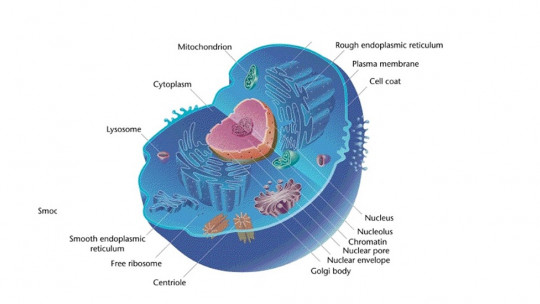
The cell is the smallest unit of life, and it is a fundamental component to define ourselves as living beings. Because its size is so small, it was not discovered until the microscope was invented.
It is from the 19th and 20th centuries that the cell theory developed, which explains that the cell is the structural unit of living beings and states that all living beings are made up of one or more cells. It is also considered a functional unit, since it carries out all vital functions (nutrition, relationship and reproduction). Likewise, the cell is the genetic unit, which contains the hereditary material and all come from another pre-existing cell.
In this article you will find explained the main differences that exist between prokaryotic and eukaryotic cells the two main types of cellular life form and whose division is at the trunk of the tree of biological evolution.
Different types of cells
As we have seen, a cell can be defined as the structural, functional and genetic unit of all living beings, and can be classified in different ways. Mainly, in prokaryotic (or prokaryotic) and eukaryotic (or eukaryotic) cells. The latter, in turn, can be classified into animal and plant cells, although Protozoa, algae and fungi are also eukaryotic organisms
The two large groups of cells (prokaryotes and eukaryotes) have similarities and differences. The first are unicellular organisms, which lack a defined or true cell nucleus and in which DNA is dispersed throughout the cytoplasm They are bacteria. Eukaryotes are organisms composed of cells that have a true nucleus, delimited within a double lipid layer, and with organized cytoplasm.
Differences between prokaryotic and eukaryotic cells
Between prokaryotic cells and eukaryotic cells there are certain differences, which are an example of the complexity of evolution. Scientists believe that eukaryotic cells evolved from prokaryotic cells, something that is reflected in their biological structure and way of behaving differently.
But what are these differences? In the following lines we will see them.
1. Core
While eukaryotic cells have a well-defined nucleus with easy-to-identify boundaries, prokaryotes do not. Genetic information is stored within the nucleus of eukaryotes; On the other hand, in prokaryotic cells the genetic material is spread throughout the interior of the cell, a sign that these life forms are more primitive and less evolved.
2. Origin
Another difference between prokaryotic and eukaryotic cells is found in the moment in which each of these life forms appeared. And, naturally, the first representatives of cells were relatively uncomplex and, consequently, their way of life and functioning were those of a prokaryote.
In this sense, it is estimated that prokaryotic cells have their origin around 3.7 billion years ago; On the other hand, eukaryotic cells are 2000 million years old.
3. Size
Prokaryotic cells are smaller: between 0.1 and 5.0µm in diameter. Eukaryotes tend to be larger: 10 to 100µm in diameter.
4. Cellular organization
Prokaryotic cells usually give rise to unicellular living beings, while eukaryotic cells give rise to multicellular living beings, in which the genome allows the appearance of several groups of cells specialized in different biological functions.
5. Configuration of the genetic material
As we have seen before, the genetic material of eukaryotes is stored in the nucleus; However, in the case of prokaryotic cells, it is dispersed throughout the cytoplasm. For this reason, the DNA molecules of prokaryotic cells are not associated with histones (proteins on which the genetic material is “coiled” to be assembled into more or less compact units, the so-called nucleosomes).
6. Composition of the plasma membrane
In eukaryotic cells, plasma membranes contain sterols In the case of prokaryotic cells, only in mycoplasmas.
7. Form of genetic material
In prokaryotic cells, DNA is circular. Now, when it comes to eukaryotic cells, DNA is linear and, as mentioned above, it is associated with histone proteins.
8. Number of chromosomes
Prokaryotic cells have only one chromosome. However, eukaryotic cells have multiple chromosomes each of which contains different stretches of genetic information.
9. Plasma membrane
In prokaryotic cells the plasma membrane is composed of peptidoglycan or murein. In the case of eukaryotes, it is made up of phospholipids.
10. Organelles
prokaryotic cells present an inner matrix with non-membranous organelles Prokaryotic cells have membranous organelles in the cytoplasm (for example, Golgi apparatus).
11. Playback
Reproduction in prokaryotic cells occurs by asexual reproduction, by binary fission. On the other hand, in eukaryotic cells reproduction occurs through mitosis and meiosis.
12. Types of living organisms to which they give rise
Prokaryotic cells are bacteria while prokaryotic cells are part of animals, plants, fungi, protozoa and algae.
Similarities between prokaryotic and eukaryotic cells
Although prokaryotic and eukaryotic cells are different in many ways, they also have certain similarities. Both contain genetic material, that is, DNA. They have a cell membrane that covers them. Their basic chemical structures are similar since both are made up of carbohydrates, proteins, nucleic acid, minerals, fats and vitamins.
Both prokaryotic and eukaryotic cells contain ribosomes, which make proteins The two types of cells regulate the flow of nutrients and waste matter into and out of the cells. They also reproduce, although in different ways. They need energy to survive, they contain cytoplasm inside the cells and a cytoskeleton. Both types of cells have a lipid bilayer, known as the plasma membrane, which forms the boundary between the inner and outer sides of the cell.
Differences between animal and plant cells
Within the different types of eukaryotic cells we can find animal and plant cells, which although they show some similarities, are also different in some aspects.
Regarding shared characteristics, both have a well-defined nucleus, where they house the DNA. They also carry out similar production processes, which include mitosis and meiosis. Cellular respiration is necessary to obtain energy, and they share some cellular components (Golgi apparatus, endoplasmic reticulum, ribosomes, etc.)
In reference to the differences, plant cells store energy in the form of starch, while animal cells do it in the form of glycogen. The former are usually larger than the latter, and usually have a rectangular shape. Although both have a cell membrane, the cell wall is only present in plant cells, algae, archaea and fungi. Plant cells are capable of synthesizing all essential amino acids, something that does not happen with animal cells.
Use this citation format to reference the article clearly and help readers find the original source.
PsychologyFor. (2024). The 12 Differences Between Eukaryotic Cell and Prokaryotic Cell. PsychologyFor. https://psychologyfor.com/the-12-differences-between-eukaryotic-cell-and-prokaryotic-cell/