

See more of our articles in your search results.
Bacteria surround us everywhere, even if we are not able to see them. These microorganisms are essential for life in all terrestrial ecosystems, since they are vital in biogeochemical processes such as the decomposition of organic matter, the completion of the nitrogen cycle, the production of oxygen (photosynthetic bacteria) and many other things.
We go further, since it is estimated that bacteria contribute 15% of the total terrestrial biomass (70 gigatons), only surpassed by plants. In addition to being on all habitable surfaces, these living beings also live inside us: our colon contains 1014 bacterial units, which help us decompose matter of plant origin, actively prevent the infection of other microorganisms and enable the development of the system. immune during our first steps as human beings.
All these figures and data are exciting, but we do not want to stop at them. To know the importance of bacteria in the world, it is necessary to investigate their way of life, and what less than describe their reproduction to find out how bacterial colonies remain stable over time. Based on this very interesting premise, we tell you everything about binary fission
What is binary fission?
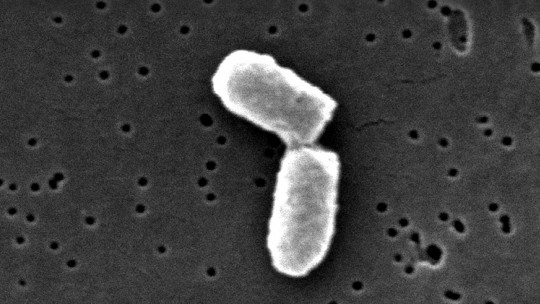
Binary fission is a type of asexual reproduction that takes place in bacteria and archaea, that is, microscopic prokaryotic organisms Before continuing, we must establish a series of bases regarding reproduction.
We have said that we are dealing with a type of asexual reproduction, whose premise is basically the same as that of mitosis in multicellular organisms. Our somatic cells (tissues) divide by this mechanism, that is, the division of a parental cell into two daughters with the same shape, size and genetic information. In any case, mitosis and fission present a series of very important differences.
How many of these have you been "meaning to read" for months?
- 1
 THOUGHT CATALOGThe Mountain Is YouTransforming Self-Sabotage Into Self-MasteryListen Free On Audible
 - 2
 New Harbinger PublicationsThe Dialectical Behavior Therapy Skills WorkbookPractical DBT Exercises for Learning Mindfulness, Interpersonal Effectiveness, Emotion Regulation...Listen Free On Audible
 - 3
 TarcherperigeeSet Boundaries, Find PeaceA Guide to Reclaiming YourselfListen Free On Audible
Broadly speaking, it is essential to highlight that mitosis is unique in organisms with more than one cell This cell division mechanism aims to increase or replace the cells of a tissue and, therefore, is used for the growth, development and repair of the organs that make up us. On the other hand, binary fission follows a much simpler premise: where there was once one bacteria, there are now two.
For this reason, binary fission is a type of asexual reproduction that is only conceived in prokaryotic organisms, that is, those that are only composed of one cell (bacteria and archaea, in this case). If it were observed in a multicellular organism, we would be dealing with a case of mitosis. It’s that simple.
Steps of binary fission
Most bacteria reproduce by binary fission, since This mechanism causes an exponential increase in specimens in a colony Where before there was one microorganism there now become two, then four, then eight, then 16, 32, 64, 128, etc. To give you an idea, the bacteria E.coli Under optimal conditions it can divide by fission once every 20 minutes. As you can imagine, in 24 hours the number of bacterial units is inconceivable with this reproductive rate.
Next, we briefly present each of the stages into which binary fission is divided. Surely many of the mechanisms collected here sound familiar to you, as they are very similar to those of mitosis. Go for it.
1. DNA Replication
For a bacteria to divide into two equal bacteria, it must be able to self-replicate its genetic information Many of the microorganisms studied have a single circular chromosome in their nucleoid (unlike the 46 in the nucleus of human cells), so we will take this rule of thumb as a reference.
The bacterial chromosome is inherently a replicon, since this term refers to a unit of genetic information that contains all the elements necessary to carry out the replication process. This conglomerate of DNA replicates at a single origin, which moves linearly until complete duplication of the entire molecule.
We are not going to dwell on complex processes such as the structures involved, the replication fork and others. It is enough for us to know, in this case, that the enzymes that enable this mechanism are known as DNA polymerases and that It is a semiconservative process, that is, each new molecule formed contains an old DNA strand and a new one
2. Chromosome segregation
In normal mitosis, chromosomes are placed at the Equator of the cell in a random manner, waiting to be “pulled” by the mitotic spindle to each extreme pole of the cell body. In meiosis (which gives rise to gametes) this moment is truly important, since chromosomal permutations at the cellular equator can result in thousands of different combinations in terms of genetic distribution.
In this case, things are much less exciting, since We only have two chromosomes, the product of the replication of one The two chromosomes move and segregate to each pole of the cytoplasm of the bacteria, without major complications.
3. Separation
As each chromosome travels to one pole, the bacterial membrane invaginates to form a septum, also known as the division wall, inside the cell. When the septum divides, both bacteria with the corresponding genetic information become individual entities capable of surviving autonomously.
The evolutionary significance of binary fission
It is necessary to highlight that there are several types of binary fission depending on the plane of division (regular, amoeboid, transverse, oblique, etc.), but we do not want to focus on technical terminology. In closing, we find it much more interesting to explore the reason for this simple and essential mechanism.
The key to bacterial binary fission can be encompassed in a single concept: logarithmic release This term refers to the second phase of bacterial growth, after the habituation of the microorganisms to the new environment in which they are introduced. During this stage, an exponential increase in the bacterial growth curve is observed, that is, the more bacteria found in the initial population, the more they can divide.
It should be noted that the slope of the logarithmic function depends on the environmental conditions, since growing in a hot and secluded place is not the same as growing in the north pole. In any case, the stabilization of growth (passage to the stationary phase or “plateau”) is conditioned by the availability of nutrients: bacteria stop dividing when there are no longer means to survive.
This is a clear example of a “quantity over quality” strategy. All bacteria are genetically the same as the parent (since binary fission is a type of asexual reproduction), so their ability to adapt is the same, right? To understand the success of binary fission, we must also take into account that the mutation rate of the bacterial genome is very high.
Therefore, it is not always guaranteed that a bacterial generation will be the same as the previous one, something tremendously beneficial for the adaptive capacity of these microorganisms. Mutations are random, so some can be bad and some good, but the key difference is that the good ones are fixed in the population while the negative ones disappear.
Thus, the faster a bacterial population divides, the more likely it is that a mutation will appear that allows better adaptation to the environment. The existence of antibiotic-resistant microorganisms is based on this foundation: the binary fission and growth of bacterial populations give them the ability to become resistant to even the most specific drugs.
Summary
As you have seen, everything in nature has an explanation, except in exceptional cases. Binary fission is a reproductive strategy just as valid as sexual reproduction for prokaryotic organisms, since they obtain the genetic variability necessary to adapt from mutations in their genome, and not through the union of a female and a male gamete (as occurs in our species).
At the end of the day, every evolutionary process can be summarized in the following phrase: living beings do what they can with what they have. The binary fission mechanism may not be perfect, but it has certainly allowed the permanence and expansion of these microorganisms on Earth for centuries.
Use this citation format to reference the article clearly and help readers find the original source.
PsychologyFor. (2024). Binary Fission: Characteristics and Phases of This Reproduction Process. PsychologyFor. https://psychologyfor.com/binary-fission-characteristics-and-phases-of-this-reproduction-process/