


When chronic stress, emotional fatigue, and the relentless pursuit of external milestones leave you feeling empty and disconnected, exploring 16 essential positive psychology books offers an evidence-based roadmap toward lasting fulfillment. For over a century, traditional clinical psychology focused almost exclusively on human pathology—treating neuroses, personality disorders, and acute distress—while largely neglecting what makes life truly worth living. You might find yourself functioning adequately in daily responsibilities yet yearning for deeper meaning, wondering why conventional self-help advice fails to generate sustainable joy and emotional resilience.
This persistent sense of emotional stagnation is not a personal failure or an incurable deficit; rather, it reflects a fundamental gap in how modern culture approaches human well-being. True psychological flourishing requires more than simply eliminating psychiatric symptoms; it demands the intentional cultivation of character strengths, positive emotions, deep engagement, and meaningful relationships. Positive psychology emerged as an empirical science to bridge this exact divide, transforming how we understand optimism, flow states, and personal growth. Engaging with foundational positive psychology literature provides you with proven, actionable frameworks to rewire automatic cognitive appraisals and construct an authentic, resilient foundation for daily happiness.
How can reading peer-reviewed positive psychology literature help you cultivate sustainable emotional vitality and purpose in an unpredictable world?
Discovering transformative evidence-based positive psychology literature empowers you to identify your signature strengths, harness the broaden-and-build power of positive emotions, and build a flourishing life grounded in rigorous empirical science.
16 Essential Positive Psychology Books
Verified Top Picks- 1
 Martin E. P. Seligman Authentic Happiness The foundational text introducing signature character strengths and eudaimonic fulfillmentCHECK TODAY'S PRICE
 - 2
 Martin E. P. Seligman Flourish: A Visionary New Understanding of Happiness and Well-being Introducing the landmark PERMA framework and post-traumatic growth in institutionsCHECK TODAY'S PRICE
 - 3Mihaly Csikszentmihalyi Flow: The Psychology of Optimal Experience The classic investigation into optimal experience, deep immersion, and autotelic statesCHECK TODAY'S PRICE
- 4Sonja Lyubomirsky The How of Happiness Empirical strategies proving that intentional activity governs forty percent of happinessCHECK TODAY'S PRICE
- 5Barbara L. Fredrickson Positivity The landmark Broaden-and-Build Theory explaining how positive emotions fuel resilienceCHECK TODAY'S PRICE
- 6Carol S. Dweck Mindset: The New Psychology of Success The power of a growth mindset to reframe failure and unlock human achievementCHECK TODAY'S PRICE
- 7Angela Duckworth Grit: The Power of Passion and Perseverance Empirical research proving that sustained perseverance matters more than innate talentCHECK TODAY'S PRICE
- 8Shawn Achor The Happiness Advantage Seven practical principles proving that a positive brain directly fuels career performanceCHECK TODAY'S PRICE
- 9Daniel Gilbert Stumbling on Happiness Why our brains consistently mispredict what will make us happy in the futureCHECK TODAY'S PRICE
- 10Jonathan Haidt The Happiness Hypothesis: Finding Modern Truth in Ancient Wisdom Exploring ancient philosophical truths through contemporary cognitive and social psychologyCHECK TODAY'S PRICE
- 11Martin E. P. Seligman Learned Optimism: How to Change Your Mind and Your Life The ABCDE cognitive dispute method to transform automatic pessimistic explanatory stylesCHECK TODAY'S PRICE
- 12Adam Grant Give and Take: Why Helping Others Drives Our Success How other-focused strategic giving fosters profound professional achievement and well-beingCHECK TODAY'S PRICE
- 13Todd B. Kashdan & Robert Biswas-Diener The Upside of Your Dark Side Evidence-based proof that psychological flexibility and difficult emotions drive wholenessCHECK TODAY'S PRICE
- 14Kristin Neff Self-Compassion: The Proven Power of Being Kind to Yourself The proven power of self-kindness, common humanity, and mindfulness over self-criticismCHECK TODAY'S PRICE
- 15Tal Ben-Shahar Happier: Learn the Secrets to Daily Joy and Lasting Fulfillment The Hamburger Model balancing immediate present pleasure with meaningful future benefitCHECK TODAY'S PRICE
- 16Oliver Burkeman The Antidote: Happiness for People Who Can't Stand Positive Thinking Embracing the negative path, vulnerability, and Stoic wisdom for genuine tranquilityCHECK TODAY'S PRICE
The Birth of Positive Psychology: From Disease Models to Human Flourishing
The positive psychology movement officially began in 1998 when Dr. Martin E. P. Seligman, during his tenure as President of the American Psychological Association (APA), declared that psychology had become half-baked by focusing solely on mental illness. While the post-World War II disease model achieved extraordinary triumphs in categorizing and treating depression, anxiety, and schizophrenia, it inadvertently treated human beings as passive victims of biological and environmental forces. Drawing on humanistic traditions established by pioneers like Carl Rogers and Abraham Maslow, Seligman proposed a scientific discipline dedicated to understanding optimal human functioning and virtues.
Unlike unverified pop psychology or toxic positive thinking movements that advocate suppressing negative emotions, empirical positive psychology relies on rigorous longitudinal studies, neuroimaging data, and randomized controlled trials. Researchers investigate how subjective well-being operates across genetic, behavioral, and cognitive dimensions, demonstrating that happiness is an active, trainable capability. By shifting the clinical paradigm from “what is wrong with you” to “what is right with you,” positive psychology establishes a comprehensive science of authentic human strengths and resilience.
To maximize the transformative benefit of positive psychology literature, readers must cultivate three foundational scientific well-being competencies:
- Understanding the PERMA model of positive emotion, engagement, relationships, meaning, and accomplishment.
- Identifying and deploying signature character strengths to navigate daily personal and professional challenges.
- Cultivating psychological flexibility to experience genuine positive emotions without denying authentic negative feelings.
Mastering these foundational competencies enables individuals to transition from passive consumers of motivational platitudes to active architects of scientifically validated subjective well-being.
Top 16 Positive Psychology Books for Lifelong Well-Being
The following curated selection represents the definitive positive psychology bibliography, spanning foundational treatises on learned optimism, flow theory, mindset dynamics, and emotional resilience.
1. Authentic Happiness: Using the New Positive Psychology to Realize Your Potential for Lasting Fulfillment — Martin E. P. Seligman
Authentic Happiness by Martin E. P. Seligman is the foundational classic that launched the positive psychology revolution into mainstream global consciousness. Seligman dismantles the hedonistic assumption that happiness is merely the pursuit of momentary sensory pleasure, distinguishing instead between the pleasant life, the good life, and the meaningful life. He proves that enduring fulfillment emerges from discovering your signature character strengths and deploying them in service of something larger than yourself.
The book introduces the Values in Action (VIA) classification system of twenty-four universal character strengths, developed collaboratively with Christopher Peterson. Seligman provides scientifically validated self-assessment exercises that help readers identify their top virtues—such as curiosity, gratitude, fairness, and humor—and integrate them into work and relationships. For anyone seeking a rigorous, accessible introduction to the science of fulfillment, this masterwork remains an essential cornerstone of positive psychology.
- Delineates the critical distinction between fleeting hedonic pleasure and eudaimonic existential fulfillment.
- Introduces the VIA inventory of twenty-four universal human character strengths and virtues.
- Provides validated cognitive exercises to increase gratitude and subjective life satisfaction.
2. Flourish: A Visionary New Understanding of Happiness and Well-being — Martin E. P. Seligman

Flourish represents Martin Seligman’s mature evolution beyond the concept of authentic happiness into a comprehensive theory of human flourishing. Seligman redefines the gold standard of positive psychology from subjective happiness to well-being, introducing his famous PERMA framework: Positive Emotion, Engagement, Relationships, Meaning, and Accomplishment. He argues that none of these five pillars alone defines well-being, but each contributes independently to a rich, fully realized human life.
Seligman details real-world applications of positive psychology across education, corporate organizations, and the military, including the Comprehensive Soldier Fitness program designed to foster post-traumatic growth. He examines how public policy and education can measure gross national well-being alongside economic indicators. This visionary volume is indispensable for leaders, educators, and clinicians seeking to build resilient and flourishing institutions.
- Introduces the multidimensional PERMA framework for measuring and cultivating human well-being.
- Explores post-traumatic growth as a transformative alternative to chronic post-traumatic stress.
- Demonstrates the systemic implementation of positive education in schools and public institutions.
3. Flow: The Psychology of Optimal Experience — Mihaly Csikszentmihalyi

Flow: The Psychology of Optimal Experience by Mihaly Csikszentmihalyi is one of the most cited and celebrated treatises in contemporary cognitive and positive psychology. Csikszentmihalyi reveals that peak human happiness does not occur during passive relaxation, but during states of flow—moments of complete absorption in an activity where high challenge seamlessly matches high skill. In this optimal state, self-consciousness vanishes, time distorts, and individuals experience effortless, deep intrinsic enjoyment.
Csikszentmihalyi draws upon decades of experience sampling research across surgeons, athletes, artists, and assembly-line workers, identifying the precise psychological conditions required to cultivate flow. He explains how ordering the information that enters our consciousness transforms mundane daily routines into autotelic experiences. This profound masterpiece provides an actionable blueprint for transforming work, creative hobbies, and relationships into engines of optimal psychological vitality.
- Identifies the precise neurocognitive conditions required to achieve optimal psychological flow states.
- Explains how matching challenge with personal skill eliminates boredom and acute performance anxiety.
- Teaches readers how to cultivate an autotelic personality for sustainable intrinsic life motivation.
4. The How of Happiness: A New Approach to Getting the Life You Want — Sonja Lyubomirsky

The How of Happiness by positive psychology researcher Dr. Sonja Lyubomirsky is widely regarded as the most empirically rigorous, practical self-help manual on human well-being ever written. Lyubomirsky introduces her landmark 50-10-40 pie chart model of happiness: while 50% of happiness is genetically determined and 10% is governed by life circumstances, a full 40% is determined by intentional activity. This empirical discovery proves that individuals possess massive agency over their long-term subjective happiness baselines.
Lyubomirsky outlines twelve evidence-based happiness activities—including practicing gratitude, cultivating optimism, avoiding overthinking and social comparison, nurturing social relationships, and developing coping strategies. She provides a Person-Activity Fit Diagnostic to help readers identify which interventions match their unique personality. This highly actionable book is essential reading for anyone seeking a scientifically validated personal happiness plan.
- Demonstrates through empirical data that intentional activities govern forty percent of individual happiness.
- Features the Person-Activity Fit Diagnostic to tailor personalized positive psychology interventions.
- Provides actionable strategies to counteract hedonic adaptation and prevent chronic overthinking spirals.
5. Positivity: Groundbreaking Research Reveals How to Embrace the Hidden Strength of Positive Emotions — Barbara L. Fredrickson
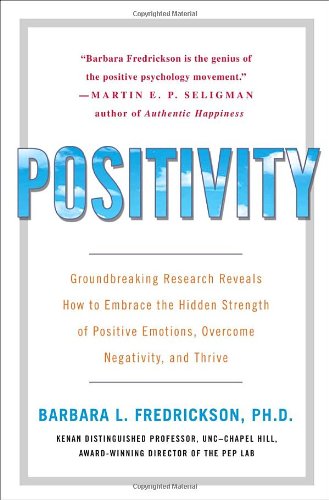
Positivity by pioneering researcher Dr. Barbara L. Fredrickson introduces the Broaden-and-Build Theory of positive emotions, one of the most transformative theoretical frameworks in modern psychology. Fredrickson demonstrates that while negative emotions narrow our visual and cognitive focus to survival-driven fight-or-flight responses, positive emotions (such as joy, gratitude, serenity, curiosity, and awe) broaden our awareness. This cognitive expansion builds lasting physical, intellectual, social, and psychological personal survival resources.
Fredrickson outlines the ten primary positive emotions and explains how cultivating micro-moments of positivity produces an upward spiral of emotional resilience and physical health. She details the critical role of positive emotional ratios in personal flourishing, marital harmony, and organizational productivity. This brilliant, scientifically grounded book teaches readers how to foster authentic positive emotions without denying or suppressing painful life realities.
- Explains the Broaden-and-Build Theory of evolutionary positive emotional adaptation.
- Details how micro-moments of positivity generate upward spirals of psychological resilience.
- Identifies the ten fundamental positive emotions and their somatic physical health benefits.
6. Mindset: The New Psychology of Success — Carol S. Dweck

Mindset: The New Psychology of Success by world-renowned Stanford psychologist Carol S. Dweck is a landmark contribution to positive psychology and cognitive development. Dweck introduces her transformative distinction between a fixed mindset—the belief that intelligence, character, and creative ability are static givens—and a growth mindset—the understanding that abilities can be cultivated through effort, deliberate practice, and mentorship. This paradigm shift fundamentally alters how individuals approach challenges, criticism, and personal failure.
Dweck illustrates how mindset dynamics operate across education, sports, business leadership, and romantic relationships. In a growth mindset, setbacks cease to be indictments of innate worth and become vital sources of neurobiological feedback and learning. This empowering, highly engaging book provides readers with concrete tools to overcome perfectionism, embrace intellectual vulnerability, and cultivate unshakeable personal and professional resilience.
- Contrasts the defensive limitations of a fixed mindset with an adaptable growth mindset orientation.
- Shows how praising effort rather than innate talent fosters sustained intrinsic motivation.
- Provides actionable strategies to reframe mistakes as vital catalysts for cognitive growth.
7. Grit: The Power of Passion and Perseverance — Angela Duckworth

Grit: The Power of Passion and Perseverance by psychologist Angela Duckworth proves through extensive empirical research that sustained passion and perseverance trump raw talent in predicting long-term achievement. Studying West Point cadets, National Spelling Bee champions, and corporate leaders, Duckworth demonstrates that while talent accounts for how fast your skills improve with effort, achievement occurs only when effort is applied repeatedly over years to master a meaningful life purpose.
Duckworth deconstructs the four psychological assets of grit: interest, deliberate practice, purpose, and hope. She demonstrates that grit is not a fixed genetic trait, but an adaptable character strength that can be systematically developed from the inside out and nurtured through culture. This inspiring and scientifically rigorous book provides an essential roadmap for building tenacious long-term goal commitment.
- Demonstrates mathematically that effort counts twice as much as innate cognitive talent.
- Outlines the four psychological assets comprising durable long-term grit mastery.
- Shows educators, parents, and leaders how to foster a culture of resilient achievement.
8. The Happiness Advantage: How a Positive Brain Fuels Success in Work and Life — Shawn Achor

The Happiness Advantage by Harvard researcher Shawn Achor reverses the traditional formula for success. While conventional corporate and academic culture teaches that hard work yields success, which eventually produces happiness, Achor proves that the formula is scientifically backward. A brain primed for positivity exhibits higher dopamine and serotonin levels, expanding visual field perception, boosting creativity, and elevating productivity by over thirty percent, creating an immediate competitive cognitive performance advantage.
Achor translates positive psychology research into seven actionable workplace principles, including the Tetris Effect (retraining the brain to spot opportunities), the 20-Second Rule (lowering activation energy for positive habits), and Social Investment. Written with infectious humor and compelling corporate case studies, this book is essential reading for professionals seeking to boost performance and build high-performing positive workplace cultures.
- Proves that happiness fuels professional success rather than functioning as an elusive byproduct.
- Introduces the 20-Second Rule to eliminate friction for positive daily behavioral habit loops.
- Details the Tetris Effect to retrain the brain for optimism and opportunity recognition.
9. Stumbling on Happiness — Daniel Gilbert

Stumbling on Happiness by Harvard psychologist Daniel Gilbert is a brilliant, witty exploration of affective forecasting—the science of how poorly humans predict what will make them happy in the future. Gilbert reveals that because our frontal lobes evolved to simulate future events, our imaginations routinely fill in imaginary details, omit critical context, and project present feelings onto tomorrow, leading to massive cognitive emotional prediction errors.
Gilbert explains the psychological immune system—the brain’s unconscious rationalization machinery that synthesizes happiness and restores our emotional baseline following adversity. This counterintuitive, entertaining book teaches readers why we routinely misjudge our future emotional reactions to marriage, money, and tragedy. For curious readers seeking to make wiser life choices, this volume delivers an illuminating masterclass in cognitive forecasting.
- Explains the cognitive mechanisms behind affective forecasting and systematic emotional prediction errors.
- Reveals how the psychological immune system rationalizes outcomes and restores emotional baseline.
- Demonstrates why relying on other people’s actual experiences produces more accurate future happiness forecasts.
10. The Happiness Hypothesis: Finding Modern Truth in Ancient Wisdom — Jonathan Haidt
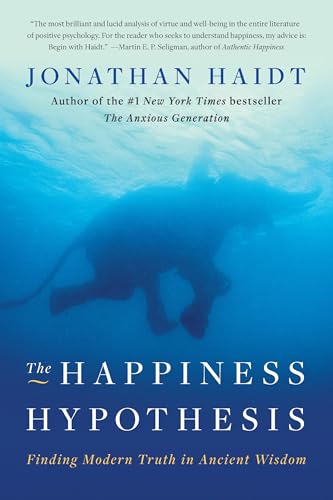
The Happiness Hypothesis by social psychologist Jonathan Haidt examines ten great ancient philosophical truths through the rigorous lens of contemporary psychological science. Haidt introduces his famous metaphor of the divided self: the conscious, rational mind as a rider attempting to guide the much larger, instinctual elephant of emotions. By exploring the roles of virtue, attachment, adversity, and transcendence, Haidt reveals how happiness emerges from harmony between rider and elephant.
Haidt explores the happiness formula ($H = S + C + V$), showing that well-being depends on our biological set point ($S$), life conditions ($C$), and voluntary activities ($V$). He investigates how adversity can foster post-traumatic growth and why cross-generational human connection is vital for moral meaning. This beautifully written, multidisciplinary book is an essential bridge between classical philosophy and positive psychology.
- Introduces the influential divided mind metaphor of the rider and the instinctual elephant.
- Formulates the scientific happiness equation balancing set points, conditions, and voluntary activities.
- Demonstrates how cultivating meaningful work and loving relationships creates vital human engagement.
11. Learned Optimism: How to Change Your Mind and Your Life — Martin E. P. Seligman

Learned Optimism by Martin E. P. Seligman represents the clinical bridge between cognitive therapy and positive psychology. Drawing on his groundbreaking discovery of learned helplessness in animals and humans, Seligman proves that pessimism is not an unalterable genetic destiny, but a learned explanatory style. He demonstrates that how we explain setbacks to ourselves—whether as permanent, pervasive, and personal, or as temporary, specific, and external—fundamentally dictates our vulnerability to depression and defeat.
Seligman adapts Aaron Beck’s cognitive dispute techniques into the practical ABCDE model (Adversity, Belief, Consequence, Disputation, Energization). By teaching readers to recognize automatic pessimistic beliefs and vigorously dispute them with evidence, he provides a clinically verified tool for building psychological resilience. This classic manual is essential for anyone seeking to overcome chronic pessimism and master flexible, realistic cognitive optimism.
- Deconstructs the three dimensions of explanatory style: permanence, pervasiveness, and personalization.
- Provides the ABCDE cognitive dispute method to dismantle automatic pessimistic thought patterns.
- Demonstrates how learned optimism enhances immune health, career longevity, and athletic achievement.
12. Give and Take: Why Helping Others Drives Our Success — Adam Grant

Give and Take by Wharton organizational psychologist Adam Grant explores how interpersonal interaction styles govern professional success and subjective well-being. Grant categorizes individuals into three distinct reciprocity styles: Takers (who strive to get more than they give), Matchers (who operate on strict equal trade), and Givers (who contribute to others without expecting immediate returns). While givers often risk burnout at the bottom of success metrics, Grant proves that the most successful individuals at the top are also other-focused strategic givers.
Grant shows that successful givers protect their time with clear boundaries, building vast networks of goodwill that compound into extraordinary professional opportunities and deep social meaning. This compelling, data-driven book challenges the cutthroat zero-sum myth of success, proving that generosity, mentoring, and prosocial collaboration are the true engines of sustainable personal and organizational flourishing.
- Identifies the three core reciprocity styles: takers, matchers, and strategic givers.
- Explains how other-focused giving creates expansive, trust-based professional and social networks.
- Provides frameworks for setting healthy boundaries to prevent altruistic exhaustion and burnout.
13. The Upside of Your Dark Side: Why Being Your Whole Self Drives Success and Fulfillment — Todd B. Kashdan and Robert Biswas-Diener
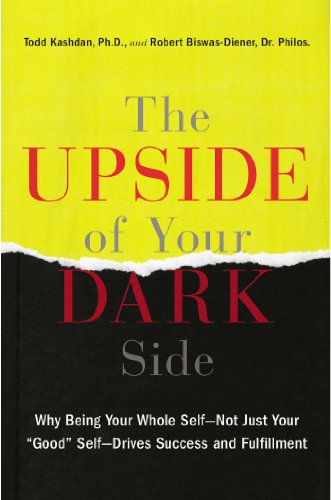
The Upside of Your Dark Side by positive psychology researchers Dr. Todd B. Kashdan and Dr. Robert Biswas-Diener offers a crucial, evidence-based corrective to the toxic positivity trap. The authors argue that a truly flourishing life requires psychological flexibility—the ability to experience and utilize the full spectrum of human emotions, including anger, anxiety, guilt, and sadness. By trying to eliminate uncomfortable emotions, individuals inadvertently diminish their creativity, resilience, and capacity for authentic connection.
Kashdan and Biswas-Diener demonstrate the functional utility of negative states: anger fuels courage to confront injustice, anxiety sharpens vigilance, and guilt motivates moral repair. The book advocates for the 80/20 emotional ratio, where life is predominantly positive but enriched by the adaptive power of difficult feelings. This refreshing, nuanced volume is essential for anyone seeking wholeness rather than superficial happiness.
- Exposes the psychological dangers and emotional costs of forced, toxic positive thinking.
- Demonstrates the functional evolutionary utility of anger, anxiety, guilt, and sadness.
- Advocates for psychological flexibility to navigate complex, unpredictable life challenges.
14. Self-Compassion: The Proven Power of Being Kind to Yourself — Kristin Neff
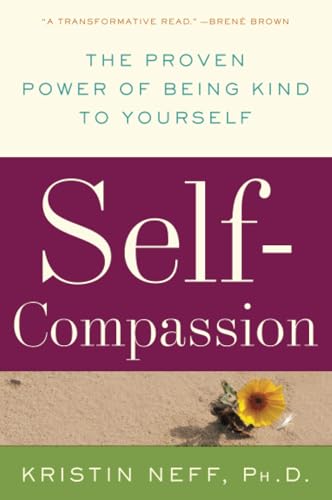
Self-Compassion by pioneering researcher Dr. Kristin Neff establishes that self-compassion, rather than fragile self-esteem, is the true psychological foundation for emotional resilience and flourishing. Neff proves that self-esteem is contingent on success, social comparison, and external validation, frequently generating narcissism, defensive ego posturing, and severe self-criticism when failure occurs. In contrast, self-compassion provides an unconditional source of safety and emotional warmth during moments of inadequacy and pain.
Neff outlines the three core components of self-compassion: self-kindness versus self-judgment, common humanity versus isolation, and mindfulness versus over-identification. She provides clinically validated exercises, journaling prompts, and guided meditations that quiet the harsh inner critic. This deeply healing, scientifically grounded book is essential for anyone struggling with perfectionism, imposter syndrome, or debilitating internal self-blame.
- Contrasts the stability of self-compassion with the narcissistic pitfalls of self-esteem.
- Outlines the three core components of self-compassion for daily emotional self-regulation.
- Provides guided somatic exercises to navigate intense shame and self-critical thoughts.
15. Happier: Learn the Secrets to Daily Joy and Lasting Fulfillment — Tal Ben-Shahar

Happier by Harvard lecturer Dr. Tal Ben-Shahar translates the most popular course in Harvard University’s history into an accessible, beautifully structured guide to meaningful living. Ben-Shahar introduces the Hamburger Model of happiness, categorizing life approaches into four quadrants: the rat racer (subordinating present joy for future success), the hedonist (enjoying the present while ignoring future consequences), the nihilist (resigned to present and future misery), and the happy person who pursues activities that provide present pleasure and future benefit.
Ben-Shahar emphasizes that happiness is not a binary on/off state, but an ongoing process of cultivating happiness boosters—small daily routines that provide meaning and joy. He explores how to apply positive psychology principles to education, workplace leadership, and romantic relationships. This warm, deeply insightful book serves as an ideal personal handbook for balanced living.
- Introduces the Hamburger Model to balance immediate joy with long-term purpose.
- Teaches how to schedule daily happiness boosters to recharge emotional energy reserves.
- Provides practical frameworks to overcome the exhausting rat-racer perfectionism trap.
16. The Antidote: Happiness for People Who Can’t Stand Positive Thinking — Oliver Burkeman
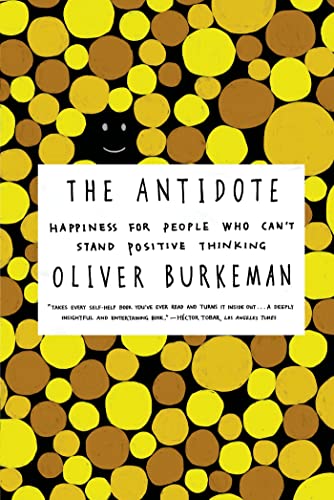
The Antidote by journalist Oliver Burkeman explores the “negative path” to happiness, drawing upon Stoic philosophy, Buddhist mindfulness, and modern clinical psychology. Burkeman challenges the toxic positive thinking industry, arguing that our desperate, relentless efforts to avoid negative emotions, failure, and uncertainty directly generate psychological suffering. By learning to embrace vulnerability, mortality, and insecurity, readers discover an authentic, grounded mental tranquility.
Burkeman investigates ancient practices like the Stoic premeditatio malorum (the premeditation of evils) and non-attachment, showing how confronting worst-case scenarios eliminates catastrophic anxiety. He explores why rigid goal obsession often leads to poor decisions, advocating instead for flexible experimentation and radical acceptance of human limitations. This counterintuitive, brilliantly written book provides an indispensable antidote to commercial happiness myths.
- Critiques the counterproductive psychological mechanisms of forced positive affirmations.
- Revitalizes ancient Stoic mental exercises to reduce catastrophic future anxiety.
- Advocates for non-judgmental acceptance of uncertainty and inevitable human vulnerability.
The Science of Well-Being: Unpacking the PERMA Framework
At the center of contemporary positive psychology stands Martin Seligman’s PERMA framework, a comprehensive multi-dimensional model that defines the essential building blocks of human flourishing. Unlike simplistic models that reduce well-being to subjective happiness or pleasure, the PERMA model demonstrates that flourishing requires the continuous cultivation of five distinct, intrinsically valued elements: Positive Emotions, Engagement, Relationships, Meaning, and Accomplishment. Each component operates as an independent contributor that can be systematically measured and developed.
Positive emotions encompass feelings of joy, gratitude, serenity, and hope, serving as vital fuel that broadens cognition and builds long-term psychological resilience. Engagement refers to the deep immersion experienced during flow states, where individuals fully deploy their highest capabilities. Relationships represent the profound truth that human beings are fundamentally social organisms whose emotional health depends on secure, loving connections. Neuroscientist Lisa Feldman Barrett notes that social connection directly regulates our physiological body budget, proving that supportive relationships are essential biological necessities for health.
Meaning and Accomplishment complete the flourishing equation by connecting daily actions to a broader purpose and fostering personal self-efficacy. Meaning involves serving causes greater than oneself, while accomplishment satisfies the intrinsic human need for mastery, competence, and achievement. Psychiatrist Viktor Frankl famously observed that individuals who have a “why” to live can endure almost any “how,” illustrating that meaning provides the ultimate anchor during profound adversity.
Applying the PERMA model across daily routines provides several systemic well-being advantages:
- Establishes a balanced multi-dimensional metric for evaluating authentic holistic life satisfaction.
- Prevents burnout by ensuring accomplishment is balanced with restorative relationships and positive emotions.
- Guides educators and leaders to design environments that foster deep intellectual and creative engagement.
- Provides actionable pathways to discover enduring existential purpose and prosocial community contribution.
Integrating the five PERMA pillars transforms self-improvement from an exhausting pursuit of perfection into a balanced, scientifically grounded journey of flourishing.
Character Strengths and Virtues: Deploying the VIA Classification
One of positive psychology’s greatest achievements is the creation of the Values in Action (VIA) Classification of Character Strengths and Virtues, spearheaded by Christopher Peterson and Martin Seligman. In response to the psychiatric Diagnostic and Statistical Manual of Mental Disorders (DSM), which categorizes human psychological pathologies, Peterson and Seligman created a “manual of the sanities”—an empirical classification of twenty-four character strengths organized under six universal human virtues: Wisdom, Courage, Humanity, Justice, Temperance, and Transcendence across historical cultures.
Extensive research demonstrates that when individuals understand and regularly deploy their top signature strengths—the core virtues that feel most authentic, energizing, and natural—they experience significantly higher levels of vitality, work engagement, and depressive symptom reduction. Unlike traditional remediation strategies that focus exclusively on fixing personal weaknesses, positive psychology proves that leveraging existing strengths produces far greater compounding personal and professional growth.
Deploying character strengths in daily life involves mastering several evidence-based strength practices:
- Completing the free online VIA survey to identify your top five core signature strengths.
- Practicing “strength spotting” in family members and colleagues to build mutual appreciation and trust.
- Finding new, creative ways to utilize your dominant strengths during routine mundane daily tasks.
- Balancing underused and overused strengths to prevent virtues from morphing into interpersonal liabilities.
Focusing on character strengths empowers individuals to construct careers and lifestyles that align with their innate psychological wiring and virtues.
Overcoming the Toxic Positivity Trap Through Psychological Flexibility
As positive psychology gained widespread popularity, it inadvertently spawned a cultural distortion known as toxic positivity—the rigid, dismissive insistence that individuals must maintain a happy, cheerful disposition regardless of circumstances. Toxic positivity demands that people silence grief, suppress anger, and reframe traumatic events with superficial positive affirmations, a practice that directly exacerbates psychological distress. Pioneering cognitive psychologist Aaron Beck established that psychological health requires objective, realistic appraisal rather than unrealistic, forced Pollyanna optimism.
True positive psychology embraces psychological flexibility—the capacity to stay in contact with the present moment and accept difficult emotions without struggle while taking values-aligned action. Research by Todd Kashdan and Robert Biswas-Diener proves that negative emotions serve vital evolutionary functions: anger motivates boundary defense, sadness signals the need for social support, and anxiety sharpens vigilance. A genuinely flourishing life does not eliminate negative emotions, but integrates them into a resilient and whole self.
Cultivating psychological flexibility involves practicing several core emotional acceptance disciplines:
- Recognizing and validating difficult emotions without immediately attempting to fix them.
- Differentiating between healthy realistic optimism and delusional, dismissive toxic positive thinking.
- Embracing the 80/20 emotional ratio where discomfort is accepted as a natural component of growth.
- Using mindfulness to observe painful feelings without becoming consumed or defined by them.
Embracing emotional wholeness ensures that your pursuit of well-being remains grounded, authentic, and deeply resilient against life’s inevitable trials.
Practical Exercises to Apply Positive Psychology Daily
Reading positive psychology literature creates lasting value only when theoretical concepts are translated into structured, daily behavioral practices. Translating scientific insights into everyday habits requires deliberate routines that bridge the gap between cognitive comprehension and lived emotional experience. Clinical psychologist Carl Rogers consistently emphasized that authentic self-actualization requires integrating insight into daily experiential living practices.
To integrate the core lessons from these 16 essential volumes into your life, practice these five evidence-based positive psychology disciplines:
- Practice the “Three Good Things” exercise each evening by writing down three positive events and why they occurred in your day.
- Conduct a weekly signature strength intervention by using one top strength in a completely new creative way.
- Write and deliver a formal gratitude letter to someone who has positively shaped your life journey.
- Schedule two hours of uninterrupted deep work to cultivate optimal psychological flow states.
- Practice a five-minute self-compassion break during stressful moments by acknowledging pain and offering soothing, non-judgmental self-talk.
Consistently practicing these actionable psychological exercises empowers you to overcome negativity bias, cultivate profound resilience, and achieve long-term authentic human flourishing.
FAQs about Positive Psychology Books and Human Flourishing
What is the best positive psychology book for a complete beginner?
For a complete beginner, Authentic Happiness by Martin E. P. Seligman or The How of Happiness by Sonja Lyubomirsky provides the most accessible, scientifically rigorous starting point. Seligman’s work introduces the foundational philosophy of positive psychology, character strengths, and the difference between pleasure and meaning. Lyubomirsky’s book delivers an extraordinarily practical, step-by-step roadmap to increasing daily well-being, featuring self-assessments that help readers match specific happiness exercises to their unique personality. Both titles ground their insights in peer-reviewed science without resorting to superficial motivational fluff.
Can positive psychology books cure clinical depression and severe anxiety?
Positive psychology books provide powerful cognitive tools, resilience frameworks, and well-being strategies, but they are not a substitute for professional clinical diagnosis, psychotherapy, or medical psychiatric treatment. Positive psychology focuses on helping individuals move from functioning adequately to flourishing. While exercises like learned optimism and gratitude writing provide valuable supplements for mild depressive symptoms, severe clinical depression, panic disorders, and trauma require specialized treatment from a licensed mental health professional. Positive psychology works best as a proactive, complementary approach to mental health.
How does positive psychology differ from traditional positive thinking?
Traditional positive thinking relies on anecdotal advice, forced optimism, and superficial affirmations that often encourage people to ignore or deny difficult emotions. In contrast, positive psychology is an empirical science grounded in peer-reviewed research, neurobiology, and randomized controlled trials. Positive psychology does not advocate ignoring reality or suppressing negative feelings; rather, it studies the specific cognitive habits, character strengths, social connections, and life conditions that genuinely foster resilience, meaning, and authentic emotional well-being.
What is the PERMA model in positive psychology?
The PERMA model is a comprehensive theory of well-being developed by Dr. Martin Seligman. It posits that human flourishing consists of five measurable, independent components: Positive Emotions (experiencing joy, hope, and gratitude), Engagement (experiencing deep flow and immersion in activities), Relationships (nurturing loving, authentic social bonds), Meaning (belonging to and serving something greater than yourself), and Accomplishment (pursuing mastery, goals, and competence for their own sake). Cultivating all five elements creates a balanced, deeply fulfilling life.
What are signature character strengths, and how do I find mine?
Signature character strengths are the core psychological traits—such as curiosity, gratitude, bravery, kindness, and perseverance—that represent your most authentic and energizing self. Developed by Christopher Peterson and Martin Seligman through the Values in Action (VIA) Institute, there are twenty-four universal character strengths recognized across cultures. You can discover your top signature strengths by taking the free, scientifically validated VIA Survey online. Research shows that regularly utilizing your top strengths in daily work and relationships significantly enhances vitality and life satisfaction.
What is the broaden-and-build theory of positive emotions?
The broaden-and-build theory, developed by Dr. Barbara Fredrickson, explains the evolutionary purpose of positive emotions like joy, gratitude, awe, and love. While negative emotions narrow our focus to immediate survival responses (such as fight or flight), positive emotions broaden our cognitive awareness and behavioral repertoire. Over time, this expanded awareness builds durable personal resources—including physical health, problem-solving skills, social support networks, and psychological resilience—that help individuals thrive during future challenges and adversity.
Bibliography
- Achor, S. (2010). The Happiness Advantage: The Seven Principles of Positive Psychology That Fuel Success and Performance at Work. Crown Currency.
- Barrett, L. F. (2017). How Emotions Are Made: The Secret Life of the Brain. Houghton Mifflin Harcourt.
- Beck, A. T. (1979). Cognitive Therapy of Depression. Guilford Press.
- Ben-Shahar, T. (2007). Happier: Learn the Secrets to Daily Joy and Lasting Fulfillment. McGraw-Hill.
- Burkeman, O. (2012). The Antidote: Happiness for People Who Can’t Stand Positive Thinking. Farrar, Straus and Giroux.
- Csikszentmihalyi, M. (1990). Flow: The Psychology of Optimal Experience. Harper & Row.
- Duckworth, A. (2016). Grit: The Power of Passion and Perseverance. Scribner.
- Dweck, C. S. (2006). Mindset: The New Psychology of Success. Random House.
- Frankl, V. E. (1959). Man’s Search for Meaning. Beacon Press.
- Fredrickson, B. L. (2009). Positivity: Groundbreaking Research Reveals How to Embrace the Hidden Strength of Positive Emotions. Crown Archetype.
- Gilbert, D. (2006). Stumbling on Happiness. Alfred A. Knopf.
- Grant, A. (2013). Give and Take: Why Helping Others Drives Our Success. Viking.
- Haidt, J. (2006). The Happiness Hypothesis: Finding Modern Truth in Ancient Wisdom. Basic Books.
- Kashdan, T. B., & Biswas-Diener, R. (2014). The Upside of Your Dark Side: Why Being Your Whole Self Drives Success and Fulfillment. Avery.
- Lyubomirsky, S. (2007). The How of Happiness: A New Approach to Getting the Life You Want. Penguin Press.
- Neff, K. (2011). Self-Compassion: The Proven Power of Being Kind to Yourself. William Morrow.
- Rogers, C. R. (1961). On Becoming a Person: A Therapist’s View of Psychotherapy. Houghton Mifflin.
- Seligman, M. E. P. (2002). Authentic Happiness: Using the New Positive Psychology to Realize Your Potential for Lasting Fulfillment. Free Press.
- Seligman, M. E. P. (2011). Flourish: A Visionary New Understanding of Happiness and Well-being. Free Press.
- Seligman, M. E. P. (1990). Learned Optimism: How to Change Your Mind and Your Life. Alfred A. Knopf.
Use this citation format to reference the article clearly and help readers find the original source.
PsychologyFor. (2026). 16 Essential Positive Psychology Books. PsychologyFor. https://psychologyfor.com/16-essential-positive-psychology-books/