

See more of our articles in your search results.
Throughout history, many different ways of governing and leading a society have been created. One of them is absolutism
With this article we will be able to delve deeper into this concept and review the most important features that differentiate it from the rest. We will also learn about some of the historical examples of this way of managing power by rulers over citizens.
What is absolutism?
Absolutism is a type of political regime typical of the time of the Old Regime, that is, the stage prior to the French Revolution, which brought with it the passage from the Modern Age to the Contemporary Age. Absolutism has the absolute state as a political system, hence its nomenclature.
In other words, for this type of regime, The monarchs, who at this time were the rulers, are the highest authority for all purposes for the three powers, which are the legislative, the executive and the judicial. Therefore, it will be the king who makes the ultimate decisions about what laws to create, how to carry them out, and judge those who break them.
We observe, therefore, that there is no separation of powers, since the three forces are concentrated in a single figure, that of the monarch, as supreme ruler of all his citizens, without being subject to any type of higher law, beyond of the divine that, as Christian countries, was the one that was above the earthly.
How many of these have you been "meaning to read" for months?
- 1
 Beacon PressMan's Search for MeaningGreat product!Listen Free On Audible
- 2
 Thomas NelsonMaking Peace with What I Can’t ControlFind Relief from the Exhaustion of Overthinking, Trying to Fix Others, and Wanting to Figure It A...Listen Free On Audible
- 3
 Hay HouseThe Let Them TheoryA Life-Changing Tool That Millions of People Can't Stop Talking AboutListen Free On Audible
In fact, the idea that the absolute power held by these monarchs is a derivation of the supreme power of God, which grants those specific people the duty and ability to govern and spread the sacred word Moving away from Europe, in some Asian countries Eastern despotism was practiced that went one step further, equating the gods themselves by personifying their kings.
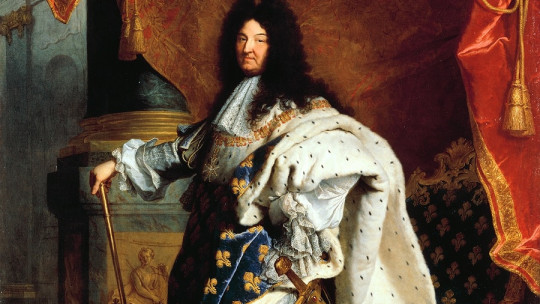
One of the phrases that best summarizes the essence of absolutism and its implications was pronounced precisely by Louis XIV of France, the Sun King, and the greatest exponent of an absolute king. After an attempted uprising in a French region, the monarch was in the Paris parliament.
Someone present questioned the scope of the king’s authority, to which Louis XIV responded: “The State is me.” It is true that the veracity of this scene and the exact words spoken by the monarch are called into question according to different historians. But the truth is that he condenses in very few words what absolutism means.
Differences between absolutism and totalitarianism
We often make the mistake of improperly equating absolutism and totalitarianism, these being different concepts. We have already seen some of the characteristics of the first. As for the second term, it refers to a type of political regime that emerged in the contemporary age, and more specifically at the beginning of the 20th century.
In a totalitarian regime, there is a single political party that monopolizes all spheres of power in the State, and channels it towards a single leader. Furthermore, they try impose a certain ideology on all citizens aiming as the ultimate goal for all of them to think in a certain way to achieve the model of society they seek.
They usually have mechanisms such as repression, censorship or political police to achieve these objectives and maintain them in power, crushing any hint of dissidence or resistance that may arise and that represents the seed for the potential fall of said totalitarian regime.
However, In absolutism, the figure of the political party does not exist or make sense, a concept that did not exist at the time of absolute monarchies There is also no leader as such, but rather a king who, as we have already said, holds all the power. Another important detail is that the absolutist regime does not claim any ideology for its citizens.
On the contrary, what absolutism demands from all subjects is nothing other than mere obedience to the monarch, and his recognition as a figure of unquestionable power. Therefore, it does not require mechanisms to modulate the thinking of citizens, but it does require them to recognize royal authority and obey it.
Stages of absolutism
Absolutism underwent a transformation, going through a series of stages. YesIts origin, that is, its initial stage, is between the 15th century and the 16th century, that is, to the transition between the Middle Ages and the Modern Age, marked by the discovery of America. Throughout this first phase, European monarchs began to bring together virtually all spheres of power over their own people.
But at this first level, there were still some limits, especially on the part of religion, since the Church still held control over many of the countries of Europe in that regard, with the Pope of Rome at the head. After the division between Catholics and Protestants, this influence would be reduced to a smaller number of countries.
The monarchies of Europe, at this time, were experiencing an evolution from feudalism to authoritarianism. That was the path towards the concentration of powers over a few kings that would end up crystallizing in absolutism. With the emergence of nation-states, this transformation became more evident, reaching its maximum splendor.
It would be in the 17th century, specifically from the middle of that century, when absolutism reached its most important stage personified, as we mentioned at the beginning, in King Louis XIV of France, the absolutist monarch par excellence, who illustrated the phenomenon of the person-state.
However, this does not mean that they were completely ironclad and immutable systems, since during these centuries uprisings, revolts and even revolutions were abundant in certain areas, which in some countries meant calling into question the authority of the absolute monarch.
The most palpable case is that of the French Revolution itself, which meant nothing less than the fall of the absolute monarchy in France, and the seed for the fall of many other dynasties throughout Europe, in the decades to come
The borders of absolutism
Although it has now become clear that absolutist monarchs achieved a concentration of power never seen before, the truth is that there were still some limits that represented a limit to this accumulation of forces in a single person. The first of these limits, as we already anticipated, was religion.
All the kings of Europe were Christian, so they were subject, like all other Christians, to divine laws and to God’s representatives on Earth, as was the case of the pope. Subsequently, After the splits of the Church, some of these monarchs would no longer be under his orders, as they would no longer be Catholics
Likewise, there were parts of law, included in natural law, developed in times of the Roman Empire, that are so essential and universal that not even the representative of absolutism would be above them. Some of its branches are located in private law or civil law, among others.
Furthermore, although the absolute monarch was the very representation of the State, as (in theory) Louis XIV said, the truth is that every kingdom is supported by a series of fundamental laws, which may even be mere traditions that are so deeply rooted in a territory and its society that not even the wishes of the monarch could break, or it would be a reason for popular revolt if it did.
Within these limits of absolutism we would find, for example, the principle of legitimacy by which the State is a continuum that is above its monarch, even if it is absolute. In that sense, when this person dies or abdicates to his heir, all citizens know that there will be a new king and the State will continue to maintain its identity.
Another tradition that would remain above the king is that of the principle of religion. This principle implies that The monarch must always maintain the religious confession of the State itself This is a characteristic that occurs both in absolutism and in other types of monarchies.
Regarding the principle of religion, there is a historical event that illustrates it perfectly, and it is the coronation of King Henry IV of France, who was Protestant but had to adopt the Catholic faith as a requirement to be the new ruler of said country. He is credited with the famous phrase: “Paris is worth a mass”, although it is true that some historians believe that it is apocryphal.
These would be some of the limits that would occur in absolutism and that would therefore represent a limit for the total accumulation of power in the monarchs.
Use this citation format to reference the article clearly and help readers find the original source.
PsychologyFor. (2024). Absolutism: Main Characteristics of This Type of Political Regime. PsychologyFor. https://psychologyfor.com/absolutism-main-characteristics-of-this-type-of-political-regime/