

See more of our articles in your search results.
Our body is made up of a large number of different structures, which in turn are made up of millions of cells.
In this great framework, we can find that there are a series of chemical substances secreted by the organism and whose action largely regulates our behavior and allows phenomena such as growth, sexual behavior or the search for food. These are hormones, which circulate through the endocrine system, in which we can find different structures, some of them at the brain level.
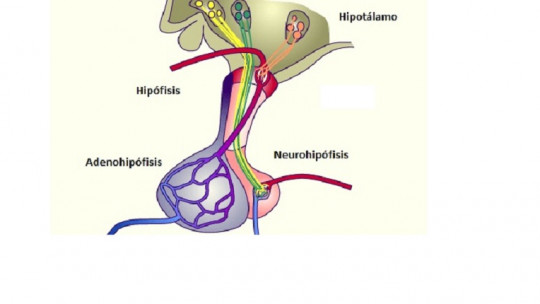
In this sense, the pituitary gland stands out, which in turn can be divided into several substructures. One of them, which we are going to talk about throughout this article, is the adenohypophysis
Adenohypophysis: definition and main functions
It is called the adenohypophysis the anterior and largest portion of the pituitary gland This ovoid-shaped structure is located in the basal part of the brain, below the hypothalamus (with which it is connected by the pituitary stalk) and resting in the hollow of the sphenoid bone known as the sella turcica.
It is a small brain region of great importance for our development as human beings, its main function being to regulate the emission of a large amount of hormones. It is therefore part of the neuroendocrine system, and specifically linked to hormones related to growth, metabolism and sexuality
How many of these have you been "meaning to read" for months?
- 1
 TarcherThe Artist's Way30th Anniversary EditionListen Free On Audible
 - 2
 Atria BooksThe Courage to Be DislikedThe Japanese Phenomenon That Shows You How to Change Your Life and Achieve Real HappinessListen Free On Audible
 - 3
 Hay HouseBecoming SupernaturalHow Common People Are Doing the UncommonListen Free On Audible
This brain region is highly vascularized, and It has a large number of glandular cells In this sense, the adenohypophysis is made up of six large types of cells, of which at least five are known to release the different hormones that the adenohypophysis secretes and regulates: somatotropes (which release growth hormone), mammotraps (which influence release of prolactin and thyrotropin), corticotropic (secrete corticotropin or ACTH), gonadotropic (linked to sexual hormones, in this case follicle-stimulating hormone and luteal hormone), thyrotropic (stimulate prolactin synthesis, but especially thyrotropin) and chromophobic (which are believed to serve to renew the possible loss of the previous ones).
Hormones that govern this structure
The adenohypophysis, as we have seen in the previous section, has as its main function to secrete and regulate the levels of different hormones. These hormones are essential when generating and allowing different biological processes. Among the different hormones it generates, the following stand out.
1. Corticotropin
Also known as adrenocorticotropic hormone, this substance It is essential when generating endogenous glucocorticoids, mainly affecting the adrenal glands. Its action generates the stimulation of different hormones by said cortex, which allow aspects such as metabolism to be regulated (for example, it influences insulin secretion), homeostatic balance and inflammatory processes.
2. Betaendorphins
Betaendorphins are other hormones released by the anterior pituitary gland. These are substances that act as endogenous opioids, generally associated with moderate, reduce or even inhibit the sensation of pain In turn, it generates sensations of pleasure and relaxation. It is generated when making great efforts, or during pregnancy and childbirth.
3. Thyrotropin
Fundamental hormone that regulates the functioning of the thyroid, its action stimulating the secretion of thyroid hormones and their regulation in the body.
4. Prolactin
This hormone is essentially known to be responsible for generating milk production in the mammary glands after pregnancy (although the hormone itself already begins to increase its amounts during pregnancy). Aside from this action, it also influences breast growth, the inhibition of menstruation and the male refractory period.
5. Follicle-stimulating hormone
An essential substance in the field of reproduction, follicle-stimulating hormone plays the role of stimulating the production of oocytes and estradiol in women (the same thing happens with the formation of sperm in men). Apart from that also has an effect on physical development and sexual maturation
6. Luteinizing hormone
This hormone is deeply linked to reproduction and the corpus luteum, with one of its best-known roles being to generate and provoke the ovulation process. In men it also plays a role in reproduction and sexuality, since stimulates the production of testosterone by Leydig cells of the testicles. It also contributes to the production of progesterone, thereby facilitating the implantation of a possible fertilized egg.
7. Somatotropin or growth hormone
This hormone is essential, as its name indicates, for the stimulation of growth and physical development. Muscles and bones are affected by this hormone, among other structures. Also is associated with the consumption and metabolization of fats and nutrients and its use in the body.
Alterations linked to this brain structure
The adenohypophysis is a fundamental structure for human beings, and its alteration or injury can generate different disorders and consequences of varying severity.
In this sense, it is possible to find that its dysfunction can generate growth alterations, among which we can find both various types of dwarfism and gigantism (due to deficiency or excess of growth hormone). The role of the adenohypophysis in the generation of thyroid hormones means that its dysfunction is linked to the suffering of both hypothyroidism (due to deficiency) and hyperthyroidism (due to excess).
It can also affect reproductive function, affecting both libido (for example, hyperprolactinemia may occur) and the formation of sex hormones and cells. For example, in the case of women, problems could appear or even the cessation of menstruation and the ability to produce eggs. Lastly, also can generate or affect metabolic alterations (including diabetes) and cause problems when metabolizing and using elements such as fats and carbohydrates.
Use this citation format to reference the article clearly and help readers find the original source.
PsychologyFor. (2024). Adenohypophysis: What it Is, Functions and Hormones it Secretes. PsychologyFor. https://psychologyfor.com/adenohypophysis-what-it-is-functions-and-hormones-it-secretes/