

See more of our articles in your search results.
Pregnancy and gestation are very delicate stages, since in this biological process the new organism begins to develop. This is why from a medical point of view, it is important know how to know as much as possible about what is happening in the development of the fetus to be able to intervene as soon as possible in the event that there are congenital diseases.
Amniocentesis is the procedure that doctors perform to obtain this early information and be able to make an early diagnosis during pregnancy. Throughout this article we will review everything you need to know about this test: what amniocentesis is, what its functions are, how it is performed and what risks to take into account.
What is an amniocentesis?
We call amniocentesis a type of prenatal test in which an early diagnosis is produced through a medical procedure of chromosomal diseases and fetal infections and that secondarily, also helps us know what the sex of the baby is before birth.
To understand how it works, you must first know that throughout the gestation stage the fetus is surrounded by a substance called amniotic fluid, whose composition has fetal cells. From the observation of this fact, the scientific community applied to the clinical field has discovered that amniotic fluid is capable of giving us useful information about the baby’s health months before birth occurs. Amniocentesis focuses on the analysis of that substance and its components.
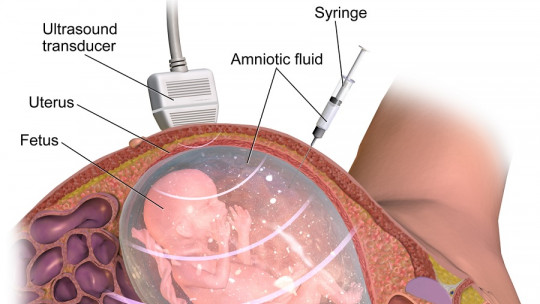
When performing amniocentesis, a small sample of amniotic fluid is obtained through the use of a needle that is inserted into the woman’s abdomen at the same time that an ultrasound is being performed with which the process can be monitored. Secondly, the sample of amniotic fluid obtained is analyzed in the laboratory, a context in which the DNA of the fetus is studied to see if there are genetic abnormalities in it.
How many of these have you been "meaning to read" for months?
- 1
 PenguinThe Body Keeps the ScoreBrain, Mind, and Body in the Healing of TraumaListen Free On Audible
 - 2
 Undercover Publishing HouseStop Letting Everything Affect YouHow to break free from overthinking, emotional chaos, and self-sabotage.Listen Free On Audible
 - 3
 American Psychiatric AssociationDiagnostic and Statistical Manual of Mental Disorders, Text Revision Dsm-5-trGeneric jeufunListen Free On Audible
In which cases is it done?
This prenatal test is only offered to those women who have a significant risk of genetic disease. In most cases, the main reason for performing an amniocentesis is to know if the fetus has any chromosomal or genetic abnormality such as can occur in Down syndrome. As a general rule, this diagnostic procedure It is scheduled between weeks 15 and 18 of gestation
Therefore, it is not always necessary to do it, in most cases it is only done in those pregnant women in whom the baby presents some risk of developing some genetic pathology. The reason it is not done for all women is that it is about a fairly invasive test that carries a small risk of miscarriage
Since amniocentesis is associated with certain risks, before performing it, a complete anatomical ultrasound is performed to detect anomalies in the baby. In cases where there are reasons to suspect the existence of genetic or chromosomal alterations the amniocentesis will be performed.
Functions of this test: what is it for?
The main cases in which an amniocentesis is required include:
Unfortunately, amniocentesis does not detect all possible birth defects. However, the ultrasound test performed at the same time can detect birth defects that cannot be reported by amniocentesis such as cleft lip, heart defects, cleft palate, or clubfoot.
However, the risk of some birth defects that are not detected by either of the two diagnostic tests cannot be ruled out. In general, the main diseases detected by amniocentesis are:
Finally, the accuracy of amniocentesis is approximately 99.4%, so although it poses certain dangers, it is very useful in cases in which there is a real suspicion of a fetal anomaly.
How do doctors perform it?
After having cleaned the area of the abdomen where the needle will be inserted with an antiseptic and administering a local anesthetic to relieve the pain of the puncture, the medical team locates the position of the fetus and placenta using an ultrasound. Going by these images, A very fine needle is inserted through the mother’s abdominal wall the wall of the uterus and the amniotic sac, trying to keep the tip away from the fetus.
Then a small amount of liquid, approximately 20 ml, is extracted and this sample is sent to the laboratory where the analysis will be performed. In this space, the fetal cells are separated from the rest of the elements present in the amniotic fluid.
These cells are cultured, fixed and stained to be able to observe them correctly through the microscope. So, chromosomes are examined for abnormalities
As for the baby and its environment, the puncture seals and amniotic sac fluid regenerate over the next 24-48 hours. The mother should return home and rest for the rest of the day, avoiding physical exercise. In a matter of a day, she can return to a normal life unless the doctor indicates otherwise.
The risks
Although security measures in medicine have also advanced a lot in this area, amniocentesis always presents risks The risk of spontaneous abortion is the most notable, although it occurs in only 1% of cases.
The possibility of premature birth, injuries and malformations in the fetus is also an aspect to take into account.
Use this citation format to reference the article clearly and help readers find the original source.
PsychologyFor. (2024). Amniocentesis: What it is and How This Diagnostic Test is Performed. PsychologyFor. https://psychologyfor.com/amniocentesis-what-it-is-and-how-this-diagnostic-test-is-performed/