

See more of our articles in your search results.
Practically from the beginning of philosophy, dualism, the idea that the body and soul are two radically different elements It has permeated the way of thinking of many people. It is a belief that fits very easily with our experience, since one thing is our consciousness, linked to what we experience subjectively, and another thing is what we intuit that is beyond it, whether we are conscious or not: the environment that It surrounds us, other people, and even our own body, bones and flesh.
But this idea that body and soul are different, which can be reformulated by thinking that there is a separation between the organism and the mental life of that organism, is not a truth that is self-evident. It exists because behind it there has been a philosophical tradition that began many centuries ago and that has been transmitted throughout the generations. Below we will see one of the first links in this chain: Avicenna’s dualist theory.
Who was Avicenna?
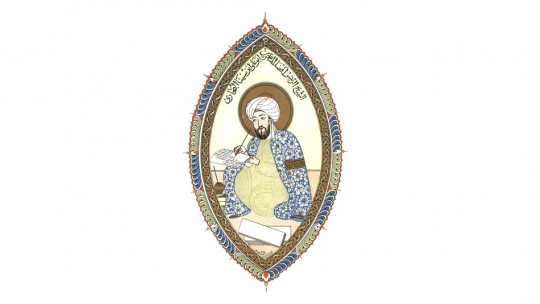
Ibn Sina, also known as Avicenna (the latter name is the Latinized version) was a philosopher, doctor and scientist born in 980 in Bukhara, in those times part of Persia. Already in his early life he proved to be a child prodigy, and in his teens he became famous for his skills as a doctor. His fame made it possible for him to work as a doctor and advisor to several princes.
When he reached the age of 21, he began to write a wide variety of texts and books, which amounted to almost three hundred. They discussed topics as different as medicine, metaphysics,
Although his mother tongue was Persian, his intellectual life was developed in Arabic and in fact he was one of the main people in charge of transferring Aristotle’s ideas to Arabic literature.
How many of these have you been "meaning to read" for months?
- 1
 New Harbinger PublicationsThe Untethered SoulThe Journey Beyond YourselfListen Free On Audible
- 2
 Sourcebooks, Inc.My Calm Down BookA Sensory Book to Help Kids Calm Their BodiesListen Free On Audible
- 3
 FINGERPRINT with FP logoMeditations (Deluxe Hardbound Edition)FINGERPRINT with FP logoListen Free On Audible
Finally, Avicenna died around the year 1037, possibly because someone poisoned him with one of the medical preparations he used.
Avicenna’s dualist theory: its main ideas
These are the foundations of Avicenna’s dualist theory.
1. The truth can be accessed through reason
Avicenna believed that there are truths that one can access using reason. From this idea, he tried to begin to build a way of thinking based only on what has logical evidence, discarding from the start everything that does not stand by itself, something that centuries later the famous French philosopher René Descartes also tried.
So that, Avicenna rejected all ideas that could be falsified and he was left with only what he understood to be absolute truths.
2. The theoretical floating man experiment
Since Avicenna wanted to arrive at the truth by using logic, used a theoretical experiment to know what the nature of the human being is, given that its result should not depend on details linked to the context in which this exercise is carried out; if something is self-evident, it need not be based on things that are materially occurring.
Thus, Avicenna imagined a situation in which a person had just been born, without having any material experience but with the ability to reason. From the beginning, in addition, a curious situation occurs: that person remains floating in the air, with his legs and arms extended and all his senses are nullified: he neither sees, nor hears, nor can he feel the touch of anything, etc.
Faced with this hypothetical situation, Avicenna points out that this person would not know that he has a body, but he would know that he has a mind.
3. The mind knows that it exists
The fundamental difference between the mind and the body is that the former knows that it exists, while the latter, whatever happens, cannot be attributed this capacity. The existence of the mental is self-evident in those who are aware of its existence. This makes the spiritual and the material radically different: bodies are not aware of anything, but we are. Therefore, in what we call “I” there is a component that is not the body itself.
Despite having been greatly inspired by Aristotle’s thought (which even led him to deny some of the foundations of Islam), he differed from him in the idea that the material and the spiritual are two dimensions of the same thing. For Avicenna, in the human body the mind and the flesh are two substances that have a totally different nature.
Criticisms of dualism
Psychology and much of Philosophy today reject dualism, for many reasons. The first is that based solely on speculation, situations that are neither real nor can be. If to demonstrate dualism you have to imagine experiences that are not real and cannot be real, then they tell us nothing about what is real.
The second criticism is that many times the defense of dualism starts from errors in the use of language. Confusing “consciousness” with “mind” or “mental life,” for example, is using simple categories to group very abstract ideas, which can lead to using each of those categories changing their meaning from time to time without being aware of it.
Finally, the third major criticism is that to maintain its validity we must assume that there are many things that belong to a spiritual dimension that cannot be accessed, which means that there is no reason to believe in them. In that sense, dualism part of a type of circular reasoning: to reach the conclusion that the spiritual (as something separate from the material) exists, one must assume that it exists.
Avicenna’s experiment, for example, presents us with a situation that cannot occur: someone who is not sensory stimulated from birth cannot become self-aware, and will probably die very prematurely.
Use this citation format to reference the article clearly and help readers find the original source.
PsychologyFor. (2024). Avicenna’s Dualist Theory. PsychologyFor. https://psychologyfor.com/avicennas-dualist-theory/