

See more of our articles in your search results.
The Aymaras are one of the most famous Amerindian peoples worldwide. They are one of the few whose language has more than a million speakers, in addition to being well known for the use they make of the coca plant and raising alpacas and llamas.
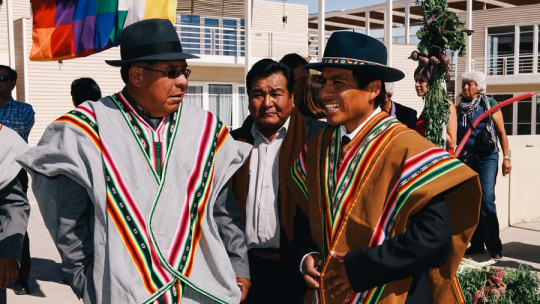
They live in the high Andes, wear colorful clothes with their characteristic hat and have a fascinating history and culture that has survived not only the Spanish conquest but also a previous one, that of the Incas.
The Aymaras are one of the most ancient indigenous groups in South America, with a rich cultural heritage that dates back thousands of years. Predominantly found in the highlands of Bolivia, Peru, and northern Chile, the Aymara people have preserved their language, traditions, and way of life despite centuries of external influences. This article explores their history, cultural characteristics, and significance in the Andean region.
Who are the Aymaras?
The Aymaras are an indigenous ethnic group that primarily resides in the Altiplano region (high plateau) of South America. They speak the Aymara language, which is part of the Aymaran language family, distinct from Quechua (the language of the Incas). The Aymaras have historically been skilled farmers, herders, and traders, adapting to the harsh climate of the Andes.
Today, the Aymara population is estimated to be around 2 million people, mainly in Bolivia, Peru, and Chile, with smaller communities in Argentina. They maintain a strong sense of cultural identity and have influenced modern politics, economy, and social movements in their respective countries.
How many of these have you been "meaning to read" for months?
- 1
 Atria BooksThe Courage to Be DislikedThe Japanese Phenomenon That Shows You How to Change Your Life and Achieve Real HappinessListen Free On Audible
 - 2
 American GirlThe Care and Keeping of You 1The Body Book for Younger Girls (American Girl® Wellbeing)Listen Free On Audible
 - 3
 TarcherThe Artist's Way30th Anniversary EditionListen Free On Audible
This ethnic group has had a history marked by constant changes due to dominant peoples, among the most important the conquest by the Incas in 1430 and the subsequent Spanish colonization. Before these events, they were divided into several independent states that were mainly concentrated in the current republics of Peru and Bolivia.
Although it is not known exactly which was the oldest Aymara country itself, it is suspected that its predecessor, the Tiahuanaco civilization, inhabited the region around 2000 BC. c, being considered the first Aymara state or “protoaimaras”. However, throughout most of their history the Aymara have lived in twelve separate kingdoms, a weak point that was strategically exploited by the Incas and which caused them to end up being their subjects. The last independent Aymara nation was Lupacas in 1400.
Upon being incorporated into the Inca Empire, these peoples went through a strong degree of acculturation, something much later and intense than the Spanish conquest of 1535. However, with the arrival of the Europeans they would go through another acculturation, which occurred in colonial times. With the subsequent independence of Latin American countries, the Aymara have been under the jurisdiction of the modern republics of Peru and Bolivia, as well as part of Chile and Argentina, being under political regimes that have treated them very differently.
The origin of his name
The term “Aymara” appears during colonial times and is of very uncertain origin. In fact, the ancestors of the current Aymaras never called themselves this way and the Incas called them “collas”.
It was not until 1559 that Juan Polo de Ondegardo y Zárate, a Spanish viceregal chronicler, called them “Aymaras” based on linguistic information collected in the Collao region. By extension, their language ended up being called “Aymara” as well, although they themselves called it “jaqi aru” (literally “humanity” and “language”).
History of the Aymara People
The history of the Aymaras is deeply intertwined with the development of pre-Columbian Andean civilizations. While their exact origins remain debated, archaeological evidence suggests that Aymara-speaking groups have lived in the region for at least 2,000 years.
Pre-Incan Period
Before the rise of the Inca Empire, the Aymaras were part of various independent kingdoms known as Aymara lordships or señoríos aymaras. The most notable early civilization associated with them is Tiwanaku, which flourished between 400 and 1000 AD near Lake Titicaca. Tiwanaku was a highly advanced society known for its agriculture, architecture, and astronomical knowledge.
Inca Conquest (15th Century)
In the 15th century, the Incas expanded their empire and incorporated Aymara territories. Although the Aymaras became part of the Inca Empire, they retained much of their culture and language. However, Quechua was imposed as the administrative language.
Spanish Colonization (16th–19th Century)
With the Spanish conquest in the 16th century, the Aymaras were subjected to forced labor (mita) in silver mines and haciendas. The Spaniards also attempted to convert them to Christianity, leading to a blend of Catholic and indigenous beliefs that still persist today.
Post-Independence Period (19th–20th Century)
After independence from Spain, Aymaras continued to face marginalization and land dispossession. However, in the 20th and 21st centuries, Aymara activism grew, advocating for indigenous rights, land reform, and political representation. Today, Bolivia, Peru, and Chile recognize Aymara culture as part of their national heritage.
Characteristics of Aymara Culture
Language
The Aymara language, spoken by nearly 2 million people, is known for its unique linguistic structure and logical syntax. Despite pressures from Spanish and Quechua, efforts have been made to preserve and revitalize Aymara as an official language in Bolivia and Peru.
Traditional Clothing
Aymara clothing reflects their heritage and social identity. Women (Cholitas Aymaras) wear polleras (wide skirts), mantas (shawls), and bowler hats (introduced by Europeans but adopted as a cultural symbol). Men wear ponchos, woolen hats (chullos), and handwoven textiles adapted to the cold climate of the Andes.
Economy and Agriculture
The Aymaras are known for their innovative agricultural techniques, including terrace farming to prevent soil erosion, raised field agriculture (waru waru) to protect crops from frost and floods, and the cultivation of staple crops like potatoes, quinoa, maize, and coca leaves. They also herd llamas and alpacas, which provide wool, meat, and transportation.
Religion and Spiritual Beliefs
Aymara spirituality is deeply connected to nature and ancestral traditions, blending indigenous beliefs with Catholicism. Some key spiritual elements include Pachamama (Mother Earth) as a central deity representing nature and fertility, Inti (the Sun God) worshiped in ceremonies, and the Aymara New Year (Willka Kuti) celebrated on June 21. Rituals include offerings to Pachamama and the use of coca leaves in divination.
Social and Political Organization
Aymara communities traditionally follow ayllu, a collective land and kinship system that promotes cooperation and reciprocity. Political representation has grown significantly, with Aymara leaders playing key roles in social movements and government positions, particularly in Bolivia.
Music and Dance
Aymara music is characterized by wind instruments such as zamponas (pan flutes) and charangos (small Andean guitars). Traditional dances include La Morenada, symbolizing the suffering of African slaves, La Diablada, depicting the battle between good and evil, and El Tinku, a ritual dance representing traditional combat.
The Aymaras Today: Challenges and Cultural Survival
Despite modernization, the Aymaras face challenges such as poverty, discrimination, and environmental issues. However, there have been important advances in indigenous rights, especially in Bolivia, where the first Aymara president, Evo Morales, served from 2006 to 2019.
In Peru and Chile, Aymara activism continues to advocate for land rights, cultural preservation, and political participation. Governments have recognized Aymara culture and language, integrating them into education systems and cultural programs.
Efforts to Preserve Aymara Culture
Bilingual education programs promote the teaching of Aymara in schools. Legal recognition of indigenous territories helps protect ancestral lands. Cultural festivals and tourism initiatives contribute to economic sustainability while promoting Aymara heritage.
The Aymaras are one of South America’s most resilient indigenous groups, preserving their language, traditions, and identity despite centuries of external influence. Their contributions to agriculture, politics, and Andean culture continue to shape modern societies in Bolivia, Peru, and Chile. By embracing their heritage and adapting to contemporary challenges, the Aymaras demonstrate the enduring strength of their ancient civilization.
FAQs About the Aymaras
What is the origin of the Aymara people?
The Aymaras are believed to have originated in the Andean highlands thousands of years ago. They are culturally linked to the Tiwanaku civilization, which thrived near Lake Titicaca before the rise of the Inca Empire.
What is the main language spoken by the Aymaras?
The Aymaras speak Aymara, one of the official indigenous languages in Bolivia and Peru. Some also speak Spanish and Quechua due to historical influences.
What are the most important traditions of the Aymaras?
Some of their most important traditions include the Aymara New Year (Willka Kuti), Pachamama offerings, traditional dances (Morenada, Diablada, Tinku), and agricultural festivals.
How do the Aymaras celebrate their New Year?
The Aymara New Year, Willka Kuti, is celebrated on June 21, marking the winter solstice. It involves ceremonies at sunrise, offerings to Pachamama, and traditional music and dance.
Where do most Aymaras live today?
Most Aymaras live in Bolivia (especially in La Paz, Oruro, and Potosí), southern Peru (Puno region), and northern Chile (Tarapacá and Arica regions). Smaller communities exist in Argentina.
References
- Buechler, Hans C. (1980) The Masked Media: Aymara Fiestas and Social Interaction in the Bolivian Highlands. Approaches to Semiotics, 59. The Hague: Mouton. ISBN 90-279-7777-1
- Buechler, Hans C., and Judith-Maria Buechler (1971). The Bolivian Aymara. Case studies in cultural anthropology. New York: Holt, Rinehart and Winston. ISBN 0-03-081380-8
- Eagen, James (2002) The Aymara of South America, First peoples. Minneapolis: Lerner Publications Co. ISBN 0-8225-4174-2
- Miles, Lynden & Nind, Louise & Macrae, C. (2010). Moving Through Time. Psychological science. 21. 222-3. 10.1177/0956797609359333.
Use this citation format to reference the article clearly and help readers find the original source.
PsychologyFor. (2025). Aymaras: Who They Are, History and Characteristics of This Culture. PsychologyFor. https://psychologyfor.com/aymaras-who-they-are-history-and-characteristics-of-this-culture/